Cucumber-Celery Juice for Dog Hydration: The Low-Calorie Cooling Solution
Summarized from peer-reviewed research indexed in PubMed. See citations below.
Overweight dogs face a real hydration problem in warm weather, but most of what is written about cucumber-celery juice for dogs is marketing dressed as science. The honest version is simpler and still useful. Cucumber and celery are roughly 95-96% water, nearly calorie-free per serving at the amounts a dog should actually drink, and palatable enough to encourage a reluctant drinker to take in more fluid. Hydration genuinely matters for dogs: a 1993 study found dehydration significantly reduced kidney filtration in dogs, and research on water intake shows dogs on moisture-rich food take in more total water than dogs on dry kibble (PubMed 8250404; Sires et al., 2025). What cucumber-celery juice is not: a cooling device, a joint medicine, an appetite drug, or a weight-loss product. It is a low-calorie, high-water occasional extra that fits inside a veterinary weight-management plan, and this guide covers how much to give, when it helps, when to skip it, and which juicer actually earns its price. For the broader rules on safe dog juicing, our guide to juicing safety for dogs is the right starting point.
Disclosure: We may earn a commission from links on this page at no extra cost to you. Affiliate relationships never influence our ratings. Full policy →
Why Do Overweight Dogs Face Real Hydration Challenges?
Dogs carrying extra weight contend with two compounding problems. Their larger body mass raises their metabolic heat production and makes activity harder, and the calorie restriction needed for weight loss often leaves owners looking for ways to add moisture and satisfaction without adding calories. Plain water is the obvious answer, but many dogs are reluctant drinkers, and commercial hydration products, broths, and milk toppers carry real calories.
The scientific case for taking hydration seriously is solid. A controlled study in dogs found that dehydration significantly decreased kidney clearance values compared with proper hydration, meaning the kidneys filtered less efficiently when fluid was short (PubMed 8250404). More recent work measured total daily water intake directly and found that dogs eating a moisture-rich fresh food took in significantly more total water than dogs on dry kibble, and exceeded their calculated minimum water requirement by a wider margin (Sires et al., 2025). That second study was funded and run by researchers employed by The Farmer’s Dog, a fresh-food company, so the finding should be read with that affiliation in mind, but the direction matches basic physiology: water that comes with food, flavor, or texture gets consumed.
Obesity itself is the most common nutritional disorder in companion animals, with consequences that include joint disease, metabolic problems, and reduced mobility (PubMed 16772464). Veterinary surveys consistently estimate that a majority of dogs in the United States are overweight or obese. Those dogs need hydration support that does not undermine a calorie-controlled diet, which is the genuine niche for a mostly-water vegetable juice given in small amounts.
How Much Water Does a Dog Actually Need?
A widely used rule of thumb is roughly one ounce of water per pound of body weight per day, though the real requirement varies with diet, activity, weather, and health. Dogs eating dry kibble need substantially more drinking water than dogs on moisture-rich food, which is exactly what the 2025 intake study measured: dry-fed dogs drank more from the bowl, but fresh-fed dogs still took in more total water over the day (Sires et al., 2025). The practical point for a weight-management plan is that total water, not just bowl water, is what matters, and moisture-rich additions like diluted juice, broth, or soaked food all count toward it. A dog getting most of its fluid from a bowl of plain water is fine; the juice conversation only starts when bowl water is not getting drunk.
What Is the Real Problem With Commercial Hydration Products?
Many commercial hydration toppers, broths, and milk products marketed for dogs carry meaningful calories. A cup of broth can add tens of calories and a cup of goat milk well over a hundred, which matters when a small dog’s entire daily weight-loss ration might be a few hundred calories. That is the legitimate opening for a mostly-water vegetable juice in a calorie-tight plan, provided it is given in the teaspoon-scale servings below rather than in bowls.
The evidence shows: dehydration measurably reduces kidney filtration in dogs, moisture-rich foods increase total water intake, and obesity is widespread, which together make low-calorie hydration a legitimate goal for overweight dogs, with juice as one small tool inside a veterinary plan.
What Does Cucumber Actually Contribute to Dog Hydration?
Cucumbers are about 95-96% water, which makes them one of the most hydrating vegetables in the produce aisle and an obvious base for a dog hydration drink. A review of cucumber’s phytochemical and therapeutic potential, published in Fitoterapia, documents antioxidant, anti-diabetic, and lipid-lowering activity in experimental models, along with a range of bioactive compounds in the fruit (PubMed 23098877). Those are laboratory findings, mostly in rodents and cell systems, so the honest translation for a dog is modest: cucumber is a hydrating, low-calorie vegetable with some antioxidant content, not a medicine.
What Nutrients Are Really in Cucumber?
Cucumber provides potassium, a small amount of magnesium, and trace silicon, along with modest vitamin K and vitamin C. The potassium matters for fluid balance, since it works with sodium to maintain cellular hydration. The silicon content is real but small, and claims that cucumber juice’s silica meaningfully supports joint connective tissue in dogs outrun the evidence, which is limited to general collagen biology rather than canine joint studies. If cucumber-celery juice helps an overweight dog, it will help through hydration volume, palatability, and calorie displacement, not through silica.
What About Whole Cucumber Instead of Juice?
Worth asking, because the whole vegetable is usually the better default. A few thin cucumber slices, seeds removed, are a classic low-calorie dog snack that provides the same water and electrolytes plus fiber, which juice removes. For an overweight dog on a restricted diet, cucumber slices can even substitute for higher-calorie training snacks, at roughly 15 calories per 100 grams. The juice’s only advantages over slices are palatability for reluctant drinkers and ease of adding to a bowl of water. If the dog happily eats cucumber slices, the juicer is unnecessary.
What About the Cooling Claims?
Cucumbers have a folk reputation as a cooling food, and some juicing content repeats it as fact, complete with invented mechanisms about compounds that “cool the blood.” The evidence does not support internal cooling from any vegetable. Dogs regulate heat mainly by panting, which moves air over evaporative surfaces in the respiratory tract, a mechanism documented as far back as a classic Science paper on unidirectional airflow during canine panting (PubMed 5449323). Panting requires moisture, which is exactly where hydration connects to heat: a well-hydrated dog has the fluid available for evaporative cooling, and a dehydrated dog loses that capacity sooner. Chilled cucumber-celery juice can help indirectly by encouraging a reluctant drinker to take in more fluid, and cold liquid is pleasant on a hot day, but the juice is not lowering core temperature through cucumber chemistry.
Key takeaway: cucumber is a legitimate hydration base because it is nearly all water with modest electrolytes and antioxidants, and its role in heat management is supporting the fluid needed for panting-based evaporative cooling, not cooling the body directly.
What Does the Science Say About Dogs and Heat?
Understanding how dogs actually handle heat separates useful hydration advice from cooling mythology, and the physiology is well documented.
How Do Dogs Dissipate Heat?
Dogs have far fewer sweat glands than humans and rely mainly on panting, which moves air rapidly over the moist surfaces of the respiratory tract so that evaporation carries heat away. A classic Science paper described the unidirectional airflow that makes canine panting such an effective evaporative cooler (PubMed 5449323). Two practical facts follow. First, panting consumes water continuously, so a hot dog’s fluid demand rises sharply. Second, anything that improves hydration supports that evaporative system, which is the real, indirect link between fluids and heat tolerance.
What Are the Warning Signs of Heat Stress?
Heat stress in dogs shows up as excessive panting that does not settle, drooling, weakness, stumbling, dark red gums, vomiting, or collapse, and any of those signs warrants immediate cooling and a veterinary call, because heat stroke is a true emergency. Overweight dogs, brachycephalic breeds with short airways, senior dogs, and dogs with heart or respiratory disease all tolerate heat more poorly and need shorter exposure, shade, and water access. No juice, cucumber, or chilled drink substitutes for the basics: shade, ventilation, water, and avoiding activity in peak heat.
Where Does Hydration Fit Into Heat Safety?
Hydration is one pillar of heat safety, not the whole structure. A well-hydrated dog enters a hot period with evaporative cooling capacity available; a dehydrated dog starts behind. Offering chilled, flavored fluids to a reluctant drinker before and after heat exposure is a reasonable hydration tool for exactly that reason, and it is the honest extent of the claim. Anything more, including the idea that specific vegetable compounds cool a dog from the inside, is not supported by evidence.
What the data says: dogs cool themselves by panting-based evaporation that consumes water, heat stress has recognizable warning signs that need real intervention, and chilled fluids support hydration, which supports that evaporative cooling, without any internal-cooling mechanism.
What Does Celery Contribute, and When Should Dogs Skip It?
Celery is about 95% water and brings a different nutrient profile to the blend. A review of celery’s antioxidant activity cataloged its compounds, including caffeic acid, p-coumaric acid, ferulic acid, apigenin, luteolin, tannins, saponins, and kaempferol (PubMed 28701046). The flavonoids in that list, apigenin and luteolin among them, have documented anti-inflammatory activity in laboratory models, with research showing they can modulate pathways like COX-2 and NF-κB (PubMed 35566252). The honest framing for a dog owner: these are real compounds with real anti-inflammatory biology in experimental systems, and whether the trace amounts in a teaspoon of celery juice do anything measurable for a dog’s joints is unknown and probably negligible compared with weight loss itself.
What About Whole Celery Stalks for Dogs?
Celery stalks are a popular crunchy dog snack, and they are fine for most dogs in moderation, with one important caveat: celery is stringy, and the long fibers can be hard for small dogs to chew and can pose a choking or digestive risk if swallowed in large pieces. Cut celery into small, thin pieces for small dogs and supervise the first few offerings. The whole stalk provides the same water and antioxidant content as the juice plus the fiber, so, as with cucumber, the whole vegetable is the better default and the juice is mainly for reluctant drinkers.
Is the Sodium in Celery a Problem?
Celery contains natural sodium, which triggers concern in owners of dogs with heart or kidney conditions. For a healthy dog, the sodium in a small serving of diluted celery juice is trivial. For dogs with kidney disease, heart disease, or hypertension, sodium intake is a medical question, and celery juice should wait for veterinary approval, with the serving size and frequency set by the vet rather than by an article.
What About Vitamin K and Medications?
Celery also provides vitamin K, which matters for dogs on anticoagulant medication, where sudden changes in dietary vitamin K can alter drug effect. The vitamin K content of celery is modest, but consistency matters more than quantity for dogs on those drugs, so any regular addition of leafy or green vegetables should be disclosed to the veterinarian managing the medication.
What the data says: celery adds water, potassium, and flavonoid antioxidants with genuine but laboratory-level anti-inflammatory activity, and its sodium and vitamin K content make it a veterinary question for dogs with kidney disease, heart disease, or anticoagulant therapy.
How Much Cucumber-Celery Juice Should a Dog Actually Get?
The serving sizes floating around dog juice content, with instructions to give “2-16 ounces daily,” are not supported by any veterinary protocol and contradict the conservative dosing used in this site’s other dog juice guides. Juice is an occasional extra, not a beverage to replace water, and the servings below follow the same teaspoon-scale protocol as our dog juicing safety guide.
What Is the Right Serving Size by Weight?
Give the first serving once, diluted at least 1:1 with water, and watch for 24-48 hours before offering more:
| Dog Weight | Serving (juice, before dilution) | Diluted Volume |
|---|---|---|
| Under 10 lbs | 1/2 teaspoon | 1 teaspoon total |
| 10-20 lbs | 1 teaspoon | 2 teaspoons total |
| 21-40 lbs | 2 teaspoons | 4 teaspoons total |
| 41-70 lbs | 1 tablespoon | 2 tablespoons total |
| Over 70 lbs | 1.5 tablespoons, max 2 | 3-4 tablespoons total |
Offer juice at most 2-3 times per week, never daily, and never as a meal replacement. Use a 1:2 juice-to-water ratio for toy breeds and sensitive stomachs. Because the servings are this small, the calorie contribution of cucumber-celery juice to a weight-loss plan is genuinely negligible, under roughly 5 calories per serving, which is the honest version of the “low calorie” claim once you strip out the invented 8-calories-per-glass figure. To put the serving in perspective, a 40-pound dog’s entire weekly juice allowance, about two tablespoons across two or three servings, is roughly the volume of a single standard ice cube, which is why this protocol is safe to describe as a flavor-and-moisture extra rather than a nutritional intervention.
Why So Conservative?
Dogs do not need vegetable juice, their digestive systems adapt best to gradual change, and the risks, including loose stool, allergic response, and the sodium and potassium questions above, are not zero. A dog that drinks plain water well does not need juice at all. The juice earns its place only for dogs whose fluid intake is genuinely low, who need flavor incentive, or who enjoy it as an occasional chilled extra on a hot day, within a veterinary-approved plan.
How Do You Measure Teaspoon-Sized Servings?
Measuring a half-teaspoon of juice is fiddly but straightforward with the right tools. Use a standard measuring spoon set rather than a kitchen spoon, which varies widely. For very small dogs, an eyedropper or a 1 mL syringe makes dosing easy and can be offered alongside the water bowl. A practical trick for the freezer section below: freeze diluted juice in ice cube trays, since a standard cube is roughly 1 tablespoon, which means a 40-pound dog’s entire 2-teaspoon serving is about two-thirds of a cube, and a 70-pound dog’s 1.5-tablespoon serving is about one and a half cubes. Cube-based serving makes the tiny volumes manageable and keeps servings consistent week to week.
What Does a Sample Week Look Like?
A realistic week for a 40-pound dog on this protocol: two servings of diluted juice on separate days, each 2 teaspoons of juice plus 2 teaspoons of water, offered chilled before or after a walk, plus the dog’s normal water bowl refilled fresh twice a day. That is roughly 20 calories per month from juice, which is why the calorie math never threatens a weight-loss plan. If the dog ignores the juice, skip it; the water bowl and the veterinary diet are doing the real work.
The main point: teaspoon-to-tablespoon servings diluted 1:1, two to three times per week, keep cucumber-celery juice a true low-calorie extra, and the conservative dosing is what makes the weight-management framing honest.
What Does the Evidence Show About Weight Loss and Joint Health in Overweight Dogs?
The joint health story for cucumber-celery juice is real, but the mechanism is weight loss, not celery chemistry. Overweight dogs carry excess mechanical load on their joints, and the clinical data show that removing that load changes lameness measurably. In one prospective trial, nine dogs with hip osteoarthritis and hind limb lameness lost 11-18% of their body weight on a restricted-calorie diet, and lameness severity scores fell significantly (Impellizeri et al., 2000). A second study of fourteen obese dogs with osteoarthritis found significant lameness improvement starting at a body weight reduction of about 6% (Marshall et al., 2010).
Those studies are the actual evidence behind the joint claims in this topic, and they say something clear: the intervention that helps arthritic overweight dogs is sustained weight loss of roughly 6-18% of body weight, achieved through veterinary-supervised calorie restriction. Vegetable juice does not produce that. What a low-calorie, palatable hydration extra can do is make a restricted diet slightly more tolerable, which supports adherence, which supports the weight loss, which supports the joints. That is the honest chain of causation, and it is worth more than any amount of apigenin speculation.
How Does a Veterinary Weight-Loss Plan Actually Work?
A sound canine weight-loss plan starts with a veterinary assessment of ideal body weight, followed by a calorie target that is usually 60-80% of the maintenance calories for the dog’s ideal weight, fed as a measured ration, not free choice. Progress is tracked with weekly weigh-ins on the same scale and regular body condition scoring, which assesses fat over the ribs, waist tuck, and abdominal profile rather than trusting the scale alone. The clinical trials above fed exactly this kind of restricted ration and achieved the 6-18% losses that improved lameness, so the model is well tested (Impellizeri et al., 2000; Marshall et al., 2010).
What Should You Do When Weight Loss Stalls?
Plateaus are normal and have a short checklist: re-weigh on the same scale, confirm the ration is actually being measured rather than estimated, subtract all snacks and toppers from the daily calories, increase activity within the dog’s tolerance, and involve the veterinarian if the stall persists, because metabolic issues and medication effects can interfere with loss. The juice protocol contributes so few calories that it will never be the cause of a plateau, which is another reason the teaspoon-scale servings matter.
The research verdict: clinical trials show weight loss of about 6-18% of body weight significantly reduces lameness in overweight dogs with osteoarthritis, so the joint benefit of a weight-management plan is well documented, while the direct joint effects of celery flavonoids in dogs remain laboratory-level speculation.
How Do You Make Cucumber-Celery Juice for Dogs?
The recipe itself is simple. What matters is ingredient safety, dilution, and storage.
What Ingredients Should You Use?
Choose fresh cucumbers and celery, organic where practical, and wash everything thoroughly with a vegetable brush. Conventional celery often carries higher pesticide residues, which is a reasonable argument for organic celery specifically. Avoid any produce with soft spots or mold. Use English cucumbers if available, though standard cucumbers work fine.
What Is the Basic Recipe?
A balanced blend uses roughly 2:1 cucumber to celery by weight. For a small batch, one medium cucumber and two celery stalks produce several ounces of juice, more than enough for weeks of dog servings at the teaspoon scale, so make juice for your household and share a teaspoon with the dog rather than juicing specifically for the dog. Cut produce to fit your juicer’s feed chute, alternate cucumber and celery pieces while feeding, and run a small amount of water through the machine at the end to flush the last juice through.
How Do You Serve It Safely?
Dilute the juice at least 1:1 with filtered water, serve at room temperature or lightly chilled, and never add salt, sugar, honey, or any seasoning. Do not mix in fruit to sweeten it for a diabetic or overweight dog. A dog that refuses the diluted juice simply does not get it; palatability tricks that add sugar defeat the purpose.
What Should You Do With the Pulp?
The pulp left by the juicer is mostly insoluble fiber, which the juice has removed. It can be composted, added in small amounts to a dog’s meal for fiber if the dog tolerates it and the veterinarian approves, or used in human cooking like any vegetable pulp. It is not waste that needs special handling, and it should not be fed in quantity, because a sudden fiber load can cause loose stool in a dog accustomed to a low-fiber ration.
What Are the Step-by-Step Prep Basics?
Wash and trim the produce, cut cucumber into chute-sized pieces and celery into a few-inch lengths, alternate pieces while feeding the juicer, collect the juice, dilute it immediately, and refrigerate the unused portion in a sealed glass container. A batch of one cucumber and two celery stalks yields several ounces of juice, which at the serving sizes in this guide is enough for weeks of dog servings, so batch for the household and share a teaspoon with the dog rather than juicing small quantities just for the pet.
Key takeaway: wash produce, use a roughly 2:1 cucumber-to-celery ratio, juice for the household and share teaspoon servings diluted 1:1, and never add sweeteners or salt.
How Should You Store Fresh Vegetable Juice?
Fresh juice is a perishable food, and the storage rules follow the published research on cold-pressed juice. A 2019 comparison study found that refrigerated cold-press juice kept its antioxidant capacity and bioactive compound content through day 5, with declines beginning at day 6-7, while juice held at room temperature degraded within 48 hours (Khaksar et al., 2019). The same study found no significant nutrient difference between cold-press and centrifugal juice measured immediately after extraction, which is a useful reality check on juicer marketing.
What Are the Practical Storage Rules?
Transfer juice to glass containers immediately, fill them to the top to minimize air, cap tightly, and refrigerate at 36-40°F. Use the juice within 48-72 hours as a conservative home window. Check before serving for off odors, discoloration, or separation that shaking does not fix, and discard anything questionable. Frozen juice cubes keep for weeks and double as a cooling snack on hot days, but freezing cannot restore nutrients lost before freezing, so freeze promptly.
Why Do the Storage Rules Matter for a Dog?
The stakes are higher for a pet than for a smoothie. Spoiled juice can carry bacterial growth that causes gastrointestinal illness, and a dog cannot tell you the juice tastes off. When in doubt, pour it out. The 72-hour rule and the sealed-glass habit are the difference between a safe occasional extra and a food-safety gamble.
How Do You Freeze Juice Into Dog-Sized Servings?
Freezing solves both storage and portioning at once. Pour diluted juice into an ice cube tray, freeze, and store the cubes in a labeled freezer bag. Because a standard cube is about a tablespoon, the cube itself becomes the measuring tool for the serving table above: roughly two-thirds of a cube for a 40-pound dog’s 2-teaspoon serving, one and a half cubes for a 70-pound dog’s 1.5-tablespoon serving, and a half cube or less for small dogs. Thaw a cube in the refrigerator or offer it frozen as a cooling snack on hot days, but never microwave it, since uneven heating can create hot spots and degrade the juice. Cubes keep for weeks, which makes batch preparation practical even at teaspoon-scale servings.
What this means for you: refrigerate immediately in sealed glass, use within 72 hours, freeze extra juice in cubes promptly, and discard anything that looks or smells wrong, because the storage research shows quality holds through day 5 only under proper refrigeration.
Which Juicer Should You Buy for Celery and Cucumber?
Celery is fibrous, and slow masticating juicers handle it better than high-speed centrifugal models, which can struggle with long strings and leave juice trapped in wet pulp. The published evidence on nutrient differences between methods is modest at the moment of extraction, with the clearer advantage in storage stability, as covered above (Khaksar et al., 2019; Kim et al., 2017). Buy a slow juicer for yield, freshness, and cleaning design, not for dramatic vitamin claims.
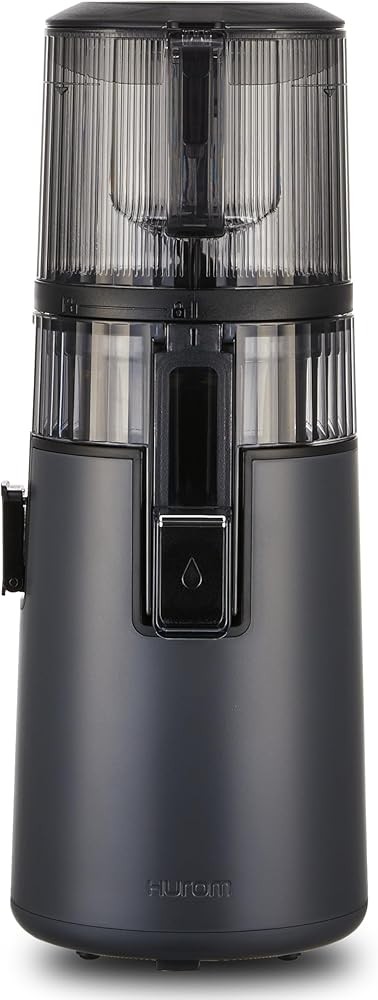
The Hurom H70 is the pick for most households that want to juice celery without fighting the machine. Its slow auger presses the fibrous stalks rather than shredding them, the strainer-free design removes the most tedious cleaning step, and the compact footprint fits small kitchens. For a dog owner, the practical advantage is simple: a juicer that cleans in minutes gets used, and a used juicer is the only kind that produces juice. At $649 it is a serious purchase, and it only makes sense if you already juice for your own household or are committed to regular juicing.
The trade-off: the H70’s hopper is smaller than the H400’s, so large batches need multiple loads, and $649 is a real investment for what may be teaspoon servings for a dog. If the dog is the only reason to buy a juicer, the honest recommendation is the budget option below instead.
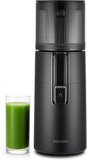
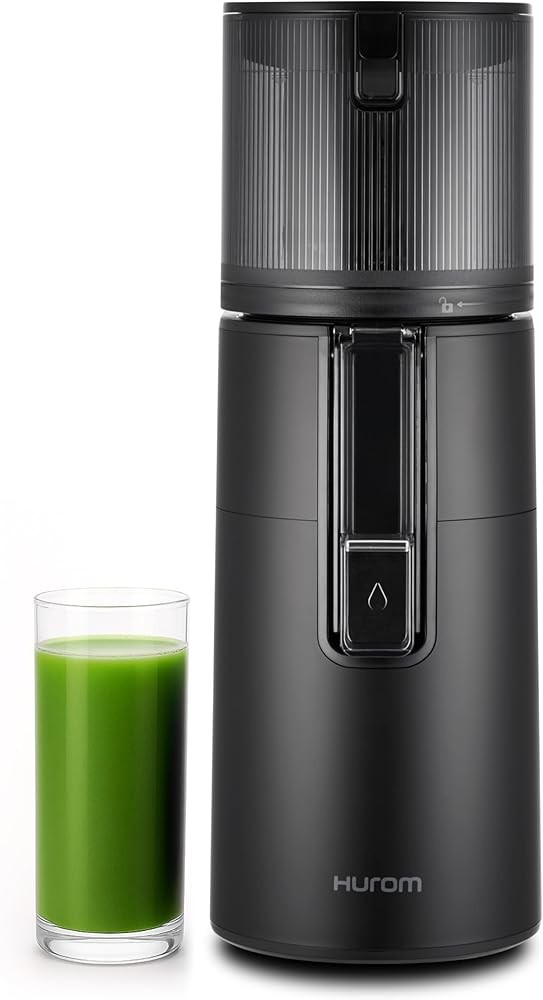
The Hurom H400 is the batch machine. Its wide-mouth hopper swallows whole celery stalks and cucumber sections without pre-cutting, which removes the most tedious part of juicing, and the easy-clean chamber set reduces the parts to wash. Households that juice for the family every few days will genuinely save time with the H400, and the juice stores well under the refrigeration rules above. At $749 it is the most expensive option here, and the honest note is that its earlier appearance in this article’s predecessor content as a “$299 budget alternative” was incorrect; the verified price is $749, which is why it is labeled for high-volume use rather than budget use.
The trade-off: the largest footprint and highest price in this review, and more machine than a single small dog needs. Buy it for genuine batch volume, not for the dog.
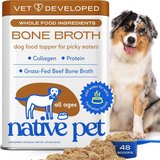
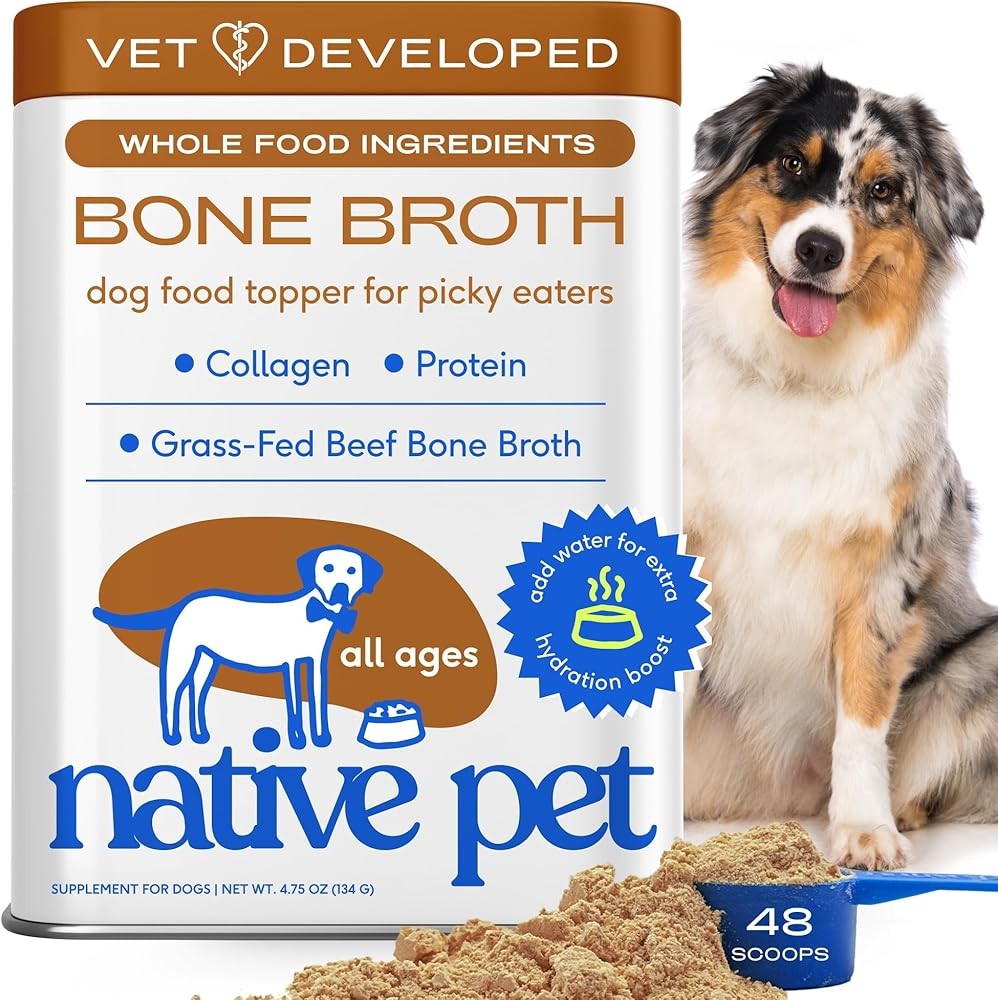
The budget pick for dog hydration is not a cheaper juicer but no juicer. Native Pet Bone Broth is a powdered real-beef bone broth that reconstitutes with warm water, provides the same hydration role as juice without any equipment, cleaning, or produce spoilage, and works as a palatability topper for picky eaters on restricted diets. At $24.99 for a container of 48 scoops, the per-serving cost is well under a dollar. It carries more calories than diluted cucumber juice, so it is not the choice for calorie-tight plans, but for owners who simply want to increase a dog’s fluid intake, it is the honest value answer.
The trade-off: bone broth has a few more calories per serving than diluted vegetable juice and is an animal-protein product rather than a vegetable one, so it suits hydration goals more than vegetable-nutrition goals. Dogs with beef sensitivities need a different option.
What Should You Look for in Any Slow Juicer?
If you buy a juicer, the buying criteria are the same as in our cold-press vs centrifugal data review: a slow masticating auger rather than a high-speed blade, a cleaning design you will tolerate daily (strainer-free or genuinely disassemblable), a self-feeding hopper if you batch, BPA-free food-contact parts, and a price that reflects how often you will actually run the machine. Ignore nutrient-retention percentages in the marketing, because the published comparisons do not support them at the advertised magnitudes.
Do You Even Need a Juicer?
For dog hydration specifically, often not. A blender with a fine mesh strainer produces a similar cucumber-celery liquid for a fraction of the price, and the whole vegetables, cut into safe pieces, are better still. A juicer earns its place in the kitchen when you already juice for your own household and the dog’s teaspoon serving is a rounding error on the batch, or when you specifically want pulp-free liquid that a straining step would also provide. Buying a $649 juicer mainly to produce two teaspoons of dog juice a few times a week is the kind of purchase this guide should talk you out of, not into.
What you need to know: the H70 at $649 is the best-balanced juicer for regular small batches, the H400 at $749 earns its price only for high-volume sessions, and the Native Pet Bone Broth at $24.99 is the honest budget route to better dog hydration with no equipment at all.
Which Other Vegetables Are Safe for Dog Hydration?
Cucumber and celery are not the only options, and variety can help a picky drinker. The same rules apply to every option: safe vegetable only, small serving, dilution, and veterinary approval for dogs with conditions.
What Are the Best Alternatives?
| Vegetable or Product | Water Content and Role | Notes |
|---|---|---|
| Watermelon (flesh only, seeds removed) | Very high water, naturally sweet | Remove rind and seeds; sugar content means small amounts only (see guide) |
| Pumpkin (plain, cooked, no spices) | Moderate water, high soluble fiber | A digestive staple rather than a thirst quencher; watch calories |
| Zucchini | High water, mild flavor | Similar profile to cucumber |
| Bone broth (plain, no onion or garlic) | High water plus minerals | The no-juicer option covered above; check for onion/garlic in commercial products |
| Plain water | The gold standard | Always the first answer; juice never replaces it |
The common thread is that every alternative is a low-calorie moisture source that supports total water intake, and none of them is a medicine. If a dog drinks plain water well, every item on this list is optional decoration; if it does not, the alternatives give you options to rotate for palatability.
The main point: watermelon flesh, zucchini, plain pumpkin, and clean bone broth join cucumber and celery as safe low-calorie hydration options with the same serving rules, and plain water remains the standard every one of them is measured against.
When Should You Give Cucumber-Celery Juice to Your Dog?
Timing matters less than the marketing suggests, but a few windows genuinely make sense.
What Are the Useful Timing Windows?
A small chilled serving before outdoor activity on a hot day encourages fluid intake ahead of heat exposure, which supports the evaporative cooling capacity that panting depends on. After exercise or a long walk, the same serving replaces some of the moisture lost through panting. Alongside a meal, diluted juice adds volume and satisfaction to a restricted diet without meaningful calories. None of these windows requires precise timing; they are simply moments when a reluctant drinker is most likely to accept fluid.
How Do You Introduce It Gradually?
Introduce juice the way you would introduce any new food: start at a quarter of the target serving for 3-4 days, watch stool quality and energy, then step up to half, then the full serving. Loose stool means the amount was too large or the vegetable does not agree with the dog, in which case reduce or stop. Facial swelling, hives, or itching after juice is an allergic response and means stop and call your veterinarian. The gradual protocol protects against the most common problem, which is simply giving too much too fast.
What Time of Day Works Best?
There is no evidence for a magic hour. The practical schedule is the one that fits the household: a chilled serving in the late afternoon before the hottest part of a summer day, a post-walk serving when the dog is already thirsty, or a small addition to the evening meal for satiety support. Consistency matters only in the sense that sporadic, unpredictable servings make it harder to notice a reaction, so pick a pattern, stick to it for a few weeks, and change it only if the dog’s response demands it.
The research verdict: the sensible windows are before heat exposure, after exercise, and alongside meals, with gradual introduction at quarter-dose steps and immediate discontinuation plus a veterinary call for any allergic signs.
What Is the Difference Between Juice and Whole Food for Dogs?
The fiber question is the one most often skipped in juicing content, and it matters for a weight-management dog. Juicing removes the pulp, and the pulp is the fiber. Whole cucumber slices and celery pieces retain that fiber, which slows digestion, adds bulk and satiety, and feeds the gut microbiome, all reasons why the whole vegetable is the better default for most dogs. Juice’s advantage is narrower: it delivers water and flavor to a dog that will not eat vegetables or drink enough plain water, and it is easier for dogs with dental problems or chewing difficulties. For a dog that accepts whole vegetables, the honest ranking is plain water first, whole vegetables second, and juice a distant third, used only for palatability or variety.
When Should You Skip Juice and Talk to Your Veterinarian First?
The list of dogs who should skip cucumber-celery juice is longer than the marketing suggests, and it mirrors the cautions in our safe juicing guide for dogs.
Which Conditions Require Veterinary Approval?
Kidney disease tops the list. Dogs with chronic kidney disease need careful management of potassium, sodium, and fluid volume, and cucumber-celery juice concentrates all three from whatever goes into the machine, so this is a veterinary decision, not a recipe decision. The potassium concern is the sharper one: compromised kidneys excrete potassium less efficiently, and the juice of high-water vegetables still carries potassium from the produce. Sodium-sensitive conditions, including heart disease and hypertension, make celery’s natural sodium a question rather than a given. Diabetic dogs should only get vegetable juice with explicit veterinary approval and glucose monitoring, since even low-sugar juice is a dietary variable in an insulin-calibrated plan. Pancreatitis and other digestive conditions warrant the same caution, and any dog on medication, especially anticoagulants that interact with vitamin K, needs the specific vegetables disclosed to the prescribing veterinarian.
Why Is Kidney Disease the Hardest Case?
Chronic kidney disease illustrates the whole problem with dog juice content: the same fluid that helps one kidney patient (increased water intake supports filtration) can harm another (potassium and sodium loads exceed excretory capacity). The published canine hydration research shows water intake genuinely supports renal function, but those studies used water, not vegetable juice with its dissolved minerals (PubMed 8250404). A veterinarian managing a kidney patient needs to know the dog’s specific lab values, stage of disease, and medication plan before any juice, broth, or topper enters the rotation. If a vet approves juice for a kidney patient, it will be at a specific volume with specific vegetables, which is the correct way for this decision to be made.
What Are the Red-Flag Signs After Juice?
Vomiting, diarrhea, lethargy, facial swelling, hives, itching, coughing, or wheezing after juice means stop and call your veterinarian. Severe signs like collapse or difficulty breathing are emergencies. Puppies under six months have no nutritional need for juice and should wait. When in doubt about any food for a dog with a health condition, the answer is a call to the vet, not a longer article.
The research verdict: cucumber-celery juice is an occasional low-calorie hydration extra for healthy adult dogs at teaspoon scale, and it is a veterinary question, not a recipe, for dogs with kidney disease, heart disease, diabetes, pancreatitis, medication use, or any history of food allergy.
How Do You Know Whether Juice Is Helping Your Dog?
Because the honest benefits of cucumber-celery juice are modest, evaluation should be equally modest. Track what matters: total daily fluid intake, willingness to drink, stool quality, and, for overweight dogs, weekly weight and body condition under a veterinary weight-loss plan. If the juice gets a reluctant drinker taking in more fluid, it is doing its job. If the dog would drink plain water anyway, the juice is optional decoration. For weight and joint goals, the metric that matters is body weight trending down by roughly 1-2% per week under veterinary supervision, because the clinical trials tie joint improvement to sustained weight loss of 6% or more, not to juice consumption (Marshall et al., 2010). Evaluate the plan by the weight curve and the dog’s mobility, and regard the juice as the small supporting player it actually is.
What Should You Track Week to Week?
A simple weekly checklist beats vague observation. Record the dog’s weight on the same scale on the same day each week. Note whether the diluted juice was accepted or ignored, since an ignored serving is a signal to stop offering it rather than to keep trying. Watch stool quality for 48 hours after each new vegetable or serving increase. And once a month, reassess whether the juice is still earning its place: if the dog drinks water readily and the juice is being poured out, retire it until a genuine need, like a heat wave or a reluctant-drinker phase, reappears. Tracking this way turns a fuzzy wellness habit into a decision you can defend, which is the standard this guide applies to every claim it makes.
The Bottom Line
Bottom line: cucumber-celery juice is a genuinely low-calorie, high-water occasional extra for dogs, with cucumber at roughly 15 calories per 100 grams and celery about 14, which puts a teaspoon-to-tablespoon dog serving under about 5 calories. The conservative serving protocol is 1/2 teaspoon to 1.5 tablespoons of juice by dog weight, diluted 1:1 with water, two to three times per week.
The evidence shows: the real benefits are hydration volume and palatability, supported by studies showing dehydration reduces canine kidney filtration and moisture-rich foods increase total water intake, while the cooling, joint, and weight-loss claims reduce to one honest chain: weight loss of about 6-18% of body weight measurably improves lameness in arthritic dogs, and juice can only support adherence to the veterinary plan that produces that loss.
The practical takeaway: skip the juice entirely for dogs that drink water well or for dogs with kidney disease, heart disease, diabetes, or medication use until a veterinarian clears it. If you juice for your own household, share teaspoon servings diluted 1:1; if you only want better dog hydration, the Native Pet Bone Broth at $24.99 delivers it with no juicer, and the H70 at $649 and H400 at $749 are premium purchases justified by your own juicing habit, not by the dog.
Related Reading
- Is Juicing Safe for Dogs? Everything You Need to Know
- Cold Press Juicing for Dogs: Why the Hurom H70 Is Essential for Canine Health
- Cold-Press vs Centrifugal Juicing: Nutrient Retention Data
- Apple-Carrot Juice vs Dog Multivitamins
- Fresh Juice vs Commercial Dog Products
- Dog Juice Recipes for Immune and Digestive Health
- Watermelon Juice for Dog Hydration: Benefits, Safety, and How to Prepare It
- Celery Juice vs Electrolyte Supplements
- Pumpkin Juice for Dogs: Digestive Health
References
-
“Influence of hydration state on renal functions of dogs.” Am J Vet Res. 1993;54(10):1758-1764. PubMed: 8250404
-
Sires R, Yamka R, Wakshlag J. “Feeding fresh food and providing water ad libitum is clinically proven to exceed calculated daily water requirements and impact urine relative supersaturation in dogs.” Front Vet Sci. 2025;12:1675990. PubMed: 41280431
-
“The growing problem of obesity in dogs and cats.” J Nutr. 2006;136(7 Suppl):1940S-1946S. PubMed: 16772464
-
Impellizeri JA, Tetrick MA, Muir P. “Effect of weight reduction on clinical signs of lameness in dogs with hip osteoarthritis.” J Am Vet Med Assoc. 2000;216(7):1089-1091. PubMed: 10754668
-
Marshall WG, Hazewinkel HA, Mullen D, et al. “The effect of weight loss on lameness in obese dogs with osteoarthritis.” Vet Res Commun. 2010;34(3):241-253. PubMed: 20237844
-
“Phytochemical and therapeutic potential of cucumber.” Fitoterapia. 2013;84:227-236. PubMed: 23098877
-
“A Review of the Antioxidant Activity of Celery (Apium graveolens L).” J Evid Based Complementary Altern Med. 2017;22(4):1027-1035. PubMed: 28701046
-
“Flavonoids as Potential Anti-Inflammatory Molecules: A Review.” Molecules. 2022;27(9):2901. PubMed: 35566252
-
“Panting in dogs: unidirectional air flow over evaporative surfaces.” Science. 1970;169(3950):1102-1104. PubMed: 5449323
-
Khaksar G, Assatarakul K, Sirikantaramas S. “Effect of cold-pressed and normal centrifugal juicing on quality attributes of fresh juices.” Heliyon. 2019;5(6):e01917. PubMed: 31286079
-
Kim MJ, et al. “Antioxidant activities of fresh grape juices prepared using various household processing methods.” Food Sci Biotechnol. 2017;26(4):861-869. PubMed: 30263614
Recommended Products