Apple Carrot Juice vs Dog Multivitamins: Which Is Better?
Summarized from peer-reviewed research indexed in PubMed. See citations below.
Apple-carrot juice and dog multivitamins occupy different corners of canine nutrition, and the comparison between them is usually framed by marketing rather than evidence. The honest starting point is this: most healthy dogs eating a quality commercial food that meets AAFCO nutrient profiles do not need a multivitamin at all, because the food is already formulated to be complete. The real question is not which supplement delivers more vitamins, but whether your dog needs supplemental vitamins in the first place, and whether a small amount of whole-food juice earns a place in an otherwise complete diet. This guide compares the two approaches on the evidence: what whole foods actually add beyond a complete kibble, how carotenoids and other nutrients are absorbed, what is really inside typical dog multivitamins, and how to use juice safely if you choose to.
Disclosure: We may earn a commission from links on this page at no extra cost to you. Affiliate relationships never influence our ratings. Full policy →
What Is This Comparison Really About?
The framing “apple-carrot juice vs dog multivitamins” pits a whole food against a supplement, which invites a false choice. Juice is not a multivitamin, and no multivitamin is a juice. The comparison only makes sense if you first answer two separate questions: does my dog need supplemental vitamins, and is there a role for fresh whole-food produce in my dog’s diet?
On the first question, the nutrition science is clear. Dogs eating complete commercial diets that meet AAFCO nutrient profiles receive all the vitamins and minerals they need from food. The National Research Council’s Nutrient Requirements of Dogs and Cats, the reference document behind AAFCO profiles, establishes those requirements so that pet food manufacturers can meet them without supplementation. When veterinarians see nutrient problems in dogs on complete food, the cause is usually disease, malabsorption, or an unbalanced homemade diet, not a gap that a random multivitamin fixes.
On the second question, whole foods add things that even a complete kibble does not provide in meaningful amounts: phytonutrients such as carotenoids and polyphenols, which are not classified as essential but have antioxidant and anti-inflammatory effects in the body. The nutrition literature has long argued that food is more than the sum of its isolated nutrients, because the matrix of a whole food carries cofactors and compounds that work together (PubMed) (PubMed). That argument applies to humans, and much of it carries over to dogs, with the caveat that canine research on phytonutrients is far thinner than the human literature.
So the honest comparison is not “juice beats vitamins.” It is: many dogs do not need the vitamins, and a little fresh produce is a reasonable whole-food addition for dogs whose diets lack it, provided it is served safely and in moderation. That is the frame this guide uses.
Do Healthy Dogs Need Multivitamins at All?
The short answer is no for most dogs, and the reasons are worth spelling out because the pet supplement market is built on the opposite impression.
Complete food is the baseline. AAFCO, the Association of American Feed Control Officials, sets nutrient profiles for dog foods, and any food labeled “complete and balanced” for a life stage is formulated to meet those requirements. That means the vitamin A, B vitamins, vitamin D, vitamin E, and minerals your dog needs are already in the kibble or canned food, added by the manufacturer to a specification. Adding a multivitamin on top of a complete diet is redundant for those nutrients.
Supplementation has real costs. Fat-soluble vitamins accumulate in the body, and excess vitamin A and vitamin D are the classic examples of harm from over-supplementation in dogs. Giving a dog that already eats complete food an additional high-dose vitamin product can push intake past the safe upper range, especially for small dogs eating large-breed-labeled products or multiple supplements at once. The most common nutritional problem veterinarians see from well-meaning owners is not deficiency; it is excess.
When supplements do make sense. A multivitamin or targeted supplement is appropriate when a veterinarian identifies a reason: dogs on homemade diets, which are frequently unbalanced without careful formulation; dogs with conditions that increase nutrient needs or impair absorption; dogs on certain medications that deplete nutrients; and dogs with diagnosed deficiencies confirmed by testing. In those cases the supplement should be chosen for the specific gap, at a dose your vet approves, not picked off a shelf because the label has a friendly dog on it.
What the supplement market does not tell you. A survey of dog and cat owners found that supplements are used widely and often without veterinary input, and that many owners cannot identify what their pet’s supplement is for. The takeaway is not that all supplements are useless; it is that the decision to supplement should start with a reason, and the reason should come from the dog’s actual situation rather than from marketing.
What Does Fresh Apple-Carrot Juice Actually Provide?
If you juice apples and carrots, you extract the water-soluble contents of the produce: sugars, vitamin C, some B vitamins, minerals, and a concentrated dose of carotenoids and polyphenols. You also leave behind most of the fiber, which is the main nutritional difference between juice and eating the whole fruit or vegetable.
Carotenoids. Carrots are among the richest sources of beta-carotene, the orange pigment that the body can convert to vitamin A. Apples add smaller amounts of carotenoids plus polyphenols including quercetin and chlorogenic acid. Research in dogs shows that dietary beta-carotene is taken up into blood plasma and white blood cells, meaning it is absorbed and reaches tissues rather than passing through unused (PubMed). A companion study found that dietary beta-carotene stimulated aspects of immune function in dogs (PubMed).
Vitamin C and polyphenols. Apples provide vitamin C and a family of polyphenols with antioxidant activity. Vitamin C is heat- and oxygen-sensitive, which is the one area where juicing method genuinely matters: slow, low-temperature extraction preserves more of it than high-speed centrifugal juicing that heats and aerates the juice.
Sugar and the missing fiber. A medium apple has about 19 grams of sugar and a large carrot about 6 grams, and juicing concentrates those sugars into a liquid with none of the fiber that normally slows their absorption. For a dog, a few tablespoons of juice is a trivial amount of sugar, but a bowl of juice is not. The fiber left behind in the pulp is genuinely good for dogs, which is one reason many veterinarians who support whole-food additions prefer lightly cooked or grated vegetables over juice.
The fair summary: fresh apple-carrot juice is a real source of carotenoids, polyphenols, and vitamin C, with direct canine evidence that carotenoids from food reach the bloodstream. It is not a vitamin supplement, and it should not be treated as one.
How Well Are Carotenoids Absorbed From Juice?
This is where the marketing gets creative, and the science is more interesting than the slogans. Carotenoid absorption depends on several factors that have nothing to do with “fresh versus synthetic.”
Processing matters, and it helps. A classic study by Rock et al. in the Journal of Nutrition compared beta-carotene absorption from raw carrots, processed carrots, and spinach in women, and found that absorption was lower from raw carrots than from the processed forms (PubMed). Cooking and pureeing break down plant cell walls and release carotenoids from the food matrix, which is why processed carrot products deliver more beta-carotene than chewing a raw carrot. Juicing accomplishes some of that same disruption, which is a genuine point in juice’s favor, but it also means “fresh” is not automatically the best-absorbed form.
Fat is required. Carotenoids are fat-soluble, and absorption depends on dietary fat traveling through the digestive tract with them. A randomized trial showed that eating eggs, a source of fat, markedly increased carotenoid absorption from raw vegetables consumed in the same meal (PubMed). A plain apple-carrot juice with no fat source delivers carotenoids that are largely unabsorbed. This is a critical and rarely mentioned detail: if the goal is carotenoid absorption, the juice should be served with food that contains fat, which is exactly how most dogs eat it, as a topper on their meal.
The body converts provitamin A at its own rate. Beta-carotene is a provitamin: the body converts part of it to vitamin A as needed. Reviews of carotenoid bioavailability and bioconversion describe this as a regulated, saturable process rather than a fixed percentage (PubMed) (PubMed). The idea that any form of beta-carotene is absorbed at a fixed “65-85 percent” rate, a figure repeated throughout supplement marketing for both humans and pets, does not come from the research literature. Absorption varies with the food matrix, the meal composition, the person or animal, and the dose.
The practical conclusions: juice can improve carotenoid release from plant cells, but it needs fat in the meal to deliver them, and the percentage claims used to sell the juice-versus-supplement comparison are invented. None of this makes juice useless; it makes it a food, subject to the same rules as other foods.
Bottom line: Carotenoid absorption is driven by food processing and meal fat, not by freshness or a fixed percentage: a 1998 Journal of Nutrition study found processed carrots delivered more beta-carotene than raw, a 2015 clinical trial showed eggs raised carotenoid uptake from raw vegetables, and canine studies confirm dogs absorb dietary beta-carotene into plasma, so serve juice over a fatty meal and regard any fixed absorption percentage as marketing.
What Does the Research Say About Dogs and Carotenoids?
The human literature on carotenoids is large; the canine literature is small but genuinely informative, because dogs are not miniature humans when it comes to carotenoid metabolism. Two studies from the same research group at Washington State University, both published in the Journal of Nutrition in 2000, established the basics.
Dogs absorb beta-carotene. In the first study, beagle dogs received single oral doses of 0 to 200 mg of beta-carotene or daily doses over seven days. Plasma beta-carotene rose in a dose-dependent way, peaking about six hours after a single dose with a short half-life of three to four hours, and with daily feeding the concentrations after the last dose were two to four times higher than after the first dose, showing that consistent intake builds plasma levels. The researchers also detected beta-carotene inside lymphocytes and neutrophils, including in the mitochondria and nuclei of those cells, which demonstrated that dogs genuinely absorb the compound rather than passing it through (PubMed).
Beta-carotene affects immune markers in dogs. In the companion study, dogs were fed 0, 2, 20, or 50 mg of beta-carotene daily for eight weeks. Dogs receiving 20 or 50 mg showed higher numbers of CD4+ helper T cells, a higher CD4 to CD8 ratio, higher plasma IgG, and a stronger delayed-type hypersensitivity response, a measure of cell-mediated immunity, compared with unsupplemented dogs (PubMed).
Two honest caveats belong next to those results. The doses in these studies, 2 to 200 mg of purified beta-carotene daily, are far above what any reasonable serving of carrot juice delivers; a few tablespoons of juice provide a fraction of a milligram to a few milligrams. And immune changes in healthy dogs are not the same as guarding against illness. What the studies establish is that dietary carotenoids are bioavailable in dogs and have measurable biological effects, which is the scientific foundation for treating carrots as a genuinely nutritious addition rather than a gimmick. They do not show that juice stops disease or replaces vitamins.
Cost and Practicality: Juice vs Multivitamins
Money is where the marketing comparison gets loudest, and where the honest math cuts in both directions.
The multivitamin side. A typical dog multivitamin costs $10 to $30 per bottle and provides roughly 60 to 120 doses, which works out to about $0.10 to $0.30 per day, or $40 to $110 per year. The cost is trivial. The problem was never price; it is that the product is redundant for a dog on complete food, so even cheap redundancy is wasted money and, for fat-soluble vitamins, a small excess risk.
The juice side. A slow juicer costs $150 to $750 depending on the model, and the H400 featured in this guide is $749. Produce for a small batch of apple-carrot juice costs about $1 to $2, and the time cost is real: washing, feeding, cleaning, roughly ten minutes per batch even with a self-feeding machine. If juice were only for the dog, this would be an absurd expense for a few tablespoons. The only sensible way to frame it is as a household appliance: the juicer serves the people in the home, and the dog occasionally gets a small share of the pulp-free produce. Framed that way, the cost per serving collapses to pennies, because the juice would be made anyway.
The practical middle path. For the dog’s benefit alone, grated or lightly cooked carrots are the winner on every axis: cheaper than either option, more fiber, no equipment, no sugar concentration, and no cleanup. Carrots cost about $1 to $2 per pound, a pound lasts a small dog a month of daily toppings, and a box grater costs $5. If the household already owns or wants a slow juicer, sharing a small amount is fine. If the goal is specifically canine nutrition, buy carrots, not a machine.
The comparison table that matters, then, is not “juice versus vitamins” but “what is the cheapest way to add real vegetable nutrition to my dog’s bowl,” and the answer is a grater.
What About the “Living Enzymes” Claims?
A large part of raw-food and juice marketing rests on the claim that fresh juice contains “living enzymes” that assist digestion, and that heat destroys them. The physics is partly right and the biology mostly wrong.
It is true that enzymes are proteins that denature at high temperatures, and it is true that centrifugal juicers generate more heat and oxidation than slow masticating juicers, which can degrade heat-sensitive nutrients such as vitamin C. If your goal is the gentlest extraction, a slow juicer is the better tool, and the difference is measurable for some nutrients.
What does not follow is that the enzymes in juice survive to “help” your dog digest food. Enzymes in food are proteins, and proteins are digested in the stomach and small intestine. A plant enzyme swallowed in juice meets stomach acid and pepsin like any other protein and is largely broken down before it could act on your dog’s food. Dogs also produce their own digestive enzymes in abundance; a healthy dog does not need dietary enzymes to digest a meal, and there is no canine research showing that juice enzymes meaningfully assist digestion.
The honest version of the enzyme claim is about nutrient preservation, not digestion: gentler extraction methods preserve more of the heat- and oxygen-sensitive vitamins and polyphenols in the produce. That is a real, if modest, reason to prefer slow juicing. It is not a reason to believe juice carries living digestive aids into the gut.
What Is Actually Inside Typical Dog Multivitamins?
Dog multivitamins are not all the same, and the honest criticism of the category is about redundancy and formulation quality, not about synthetic ingredients being toxic.
The redundancy problem. A quality complete dog food already contains the vitamins in a multivitamin. Giving both means the dog gets two sources of nutrients it needs only one of, and for fat-soluble vitamins the excess is stored rather than excreted. This is the strongest argument against routine multivitamin use in dogs on complete diets, and it does not require impugning any specific brand.
Formulation quality varies. Some products use nutrient forms with poorer absorption, such as mineral oxides instead of chelated minerals, and synthetic dl-alpha-tocopherol rather than the natural d-alpha form of vitamin E, which has higher biological activity. These are legitimate quality differences worth checking on a label, and they matter most when a supplement is actually needed.
One ingredient deserves specific attention: menadione. Vitamin K3, menadione, is a synthetic form of vitamin K that has known toxicity concerns and is banned for human use in several countries. Some dog products, including long-standing brands such as Pet-Tabs Plus, have listed menadione in their ingredients. The safer forms are vitamin K1 (phylloquinone) from plants and K2 (menaquinone) from fermentation, which dogs on complete diets typically get adequate amounts of. If you are buying a supplement that contains any vitamin K, choosing one without menadione is a sensible precaution.
The bottom line on multivitamins: for a healthy dog on complete commercial food, a multivitamin is usually unnecessary and can contribute to excess intake of fat-soluble vitamins. If your veterinarian recommends one for a specific reason, choose a product with quality nutrient forms, no menadione, and dosing matched to your dog’s size, and give it as directed rather than doubling up.
Key takeaway: Complete AAFCO foods already provide 100% of canine vitamin requirements; the realistic risks of routine dog multivitamins are redundancy and excess fat-soluble vitamins (A and D accumulate in the body), while fresh juice is a whole-food topper with phytonutrients, not a substitute for the nutrients a complete diet already supplies.
What Are the Best Juicers for Fresh Dog-Safe Juice?
If you decide to make fresh juice for your household and your dog occasionally shares a small amount, a slow masticating juicer is the right tool. Here is the model we can recommend with confidence, with its price checked at the time of writing:
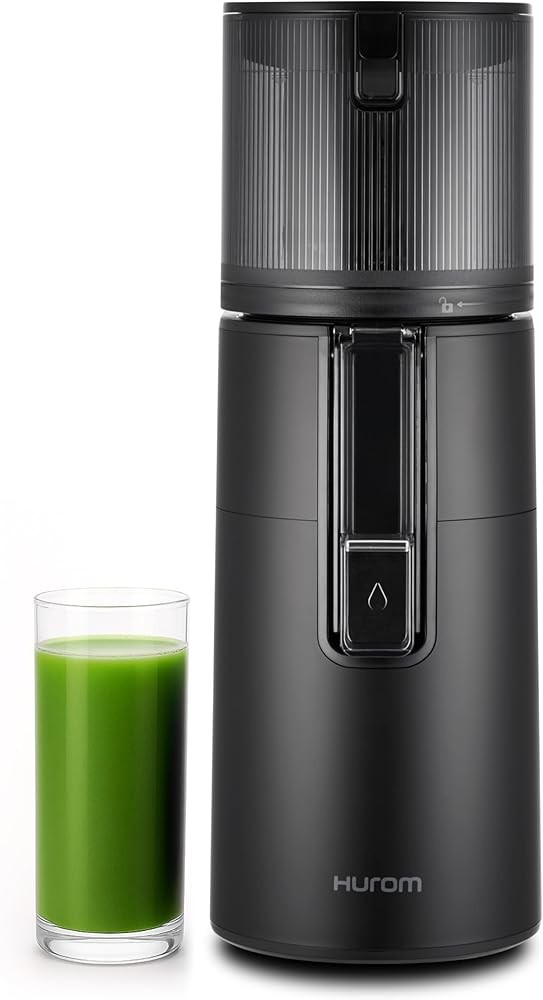
Hurom H400 is Hurom’s flagship slow juicer: a self-feeding auger system with a wide mouth that accepts whole apples and large carrot pieces, easy-clean chambers that disassemble without tools, and the slow-squeeze technology Hurom pioneered, which minimizes heat and oxidation during extraction. At $749 it is an investment, and it makes sense for households that juice several times a week, for dogs and people alike. The H400 listing on Amazon is currently the reference price point for this class; the manual-feed H70 model we would normally recommend as the budget option is unavailable at the time of writing, so check current availability if you want the lower-priced Hurom.
What to look for in any juicer for this purpose: a masticating (slow) rather than centrifugal mechanism, easy-to-clean parts, and a chute size that matches how much prep you want to do. If the juicer is only for occasional use, a simpler masticating model from a reputable brand at a lower price is a reasonable choice; the H400 earns its premium for households that juice often.
And the honest budget answer, repeated because it matters: your dog does not need a juicer at all. Grated or lightly cooked carrots cost pennies, keep the fiber, and deliver the same carotenoids, and they are easier on a dog’s digestion than concentrated juice. Buy the juicer because your household wants juice, not because the dog requires it.
How Should You Serve Apple-Carrot Juice to Your Dog?
If your veterinarian is on board and your dog has no medical reason to avoid fruit sugar, the serving rules keep it safe and sensible:
Small amounts. A reasonable serving is about 1 to 2 tablespoons per 10 pounds of body weight, a few times per week at most, poured over food. That means a 20-pound dog gets 2 to 4 tablespoons, and even a large dog does not need more than a quarter cup. The large serving sizes sometimes recommended online, several ounces for a big dog, are unnecessary sugar with no evidence behind them.
Serve with the meal, not instead of it. Juice as a topper on the dog’s regular food provides fat from the meal, which is what allows carotenoid absorption, and keeps the juice from displacing balanced nutrition. Juice between meals is just sugar water entering an empty stomach.
Preparation safety. Remove apple seeds and the core before juicing: apple seeds contain amygdalin, which can release cyanide when crushed in quantity. Scrub carrots well. Use plain produce with no added sugar, and never give your dog any juice containing grapes, raisins, xylitol-sweetened products, or onion and garlic family vegetables, all of which are toxic to dogs in various ways.
Know when to skip it. Dogs with diabetes, obesity, or pancreatitis should not get sugary juice. Dogs with kidney disease face different dietary rules entirely. Puppies get complete nutrition from their growth food and do not need juice. When in doubt, ask the vet who knows the dog.
What this means for you: Offer about 1-2 tablespoons of apple-carrot juice per 10 pounds of body weight, poured over the regular meal, a few times a week at most; skip it for diabetic or overweight dogs, and choose grated or lightly cooked carrots for everyday vegetable additions because they keep the fiber and the sugar dilution.
A note on whole produce. If the goal is adding vegetables to your dog’s diet, gently cooked or grated carrot is arguably better than juice, because it keeps the fiber, which supports digestion and satiety, and avoids the sugar concentration. Juice is a reasonable occasional extra and a way to use produce the household is already juicing; it is not the optimal way to feed vegetables to a dog.
When Do Supplements or a Vet Visit Make Sense?
The decision framework for supplements and juice both comes back to the same questions:
See your veterinarian if: your dog eats a homemade or raw diet (these need professional formulation to be complete, and raw diets carry documented pathogen risks (PubMed)); your dog has a medical condition such as diabetes, kidney disease, pancreatitis, or allergies; your dog is on any medication; or you are considering any supplement and cannot name the specific reason for it.
Supplements make sense when: a veterinarian has identified a deficiency or a condition that increases needs, such as joint disease, skin disease, or senior-related concerns with an evidence base behind the specific product; your dog is on a homemade diet formulated with veterinary guidance and needs the nutrients the recipe cannot cover; or testing shows a gap. In those cases, targeted supplements with quality forms, no menadione, and vet-approved dosing beat any general multivitamin.
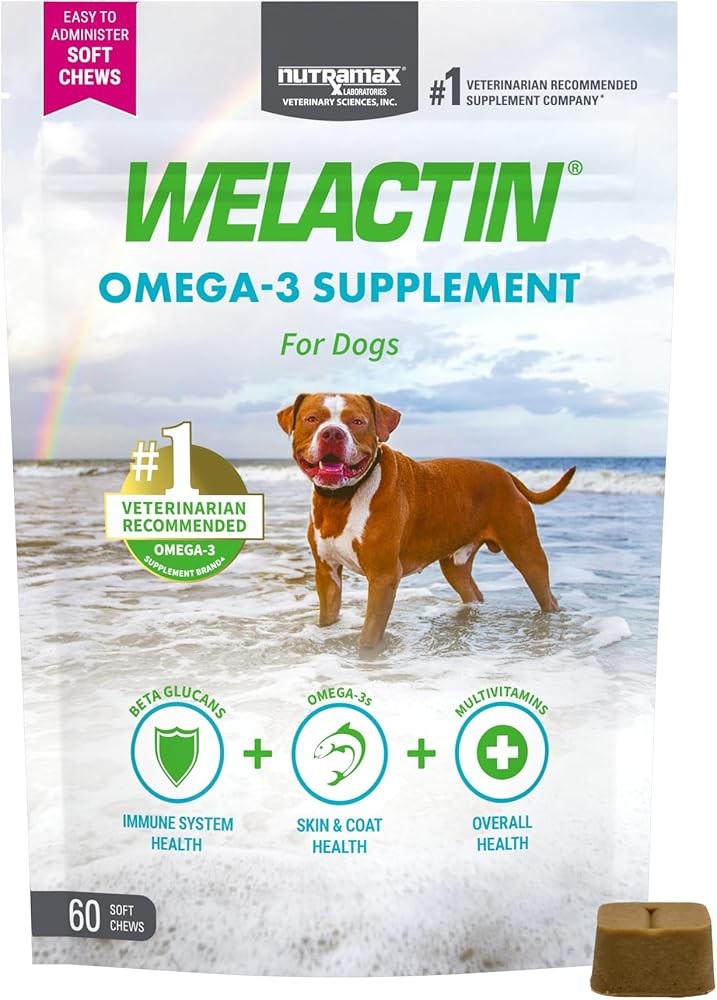
What evidence supports for senior and working dogs: specific conditions have specific evidence, such as fish oil for certain inflammatory conditions and joint supplements for arthritis, and those should be chosen by indication rather than by a one-size-fits-all vitamin. The supplements with the strongest canine evidence are the targeted ones, not the general multivitamins. Omega-3 fish oil for dogs is the clearest example: products like Nutramax Welactin soft chews ($24.97 per 60 chews) carry veterinary brand credibility and are the kind of item worth discussing with your vet when inflammation or skin and coat issues are present, rather than buying on impulse.
The takeaway across all of this: nutrition for dogs is a veterinary conversation, not a supplement aisle decision. Complete food handles the vitamins. Whole foods add variety and phytonutrients. Supplements fill specific, identified gaps. Juice, in small amounts, is a pleasant way to share something fresh with your dog, no more and no less.
Frequently Asked Questions
My dog eats kibble with “complete and balanced” on the bag. Does she still need a multivitamin?
No. The AAFCO statement means the food meets established nutrient profiles for the life stage, and vitamin needs are covered by the food. Adding a multivitamin is redundant and can push fat-soluble vitamins above desirable intake. If you are worried about a specific nutrient, the right step is a veterinary check and targeted testing, not a general supplement.
Is apple-carrot juice safe for dogs every day?
Occasional is better than daily. Juice concentrates fruit sugar and removes fiber, so daily servings add unnecessary calories and sugar to a dog’s diet. A few tablespoons over food two or three times a week is a reasonable ceiling for most healthy dogs, and dogs with diabetes or weight issues should not have it at all.
Aren’t synthetic vitamins worse than food vitamins?
“Synthetic” is not automatically bad. Many vitamins in supplements, including those in human medicine, are synthetic and work perfectly well. The fair criticisms of some dog multivitamins are specific: redundant dosing on top of complete food, less absorbable mineral forms, dl-alpha vitamin E, and menadione. The answer is to choose well when a supplement is needed, not to fear chemistry in general.
Do I need a $700 juicer to give my dog vegetables?
No. If you already juice for your household, sharing a small amount with your dog is fine. If you do not, grated or lightly cooked carrots are cheaper, keep the fiber, and are better for the dog. A slow juicer is a household appliance decision, not a dog nutrition requirement.
Can juice help my dog’s coat or energy?
Diet quality can influence coat condition and energy, and carotenoids and polyphenols have plausible antioxidant roles. But a healthy dog on complete food with a dull coat or low energy deserves a veterinary check, because those signs can indicate thyroid disease, allergies, dental pain, or other conditions. Nutrition changes are supporting moves, not diagnostic tools.
What is the single best thing I can do for my dog’s nutrition?
Feed a quality complete food appropriate for the dog’s life stage, keep the dog at a healthy weight, and get regular veterinary care. Weight management alone does more for canine health and longevity than any supplement or juice protocol. Everything else, vegetables, juice, supplements, is garnish on a solid foundation.
Can puppies have apple-carrot juice?
Puppies do not need it. Growth foods are formulated to meet the higher and more precise nutrient demands of developing dogs, and extra sugar and calories are not helpful during growth. If you want to introduce vegetables, a tiny amount of cooked, mashed carrot mixed into food after weaning is fine, but juice offers a puppy nothing that its growth diet does not already provide.
Are carrots safe for dogs every day?
Plain carrots, grated or lightly cooked, are safe daily in modest amounts as long as they stay a small fraction of the diet, roughly under 10 percent of daily calories, and the dog has no medical reason to limit carbohydrates. Carrots add fiber, moisture, and carotenoids. Juice is the version to ration, not the vegetable itself, because juicing removes the fiber and concentrates the sugar.
Is juicing worth it for a small dog?
Probably not on the dog’s account alone. A 15-pound dog needs about 1 to 2 tablespoons of juice per serving, and a single apple and carrot make far more juice than a small dog should get in a week. Unless your household juices for people and the dog gets a spoonful as a byproduct, the equipment, produce, and cleanup are hard to justify for a small dog’s nutritional benefit. Grated carrot over the morning meal achieves the same goal with none of the overhead.
How do I know if my dog’s multivitamin is actually needed?
Ask two questions. First, what does the dog eat? If it is a complete commercial food, the nutrient base is already covered. Second, what specific gap is the supplement filling? If you cannot name one, the supplement is probably unnecessary. A veterinarian can check for real problems with an exam and targeted tests, which beats guessing with a bottle, and if a supplement is warranted, the vet can name the product and dose.
Related Reading
- Carrot Juice for Dogs: Benefits, Dosage, and Safety Guide
- Juicing for Dogs After Surgery: Supporting Recovery
- 10 Dog-Safe Juice Recipes Your Pet Will Love
- Watermelon Juice for Dog Hydration: Benefits, Safety, and How to Prepare It
- Cold Press Juicing for Dogs: A Practical Guide
- Juicing for Senior Dogs: What Changes With Age
📱 Join the discussion: Facebook | X | YouTube | Pinterest
References and Clinical Studies
- Jacobs DR, Tapsell LC. Food, Not Nutrients, Is the Fundamental Unit in Nutrition. Nutrition Reviews, 2007. PubMed
- Liu RH. Health Benefits of Fruit and Vegetables Are From Additive and Synergistic Combinations of Phytochemicals. American Journal of Clinical Nutrition, 2003. PubMed
- Rock CL, Lovalvo JL, Emenhiser C, et al. Bioavailability of Beta-Carotene Is Lower in Raw Than in Processed Carrots and Spinach in Women. Journal of Nutrition, 1998. PubMed
- Yeum KJ, Russell RM. Carotenoid Bioavailability and Bioconversion. Annual Review of Nutrition, 2002. PubMed
- Castenmiller JJ, West CE. Bioavailability and Bioconversion of Carotenoids. Annual Review of Nutrition, 1998. PubMed
- Kim JE, Gordon SL, Ferruzzi MG, Campbell WW. Effects of Egg Consumption on Carotenoid Absorption From Co-Consumed, Raw Vegetables. American Journal of Clinical Nutrition, 2015. PubMed
- Chew BP, Park JS, Wong TS, et al. Dietary Beta-Carotene Is Taken Up by Blood Plasma and Leukocytes in Dogs. Journal of Nutrition, 2000. PubMed
- Kim HW, Chew BP, Wong TS, et al. Dietary Beta-Carotene Stimulates Cell-Mediated and Humoral Immune Response in Dogs. Journal of Nutrition, 2000. PubMed
- Buff PR, Carter RA, Bauer JE, et al. Natural Pet Food: A Review of Natural Diets and Their Impact on Canine and Feline Physiology. Journal of Animal Science, 2014. PubMed
- Freeman LM, Chandler ML, Hamper BA, et al. Current Knowledge About the Risks and Benefits of Raw Meat-Based Diets for Dogs and Cats. Journal of the American Veterinary Medical Association, 2013. PubMed
Recommended Products