Cold Press vs Centrifugal: The Nutrient Retention Showdown
Summarized from peer-reviewed research indexed in PubMed. See citations below.
The marketing war between cold press and centrifugal juicers is fought with dramatic numbers: 90% vitamin C preservation on one side, enzyme destruction on the other, and lab-test claims that rarely come with a citation. The published research is more interesting and more honest. A 2019 study that directly compared cold-pressed and centrifugal juice found no significant difference in vitamin C, total phenolics, or total carotenoids measured right after extraction, while refrigerated cold-press juice held its quality through day 5 of storage (Khaksar et al., 2019). A separate study found higher polyphenol, anthocyanin, and vitamin C content in grape juice from a low-speed masticating juicer than from a high-speed centrifugal model (Kim et al., 2017). Both findings matter, because they separate the real advantages of slow juicing (gentler extraction, better storage stability) from the inflated ones. This guide compares the two methods on the evidence, covers yield, cleaning, speed, and cost with real prices, and ends with concrete juicer recommendations.
Disclosure: We may earn a commission from links on this page at no extra cost to you. Affiliate relationships never influence our ratings. Full policy →
| Product | Key Specs | Best For | Price |
|---|---|---|---|
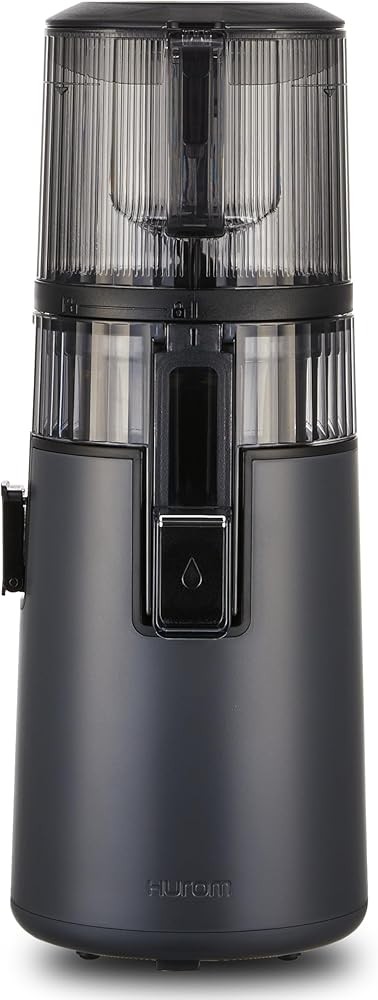
| Hurom H70 Cold Press Juicer | Strainer-free, compact, self-feeding hopper, few parts | Daily single-servings and small kitchens | $649 |
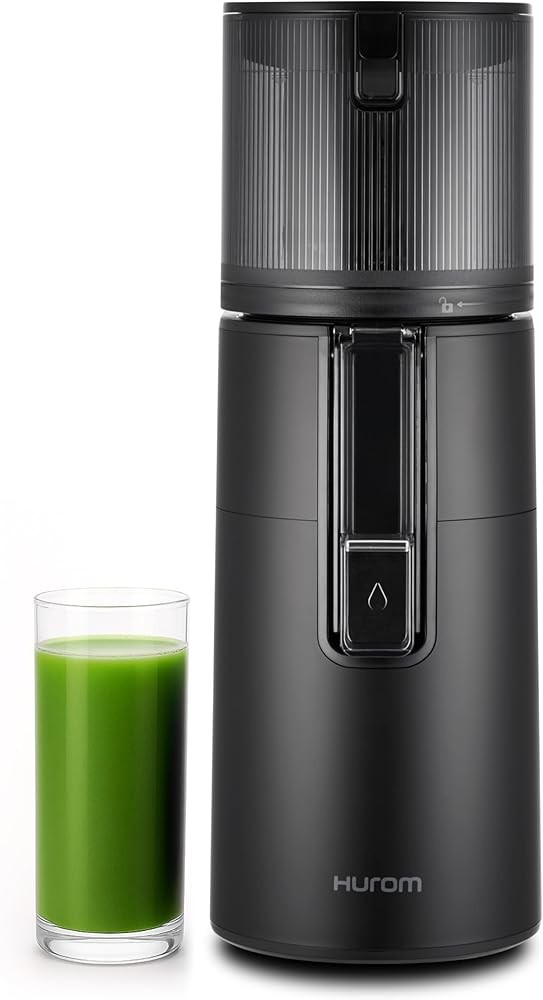
| Hurom H320 Cold Press Juicer | Family-size hopper, pulp-control lever, fine and coarse strainers | Budget buyers and pulp-control fans | $599 |
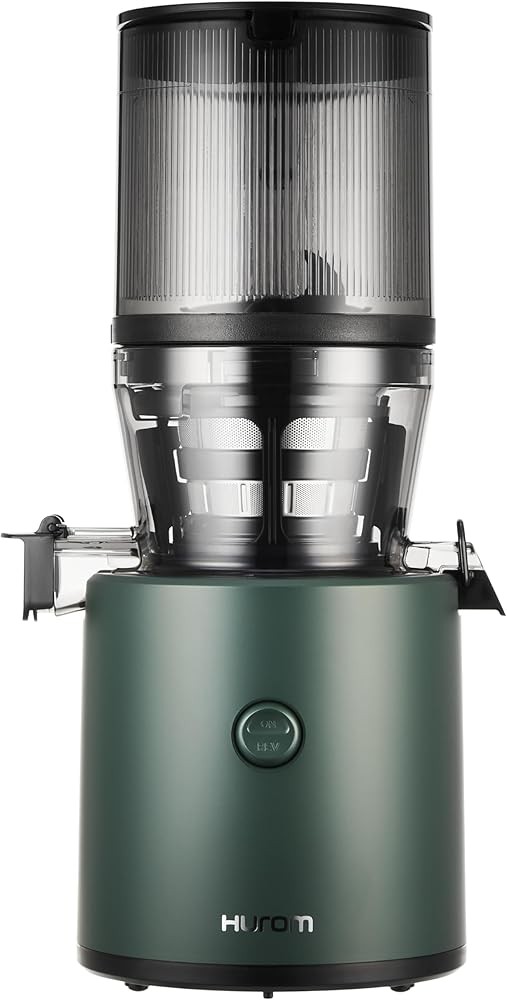
| Hurom H400 Cold Press Juicer | Wide-mouth hopper fits whole produce, easy-clean two-part auger chamber | High-volume batch juicing | $749 |
What Is the Real Difference Between Cold Press and Centrifugal Juicers?
The two technologies could hardly be more different mechanically. A cold press (masticating) juicer drives a single auger at a slow speed, crushing and pressing produce against a screen, the way a press has always worked. A centrifugal juicer spins a bladed basket at high speed, shredding produce and flinging juice outward through a mesh by centrifugal force. Industry reviews of juice extraction describe both approaches: presses are the traditional method, while centrifugation became a commercial alternative where throughput matters (Beveridge, 1997).
What Do the Speeds Actually Look Like?
Slow masticating juicers turn their augers at a few dozen revolutions per minute. Hurom’s published specification for the H330, for example, is 50 rpm, and the H70 and H400 run in the same slow-auger class. Centrifugal juicers spin thousands of times per minute, which is one to two orders of magnitude faster. That speed difference drives everything else: friction heat, air incorporation, and how violently plant cells are torn open.
Why Does Speed Change Juice Quality?
Three mechanisms connect speed to quality. First, heat: every mechanical action converts some energy to heat, and high-speed shredding produces more of it. Vitamin C, many B vitamins, and plant enzymes are heat-sensitive, so hotter processing conditions degrade them faster. Second, air: centrifugal juicers whip air into the juice as foam, and oxygen is the main enemy of fresh juice, driving the oxidation of vitamin C, polyphenols, and pigments. Third, cell disruption: violent shredding mixes plant enzymes with their substrates immediately, kicking off browning and degradation reactions during extraction itself. The apple is the classic example, because cut apple tissue browns rapidly when its polyphenol oxidase meets oxygen, which is why commercial processors take care to exclude oxygen during juice extraction (Beveridge, 1997).
These mechanisms are real and well established in food science. What is less well established is the size of the effect in home juicers, which is where the published comparisons come in. Broader food-processing research points the same direction: a 2026 comparison of thermal and non-thermal processing of melon juice found the heat-based methods caused browning, reduced stability, and off-flavors, while high-pressure processing retained up to 90% of bioactive compounds and better antioxidant capacity (Shangguan et al., 2026).
The key takeaway: slow masticating juicers press instead of shred, run cooler, and incorporate less air, and those differences matter for heat- and oxygen-sensitive nutrients. The remaining question is how much they matter in practice, which the direct comparison studies answer next.
What Does the Research Actually Show About Nutrient Retention?
The cleanest evidence comes from a 2019 study in Heliyon that extracted fresh fruit juice with a cold-press juicer and a normal centrifugal juicer and compared the results (Khaksar et al., 2019). Measured immediately after extraction, the two methods produced juice with no statistically significant differences in ascorbic acid, total phenolic content, total carotenoids, or antioxidant capacity measured by FRAP and DPPH assays. The authors were explicit that their results question the marketing claim of cold-press superiority. If you drink juice within the hour, the machine matters far less than the produce.
What Does the Grape Juice Study Show?
The strongest counterpoint is a 2017 study in Food Science and Biotechnology that made grape juice four ways: low-speed masticating juicer, high-speed centrifugal juicer, blender, and plain grape flesh (Kim et al., 2017). Total polyphenols, total flavonoids, monomeric anthocyanins, and vitamin C were all highest in the low-speed masticating juice, in the order low-speed masticating greater than blender greater than high-speed centrifugal greater than grape flesh. DPPH radical scavenging and SOD-like activity were also significantly higher in the low-speed juice. One transparency note matters here: the researchers who ran that comparison were affiliated with Hurom’s R&D center, so read the magnitude of the gaps with some skepticism even though the direction is consistent with gentler extraction preserving more of these compounds.
Why the Two Studies Can Both Be Right
The most sensible reading of the two studies together is that extraction differences are modest and ingredient-dependent. In oranges, where juice is easy to release, cold press and centrifugal came out statistically even. In grapes, where pigments and polyphenols concentrate in the skins, gentler pressing preserved more of them. Neither study supports the 90% versus 60% retention claims that dominate juicer advertising. The honest framing: a slow juicer is a mild quality upgrade at the moment of extraction, not a nutritional miracle.
Extraction Method Changes the Phytonutrient Mix
Beyond total nutrient content, how juice is extracted changes which compounds end up in the glass. A 2013 USDA study of orange juice compared commercial food-service juicer extraction, hand-squeezing, and pasteurized processed juice (Bai et al., 2013). Flavonoid glycosides, which concentrate in the inner peel albedo, were roughly twice as high in the processed juice that included more peel tissue, while polymethoxylated flavones associated with peel oil were highest in the commercially extracted fresh juice. Similar findings show up across fruit products: processing technology shifts phenolic compounds and polysaccharides in strawberry nectar (PubMed 41581484). The practical point: your juice’s phytonutrient profile depends on which parts of the produce end up in the extractor and how the juice is processed, not just on how fast the machine spins.
The evidence shows: in the direct published comparison, fresh cold-press and centrifugal juices were nutritionally similar (Khaksar 2019), while low-speed masticating extraction beat high-speed centrifugal for polyphenols, anthocyanins, and vitamin C in grapes (Kim 2017, with a Hurom-affiliated research group). Real differences exist, but they are modest and vary by produce, and no credible study supports the dramatic retention percentages in juicer marketing.
How Long Does Fresh Juice Stay Good, and What Does Storage Do to It?
If extraction method is a modest factor, storage is a big one, and this is where cold press earns part of its reputation. In the 2019 comparison study, cold-pressed juice stored under simulated home-refrigerated conditions kept its antioxidant capacity, bioactive compound content, and physicochemical properties unchanged through day 5. At day 6, most parameters began declining, and they reached their lowest values at day 7. Juice held at room temperature around 28°C lost quality within 48 hours, and principal component analysis tied the late-stage decline mainly to ascorbic acid and FRAP antioxidant capacity, meaning vitamin C oxidation is the leading edge of spoilage (Khaksar et al., 2019).
What Are the Practical Storage Rules?
Those findings translate into simple home rules. Refrigerate juice immediately in glass containers filled to the top to minimize air, seal them, and keep them at 36-40°F. Drink refrigerated juice within 24-72 hours as a conservative home window, because the research shows quality holding through day 5 but sliding after that, and pets and children make the conservative end of that range the right choice. Never leave juice at room temperature for more than about 2 hours. Stir or shake before drinking, because pulp settles and carries much of the fiber and phytonutrients. Freezing extends storage substantially and is a legitimate meal-prep option, but freezing cannot restore nutrients already lost during extraction, so freeze fresh juice promptly.
The temperature dependence of vitamin C loss is well documented: accelerated-storage models for tropical juices show degradation accelerating sharply as storage temperature rises from 35°C to 55°C (Fernandez-Rosillo et al., 2026), and processing choices modulate stability during cold storage too, with continuous-flow high-pressure homogenization improving anthocyanin and ascorbic acid stability in blueberry juice (PubMed 38739462). Refrigerated processed juice blends have held their carotenoid and phenolic content across weeks of cold storage in controlled studies (Lepaus et al., 2023), which is exactly why prompt chilling is the highest-value habit in juice handling.
How Do You Freeze Juice Without Destroying It?
Freezing works well for batch prep if you do it right. Pour fresh juice into ice cube trays or small jars, leaving headroom for expansion, seal them, and freeze promptly; frozen juice keeps for weeks and thaws in the refrigerator overnight or in a bowl of cool water. The thawed juice will separate, so shake it before drinking, and never refreeze thawed juice. Freezing preserves the nutrients that survived extraction, which is precisely why the quality of the fresh juice matters more than the freezing method: a slow-pressed juice frozen at its peak beats an oxidized centrifugal juice frozen after an hour on the counter.
What Do Visible Signs Tell You?
You can see oxidation happen. Green juice turns brown as chlorophyll degrades, red and purple juice fades as anthocyanins break down, and apple juice browns as polyphenol oxidase does its work, the same reaction that browns a cut apple. These visible changes track real nutrient loss, so regard browning and fading as signals that the juice is past its best. Separation, off-odors, and fermentation bubbles mean the juice is spoiled, not just degraded, and spoiled juice should go down the sink.
Bottom line: refrigerated cold-press juice kept its quality through day 5 in the 2019 study, while room-temperature storage degraded it within 48 hours, so store juice sealed, cold, and dark, and finish it within 72 hours for the conservative home version of that science.
Which Produce Types Show the Biggest Difference Between Juicers?
The gap between juicing methods is not uniform across produce. Knowing which ingredients amplify the difference helps you decide whether a slow juicer is worth the price for the way you actually juice.
Which Produce Favors Cold Press the Most?
Fibrous, low-moisture produce is where cold press dominates. Leafy greens like kale and spinach, and especially wheatgrass, press well under an auger but shred poorly in a centrifugal basket, which tends to produce low yields, wet pulp, and heavily oxidized green juice. If leafy greens are your main juicing ingredient, a slow masticating juicer is close to a requirement. Celery, with its tough strings, also extracts more completely under continuous pressing.
Which Produce Shows Only a Small Difference?
Soft, high-moisture fruit shows the smallest gap. Oranges and other citrus juice easily in any machine, and the 2019 comparison found no significant nutrient difference between methods in the fruit juices it tested. Apples sit in the middle: they juice fine in both, but apple juice’s rapid browning makes oxidation control matter, so the visible quality difference between a slow-pressed and a centrifugal apple juice within a couple of hours is real even if the measured nutrient gap is modest. Commercial processing shows the same trade-offs: in red grape juice, thermal pasteurization and ohmic heating inactivated more than 90% of polyphenol oxidase, the browning enzyme, but produced darker juice, while high-pressure processing preserved color better with less enzyme inactivation (Eran Nagar et al., 2026). Browning control and nutrient preservation are not the same goal, which is a useful corrective to simple marketing stories. The grape study’s results suggest pigmented, polyphenol-rich fruit benefits more from gentle extraction, but the evidence base is thinner than the marketing implies.
When Is a Different Tool Simply Better?
Citrus deserves a dedicated reamer or press, which is faster, easier to clean, and produces excellent juice. And for every produce type, the biggest quality lever is not the machine but the timing: juice drunk fresh beats juice that sat in a warm pitcher for an hour, regardless of which juicer made it.
What the data says: leafy greens and wheatgrass show the largest cold-press advantage on yield and juice quality, soft fruit shows the smallest measured nutrient gap between methods, and citrus is usually better handled by a dedicated reamer than by either machine.
Is Juice Healthier Than Eating the Whole Vegetable?
Before any juicer purchase, it is worth asking a more basic question: whether juicing is even the best way to get the nutrients in the first place. For most people most of the time, the honest answer is no, whole produce wins.
What Do You Lose When You Juice?
Juicing removes the pulp, and the pulp is mostly fiber, along with fiber-bound phytonutrients and a meaningful share of the produce’s bulk. Fiber slows sugar absorption, feeds the gut microbiome, and provides satiety, and juice has almost none of it. A glass of orange juice is a concentrated dose of the fruit’s sugar and water with the fiber left behind, which is why whole fruit is consistently the better default for daily nutrition. The 2019 comparison study and the grape study measure what survives in juice; neither claims juice is nutritionally superior to eating the produce.
When Does Juice Actually Make Sense?
Juice earns its place in three situations. First, convenience and volume: it is easier to drink a meaningful serving of vegetables than to chew one, which matters for people who struggle to eat enough produce. Second, digestion: some people with chewing difficulties, gut conditions, or simple preference tolerate juice better than raw vegetables. Third, enjoyment: a well-made vegetable juice can replace sugary drinks, which is a real win even if the juice itself is not magic. Those are honest use cases, and they are the ones this guide’s recommendations are built around.
What About Sugar and Calories?
Vegetable juice is comparatively low in sugar, but fruit juice is not, and the distinction gets lost in juicing marketing. Juice concentrates the natural sugars of whatever goes into the machine, so fruit-heavy blends can carry as much sugar per glass as soda, minus the fiber that would blunt it. If you juice for health, keep the base vegetable-forward, use fruit as flavor rather than foundation, and count juice toward your daily produce and sugar budget rather than treating it as an unlimited add-on.
What matters most: whole vegetables are the nutritional default, juice is a convenience and variety option, and vegetable-forward juice drunk promptly from a slow masticating juicer is the best version of the category, not a replacement for eating your greens.
Which Cold Press Juicer Should You Buy?
All three picks below are real, current Amazon listings at verified prices, and all three are slow masticating machines from Hurom, the company that popularized the category. They differ in size, hopper design, cleaning effort, and price, not in core extraction philosophy. The differences between them are smaller than the difference between any of them and a centrifugal juicer, which is the comparison that actually matters in this article.
The Hurom H70 is the pick for most households because it removes the two biggest obstacles to regular juicing: mesh strainers and tedious cleaning. Its strainer-free design means there is no fine mesh to scrub pulp out of, and the machine breaks down into a small number of parts that rinse clean in minutes. The self-feeding hopper accepts reasonably sized produce without constant pushing, and the compact vertical footprint fits small counters. In the context of this article’s evidence, the H70 is the machine for people who juice daily, drink juice fresh or within 48 hours, and want cleaning to take minutes rather than a sink session.
The trade-off: the H70’s hopper is smaller than the H400’s wide-mouth version, so big batch sessions mean multiple loads, and at $649 it costs $50 more than the H320 without adding features. Choose it for the footprint and the cleaning experience, not for a nutrient advantage over the other two Hurom models, because there is none.
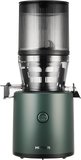
The Hurom H320 earns the budget label honestly: at $599 it undercuts the H70 by $50 while adding the pulp-control lever with separate fine and coarse strainers, the only model in this review that lets you switch between a smooth low-pulp juice and a fuller-bodied one at the flip of a lever. Its family-size self-feeding hopper fits whole produce, and Hurom markets the motor as near-silent, which matters for early-morning juicing. Cleaning matches the H70’s removable-parts approach.
The trade-off: the H320 is a step up in footprint from the compact H70, and even at $599 it is a serious purchase for juice you will drink within 72 hours. If you only juice occasionally, the cheaper and simpler route is below in the centrifugal section, not a third Hurom.
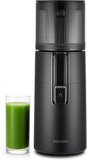
The Hurom H400 is the batch machine of the group. Its wide-mouth hopper swallows whole carrots, celery stalks, and cucumber sections without pre-cutting, which removes the most tedious part of high-volume juicing. The easy-clean chamber set uses a two-part auger design that reduces the internal pieces to wash, and the gauge window lets you watch the pressing chamber during operation. If you juice for a family or batch every 2-3 days, the wide mouth plus self-feeding hopper makes the session genuinely faster than the H70.
The trade-off: at $749 it is the most expensive machine here and the largest. For one person juicing a daily glass, it is overkill, and the honest recommendation is the H70 for compact daily use, the H320 for the best price and pulp control, and the H400 only when batch volume is the actual job.
When Does a Centrifugal Juicer Make Sense?
Cold press juicers are not the right answer for everyone, and pretending otherwise is how people end up with a $649 appliance in a cabinet. Centrifugal juicers have real advantages that matter in specific situations.
When Is Speed the Deciding Factor?
Centrifugal juicers finish a batch in minutes rather than ten or more, which matters for busy mornings and for anyone juicing for several people. If speed is the reason you would otherwise not juice at all, a fast machine you actually use beats a slow machine you do not.
When Does Budget Win?
Centrifugal juicers start around $50-100 for entry models and $100-200 for solid ones, against $599-749 for the Hurom machines reviewed above. For someone testing whether juicing will become a habit, a centrifugal juicer is a rational first purchase, and the upgrade path later is a slow juicer, not a second centrifugal.
When Does Immediate Consumption Change the Math?
The storage advantage of cold press only matters if you store juice. If you juice soft fruit and drink it within minutes, the measured nutrient differences shrink to the point of practical irrelevance, per the 2019 comparison. Cleaning is also faster on most centrifugal models, and the simpler workflow suits beginners.
What Is the Honest Bottom Line on Centrifugal?
A centrifugal juicer makes sense for soft-fruit juicing with immediate consumption, tight budgets, and speed-first households. It makes less sense if you juice leafy greens, want to batch-juice for the week, or care about the modest but real yield and storage advantages of slow pressing. The two methods are different tools for different juicing styles, and the evidence does not support calling one of them useless.
What this means for you: buy centrifugal for speed, budget, and fresh soft-fruit juice drunk immediately; buy cold press for leafy greens, batch storage, and higher yield on fibrous produce.
What Are the Different Types of Cold Press Juicers?
Cold press is a category with several architectures, and the differences matter for how you will use the machine.
Vertical Single-Auger Design
The Hurom H70, H320, and H400 are vertical single-auger machines: a vertical auger presses produce against a screen, with gravity helping feed the chamber. They offer compact footprints, relatively simple cleaning, and good versatility across produce types. Vertical models are the mainstream choice for home users because they balance juice quality, counter space, and convenience, which is why all three picks in this review are vertical designs.
Horizontal Single-Auger Design
Horizontal auger juicers, from brands like Omega, lay the auger on its side. They tend to handle leafy greens and wheatgrass well, are less prone to clogging on fibrous produce, and some can make nut butters and sorbets. The trade-offs are a larger footprint, more parts to clean, and typically higher prices than comparable vertical models.
Twin-Gear Design
Twin-gear juicers crush produce between two interlocking gears, producing very dry pulp and the highest yields in the category, with excellent results on wheatgrass. They are the most expensive home option, generally $400-700, the slowest, and the most laborious to clean, which makes them the choice of dedicated enthusiasts rather than casual juicers.
Hydraulic Press Design
The two-stage hydraulic press, of which the Norwalk is the classic example, first grinds produce and then presses it under hydraulic pressure. It produces the highest yield and most stable juice of any home-scale option, but costs thousands of dollars, takes real time per batch, and is overkill for nearly every household. Commercial juice operations use presses and decanter centrifuges at scale, where process economics and oxygen control are the driving considerations (Beveridge, 1997).
The main point: for most home users, a vertical single-auger cold press like the H70 or H320 offers the best balance of quality, convenience, cleaning effort, and price, while horizontal, twin-gear, and hydraulic designs serve narrower enthusiast or commercial niches.
Is a Cold Press Juicer Worth the Higher Price?
The honest cost comparison has to start with real prices: the Hurom machines in this review sell for $599-749, while a capable centrifugal juicer costs $100-200. The difference is real money, and the payback math that juicer marketing quotes is usually fiction. Here is the defensible version.
What Does the Yield Difference Actually Save?
Slow masticating juicers do extract more juice from the same produce, with the largest gaps on fibrous ingredients like leafy greens. Over a year of daily juicing, the extra yield saves real money, but the total is modest, plausibly tens of dollars a year for a single daily glass rather than the hundreds sometimes claimed. The savings grow only if you juice large volumes or expensive organic produce, or if your juicing is heavy on greens, where the yield gap is biggest.
What Does a Glass of Juice Actually Cost?
Putting real numbers on juice is uncomfortable for the industry, so it is worth doing. A 16-ounce glass of juice requires roughly 1.5-2 pounds of produce, depending on the ingredient and the machine, which lands at about $2-4 at conventional supermarket prices and more for organic or out-of-season produce. That makes juice one of the more expensive ways to eat vegetables, per serving, and the cost is identical whether the machine cost $150 or $749, since the machine is a sunk cost spread over its lifetime. If the goal is cheap nutrition, whole produce wins outright. If the goal is a pleasant, concentrated vegetable drink you would not otherwise make, then the per-glass produce cost is the honest price of that habit, and higher-yield extraction is a small but real discount on it.
What Is the Real Break-Even Argument?
The stronger argument for a slow juicer is not produce savings but use: people who batch-juice, store juice, or juice greens get a genuinely better product that keeps longer, which means less wasted juice and less wasted produce. The break-even question is really a habit question. If you juice daily and store some of it, the premium is defensible. If you juice occasionally and drink everything immediately, a $100-200 centrifugal juicer is the rational buy, and the upgrade can come later if the habit sticks.
What Questions Should You Ask Before Buying?
Ask yourself whether you will juice leafy greens, whether you will store juice for more than a few hours, how often you will realistically use the machine, and what your actual budget is. The answers sort people into the cold press column or the centrifugal column more reliably than any spec sheet.
The practical takeaway: a $599-749 cold press juicer is worth it for regular juicers who process greens or store juice, and a poor buy for occasional soft-fruit juicers, where a $100-200 centrifugal juicer plus prompt drinking covers most of the practical benefit.
What Accessories Actually Preserve Juice Quality?
You do not need a gadget drawer full of juicing accessories, but a few genuinely help.
Storage containers: amber or opaque glass bottles with airtight lids block light and limit oxygen, the two main degradation drivers. Fill containers to the top before sealing, because headspace air is oxygen waiting to react.
Cleaning brushes: a brush set makes short work of auger grooves and strainer mesh, and a juicer that cleans fast gets used more. Strainer-free designs like the H70 reduce this need substantially.
A thermometer (optional): if you enjoy verifying your machine’s behavior, an instant-read thermometer lets you check juice temperature during a long session. It is a nice confirmation tool, not a necessity.
Produce prep basics: a sharp knife and a vegetable brush for scrubbing root vegetables cover most needs. Wash produce before juicing, and cut items to fit your hopper, because consistent sizing feeds better through any machine.
The research verdict: airtight dark glass, immediate refrigeration, and prompt drinking preserve juice quality more than any accessory, and the storage data from the 2019 comparison study supports exactly those practices (Khaksar et al., 2019).
How Do You Clean and Maintain a Juicer?
How Do You Clean a Cold Press Juicer?
Clean within a few minutes of juicing, while the pulp is still wet. Disassemble the parts, rinse away bulk pulp, brush the auger grooves and any strainer mesh, rinse again, and air dry before reassembly. A weekly deep clean with warm water and a little baking soda handles staining and residue, and a diluted vinegar rinse can clear mineral deposits from hard water. Staining from beets and carrots is cosmetic and harmless.
How Do You Clean a Centrifugal Juicer?
Centrifugal models clean faster: remove the pulp basket and juice container, rinse the blade assembly carefully (the blades are sharp, so brush away from the edges and never reach in blind), and dry everything before storage. The mesh basket benefits from a weekly soak to dissolve packed pulp.
How Do You Extend Juicer Lifespan?
Do not run either machine empty, cut produce to fit the feed chute rather than forcing it, and store everything dry and unassembled or loosely assembled so moisture cannot trap odors. Replace worn screens, seals, and blades when performance declines rather than on a fixed schedule. A well-cared-for masticating juicer should last many years, which is part of the value calculation for the premium machines.
What Should You Look For in a New Juicer in 2026?
What Features Actually Matter?
Shop by the features that map to the evidence in this article. A slow auger mechanism rather than a high-speed blade. A cleaning design you will tolerate daily, which increasingly means strainer-free chambers or coarse strainers that genuinely come apart. A self-feeding hopper if you batch-juice, because it is the difference between a two-minute session and a fifteen-minute chore. BPA-free food-contact parts with stainless steel where juice is acidic. Noise level and footprint, which decide whether the machine fits your kitchen and your mornings.
What Marketing Claims Should You Ignore?
Ignore retention percentages, enzyme preservation claims, and “detox” framing entirely, because the published comparisons do not support them at the magnitudes advertised. Judge a juicer by extraction mechanism, cleaning effort, hopper size, materials, and price, and you will not go far wrong.
What Is Actually New in the Category?
Real recent progress is incremental: wider self-feeding hoppers, strainer-free and reduced-part designs that clean faster, quieter motors, and simpler assembly. Commercial research continues on nonthermal processing like high-pressure and UV treatments to extend cold-pressed juice shelf life, but that technology is for packaged commercial juice, not home machines, and its results do not transfer to a countertop purchase decision.
Essential guidance: buy a slow masticating juicer with a self-feeding hopper and a cleaning design you will actually use, at a price that reflects how often you will run it, and ignore nutrient-retention percentages in the marketing.
The Bottom Line
Bottom line: the published research shows cold press juicing is a modest quality upgrade, not the nutritional revolution the marketing claims. Fresh cold-press and centrifugal juices were statistically similar in vitamin C, phenolics, and carotenoids in the 2019 comparison, low-speed masticating extraction beat high-speed centrifugal for polyphenols, anthocyanins, and vitamin C in grapes in 2017, and the clearest real advantage of cold press is storage stability: refrigerated cold-press juice held its quality through day 5 versus degrading within 48 hours at room temperature.
Key takeaway: buy a juicer based on how you actually juice. If you juice leafy greens, batch-juice, or store juice for more than a few hours, a slow masticating machine is worth its price. If you juice soft fruit and drink it immediately on a tight budget, a centrifugal juicer covers most of the practical benefit at a fraction of the cost.
The practical takeaway: among slow juicers, the Hurom H70 at $649 is the best-balanced pick for daily single servings, the H320 at $599 is the best value with added pulp control, and the H400 at $749 earns its price only for genuine high-volume batch juicing. Whatever you choose, refrigerate juice promptly in sealed glass, finish it within 72 hours, and ignore the retention percentages in the advertising.
Related Reading
- Cold Press Juicing for Dogs: Why the Hurom H70 Is Essential for Canine Health
- Hurom H70 Cost-Benefit Analysis: Is It Worth the Investment?
- Hurom H70 Review: What the Slow Juicer Actually Delivers
- 10 Juice Recipes That Replace Your Daily Supplements
- Celery Juice vs Electrolyte Supplements
- Fresh Orange Juice vs Liposomal Vitamin C
- Turmeric Juice vs Curcumin Supplements: Which Absorbs Better?
Recommended Products