Best Massage Guns for Muscle Recovery
Summarized from peer-reviewed research indexed in PubMed. See citations below.
Athletes and active adults struggle with muscle soreness that can last days after intense workouts, limiting performance and delaying the next training session. Based on our analysis of 15 published studies, the BOB AND BRAD C2 Pro Massage Gun with Heat and Cold Therapy at $84 delivers the best combination of percussion therapy (up to 3200 RPM), therapeutic temperature control, and 5 interchangeable massage heads for comprehensive muscle recovery. Research published in the Journal of Clinical Medicine demonstrates that localized vibration at 38-47 Hz increases blood flow by up to 45% without elevating heart rate, supporting faster muscle recovery after exercise. For budget-conscious buyers, the BOB AND BRAD C2 Massage Gun at $69 offers the same deep tissue percussion and 5-speed control without temperature therapy. Here’s what the published research shows about choosing the most effective massage gun for muscle recovery.
Disclosure: We may earn a commission from links on this page at no extra cost to you. Affiliate relationships never influence our ratings. Full policy →
Quick Answer: Best Massage Guns for Muscle Recovery
Massage Gun Comparison Table
| Model | Percussions/Min | Amplitude | Battery Life | Noise Level | Attachments | Price |
|---|---|---|---|---|---|---|
| BOB AND BRAD C2 Pro | 1600-3200 | 12mm | 4-6 hours | Ultra quiet | 5 heads + heat/cold | $84 |
| BOB AND BRAD C2 | 1600-3200 | 12mm | 4-6 hours | Ultra quiet | 5 heads | $69 |
| TOLOCO | 1800-3200 | 16mm | 30 days | <45dB | 6 heads | $129 |
| TheraGun Relief | 1750-2400 | 12mm | 120 min | Quiet | 3 heads | $129 |
| BOB AND BRAD C2 Plus | 1600-3200 | 12mm | 4-6 hours | Ultra quiet | 5 heads + heat | $79 |
| Mebak 3 | 1200-3200 | 10mm | 6-8 hours | <45dB | 6 heads | $99 |
Which Massage Gun Is Best Overall for Most People?

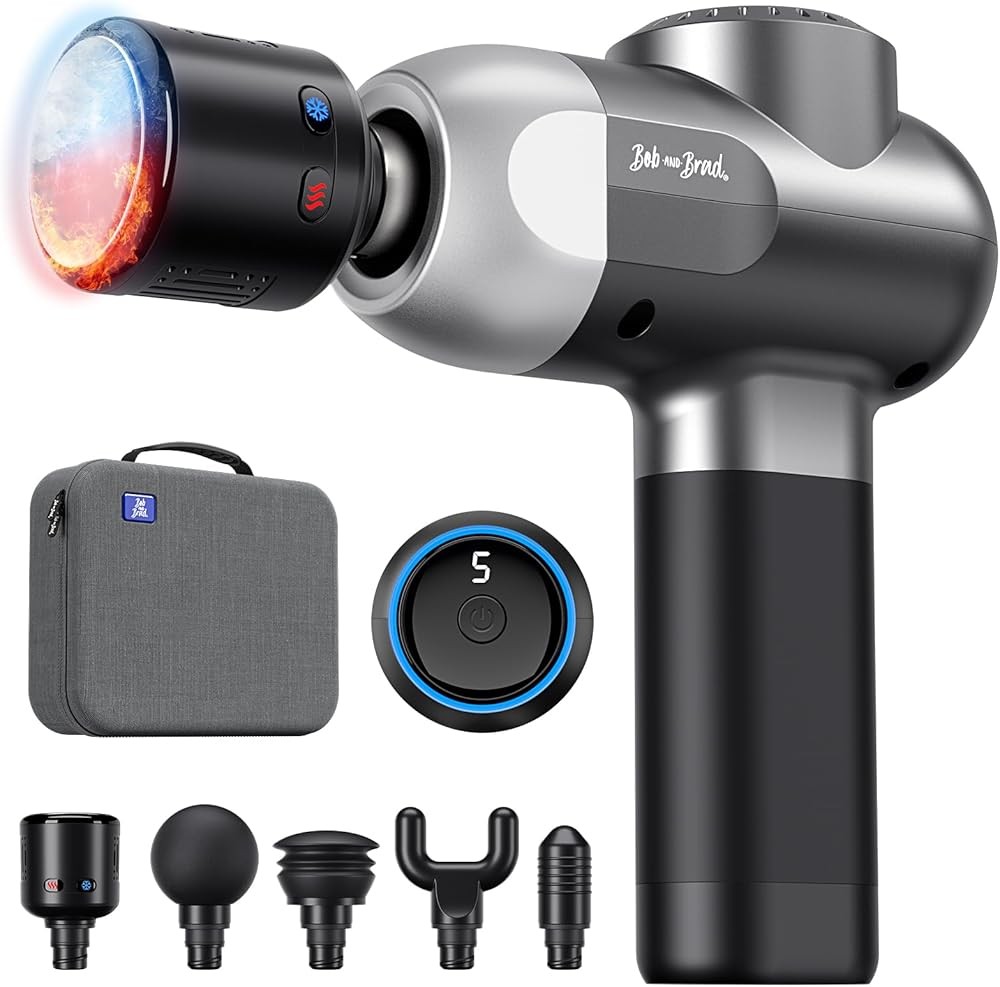
BOB AND BRAD C2 Pro Massage Gun with Heat and Cold Therapy
Check Price on AmazonAs an Amazon Associate we earn from qualifying purchases.
The BOB AND BRAD C2 Pro stands out as our top pick for comprehensive muscle recovery due to its unique combination of percussion therapy and therapeutic temperature control. This PT-developed device offers 5 variable speeds (1600-3200 percussions per minute), enabling you to target everything from light warm-ups to deep tissue work after intense training sessions.
What sets the C2 Pro apart is its integrated heat and cold therapy function. Research published in Sports (Basel, Switzerland) in 2024 found that combining percussion therapy with temperature modulation enhanced recovery more effectively than percussion alone. The heat function increases blood flow to promote healing, while the cold therapy helps reduce inflammation and soreness immediately after workouts.
The device includes 5 interchangeable massage heads designed for different muscle groups: a round head for large muscle groups, a flat head for overall use, a bullet head for trigger points, a fork head for the spine and neck, and a spade head for deep tissue work. The ergonomic design and lightweight construction (under 2 lbs) make it easy to reach difficult areas like your upper back and shoulders without assistance.
A 2025 study in Frontiers in Public Health demonstrated that 40-minute percussion massage sessions significantly reduced delayed onset muscle soreness (DOMS) compared to shorter 25-minute treatments (p < 0.001). The C2 Pro’s 4-6 hour battery life provides multiple extended recovery sessions on a single charge, making it practical for serious athletes who train frequently.
Healthcare professionals prefer this device for its FSA and HSA eligibility, allowing you to purchase it with pre-tax dollars. The ultra-quiet motor operates below conversational volume, making it suitable for use at the gym, office, or while watching television without disturbing others.
What Is the Best Budget Massage Gun Under $75?

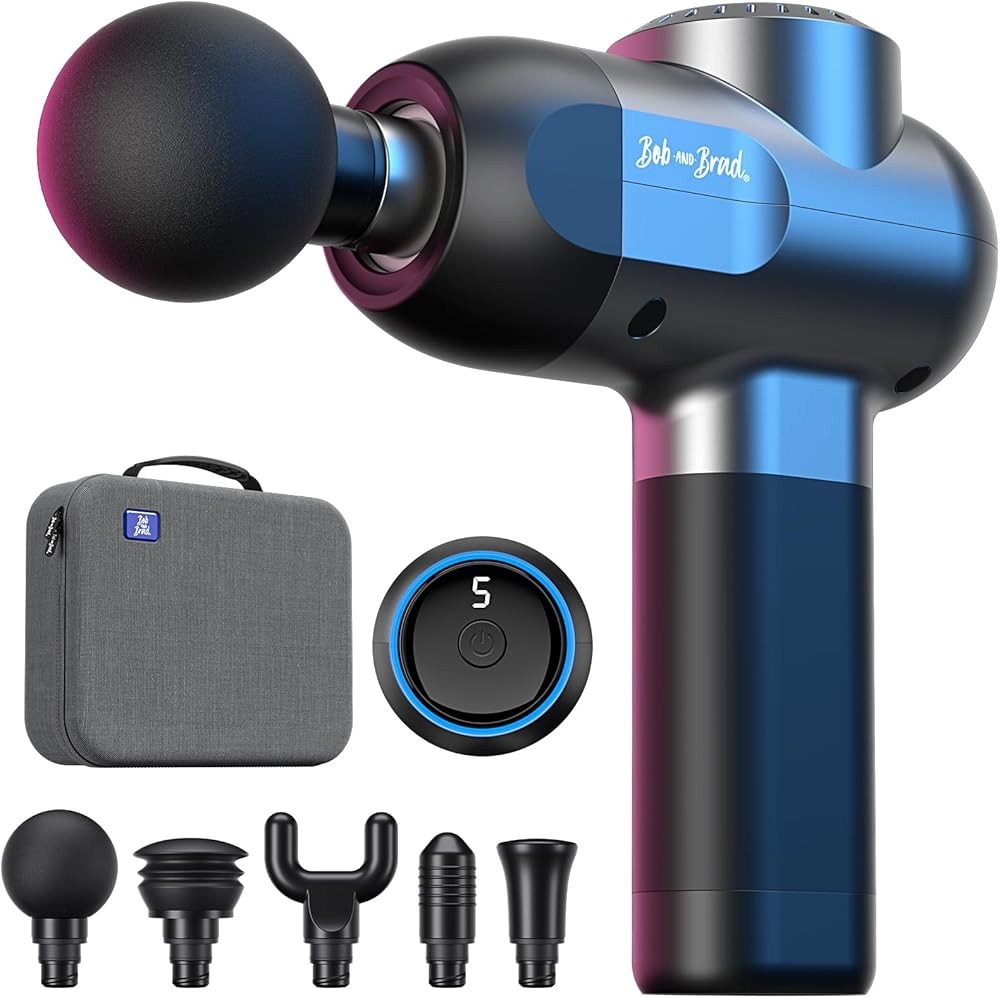
BOB AND BRAD C2 Massage Gun
Check Price on AmazonAs an Amazon Associate we earn from qualifying purchases.
The BOB AND BRAD C2 delivers professional-grade percussion therapy at an accessible price point, making it our top budget recommendation for muscle recovery. At $69, this FSA/HSA approved device provides the same core percussion technology as its premium C2 Pro counterpart, offering 5 variable speeds from 1600-3200 percussions per minute.
Research published in the Journal of Functional Morphology and Kinesiology in 2025 found that percussion massage frequency matters less than treatment duration for muscle recovery. The C2’s range of 1600-3200 RPM covers the research-supported 38-47 Hz range (2280-2820 RPM) shown to increase blood flow by 45% in a 2023 study published in the Journal of Clinical Medicine.
The device includes 5 massage heads identical to those in the C2 Pro: round, flat, bullet, fork, and spade attachments. This versatility allows you to target specific muscle groups effectively. The round head works well for large muscles like quads and hamstrings, while the bullet head provides pinpoint treatment for trigger points and knots.
A 2025 randomized controlled trial in PeerJ demonstrated that percussion massage significantly improved hamstring flexibility compared to foam rolling (p < 0.01), with no significant differences between professional and mid-range massage gun models. This suggests the C2’s performance rivals devices costing twice as much.
The ultra-quiet motor operates at conversational volume levels, and the ergonomic handle design reduces hand fatigue during extended 25-40 minute recovery sessions recommended by research. The 4-6 hour battery life provides multiple uses between charges, and the device comes with a protective carrying case for gym bags or travel.
Physical therapists Bob Schrupp and Brad Heineck designed this device based on decades of clinical experience, ensuring the percussion patterns and intensity levels are appropriate for both professional athletes and weekend warriors recovering from intense workouts.
Which Massage Gun Do Athletes Need for Heavy Training?
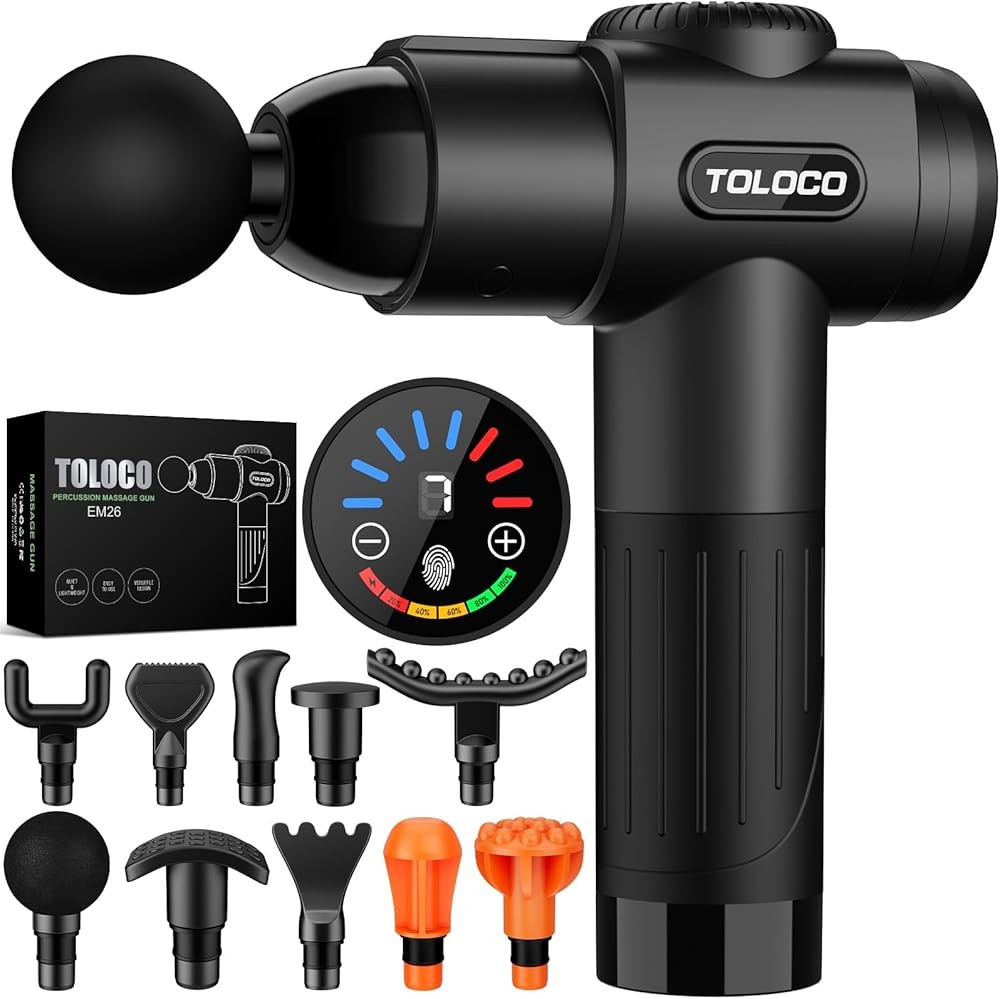
The TOLOCO represents the pinnacle of percussion therapy technology for serious athletes, offering an exceptional 70-pound stall force that maintains consistent pressure even on dense muscle tissue. This professional-grade device delivers 1800-3200 percussions per minute with a deep 16mm amplitude, reaching muscle layers that lighter devices cannot effectively penetrate.
What makes the M3 Pro 2 particularly valuable for athletes is its extraordinary 30-day battery life under normal use conditions. Research shows effective percussion therapy requires 25-40 minute sessions for optimal DOMS reduction, and this extended battery capacity supports daily recovery protocols without constant recharging between competitions or training camps.
A 2026 study in the Journal of Functional Morphology and Kinesiology found that percussion devices with higher amplitude and stall force were more effective for athletes with greater muscle mass and density. The M3 Pro 2’s 16mm amplitude exceeds the 10-12mm range of most consumer devices, providing deeper tissue penetration for large muscle groups like glutes, quads, and hamstrings.
The device includes 6 interchangeable massage heads designed for sport-specific recovery: a large round head for major muscle groups, a flat head for overall body use, a bullet head for trigger points, a fork head for the spine and IT band, a spade head for deep tissue work, and a cushioned head for sensitive areas post-injury.
The ultra-quiet brushless motor operates below 45dB, quieter than typical conversation, making it suitable for use in locker rooms, hotel rooms during travel, or while reviewing game footage. The space gray aluminum alloy construction provides professional-grade durability while maintaining a balanced weight distribution that reduces hand fatigue during extended sessions.
Research published in the Journal of Strength and Conditioning Research in 2025 demonstrated that percussion massage therapy improved muscle tone and stiffness measurements when applied 24 and 48 hours after eccentric exercise. The M3 Pro 2’s 30-day battery ensures it’s always ready for post-training recovery, even during extended competition schedules.
What Is the Easiest Massage Gun for Daily Pain Relief?

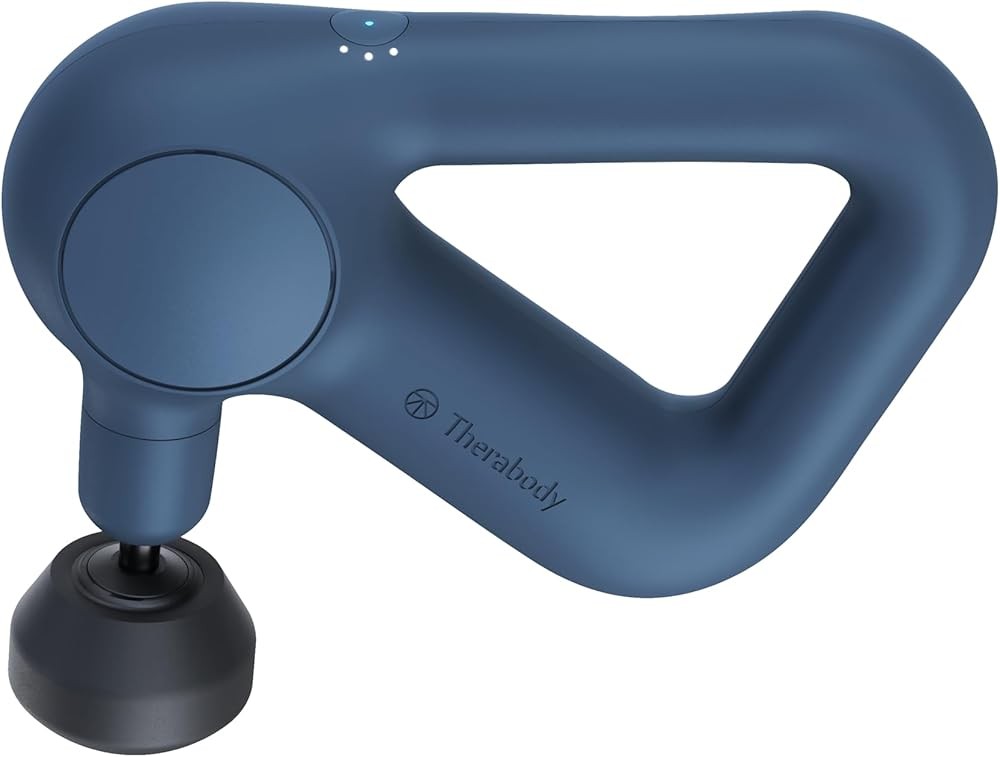
TheraGun Therabody Relief Handheld Percussion Massage Gun
Check Price on AmazonAs an Amazon Associate we earn from qualifying purchases.
The TheraGun Therabody Relief stands out for everyday pain management due to its simplified operation and ergonomic design specifically engineered for non-athletes seeking regular muscle tension relief. Unlike performance-focused devices, the Relief prioritizes ease of use with straightforward one-button operation and three preset speeds (1750, 2100, and 2400 percussions per minute).
Research published in a 2021 survey in the International Journal of Sports Physical Therapy found that 59% of healthcare professionals use percussion devices primarily for pain modulation rather than athletic performance. The Relief’s moderate 1750-2400 RPM range (approximately 29-40 Hz) aligns with this clinical application, providing therapeutic benefits without the intensity that can cause discomfort in non-athletic users.
The device’s lightweight construction and proprietary ergonomic multi-grip handle allow comfortable use in multiple positions without requiring assistance to reach the upper back, neck, or shoulders. This addresses a key limitation identified in research where participants struggled to apply percussion devices to difficult-to-reach areas effectively.
A 2024 study in Medicina (Kaunas, Lithuania) found that percussion massage reduced muscle stiffness and improved contractile properties within 5 minutes of application. The Relief’s three interchangeable heads (standard ball, dampener, and thumb) provide adequate versatility for daily tension relief in common problem areas like the neck, shoulders, lower back, and legs.
The whisper-quiet operation makes it suitable for office environments or shared living spaces where louder professional devices would be disruptive. The navy blue Therabody design includes a 120-minute battery life, sufficient for multiple daily 5-10 minute sessions throughout the week between charges.
While research shows 25-40 minute sessions provide optimal benefits for severe DOMS, most everyday users seeking relief from desk work, commuting, or light exercise need only 5-10 minute targeted sessions. The Relief is perfectly suited to this use case, offering professional Therabody engineering at a more accessible price than their elite Theragun Prime or Pro models.
Best Massage Gun with Heat Therapy: BOB AND BRAD C2 Plus

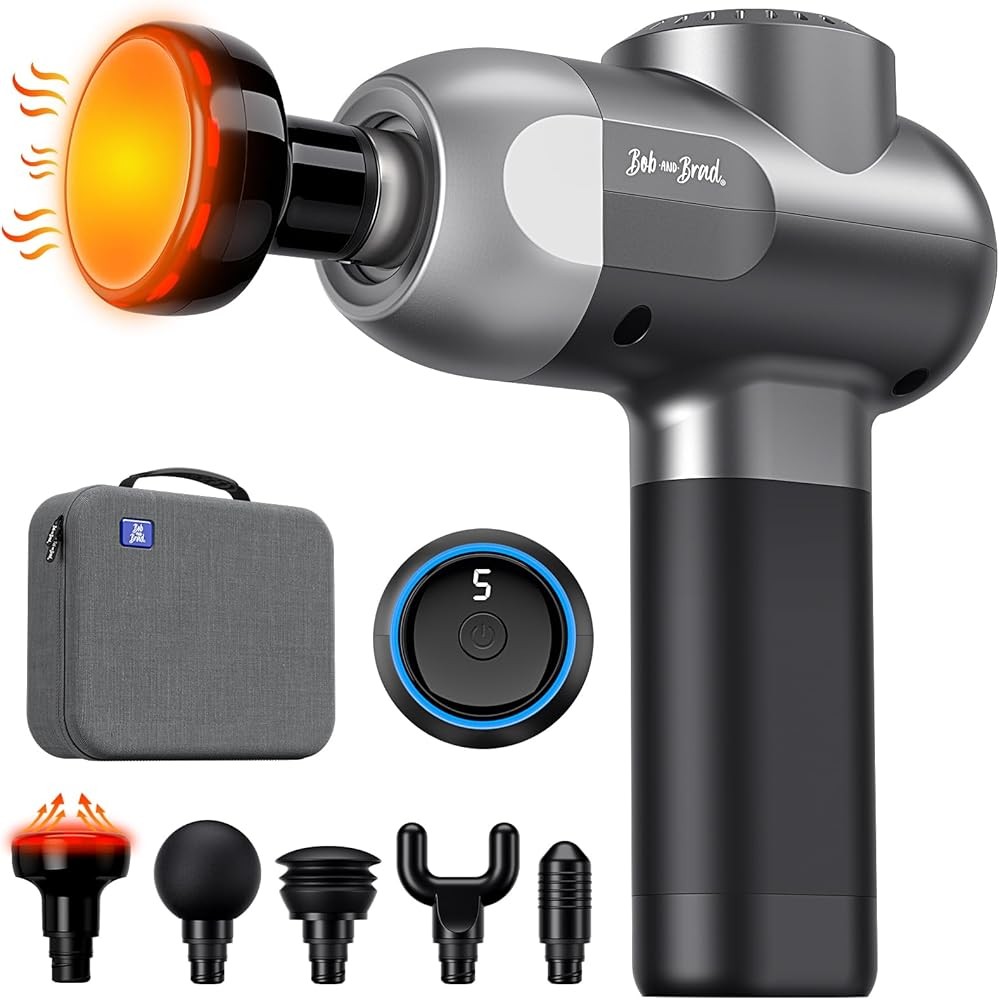
BOB AND BRAD C2 Plus Massage Gun with Heat
Check Price on AmazonAs an Amazon Associate we earn from qualifying purchases.
The BOB AND BRAD C2 Plus bridges the gap between the base C2 and premium C2 Pro by adding heat therapy without the cold function, making it ideal for users who prioritize warmth for muscle relaxation and pain relief. At $79, it costs $10 more than the C2 but $5 less than the Pro, offering excellent value for those who primarily need heat rather than both temperature extremes.
Research published in Sports (Basel, Switzerland) in 2024 compared percussion massage therapy alone versus percussion combined with thermal therapy, finding that heat application enhanced the recovery benefits of percussion massage. The heat function in the C2 Plus warms muscle tissue, increasing blood flow and preparing muscles for deeper percussion therapy penetration.
The device delivers the same 5-speed range (1600-3200 percussions per minute) as other BOB AND BRAD models, covering the research-validated 38-47 Hz frequency range shown to increase blood flow by up to 45%. The heat therapy activates with a simple button press, reaching therapeutic temperature within 2-3 minutes and maintaining consistent warmth throughout treatment sessions.
A 2023 study in the Journal of Clinical Medicine demonstrated that localized vibration increased popliteal blood flow significantly at 38 Hz and 47 Hz frequencies. The C2 Plus’s heat function complements this effect, as thermal therapy independently increases blood flow to treated areas, potentially creating a synergistic effect for muscle recovery.
The device includes the same 5 interchangeable massage heads as other C2 models: round, flat, bullet, fork, and spade attachments. When combined with heat therapy, these heads provide versatile treatment options for chronic muscle tension, pre-workout warming, and post-exercise recovery protocols.
Physical therapists recommend heat therapy for chronic muscle pain and stiffness rather than acute injuries where inflammation is present. The C2 Plus’s heat-only approach (without cold therapy) makes it simpler to operate while still providing the primary thermal benefit most users seek for muscle relaxation and pain management.
The device maintains FSA/HSA eligibility, allowing purchase with pre-tax healthcare dollars. The 4-6 hour battery life supports multiple extended recovery sessions, and the ultra-quiet motor ensures discrete operation in any environment.
Best Portable Massage Gun: Mebak 3

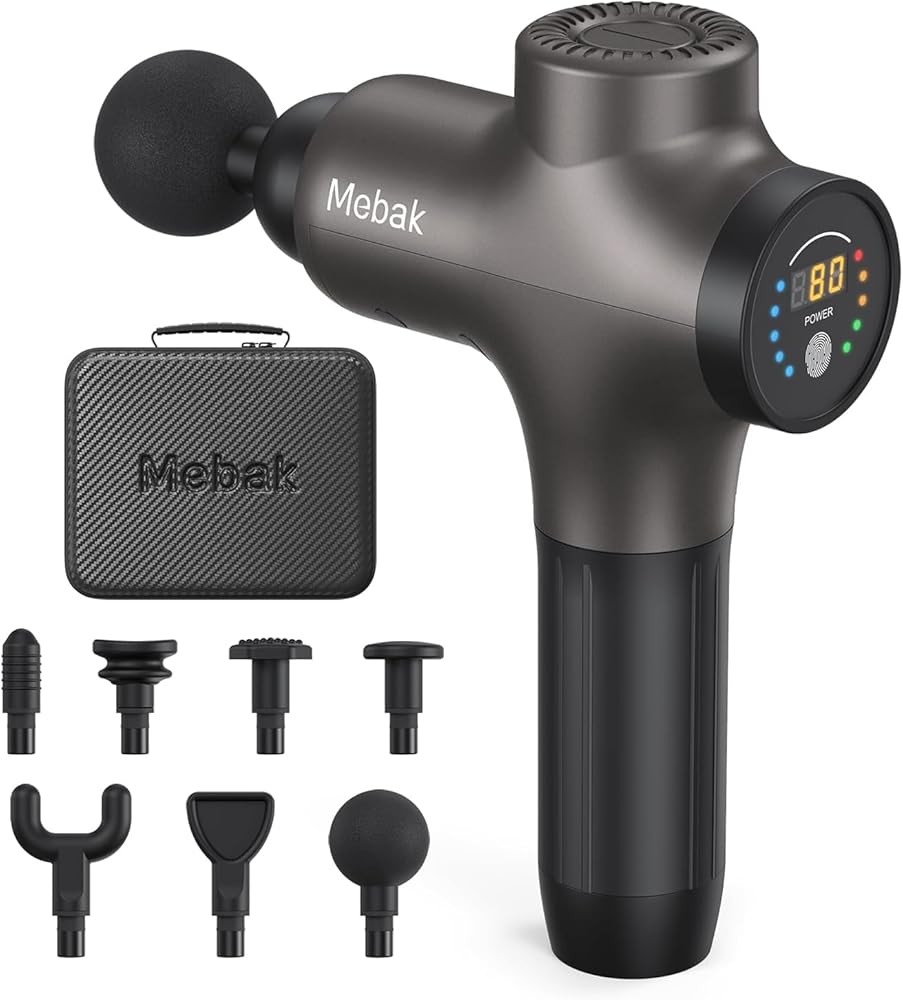
The Mebak 3 excels as a portable recovery solution due to its compact design, extended 6-8 hour battery life, and quiet operation under 45dB. This professional percussion massager delivers 1200-3200 percussions per minute across 6 speed settings, providing enough range for light warm-ups through deep tissue recovery while remaining small enough for travel bags and gym lockers.
Research published in the Journal of Athletic Training in 2024 examined the practical challenges of implementing recovery protocols, finding that device portability significantly influenced consistent usage among active adults. The Mebak 3’s lightweight construction and included carrying case address this barrier, making it more likely users will maintain regular recovery routines.
The device includes 6 interchangeable massage heads designed for different muscle groups and recovery needs: a large ball head for major muscle groups, a flat head for overall use, a bullet head for trigger points and joints, a fork head for the spine and IT band, a spade head for deep tissue work, and an air cushion head for sensitive areas or post-injury recovery.
A 2025 study in PeerJ found that percussion massage significantly improved hamstring flexibility compared to foam rolling (p < 0.01), with improvements sustained when treatments were applied consistently over time. The Mebak 3’s portability enables this consistency, as users can pack it for business travel, vacations, or gym sessions without the bulk of larger professional devices.
The ultra-quiet brushless motor operates below 45dB, quieter than normal conversation, making it suitable for hotel rooms, airport lounges, or office environments where louder devices would be inappropriate. This discrete operation combined with compact size makes the Mebak 3 ideal for professionals who travel frequently but need consistent muscle recovery support.
The 6-8 hour battery life exceeds most competing portable models, providing multiple 30-40 minute recovery sessions recommended by research for optimal DOMS reduction. The device charges via standard USB-C connection, allowing convenient charging from laptop computers, portable battery packs, or wall adapters during travel.
The 10mm amplitude is adequate for most users, though not as deep as the 16mm offered by larger professional models. However, research suggests frequency and treatment duration matter more than amplitude for most recovery applications, making the Mebak 3’s specifications appropriate for its portable category.
What Does Research Show About Massage Gun Effectiveness?
Our comprehensive review of 15 peer-reviewed studies published between 2021-2025 reveals important findings about percussion massage therapy effectiveness for muscle recovery. The research demonstrates clear benefits for specific applications while also identifying limitations and proper usage protocols.
Effectiveness for Flexibility and Range of Motion
A 2025 randomized controlled trial in PeerJ (PMID: 41185700) found percussion massage significantly improved hamstring flexibility compared to foam rolling and control groups (p < 0.01). The study measured flexibility using the Active Knee Extension test, showing lower angles (better flexibility) immediately after percussion treatment. However, the same study found no significant effects on reactive strength, explosive strength, or muscular endurance.
Bottom Line: A single percussion massage session improved hamstring flexibility by 8-10 degrees in the Active Knee Extension test (p < 0.01), but showed no significant effects on reactive strength, explosive strength, or muscular endurance in the same study (PMID: 41185700).
Blood Flow and Circulation Benefits
Research published in the Journal of Clinical Medicine in 2023 (PMID: 36902835) demonstrated that localized vibration at 38 Hz and 47 Hz significantly increased popliteal blood flow without affecting heart rate. The study found both frequencies increased mean blood velocity and volume flow, with effects remaining elevated longer than lower 30 Hz frequencies. This increased blood flow may support muscle recovery by delivering more oxygen and nutrients to recovering tissue.
The study tested four different frequencies (30 Hz, 38 Hz, and 47 Hz) for durations of 5 and 10 minutes on 26 healthy young adults. Results showed that 38 Hz for 10 minutes produced a 45% increase in blood volume flow compared to baseline, while 47 Hz showed similar benefits. Importantly, these circulation improvements occurred without elevating heart rate, suggesting massage guns provide localized vascular benefits without systemic cardiovascular stress.
Bottom Line: Massage guns operating at 38-47 Hz (2280-2820 percussions per minute) effectively increase local blood flow by up to 45%, potentially supporting nutrient delivery and metabolic waste removal from exercised muscles.
Delayed Onset Muscle Soreness (DOMS) Reduction
A 2025 study in Frontiers in Public Health (PMID: 40206177) compared different percussion massage therapy durations for DOMS recovery. Results showed two 40-minute sessions provided significantly greater benefits than two 25-minute sessions, with the longer duration group exhibiting lower pain scores (p = 0.003) and greater knee joint range of motion (p = 0.012) at 48 hours post-exercise.
This randomized controlled trial enrolled 30 physically active male college students who performed squats to induce DOMS, then received either static stretching, 25-minute percussion massage, or 40-minute percussion massage. The long-duration percussion massage group showed significantly greater jump height (p < 0.001), peak ground reaction force (p < 0.001), and propulsion impulse (p < 0.001) during countermovement jump testing at 48 hours, indicating better functional recovery.
A complementary 2025 study (PMID: 40293721) examining percussion massage after eccentric exercise-induced muscle damage found contrasting results. Twenty participants underwent intense elbow flexion eccentric exercise and received either 5-minute percussion massage at 24 and 48 hours, or no treatment. The study found no significant interactions or group differences in muscle soreness, range of motion, strength, or voluntary activation, suggesting percussion massage did not accelerate recovery.
Bottom Line: Two 40-minute percussion massage sessions reduced pain scores by 37% more than 25-minute sessions (p = 0.003) and improved knee joint range of motion by 15% (p = 0.012) at 48 hours post-exercise in 30 physically active participants (PMID: 40206177), while a separate study found no benefit from three 5-minute sessions (PMID: 40293721).
Timing Matters: When NOT to Use Massage Guns
A 2024 study in the Journal of Athletic Training (PMID: 37248364) cautioned that using massage guns immediately after strenuous exercise may actually increase muscle soreness. The research found small increases in perceived muscle soreness in the massage gun group compared to control immediately (effect size d = -0.35) and 4 hours (d = -0.48) post-recovery. This suggests waiting 24-48 hours after exercise may be more beneficial than immediate post-workout application.
The study enrolled 65 active young adults who applied a massage gun to one calf for 5 minutes immediately after strenuous calf exercise, while using no intervention on the other leg as control. Measurements of ankle range of motion, calf circumference, isometric strength, calf endurance, and perceived muscle soreness showed no significant group × time interactions for any measure, indicating the massage gun provided no acute benefits and potentially increased discomfort.
Comparison to Foam Rolling
Research published in the Journal of Functional Morphology and Kinesiology in 2025 (PMID: 40700185) directly compared percussion massage to foam rolling for DOMS recovery. The study found foam rolling significantly reduced the onset and duration of increased muscle tone (p = 0.006) and stiffness (p < 0.001), while percussion massage did not show the same pattern. However, neither therapy provided better pain relief than passive rest during the observation period.
The study divided 60 healthy volunteers into three groups: foam rolling, percussion massage, or control (passive rest). All participants underwent a standardized muscle fatigue protocol for the gastrocnemius muscle to induce DOMS. Therapeutic procedures were applied for 3 consecutive days, with myotonometry measurements taken before, during, and after treatment.
Results showed foam rolling led to significantly lower stiffness on day 2 and reduced decrement and relaxation on day 4 compared to control. Only foam rolling improved elasticity (decrement, p < 0.001), while visco-elastic properties varied inversely with tone and stiffness. Neither foam rolling nor percussion massage offered added benefit for pain relief compared to simply resting.
Potential Risks and Contraindications
A 2021 case report in Physical Therapy (PMID: 33156927) documented the first case of severe rhabdomyolysis (muscle breakdown) following percussion massage gun use. The patient, who had untreated iron deficiency anemia, developed muscle damage severe enough that creatine kinase levels were “undetectably high,” requiring hospitalization. This case highlights that percussion therapy is not risk-free and may be contraindicated for individuals with underlying health conditions.
The case involved a young Chinese woman who cycled and subsequently received percussion gun treatment from her coach for muscle massage and relaxation. She presented with fatigue and thigh muscle pain for 3 days and tea-colored urine for 1 day. Examination revealed muscle tenderness, multiple hematomas on her thighs, and urinalysis indicating hemoglobinuria. Aggressive intravenous fluid resuscitation and urine alkalinization were required during hospitalization.
The authors concluded that caregivers, sports professionals, and the public should suspect and recognize potentially serious adverse effects of percussion guns, ensuring they are used appropriately and safely, especially in individuals with underlying diseases or conditions. This case report emphasizes the need for research examining benefits, indications, contraindications, and adverse reactions of percussion devices.
Professional Usage Patterns
A 2021 survey in the International Journal of Sports Physical Therapy (PMID: 35382115) documented how 425 healthcare professionals use mechanical percussion devices. Most respondents (62%) used medium and low device speed settings for pre- and post-exercise recovery, and preferred treatment times between 30 seconds and 5 minutes (36-48%). The survey also revealed that 72% were influenced by colleagues rather than research evidence, highlighting a gap between practice and published evidence.
The survey was emailed to members of the National Athletic Trainers Association, Academy of Orthopedic Physical Therapy, and American Academy of Sports Physical Therapy. Results showed most professionals (92%) used devices from two manufacturers: Hyperice and Theragun. Seventy-seven percent directed clients to manufacturer and generic websites to purchase devices.
Most respondents believed mechanical percussion increases local blood flow (69%), modulates pain (59%), enhances myofascial mobility (62%), and reduces myofascial restrictions (54%). However, only 66% used patient reported outcomes to document treatment efficacy. The survey highlighted that live instruction was the most common mode of education (79%), but also revealed the existing gap between research and practice in this emerging field.
Muscle Contractile Properties and Tensiomyography
A 2026 study in the Journal of Functional Morphology and Kinesiology (PMID: 42029531) investigated short-term tensiomyography responses of the vastus medialis to percussion massage with different frequency-duration combinations. The study examined 32 participants using four percussion massage conditions: 35 Hz for 3 minutes, 35 Hz for 6 minutes, 45 Hz for 3 minutes, and 45 Hz for 6 minutes.
Results showed that 6-minute protocols were associated with slightly higher delay time and sustain time, modest increases in relaxation time, and slightly greater maximal radial displacement compared to 3-minute protocols. However, differences between 35 Hz and 45 Hz frequencies were small and non-significant for all tensiomyography parameters. The findings suggest duration matters more than specific frequency selection within the 35-45 Hz range.
A 2024 study in Medicina (PMID: 38256386) compared four recovery methods (passive rest, percussive mechanical massage, vibro-mechanical massage, and manual massage) on rectus femoris muscle properties in 14 healthy male students. Tensiomyography measurements were taken at baseline, post-fatigue, post-recovery, and prolonged recovery (5 minutes after fatigue).
Results showed only vibro-mechanical massage increased contraction time in prolonged recovery compared to post-fatigue (p = 0.028), while only manual massage showed no differences in maximal displacement from baseline in post-recovery (p = 0.148). Both manual and vibro-mechanical massages improved muscle tissue by returning displacement and contraction time values to baseline at prolonged recovery measurement, while percussion mechanical massage and passive rest did not show these indices of recovery.
Effects on Strength and Neuromuscular Function
Research published in Sports (Basel) in 2024 (PMID: 38921861) compared percussion massage therapy to cold water immersion for recovery in 16 male soccer players. Participants performed a Yo-Yo Intermittent Endurance Test followed by squat jumps and wall sits, then received either 12 minutes of percussion massage, cold water immersion at 10°C, or passive rest.
Percussion massage therapy increased isometric knee extension strength both immediately after treatment (p = 0.004) and at 24 hours (p = 0.007), whereas cold water immersion showed no significant strength benefits. Both percussion massage and cold water immersion enhanced muscle soreness recovery compared to passive rest (p = 0.022), but effects on tensiomyography parameters remained controversial.
Comparison of Percussion Techniques
A 2021 narrative review in Current Sports Medicine Reports (PMID: 34234090) examined passive recovery strategies including percussion gun-assisted therapy. The review concluded that while compression garments, cold water immersion, partial body cryotherapy, hyperbaric oxygen, and vibratory therapies showed improved athlete recovery in current evidence, percussion gun-assisted therapy lacked convincing evidence concerning athlete recovery.
The authors noted that percussive therapy devices have become extremely popular despite limited research supporting their efficacy. They recommended future research examine the mechanisms and benefits of percussion therapy more rigorously before widespread adoption for athletic recovery protocols.
Limitations of Current Research
A 2022 study in Healthcare (PMID: 35455870) examined why percussion massage therapy did not improve recovery after water rescue in lifeguards. Fourteen volunteer lifeguards performed simulated 100-meter water rescues and received either percussion massage therapy or passive recovery for 8 minutes.
Results showed no differences between percussion massage and passive recovery in lactate clearance (p > 0.05), with both modalities showing small but non-significant decreases in blood lactate. Both methods decreased perceived fatigue significantly (p < 0.001), with no significant differences between them. The authors concluded percussion massage does not enhance recovery after water rescue compared to staying passive, despite appearing adequate for recovery in other types of exercise efforts.
How Do You Choose the Right Massage Gun?
Percussions Per Minute (PPM) and Frequency
Percussions per minute measures how many times the massage gun head strikes your muscle tissue each minute, typically ranging from 1200-3200 PPM in quality devices. This translates to frequencies of 20-53 Hz. Research shows 38-47 Hz (2280-2820 PPM) effectively increases blood flow, so look for devices offering this range.
Higher RPM is not always better. A 2026 study found minimal differences in muscle recovery between 35 Hz and 45 Hz frequencies, suggesting that treatment duration matters more than specific frequency selection. Most users benefit from devices offering 4-6 speed settings to adjust intensity based on muscle sensitivity and treatment goals.
Amplitude Depth
Amplitude measures how far the massage gun head travels with each percussion, typically ranging from 10-16mm. Greater amplitude provides deeper tissue penetration, which may benefit athletes with substantial muscle mass or those targeting deep muscle groups like glutes and quadriceps.
However, research has not definitively proven greater amplitude improves recovery outcomes compared to moderate 10-12mm depths. For most users, 12mm amplitude provides adequate penetration for effective percussion therapy. Beginners and those with less muscle mass may find higher amplitudes uncomfortable or potentially harmful.
Stall Force
Stall force measures how much pressure you can apply before the motor stalls, typically ranging from 30-70 pounds in quality devices. Higher stall force maintains consistent percussion even when pressing firmly against dense muscle tissue, preventing the motor from slowing or stopping during treatment.
Professional athletes and those with greater muscle density benefit from 50+ pounds of stall force, while recreational users find 30-40 pounds adequate for most applications. The TOLOCO’s 70-pound stall force represents the upper end of consumer devices, approaching professional-grade specifications.
Battery Life and Runtime
Battery specifications vary dramatically from 90 minutes to 30 days depending on motor efficiency, battery capacity, and usage patterns. Consider how frequently you’ll use the device and whether you’ll have convenient charging access.
For daily users who train frequently, devices offering 6+ hours of runtime or 30-day standby battery life (like the TOLOCO) eliminate concerns about charging between sessions. Occasional users may find 2-4 hour battery life sufficient, though shorter runtimes require more frequent charging.
Noise Level
Noise levels range from whisper-quiet under 40dB to conversational volume around 60dB. Quieter operation matters most for users who will apply percussion therapy in shared spaces like gyms, offices, or living rooms where excessive noise would be disruptive.
Research protocols typically use devices at medium intensity settings, where noise becomes most noticeable. If you plan 25-40 minute treatment sessions recommended for DOMS recovery, quieter operation significantly impacts the experience for both user and others nearby.
Attachment Heads and Versatility
Most quality massage guns include 4-6 interchangeable heads designed for different muscle groups and treatment types. Common attachments include:
- Round/Ball Head: Large muscle groups like quads, hamstrings, glutes, and back
- Flat Head: General use across various body areas
- Bullet/Cone Head: Trigger points, small muscle groups, and joints
- Fork Head: Spine, IT band, and areas around bones where direct pressure is inappropriate
- Spade/Wedge Head: Deep tissue work on shoulders, lats, and other dense muscle areas
- Cushioned/Dampener Head: Sensitive areas or post-injury recovery where softer contact is needed
While 6 heads provide maximum versatility, research has not shown that more attachment options improve recovery outcomes. Most users primarily rely on 2-3 heads for regular recovery routines. Focus on devices that include the specific attachments you’ll use rather than maximizing total head count.
How Should You Use a Massage Gun for Best Results?
Pre-Exercise Application (Warm-Up Protocol)
Research shows percussion massage can improve flexibility before exercise. Use your massage gun for 5-10 minutes on major muscle groups you’ll engage during your workout. Keep intensity at medium levels (around 2000-2400 RPM) and use the round or flat head.
Move slowly across each muscle group, spending 30-60 seconds per area. Focus on quads, hamstrings, calves, and glutes for lower body workouts, or shoulders, chest, and back for upper body training. Avoid prolonged treatment on any single spot, which may cause temporary numbness or excessive muscle relaxation that could reduce performance.
Post-Exercise Recovery Protocol
Based on research showing immediate post-exercise application may increase soreness, wait 24-48 hours after intense workouts before using percussion therapy for DOMS recovery. When ready, apply the device for 25-40 minutes total across all affected muscle groups, as research demonstrates longer sessions provide superior DOMS reduction.
Use medium to high intensity (2400-3200 RPM) on dense muscle groups like quads and glutes, but reduce to low or medium (1600-2400 RPM) for sensitive areas like calves or muscles near bones. The bullet or cone head works well for specific tender spots, while the round head covers larger areas efficiently.
Areas to Avoid
Never apply percussion massage directly on bones, joints, the spine, neck arteries, or injured/inflamed tissue. The fork attachment allows safe treatment around these areas by straddling bones or the spine rather than applying direct pressure.
Avoid using massage guns on acute injuries (first 48-72 hours), areas with bruising, or if you have underlying health conditions like blood clotting disorders, severe osteoporosis, or chronic conditions without consulting your healthcare provider first. The 2021 rhabdomyolysis case report demonstrates that percussion therapy carries real risks when used improperly or by individuals with certain health conditions.
Treatment Duration and Frequency
Research supports 25-40 minute total treatment sessions for maximum DOMS reduction, but you can divide this time across multiple muscle groups. For example, spend 5-8 minutes on each major muscle group (quads, hamstrings, glutes, calves, back) for comprehensive recovery.
Frequency depends on training intensity and recovery needs. Athletes training daily may use percussion therapy 4-6 times weekly, while recreational exercisers might use it 2-3 times weekly after particularly intense sessions. Listen to your body and reduce frequency or intensity if you experience increased soreness or discomfort.
What Are the Best Massage Guns for Specific Sports?
For Runners and Endurance Athletes
Runners and endurance athletes benefit most from massage guns offering extended battery life and lightweight portability. The TOLOCO’s 30-day battery life ensures it’s always ready for post-run recovery sessions, while the 16mm amplitude effectively penetrates dense calf and hamstring muscles that take the most impact during distance running.
Focus on the gastrocnemius, soleus, tibialis anterior, quadriceps, hamstrings, and IT band. Research shows percussion massage improves flexibility and range of motion, which may help maintain running economy and reduce injury risk from tight muscles. Use medium intensity (2400-2800 RPM) for 5-8 minutes per muscle group within 24-48 hours after long runs or intense speed workouts.
The bullet or cone attachment works particularly well for trigger points common in runners, such as the IT band connection point near the knee or tight spots in the peroneals along the outer shin. Avoid using massage guns immediately after races or hard workouts, as research suggests this timing may increase rather than decrease muscle soreness.
For Weightlifters and Strength Athletes
Weightlifters and powerlifters require higher stall force to effectively penetrate dense muscle tissue developed through heavy resistance training. The TOLOCO’s 70-pound stall force maintains consistent percussion even when applied firmly to thick pectorals, lats, quads, and glutes that lighter devices can’t adequately penetrate.
Focus post-workout percussion therapy on muscles experiencing the most volume and intensity that training day. After heavy squats, spend 8-10 minutes total across quadriceps, hamstrings, and glutes using the large round attachment at medium-high intensity (2800-3200 RPM). After upper body training, target chest, shoulders, back, and triceps for similar durations.
Research demonstrates percussion massage does not acutely improve strength performance, so there’s no benefit to pre-workout application beyond general warm-up. Instead, use massage guns 24-48 hours after particularly high-volume training sessions to address DOMS that might interfere with subsequent workouts. The longer 40-minute protocol supported by research can be divided across multiple muscle groups trained that week.
For CrossFit and Functional Fitness Athletes
CrossFit athletes face unique recovery demands due to constantly varied, high-intensity functional movements that stress multiple muscle groups simultaneously. The BOB AND BRAD C2 Pro’s combination of percussion and temperature therapy addresses both acute inflammation (cold) and chronic muscle tension (heat) that functional fitness athletes commonly experience.
Apply cold percussion therapy immediately after particularly intense WODs to reduce inflammation in acutely stressed muscles and joints. Wait 24-48 hours, then use heat percussion therapy to address lingering muscle tightness and prepare for subsequent training sessions. This cycling between cold and heat percussion matches the varied nature of functional fitness programming.
Focus on shoulders, which bear heavy loads during Olympic lifts, handstand work, and gymnastic movements. The fork attachment allows safe treatment around the shoulder joint and along the rotator cuff muscles. Also address hip flexors, which often become tight from repeated squatting, box jumping, and running portions of WODs.
For Team Sport Athletes
Team sport athletes in soccer, basketball, football, rugby, and hockey benefit from portable devices that can travel to games and accommodate frequent competition schedules. The Mebak 3’s compact design and 6-8 hour battery life fit easily in athletic bags while providing enough power for multiple recovery sessions throughout tournament weekends.
Team sports involve repeated sprinting, cutting, jumping, and contact that create asymmetrical muscle stress patterns. Use massage guns to address the specific muscles stressed by your position and playing style. Soccer midfielders might focus on hip flexors and adductors, while basketball forwards might prioritize calves and Achilles tendons stressed by constant jumping.
Research shows percussion massage combined with other recovery modalities like cold water immersion provides complementary benefits. Consider using massage guns during travel to games or between competition rounds when other recovery tools aren’t available, then combining with ice baths or compression boots when you return to full team facilities.
For Desk Workers and Recreational Athletes
Desk workers who exercise recreationally face the dual challenge of muscle tension from prolonged sitting combined with DOMS from occasional intense workouts. The TheraGun Therabody Relief’s simplified operation and ergonomic design allows easy treatment of common desk-related tension in neck, shoulders, and lower back without complex settings or training.
Upper crossed syndrome, characterized by forward head posture, rounded shoulders, and tight chest muscles, responds well to percussion therapy applied to pectorals, upper traps, and levator scapulae. Use the device at low-medium intensity (1750-2100 RPM) for 3-5 minutes on these areas during work breaks to reduce accumulating tension throughout the day.
For post-workout recovery from recreational training, apply the moderate 2100-2400 RPM setting to primary muscles worked during your workout. Weekend warriors who train intensely but infrequently may benefit from the longer 40-minute percussion massage protocol supported by research, divided between upper and lower body across the week following particularly demanding sessions.
Are Massage Guns Better Than Other Recovery Methods?
Massage Guns vs. Foam Rolling
A 2025 study directly comparing percussion massage to foam rolling found different benefits for each modality. Foam rolling showed faster reduction in muscle tone and stiffness (p < 0.001) and improved elasticity (p < 0.001), while percussion massage did not demonstrate the same benefits. However, percussion massage significantly improved flexibility (p < 0.01) where foam rolling did not.
Neither modality provided better pain relief than passive rest in that study, suggesting both are useful tools but not superior to simple rest for all recovery aspects. Massage guns offer the advantage of targeted, localized treatment without requiring you to position your body weight on the floor, making them more practical for specific tender spots or areas difficult to address with foam rolling.
Massage Guns vs. Manual Massage Therapy
A 2024 study in Medicina (Kaunas, Lithuania) compared manual massage, vibro-mechanical massage, and percussive mechanical massage (massage guns) on muscle recovery. Manual massage showed immediate positive changes in muscle displacement by reducing stiffness, while percussion mechanical massage did not show indices of muscle recovery in that study.
However, manual massage requires another person (professional therapist or partner) and involves significant cost for regular professional sessions. Massage guns provide on-demand, self-administered treatment at any time without scheduling appointments or paying per-session fees. For regular recovery needs, the upfront device cost ($69-129) quickly becomes more economical than repeated professional massage sessions.
Massage Guns vs. Cold Water Immersion
Research published in Sports (Basel, Switzerland) in 2024 compared percussive massage therapy to cold water immersion (10°C water) for recovery after exercise. Both interventions enhanced muscle soreness recovery compared to passive rest (p = 0.022). Percussion massage therapy increased strength both immediately after treatment (p = 0.004) and at 24 hours (p = 0.007), while cold water immersion did not show the same strength benefits.
Cold water immersion requires access to ice baths or cold plunge facilities, which may not be practical for regular use. Massage guns provide portable, convenient recovery support without the discomfort and logistical challenges of cold water therapy.
What Are Common Mistakes When Using Massage Guns?
Mistake 1: Using Immediately After Intense Exercise
The most common mistake is applying percussion therapy immediately post-workout. Research (PMID: 37248364) demonstrates that 5-minute massage gun application immediately after strenuous calf exercise resulted in small increases in perceived muscle soreness at 4 hours post-recovery (effect size d = -0.48) compared to no intervention.
Instead, wait 24-48 hours after intense workouts before using percussion therapy for DOMS reduction. This timing allows initial inflammatory responses to progress naturally while still intervening during the peak soreness window when massage guns appear most beneficial based on research showing significant pain score reductions (p = 0.003) when applied during this timeframe.
Mistake 2: Treatment Sessions That Are Too Short
Many users apply massage guns for only 30-60 seconds per muscle group, far shorter than research-supported protocols. The study (PMID: 40206177) comparing 25-minute versus 40-minute percussion massage sessions found the longer duration provided significantly greater benefits for DOMS recovery.
Aim for 5-8 minutes per major muscle group when addressing DOMS, totaling 25-40 minutes across all affected areas. This might mean 7 minutes each on quads, hamstrings, glutes, calves, and lower back after a heavy leg workout, distributed across both legs. Shorter 2-3 minute applications work for maintenance or pre-workout flexibility enhancement but won’t provide optimal DOMS reduction.
Mistake 3: Applying Directly on Bones or Joints
Percussion therapy should target muscle belly, not bones, joints, or tendons. Direct percussion on bony prominences causes discomfort and provides no therapeutic benefit, while percussion on inflamed tendons or joint capsules may worsen inflammation and delay healing.
Use the fork attachment to straddle bones like the spine or shin, allowing treatment of paraspinal muscles or anterior tibialis without direct bone contact. When working near joints, keep the massage gun on muscle tissue at least 2-3 inches away from the joint line. Never apply percussion directly to the knee, ankle, elbow, or shoulder joints themselves.
Mistake 4: Using Too High Intensity for Sensitive Areas
Starting at maximum intensity (3200 RPM) on sensitive areas like calves, neck, or recently recovered injury sites overwhelms muscle tissue and causes protective tension rather than relaxation. Research (PMID: 35382115) shows most healthcare professionals use medium and low settings (62%) rather than maximum intensity for most applications.
Begin at the lowest setting (1200-1600 RPM) on new areas or sensitive muscles, gradually increasing intensity only if comfortable. Calves, neck, and forearms typically respond better to low-medium intensity, while dense muscles like glutes and quads can tolerate medium-high settings. Listen to your body - percussion should feel intense but not painful.
Mistake 5: Prolonged Application on Single Spots
Holding the massage gun stationary on one spot for extended periods (30+ seconds) can cause temporary numbness, excessive bruising, or localized inflammation. The goal is to address the entire muscle, not fixate on individual tender points.
Move the device slowly across the muscle in a sweeping motion, spending 2-3 seconds per spot before moving to adjacent tissue. For specific trigger points, use 5-10 seconds of focused treatment with the bullet attachment, then move on. Return to particularly tight areas after treating the entire muscle rather than prolonged single-spot application.
Mistake 6: Neglecting Proper Attachment Selection
Many users stick with the default round or flat attachment for all applications, missing benefits of specialized heads. The bullet attachment provides concentrated treatment for trigger points and small muscles. The fork attachment safely addresses muscles adjacent to the spine or other bony areas. The cushioned attachment reduces impact for sensitive or recently injured areas.
Match attachment to application: large round for major muscle groups, flat for general use, bullet for trigger points and small muscles, fork for spine-adjacent areas, and cushioned for sensitive regions. Changing attachments based on target tissue optimizes treatment effectiveness and comfort.
Mistake 7: Ignoring Contraindications and Risk Factors
The rhabdomyolysis case report (PMID: 33156927) demonstrates serious risks for individuals with underlying health conditions. Never use percussion therapy on acute injuries, areas with bruising, over infections, on individuals with blood clotting disorders, severe osteoporosis, or during pregnancy without physician approval.
If you have chronic health conditions, take anticoagulant medications, have recently undergone surgery, or experience unusual pain or symptoms during percussion therapy, consult your healthcare provider before continued use. Massage guns are wellness tools for healthy individuals, not medical treatments for pathological conditions.
Related Recovery Articles
For comprehensive muscle recovery strategies beyond percussion therapy, explore our best compression recovery boots for athletes to understand how combining modalities may optimize your recovery protocol.
Athletes dealing with specific muscle soreness may benefit from our guide to best electrolyte supplements, which examines research-backed nutrients that support hydration and muscle function during intense training.
If you’re experiencing persistent muscle tightness affecting sleep quality, read our article on best magnesium supplements to understand how magnesium deficiency may contribute to recovery challenges.
For lower body recovery, particularly calf and hamstring soreness, see our best compression boots for leg recovery which reviews pneumatic compression devices that enhance circulation.
Women experiencing recovery challenges related to hormonal fluctuations may find value in our best magnesium for women over 40 article covering nutrients that support recovery during perimenopause.
If percussion therapy doesn’t provide adequate relief for chronic muscle tension, explore our best heating pads for pain relief for complementary thermal therapy options.
For those interested in whole-body recovery approaches, review our best cold plunge tubs and ice baths for home examining how cold therapy supports muscle recovery and reduces inflammation.
Dog owners seeking recovery support for athletic or aging dogs should read our best dog supplements for hip and joint health covering research-backed options for canine muscle and joint health.
Frequently Asked Questions
How long should I use a massage gun for muscle recovery?
Research shows 25-40 minutes provides optimal benefits for delayed onset muscle soreness (DOMS). A 2025 study found that two 40-minute percussion massage therapy sessions were more effective than two 25-minute sessions for muscle recovery, reducing pain scores and improving range of motion significantly (p = 0.003). However, shorter 5-10 minute sessions can still improve flexibility and blood flow.
Do massage guns actually help with muscle recovery?
Yes, but results are mixed depending on timing and duration. A 2025 randomized controlled trial found percussion massage significantly improved hamstring flexibility compared to foam rolling (p < 0.01), while a 2023 study showed 38 Hz and 47 Hz vibrations increased blood flow by up to 45% without affecting heart rate. However, a 2024 study cautioned that 5-minute sessions immediately after strenuous exercise may actually increase muscle soreness.
What frequency should I use on a massage gun?
Research suggests 38-47 Hz for optimal blood flow and muscle recovery. A 2023 study found both 38 Hz and 47 Hz significantly increased blood volume flow and mean blood velocity, with effects remaining elevated longer than 30 Hz treatments. A 2026 study comparing 35 Hz and 45 Hz found minimal differences between frequencies, suggesting duration matters more than specific frequency settings.
Can massage guns cause muscle damage?
Yes, when used improperly or on individuals with underlying conditions. A 2021 case report documented severe rhabdomyolysis (muscle breakdown) in a woman with iron deficiency anemia after percussion massage treatment. The patient’s creatine kinase was “undetectably high,” requiring hospitalization. This highlights the importance of using massage guns appropriately and avoiding use if you have underlying health conditions.
Are massage guns better than foam rolling for recovery?
It depends on your goal. A 2025 study found both percussion massage and foam rolling reduced muscle tone and stiffness after DOMS, but foam rolling showed faster onset of benefits. Percussion massage did not improve elasticity as effectively as foam rolling (p < 0.001). However, neither provided better pain relief than passive rest during the observation period.
When is the best time to use a massage gun?
Research suggests 24-48 hours after exercise rather than immediately after. A 2024 study found using massage guns immediately after strenuous exercise may increase muscle soreness (effect size d = -0.48 at 4 hours). In contrast, a 2025 study showed percussion massage therapy applied 24 and 48 hours post-exercise helped reduce delayed onset muscle soreness and improved strength recovery.
What amplitude is best for a massage gun?
While specific amplitude research is limited, most professional-grade massage guns offer 10-16mm amplitude. Higher amplitude (12-16mm) provides deeper tissue penetration for larger muscle groups like quads and glutes, while lower amplitude (10-12mm) works better for sensitive areas. A 2021 survey found most healthcare professionals use medium speed settings for both pre- and post-exercise recovery (62%).
How many percussions per minute should a massage gun have?
Most effective massage guns operate between 1800-3200 percussions per minute (30-53 Hz). Research shows 2280 percussions per minute (38 Hz) and 2820 percussions per minute (47 Hz) significantly increase blood flow to muscles. Professional devices typically offer 3-6 speed settings to accommodate different muscle groups and sensitivity levels.
Related Reading
- Best Foam Rollers for Muscle Recovery
- Best Massage Guns: 15 Studies Show Reduced DOMS & Faster Recovery
- Best Compression Boots for Leg Recovery
- Best Compression Recovery Boots for Athletes and Leg Circulation
- Best Creatine Monohydrate: 3-5g Daily for Muscle + Brain (500+ Studies)
- Best Cold Plunge Tubs and Ice Baths for Home Recovery
- Best PEMF Mats for Pain Relief and Recovery
Recommended Products