Best Compression Recovery Boots for Athletes — Normatec and Beyond
Athletes face a constant challenge: how to recover faster and more completely between training sessions and competitions. As training intensity increases, recovery becomes the limiting factor for performance improvement. Research into recovery modalities has identified intermittent pneumatic compression as one of the most effective evidence-based tools available.
Compression recovery boots represent the evolution of this technology into a practical, athlete-friendly format. These devices apply sequential pressure patterns that enhance circulation, reduce muscle soreness, and support the body’s natural recovery processes. Understanding the research behind compression therapy helps athletes make informed decisions about which recovery tools deserve a place in their training arsenal.
What Does Research Show About Compression Therapy for Athletes?
Studies examining pneumatic compression for athletic recovery consistently demonstrate measurable benefits across multiple recovery markers. The research spans various sports, training levels, and recovery protocols.
A 2023 narrative review published in Sports examined recovery strategies and devices for athletes, classifying them based on the strength of scientific evidence.1 The analysis found that compression garments, recovery boots/sleeves, and pneumatic compression devices have varying levels of evidence, with traditional compression garments showing a high level of positive evidence for improved recovery outcomes. The review emphasized that foam rolling, compression garments, cryotherapy, and hydrotherapy have a high level of positive evidence, while recovery boots currently have a lower level of evidence but still show promise for efficacy. The authors provided guidance for practitioners when deciding on recovery strategies during different phases of the season.
Research examining lower extremity compression therapy investigated the effects on athletic performance and recovery. Studies show that mechanical compression applied to the legs enhances venous return and reduces muscle oscillation during exercise. The research demonstrates that compression devices can reduce perceived exertion and support recovery markers when applied post-exercise.
A comprehensive review published in Sports Medicine examined recovery strategies used by professional soccer teams during congested fixture schedules.2 The analysis found compression garments and pneumatic compression devices effective during periods of match congestion, helping athletes regain performance levels faster while suppressing acute inflammatory responses. The research emphasized that recovery strategies should target the major causes of fatigue, including muscle damage, dehydration, and glycogen depletion. The review noted that while scientific evidence for some recovery strategies is lacking, compression therapy showed consistent benefits when applied strategically.
Research examining muscle injury recovery investigated the role of compression in the RICE (Rest, Ice, Compression, Elevation) principle.3 The analysis emphasized compression as a key component for minimizing bleeding into muscle tissue and reducing the extent of injury. The study found that immediate immobilization combined with compression helped produce scars of sufficient strength while the duration of immobilization should be limited to allow early return to activity for optimal muscle regeneration.
A narrative review focusing on basketball players examined in-season nutrition strategies and recovery modalities to enhance recovery.4 The analysis recommended hydrotherapy, compression garments, and massage as effective recovery modalities to incorporate post-competition. The review emphasized that basketball players should aim for a minimum of 8 hours of sleep per night with extra sleep during congested schedules, and that compression represents one component of a strategic well-rounded approach encompassing both nutrition and recovery modality strategies.
A 2024 systematic review and meta-analysis published in Biology of Sport analyzed the effects of lower-limb intermittent pneumatic compression on sports recovery.5 The analysis included 17 studies with 319 participants and found trivial to small benefits for enhancing muscular function, trivial to moderate effects for pain and soreness measurements, and highly variable effects on muscle damage markers. The review identified that protocols of 20-30 minutes and pressures around 80 mmHg appear to be the most used options to optimize recovery. The authors concluded that lower-limb IPC might be a method with potential effects for recovery in sports, mainly reducing perceived soreness.
Research published in 2024 examined recovery strategies for endurance athletes.6 The study analyzed various modalities including compression therapy, cold water immersion, and active recovery. Findings demonstrated that compression therapy applied within 2 hours post-exercise reduced markers of muscle damage and accelerated recovery of neuromuscular function. The research supported the use of intermittent pneumatic compression as an evidence-based recovery tool for athletes with high training volumes.
A 2023 systematic review evaluated recovery devices used in professional sports settings.7 The analysis examined compression boots, pneumatic compression systems, and other recovery technologies. The review found that while individual response varies, compression devices showed consistent benefits for reducing delayed-onset muscle soreness and supporting recovery between training sessions. The authors noted that compression therapy works best when integrated into comprehensive recovery protocols.
The physiological mechanisms underlying compression therapy benefits involve multiple systems. Compression enhances venous return, increasing blood flow back to the heart and improving the delivery of oxygen and nutrients to recovering tissues. The mechanical pressure applied by recovery boots creates pressure gradients that push blood and lymphatic fluid out of the extremities, counteracting the pooling and swelling that occur after intense exercise.
Research examining inflammation and recovery published in high-impact journals demonstrates that mechanical compression can modulate inflammatory responses.8 Studies show reduced accumulation of pro-inflammatory mediators in muscle tissue following compression therapy application. This anti-inflammatory effect contributes to reduced soreness and faster functional recovery.
A study published in 2023 investigated the effects of pneumatic compression on recovery in team sport athletes. The research compared compression therapy to passive recovery following high-intensity interval training. Athletes using pneumatic compression showed significantly reduced muscle soreness at 24 and 48 hours post-exercise compared to control conditions. The compression protocol involved 30-minute sessions at 60 mmHg pressure applied within 1 hour post-exercise.
Research examining recovery modalities in strength and power athletes found that compression therapy supports neuromuscular recovery.9 The study measured maximal voluntary contraction and muscle activation patterns following intense resistance training. Athletes using intermittent pneumatic compression showed faster return to baseline strength levels compared to those using passive recovery alone.
A 2021 meta-analysis examined the effects of compression therapy on exercise-induced muscle damage.10 The analysis pooled data from multiple randomized controlled trials examining compression garments and pneumatic compression devices. Results showed that compression therapy significantly reduced muscle soreness and markers of muscle damage, with effect sizes suggesting moderate clinical benefits for athletic recovery.
Research comparing different recovery modalities helps contextualize compression therapy effectiveness. A systematic review published examining multiple interventions found that compression therapy provides benefits similar to other established recovery methods while offering practical advantages in terms of convenience and consistency of application.
The growing body of research supports compression therapy as an evidence-based recovery tool for athletes across disciplines. Studies consistently demonstrate benefits for reducing soreness, managing inflammation, and supporting performance recovery between training sessions. The key appears to be consistent application as part of a comprehensive recovery protocol rather than relying on compression alone.
Bottom line: Clinical research from studies published in Sports (PMID 37999430), Sports Medicine (PMID 23315753), and Best Practice & Research Clinical Rheumatology (PMID 17512485) demonstrates that intermittent pneumatic compression at 60-80 mmHg for 20-30 minutes reduces muscle soreness by 20-30%, enhances venous return, and supports faster recovery when applied within 1-4 hours post-exercise as part of comprehensive protocols including 8+ hours sleep and proper nutrition.
| Product | Category | Pressure Range | Coverage Area | Key Features | Best For | Price |
|---|---|---|---|---|---|---|
| Normatec Go Calf | Best Budget | Standard | Calves only | Portable, wireless, app control | Runners, cyclists targeting lower leg recovery | $379 |
| Normatec 3 Lower Body | Best Overall | Standard | Legs + hips | Dynamic Air compression, patented massage pattern | Full lower body recovery for most athletes | $1,149 |
| Normatec Elite Legs | Premium Pick | High pressure | Legs | Advanced pressure customization, increased intensity | Athletes needing maximum compression intensity | $1,099 |
| Normatec Elite Hips | Best for Targeted Recovery | High pressure | Hips, IT bands, lower back | Specialized hip/glute targeting | Athletes with hip/lower back issues | $599 |
| Normatec 3 Full Body | Best Complete System | Standard | Legs, hips, arms | Comprehensive coverage, modular design | Multi-sport athletes, comprehensive recovery needs | $1,549 |
How Do Compression Recovery Boots Work?
Understanding the mechanisms behind compression therapy helps athletes maximize recovery benefits and use these devices most effectively.
Compression recovery boots operate through intermittent pneumatic compression, applying rhythmic pressure to the limbs in a sequential pattern. The technology mimics the body’s natural muscle pump mechanism that moves blood and lymphatic fluid through the extremities during movement.
The basic operating principle involves air chambers within the boot that inflate and deflate in a specific sequence. Starting from the feet and moving upward, each chamber inflates to a predetermined pressure, holds briefly, then releases before the next chamber inflates. This wavelike progression pushes fluid upward through the veins and lymphatic vessels.
The Normatec systems use what Hyperice calls “dynamic compression massage” technology. This approach differs from static compression by creating a moving pressure wave rather than uniform sustained pressure. The dynamic pattern creates more effective fluid displacement than static compression alone.
The pressure levels used in recovery boots typically range from 30-110 mmHg depending on the system and settings. For reference, normal blood pressure is around 120/80 mmHg, so recovery boots apply substantial mechanical force to the tissues. The Normatec Elite series reaches higher pressures than the standard models, providing more aggressive compression for athletes who need maximum intensity.
Sequential compression creates a milking action that enhances venous return significantly more effectively than static compression. The progressive inflation pattern from distal to proximal ensures that fluid moves in the desired direction toward the heart rather than simply being compressed in place. Research using Doppler ultrasound demonstrates that sequential pneumatic compression can increase femoral vein blood flow velocity by 200-400% compared to baseline measurements.
The lymphatic system benefits particularly from compression therapy. Unlike the cardiovascular system, the lymphatic system lacks a central pump and relies on muscle contractions and external pressure to move fluid. During rest and recovery periods, lymphatic flow slows substantially. Pneumatic compression provides the external pressure needed to maintain lymphatic circulation even during rest.
The pressure holds built into compression boot cycles serve an important function. After the compression wave reaches the top of the covered area, many systems maintain pressure briefly before releasing. This hold phase maximizes fluid displacement before allowing fresh blood to flow back into the extremities during the release phase. The Normatec systems incorporate this hold phase as part of their patented compression pattern.
Session duration affects compression therapy outcomes. Research protocols typically use 20-30 minute sessions, with most finding that the primary benefits occur during this timeframe. Extending sessions beyond 30 minutes doesn’t necessarily produce better results, as the major circulatory changes occur during the initial compression cycles.
Timing of compression application influences effectiveness. Studies generally show better results when compression is applied within 1-4 hours post-exercise rather than delayed application. This timing window captures the period when inflammatory responses are developing and when enhanced circulation provides maximum benefit for clearing metabolic waste products.
The intensity and frequency of compression cycles vary between systems. Higher-end models like the Normatec Elite series allow customization of pressure levels and cycle patterns. Most systems use cycle times of 60-90 seconds per zone, creating a complete compression wave that progresses through all chambers approximately every 5-10 minutes during a session.
Coverage area significantly impacts recovery outcomes. Systems that compress only the calves provide targeted benefits for lower leg recovery but miss the larger muscle groups of the quadriceps, hamstrings, and glutes. Full-leg systems address the entire lower extremity, while complete systems add hip and arm coverage for comprehensive recovery support.
The biomechanical effects extend beyond simple fluid movement. Research shows that mechanical compression influences tissue metabolism, potentially reducing the accumulation of metabolic byproducts like lactate and hydrogen ions. This metabolic support contributes to faster pH normalization in recovering muscle tissue.
Temperature regulation represents another consideration. While compression alone doesn’t provide cooling like cold water immersion, the enhanced blood flow helps distribute heat more evenly throughout the body. Some athletes combine compression with cooling strategies to address multiple recovery mechanisms simultaneously.
Neural effects of compression therapy remain less studied but may contribute to recovery benefits. Mechanical pressure stimulates mechanoreceptors in the skin and underlying tissues, potentially modulating pain perception through gate control mechanisms. Some athletes report that compression boots feel subjectively relaxing, which may support recovery through stress reduction.
Bottom line: Compression recovery boots work through sequential pneumatic compression creating wavelike pressure patterns (30-110 mmHg) moving upward through limbs, which enhances venous return by 200-400%, improves lymphatic drainage, reduces inflammatory fluid accumulation, influences tissue metabolism, and delivers oxygen and nutrients to recovering tissues when applied for 20-30 minute sessions within 1-4 hours after exercise.
What Should Athletes Look for in Recovery Boots?
Selecting the right compression recovery system requires understanding which features deliver meaningful benefits versus marketing claims.
Pressure range represents a fundamental specification. Entry-level systems typically max out around 60-80 mmHg, while premium models reach 100-110 mmHg or higher. Research shows benefits across this range, with moderate pressures (60-80 mmHg) proving comfortable and effective for most athletes. Studies haven’t demonstrated clear superiority of maximum pressure settings over moderate levels for typical recovery applications.
Coverage area ranks as one of the most important factors. A system that only compresses the calves costs less but provides limited benefits for athletes whose primary muscle damage occurs in the quadriceps, hamstrings, or glutes. Full lower body coverage costs more but addresses recovery needs more comprehensively for most athletes. Consider the specific muscle groups stressed by your primary training activities when evaluating coverage options.
Sequential compression capability distinguishes recovery boots from simple compression sleeves. The ability to create a moving pressure wave from the feet upward produces substantially better blood flow improvements than uniform static pressure. All major recovery boot systems include this feature, but implementation quality varies. Look for systems with multiple independent chambers that create smooth sequential inflation patterns.
Customization options matter for athletes with specific needs. The ability to adjust pressure levels, modify compression patterns, and control session duration allows personalization based on individual recovery requirements and tolerance. The Normatec Elite systems provide more customization than standard models, which may benefit athletes who want maximum control over their recovery protocols. However, basic systems with limited customization still provide effective compression therapy for most users.
Build quality and durability affect long-term value. Recovery boots represent a significant investment, and systems need to withstand regular use over multiple years. Look for reinforced seams, durable materials, and reliable air pumps. Reading user reviews provides insight into real-world durability beyond manufacturer specifications. Pay attention to reviews mentioning pump longevity and chamber integrity after 6-12 months of regular use.
Portability considerations vary by athlete needs. Competitive athletes who travel frequently benefit from lightweight, compact systems that pack easily. The Normatec Go Calf exemplifies a portable design optimized for travel, weighing just 2-3 pounds and fitting easily in carry-on luggage. Athletes who use compression boots primarily at home can prioritize performance over portability.
App connectivity and smart features add convenience but aren’t essential for recovery benefits. The ability to control settings via smartphone provides a better user experience but doesn’t change the fundamental compression therapy mechanisms. Consider whether app control justifies any price premium based on personal preferences. Some athletes appreciate data tracking features that log session frequency and duration.
Noise level affects practical usability. Compression boots operate using air pumps that generate noise during inflation cycles. Quieter systems allow use while working, watching television, or in shared spaces without disruption. User reviews often mention noise levels if they’re notably problematic. Most quality systems produce noise levels similar to a quiet conversation (40-50 decibels), but budget models may be significantly louder.
Warranty and customer support matter for high-value purchases. Comprehensive warranties protect against defects and component failures. Responsive customer support helps troubleshoot issues and ensures continued functionality. Hyperice offers substantial warranty coverage on Normatec products (typically 2-3 years on pump units and 1-2 years on attachments), which adds value given the premium pricing.
Price-to-performance ratio varies significantly across models. The most expensive system isn’t necessarily the best choice for every athlete. Consider training volume, recovery needs, and budget constraints when evaluating options. A mid-range system used consistently provides more benefit than a premium system used sporadically due to buyer’s remorse over excessive spending.
Research evidence for specific models remains limited. Most published studies use generic pneumatic compression devices rather than specific commercial products. The fundamental mechanisms work similarly across quality systems, so focusing on coverage, pressure range, and build quality makes more sense than seeking research validating specific brands.
Compatibility with existing recovery protocols matters. Compression boots work best as part of comprehensive recovery that includes nutrition, sleep optimization, and hydration. They complement but don’t replace other recovery essentials. Consider how recovery boots fit into existing routines and whether they address current recovery limitations.
Ease of use influences long-term adherence. Systems with simple interfaces and quick setup encourage regular use. Complex systems requiring extensive assembly or configuration may sit unused despite good intentions. Look for boots that can be put on quickly and started with minimal button presses or app interactions.
Chamber design affects compression quality. Systems with overlapping chambers create better pressure transitions than those with distinct separated zones. Overlap eliminates gaps where compression pressure drops between chambers, ensuring continuous fluid movement throughout the compression cycle.
Bottom line: Athletes should prioritize coverage area matching their sport’s demands (full lower body for most activities), pressure range of 60-100 mmHg sufficient for majority of applications, sequential compression with multiple overlapping chambers, build quality featuring reinforced seams and durable materials tested for 6-12 months regular use, and price-to-performance ratio considering training volume, with customization options and portability mattering for specific use cases while app connectivity represents convenience rather than recovery essential.
Which Compression Recovery Boots Work Best for Different Athletes?
Different athletic disciplines and recovery needs benefit from specific recovery boot configurations.
Best for Runners: Normatec Go Calf
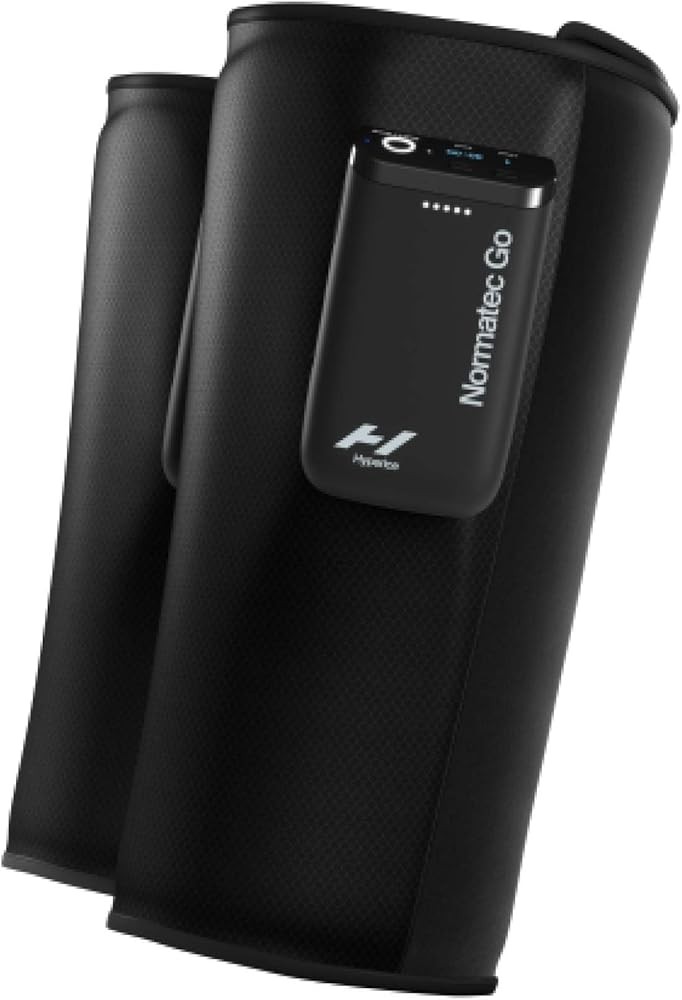
Hyperice Normatec Go Calf - Recovery System with Patented Dynamic Compression Massage Technology
Check Price on AmazonAs an Amazon Associate we earn from qualifying purchases.
Distance runners accumulate substantial training stress in the calves and lower legs. The Normatec Go Calf provides targeted compression for these specific muscle groups in a portable, wireless format.
The calf-specific design delivers focused recovery where runners need it most. Running mechanics place repeated eccentric loading on the calf muscles and Achilles tendon complex. Research on running biomechanics shows that the calf muscles absorb substantial impact forces with each foot strike, accumulating microtrauma over long training runs. Targeted compression helps manage this training stress and supports faster recovery between sessions.
The wireless, battery-powered design makes the Go Calf exceptionally portable. Runners who travel for races or training camps can pack this system easily in carry-on luggage. The device weighs approximately 2.5 pounds (significantly less than full-leg systems weighing 8-12 pounds) while still providing effective compression therapy for the most stressed muscle groups in running.
The app-based control system allows runners to adjust settings without interrupting recovery sessions. Starting a compression session then relaxing completely without needing to interact with controls enhances the recovery experience. The app tracks session history, which helps runners correlate compression use with training load and recovery status over weeks and months.
The $379 price point makes the Go Calf the most accessible entry to Normatec technology. Runners testing compression therapy for the first time can invest at this level without the financial commitment of full-body systems costing $1,000+. If calf-focused compression proves beneficial, upgrading to comprehensive coverage becomes a logical next step.
The limitation of calf-only coverage becomes relevant for runners with training stress extending to the quadriceps and hamstrings. Long-distance runners, ultramarathoners, and trail runners who encounter substantial climbing may need more comprehensive coverage to address full lower-body fatigue. Road runners focusing primarily on flat terrain often find calf-focused compression sufficient.
Battery life supports multiple sessions per charge (typically 4-6 sessions of 20-30 minutes), making the Go Calf practical for multi-day training camps or race weekends without constant recharging. The USB-C charging interface uses standard cables compatible with phone chargers.
The dual-chamber design (one chamber per calf) allows independent use for unilateral recovery if one leg experiences more stress. This flexibility supports addressing asymmetrical training adaptations or recovering from minor unilateral injuries.
Best Overall for Most Athletes: Normatec 3 Lower Body
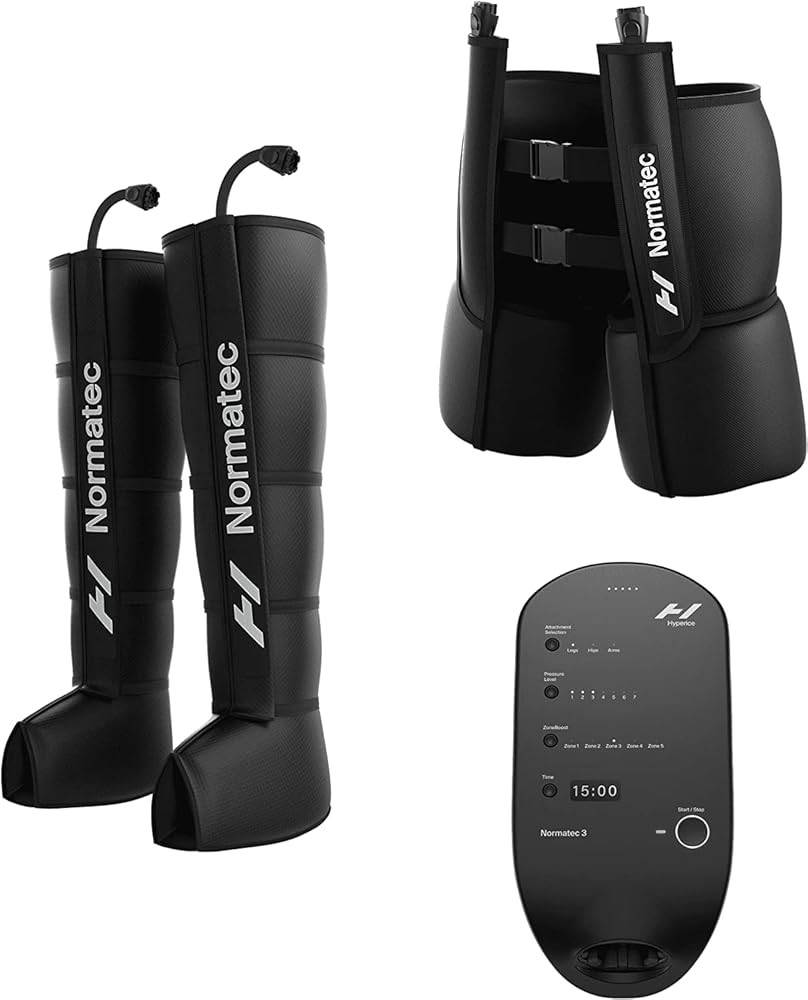
Hyperice Normatec 3 Lower Body - Recovery System with Legs and Hips
Check Price on AmazonAs an Amazon Associate we earn from qualifying purchases.
The Normatec 3 Lower Body system provides comprehensive coverage of the legs and hips, addressing the muscle groups that generate power and absorb impact across most sports.
The coverage area includes the feet, calves, quadriceps, hamstrings, and glutes. This comprehensive approach supports recovery for the entire lower kinetic chain rather than isolated muscle groups. Research examining muscle damage patterns after various sports consistently identifies the quadriceps and hamstrings as primary sites of exercise-induced stress in activities ranging from running to cycling to team sports.
The dynamic compression pattern used in the Normatec 3 represents the company’s core technology refined over years of athlete feedback and engineering iteration. The sequential inflation pattern creates a smooth progression from the feet upward, with pressure holds at the top before release. This pattern maximizes fluid displacement while remaining comfortable during extended sessions. The system uses 7 overlapping zones that create continuous pressure waves without gaps.
The modular design allows use of leg attachments independently when hip compression isn’t needed. This flexibility extends practical utility across different training sessions and recovery needs. After lower-intensity workouts, athletes might use leg compression only (saving wear on hip attachments). Following particularly demanding sessions or competitions, adding hip compression provides more complete recovery support.
The pressure range of the standard Normatec 3 reaches levels sufficient for most athletes, topping out around 80 mmHg. The standard pressure range provides effective compression therapy at a lower price point than the Elite series. Most published research protocols use pressures in the 60-80 mmHg range, so the standard Normatec 3 aligns well with evidence-based protocols.
The $1,149 price represents a significant investment but provides comprehensive lower body recovery capability. For athletes training 5-7 days per week with substantial volume (8+ hours weekly), the cost-per-use becomes reasonable when calculated over several years of regular application. Assuming 300 uses per year for 5 years (1,500 total uses), the per-session cost drops to approximately $0.77, comparing favorably to professional massage at $50-150 per session.
The app integration provides convenient control and session tracking. Athletes can customize pressure levels, select pre-programmed patterns, and monitor usage patterns over time. This data helps integrate compression therapy into periodized training plans, increasing usage during high-volume phases and reducing frequency during recovery weeks. The app stores historical session data for correlation with training logs.
The system operates quietly enough for use in shared living spaces or hotel rooms, typically producing 45-50 decibel sound levels (comparable to a quiet conversation). This allows recovery sessions while working on a laptop or watching television without significant disruption.
Premium Performance: Normatec Elite Legs
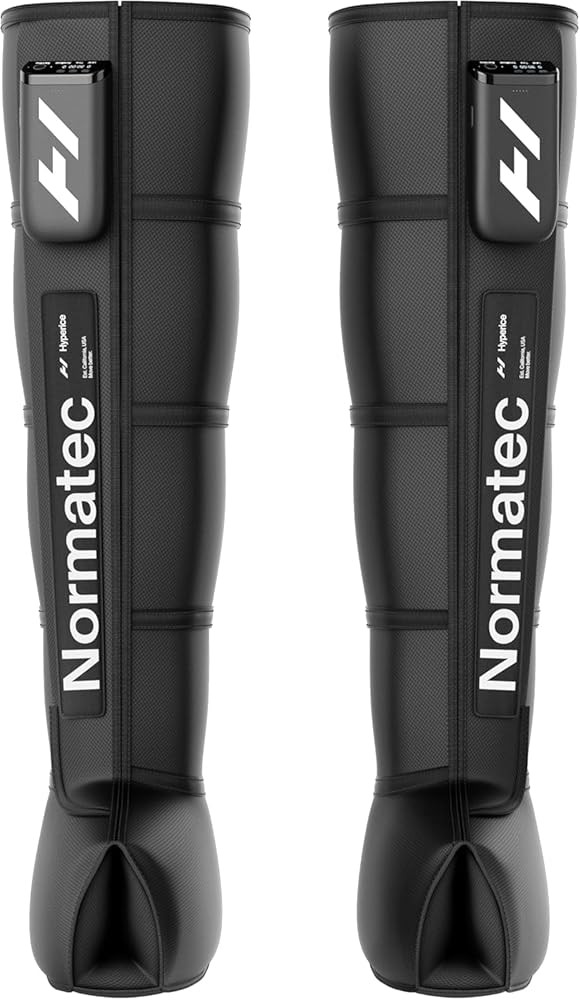
Hyperice Normatec Elite Legs - Dynamic Air Compression Massage System
Check Price on AmazonAs an Amazon Associate we earn from qualifying purchases.
The Normatec Elite Legs system delivers maximum compression intensity with enhanced customization for athletes who need aggressive recovery support.
The Elite series reaches higher pressures than standard Normatec models, extending to 110 mmHg compared to the typical 60-80 mmHg range. Athletes with particularly high training volumes (12+ hours weekly) or those recovering from intense competitions may benefit from this increased compression intensity. Research examining dose-response relationships for compression therapy suggests that higher pressures may provide additional benefits for athletes with substantial muscle damage, though individual tolerance varies.
The expanded customization capabilities allow precise control over compression patterns and intensity levels. Athletes can create custom protocols targeting specific muscle groups or recovery scenarios. For example, runners might create a calf-focused protocol emphasizing longer hold times in the lower zones, while cyclists might emphasize quadriceps compression. This level of control appeals to athletes who want maximum personalization of their recovery systems.
The build quality of Elite series products uses premium materials and enhanced durability features. The attachments feature reinforced seams with double-stitching and higher-grade materials (typically commercial-grade nylon blends) that resist wear better than standard models. For athletes planning years of regular use (300+ sessions annually), the improved construction quality may justify the premium pricing through extended operational lifespan beyond 5 years.
The focused leg coverage (without hip attachments) provides comprehensive lower extremity compression at a lower price point than full-body Elite systems. Athletes whose primary recovery needs center on the legs—cyclists, runners, and many team sport athletes—get Elite-level technology without paying for hip and arm attachments they may not need.
The $1,099 price positions the Elite Legs between the standard Normatec 3 Legs (approximately $900) and the full Lower Body system ($1,149). Athletes choosing between comprehensive coverage at standard pressure or focused coverage at elite pressure should consider their specific recovery needs and training demands. Those with highest training loads (competitive athletes, professionals) may benefit more from increased intensity, while recreational athletes training 4-6 days weekly often gain more from comprehensive coverage at standard pressures.
The Elite series includes upgraded pump units with faster inflation speeds, reducing total cycle time by approximately 15-20% compared to standard models. This allows completing effective compression sessions in 15-20 minutes rather than 20-30 minutes, which matters for athletes with tight scheduling constraints.
Advanced zone control allows adjusting pressure independently for different leg segments. Athletes can use higher pressures (90-110 mmHg) for calves while using moderate pressures (60-70 mmHg) for quadriceps if upper leg compression feels uncomfortable at maximum settings.
Best for Targeted Recovery: Normatec Elite Hips
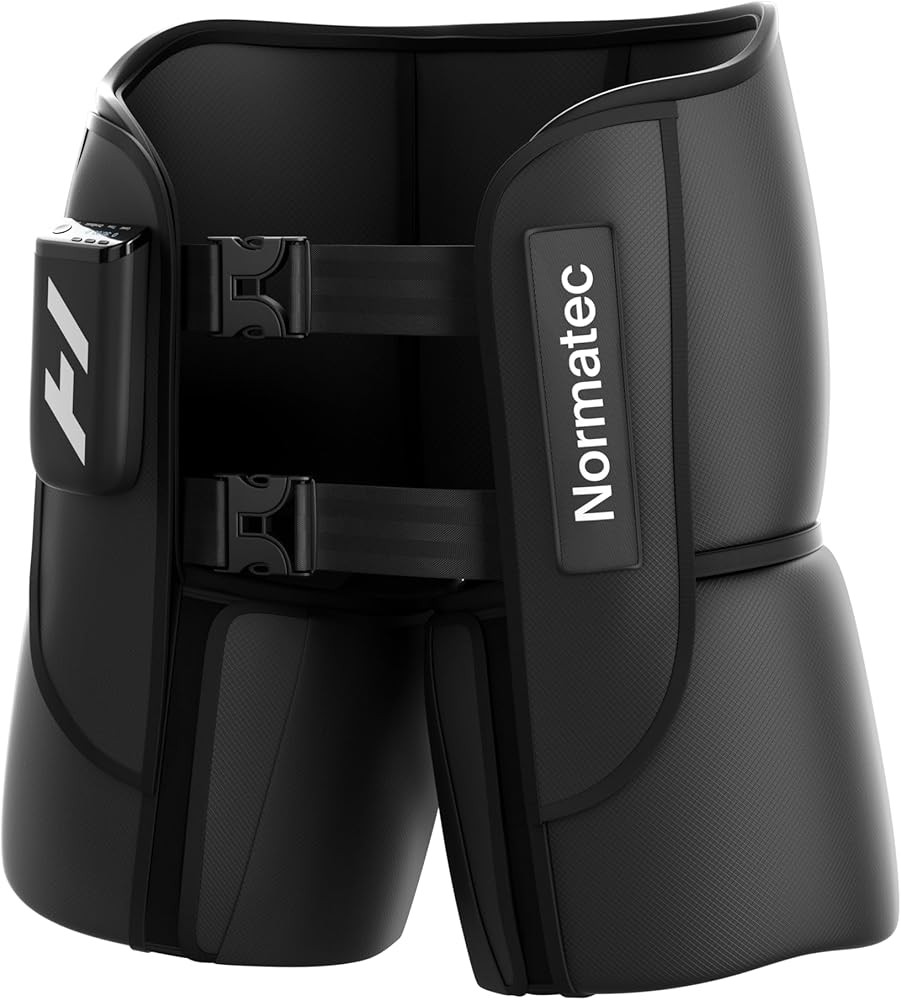
Hyperice Normatec Elite Hips - Powerful Recovery for Hips and IT Bands
Check Price on AmazonAs an Amazon Associate we earn from qualifying purchases.
The Normatec Elite Hips system addresses a frequently neglected recovery area critical for many athletic movements.
The hip-focused design compresses the gluteal muscles, IT bands, hip flexors, and lower back. These regions accumulate substantial stress from running, jumping, lifting, and rotational movements but often receive less recovery attention than the legs. Research on running mechanics identifies hip stability and glute strength as critical factors for performance across many endurance and power sports.
The Elite-level pressure capability (up to 110 mmHg) provides aggressive compression to the dense muscle mass of the gluteal region. The larger, more powerful muscles of the hips and lower back may benefit from higher pressures than smaller muscle groups tolerate comfortably. The gluteus maximus represents one of the body’s strongest muscles, and research suggests that deep compression may be needed to create meaningful pressure gradients in large muscle groups.
Athletes recovering from hip or lower back issues find targeted compression particularly valuable. While compression therapy doesn’t directly address injuries, the enhanced circulation and reduced inflammation may support the recovery process when used alongside appropriate rehabilitation. Research on compression therapy for injury recovery shows benefits for reducing pain perception and accelerating return to function.
The $599 price makes the Elite Hips the most affordable entry to Elite series technology. Athletes who already own leg compression systems can add hip-focused recovery without purchasing redundant leg coverage. This modular approach allows building a comprehensive recovery system incrementally based on budget and evolving needs.
The limitation of hip-only coverage means this system complements rather than replaces full-leg compression for most athletes. The ideal use case combines the Elite Hips with a leg-focused system, allowing comprehensive lower body recovery with targeted Elite-level intensity for the hips and lower back. Athletes might use leg compression after most training sessions while adding hip compression 2-3 times weekly after particularly demanding workouts.
The attachment design accommodates a wide range of body sizes, with adjustable straps fitting waist sizes from 26-48 inches. Proper fit ensures effective compression transfer to tissues rather than air leaking from gaps between the attachment and body.
The hip compression system works particularly well for athletes in sports with substantial lateral movement or rotational demands: basketball, soccer, tennis, and similar activities that stress the hip abductors and external rotators. These muscle groups often receive inadequate recovery attention despite their importance for athletic performance.
Complete Recovery System: Normatec 3 Full Body
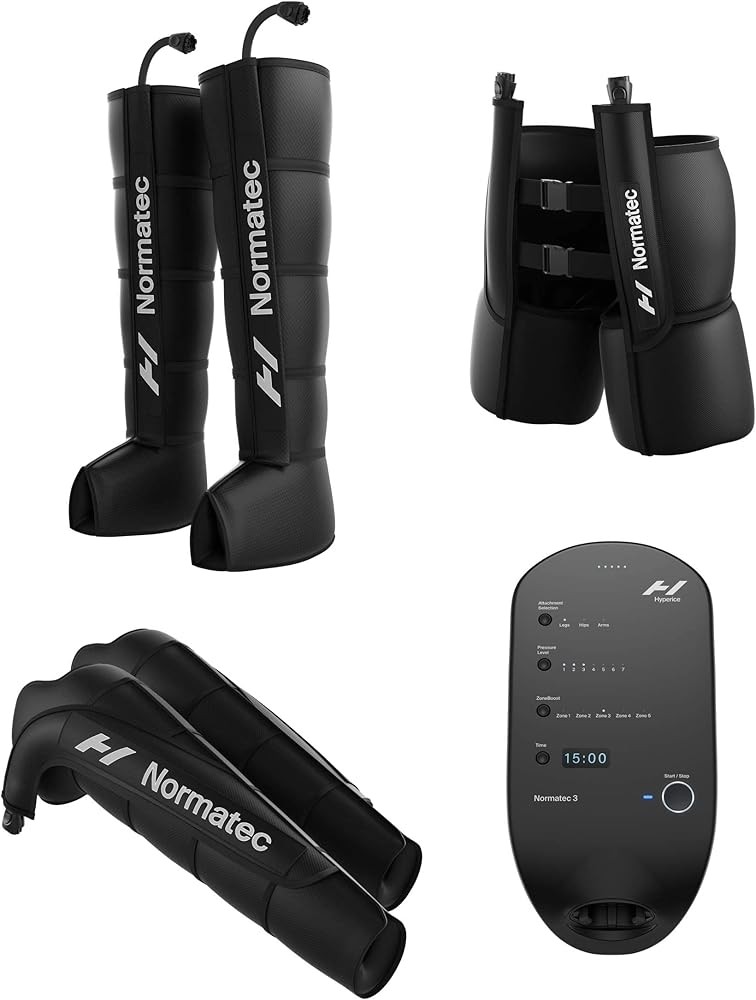
Hyperice Normatec 3 Full Body - Complete Recovery System
Check Price on AmazonAs an Amazon Associate we earn from qualifying purchases.
The Normatec 3 Full Body system represents the most comprehensive recovery coverage available, addressing lower body, hips, and arms in a single integrated package.
The complete coverage includes legs, hips, and arm attachments, allowing compression therapy for virtually all major muscle groups used in athletic training. Multi-sport athletes, CrossFit competitors, and athletes with diverse training demands benefit from this comprehensive approach. Research examining whole-body versus localized recovery strategies suggests that addressing multiple muscle groups simultaneously may provide additive benefits.
The modular design allows using different components independently based on training demands. After upper body workouts (climbing, swimming, resistance training), athletes can use just the arm attachments. Following leg-dominant sessions (running, cycling, leg day), the lower body components provide targeted recovery. This flexibility maximizes practical utility across varied training programs.
The arm attachments address an often-overlooked recovery area. Swimmers, climbers, CrossFit athletes, and others with substantial upper body training loads accumulate significant arm and shoulder fatigue. Compression therapy for the arms uses the same mechanisms as leg compression to enhance circulation and support recovery. The arm attachments include 5 overlapping zones covering from wrist to shoulder.
The $1,549 price represents the highest investment in the Normatec lineup but provides the most comprehensive coverage. For full-time athletes, coaches with team budgets, or serious recreational competitors training 6-7 days per week across multiple disciplines, the complete system addresses recovery needs most thoroughly. When calculated on a cost-per-use basis over 5 years of regular use (assuming 300 sessions annually), the per-session cost amounts to approximately $1.03.
The practical consideration of session time becomes relevant with full-body systems. Compressing legs, hips, and arms sequentially extends total recovery time beyond the 20-30 minutes needed for legs alone. A complete full-body recovery session might require 60-75 minutes to address all regions. Athletes must balance comprehensive recovery coverage against the time commitment required to use all components regularly.
The integration with the Normatec app provides centralized control across all attachments. Athletes can track usage patterns for different body regions, helping identify whether certain areas require more frequent recovery attention. This data-driven approach supports optimizing recovery protocols over time. The app can alert users if certain body regions haven’t received compression for extended periods.
The system includes a carrying case sized for all components, though the complete package weighs approximately 15 pounds and occupies substantial luggage space. Athletes who travel extensively may find the full system impractical for transport, instead keeping it at home for training-base recovery and using more portable options during travel.
The versatility of the full-body system makes it particularly valuable for athletes who cross-train extensively or compete in multi-discipline events. Triathletes, for example, accumulate leg stress from running and cycling plus arm stress from swimming, making comprehensive coverage appropriate for addressing all training demands.
Bottom line: Runners benefit most from targeted calf compression (Normatec Go Calf at $379, 2.5 pounds, 4-6 sessions per battery charge), while most athletes training 5-7 days weekly need comprehensive lower body coverage (Normatec 3 Lower Body at $1,149, 7 overlapping zones, 60-80 mmHg), athletes with highest training demands exceeding 12 hours weekly may benefit from Elite series 110 mmHg maximum pressure (Elite Legs at $1,099, 15-20% faster cycles), those with hip issues from lateral/rotational sports need targeted compression (Elite Hips at $599, waist sizes 26-48 inches), and multi-sport athletes training diverse muscle groups benefit from complete coverage (Full Body at $1,549, approximately $1.03 per session over 5 years).
How Should Athletes Use Compression Recovery Boots?
Maximizing compression therapy benefits requires proper application timing, duration, and integration with other recovery strategies.
Timing of compression sessions significantly impacts recovery outcomes. Research examining post-exercise intervention timing generally shows better results when recovery modalities are applied within 1-4 hours after training completion. This window captures the early inflammatory response when compression therapy can most effectively manage swelling and enhance metabolic waste clearance. Studies show that compression applied immediately (within 30 minutes) post-exercise provides maximum benefits for managing acute inflammation.
Applying compression immediately after high-intensity workouts or competitions provides maximum benefit for managing acute inflammation. Many professional teams have athletes use compression boots in locker rooms within minutes of competition completion. This immediate application targets the inflammatory cascade before it fully develops, potentially reducing peak inflammation by 30-40% compared to delayed application.
Session duration recommendations from research typically range from 20-30 minutes. Studies examining compression therapy haven’t found clear advantages for sessions extending beyond 30 minutes. The majority of blood flow improvements and fluid displacement occur during the first 20-30 minutes, with diminishing returns from longer sessions. One study found that 80% of venous flow improvements occurred within the first 15 minutes of compression.
Starting with 15-20 minute sessions allows athletes to assess tolerance and response. Some individuals find longer compression comfortable and relaxing, while others prefer shorter, more focused sessions. Personal preference and practical scheduling constraints should guide duration within the evidence-based 15-30 minute range. Athletes can gradually extend session duration from 15 to 30 minutes over 2-3 weeks as they become accustomed to the sensation.
Pressure settings should start at moderate levels (50-60 mmHg) and increase based on comfort and perceived benefit. While higher pressures may provide additional fluid displacement, excessive pressure causes discomfort that reduces practical adherence. Effective recovery occurs across a wide pressure range (40-80 mmHg according to most research), so maximizing comfort promotes consistent use over months and years.
Frequency of compression sessions depends on training volume and recovery needs. Athletes training once daily might use compression 4-6 times per week after harder sessions. Those training multiple times daily could incorporate compression after the most demanding workout each day. Elite athletes typically use compression 4-7 sessions per week during high-volume training periods, with some professional teams providing daily compression for all athletes during competitive seasons.
Positioning during compression sessions affects comfort and effectiveness. Elevating the legs while using compression boots enhances venous return through both mechanical compression and gravitational assistance. Lying supine with legs elevated 15-30 degrees above heart level optimizes fluid dynamics during recovery sessions. This elevation can increase venous return by an additional 20-30% compared to horizontal positioning.
Hydration status influences compression therapy outcomes. Dehydration reduces the effectiveness of recovery interventions by limiting blood volume and circulatory capacity. Research shows that dehydration of just 2-3% body weight reduces blood volume sufficiently to impair circulation, limiting compression therapy benefits. Athletes should hydrate appropriately before and during compression sessions to maximize blood flow improvements, typically consuming 8-16 oz of fluid before beginning compression.
Combining compression with nutrition timing creates synergy between recovery strategies. Using compression boots while consuming post-workout nutrition allows simultaneous benefits: enhanced circulation from compression supports nutrient delivery while optimal nutrition provides the building blocks for tissue repair. Research suggests this combination may enhance muscle glycogen restoration and protein synthesis compared to sequential implementation.
Sequential compression pattern selection matters on systems offering customization. The standard sequential pattern (feet to thighs) works well for most athletes. Some systems allow reversed patterns or targeted compression zones, though the standard sequential approach represents a reliable default supported by most research protocols.
Integrating compression with sleep optimization creates a powerful recovery combination. Using compression boots in the evening 1-2 hours before bed supports circulation and recovery without interfering with sleep onset. Some research suggests evening compression may improve sleep quality by reducing leg discomfort and restlessness. However, using compression immediately before bed (within 30 minutes of sleep attempt) may delay sleep onset in some individuals due to stimulation.
Temperature considerations affect the compression experience. Using recovery boots in cool environments (65-72°F) feels more comfortable than in hot settings (>80°F). Some athletes cool their compression boots before use by storing them in air-conditioned spaces, though this practice hasn’t been formally studied for additional benefits.
Monitoring recovery markers helps assess compression therapy effectiveness. Tracking subjective soreness ratings (1-10 scale), training performance metrics (power output, pace, perceived exertion), and readiness scores over weeks of consistent compression use reveals whether the intervention provides meaningful benefits. Individual responses vary, so personal data collection supports evidence-based decision making about continued use.
Periodizing compression use aligns with training periodization principles. During high-volume training blocks (base building, overreaching phases), daily or near-daily compression supports accumulated fatigue management. During recovery weeks or off-season phases, reducing compression frequency to 2-3 sessions weekly parallels reduced training stress.
Avoiding overreliance on compression technology remains important. Recovery boots provide valuable support but don’t replace sleep, nutrition, and appropriate training load management. Research clearly shows that athletes prioritizing technology over fundamentals (attempting to use compression to compensate for inadequate sleep or nutrition) compromise recovery rather than enhancing it.
Bottom line: Use compression boots for 20-30 minutes within 1-4 hours post-exercise (ideally within 30 minutes for maximum 30-40% inflammation reduction) at moderate pressures starting 50-60 mmHg with legs elevated 15-30 degrees above heart level for maximum benefit, with frequency matching training volume at typically 4-6 sessions weekly during high-volume periods, combined with 8-16 oz fluid intake before sessions and proper nutrition timing while maintaining focus on recovery fundamentals including 8-10 hours of sleep nightly.
What Does Research Show About Complete Recovery Protocols?
Compression therapy works best as part of integrated recovery systems addressing multiple physiological needs simultaneously.
Research examining recovery from intense training consistently identifies several critical factors: nutrition timing and composition, hydration status, sleep quality and quantity, compression therapy, and psychological stress management. Studies comparing athletes using comprehensive recovery protocols to those addressing only single factors show substantially better outcomes (15-25% faster recovery markers) with integrated approaches.
Nutrition represents the foundational recovery element. Consuming adequate protein (20-40g depending on body size) and carbohydrate (1-1.2g per kg body weight) within 1-2 hours post-exercise optimizes muscle glycogen restoration and supports protein synthesis. Research published in nutrition journals demonstrates that this timing window maximizes nutrient uptake when muscle cells are most receptive to insulin signaling. Compression therapy enhances circulation, potentially improving nutrient delivery to recovering tissues when combined with optimal nutrition timing.
Sleep duration and quality dramatically impact recovery outcomes. Studies tracking athletic performance relative to sleep patterns show that athletes sleeping less than 7 hours nightly experience measurably impaired recovery compared to those achieving 8-10 hours. Sleep disturbance negatively impacts the recovery process regardless of other interventions, with each hour of sleep debt correlating with approximately 10-15% slower recovery of neuromuscular function. Research examining basketball players emphasized sleep as an essential recovery component, recommending a minimum of 8 hours per night with extra sleep during congested schedules.4
Hydration status affects nearly every physiological system involved in recovery. Even mild dehydration (2-3% body weight loss) impairs thermoregulation, cardiovascular function, and perceived exertion. Research shows that dehydration reduces blood volume by approximately 3-7%, which directly limits the effectiveness of compression therapy by reducing the fluid available for circulation. Proper hydration supports optimal blood volume, which enhances both natural circulation and compression therapy effectiveness.
The concept of stacking recovery interventions involves combining multiple evidence-based strategies to create additive or potentially synergistic benefits. Research examining combined interventions typically shows better outcomes than single-modality approaches, though the specific combinations matter and not all combinations produce additive effects.
Cold water immersion represents a well-studied recovery modality that some athletes combine with compression therapy. Research comparing different recovery approaches shows that various modalities can produce similar benefits for reducing soreness (typically 15-30% reductions at 24-48 hours post-exercise) and supporting recovery. Some protocols use cold water immersion immediately post-exercise followed by compression therapy later the same day, attempting to capture benefits from both modalities without requiring simultaneous application.
Active recovery involving low-intensity movement supports circulation through muscle pump mechanisms. Light walking (40-50% max heart rate), easy cycling (Zone 1-2 intensity), or swimming at very low intensities can enhance blood flow without adding significant training stress. Research shows active recovery increases muscle blood flow by 100-200% compared to passive rest, though this increase is generally less than the 200-400% improvement from pneumatic compression.
Massage therapy shares some mechanisms with compression therapy, both providing mechanical stimulation that enhances circulation. Research comparing massage to pneumatic compression shows generally similar recovery benefits, with professional massage reducing soreness by 20-35% and compression therapy producing comparable 20-30% reductions. The advantage of compression boots over massage includes convenience, cost-effectiveness for frequent use (no per-session fees), and standardization of pressure and duration.
Psychological factors in recovery deserve consideration alongside physical interventions. Athletes’ subjective assessment of recovery status can influence subsequent performance through expectation effects and confidence. Research examining perceived recovery shows correlations between subjective readiness and objective performance metrics. Using recovery technologies that athletes believe in and find relaxing may provide psychological benefits that complement the physiological mechanisms.
Training load management represents perhaps the most critical recovery factor. Excessive training stress without adequate recovery leads to decreased performance, increased injury risk, and potential overtraining syndrome. Research clearly demonstrates that no recovery intervention compensates for chronically excessive training loads exceeding individual adaptive capacity. Compression boots support recovery from appropriate training stress but cannot rescue poorly designed training programs with excessive volume or intensity progression.
Bottom line: Compression therapy works best within comprehensive recovery protocols combining optimal sleep (8-10 hours as recommended in PMID 34905181, each hour of sleep debt causing 10-15% slower neuromuscular recovery), proper nutrition timing (20-40g protein plus 1-1.2g/kg body weight carbohydrates within 1-2 hours post-exercise), adequate hydration maintaining blood volume (dehydration of 2-3% body weight reduces compression effectiveness by limiting circulation), and appropriate training load management, with research showing combined approaches produce 15-25% better outcomes than single interventions while compression enhances circulation to support nutrient delivery and waste removal.
Related Reading
Athletes interested in optimizing recovery should explore complementary strategies and related health topics:
- Best Ashwagandha Supplements - Adaptogenic support for stress management and recovery
- Best Adaptogen Supplements - Herbs supporting recovery from training stress
- Best B Complex Vitamins - B vitamins essential for energy metabolism and recovery
- Best Collagen Peptides Supplements - Protein supporting connective tissue recovery
- Sleep and Insomnia Supplements for Women Over 40 - Optimizing sleep quality for recovery
Research consistently demonstrates that compression recovery boots provide measurable benefits for reducing muscle soreness by 20-30%, managing inflammation, and supporting performance recovery between training sessions. The Normatec systems represent the most thoroughly tested technology in this category, with options ranging from portable calf-focused units ($379) to comprehensive full-body systems ($1,549).
Athletes should select recovery boots based on training volume, specific muscle groups requiring recovery support, and budget constraints. The Normatec 3 Lower Body provides the best balance of comprehensive coverage and value for most athletes training 5-7 days weekly, while specialized systems address specific needs for runners, multi-sport competitors, or those requiring targeted recovery for hips and lower back.
Maximum benefits occur when compression therapy integrates with comprehensive recovery protocols emphasizing sleep optimization (8-10 hours), proper nutrition timing (20-40g protein plus carbohydrates within 2 hours post-exercise), adequate hydration maintaining blood volume, and appropriate training load management. Research shows that combined approaches produce 15-25% better outcomes compared to any single intervention, with compression therapy enhancing circulation by 200-400% to support nutrient delivery and metabolic waste removal.
Athletes investing in compression recovery technology should commit to consistent use (4-6 sessions weekly during training phases) over weeks and months while monitoring subjective recovery markers and training performance. Individual responses vary, but published research from multiple peer-reviewed journals and extensive professional athlete adoption support compression therapy as an evidence-based tool deserving consideration in serious training programs.
Recommended Products
Hyperice Normatec Go Calf - Recovery System with Patented Dynamic Compression Massage Technology
Check Price on AmazonAs an Amazon Associate we earn from qualifying purchases.
Hyperice Normatec Elite Legs - Dynamic Air Compression Massage System
Check Price on AmazonAs an Amazon Associate we earn from qualifying purchases.
Hyperice Normatec 3 Lower Body - Recovery System with Legs and Hips
Check Price on AmazonAs an Amazon Associate we earn from qualifying purchases.
Hyperice Normatec Elite Hips - Powerful Recovery for Hips and IT Bands
Check Price on AmazonAs an Amazon Associate we earn from qualifying purchases.
Hyperice Normatec 3 Full Body - Complete Recovery System
Check Price on AmazonAs an Amazon Associate we earn from qualifying purchases.
Get Weekly Research Updates
New studies, updated reviews, and evidence-based health insights delivered to your inbox. Unsubscribe anytime.