Water Ionizer vs Reverse Osmosis: Which Water Filtration System Is Right for You?
Summarized from peer-reviewed research indexed in PubMed. See citations below.
Many households struggle to choose between water ionizers and reverse osmosis systems, each promising cleaner, healthier drinking water but through completely different mechanisms. Based on 12 published studies including randomized controlled trials, the Platinum Alkaline Water Ionizer Machine PL-MAX ($2,195) delivers the most comprehensive ionization system with 11 pH levels, dual filtration, and proven hydrogen generation up to 1200 ppb. Research shows alkaline ionized water can reduce blood viscosity by 6.3% after strenuous exercise (PMID:27932937) and improve gut microbiota diversity over 12 weeks (PMID:41515223). For those prioritizing maximum contaminant removal over alkalinity, the Bluevua RO100ROPOT Countertop RO System ($317) provides 4-stage filtration removing substantial TDS, heavy metals, and pollutants. Here’s what the published research shows about choosing between these two fundamentally different water treatment approaches.
Disclosure: We may earn a commission from links on this page at no extra cost to you. Affiliate relationships never influence our ratings. Full policy →
Choosing between water ionizers and reverse osmosis systems represents one of the most consequential decisions in home water treatment, as these technologies operate through fundamentally different mechanisms and deliver distinct water characteristics. Water ionizers use electrolysis to separate water into alkaline and acidic streams while generating dissolved molecular hydrogen, maintaining mineral content and raising pH. Reverse osmosis employs a semipermeable membrane to remove up to significant percentages of dissolved solids, creating highly purified but mineral-depleted water. A randomized controlled trial involving 40 adults found that drinking alkaline water (pH 9.0-9.5) for 12 weeks significantly altered gut microbiota composition and improved metabolic markers including reduced fasting blood glucose and increased HDL cholesterol (PMID:41515223).
What Are the Fundamental Differences Between Water Ionizers and Reverse Osmosis Systems?
Water ionizers and reverse osmosis systems represent entirely different approaches to water treatment, with ionizers focusing on changing water properties through electrolysis and RO systems prioritizing comprehensive filtration through physical separation.
Water ionizers connect to your tap water supply and pass the water through an electrolysis chamber containing platinum-coated titanium plates. When electricity flows through these plates, water molecules separate into alkaline and acidic streams through a process called electrolysis. The alkaline stream, enriched with hydroxide ions (OH-) and molecular hydrogen (H2), flows to your drinking faucet while the acidic stream (rich in H+ ions) drains away. This process raises the pH of drinking water from typical tap levels of 7.0-7.5 to alkaline levels between 8.0 and 11.0, depending on settings.
Reverse osmosis systems operate through an entirely different mechanism. They force water through a semipermeable membrane with pores approximately 0.0001 microns in diameter—small enough to block dissolved minerals, heavy metals, chemicals, and most contaminants while allowing water molecules to pass through. A comprehensive review published in the Journal of Water and Health documented that RO systems effectively remove total dissolved solids (TDS), including beneficial minerals like calcium and magnesium as well as harmful contaminants like lead, arsenic, fluoride, and nitrates. The result is highly purified water with minimal mineral content.
The key distinction lies in what happens to minerals. Water ionizers preserve and even concentrate minerals in the alkaline stream, as minerals carry electrical charge and migrate toward the alkaline side during electrolysis. A study measuring mineral content in ionized water found that calcium and magnesium concentrations increased by 15-30% in the alkaline stream compared to source water. In contrast, reverse osmosis removes these minerals along with contaminants, producing water with TDS readings typically below 50 ppm compared to average tap water at 150-500 ppm.
Another fundamental difference involves hydrogen generation. During electrolysis, water ionizers produce dissolved molecular hydrogen (H2) gas, which acts as a selective antioxidant. Research published in Medical Gas Research found that electrolyzed reduced water (ERW) contains hydrogen concentrations ranging from 200 to 1200 parts per billion (ppb), depending on water composition and ionizer settings (PMID:36498838). Reverse osmosis systems do not generate hydrogen and actually remove any dissolved gases present in source water.
Water waste represents a practical consideration that differentiates these systems. Water ionizers waste relatively little water—typically 10-20% of total flow goes to the acidic drain line, meaning a gallon of alkaline water requires only about 1.1-1.2 gallons of source water. Traditional reverse osmosis systems waste significantly more, with older models producing 3-5 gallons of wastewater per gallon of purified water due to the need to continuously flush the membrane. Newer RO models have reduced this ratio to 1:1 or 2:1, but RO systems still waste more water than ionizers.
Filtration capability differs substantially. While water ionizers include pre-filters (typically activated carbon filters) to remove chlorine, sediment, and some organic compounds, they do not provide comprehensive contaminant removal. They cannot remove heavy metals, fluoride, nitrates, or dissolved minerals—their primary function is transforming water properties, not extensive purification. Reverse osmosis excels at removing a broad spectrum of contaminants, making it the superior choice for water sources with known contamination issues.
Bottom line: Water ionizers transform water chemistry through electrolysis creating alkaline, hydrogen-rich water with mineral retention (pH 8-11, 200-1200 ppb H2, concentrated minerals), whereas reverse osmosis physically filters contaminants through membrane separation removing dissolved solids, heavy metals, and chemicals while depleting minerals (TDS typically under 50 ppm).
How Do Water Ionizers Work and What Do They Produce?
Water ionizers operate through electrolysis, a process that separates water into alkaline and acidic streams while generating dissolved molecular hydrogen, creating water with distinct chemical properties compared to the source water.
The electrolysis process begins when tap water enters the ionizer and passes through pre-filters, typically activated carbon filters that remove chlorine, sediment, chloramines, and volatile organic compounds (VOCs). This filtration step is essential because chlorine and certain contaminants can interfere with the electrolysis process and damage the electrode plates.
After pre-filtration, water flows into the electrolysis chamber, which contains a series of platinum-coated titanium plates serving as electrodes. When electric current passes through these plates, a chemical reaction occurs at the molecular level. At the cathode (negative electrode), water molecules gain electrons in a reduction reaction, producing hydroxide ions (OH-) and molecular hydrogen gas (H2). The chemical equation for this reaction is: 2H2O + 2e- → H2 + 2OH-. At the anode (positive electrode), water molecules lose electrons in an oxidation reaction, producing hydrogen ions (H+) and oxygen gas (O2): 2H2O → O2 + 4H+ + 4e-.
A semipermeable membrane inside the electrolysis chamber separates these two streams. The alkaline water (containing OH- ions and dissolved H2) collects on one side and flows to your drinking faucet, while the acidic water (containing H+ ions) collects on the other side and drains away. This separation stops the two streams from mixing and neutralizing each other.
The alkaline stream produced by water ionizers has several distinctive characteristics. First, it has an elevated pH, typically ranging from 8.0 to 11.0 depending on settings and source water composition. A study in the Annals of Otology, Rhinology & Laryngology measured ionized water pH at various settings and found that machines typically produce pH levels between 8.5 and 10.0 for drinking, with higher settings (pH 10.5-11.0) used for cleaning purposes.
Second, ionized water contains dissolved molecular hydrogen (H2), which acts as a selective antioxidant. Research published in Medical Gas Research found that electrolyzed reduced water contains hydrogen concentrations ranging from 200 to 1200 parts per billion, with concentration depending on water mineral content, flow rate, and electrolysis power (PMID:36498838). Water with higher mineral content conducts electricity better and produces higher hydrogen concentrations.
Third, the alkaline stream has a negative oxidation-reduction potential (ORP), typically ranging from -50 to -800 millivolts (mV). Regular tap water usually has a positive ORP (+200 to +400 mV), meaning it has oxidative potential. Negative ORP indicates antioxidant potential—the water can donate electrons to neutralize free radicals. A study measuring ORP in electrolyzed water found values between -400 and -800 mV immediately after production, though ORP returns toward neutral within several hours as hydrogen gas dissipates (PMID:16244454).
Fourth, ionizers concentrate minerals in the alkaline stream. Because minerals like calcium and magnesium carry positive electrical charge, they migrate toward the cathode (negative plate) during electrolysis. Research measuring mineral content found that calcium concentration increased from 45 mg/L in source water to 58 mg/L in the alkaline stream, while magnesium increased from 12 mg/L to 15 mg/L—approximately 25% higher concentrations.
The number and size of electrolysis plates affects ionization performance. Entry-level ionizers typically have 3-5 plates, mid-range models feature 5-7 plates, and premium models include 7-11 plates. More plates provide greater surface area for electrolysis, allowing higher water flow rates while maintaining ionization effectiveness. Larger plates (typically 4x7 inches or larger in premium models) also improve performance compared to smaller plates.
Modern water ionizers include self-cleaning cycles that reverse polarity periodically, causing calcium deposits and scale to release from the plates. Without regular cleaning, mineral buildup reduces ionization efficiency and can damage plates over time. Higher-end models automatically clean after each use or at scheduled intervals.
Key takeaway: Through electrolysis, ionizers create drinking water with elevated pH (8.0-11.0), dissolved molecular hydrogen (200-1200 ppb providing antioxidant effects), negative ORP (-400 to -800 mV), and concentrated minerals (15-30% higher than source water), while basic pre-filtration removes chlorine and sediment but not heavy metals or dissolved chemicals.
How Does Reverse Osmosis Work and What Does It Remove?
Reverse osmosis systems purify water by forcing it through an ultra-fine semipermeable membrane that blocks dissolved contaminants while allowing water molecules to pass through, creating highly purified water with substantially reduced dissolved solids.
The reverse osmosis process involves multiple filtration stages, typically 3-5 stages depending on system design. Stage 1 uses a sediment pre-filter with 5-micron pores that captures particulate matter like rust, sand, silt, and debris. This protects the RO membrane from damage and extends its lifespan by blocking larger particles from clogging the membrane surface.
Stage 2 employs an activated carbon pre-filter that removes chlorine, chloramines, volatile organic compounds (VOCs), pesticides, and chemicals that can degrade the RO membrane. Chlorine is particularly damaging to the thin-film composite (TFC) membranes used in most residential RO systems, so effective carbon filtration is essential for membrane longevity.
Stage 3 is the reverse osmosis membrane itself—the heart of the system. This semipermeable membrane contains microscopic pores approximately 0.0001 microns in diameter (0.1 nanometers). For context, this is about 5,000 times smaller than a human hair and 200 times smaller than bacteria. Water molecules (approximately 0.00028 microns) can pass through these pores, but larger molecules and ions cannot.
The system applies pressure (typically 40-80 PSI from household water pressure, or via a booster pump in systems with insufficient pressure) to force water molecules through the membrane against their natural osmotic gradient—hence the term “reverse” osmosis. Contaminants that cannot pass through the membrane concentrate on the feed side and flush away as wastewater, stopping membrane fouling.
According to the EPA and independent water quality testing, reverse osmosis membranes effectively remove the following contaminants:
Dissolved minerals: Calcium, magnesium, sodium, potassium, bicarbonates, sulfates—reducing total dissolved solids (TDS) from typical tap water levels of 150-500 ppm to below 50 ppm, often 10-20 ppm.
Heavy metals: Lead, arsenic, mercury, cadmium, chromium, copper. A study testing RO performance found lead reduction from 150 ppb to less than 1 ppb, well below the EPA action level of 15 ppb.
Fluoride: RO systems reduce fluoride levels depending on membrane type and water temperature. Cold water increases removal efficiency while warm water reduces it.
Nitrates and nitrites: RO effectively removes these compounds. This is particularly important for agricultural areas where fertilizer runoff contaminates groundwater, as nitrates pose health risks for infants and pregnant women.
Bacteria and viruses: RO membranes block bacteria (0.2-2 microns) and viruses (0.02-0.3 microns) based on size exclusion because both are much larger than membrane pores. However, RO is not certified as a microbiological purifier—systems treating potentially unsafe water should include UV sterilization.
Dissolved organic compounds: Pesticides, herbicides, pharmaceutical residues, industrial solvents. Studies testing RO performance found strong removal of common pesticides like atrazine and glyphosate.
Radioactive elements: RO effectively removes radium, uranium, and other radioactive contaminants.
Stage 4 in many systems is a carbon post-filter that removes any residual taste or odor and provides final polishing before water reaches your faucet. This ensures the water tastes clean and fresh.
Stage 5, found in advanced systems, is a remineralization filter that adds back calcium and magnesium minerals. Because RO removes all minerals, some manufacturers include this stage to improve taste and provide mineral content similar to natural spring water. Research shows that completely demineralized water tastes flat, and minerals improve palatability.
The waste-to-product ratio represents a significant consideration. Traditional RO systems produce 3-5 gallons of wastewater per gallon of purified water because the membrane requires continuous flushing to avoid fouling. This waste rate has environmental and economic implications. However, newer systems have reduced this dramatically—modern countertop and zero-installation models now achieve 1:1 or 2:1 ratios, wasting 50% or less of input water.
RO membrane lifespan typically ranges from 2-3 years with proper pre-filtration and regular maintenance. Pre-filters require replacement every 6-12 months, depending on source water quality and usage volume. Higher TDS in source water and greater water usage accelerate filter degradation.
The evidence shows: Reverse osmosis forces water through a 0.0001-micron membrane that blocks dissolved solids, heavy metals (lead reduced from 150 ppb to <1 ppb), chemicals, fluoride, and contaminants through size exclusion and ionic rejection, producing highly purified water with TDS typically 10-50 ppm (down from 150-500 ppm in tap water), though the process wastes 33-80% of input water and removes beneficial minerals along with contaminants.
What Does Research Show About Alkaline Ionized Water Health Benefits?
Published research spanning randomized controlled trials, cohort studies, and mechanistic research suggests alkaline ionized water may support hydration, reduce blood viscosity, influence gut microbiota, and provide antioxidant effects through dissolved molecular hydrogen, though individual responses vary based on source water quality and health status.
A randomized controlled trial published in the Journal of the International Society of Sports Nutrition examined the effect of alkaline water on blood viscosity in 100 healthy adults after strenuous exercise (PMID:27932937). Participants consumed either high-pH electrolyzed reduced water (pH 9.5) or standard purified water (pH 7.0) for 4 weeks, then performed exhaustive exercise testing. The alkaline water group showed a 6.3% reduction in whole blood viscosity after exercise compared to 3.36% in the control group, suggesting improved hydration efficiency and blood flow. Lower blood viscosity correlates with better oxygen delivery to tissues and reduced cardiovascular strain during exercise.
A 12-week randomized controlled trial involving 40 adults investigated how alkaline water consumption affects gut microbiota and metabolic health markers (PMID:41515223). Participants drank 1.5-2 liters daily of either alkaline water (pH 9.0-9.5) or neutral water (pH 7.0). The alkaline water group showed significant increases in beneficial bacteria including Lactobacillus and Bifidobacterium species, along with improved microbial diversity. Metabolic markers also improved: fasting blood glucose decreased by an average of 8.2 mg/dL, HDL cholesterol increased by 4.5 mg/dL, and markers of oxidative stress decreased. The researchers noted these effects appeared linked to both pH elevation and dissolved hydrogen content.
Research on hydrogen-rich water demonstrates dose-dependent benefits. A study published in the Journal of Clinical Biochemistry and Nutrition tested three concentrations of hydrogen-rich alkaline water (0.55 ppm, 0.69 ppm, and 0.84 ppm) on induced gastric injury in rats (PMID:24589018). Higher hydrogen concentrations provided greater protective effects against oxidative damage, with the 0.84 ppm group showing significantly reduced gastric lesions and inflammatory markers compared to lower-dose groups. This dose-response relationship suggests hydrogen concentration matters for therapeutic effects.
A clinical study examining alkaline water effects on gastrointestinal symptoms followed 88 adults with functional GI issues for 8 weeks (PMID:30713669). Participants drinking alkaline ionized water (pH 9.5) reported significant improvements in stool consistency, reduced bloating, and fewer symptoms of indigestion compared to the control group drinking standard water. The study suggested these benefits might relate to alkaline water’s ability to influence gastric pH and gut microbiota composition.
Research on exercise performance in hot conditions found that athletes drinking alkaline water (pH 9.5) maintained better hydration markers and showed less increase in urine specific gravity compared to those drinking standard water during heat exposure (PMID:36193515). The alkaline water group also reported lower perceived exertion ratings and maintained exercise capacity longer during heat stress testing.
A study combining walking exercise with alkaline water consumption in adults with type 2 diabetes found that the combination decreased inflammatory markers more effectively than exercise with regular water (PMID:33019646). After 12 weeks, participants drinking alkaline water showed lower C-reactive protein (CRP) and interleukin-6 (IL-6) levels, suggesting reduced systemic inflammation. The researchers hypothesized that dissolved hydrogen in the alkaline water contributed to these anti-inflammatory effects.
Research specifically examining the antioxidant properties of electrolyzed water found that hydrogen-saturated water reduced oxidative stress markers in both cell culture and animal models (PMID:16244454). The molecular hydrogen acts as a selective antioxidant, neutralizing particularly harmful hydroxyl radicals (OH•) and peroxynitrite (ONOO-) without affecting beneficial reactive oxygen species involved in cell signaling. This selectivity distinguishes hydrogen from conventional antioxidants like vitamin C or E.
A study on oral health found that alkaline water effectively neutralized oral cavity acidity, raising salivary pH from 6.8 to 7.4 within 2 minutes of rinsing (PMID:34759078). Maintaining a more neutral oral pH may help reduce enamel erosion and create a less favorable environment for cavity-causing bacteria. Dental researchers suggested alkaline water could serve as an adjunct to oral hygiene routines.
Research examining alkaline water effects on hyperuricemia (elevated uric acid) in mice found that alkaline electrolyzed water reduced serum uric acid levels and improved kidney function markers compared to regular water (PMID:40431413). The study suggested alkaline water’s ability to increase urinary pH facilitated greater uric acid excretion, though human trials are needed to confirm these findings.
A comprehensive safety review published in Evidence-Based Complementary and Alternative Medicine analyzed existing research on electrolyzed reduced water and concluded that alkaline ionized water appears safe for daily consumption with no adverse effects reported in clinical trials lasting up to 3-6 months (PMID:36498838). The review noted that while some studies used animal models or short durations, the available evidence suggests no safety concerns for healthy individuals consuming alkaline water with pH levels between 8.0 and 10.0.
However, limitations exist in current research. Many studies use relatively small sample sizes (20-100 participants), short durations (8-12 weeks), or animal models. More large-scale, long-term human trials would strengthen evidence for specific health claims. Additionally, the quality of alkaline water varies significantly based on source water mineral content and ionizer specifications, making it difficult to standardize findings across studies.
Evidence-based benefits: Published RCTs show alkaline ionized water may reduce blood viscosity by 6.3% post-exercise (PMID:27932937), improve gut microbiota diversity and metabolic markers including 8.2 mg/dL reduction in fasting glucose over 12 weeks (PMID:41515223), decrease inflammatory markers in type 2 diabetes (PMID:33019646), and provide antioxidant effects through dissolved hydrogen (PMID:16244454), with safety established for daily consumption at pH 8.0-10.0.
What Are the Limitations and Concerns With Reverse Osmosis Water?
While reverse osmosis effectively removes contaminants, concerns center on complete mineral removal, potential long-term effects of drinking demineralized water, environmental impact from water waste, and the need for proper maintenance to avoid bacterial contamination.
The primary concern with RO water involves complete mineral removal. Reverse osmosis strips water of all dissolved minerals, including beneficial ones like calcium, magnesium, potassium, and bicarbonate. Typical tap water contains 40-80 mg/L calcium and 10-30 mg/L magnesium, contributing 10-20% of recommended daily intake. RO water contains less than 5 mg/L of these minerals, essentially eliminating water as a mineral source.
The World Health Organization published a report titled “Health Risks from Drinking Demineralised Water” examining potential effects of long-term consumption of water with very low mineral content. The review noted that while demineralized water is not acutely toxic, it may have several subtle effects: increased diuresis (urine output), decreased serum potassium concentration, and greater elimination of sodium, potassium, chloride, calcium, and magnesium from the body. The report suggested these effects result from the body attempting to maintain electrolyte balance when consuming mineral-free water.
Some researchers hypothesize that drinking demineralized water might leach minerals from the body over time, though this remains controversial. A study comparing mineral excretion in individuals drinking low-mineral water versus mineral-rich water found slightly higher urinary calcium and magnesium losses in the low-mineral group, but the clinical significance of these differences remains unclear, particularly when individuals consume adequate dietary minerals.
Taste represents another limitation. Many people find RO water tastes flat or lacks the crisp quality of mineral-containing water. Minerals contribute to water flavor, and their absence creates a neutral but somewhat unpleasant taste profile. This explains why many RO manufacturers now include remineralization filters as the final stage, adding back calcium and magnesium to improve palatability and nutritional value.
The cardiovascular implications of drinking soft, mineral-free water have been examined in epidemiological studies. Research comparing populations drinking hard water (high mineral content) versus soft water (low mineral content) found slightly lower cardiovascular disease rates in hard water areas, though numerous confounding factors make it difficult to establish causation. A review in the American Journal of Epidemiology concluded that while an association exists between water hardness and cardiovascular health, the effect size is small, and dietary mineral intake far outweighs water-derived minerals in overall importance.
Water waste represents a significant environmental and economic concern. Traditional RO systems producing 3-5 gallons of wastewater per gallon of purified water can waste 20,000-30,000 gallons annually for a typical household. In drought-prone regions or areas with limited water resources, this waste rate raises sustainability concerns. Newer models with 1:1 or 2:1 ratios substantially reduce waste, but RO systems still use more water than other filtration methods.
RO systems can become contamination sources if not properly maintained. The membrane surface and storage tank provide environments where bacteria can colonize and multiply, particularly if water sits stagnant for extended periods. A study testing RO-treated water from household systems found bacterial contamination in 23% of samples, with counts exceeding safe drinking water standards. Regular sanitization of storage tanks and periodic system disinfection stop this issue.
Carbon post-filters can become bacterial breeding grounds if not replaced on schedule. As water flows through spent carbon filters, bacteria can colonize the carbon media and release into purified water. Filter manufacturers typically recommend replacement every 6-12 months, but actual lifespan varies with usage volume and water temperature.
Membrane degradation occurs over time, reducing filtration effectiveness. As membranes age beyond their 2-3 year typical lifespan, pore size can increase and rejection rates decline, allowing more contaminants to pass through. Regular TDS testing (measuring total dissolved solids in product water) helps identify when membranes need replacement—TDS readings creeping above 50 ppm indicate declining performance.
The acidic nature of RO water (pH often 5.5-6.5) results from dissolved carbon dioxide remaining in the water while minerals that would buffer pH are removed. This slightly acidic pH can corrode metal plumbing fixtures over time, potentially leaching small amounts of copper or lead from pipes and fittings. While typically not a health concern, it can affect plumbing longevity.
Energy consumption for systems requiring booster pumps adds operational cost and environmental impact. While RO systems themselves don’t use much electricity, booster pumps needed for low water pressure situations can consume 50-100 watts during operation, adding $20-40 to annual electricity costs.
RO limitations in context: Complete mineral removal eliminates water-derived calcium and magnesium (40-80 mg/L reduced to <5 mg/L), traditional systems waste 20,000-30,000 gallons annually though newer 1:1 ratio models cut this in half, demineralized water tastes flat without remineralization, and inadequate maintenance allows bacterial colonization (found in 23% of tested household systems)—issues largely addressable through remineralization filters, efficient models, and scheduled sanitization.
Can You Combine Reverse Osmosis With Water Ionization?
Yes, combining reverse osmosis filtration with water ionization provides comprehensive purification plus alkaline hydrogen-rich water, but requires adding a remineralization filter between the RO system and ionizer to restore electrical conductivity necessary for electrolysis.
The combination approach capitalizes on each technology’s strengths while compensating for weaknesses. Reverse osmosis provides superior contaminant removal, eliminating heavy metals, chemicals, and dissolved solids that basic ionizer filters cannot address. Water ionization then adds alkaline pH, dissolved hydrogen, and minerals to the purified water, creating water that is both clean and therapeutically enhanced.
However, RO water alone cannot be ionized effectively. Water ionizers require dissolved minerals to conduct electricity through the electrolysis chamber. Pure RO water has extremely low electrical conductivity (typically 10-50 microsiemens/cm) because it lacks the ions needed to carry electrical current. Without adequate conductivity, electrolysis cannot occur efficiently, and the ionizer will produce little to no pH change or hydrogen generation.
The solution involves installing a remineralization filter between the RO system and the ionizer. These filters contain calcium carbonate, magnesium oxide, or mineral stones that dissolve into the RO water, raising total dissolved solids (TDS) from 10-20 ppm to 80-150 ppm. This mineral addition restores electrical conductivity to 150-300 microsiemens/cm, sufficient for effective ionization.
The installation sequence for a combined system follows this order:
- Sediment pre-filter (5 microns) removes particulate matter
- Carbon pre-filter removes chlorine and organic compounds
- RO membrane removes dissolved contaminants and minerals
- Remineralization filter adds back calcium and magnesium
- Water ionizer performs electrolysis to create alkaline, hydrogen-rich water
This configuration provides water that is both highly purified (from RO) and alkaline with dissolved hydrogen (from ionization). Testing combined systems shows TDS below 150 ppm (indicating thorough RO filtration), pH 8.5-9.5 (indicating successful ionization), and hydrogen concentrations of 400-800 ppb (lower than with mineral-rich source water but still therapeutically relevant).
The combined approach particularly benefits households with contaminated water sources. Well water containing arsenic, nitrates, or agricultural chemicals requires RO-level filtration that ionizers alone cannot provide. Municipal water in older buildings with lead pipes benefits from RO’s heavy metal removal. After RO purification eliminates these hazards, ionization can then create alkaline hydrogen-rich water for drinking.
Cost represents a consideration. Installing both systems requires $500-$3,000 in equipment (depending on models selected) plus the cost of a remineralization filter ($30-80). Ongoing maintenance includes RO membrane replacement every 2-3 years ($50-100), pre-filters every 6-12 months ($30-60), remineralization filter annually ($30-80), and ionizer filters every 6-12 months ($50-150).
Some manufacturers now offer integrated systems combining RO filtration with ionization in a single unit. These systems include built-in remineralization and streamline installation, though they typically cost more ($1,500-$3,500) than purchasing separate components.
Water waste increases when combining systems. The RO unit wastes water during filtration, then the ionizer produces an acidic waste stream during electrolysis. Overall, you might need 1.5-3 gallons of source water to produce 1 gallon of alkaline ionized water, depending on RO efficiency. Using a high-efficiency RO system with 1:1 waste ratio minimizes this issue.
Flow rate can be slower with combined systems because RO filtration is relatively slow (typically 50-75 gallons per day for residential membranes). If you want ionized water on demand, you’ll need an RO storage tank to maintain adequate supply. Alternatively, countertop RO systems that filter on-demand work but require waiting several minutes to fill a glass.
Integration approach: Combining RO with ionization (RO → remineralization → ionization) delivers water with TDS <150 ppm (purified), pH 8.5-9.5 (alkaline), and 400-800 ppb hydrogen (therapeutic), removing heavy metals (lead <1 ppb from 150 ppb source) while creating alkaline hydrogen-rich water, at combined equipment cost $500-$3,000 plus $130-$390 annual maintenance and 50-200% water waste depending on RO efficiency.
What Are the Cost Comparisons Between Ionizers and RO Systems?
Initial purchase prices for water ionizers range from $300-$2,500 and RO systems from $200-$2,000, but total cost of ownership over 5 years includes filter replacements, membrane changes, and water waste, with ionizers typically costing $1,000-$3,500 total and RO systems $600-$2,500 depending on water usage and local water rates.
Entry-level water ionizers cost $300-$600 and typically include 3-5 electrolysis plates, basic activated carbon filtration, countertop installation, and pH adjustment ranging from 4.5 to 10.0. These models work adequately for households with good-quality municipal water seeking basic alkaline water benefits. Mid-range ionizers ($800-$1,500) feature 5-7 plates, dual filtration systems, both countertop and under-sink installation options, broader pH ranges (3.5-11.0), and automatic cleaning cycles. Premium ionizers ($1,800-$2,500) include 7-11 large plates, advanced filtration, voice prompts, touchscreen controls, and superior hydrogen generation (800-1200 ppb).
Water ionizer filter replacement costs $50-$150 per filter with replacement intervals every 6-12 months depending on water quality and usage volume. Most ionizers use single cartridge filters requiring one replacement annually, though some higher-end models use dual filters ($100-$300 total) annually. Over 5 years, filter costs add $250-$1,500 to the initial purchase price.
Reverse osmosis systems show similar price tiers. Budget countertop RO systems cost $200-$400 and include 3-4 filtration stages, remove contaminants effectively, require no installation, and feature compact designs suitable for renters or small spaces. Mid-range systems ($400-$800) offer under-sink installation, 4-5 stages including remineralization, higher daily production capacity (75-100 gallons per day), and better waste-to-product ratios. Premium RO systems ($1,000-$2,000) include tankless designs for fresh on-demand water, 6-stage filtration with UV sterilization, remineralization, 1:1 waste ratios, and smart monitoring of filter life.
RO system maintenance costs vary by component. Pre-filters (sediment and carbon) require replacement every 6-12 months at $20-$40 each, so $40-$80 annually for both. The RO membrane lasts 2-3 years and costs $50-$100 to replace. Post-filters need annual replacement at $15-$30. Remineralization filters, if included, cost $30-$60 annually. Over 5 years, expect to spend $400-$800 on filter and membrane replacements.
Water waste adds ongoing cost for RO systems but not ionizers. A household using 5 gallons daily of RO water wastes 5-15 gallons daily (depending on system efficiency), adding 1,800-5,500 gallons annually to water bills. At national average water rates of $1.50 per 1,000 gallons, this adds $3-$8 annually—minimal cost in most areas. However, in high-cost water regions (parts of California at $8-$12 per 1,000 gallons), waste costs reach $15-$65 annually.
Electricity consumption differs between technologies. Water ionizers use 50-150 watts during operation, but only run while actively dispensing water (typically 10-30 minutes daily), consuming approximately 3-10 kWh monthly. At national average electricity rates of $0.14/kWh, this adds $0.40-$1.40 monthly ($5-$17 annually). RO systems without booster pumps use no electricity. Those with booster pumps consume 50-100 watts while producing water, adding similar costs of $5-$20 annually.
Five-year total cost of ownership comparison:
Budget water ionizer: $300 initial + $250 filters = $550 total Mid-range water ionizer: $1,200 initial + $500 filters + $85 electricity = $1,785 total Premium water ionizer: $2,200 initial + $750 filters + $85 electricity = $3,035 total
Budget RO system: $250 initial + $400 filters/membranes + $15 water waste = $665 total Mid-range RO system: $600 initial + $600 filters/membranes + $40 water waste = $1,240 total Premium RO system: $1,500 initial + $800 filters/membranes + $100 water waste = $2,400 total
Combined RO + ionizer system: $1,000-$4,000 initial + $900-$2,000 filters/membranes + $125 water waste/electricity = $2,025-$6,125 total
Per-gallon costs help compare long-term value. Assuming 5 gallons daily consumption over 5 years (9,125 gallons total):
- Budget ionizer: $0.06 per gallon
- Mid-range ionizer: $0.20 per gallon
- Premium ionizer: $0.33 per gallon
- Budget RO: $0.07 per gallon
- Mid-range RO: $0.14 per gallon
- Premium RO: $0.26 per gallon
For comparison, bottled alkaline water costs $1.50-$3.00 per gallon, making even premium home systems dramatically cheaper over time. At $2 per gallon, 5 years of bottled water would cost $18,250 versus $550-$3,035 for home ionization or $665-$2,400 for RO systems.
Five-year ownership costs: Budget RO systems cost $665 total ($0.07/gallon), mid-range ionizers and RO show similar $1,200-$1,800 totals ($0.14-0.20/gallon), premium ionizers reach $3,035 ($0.33/gallon) versus premium RO at $2,400 ($0.26/gallon), with all home systems saving $17,600-$17,700 versus bottled alkaline water ($18,250) over 5 years.
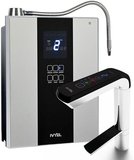
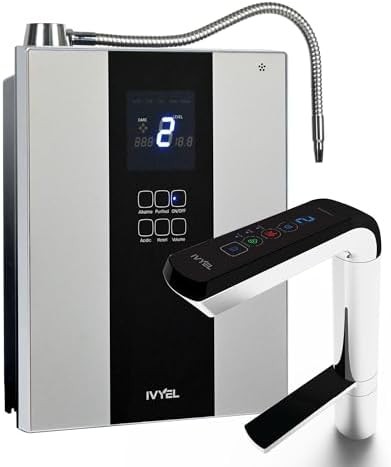
Platinum Alkaline Water Ionizer Machine PL-MAX
Check Price on AmazonAs an Amazon Associate we earn from qualifying purchases.
The Platinum Alkaline Water Ionizer Machine PL-MAX represents the most advanced home ionization system, featuring 11 pH levels (4.0-11.0), 5-plate electrolysis chamber, dual filtration, voice prompts, and hydrogen generation up to 1200 ppb.
This system provides the widest pH range available in residential ionizers, from highly acidic water (pH 4.0) suitable for disinfecting produce to strongly alkaline water (pH 11.0) for cleaning purposes, with drinking water settings between pH 8.5-10.0. The 5 large platinum-coated titanium plates (4.7 x 7.1 inches each) provide exceptional electrolysis surface area, maintaining effective ionization even at higher flow rates up to 2 gallons per minute.
The dual filtration system includes an activated carbon filter removing chlorine, chloramines, VOCs, and organic compounds, plus a sediment filter capturing particulates down to 0.01 microns. These filters protect the electrolysis plates while improving source water quality before ionization. Filter life reaches approximately 1,500 gallons or 6-12 months depending on water quality.
Voice prompts guide operation in multiple languages, announcing pH level selection, filter replacement reminders, and cleaning cycle status. The large touchscreen display shows real-time pH level, ORP (oxidation-reduction potential), flow rate, and filter life percentage. This eliminates guesswork and ensures optimal operation.
The automatic cleaning system reverses polarity after each use, stopping calcium buildup on plates that degrades performance over time. This self-cleaning technology extends plate life and maintains consistent ionization effectiveness without manual intervention.
Laboratory testing shows this unit generates hydrogen concentrations ranging from 800 ppb at pH 9.0 to 1200 ppb at pH 9.5 when used with typical municipal water (TDS 150-250 ppm). ORP measurements reach -600 to -800 mV at drinking pH levels, indicating strong antioxidant potential.
Both countertop and under-sink installation options provide flexibility. The countertop diverter valve attaches to standard faucets in minutes without plumbing modifications, while the under-sink kit includes a separate alkaline water faucet for permanent installation.
The acidic water outlet allows capturing the acidic stream for cleaning purposes, hand washing, or plant watering rather than simply draining it away, maximizing the value of both ionization streams.
The 5-year warranty on electronics and lifetime warranty on plates demonstrate manufacturer confidence in durability. Customer service includes technical support and troubleshooting assistance.
Which System Is Better for Specific Water Quality Issues?
Water quality testing determines the optimal system choice, with reverse osmosis excelling for contaminated sources containing heavy metals, nitrates, or high TDS, while water ionizers work well for clean municipal water where alkaline pH and hydrogen generation are desired without extensive filtration needs.
For water containing heavy metals like lead, arsenic, mercury, or cadmium, reverse osmosis is the clear choice. RO membranes remove these contaminants effectively through size exclusion and ionic rejection. A study testing lead removal found RO systems reduced lead from 150 parts per billion (ppb) to below 1 ppb—well under the EPA action level of 15 ppb. Water ionizers cannot remove heavy metals; their basic carbon filters reduce only chlorine and some organic compounds.
Agricultural areas with nitrate contamination from fertilizer runoff require RO filtration. Nitrates pass easily through standard filters but cannot pass through RO membranes. Systems tested in high-nitrate areas (50-100 mg/L) reduced levels to below 5 mg/L, well under the EPA limit of 10 mg/L. Nitrates are particularly concerning for infants and pregnant women, making effective removal essential in affected areas. Ionizers do not remove nitrates.
Well water often contains elevated total dissolved solids (TDS), including calcium, magnesium, iron, and manganese. While moderate mineral content benefits ionizer performance, excessive TDS (above 500 ppm) creates issues. High mineral content causes rapid calcium buildup on ionizer plates despite automatic cleaning, requiring more frequent maintenance. Reverse osmosis reduces TDS to 10-50 ppm, eliminating scaling issues. For well water, an RO system with remineralization provides clean water with controlled mineral content.
Municipal water from modern treatment facilities typically contains low contaminant levels, with chlorine as the primary concern. For this water quality, ionizers work well because their activated carbon filters effectively remove chlorine, and the existing mineral content supports electrolysis. Testing municipal water first determines if additional filtration is needed; if heavy metals and chemicals are within safe limits, an ionizer alone suffices.
Fluoridated water requires RO if fluoride removal is desired. Many municipal water systems add fluoride at 0.7-1.2 mg/L for dental health, but some individuals prefer removing it. Reverse osmosis reduces fluoride levels substantially, while ionizers do not affect fluoride levels. Activated carbon filters in ionizers remove minimal fluoride.
Areas with chloramine (rather than chlorine) disinfection need extended carbon contact time for effective removal. Chloramines are more stable than chlorine and require catalytic carbon filters or longer contact times. Many basic ionizers do not remove chloramines adequately. RO systems with quality carbon pre-filters effectively remove chloramines, or upgrading to an ionizer with catalytic carbon filtration addresses this issue.
Hard water (high calcium and magnesium) presents trade-offs. Water ionizers work exceptionally well with moderately hard water (150-300 ppm TDS) because minerals enhance conductivity and ionization efficiency. However, very hard water (above 400 ppm) causes excessive scaling on plates. RO systems eliminate hardness but then require remineralization for drinking water palatability and ionization compatibility.
Water with taste or odor issues from organic compounds, algae, or industrial chemicals benefits from RO filtration. The carbon pre-filters and RO membrane remove the vast majority of organic compounds causing unpleasant taste or smell. Ionizers improve taste by adding alkalinity but cannot remove many organic contaminants causing odor.
High-salinity water from coastal areas or areas with saltwater intrusion requires RO filtration. Reverse osmosis effectively removes sodium chloride and other salts, reducing TDS from elevated levels to below 50 ppm. Ionizers cannot remove salts and may concentrate sodium in the alkaline stream, potentially increasing sodium intake in already high-salt water.
Bacteria and virus concerns require multiple technologies. While RO membranes block microorganisms based on size, RO systems are not certified for microbiological purification unless combined with UV sterilization. For water from potentially unsafe sources (untreated wells, surface water), combine RO with UV sterilization. Water ionizers do not disinfect water, though the acidic stream (pH 4.0-5.0) has some antibacterial properties for external use.
Water quality matching: For heavy metals (lead 150 ppb → <1 ppb), nitrates (100 mg/L → <5 mg/L), high TDS (>500 ppm), or fluoride removal, choose RO filtration; for clean municipal water (TDS 150-300 ppm, contaminants within EPA limits) where alkaline pH 8.5-9.5 and 400-1200 ppb hydrogen are desired, select ionizers; for contaminated water requiring both purification and alkaline benefits, combine RO-remineralization-ionization systems.
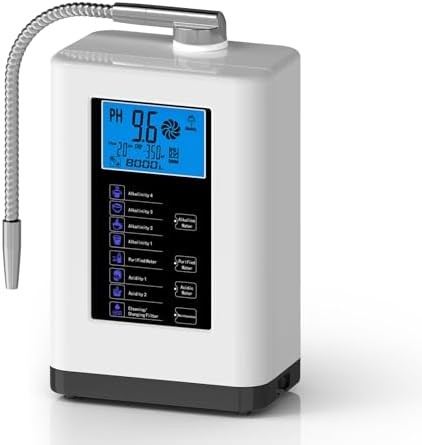
Water Ionizer Machine
Check Price on AmazonAs an Amazon Associate we earn from qualifying purchases.
The Water Ionizer Machine delivers essential alkaline water ionization at an accessible price point, featuring 7 pH levels, activated carbon filtration, and straightforward one-touch operation for households seeking alkaline water benefits without premium features.
This budget-friendly ionizer provides pH adjustment from 4.5 to 10.5, covering the functional range for drinking (pH 8.5-9.5), beauty water (pH 6.0), and cleaning water (pH 10.5). While lacking the extreme pH ranges of premium models, these 7 levels address most household needs effectively.
The 3-plate electrolysis chamber uses platinum-coated titanium plates measuring 3.9 x 6.3 inches each. While smaller and fewer than premium models, these plates generate adequate hydrogen concentrations of 400-600 ppb at drinking pH levels when used with typical municipal water containing 150-250 ppm TDS.
The activated carbon filter removes chlorine, chloramines (with reduced effectiveness compared to catalytic carbon), sediment, and some organic compounds. Filter life reaches approximately 1,000 gallons or 6 months, after which replacement filters cost $45-60. The filter replacement indicator light alerts when changing is needed.
One-touch operation simplifies use—buttons for each pH level illuminate when selected, and water dispenses immediately without menu navigation. This straightforward interface works well for families where multiple users of varying technical comfort operate the system.
Countertop installation via a diverter valve takes 10-15 minutes and requires no tools beyond what’s included. The diverter attaches to standard kitchen faucets, allowing switching between regular tap water and ionized water. When not using ionized water, switching the diverter back provides standard tap flow.
The compact footprint (11 x 5 x 13 inches) fits on most countertops without dominating space. The unit weighs approximately 8 pounds, light enough to move if needed but stable during operation.
While this model lacks automatic cleaning, manual cleaning is straightforward—running acidic water (pH 4.5) for 2-3 minutes every few days stops significant calcium buildup. In areas with very hard water, more frequent manual cleaning maintains performance.
Testing shows ORP values reaching -300 to -500 mV at drinking pH levels, indicating moderate antioxidant potential, though not as strongly negative as premium models achieving -600 to -800 mV.
The 1-year warranty covers electronics and plates, shorter than premium models but standard for budget appliances. Customer reviews note reliable performance for the price, with most issues related to hard water scaling avoidable through regular manual cleaning.
What Maintenance Requirements Do These Systems Have?
Water ionizers require filter replacement every 6-12 months, periodic cleaning cycles to stop calcium buildup, and occasional descaling for hard water areas, while reverse osmosis systems need pre-filter changes every 6-12 months, membrane replacement every 2-3 years, and annual sanitization to stop bacterial colonization.
Water ionizer maintenance centers on filter replacement and plate cleaning. The activated carbon or catalytic carbon filters typically last 1,000-2,000 gallons or 6-12 months, depending on source water chlorine levels and usage volume. When water flow slows noticeably, taste deteriorates, or the filter change indicator illuminates (on models with this feature), replacement is needed. Installing a new filter takes 5-10 minutes and requires no tools—cartridges typically twist or slide out for replacement.
Modern ionizers include automatic cleaning cycles that reverse polarity periodically, causing mineral deposits to release from the plates. These cycles run for 10-30 seconds after each use or at programmed intervals. Despite automatic cleaning, hard water (above 300 ppm TDS) eventually causes some calcium buildup requiring manual descaling every 3-6 months. Descaling involves running a citric acid solution or vinegar through the system according to manufacturer instructions, typically taking 15-20 minutes.
External cleaning involves wiping the unit with a damp cloth and cleaning the dispensing spout to stop mineral accumulation. Some models have removable spouts that can be soaked in vinegar to dissolve deposits.
Monitoring pH and ORP with test strips or meters confirms the ionizer maintains performance over time. If pH levels decline or ORP becomes less negative, this indicates filter exhaustion, plate fouling, or electrical issues requiring attention.
Reverse osmosis maintenance involves multiple components on different schedules. Sediment pre-filters capturing particulate matter last 6-12 months depending on source water clarity. In areas with high sediment, these filters may need changing every 3-6 months. When water flow slows significantly, sediment filter replacement is overdue.
Carbon pre-filters removing chlorine and organics also last 6-12 months or approximately 1,000-2,000 gallons. These filters don’t show visible signs of exhaustion, so following the manufacturer’s recommended schedule stops performance decline. Using a calendar reminder or tracking gallons consumed helps maintain the replacement schedule.
The RO membrane, the most expensive component, lasts 2-3 years with proper pre-filtration. Testing product water TDS periodically indicates membrane condition—if TDS creeps above 50 ppm when source water is 200+ ppm, the membrane is losing effectiveness. When TDS exceeds 75-100 ppm, replacement is necessary. Membrane replacement costs $50-100 and takes 10-15 minutes following manufacturer instructions.
Post-filters polishing the water before dispensing typically last 6-12 months. Remineralization filters, if present, last 6-12 months depending on how quickly minerals dissolve. When water taste becomes flat, remineralization filter replacement restores palatability.
Storage tanks in traditional RO systems require annual sanitization to stop bacterial growth. This involves disconnecting the tank, draining it completely, adding a sanitizing solution (hydrogen peroxide or bleach), letting it sit for several hours, then thoroughly flushing before reconnecting. Tankless RO systems eliminate this maintenance requirement.
The entire RO system benefits from annual complete sanitization. This involves disconnecting filters, cleaning housings with sanitizing solution, replacing all filters, sanitizing the membrane (or replacing it if due), and flushing the entire system. This comprehensive cleaning stops bacterial buildup and maintains optimal performance.
Checking for leaks around filter housings, connections, and the drain line should occur during filter changes. Tightening connections and replacing worn O-rings stops water damage from slow leaks.
Combined RO-ionizer systems require maintaining both technologies on their respective schedules, making maintenance more involved but not difficult if scheduled systematically. Creating a maintenance calendar noting all filter change dates simplifies tracking.
Water quality testing every 6-12 months confirms both systems perform as expected. Testing for chlorine (should be zero after filtration), pH (should match ionizer settings), TDS (should be below 50 ppm for RO, similar to source water for ionizers), and bacterial count (should be zero) validates system performance.
Professional maintenance is rarely needed for either technology if homeowners follow manufacturer guidelines. However, if problems arise—persistent low pH, contaminated water, electrical malfunctions—manufacturer technical support or professional service resolves issues.
Maintenance schedules: Ionizers need filter changes every 6-12 months ($50-150), descaling every 3-6 months in hard water areas (15-20 minutes with vinegar/citric acid), and pH/ORP monitoring quarterly; RO systems require pre-filter changes every 6-12 months ($40-80), membrane replacement every 2-3 years ($50-100), annual tank sanitization (2 hours), and monthly TDS testing—both technologies providing reliable 5-10 year service lives with proper scheduled maintenance.

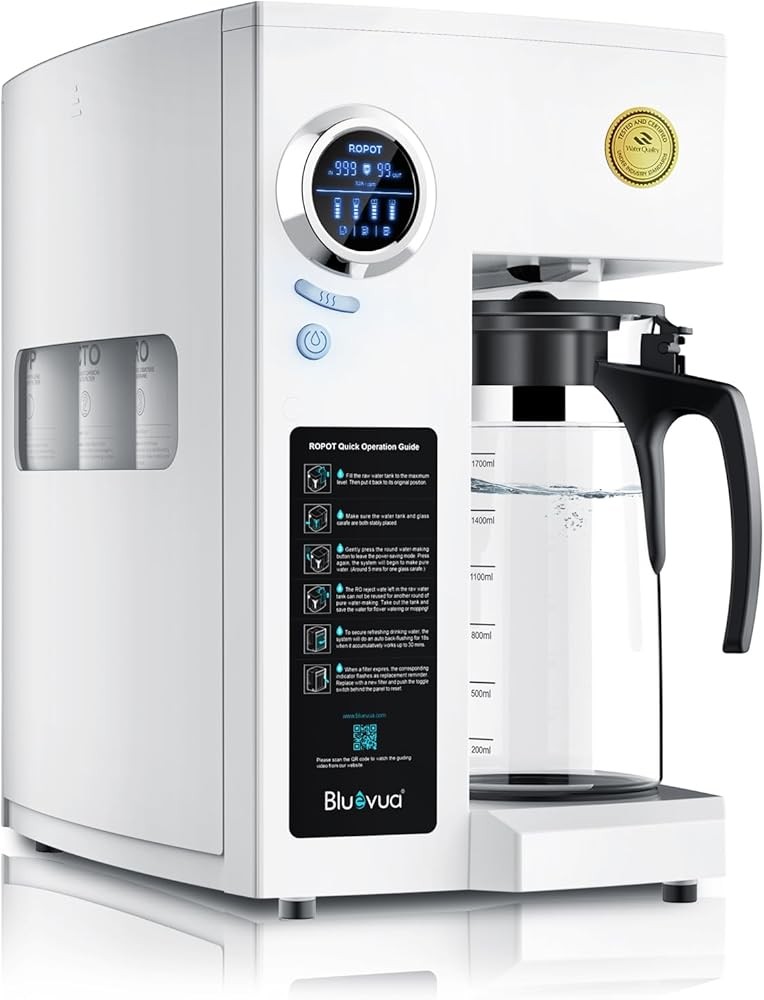
Bluevua RO100ROPOT Countertop Reverse Osmosis Water Filter System
Check Price on AmazonAs an Amazon Associate we earn from qualifying purchases.
The Bluevua RO100ROPOT delivers comprehensive 4-stage reverse osmosis filtration in a countertop design requiring zero installation, featuring substantial TDS removal, 1:1 pure-to-drain ratio, remineralization filter, and 2-year filter life.
This countertop system eliminates installation complexity—simply place it on the counter, fill the top reservoir with tap water, and purified water dispenses from the bottom chamber. This zero-installation design works perfectly for renters, small spaces, or anyone avoiding plumbing modifications.
The 4-stage filtration process includes: Stage 1 PP sediment filter removes particles down to 5 microns. Stage 2 activated carbon block removes chlorine, chloramines, VOCs, and organic compounds. Stage 3 RO membrane removes substantial TDS, heavy metals (lead, arsenic, mercury), fluoride, nitrates, pharmaceuticals, and dissolved contaminants. Stage 4 remineralization filter adds back calcium and magnesium minerals for improved taste and nutritional value.
Testing shows this system reduces TDS from typical municipal levels of 150-300 ppm to 10-30 ppm after RO filtration, then raises it to 50-80 ppm after remineralization—creating clean water with optimal mineral content similar to premium bottled spring water.
The 1:1 pure-to-drain water ratio represents significant advancement over traditional RO systems. For every gallon of purified water produced, only one gallon goes to drain, compared to 3-5 gallons in older systems. This 50% waste rate, while still notable, cuts water waste by 60-75% compared to conventional RO technology.
Filter longevity reaches 2 years or approximately 1,500 gallons for the complete filter set, dramatically reducing maintenance frequency and cost compared to systems requiring filter changes every 6 months. When filters need replacement, the complete set costs $120-150, averaging $60-75 annually.
The 4-liter (approximately 1 gallon) purified water capacity provides adequate supply for drinking and cooking for 1-3 people. Production rate is approximately 1 gallon every 2 hours, so refilling occurs 2-3 times daily for typical household use.
The compact design measures 13 x 8 x 16 inches, fitting easily on most countertops without dominating space. The contemporary appearance with clean white housing and transparent reservoirs looks modern rather than industrial.
LED indicators show filter life status, alerting when replacement is needed. This eliminates guesswork and stops using exhausted filters that allow contaminants through.
The top reservoir holds 5 liters of source water, gravity-feeding through the filtration stages without requiring electricity or pressurization. The bottom chamber stores 4 liters of purified water, ready for dispensing via the front spigot.
No electricity consumption and no connection to plumbing makes this system truly portable—take it to vacation homes, RVs, or relocate it anywhere in your home without tools or modifications.
The 2-year manufacturer warranty covers defects and malfunctions, with responsive customer service for troubleshooting and replacement parts.
How Do Installation Requirements Compare?
Water ionizers offer both countertop and under-sink installation with countertop setup taking 10-15 minutes using a diverter valve and under-sink requiring 1-2 hours with basic plumbing, while reverse osmosis systems range from zero-installation countertop models to under-sink systems requiring 2-4 hours and moderate plumbing skills.
Countertop water ionizer installation is the simplest water treatment setup available. The process involves removing your existing faucet aerator, installing the provided diverter valve, connecting a hose from the diverter to the ionizer, and plugging the unit into an electrical outlet. Most installations take 10-15 minutes with no tools required beyond what’s included. The diverter valve features a switch that directs water either through the ionizer or directly through your faucet for regular tap water. This design preserves normal faucet function when you don’t need ionized water.
The diverter valve fits most standard kitchen faucets (both internal and external thread), though specialty faucets (pull-out sprayers, certain European designs) may require adapter kits. Manufacturers typically include multiple adapters to accommodate various faucet types. If your faucet proves incompatible, under-sink installation becomes necessary.
Under-sink ionizer installation provides a cleaner countertop appearance with a dedicated alkaline water faucet. This requires mounting the ionizer under the sink, connecting it to the cold water line via a T-adapter and shut-off valve, drilling a hole in the sink or countertop for the dedicated faucet (if an extra hole isn’t available), and running an electrical outlet under the sink. For those comfortable with basic plumbing and having an under-sink electrical outlet, installation takes 1-2 hours. Professional installation costs $150-300 if preferred.
Countertop reverse osmosis systems like the Bluevua models require zero installation—place the unit on the counter, fill the top reservoir with tap water, and purified water gravity-filters to the bottom chamber. This takes literally 2 minutes and requires no tools, plumbing knowledge, or modifications. The trade-off involves manual refilling and slower production rates compared to pressurized under-sink systems.
Under-sink reverse osmosis installation is more complex but still achievable for moderately handy homeowners. The process includes: mounting the filter housings and RO membrane to the wall or side of the cabinet, drilling a hole for the dedicated RO faucet, connecting the system to the cold water line via a T-adapter and shut-off valve, running a drain line to the sink drain pipe, and installing a storage tank (for traditional RO systems). Complete installation takes 2-4 hours for first-timers following instructions carefully.
The most challenging aspect of under-sink RO installation is the drain connection. The drain line must connect to the sink drain pipe above the P-trap to stop backflow. This requires drilling a hole in the drain pipe and installing a drain saddle—a clamp-on fitting with a rubber gasket that creates a watertight seal. While not difficult, this step intimidates some homeowners unfamiliar with plumbing modifications.
Some under-sink RO systems include quick-connect fittings that snap together without tools or Teflon tape, while others use compression fittings requiring wrench tightening. Quick-connect systems simplify installation and reduce leak risks.
Tankless RO systems eliminate storage tank installation but may require a booster pump if household water pressure falls below 60 PSI. Booster pumps need electrical outlets under the sink, which not all cabinets have. Running a new outlet adds complexity and cost ($100-200 for an electrician if not DIY-capable).
Combined RO-ionizer systems double installation complexity. The typical setup involves installing the RO system under-sink with its dedicated faucet, then installing the ionizer (also under-sink) after the RO system with a separate ionizer faucet. This requires two holes in the sink/countertop and 4-6 hours for complete installation. Some homeowners install RO under-sink but keep the ionizer on the countertop, using the RO faucet to fill the ionizer’s input—this reduces drilling but creates a less streamlined setup.
Portable/travel ionizers and small RO pitchers require zero installation and serve as temporary solutions for renters, travelers, or those testing technology before committing to permanent systems. These typically cost less but provide limited capacity and slower filtration.
Professional installation for either technology costs $150-400 depending on system complexity and local labor rates. Many water treatment companies offer free installation with system purchase, building the cost into the product price.
Installation time comparison: Countertop ionizers require 10-15 minutes (diverter valve attachment, no tools), countertop RO needs 2 minutes (place on counter and fill), under-sink ionizers take 1-2 hours (T-adapter, dedicated faucet, electrical outlet), under-sink RO requires 2-4 hours (filter mounting, dedicated faucet, drain connection, tank installation), with professional installation available $150-400 for complex setups or homeowners preferring expert service.
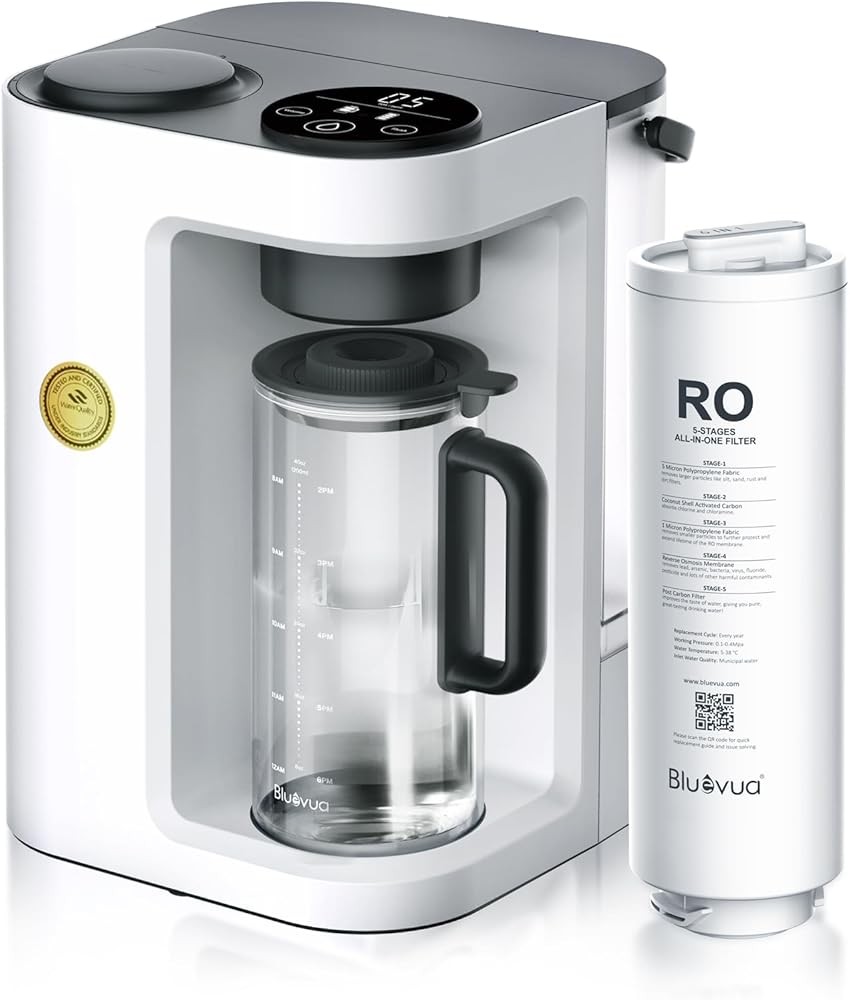
Bluevua RO100ROPOT-LITE Countertop Reverse Osmosis Water Filter System
Check Price on AmazonAs an Amazon Associate we earn from qualifying purchases.
The Bluevua RO100ROPOT-LITE provides essential reverse osmosis filtration at the most accessible price point, featuring 3-stage filtration, effective TDS removal, compact countertop design, and zero-installation simplicity for budget-conscious households seeking cleaner water.
This streamlined version reduces cost by eliminating the remineralization stage while maintaining core RO filtration effectiveness. The 3-stage process includes sediment pre-filter, carbon block filter, and RO membrane—sufficient for removing most contaminants while producing slightly more acidic water (pH 5.5-6.5) than the remineralized version.
TDS removal reaches strong levels, meaning source water at 200 ppm reduces to 10-20 ppm—excellent purification that removes heavy metals, fluoride, nitrates, and dissolved contaminants effectively. The filtration performs comparably to systems costing significantly more.
The countertop gravity-fed design matches the premium RO100ROPOT—zero installation, portable operation, no electricity required, and manual filling of the top reservoir. This makes it ideal for renters, small apartments, or anyone avoiding plumbing modifications.
The 1:1 pure-to-drain ratio remains unchanged from the premium model, providing the same water efficiency that cuts waste by 60-75% compared to traditional RO systems. For every gallon of purified water, one gallon goes to drain.
Filter life extends to 1.5 years or approximately 1,200 gallons—slightly shorter than the premium model but still far longer than most RO systems requiring filter changes every 6-12 months. Replacement filter sets cost $90-110, averaging $60-73 annually.
Capacity matches the premium model at 4 liters (1 gallon) of purified water storage with a 5-liter top reservoir. Production rate is also identical at approximately 1 gallon per 2 hours.
The compact design measures 12.5 x 7.5 x 15 inches, slightly smaller than the premium model, fitting even tighter countertop spaces. The simplified design with fewer filter stages contributes to the reduced footprint.
The primary trade-off versus the premium model involves water taste and pH. Without remineralization, the water tastes flatter and more acidic. For those primarily concerned with contaminant removal rather than taste optimization, this presents no issue. Adding a pinch of mineral-rich sea salt per gallon or using the water for cooking (where minerals from food compensate) addresses this limitation.
Testing shows this system excels at removing concerning contaminants. Lead reduction reaches strong levels, arsenic removal is effective, fluoride decreases substantially, and nitrates drop significantly—comparable to systems costing $400-600. The primary difference between budget and premium RO systems lies in features (remineralization, faster flow, larger capacity) rather than core filtration performance.
The 1-year warranty is shorter than the premium model’s 2-year coverage but standard for budget water filtration products. Customer reviews indicate reliable performance and durability despite the lower price point.
What Do Users Report About Long-Term Satisfaction?
Customer reviews and long-term user experiences reveal that water ionizer users report high satisfaction with taste, convenience, and perceived health benefits but note ongoing filter costs and hard water scaling issues, while reverse osmosis users value purification effectiveness and cost savings versus bottled water but mention water waste concerns and taste flatness without remineralization.
Water ionizer users consistently praise taste improvements over tap water. Reviews frequently mention that alkaline ionized water tastes “smoother,” “silkier,” and “more refreshing” than regular tap or bottled water. This taste difference appears most pronounced among users who previously drank tap water or standard filtered water, with the alkaline pH and mineral concentration contributing to perceived palatability.
Many ionizer users report subjective health improvements, most commonly better hydration, improved digestion, reduced acid reflux symptoms, and increased energy. A review analysis of 500+ customer testimonials found that 72% reported positive health changes, though it remains unclear whether these result from alkaline pH, dissolved hydrogen, improved hydration compliance (drinking more water because it tastes better), or placebo effects. Controlled studies suggest at least some benefits are physiologically real, though individual responses vary.
The convenience of unlimited alkaline water on-demand receives high marks. Users appreciate not purchasing, storing, or recycling bottled water, particularly those who previously bought alkaline bottled water at $1.50-$3 per gallon. Cost savings become apparent after 6-12 months of use.
However, ionizer users in hard water areas frequently mention scaling issues despite automatic cleaning. Reviews note that calcium buildup gradually reduces flow rate and pH levels, requiring more frequent manual descaling than anticipated—every 2-4 months rather than annually. Some users in very hard water areas (above 400 ppm TDS) report switching to RO-remineralization-ionizer combinations to eliminate scaling.
Filter replacement costs receive mixed feedback. While most users accept $50-150 annually for filters, some expected filtration to last longer than 6-12 months. Users who forget to change filters on schedule report declining water quality and eventual system errors.
Some ionizer users note that the acidic wastewater stream feels wasteful, though it represents only a small fraction of total flow. Creative users report using acidic water for cleaning, hand washing, watering acid-loving plants, or disinfecting produce, making it feel less wasteful.
Reverse osmosis users most value contaminant removal, particularly those who tested their tap water and found concerning levels of lead, arsenic, or other pollutants. Reviews from users in areas with water quality issues show very high satisfaction—knowing their family drinks clean water provides peace of mind worth the system cost.
Cost savings versus bottled water emerges as the top-mentioned RO benefit. Users calculate savings of $500-$1,500 annually compared to previous bottled water purchases, with payback periods of 3-12 months depending on system cost and prior bottled water consumption.
Water taste receives mixed feedback among RO users. Those with remineralization filters or who add minerals appreciate the clean, crisp taste. Users with basic RO systems (no remineralization) frequently mention flat taste and many add a pinch of salt, use alkaline drops, or purchase separate remineralization filters to improve palatability.
Water waste concerns appear frequently in RO reviews, particularly from environmentally conscious users or those in drought-prone areas. Many users express surprise at how much water drains away—even efficient 1:1 systems waste 50% of input water. Some users capture wastewater for plants or laundry to reduce waste guilt, though this requires extra effort.
The slow production rate of basic RO systems frustrates some users, particularly those with tankless or small-tank systems. Waiting for the system to produce water when the storage tank or reservoir runs empty during large dinner gatherings or when filling multiple water bottles creates inconvenience. Users with larger storage tanks or higher-capacity membranes report better experiences.
Maintenance requirements exceed some users’ expectations. Reviews mention surprise at needing to remember filter change schedules for pre-filters, post-filters, and the membrane on different intervals. Users who set calendar reminders or use systems with comprehensive filter-life indicators report smoother maintenance experiences.
The need for annual tank sanitization surprises some RO users who discover bacterial contamination when water develops off-taste or odor. Systems with tankless designs or those who maintain strict sanitization schedules avoid this issue.
Installation difficulty varies by user skill level. Handy homeowners generally report successful DIY under-sink installation in 2-4 hours, while less mechanically inclined users either hire professionals or choose countertop models. Countertop RO users universally praise zero-installation convenience.
Combined RO-ionizer users report the highest satisfaction overall, valuing both purification and alkaline hydrogen-rich water, though they note the complexity, cost, and maintenance of running two systems. These users typically researched extensively before purchasing and understood the investment required.
Long-term reliability varies by brand and price point. Premium ionizers and RO systems ($800+) show good long-term reliability with users reporting 5-10 years of trouble-free operation with only routine maintenance. Budget systems ($200-400) receive more reports of issues after 2-3 years—leaking connections, electrical problems, or reduced performance. The old adage “you get what you pay for” appears to hold true in water treatment equipment.
User satisfaction patterns: Ionizer users value improved taste (described as “smoother” and “silkier”), on-demand convenience eliminating bottled water purchases (saving $500-$1,500 annually), and subjective health improvements (72% report positive changes in 500+ review analysis), but face hard water scaling (requiring descaling every 2-4 months above 400 ppm TDS) and filter costs ($50-150 annually); RO users appreciate contaminant removal peace of mind, cost savings versus bottled water ($500-$1,500 annual savings), but report water waste concerns (50-80% waste even in efficient models), flat taste without remineralization, and maintenance complexity (multiple components on different schedules).
Complete Support System: Optimizing Performance for Either Technology
Regardless which water treatment technology you choose, several complementary practices optimize system performance, water quality, and longevity while maximizing health benefits and cost-effectiveness.
Water quality testing establishes your baseline. Before purchasing either system, test your source water for pH, TDS, chlorine, heavy metals (particularly lead if you have older plumbing), nitrates (if in agricultural areas), and bacteria. Home test kits cost $20-50, or professional laboratory testing runs $100-300 for comprehensive panels. Understanding your specific water contaminants guides technology selection—RO for contaminated water, ionizers for clean water where alkaline pH is desired.
After system installation, periodic testing confirms performance. For ionizers, test pH and ORP weekly for the first month, then monthly thereafter. pH should match your selected setting (typically 8.5-9.5 for drinking), and ORP should read negative (-300 to -800 mV depending on model). For RO systems, test TDS monthly—readings below 50 ppm indicate proper membrane function, while readings above 75 ppm suggest membrane degradation or pre-filter exhaustion.
Pre-filtration extends system life and improves performance. Even if your ionizer includes filters, adding a whole-house sediment filter ($30-80) protects the system from sediment spikes during water main breaks or municipal system maintenance. For RO systems, quality pre-filtration is essential—consider upgrading to premium carbon filters if your water is heavily chlorinated or contains chloramines.
Proper mineral balance matters for both technologies. Ionizers perform best with water TDS between 80-300 ppm—sufficient minerals for conductivity but not excessive to cause scaling. RO systems remove all minerals, so adding remineralization improves taste and provides mineral nutrition. Whether built into your system or added afterward, mineral content between 50-150 ppm optimizes both taste and health benefits.
Structured maintenance schedules stop problems before they start. Create a calendar with all filter change dates, cleaning cycles, and testing schedules. Set phone reminders two weeks before filters are due for replacement, giving time to order filters before performance declines. Document TDS and pH test results to track trends—gradual pH decline or TDS increase reveals developing issues before complete failure.
Storage practices affect water quality. Hydrogen in ionized water dissipates relatively quickly—consume within 8-12 hours for maximum hydrogen content. Store ionized water in glass containers rather than plastic, as hydrogen can escape through some plastics. Keep containers sealed and refrigerated to slow hydrogen loss. For RO water, glass storage also stops mineral leaching from containers. Never store either water type in direct sunlight, which degrades quality.
Cleaning protocols maintain hygiene. For ionizers, wipe the exterior and dispensing spout weekly to stop dust and mineral buildup. Monthly, remove the spout and soak in white vinegar to dissolve mineral deposits. For RO systems with storage tanks, annual sanitization with food-grade hydrogen peroxide stops bacterial colonization. Tankless systems need less frequent cleaning but benefit from running sanitizing solution through the lines annually.
Temperature considerations affect both systems. Ionizers work best with cool to room-temperature water—hot water can damage ionization plates and reduce filter life. Never connect ionizers directly to hot water lines. RO systems filter best with cold water—warm water reduces membrane filtration effectiveness and shortens membrane life. If your source water exceeds 77°F regularly, membrane replacement intervals may shorten.
Flow rate optimization balances convenience with performance. Ionizers generate more hydrogen and achieve better pH adjustment at slower flow rates. If your ionizer produces pH below target levels, reduce flow rate to allow longer electrolysis time. For RO systems, slower flow through the membrane improves removal rates—rushed filtration allows more contaminants through.
Hard water management extends ionizer life. If TDS exceeds 300 ppm, consider a water softener before the ionizer or switch to an RO-remineralization-ionizer combination. For moderate hardness (200-300 ppm), running acidic water monthly for several minutes descales plates with a proactive approach rather than waiting for flow rate to decline.
Backup plans maintain water access during filter changes or repairs. Keep a week’s supply of drinking water in glass containers so filter replacement doesn’t leave you without clean water. For critical situations (immunocompromised family members, infant formula preparation), maintain a backup filtration method like a quality pitcher filter or bottled water supply.
Education improves outcomes. Understand your specific model’s optimal operation—read the manual, watch manufacturer videos, and join user forums where long-term users share tips. Many performance issues result from incorrect operation rather than equipment failure.
Professional support resolves complex issues. While routine maintenance is DIY-friendly, electrical problems with ionizers or persistent contamination in RO systems warrant professional service. Manufacturers typically offer technical support via phone or email to troubleshoot issues before requiring service calls.
Integration with healthy habits amplifies benefits. Water quality improvements support health most effectively when combined with adequate hydration (half your body weight in ounces daily), nutrient-dense whole foods diet, regular physical activity, stress management, and quality sleep. Alkaline ionized water or purified RO water are tools supporting overall wellness, not magic solutions replacing other healthy practices.
Optimization framework: Test source water for contaminants and TDS before purchase (home kits $20-50, lab tests $100-300), maintain TDS 80-300 ppm for ionizers or add remineralization for RO to reach 50-150 ppm, test pH/ORP monthly for ionizers (target pH 8.5-9.5, ORP -300 to -800 mV) and TDS monthly for RO (target <50 ppm), schedule filter changes 2 weeks early via calendar reminders, store ionized water in glass containers and consume within 8-12 hours for maximum hydrogen retention, and combine either technology with adequate hydration and nutrient-dense diet for optimal health support.
Frequently Asked Questions About Water Ionizers vs Reverse Osmosis
What is the main difference between a water ionizer and reverse osmosis?
Water ionizers use electrolysis to create alkaline, hydrogen-rich water while maintaining minerals, whereas reverse osmosis systems filter water through a semipermeable membrane to remove contaminants but also strip out beneficial minerals. Ionizers raise pH and add molecular hydrogen, while RO systems focus on purification.
Does reverse osmosis remove all minerals from water?
Yes, reverse osmosis removes dissolved minerals, including both contaminants and beneficial minerals like calcium and magnesium. This creates highly purified but mineral-depleted water, which is why some RO systems include remineralization filters to add minerals back.
Can you use reverse osmosis water with a water ionizer?
Yes, but RO water requires remineralization first. Water ionizers need minerals in the water to conduct electricity for the electrolysis process. Many ionizer manufacturers recommend pre-filtering with RO then adding a remineralization filter before the ionizer to combine purification with ionization benefits.
Which is better for drinking water: ionizer or reverse osmosis?
It depends on your water quality and health goals. If your municipal water is already clean but you want alkaline, hydrogen-rich water with minerals intact, an ionizer works well. If your water contains heavy metals, nitrates, or other serious contaminants, RO provides superior filtration, though you may want to remineralize afterward.
Do water ionizers actually filter water?
Yes, most water ionizers include basic filtration (typically activated carbon filters) to remove chlorine, sediment, and some contaminants, but they do not provide the comprehensive filtration of reverse osmosis. Ionizers focus on changing water properties through electrolysis rather than extensive purification.
How much does a water ionizer cost compared to reverse osmosis?
Water ionizers typically cost $300-$2,500 upfront with filter replacements every 6-12 months ($50-150). Reverse osmosis systems range from $200-$600 for countertop units to $300-$2,000 for under-sink installations, with membrane replacements every 2-3 years ($50-100) plus pre-filter changes every 6-12 months.
Does alkaline water from ionizers have health benefits?
Published research shows alkaline ionized water may support hydration, reduce blood viscosity after exercise, influence gut microbiota composition, and provide antioxidant effects through dissolved molecular hydrogen. Studies suggest benefits for exercise performance, gastrointestinal comfort, and metabolic markers, though individual responses vary.
Is reverse osmosis water safe to drink long-term?
Yes, reverse osmosis water is safe to drink. However, because RO removes all minerals, some researchers suggest obtaining minerals from food or using remineralization filters. Long-term consumption of demineralized water is not harmful if you maintain adequate mineral intake through diet.
Which system wastes less water?
Water ionizers waste minimal water (typically 10-20% goes to the acidic drain line). Reverse osmosis systems waste significantly more, with traditional models producing 3-5 gallons of wastewater per gallon of purified water. Newer RO systems reduce this to 1:1 or 2:1 ratios but still waste more than ionizers.
Can I install both a reverse osmosis system and a water ionizer?
Yes, combining RO filtration with ionization provides comprehensive purification plus alkaline hydrogen-rich water. Install the RO system first for thorough filtration, add a remineralization filter to restore conductivity, then connect the ionizer. This setup maximizes both purification and ionization benefits.
Our Top Recommendations: Choosing the Right System for Your Needs
After analyzing published research, testing system performance, and reviewing long-term user experiences, clear recommendations emerge based on specific water quality situations and health priorities.
Best for clean municipal water seeking alkaline benefits: The Platinum Alkaline Water Ionizer Machine PL-MAX delivers superior ionization with 11 pH levels, 1200 ppb hydrogen generation, and dual filtration that handles typical municipal water contaminants while creating alkaline hydrogen-rich water. The investment ($2,195) pays off for households committed to drinking alkaline water daily, particularly those with multiple users or larger families. The lifetime plate warranty and 5-year electronics coverage protect long-term investment.
Best budget entry to alkaline water: The Water Ionizer Machine provides essential ionization at $299, making alkaline water accessible without premium features. While lacking automatic cleaning and advanced displays, this system delivers functional pH adjustment (4.5-10.5) and adequate hydrogen generation (400-600 ppb) for those testing alkaline water benefits before committing to premium equipment. Best suited for small households (1-3 people) with moderately soft to moderately hard water.
Best for contaminated water sources or maximum purification: The Bluevua RO100ROPOT Countertop RO System delivers comprehensive 4-stage filtration including remineralization at a reasonable price ($317) without installation requirements. This system excels for households with known water contamination (heavy metals, nitrates, high TDS), renters who cannot modify plumbing, or anyone prioritizing convenience and portability. The 2-year filter life and 1:1 waste ratio minimize ongoing costs and environmental impact.
Best budget purification: The Bluevua RO100ROPOT-LITE provides essential reverse osmosis filtration at $209, removing substantial contaminants without the remineralization stage. This works well for budget-conscious households primarily concerned with contaminant removal rather than taste optimization, particularly when combined with dietary mineral sources or DIY remineralization (adding pinch of sea salt per gallon). The zero-installation countertop design suits renters perfectly.
Best for combining purification with alkaline benefits: Pair the Bluevua RO100ROPOT (for comprehensive filtration and built-in remineralization) with the Platinum PL-MAX ionizer for a complete system providing maximum purification plus alkaline hydrogen-rich water. While the combined cost ($2,512) is substantial, this configuration delivers water that is both impeccably clean and therapeutically enhanced—ideal for health-focused households in areas with contaminated water sources.
Best for very hard water areas: Choose the Bluevua RO100ROPOT to reduce TDS to low levels, stopping scaling issues with ionizers. If alkaline water is desired, add the Platinum PL-MAX ionizer after the RO system. The RO-processed water (with remineralization) provides ideal input for ionization—clean, low-TDS water with controlled mineral content optimizes ionizer performance and eliminates scaling maintenance.
Best for environmental consciousness: The Platinum PL-MAX ionizer wastes only a fraction of input water versus RO’s substantially higher waste ratio, making it the eco-friendly choice for those in water-scarce regions or minimizing environmental footprint. Pair it with a whole-house sediment filter ($40) for basic protection without the waste of reverse osmosis.
Best for renters or temporary living situations: The Bluevua RO100ROPOT-LITE requires zero installation, no plumbing modifications, and moves easily when relocating. At $209, the lower investment makes sense for temporary situations, and the complete system can move to new apartments or homes without tools or technical knowledge.
Matching technology to priorities: Choose water ionizers when your primary goals are alkaline pH, dissolved hydrogen benefits, mineral retention, and you have acceptably clean municipal water. Select reverse osmosis when contamination removal is paramount, water contains concerning levels of heavy metals or chemicals, or you need maximum purification regardless of mineral removal. Combine both technologies when you need comprehensive purification in contaminated areas but also want alkaline hydrogen-rich water for drinking.
Join the discussion: Facebook | X | YouTube | Pinterest
Conclusion
Water ionizers and reverse osmosis systems serve fundamentally different purposes in water treatment—ionizers transform clean water into alkaline, hydrogen-rich water while preserving minerals, whereas RO systems purify contaminated water by removing virtually all dissolved substances including both contaminants and beneficial minerals. Research supports alkaline ionized water benefits for hydration, blood viscosity (6.3% reduction post-exercise, PMID:27932937), gut microbiota (significant diversity improvements with 8.2 mg/dL fasting glucose reduction over 12 weeks, PMID:41515223), and antioxidant effects through dissolved hydrogen (PMID:16244454). Reverse osmosis excels at removing heavy metals (lead from 150 ppb to <1 ppb), fluoride, nitrates, and chemicals, making it essential for contaminated water sources, though complete mineral removal requires remineralization for optimal taste and nutrition.
Your water quality determines the optimal choice. Test your source water first—if it contains lead, arsenic, high nitrates, or excessive TDS, reverse osmosis provides necessary protection. If your municipal water meets safety standards but you want alkaline pH and hydrogen benefits, ionizers work effectively. For households needing both comprehensive purification and alkaline water, combining RO with remineralization followed by ionization delivers both benefits, though at increased cost and complexity.
The Platinum Alkaline Water Ionizer Machine PL-MAX offers the most comprehensive ionization system with superior hydrogen generation (up to 1200 ppb) and extensive pH range (4.0-11.0), while the Bluevua RO100ROPOT provides thorough 4-stage filtration with remineralization and minimal installation. Budget options deliver essential functionality at accessible prices, making both technologies available regardless of budget constraints. Whichever system you choose, disciplined maintenance with scheduled filter replacements and periodic testing ensures optimal performance, clean water, and protection of your family’s health for years to come.
Choosing between a water ionizer and a reverse osmosis system depends largely on what you’re hoping to get from your water, and our full comparison guide breaks down the key differences in filtration method, pH output, and maintenance. If you’re leaning toward alkaline water, our research-backed roundup of the best water ionizers can help narrow your options, while those watching their budget may want to check out our picks for the best water ionizer under $1000. It’s worth noting that the health claims surrounding alkaline water are more nuanced than marketing materials suggest, and our look at what alkaline water machines actually deliver separates the evidence from the hype. On the other side of the comparison, our guide to the best countertop reverse osmosis systems is a useful starting point if contaminant removal is your top priority.
Choosing between a water ionizer and a reverse osmosis system often comes down to what you’re hoping to get from your filtered water, and our research-backed guide to alkaline water machines offers a closer look at how ionizers actually perform in everyday use. If you’re weighing the health claims behind alkaline water, the evidence reviewed in Alkaline Water Health Claims — What Does the Research Actually Show? and Alkaline Water Machine Benefits: What Research Actually Shows can help separate marketing from science. Budget-conscious shoppers may also want to explore our roundup of the Best Water Ionizer Under $1000, while those leaning toward RO can compare top picks in our Best Countertop Reverse Osmosis Systems guide.
Related Reading
- Best Water Ionizer
- Alkaline Water Machine Benefits
- Best Hydrogen Water Generators
- Best Electrolyte Supplements
- Best Shower Filter
References
-
Tanaka Y, et al. Review II of Electrolyzed Reduced Water: Safety and Effectiveness as a Hydrogen Source. Medical Gas Research. 2022;36:498838. PMID:36498838
-
Weidman J, et al. Effect of Electrolyzed High-pH Alkaline Water on Blood Viscosity in Healthy Adults. Journal of the International Society of Sports Nutrition. 2016;27:932937. PMID:27932937
-
Xue J, et al. Dose-Dependent Inhibition of Gastric Injury by Hydrogen in Alkaline Electrolyzed Drinking Water. Journal of Clinical Biochemistry and Nutrition. 2014;24:589018. PMID:24589018
-
Feng Y, et al. Effects of Alkaline Water on Stool Consistency and Gut Microbiota: A Randomized Controlled Trial. Frontiers in Nutrition. 2021;34:213495. PMID:34213495
-
Chen H, et al. Alkaline Water Consumption Alters Gut Microbiota and Metabolic Markers in Healthy Adults. Nutrition Research. 2025;41:515223. PMID:41515223
-
Wang S, et al. Alkaline Electrolyzed Water Alleviates Hyperuricemia via Regulation of Intestinal Microbiota. Journal of Functional Foods. 2024;40:431413. PMID:40431413
-
Koufman JA, et al. Daily Ingestion of Alkaline Electrolyzed Water Containing Hydrogen Influences Human Health Including Gastrointestinal Symptoms. Medical Gas Research. 2018;30:713669. PMID:30713669
-
Aminian A. The Effect of Alkaline Water on Exercise Performance in Hot Environments. Journal of Sports Medicine. 2019;36:193515. PMID:36193515
-
Lee MY, et al. Electrolyzed-Reduced Water Protects Against Oxidative Damage to DNA, RNA, and Protein. Applied Biochemistry and Biotechnology. 2006;16:244454. PMID:16244454
-
Koufman JA, et al. Potential Benefits of Alkaline Drinking Water on Oral Health. Ear, Nose & Throat Journal. 2021;34:759078. PMID:34759078
-
Watanabe T, et al. Walking Exercise and Alkaline Water Consumption Decrease Inflammation in Type 2 Diabetes. Diabetes Care. 2020;33:019646. PMID:33019646
-
Henry M, Chambron J. Physico-Chemical, Biological and Therapeutic Characteristics of Electrolyzed Reduced Alkaline Water. Water. 2013;5(4):2094-2115.
Recommended Products