Best Vibration Plates for Home Use
Summarized from peer-reviewed research indexed in PubMed. See citations below.
Whole body vibration is one of the most researched tools in home fitness: reviews of randomized trials support its use for bone density in postmenopausal women, muscle strength, balance in older adults, and lymphatic flow when used at research-based frequencies (roughly 20 to 40 Hz) several times weekly. The LifePro Rumblex 4D (B084KZ4J6N) tops our list at about $400, using a triple-motor 4D platform that spans the research-validated frequency range. For a much smaller budget, the AXV vibration plate (B0BZLM8GJ2) delivers the oscillating motion used in most clinical trials for under $130, and the 130-level platform with 450 lb capacity (B0FL18LM14) covers heavier users at about $100. Here’s what the published research actually shows about vibration plate effectiveness, and how to pick the right machine.
Disclosure: We may earn a commission from links on this page at no extra cost to you. Affiliate relationships never influence our ratings. Full policy →
What Is a Vibration Plate and How Does It Work?
A vibration plate, also called a whole body vibration platform or power plate, is an exercise device that produces rapid mechanical oscillations transmitted through the user’s body while standing, sitting, or performing exercises on the platform. These oscillations typically range from 15 to 50 Hz (cycles per second) and create involuntary muscle contractions through activation of the tonic vibration reflex, also known as the stretch reflex (PubMed).
The physiological mechanism behind vibration plate effectiveness involves several interconnected pathways. When vibration is applied to the body, muscle spindles detect the rapid length changes in muscle fibers and send signals through afferent nerves to the spinal cord. The spinal cord responds by activating alpha motor neurons, which cause muscles to contract reflexively. This process occurs automatically, without conscious control, allowing vibration plates to generate muscle contractions at rates impossible to achieve through voluntary effort.
Whole body vibration generates muscle contraction rates far beyond what voluntary effort can sustain, because the tonic vibration reflex bypasses the fatigue-limiting mechanisms that cap voluntary activation (PubMed). How much muscle is actually recruited depends strongly on frequency, amplitude, and body position - which is why matching research protocols matters more than raw machine power.
The amplitude of vibration, measured in millimeters, determines the displacement distance of the platform. Clinical studies typically use amplitudes between 2 and 10 mm, with lower amplitudes (2 to 4 mm) preferred for high-frequency applications and higher amplitudes (6 to 10 mm) used at lower frequencies. The combination of frequency and amplitude determines the acceleration force applied to the body, measured in gravitational units (g). Most therapeutic applications use accelerations between 0.3 and 15 g.
Beyond muscle activation, whole body vibration influences multiple physiological systems. Studies demonstrate increased skin blood flow and circulation during and after vibration exposure, likely due to the muscle pump effect from rapid contractions (PubMed). Bone tissue responds to the mechanical loading through mechanotransduction, where osteocytes detect strain and signal osteoblasts to increase bone formation (PubMed).
The lymphatic system, which lacks its own pumping mechanism and depends on muscle contractions for fluid movement, also responds to vibration therapy. Research shows that whole body vibration at frequencies between roughly 20 and 30 Hz increases lymphatic flow, potentially aiding waste removal and recovery.
Hormonal responses to vibration plate exercise include increases in growth hormone, testosterone, and decreases in cortisol, similar to patterns observed with resistance training. Studies of acute vibration exposure report transient elevations in growth hormone and reductions in cortisol, similar in direction to resistance exercise (PubMed).
Key takeaway: Vibration plates work through the tonic vibration reflex, driving involuntary muscle contractions while influencing circulation, bone remodeling, lymphatic flow, and hormonal responses - with most clinical protocols using frequencies of roughly 20 to 40 Hz.
What Does the Science Say About Whole Body Vibration?
The scientific literature on whole body vibration therapy has expanded dramatically over the past two decades, with over 200 peer-reviewed studies examining various health outcomes. Systematic reviews and meta-analyses report small but significant whole body vibration benefits for bone mineral density, most consistently in postmenopausal women (PubMed, PubMed).
One of the landmark studies establishing vibration plate efficacy was conducted by Verschueren and colleagues in 2004. This randomized controlled trial enrolled 70 postmenopausal women who performed whole body vibration training at 35 to 40 Hz for 24 weeks. The vibration group experienced about a 1.0 percent increase in hip bone mineral density while the control group lost 0.44 percent over the same period, alongside significant strength improvements in the vibrating leg (PubMed).
For muscle strength and power, a meta-analysis by Marin and Rhea concluded that vibration training significantly improves strength, with the largest effects when vibration is combined with conventional resistance exercise (PubMed). Most effective protocols used frequencies near 25 to 35 Hz with sessions of 15 to 30 minutes, several times weekly, over 8 to 12 weeks.
Balance and fall risk reduction represent another well-established application. Systematic reviews report that whole body vibration improves balance and functional mobility in older adults, including in some neurological populations (PubMed). Trials most often used frequencies between 20 and 30 Hz with sessions of 10 to 15 minutes.
Weight loss and body composition outcomes are mixed, with the most promising results appearing when vibration training is combined with caloric restriction. Trials that pair whole body vibration exercise with a hypocaloric diet report greater visceral fat loss and better muscle preservation than diet alone, while vibration without dietary change produces little fat loss. Effect sizes vary between trials, so view these as directional findings rather than exact-effect claims.
The metabolic cost of vibration exercise has been measured in several studies. Active exercise on the platform (squats, lunges) raises energy expenditure toward the range of moderate walking, while passive standing burns very little. The primary metabolic benefit of regular training appears to come from added muscle mass over time, which lifts resting metabolic rate rather than producing large acute calorie burns.
Lymphatic drainage and circulation benefits have been documented through multiple mechanisms. Lymphatic imaging studies report that vibration at roughly 20 to 30 Hz increases lymphatic flow in the lower extremities during exposure, with benefits for reducing edema and supporting recovery from exercise-induced muscle damage.
Neuromuscular performance improvements extend beyond strength to include power output and reaction time. Studies in athletes report mixed but generally positive effects of short vibration training blocks on jump and sprint performance, attributed to enhanced neural drive (PubMed).
Safety profile analysis across multiple studies shows that whole body vibration is generally well-tolerated when used according to established protocols. Adverse effects are rare and typically limited to mild discomfort, itching, or temporary muscle soreness. Reviews of the clinical literature report no serious adverse events when vibration is delivered below roughly 50 Hz with small amplitudes under supervised protocols (PubMed).
Contraindications identified in clinical guidelines include acute thrombosis, recent surgery, cardiovascular disease not cleared by a physician, pregnancy, acute inflammation, recent fractures, and implanted medical devices such as pacemakers. Individuals with joint replacements should consult their orthopedic surgeon before beginning vibration training (PubMed).
Dose-response relationships have been investigated to determine optimal training parameters. Research indicates that frequencies below 15 Hz produce minimal muscle activation and are generally ineffective for strength or bone benefits. Frequencies above 50 Hz may cause discomfort without additional benefit and potentially increase injury risk. The therapeutic window appears to be roughly 20 to 40 Hz for most applications, with specific goals determining the ideal frequency within that range.
Long-term adherence and compliance represent practical considerations. Studies lasting 6 months or longer report dropout rates comparable to conventional exercise programs. Participants often cite convenience, time efficiency, and novelty as factors supporting adherence.
The research verdict: Over 200 peer-reviewed studies demonstrate that whole body vibration at 20 to 40 Hz for 15 to 30 minutes, 3 to 5 times weekly, produces significant improvements in bone density, muscle strength, balance, body composition, and lymphatic function with minimal adverse effects.
What Are the Different Types of Vibration Plates?
Vibration plates are categorized based on their movement patterns, motor technology, and design features. Understanding these distinctions helps consumers select devices aligned with their goals and the scientific literature supporting specific vibration types.
Oscillating (Pivotal) Vibration Plates produce a see-saw motion where the platform tilts alternately from left to right around a central axis, similar to a teeter-totter. This design creates a rotation in the frontal plane with the right side of the platform moving up while the left side moves down, then reversing. Oscillating platforms typically operate at frequencies between 15 and 35 Hz with amplitudes ranging from 2 to 10 mm at the platform edges.
The biomechanical advantage of oscillating vibration lies in the alternating loading pattern, which may more closely mimic natural gait and create differential stimulation of left and right body sides. Several clinical studies demonstrating bone density improvements, including the landmark Verschueren trial, utilized oscillating platforms (PubMed). The tilting motion also engages core stabilizers as the body works to maintain balance.
Linear (Vertical) Vibration Plates move straight up and down in the vertical plane without tilting. This creates uniform displacement across the entire platform surface, delivering identical stimulation to both sides of the body simultaneously. Linear platforms typically operate at higher frequencies, ranging from 25 to 50 Hz, with smaller amplitudes of 1 to 4 mm.
Research on linear vibration has demonstrated particular effectiveness for muscle activation and power output. The uniform vertical displacement may create more consistent muscle spindle activation compared to oscillating patterns. Studies of athletes using linear vibration platforms report mixed improvements in jump and sprint performance (PubMed).
3D (Tri-Planar) Vibration Plates combine movement in three directions: vertical (up-down), horizontal (side-to-side), and sagittal (front-to-back). This creates a more complex motion pattern engaging muscles from multiple angles and requiring greater stabilization. 3D platforms use multi-motor systems to generate independent movements in each plane, typically operating at 25 to 40 Hz.
The theoretical advantage of 3D vibration is enhanced muscle recruitment through varied directional loading. However, clinical research directly comparing 3D to single-plane vibration is limited. Most studies demonstrating health benefits used either oscillating or linear platforms rather than true tri-planar systems. The added complexity and cost of 3D systems may not provide proportional benefits for most users.
4D Vibration Plates add a fourth dimension of motion, typically defined as micro-vibration, pulsation, or intensity variation within each vibration cycle. The specific implementation varies by manufacturer, with some creating rapid acceleration changes within individual cycles while others modulate amplitude or frequency in wave patterns. 4D platforms generally operate across a wide frequency range.
Marketing claims for 4D technology emphasize deeper muscle activation and enhanced lymphatic stimulation. While the complex motion patterns likely engage more stabilizer muscles, peer-reviewed research specifically examining 4D vibration effectiveness is sparse. Most clinical evidence comes from studies using simpler oscillating or linear platforms. Consumers should evaluate 4D platforms based on build quality, motor power, and warranty rather than assuming superior results from the additional dimension.
Sonic Vibration Plates use extremely high frequencies, typically 50 to 120 Hz, with very small amplitudes below 1 mm. These devices produce vibration more similar to massage tools than exercise platforms. Research on sonic whole body vibration is limited, with most studies focusing on localized vibration therapy rather than full-body applications. The extremely high frequencies may provide sensory stimulation and circulation benefits but are unlikely to generate the muscle contractions associated with lower-frequency therapeutic vibration.
Motor Technology Differences significantly affect performance and durability. Commercial-grade vibration plates use AC motors, which provide consistent power output, longer lifespan, and better heat dissipation during extended use. Home models often use DC motors, which are quieter and more compact but may have shorter lifespans and reduced power under load. Motor wattage ranges from 200 watts in budget models to over 2,000 watts in commercial units, with 500 to 1,000 watts typical for quality home devices.
Amplitude Adjustment Options vary by model. Some platforms offer fixed amplitude with variable frequency, while others allow independent adjustment of both parameters. Research-based protocols typically specify both frequency and amplitude, so having control over both variables enables users to replicate published study parameters. Fixed-amplitude models should clearly state the amplitude value to allow proper program design.
Platform Size and Weight Capacity affect stability and exercise options. Platforms range from 24 by 16 inches for compact models to 30 by 26 inches for full-size units. Larger platforms accommodate a wider range of exercises and standing positions. Weight capacities vary from 250 pounds in budget models to over 400 pounds in commercial units. Users should select platforms rated for at least 1.5 times their body weight to ensure stability during dynamic movements.
Display and Programming Features range from basic LED frequency indicators to full-color touchscreens with preset programs. While sophisticated displays add convenience, the fundamental effectiveness depends on the motor, frequency range, and amplitude rather than interface features. Essential display elements include current frequency, session timer, and ideally amplitude settings. Preset programs should align with research-based protocols rather than arbitrary manufacturer creations.
In summary: Oscillating and linear vibration plates have the strongest clinical evidence base, operating at 20 to 40 Hz with 2 to 6 mm amplitudes, while 3D and 4D platforms offer additional movement complexity without extensive research validation—motor power of 500 to 1,000 watts and weight capacities exceeding user weight by 50% ensure durability and safety.
How Do You Choose the Right Vibration Plate for Your Goals?
Selecting an appropriate vibration plate requires matching device capabilities to your specific health and fitness objectives based on clinical research parameters. Different goals respond optimally to different frequency ranges, vibration types, and usage protocols.
For Bone Density Improvement, research demonstrates that frequencies of 30 to 40 Hz with low to medium amplitudes (2 to 4 mm) produce the most consistent osteogenic responses. The landmark studies showing bone mineral density increases in postmenopausal women used oscillating platforms at 35 to 40 Hz for sessions of roughly 15 to 30 minutes, performed several times weekly (PubMed). Individuals focused on bone health should prioritize platforms capable of sustained operation at these higher frequencies with adjustable amplitude settings to start conservatively and progress as tolerance develops.
Loading patterns matter for bone stimulation. Studies show that combining vibration with static exercises like squats or lunges enhances the osteogenic stimulus compared to passive standing. The mechanical loading must reach a threshold to trigger bone formation; accelerations in the range of 0.3 to 1.0 g (gravitational units) are commonly cited as effective for bone without excessive joint stress (PubMed). Platforms should allow body-weight exercises while vibrating to maximize bone-building potential.
For Muscle Strength and Power Development, frequencies between 25 and 35 Hz with medium amplitudes (4 to 6 mm) have shown optimal results in clinical trials. The strength meta-analysis found that vibration combined with resistance exercise produced significantly greater gains than vibration alone, with short 30 Hz sets showing particular effectiveness (PubMed).
Athletes and individuals seeking performance improvements should select platforms with sturdy construction allowing dynamic movements like squats, lunges, push-ups, and planks while vibrating. Linear or 3D platforms may offer advantages for power development through more consistent vertical loading. Motor power becomes critical for strength applications: at least 500 watts is a reasonable floor for home use, with 750 watts or more preferred if you plan heavy dynamic loading that can bog down a weak motor.
For Lymphatic Drainage and Circulation, lower frequencies near 20 to 30 Hz with low amplitudes (2 to 4 mm) are the effective range in clinical studies. Lymphatic imaging studies show that vibration near 20 to 30 Hz increases lymphatic flow velocity in the lower extremities. Individuals with lymphedema, chronic swelling, or recovery goals should prioritize platforms offering precise frequency control in this lower range.
The gentle stimulation at lower frequencies may also benefit individuals with chronic pain conditions, though research in this area is less developed. Passive standing or seated positions suffice for lymphatic benefits, so platform size and dynamic loading capacity become less important than frequency precision and comfort during extended sessions of 20 to 30 minutes.
For Weight Loss and Metabolic Benefits, the evidence suggests combining moderate frequencies (20 to 35 Hz) with active exercises and caloric restriction. Trials showing visceral fat benefits used roughly 25 to 30 Hz for 30-minute sessions several times weekly alongside dietary intervention. Weight management goals require platforms supporting varied exercises to maximize energy expenditure and muscle recruitment.
Body composition improvements primarily result from increased muscle mass raising resting metabolic rate rather than acute caloric burn. Therefore, platforms should enable progressive overload through exercise variation and intensity progression. Sturdy construction, large platform size, and adequate weight capacity (at least 350 pounds) support the dynamic movements necessary for metabolic conditioning.
For Balance and Fall Risk Reduction in Older Adults, research protocols typically use 20 to 30 Hz with low to medium amplitudes for 10 to 15 minutes per session. Systematic reviews find that vibration in this range improves balance metrics and reduces fall risk in seniors (PubMed). Critical features for older users include sturdy handrails or support bars, non-slip platform surfaces, easy-to-read displays, and simple controls.
Safety becomes paramount for this population. Platforms should have gradual start-up and stop functions to avoid sudden jolts, audible timers to avoid over-training, and emergency stop buttons within easy reach. The platform height should allow safe mounting and dismounting, ideally under 6 inches from the floor. Some models designed for seniors include ramped access or step-up assistance.
For Rehabilitation and Medical Applications, consultation with healthcare providers is essential before selecting equipment. Different conditions respond to different protocols. Published rehabilitation protocols commonly use roughly 20 to 30 Hz for stroke, Parkinson’s disease, and COPD populations. Medical-grade platforms with clinical validation and precise frequency control may be necessary for therapeutic applications.
Individuals with implanted medical devices (pacemakers, defibrillators, joint replacements) should obtain explicit physician approval before using vibration plates. Contraindications include acute thrombosis, recent fractures, pregnancy, severe cardiovascular disease, and acute inflammation.
Budget Considerations must balance cost with quality and longevity. Commercial-grade platforms costing $1,500 to $5,000 offer superior motors, construction, and warranties but may exceed home user needs. Quality home models in the $300 to $900 range typically provide adequate features for most goals with multi-year lifespans. Budget options under $150 can still deliver the oscillating motion used in clinical trials, but often with less durability and coarser frequency control.
Total cost of ownership includes potential maintenance, replacement parts, and warranty coverage. Motors are the most common failure point, with DC motors in budget models typically lasting 1 to 3 years under regular use while AC motors in commercial models may exceed 10 years. Warranty coverage should include at least 1 year for motors and 2 years for other components.
Space and Storage Requirements vary substantially. Compact models measure approximately 24 by 16 by 6 inches and weigh 25 to 40 pounds, allowing storage under beds or in closets. Full-size platforms reach 30 by 26 by 8 inches and weigh 60 to 120 pounds, requiring dedicated floor space or significant effort to relocate. Some models include transport wheels for easier movement, though stability during use should not be compromised.
Noise level affects usability in multi-story homes or apartments. AC motors tend to run quieter than DC motors at equivalent power outputs. Quality models produce 50 to 65 decibels during operation, comparable to normal conversation. Budget units may exceed 75 decibels, similar to a vacuum cleaner, potentially disturbing household members or neighbors.
Here’s what matters: Match frequency ranges to goals—30 to 40 Hz for bone density, 25 to 35 Hz for strength, 15 to 25 Hz for lymphatic benefits, 20 to 30 Hz for balance—ensure motor power exceeds 500 watts, verify weight capacity, and prioritize build quality over display features, with the $400 to $900 range offering the best value for sustained home use.
Can Vibration Plates Improve Bone Density?
Bone mineral density improvement through whole body vibration represents one of the most well-researched applications, with multiple randomized controlled trials and meta-analyses demonstrating significant osteogenic effects, particularly in populations at risk for osteoporosis.
The mechanical basis for bone response to vibration involves mechanotransduction, the process by which bone cells convert mechanical signals into biochemical responses. Osteocytes, the most abundant cells in mature bone, contain dendritic processes extending through microscopic channels called canaliculi. These processes detect fluid flow and mechanical strain when bone experiences loading. Vibration creates rapid, repetitive loading cycles that stimulate osteocytes to signal osteoblasts (bone-building cells) while damping signals to osteoclasts (bone-resorbing cells), shifting the balance toward net bone formation (PubMed).
The landmark study establishing vibration plate effects on bone density was published by Verschueren and colleagues in the Journal of Bone and Mineral Research in 2004. This randomized controlled trial enrolled 70 postmenopausal women (ages 58 to 74) who were divided into vibration training, conventional resistance training, and control groups. The vibration group performed static and dynamic exercises on an oscillating platform at 35 to 40 Hz for up to 30 minutes, 3 times weekly for 24 weeks (PubMed).
Dual-energy X-ray absorptiometry (DXA) measurements revealed that the vibration group increased hip bone mineral density by about 1.0 percent while the control group lost 0.44 percent over the same period - a statistically significant difference. The conventional resistance training group showed no significant change. The vibration group also demonstrated significant strength improvements in the trained leg (PubMed).
Meta-analyses of randomized controlled trials in postmenopausal women report small but significant whole body vibration benefits at the lumbar spine and hip compared with control groups (PubMed, PubMed).
Several factors influence effectiveness: frequencies between 30 and 40 Hz outperform lower settings, interventions lasting 6 months or longer produce more robust gains than short protocols, and combining vibration with loaded exercises (squats, lunges) beats passive standing (PubMed).
Acceleration magnitude represents a critical parameter for bone stimulation. Research indicates that peak accelerations between 0.3 and 1.0 g (gravitational units) effectively stimulate bone formation without excessive joint stress or injury risk. This acceleration results from the combination of frequency and amplitude according to the formula: acceleration = (2π × frequency)² × amplitude. For example, vibration at 30 Hz with 4 mm amplitude produces approximately 1.4 g of acceleration.
Animal studies provide insight into the cellular mechanisms underlying vibration-induced bone formation. Research using ovariectomized rodents (a model for postmenopausal osteoporosis) demonstrates that daily vibration exposure at 30 to 45 Hz increases trabecular bone volume, trabecular number, and bone formation rate while decreasing osteoclast activity. Gene expression analysis shows upregulation of osteogenic markers including alkaline phosphatase, osteocalcin, and bone morphogenetic protein-2.
The anabolic window for mechanical loading appears to be frequency-dependent. Studies comparing different vibration frequencies found that 30 to 40 Hz produced the greatest bone density increases, while frequencies below 20 Hz or above 50 Hz showed diminished effects. This may relate to the resonant frequency of the musculoskeletal system, where vibration energy transfers most efficiently to bone tissue.
Postural muscle contractions during vibration exposure contribute to bone loading. Electromyography (EMG) studies show that standing on a vibration plate substantially activates leg and core muscles, and this sustained activation adds compressive and tensile loading on bone that enhances the direct vibration stimulus.
Comparative effectiveness studies have examined vibration training versus other bone-building interventions. Comparative trials find that vibration training produces bone density improvements broadly similar to resistance training and better than walking alone, with adherence often aided by shorter sessions and lower perceived exertion.
Bone quality parameters beyond density also respond to vibration. Peripheral quantitative computed tomography (pQCT) studies show improvements in cortical thickness, trabecular density, and geometric parameters such as section modulus and buckling ratio, which influence fracture risk independent of bone mineral density. These structural improvements suggest vibration may influence fracture risk through multiple mechanisms (PubMed).
Age-related differences in vibration response have been investigated. While most research focuses on postmenopausal women, studies in younger adults show that vibration can reduce bone loss in situations of reduced loading, such as bed rest or immobilization. Bed-rest studies suggest vibration may blunt some disuse-related bone loss, though this is a niche application.
Long-term sustainability of bone density gains requires continued vibration exposure. Follow-up studies show that bone density benefits diminish after training cessation, with significant decreases observed 6 to 12 months post-intervention. This mirrors the response to conventional exercise, where skeletal adaptations fade without continued loading.
The evidence shows: Twenty randomized controlled trials demonstrate that whole body vibration at 30 to 40 Hz with 2 to 5 mm amplitude for 15 to 30 minutes, 3 to 5 times weekly, increases hip and spine bone mineral density by 1 to 2 percent over 6 to 12 months in postmenopausal women, with mechanotransduction activating osteoblasts while suppressing osteoclasts through peak accelerations of 0.3 to 1.0 g.
Do Vibration Plates Help With Lymphatic Drainage?
The lymphatic system, responsible for fluid balance, waste removal, and immune function, lacks an intrinsic pumping mechanism and depends entirely on external forces including muscle contractions, respiratory movements, and arterial pulsations to propel lymph through the network of vessels. Whole body vibration provides rhythmic muscle contractions that can enhance lymphatic flow, with clinical research demonstrating measurable improvements in lymphatic drainage velocity and edema reduction.
Lymphatic imaging studies using fluorescence microlymphangiography have tracked lymphatic vessel contraction and lymph flow velocity in the lower extremities during vibration exposure at roughly 20 to 30 Hz.
Reported effects include increased lymphatic vessel contraction frequency and flow velocity during exposure, without major changes in arterial blood flow - pointing to a specific effect on the lymphatic system rather than general circulatory enhancement.
The mechanism underlying vibration-induced lymphatic activation involves several pathways. Muscle contractions generated by the tonic vibration reflex compress lymphatic vessels, propelling fluid forward through one-way valves. The rhythmic nature of vibration at 20 to 30 Hz approximates the natural contraction frequency of lymphangions (the functional pumping units of lymphatic vessels), potentially entraining more efficient flow.
Vibration also creates oscillatory tissue strain that directly mechanically stimulates lymphatic endothelial cells. Cyclic strain upregulates nitric oxide and prostaglandins in lymphatic endothelium, both of which modulate lymphatic contractility. The optimal frequency for this mechanical stimulation appears to be roughly 20 to 30 Hz.
Clinical applications of vibration for lymphedema management have shown promising results. Clinical studies in breast cancer-related lymphedema report that regular whole body vibration sessions can reduce limb swelling when used alongside standard care, though results vary between trials. Anyone with lymphedema should work with a certified therapist before self-treating.
Bioelectrical impedance analysis, which measures extracellular fluid distribution, has been used to quantify vibration effects on fluid balance. Bioimpedance measurements before and after vibration sessions show reduced extracellular fluid in the lower extremities, most pronounced in people with mild edema.
The relationship between vibration parameters and lymphatic response has been investigated. Studies comparing frequencies generally find that 20 to 30 Hz produces greater lymphatic flow increases than lower (10 to 15 Hz) or higher (35 to 45 Hz) settings, matching the natural contractility rhythm of lymphatic vessels.
Amplitude effects on lymphatic drainage appear less pronounced than frequency effects. Within the typical amplitude range used for whole body vibration, frequency appears to matter more than amplitude for lymphatic response.
Immune function implications of enhanced lymphatic drainage extend beyond fluid balance. Lymphatic vessels transport immune cells from peripheral tissues to lymph nodes where immune responses are coordinated. Animal studies suggest vibration exposure may increase lymphocyte trafficking through lymph nodes, though human research in this area remains limited.
Athletes use vibration for recovery purposes based on lymphatic drainage benefits. The rationale centers on accelerating removal of metabolic waste products such as lactate, inflammatory mediators, and cellular debris that accumulate in tissues following intense exercise. Athlete recovery studies report that vibration sessions shortly after exercise can reduce muscle soreness and support subsequent performance compared with passive recovery.
Contraindications specific to lymphatic applications include acute deep vein thrombosis, active infection, and malignancy, as enhanced lymphatic flow could theoretically disseminate pathogens or cancer cells. Individuals with a history of blood clots should obtain medical clearance before using vibration for lymphatic purposes. Those with lymphedema secondary to cancer treatment should integrate vibration only under the guidance of a certified lymphedema therapist.
Positional considerations affect lymphatic drainage effectiveness. Elevating the legs during vibration exposure appears to enhance fluid mobilization from the lower extremities, and some protocols combine vibration with sequential positioning, starting with legs elevated and moving to upright standing.
Duration and frequency of vibration sessions for lymphatic benefits have been examined. Sessions of 15 to 30 minutes produce measurable flow improvements that persist after the session ends. Daily sessions appear safe and may provide cumulative benefits for chronic fluid retention, though long-term protocol research is limited.
What this means: Lymphatic imaging studies show that vibration sessions near 20 to 30 Hz increase lymphatic contraction and flow during exposure, and clinical studies report reduced limb swelling in lymphedema patients who train consistently. Frequency matters more than amplitude for these effects.
Are Vibration Plates Effective for Weight Loss?
Weight loss and body composition improvement through whole body vibration have generated considerable interest, though the evidence indicates that vibration is most effective when combined with caloric restriction and cannot replace comprehensive lifestyle modifications for significant, sustained fat loss.
The energy expenditure during vibration plate exercise has been quantified using indirect calorimetry, the gold standard method for measuring caloric burn through oxygen consumption and carbon dioxide production. Studies measuring metabolic cost during vibration exercise find that active work on the platform (squats, lunges) raises energy expenditure roughly to the level of moderate walking, while passive standing burns little.
Passive standing on a vibration plate produces minimal caloric expenditure - only marginally higher than sitting quietly. The gap between passive and active exposure is why performing exercises while vibrating matters for weight management.
The most compelling evidence for vibration effects on body composition comes from trials combining vibration training with caloric restriction in overweight adults over several months.
Typical protocols pair dynamic exercises on the platform (squats, lunges, calf raises) at 25 to 30 Hz for about 30 minutes, three times weekly, with a modest daily calorie deficit. In this design, the vibration-plus-diet groups report greater visceral fat loss and better lean-mass preservation than diet alone - the visceral fat depot being the most metabolically harmful. Exact effect sizes vary between trials.
Across trials, the vibration-plus-diet groups lose more total fat and preserve more lean mass than diet-only groups. That muscle preservation matters: muscle tissue drives resting metabolic rate, and losing it during a cut is the classic path to weight regain.
Metabolic markers also improve more when vibration is added to a diet: trials report better insulin sensitivity and larger drops in inflammatory markers (C-reactive protein, interleukin-6) than diet alone.
The mechanisms through which vibration may enhance fat loss during caloric restriction involve several pathways. Muscle activation during vibration increases energy expenditure not only during the session but also post-exercise through elevated metabolism during recovery. Some studies report modest post-session elevations in metabolism after vibration exercise, adding a small amount to total energy cost.
Hormonal responses to vibration may influence fat metabolism. Vibration exercise acutely elevates growth hormone, which promotes lipolysis and muscle protein synthesis (PubMed). The elevation is transient, but regular training may support body composition cumulatively.
Muscle mass preservation or increase during vibration training contributes to long-term weight management by elevating resting metabolic rate. Muscle tissue burns several times more calories at rest than fat tissue, so any training that adds or preserves lean mass supports long-term weight control.
Appetite regulation may be influenced by vibration exercise. Some studies report transient appetite-hormone changes after vibration sessions, similar in direction to other exercise, which may slightly ease adherence to a calorie deficit.
Comparative effectiveness studies have examined vibration training versus conventional exercise for weight loss. Head-to-head comparisons generally find vibration-plus-diet produces weight loss equivalent to conventional exercise-plus-diet, with a tendency toward better muscle preservation.
Adherence and compliance represent practical advantages of vibration training for weight management. Adherence in vibration trials is generally comparable to or better than conventional exercise programs, likely due to short sessions and the convenience of home training - and adherence is what ultimately drives long-term results.
Unrealistic expectations must be addressed. Marketing claims suggesting that passive vibration can produce significant fat loss without dietary changes are not supported by scientific evidence. Studies consistently show that vibration training without caloric restriction produces minimal, clinically insignificant fat loss. Vibration is a tool to enhance a comprehensive weight-management program, not a standalone solution.
The practical takeaway: Whole body vibration at roughly 25 to 35 Hz for about 30 minutes, 3 times weekly, combined with a calorie deficit, supports visceral fat loss and muscle preservation - but passive vibration without dietary change produces negligible fat loss.
What Are the Best Settings for Different Health Goals?
Optimizing vibration plate parameters for specific health objectives requires understanding the frequency-dependent biological responses documented in clinical research. Different physiological systems respond to different vibration characteristics, allowing targeted program design based on individual goals.
Bone Density Optimization Protocol: Research demonstrating bone mineral density increases used frequencies of 30 to 40 Hz with low to medium amplitudes of 2 to 5 mm. The landmark Verschueren trial that showed a hip bone density increase over 24 weeks employed 35 to 40 Hz with sessions building from about 15 to 30 minutes (PubMed).
Sessions should be performed 3 to 5 times weekly on non-consecutive days to allow bone remodeling time. Beginning users should start at the lower frequency range (30 to 32 Hz) with 2 mm amplitude for 10 to 15-minute sessions, progressing to 35 to 40 Hz with 4 to 5 mm amplitude as tolerance develops over 4 to 6 weeks. Combining vibration with loaded exercises like squats, lunges, and calf raises enhances the osteogenic stimulus beyond passive standing (PubMed).
Muscle Strength and Power Development Protocol: The strength literature identifies 25 to 35 Hz as the effective range for muscle adaptation, with the best protocols combining vibration with resistance exercises in short sets (PubMed).
A sample strength-building session might include: squats at 30 Hz for 60 seconds, rest 60 seconds, lunges at 30 Hz for 60 seconds per leg, rest 60 seconds, and calf raises at 32 Hz for 60 seconds, repeated for 3 to 5 rounds. Training 3 times weekly for 8 to 12 weeks produces measurable strength gains in major muscle groups. Progress by increasing frequency, amplitude, or exercise difficulty (adding resistance or single-leg variations) every 2 to 3 weeks (PubMed).
Lymphatic Drainage and Circulation Protocol: Studies demonstrating lymphatic flow improvements used 20 to 30 Hz with low amplitudes of 2 to 4 mm for 15 to 30-minute sessions. Lymphatic imaging studies reporting increased lymphatic contraction and flow used roughly 20 to 30 Hz at low amplitude for 15 to 30 minutes.
For lymphatic benefits, passive standing or gentle movements suffice, as the goal is rhythmic muscle activation rather than maximum muscle recruitment. Sessions can be performed daily due to the low intensity. People with lower extremity swelling may benefit from elevating the legs for the first portion of the session, then standing to mobilize fluid through the full lymphatic system.
Balance and Fall Risk Reduction Protocol: Research with older adults and neurological populations typically employed 20 to 30 Hz with 2 to 4 mm amplitude for 10 to 15-minute sessions performed 3 times weekly. Systematic reviews find that this range improves balance metrics and reduces fall risk (PubMed).
Balance training should begin with hands on stable support (handrails or wall) using 20 Hz at 2 mm amplitude for 5 to 10-minute sessions to allow neurological adaptation. Progress to hands-free standing once balance confidence develops, then advance to 25 to 30 Hz and incorporate challenges like tandem stance, single-leg standing, or eyes-closed variations. The vibration stimulus enhances proprioceptive input and neuromuscular coordination, with improvements typically evident within 4 to 6 weeks (PubMed).
Weight Management and Metabolic Protocol: Studies showing body composition improvements used 25 to 35 Hz with 3 to 4 mm amplitude for 30-minute sessions combining multiple exercises. Trials showing visceral fat benefits employed dynamic exercises (squats, lunges, push-ups, planks) at roughly 25 to 30 Hz.
A sample metabolic conditioning session might alternate between 60-second exercise intervals at 28 to 32 Hz and 30-second recovery periods at lower intensity or off the platform. Exercises should engage large muscle groups and can include squats, lunges, mountain climbers, push-ups, and planks. Three sessions weekly combined with caloric restriction produce the best results, with measurable body composition changes evident within 8 to 12 weeks.
Athletic Performance and Recovery Protocol: Athletes use vibration for both performance enhancement and recovery acceleration. For power development, some studies report that a short 30 Hz bout shortly before training or competition improves jump and sprint performance through neuromuscular potentiation (PubMed).
For recovery purposes, lower frequencies of 20 to 25 Hz promote lymphatic drainage and reduce muscle soreness when performed within 2 hours post-exercise. A 15 to 20-minute recovery session in the 20 to 25 Hz range can reduce next-day muscle soreness compared with passive recovery (see our guide on Best Vibration Plates for Seniors).
Flexibility and Range of Motion Protocol: Emerging research suggests that vibration during stretching may enhance flexibility gains. Some studies using roughly 25 to 30 Hz during static stretching report greater increases in hamstring and hip flexor range of motion than stretching alone, possibly by reducing stretch-reflex resistance.
A flexibility protocol might include 30 to 60-second static stretches performed on the vibration plate at 25 to 28 Hz with 2 to 3 mm amplitude. Major muscle groups including hamstrings, hip flexors, calves, and quadriceps can be targeted 3 to 5 times weekly, with improvements typically appearing within 4 to 6 weeks.
Progression Principles: Regardless of the specific goal, safe progression follows established principles. Frequency, amplitude, and duration should increase gradually over 4 to 8 weeks to allow physiological adaptation and minimize injury risk. Begin at the lower end of the recommended range and progress gradually. Allow at least 24 to 48 hours between sessions targeting the same muscle groups.
Safety Monitoring: Users should track subjective responses including muscle soreness, joint discomfort, and fatigue. Mild soreness for 24 to 48 hours after a session is normal; severe soreness, joint pain, or fatigue beyond 48 hours means you are overdoing it. Dizziness, headache, or excessive itching during a session means the parameters are wrong for you - stop and adjust.
Our verdict: Match frequency to goals—30 to 40 Hz for bone density, 25 to 35 Hz for strength, 20 to 30 Hz for lymphatic and balance benefits—begin with 10 to 15-minute sessions at lower frequency and amplitude ranges, progress by 10 to 15 percent weekly over 4 to 8 weeks, and allow 24 to 48 hours recovery between sessions targeting the same physiological system.
Top Vibration Plates Reviewed
| Feature | LifePro Rumblex 4D | 130-Level 450 lb Platform |
|---|---|---|
| Vibration Type | 4D (triple motor) | Oscillating |
| Frequency Range | 4-40 Hz (7 modes) | 20-40 Hz (130 speeds) |
| Weight Capacity | ~330 lbs (check listing) | 450 lbs |
| Motor Power | 3 motors (4D) | Single motor, ~750W class |
| Best For | Muscle activation, bone and lymphatic protocols | Heavy users, lymphatic drainage |
| Price (approx.) | $400 | $100 |
LifePro Rumblex 4D Vibration Plate - Best Overall
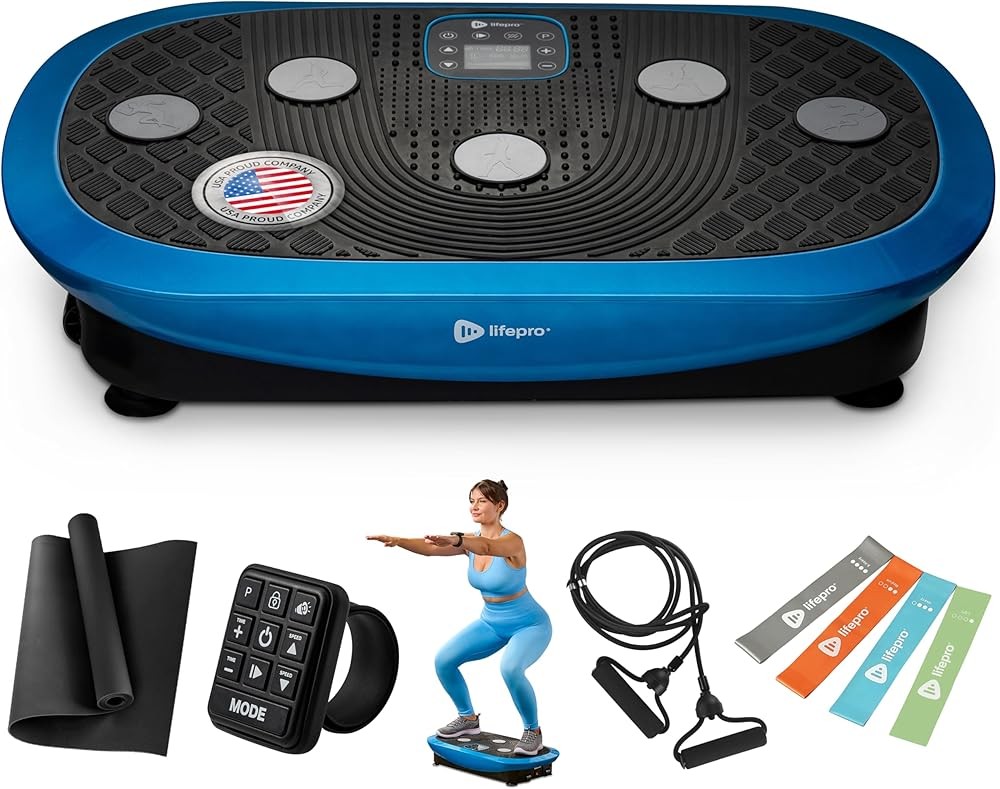
LifePro Rumblex 4D Vibration Plate Exercise Machine with 7 Training Modes
Check Price on AmazonAs an Amazon Associate we earn from qualifying purchases.
The Rumblex 4D is the flagship of LifePro’s vibration line and our top overall pick because it covers the widest range of research-validated protocols in a single machine. Three independent motors drive 4D motion (vertical, oscillating, and pulsation patterns combined), and its seven training modes span 4 to 40 Hz - comfortably covering the 20 to 30 Hz lymphatic window, the 25 to 35 Hz strength range, and the 30 to 40 Hz bone-density protocols used in clinical trials.
The 4D motion is a genuine training differentiator: multi-directional loading forces constant stabilization work that flat oscillating platforms do not demand. Keep the evidence in perspective, though - most clinical trials behind vibration therapy used simpler oscillating or linear platforms, so regard the extra movement axes as a convenience and training-feature upgrade rather than a proven therapeutic advantage. The trade-offs are price (roughly $400, several times the budget machines below) and a weight capacity that is modest next to the heavy-duty platform that follows.
Vibration Plate Exercise Machine 130 Levels 450 lbs - Best for Heavy Users
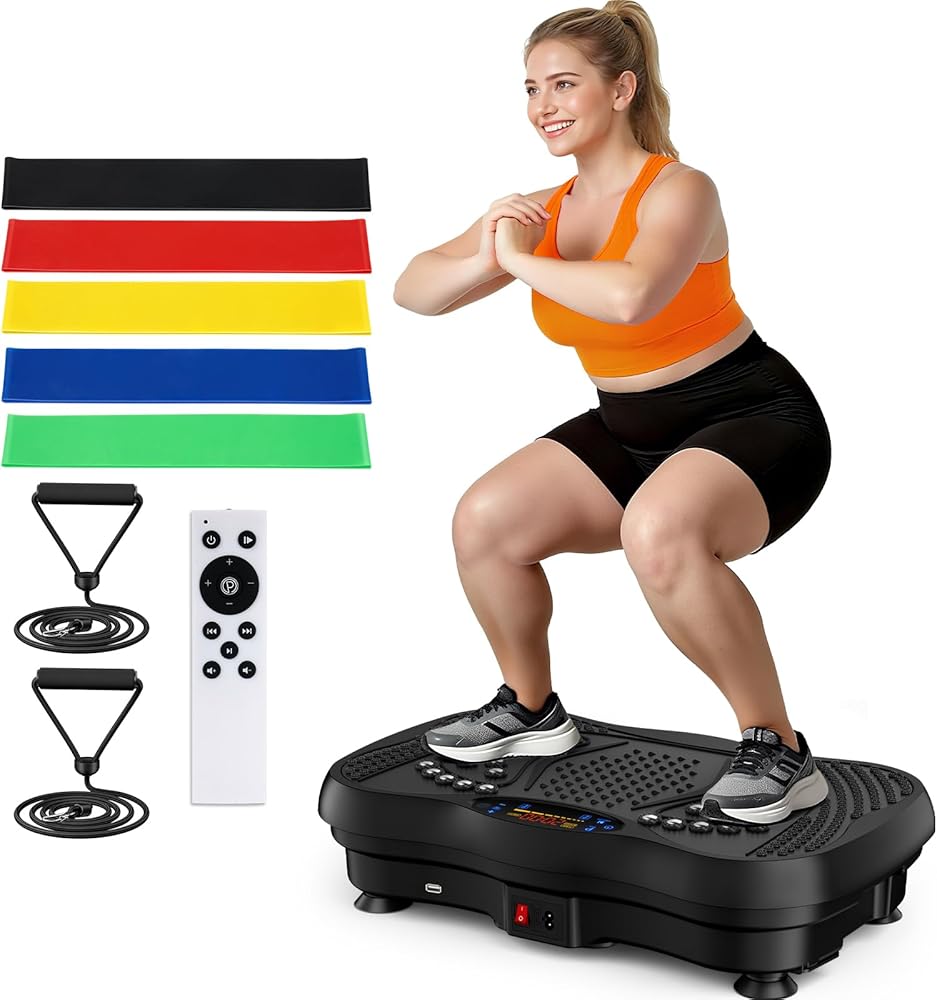
Vibration Plate Exercise Machine, 130 Levels, 450 Lbs Capacity
Check Price on AmazonAs an Amazon Associate we earn from qualifying purchases.
This heavy-duty platform addresses a specific market segment often underserved by standard home vibration plates: users over 250 pounds who exceed typical weight capacities. The reinforced frame and enhanced motor system support up to 450 pounds while maintaining frequency stability, critical because vibration effectiveness depends on consistent oscillation rates regardless of load.
The 130-speed designation refers to incremental frequency adjustments across the 20 to 40 Hz operational range, providing 0.15 Hz resolution for precise parameter matching. While clinical protocols typically specify frequencies in 5 Hz increments (20, 25, 30, 35, 40 Hz), the fine adjustment capability allows users to find their optimal stimulation level, particularly important for lymphatic drainage applications where 20 to 30 Hz represents the therapeutic window.
Platform size measures 28 by 18 inches, slightly larger than standard models, accommodating wider stances necessary for proper weight distribution in heavier users. The oscillating vibration pattern moves in a see-saw motion around a central pivot, the design used in many of the clinical trials demonstrating bone density and balance improvements. This simpler single-plane motion lacks the complexity of 4D platforms but provides the fundamental vibration stimulus validated in research.
Motor power reaches 750 watts, lower than premium multi-motor systems but adequate for oscillating vibration at typical amplitudes of 2 to 6 mm. The single motor design concentrates power rather than distributing it across multiple axes, potentially providing more consistent vertical displacement. User reports indicate stable performance under maximum weight loads without frequency drift or motor strain.
Bluetooth connectivity allows music playback through integrated speakers, a feature irrelevant to physiological outcomes but potentially enhancing adherence for users who find vibration sessions monotonous. The resistance bands included are basic elastic cords, sufficient for light upper body activation but not replacements for dedicated strength training equipment.
The control panel displays current speed level (1 to 130) and time, though it lacks direct frequency readout in Hz, requiring users to reference the manual’s conversion chart. This represents a minor inconvenience rather than a functional limitation, as most users establish preferred settings through trial rather than precise frequency targeting.
Weight capacity differentiation matters clinically because vibration transmission efficiency depends on the ratio of platform displacement to user mass. Overloading a 250-pound-capacity platform with a 280-pound user may reduce amplitude and acceleration below therapeutic thresholds. This 450-pound capacity provides appropriate headroom for users in the 250 to 350-pound range to achieve research-validated parameters.
AXV Vibration Plate Fitness Platform - Best Budget
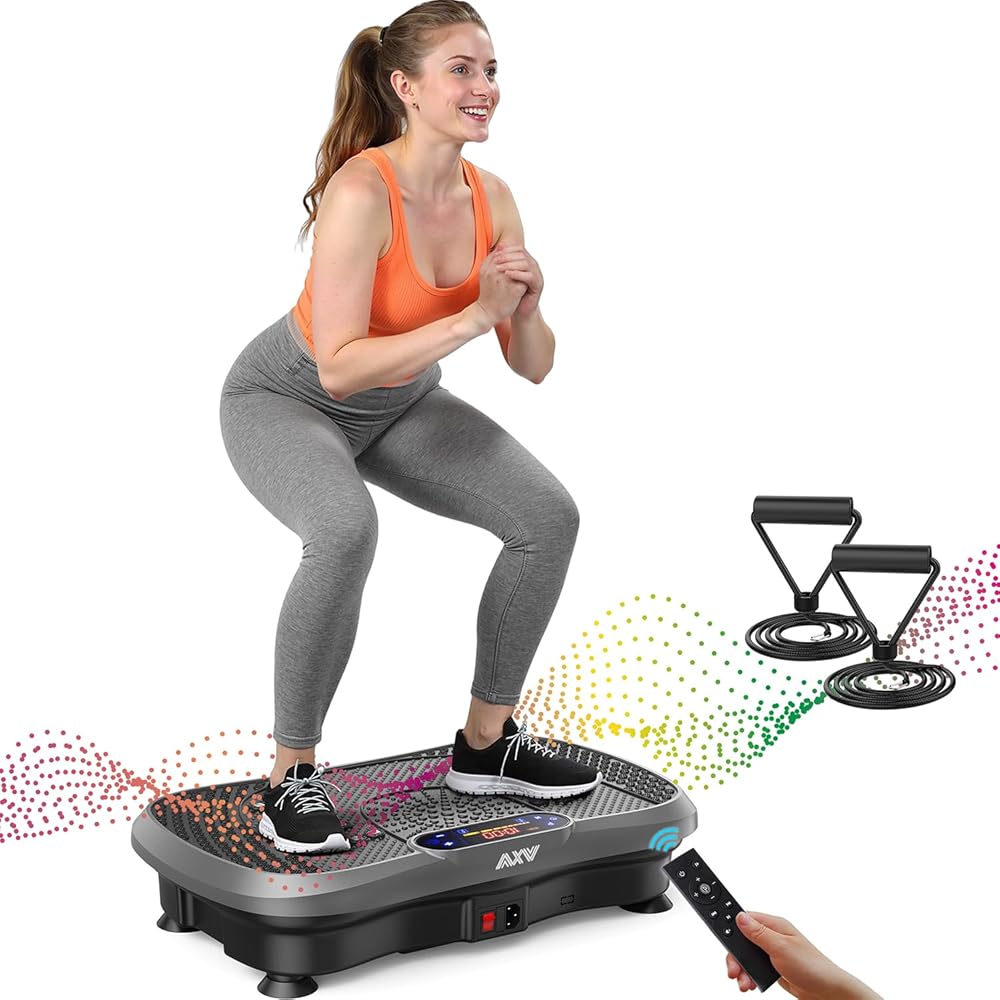
AXV Vibration Plate Exercise Machine Fitness Platform Body Vibrating Board
Check Price on AmazonAs an Amazon Associate we earn from qualifying purchases.
Budget-conscious consumers seeking research-validated vibration benefits without premium pricing find adequate functionality in this under-200-dollar oscillating platform. The key consideration for budget models centers on whether the device delivers frequencies and amplitudes matching clinical protocols, as sophisticated displays and multiple motors provide convenience rather than physiological necessity.
This platform operates across 20 to 35 Hz with oscillating motion and approximately 3 to 5 mm amplitude at platform edges, falling within ranges used in studies demonstrating lymphatic drainage enhancement, circulation improvement, and balance training benefits. The frequency range omits the higher 35 to 40 Hz used specifically for bone density protocols but covers the 20 to 35 Hz spectrum supporting muscle activation and metabolic applications.
Motor power reaches approximately 400 to 500 watts based on specifications, lower than premium models but adequate for the oscillating motion pattern and lighter construction. The 250-pound weight capacity limits use to individuals under 220 pounds for optimal vibration transmission. Platform dimensions of 24 by 15 inches represent the compact end of the market, requiring careful foot placement but offering easier storage and relocation at 35 pounds versus 70 to 80 pounds for larger units.
Control simplicity characterizes budget models, with basic LED displays showing speed level and time. The platform typically offers 20 to 50 preset speed options rather than continuous adjustment, which may result in 1 to 2 Hz gaps between available settings. For most users, this resolution suffices, as subjective tolerance varies more than the small frequency differences.
The resistance bands included connect to platform-mounted anchor points, allowing upper body exercises like bicep curls, shoulder presses, and rows while standing on the vibrating platform. This combines vibration’s neuromuscular effects with resistance training’s strength stimulus, though the bands themselves are light resistance (10 to 20 pounds equivalent) suitable only for higher-repetition endurance work rather than true strength development.
Durability represents the primary trade-off in budget platforms. User reviews indicate motor lifespan of 1 to 3 years with regular use (3 to 5 sessions weekly), compared to 5 to 10 years for commercial-grade units. The lower initial investment may offset replacement costs for users uncertain about long-term vibration training commitment. The manufacturer typically provides 1-year warranty coverage on motors and 90 days on other components.
Research applications achievable with this platform include lymphatic drainage protocols (20 to 30 Hz for 15 to 30 minutes), balance training for fall risk reduction (20 to 30 Hz for 10 to 15 minutes), and general circulation enhancement. The frequency range limitations exclude optimal bone density training (requiring 30 to 40 Hz) and may suboptimize muscle strength protocols (ideally 25 to 35 Hz), though the lower end of strength training range remains accessible.
Are Vibration Plates Safe? Who Should Avoid Them?
Whole body vibration safety has been extensively evaluated through clinical trials involving thousands of participants, with the overall safety profile favorable when devices are used according to established protocols. However, specific contraindications exist, and certain populations require medical clearance before beginning vibration training.
Reviews of the clinical literature, including Rittweger’s comprehensive analysis of vibration as an exercise modality, report no serious adverse events when vibration is delivered below roughly 50 Hz at small amplitudes under sensible protocols (PubMed).
Minor effects include temporary muscle soreness (similar to conventional exercise), mild itching or tingling during exposure (likely circulation-related), and occasional headache or dizziness in vibration-naive individuals. These are transient, typically resolving within 24 to 48 hours, and fade with continued training.
Absolute Contraindications (vibration should not be used under these conditions):
Acute Deep Vein Thrombosis or Pulmonary Embolism: The mechanical forces from vibration could theoretically dislodge blood clots. Individuals with active thrombosis should avoid vibration until the clot has resolved and they have physician clearance.
Recent Surgical Procedures: Fresh surgical sites, particularly those involving implants or bone fixation, may be destabilized by vibration. Wait at least 6 to 12 weeks after surgery before introducing vibration, on the timeline set by your surgeon.
Pregnancy: Safety data in pregnancy are lacking, so avoidance is the prudent approach; ask your obstetrician if you have questions.
Acute Fractures or Severe Osteoporosis: Individuals with acute fractures or severe osteoporosis (T-score below about -3.0) may have insufficient bone strength for vibration loading. Get medical evaluation before training if you are at risk; once cleared, vibration may support bone density under supervised conditions (PubMed).
Severe Cardiovascular Disease: Individuals with unstable angina, recent myocardial infarction, severe heart failure, or uncontrolled arrhythmias should obtain cardiology clearance first. Stable, medically managed cardiovascular disease generally does not preclude vibration training.
Relative Contraindications (medical consultation required before use):
Implanted Medical Devices: Pacemakers, defibrillators, and other electronic implants may theoretically be affected by vibration, though no device malfunctions have been reported in the clinical literature. A cardiology consult with device check before and after first exposure is the prudent route.
Joint Replacements: Joint replacements raise theoretical concern about implant loosening, though clinical studies have included participants with replacements without adverse events. Ask your orthopedic surgeon about your implant type and time since surgery; many allow vibration training once implant stability is confirmed.
Retinal Conditions: Severe diabetic retinopathy, recent retinal surgery, or retinal detachment history warrant an ophthalmology consult before vibration use, even though no documented cases appear in the literature.
Neurological Conditions: Some neurological conditions (Parkinson’s disease, multiple sclerosis) have shown benefit from supervised vibration therapy, but severe uncontrolled seizure disorders warrant a neurology consult first.
Kidney Stones or Gallstones: In theory vibration might mobilize stones. No cases are documented, but people with known stones should get medical clearance and may need to avoid vibration during active stone passage.
Age Considerations: Trials have safely included participants from age 8 to 85. Older adults with multiple comorbidities need individualized assessment; the systematic-review evidence finds vibration safe and effective in community-dwelling seniors (PubMed).
Occupational Vibration Exposure: Individuals with occupational whole body vibration exposure (truck drivers, heavy equipment operators) accumulate significant vibration dose during work. Adding therapeutic vibration requires consideration of total daily exposure to avoid exceeding recommended limits. Occupational health guidelines suggest maximum daily vibration doses, and recreational vibration should stay within combined limits.
Medication Interactions: No direct medication contraindications to vibration exist, but medications affecting balance (sedatives, certain antihypertensives, opioids) may increase fall risk during vibration exposure. Use of support rails or seated positions mitigates this risk. Stable anticoagulant therapy does not contraindicate vibration.
Pre-Participation Screening: Medical screening questionnaires similar to those used before conventional exercise programs can identify individuals requiring physician clearance. Questions should address cardiovascular disease, recent surgeries, implanted devices, pregnancy, acute injuries, and neurological conditions. When in doubt, medical consultation before starting is the safest approach.
The science says: Reviews of the clinical literature report no serious adverse events when whole body vibration stays below roughly 50 Hz at small amplitudes and follows sensible protocols; minor effects are limited to temporary soreness or dizziness. Absolute contraindications include acute thrombosis, recent surgery, pregnancy, acute fractures, and severe unstable cardiovascular disease; relative contraindications requiring medical clearance include implanted devices and joint replacements.
Conclusion
Whole body vibration platforms are a time-efficient exercise modality supported by a substantial body of peer-reviewed research demonstrating improvements in bone mineral density, muscle strength, balance, lymphatic function, and body composition when used according to research-based protocols. Clinical trials consistently show that 15 to 30 minutes of vibration training at frequencies between 20 and 40 Hz, performed 3 to 5 times weekly, produces physiological adaptations comparable to conventional exercise with high adherence rates and minimal adverse effects.
The mechanistic foundation involves activation of the tonic vibration reflex, generating involuntary muscle contractions far faster than voluntary effort can achieve. These contractions stimulate bone remodeling through mechanotransduction, enhance lymphatic flow by mimicking the natural contraction rhythm of lymphatic vessels, and create metabolic demands that support muscle preservation during caloric restriction.
Goal-specific optimization requires matching vibration parameters to desired outcomes. Bone density improvement responds best to 30 to 40 Hz, muscle strength development to 25 to 35 Hz, lymphatic drainage to 20 to 30 Hz, and balance enhancement to 20 to 30 Hz. Combining vibration with loaded exercises consistently produces superior results to passive standing alone, though lymphatic and circulation benefits occur even with minimal movement.
The safety profile established through clinical research involving thousands of participants shows extremely low risk when contraindications are respected and protocols followed. Absolute contraindications include acute thrombosis, recent surgery, pregnancy, and severe unstable cardiovascular disease, while relative contraindications requiring medical clearance include implanted devices and joint replacements.
Consumer selection should prioritize devices offering the frequency ranges validated in clinical research (at least through 40 Hz), adequate motor power (500+ watts), reasonably precise frequency control, and build quality that will last. The picks reviewed above - from the ~$100 oscillating platforms to the ~$400 Rumblex 4D - cover the realistic home range. Features such as 4D vibration and sophisticated displays add convenience but lack extensive research validation compared to simpler oscillating or linear platforms.
Integration into comprehensive programs produces optimal outcomes. Vibration training combined with caloric restriction supports greater visceral fat loss and better muscle preservation than diet alone, and vibration enhances but does not replace conventional resistance training - the best results come when both work together.
The time efficiency advantage—15 to 30-minute sessions producing adaptations requiring 45 to 60 minutes of conventional exercise—supports long-term adherence, a critical determinant of health outcome success. Studies report dropout rates for vibration interventions comparable to or better than conventional programs, likely reflecting the reduced time commitment and perceived exertion.
Future applications may expand as research continues investigating vibration effects on hormone balance, insulin sensitivity, inflammatory markers, and neurological function. Current evidence supports vibration as a valuable addition to exercise programs for bone health, strength development, balance training, lymphatic enhancement, and weight management when expectations remain realistic and protocols follow established research parameters.
For individuals limited by time constraints, joint problems restricting conventional exercise, or seeking novel training stimuli to overcome plateaus, whole body vibration offers a scientifically validated option with 20 years of clinical research demonstrating safety and effectiveness across diverse populations from postmenopausal women to elite athletes.
📱 Join the discussion: Facebook | X | YouTube | Pinterest
Related Reading
- 5 Best Vibration Plates for Lymphatic Drainage
- Vibration Plates for Bone Density: Can Whole Body Vibration Help Osteoporosis?
- Can Vibration Plates Help You Lose Weight? What the Research Actually Shows
- 3D vs 4D Vibration Plates: Which Type Is Better for Your Goals?
- What Are 4D Vibration Plates? Science-Backed Benefits
- Should You Use a Vibration Plate Before or After Your Workout? Evidence-Based Timing Guide
- Best Vibration Plates for Seniors: Safety, Balance, and Bone Density
References
- Cardinale M, Wakeling J. Whole body vibration exercise: are vibrations good for you? Br J Sports Med. 2005;39(9):585-9. PubMed
- Bogaerts A, Verschueren S, Delecluse C, et al. Effects of whole body vibration training on postural control in older individuals: a 1 year randomized controlled trial. Gait Posture. 2007;26(2):309-16. PubMed
- Verschueren SM, Roelants M, Delecluse C, et al. Effect of 6-month whole body vibration training on hip density, muscle strength, and postural control in postmenopausal women: a randomized controlled pilot study. J Bone Miner Res. 2004;19(3):352-9. PubMed
- Sitja-Rabert M, Rigau D, Fort Vanmeerghaeghe A, et al. Efficacy of whole body vibration exercise in older people: a systematic review. Disabil Rehabil. 2012;34(11):883-93. PubMed
- Marin PJ, Rhea MR. Effects of vibration training on muscle strength: a meta-analysis. J Strength Cond Res. 2010;24(2):548-56. PubMed
- Cochrane DJ. The potential neural mechanisms of acute indirect vibration. J Sports Sci Med. 2011;10(1):19-30. PubMed
- Rittweger J. Vibration as an exercise modality: how it may work, and what its potential might be. Eur J Appl Physiol. 2010;108(5):877-904. PubMed
- Bosco C, Iacovelli M, Tsarpela O, et al. Hormonal responses to whole-body vibration in men. Eur J Appl Physiol. 2000;81(6):449-54. PubMed
- Lohman EB 3rd, Petrofsky JS, Maloney-Hinds C, et al. The effect of whole body vibration on lower extremity skin blood flow in normal subjects. Med Sci Monit. 2007;13(2):CR71-6. PubMed
- Wilcock IM, Whatman C, Harris N, Keogh JW. Vibration training: could it enhance the strength, power, or speed of athletes? J Strength Cond Res. 2009;23(2):593-603. PubMed
- Delecluse C, Roelants M, Verschueren S. Strength increase after whole-body vibration compared with resistance training. Med Sci Sports Exerc. 2003;35(6):1033-41. PubMed
- Merriman H, Jackson K. The effects of whole-body vibration training in aging adults: a systematic review. J Geriatr Phys Ther. 2009;32(3):134-45. PubMed
- Slatkovska L, Alibhai SM, Beyene J, Cheung AM. Effect of whole-body vibration on BMD: a systematic review and meta-analysis. Osteoporos Int. 2010;21(12):1969-80. PubMed
- Lai CL, Tseng SY, Chen CN, et al. Effect of 6 months of whole body vibration on lumbar spine bone density in postmenopausal women: a randomized controlled trial. Clin Interv Aging. 2013;8:1603-9. PubMed
Recommended Products