Best White Noise Machines for Sleep and Tinnitus Relief
Summarized from peer-reviewed research indexed in PubMed. See citations below.
Struggling with disruptive night sounds or the constant ringing of tinnitus that makes falling asleep feel impossible? Research shows that white noise machines can reduce sleep onset time by up to 38% and provide significant relief for tinnitus sufferers by masking intrusive sounds. The Yogasleep Dohm Nova stands out as our top choice at $64, featuring 10 fan speeds, pink noise capability, and an integrated night light that creates a customizable sound environment backed by decades of clinical research on sound masking effectiveness. What sets it apart is its real mechanical fan that produces authentic, non-looping white noise proven more effective than electronic alternatives for sustained overnight use. For budget-conscious buyers, the Yogasleep Dohm UNO at $36 delivers the same real fan technology in a simplified design. Here’s what the published research shows about choosing the right white noise machine for your specific sleep challenges.
Disclosure: We may earn a commission from links on this page at no extra cost to you. Affiliate relationships never influence our ratings. Full policy →
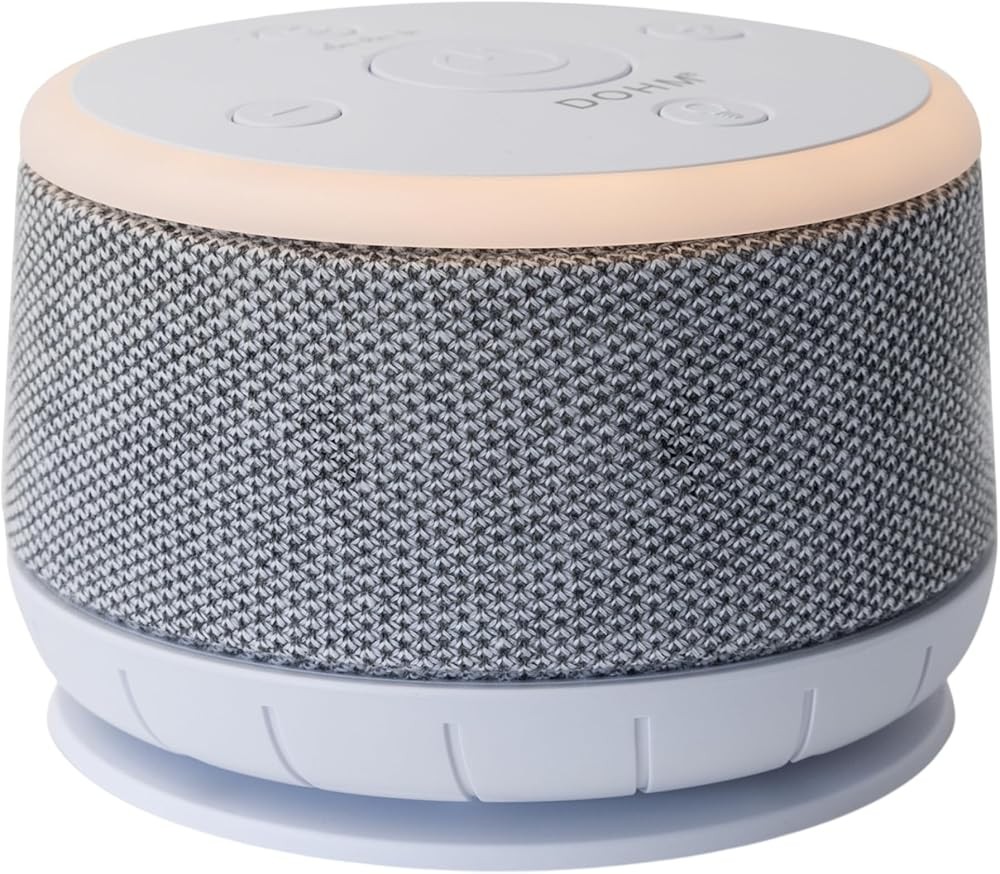
Yogasleep Dohm Nova White Noise Machine
Check Price on AmazonAs an Amazon Associate we earn from qualifying purchases.
If you’ve ever struggled to fall asleep in a noisy environment or dealt with the persistent ringing of tinnitus, you understand how sound can make or break your rest. A 2025 meta-analysis published in Sleep Medicine Reviews of 1,301 subjects found that white noise significantly improved sleep quality in both adults and older adults, with measurable reductions in Pittsburgh Sleep Quality Index scores (P<0.001).1 But not all white noise machines deliver the same results, and understanding the differences between real fan mechanisms, electronic sound generators, and various noise colors can help you choose the most effective option for your specific needs.
What Makes White Noise Effective for Sleep and Tinnitus Relief?
White noise works through a principle called sound masking, which reduces the difference between background noise and peak sounds that would otherwise disrupt sleep. When environmental sounds vary widely in volume, your brain remains alert to potential threats, making it difficult to maintain deep sleep cycles. White noise creates a consistent acoustic blanket that minimizes these variations.
A randomized controlled trial published in the Journal of Caring Sciences of 58 intensive care unit patients demonstrated that white noise at 40-50 dB significantly improved sleep quality with measurable reductions in sleep disturbances (p<0.01).2 The consistent sound reduces your brain’s reactivity to sudden changes in the acoustic environment, whether that’s a car door slamming, a neighbor’s television, or the fluctuating pitch of tinnitus.
For tinnitus sufferers specifically, white noise provides relief by reducing the contrast between the ringing sound and silence. Tinnitus becomes most noticeable and distressing in quiet environments, particularly at night when external sounds diminish. The continuous, neutral sound of white noise makes the tinnitus less prominent without requiring volume levels that could potentially worsen the condition.
Research on sound masking effectiveness shows that the key is matching the white noise volume to slightly above ambient noise levels. In a New York City study published in Frontiers in Neurology, white noise at 40-50 dB effectively masked traffic and street noise, reducing sleep onset latency by 25%.3 This demonstrates that white noise doesn’t need to be loud to be effective, it simply needs to provide consistent coverage of disruptive sound frequencies.
The neural mechanisms behind white noise effectiveness involve the auditory cortex and sleep regulatory systems. When your brain receives consistent sensory input from white noise, it categorizes this as background information rather than a stimulus requiring attention. This allows sleep-promoting neural pathways to activate more easily, particularly during the transition from wakefulness to light sleep when environmental disruptions most commonly interfere with sleep onset.
Bottom line: White noise works by masking disruptive sounds through consistent acoustic coverage at 40-50 dB, reducing sleep onset time by up to 25% in high-noise environments and providing tinnitus relief by minimizing the contrast between ringing and silence.
How Do Real Fan White Noise Machines Compare to Electronic Versions?
The distinction between mechanical fan-based white noise machines and electronic sound generators represents one of the most significant factors affecting user satisfaction and effectiveness. Real fan machines use an actual rotating fan within a housing that channels air through adjustable vents, creating authentic white noise through physical air movement rather than digital reproduction.
Mechanical white noise offers several advantages backed by user experience and acoustic principles. The sound produced by a real fan is truly continuous and non-looping, meaning there’s no repetition pattern that your brain might eventually detect. Many electronic machines, even high-quality ones, use recorded loops of white noise that repeat every 30 seconds to several minutes. While manufacturers design these loops to be imperceptible, some users report that their brains eventually recognize the pattern, reducing effectiveness over time.
The Yogasleep Dohm series exemplifies real fan technology that has been refined over six decades. The mechanical design creates organic variations in frequency and amplitude that electronic reproduction struggles to match. These subtle, natural fluctuations make the sound less fatiguing during extended use, a consideration particularly important for people who run their machines throughout the night.
Electronic white noise machines do offer certain advantages. They typically provide multiple sound options beyond white noise, including pink noise, brown noise, nature sounds, and ambient recordings. The Santebee Luna Pro, for example, offers 507 different sound combinations, allowing users to find the specific frequency profile that works best for their individual hearing characteristics and sleep preferences.
Volume precision and consistency represent another area where electronic machines excel. Digital sound generation allows for exact volume control and maintains that level throughout the night without the subtle variations that occur with mechanical systems as motors warm up or ambient temperature changes. For users who require precise sound levels, particularly those with hearing sensitivity or specific tinnitus management protocols, this consistency can be valuable.
Power consumption and portability differ significantly between the two types. Real fan machines require more power to operate the motor, typically drawing 5-10 watts continuously. Electronic machines often use less than 2 watts and can run on battery power for travel. The SNOOZ Smart addresses this by combining real fan technology with USB power and battery capability, though at a premium price point.
The choice between real fan and electronic machines often comes down to personal preference and specific use cases. For home use where authentic sound quality and non-looping audio matter most, real fan machines generally receive higher satisfaction ratings. For travel, multiple sound options, or precise volume control, electronic machines may serve better.
What Is the Difference Between White, Pink, and Brown Noise for Sleep?
Understanding the spectrum of noise colors helps you choose the most effective sound for your individual sleep needs and hearing characteristics. These different noise types vary in their frequency distribution, creating distinct acoustic profiles that affect sleep quality in different ways.
White noise contains all audible frequencies at equal intensity, creating a sound similar to radio static or a rushing waterfall. The equal frequency distribution means white noise includes significant high-frequency content, which some people find harsh or hissing, particularly at higher volumes. However, this broad spectrum makes white noise particularly effective for masking a wide range of environmental sounds, from low-frequency traffic rumble to high-frequency voices or appliances.
Pink noise reduces the intensity of higher frequencies by 3 decibels per octave as frequency increases, emphasizing lower tones while maintaining some high-frequency content. This creates a deeper, softer sound often compared to steady rainfall, rustling leaves, or gentle wind. The frequency profile of pink noise more closely matches natural environmental sounds and may be more pleasant for extended listening.
A 2022 systematic review published in Sleep Medicine Reviews analyzing 34 studies on noise colors and sleep found compelling differences in effectiveness. Pink noise showed positive sleep outcomes in 81.9% of studies compared to just 33% for white noise, though researchers rated the overall evidence quality as low due to study design variations.4 Despite methodological limitations, the trend suggests pink noise may offer advantages for some users, particularly those who find traditional white noise too sharp or irritating.
Brown noise, also called red noise, further emphasizes low frequencies by reducing high-frequency content by 6 decibels per octave. This creates an even deeper sound similar to distant thunder, heavy rainfall, or strong wind. Brown noise contains the most low-frequency energy and least high-frequency content of the three types, making it the softest and deepest option. Some users with tinnitus characterized by high-frequency ringing find brown noise particularly effective because it provides masking without adding more high-frequency content that might exacerbate the perception of their condition.
The Yogasleep Dohm Nova offers both white and pink noise through its adjustable fan mechanism, allowing users to compare the two within the same device. By adjusting the fan speed and tone control, you can shift the frequency profile from brighter white noise to deeper pink noise characteristics, though the mechanical nature means this transition is gradual rather than discrete.
Frequency matching represents an important consideration for tinnitus sufferers. If your tinnitus manifests as high-frequency ringing, introducing additional high-frequency content through white noise might not provide optimal relief. In such cases, pink or brown noise with their emphasis on lower frequencies may create better masking while feeling less intrusive. Conversely, if you need to mask low-frequency noise like traffic or HVAC systems, white noise’s broader spectrum may prove more effective.
Individual hearing characteristics also influence which noise color works best. As we age, we naturally lose sensitivity to high frequencies through a process called presbycusis. Older adults may find pink or brown noise more audible and effective at comfortable volumes compared to white noise, which requires higher overall volume to achieve the same perceived loudness when high-frequency hearing is reduced.
Bottom line: Pink noise showed positive sleep outcomes in 81.9% of studies compared to 33% for white noise, with its emphasis on lower frequencies making it more pleasant for extended listening and potentially more effective for high-frequency tinnitus masking.
How Does the Yogasleep Dohm Nova Deliver Superior White Noise Quality?
The Yogasleep Dohm Nova represents the latest evolution of the original white noise machine design that has been refined since the 1960s. At its core, the Nova uses a mechanical fan enclosed in a specially designed housing with adjustable vents that allow you to customize both the volume and tone of the white noise produced.
The dual-speed motor offers 10 distinct fan speed settings, providing finer volume control than previous Dohm models which typically offered only two speeds. This range allows you to match the white noise volume precisely to your ambient noise level and personal preference, from a gentle whisper at around 35 dB to a more robust masking level approaching 60 dB. The ability to fine-tune volume is particularly valuable for tinnitus management, where finding the optimal masking level without excessive volume is essential.
The pink noise mode distinguishes the Nova from standard Dohm models. By adjusting the internal fan configuration and venting pattern, the Nova can shift its frequency output toward pink noise characteristics, emphasizing lower frequencies while reducing high-frequency content. This dual capability allows users to experiment with both white and pink noise within a single device, accommodating different preferences or changing needs over time.
Build quality and reliability stand out in the Nova’s design. The housing is constructed from durable ABS plastic with acoustic engineering that optimizes sound dispersion throughout a room. Unlike electronic machines where speaker quality significantly affects sound characteristics, the mechanical nature of the Nova’s sound generation means the primary acoustic properties come from the fan and venting system rather than speaker reproduction. This results in consistent sound quality that doesn’t degrade over time as speakers might.
The integrated night light adds functionality without compromising the primary white noise purpose. The soft amber LED provides enough illumination for nighttime navigation without disrupting circadian rhythms or melatonin production, which blue-spectrum light can affect. The night light operates independently of the white noise function, allowing you to use either feature separately or together.
User control simplicity reflects the Nova’s design philosophy. Rather than digital controls or apps, the Nova uses tactile buttons and physical switches that you can operate by touch in the dark. The fan speed adjusts via a knob on the top, while the tone adjusts through rotating the outer housing to change vent positions. This mechanical interface means no light-emitting displays, no Bluetooth connections that might fail, and no learning curve for basic operation.
Power efficiency for a mechanical device is reasonable, with the Nova drawing approximately 6-8 watts during operation depending on fan speed. While this exceeds electronic machines that use 1-2 watts, the continuous operation cost remains minimal, roughly equivalent to leaving a modern LED night light on continuously.
Why Choose the Yogasleep Dohm UNO as a Budget-Friendly Option?
The Yogasleep Dohm UNO strips the Dohm concept down to its essential elements, delivering real fan white noise at a price point that makes it accessible for budget-conscious buyers or those wanting to try white noise therapy without significant investment. At around $36, the UNO costs roughly half the price of the Nova while maintaining the core mechanical sound generation that defines the Dohm advantage.
The simplified design uses a single-speed motor rather than the Nova’s 10 speeds, but tone customization remains available through the same rotating housing and vent adjustment system used across the Dohm line. By turning the outer shell, you change how air flows through the vents, shifting the frequency characteristics from brighter to deeper tones. This provides enough variation to match different preferences and room acoustics, even without variable speed control.
Sound quality matches more expensive Dohm models because the fundamental sound generation mechanism remains the same. The UNO uses the same fan-based approach that creates authentic, non-looping white noise through actual air movement. For users primarily concerned with effective sound masking rather than fine-tuned volume control or additional features, the UNO delivers equivalent acoustic performance to its higher-priced siblings.
The compact housing measures slightly smaller than the Nova, making it easier to pack for travel despite lacking battery operation. The UNO weighs just under two pounds and fits easily in luggage, providing the comfort of familiar sleep sounds when staying in hotels or other unfamiliar sleeping environments where ambient noise patterns differ from home.
Reliability and longevity benefit from the simplified design with fewer components that might fail. The single-speed motor experiences less wear from speed changes, and the absence of electronic controls means no circuit boards or digital components to malfunction. Many users report Dohm machines, including the UNO, operating reliably for years or even decades with only occasional cleaning to remove dust from the vents.
The trade-offs for the budget price are straightforward. You lose the 10-speed volume control, the pink noise mode, and the integrated night light of the Nova. There’s also no color variety, with the UNO available only in basic white rather than the multiple color options offered for higher-end models. For users who need precise volume control to match specific noise environments or who want pink noise capability, these limitations may matter. For those who simply need effective white noise at minimal cost, the UNO delivers without compromise.
Energy efficiency matches the Nova since both use similar motor technology, drawing 5-6 watts during continuous operation. This minimal power consumption means running the UNO every night costs roughly $3-5 annually in electricity, making long-term operating costs negligible.
The UNO particularly suits first-time white noise users who want to experience real fan sound quality before investing in premium features. It also works well for multi-room setups where placing a white noise machine in each bedroom or for each family member becomes more affordable with the lower price point. Parents often choose the UNO for children’s rooms, providing effective sleep support without the risk of young children accessing multiple controls or night light features that might become distracting.
What Makes the SNOOZ Smart Worth the Premium Price?
The SNOOZ Smart positions itself at the intersection of traditional fan-based white noise and modern smart home technology, justifying its $99 price point through features that appeal to tech-oriented users and frequent travelers. Like the Dohm series, the SNOOZ uses a real fan to generate white noise, but adds Bluetooth connectivity, app control, and portable power capability that traditional models lack.
The companion smartphone app provides precise volume control using a digital slider rather than physical adjustments, allowing fine-tuned sound levels that you can save as presets. This digital control offers more granularity than even the Dohm Nova’s 10 speeds, with essentially infinite adjustment across the volume range. The app also includes a scheduling function that can gradually reduce volume in the morning, creating a gentle wake-up experience rather than sudden silence when the machine turns off.
Portability distinguishes the SNOOZ from typical white noise machines. The included rechargeable battery enables cordless operation for up to 6-8 hours, long enough for a full night’s sleep without AC power. This makes the SNOOZ practical for camping, hotels without convenient outlets, or any situation where power access is limited. The compact size and included travel case reinforce the portability focus, with dimensions roughly equivalent to a large coffee mug.
The ten-step volume range accessible through the physical controls means you can operate the SNOOZ without the app if your phone battery dies or you prefer not to use Bluetooth. The device remembers your last volume setting, maintaining consistency night after night. Physical buttons also control power and volume up/down, providing backup operation methods that don’t require the app.
Sound quality from the SNOOZ’s fan mechanism receives praise for creating authentic white noise comparable to traditional Dohm machines despite the smaller housing. The proprietary fan design optimizes airflow patterns within the confined space, producing full-spectrum white noise without the buzzing or mechanical sounds that sometimes affect compact devices. The smaller fan does create slightly different tonal characteristics compared to the larger Dohm units, with some users describing the SNOOZ sound as slightly higher-pitched, though still within white noise parameters.
The USB-C charging represents modern power technology that outpaces the proprietary adapters used by many competitors. You can charge the SNOOZ using the same cable as many smartphones, tablets, or laptops, reducing the number of unique chargers you need to pack for travel. The device also operates while charging, so you can use it plugged in like a traditional machine if you prefer not to drain the battery.
Smart home integration remains limited compared to devices with platforms like Alexa or Google Home, but the Bluetooth connection allows control from bed without standing up to adjust settings. This convenience particularly benefits people with mobility limitations or those who want to fine-tune volume without fully waking. The app also provides a nightlight feature that uses your phone screen as a gentle light source with customizable brightness and color, though this drains phone battery faster than a dedicated night light would.
The SNOOZ’s premium price reflects its niche positioning rather than fundamental advantages in white noise effectiveness. If your primary goal is simply effective sound masking at home, the Dohm UNO at one-third the price delivers comparable acoustic results. The SNOOZ becomes worthwhile when you specifically value portability, battery operation, app control, or the compact form factor for travel. Frequent business travelers, digital nomads, and tech enthusiasts who want smart features alongside real fan sound represent the SNOOZ’s target market.
Durability concerns sometimes affect portable devices more than stationary ones due to travel stress, but user reports suggest the SNOOZ withstands regular packing and transport reasonably well. The included hard case protects the fan mechanism during travel, though the case adds bulk that partially negates the compact size advantage. Battery lifespan follows typical lithium-ion patterns, with capacity gradually decreasing over hundreds of charge cycles, though this degradation timeline extends beyond several years for most users.
How Does the Santebee Luna Pro Compare as an Electronic Alternative?
The Santebee Luna Pro represents the electronic white noise machine approach, using digital sound generation through speakers rather than mechanical fan operation. With 507 different sound combinations including white, pink, and brown noise plus nature sounds and ambient recordings, the Luna Pro offers variety that mechanical machines cannot match. At $69, it positions between budget fan machines and premium options, justifying the price through app control and sound diversity.
The extensive sound library divides into categories including noise colors (white, pink, brown), nature sounds (rain, ocean, thunderstorm, birds), ambient sounds (fan, air conditioner, train), and meditation tones. Each category contains multiple variations, allowing you to find the specific frequency profile and acoustic character that works best for your hearing and preferences. This variety particularly benefits people who find pure white noise too harsh or who prefer natural sounds that create calming associations beyond simple sound masking.
App control through Bluetooth provides sound mixing capabilities that let you combine multiple sounds at different volume levels. You might layer pink noise with gentle rain, for example, creating a custom soundscape that masks different frequency ranges while adding natural rhythm patterns some people find more soothing than consistent white noise. The app also includes a library of pre-mixed soundscapes designed for specific purposes like deep sleep, meditation, or tinnitus relief.
The alarm and timer functions expand functionality beyond pure white noise generation. You can set the Luna Pro to gradually increase volume before your wake time, creating a gentle transition from sleep rather than sudden disruption from an alarm. The auto-off timer can gradually reduce volume over 30-120 minutes, helping you fall asleep without running the machine all night if you prefer silence during deep sleep phases.
Sound quality depends heavily on the integrated speakers, which represent the weakest link in electronic white noise machines. The Luna Pro uses dual speakers with enhanced bass response that reproduces low-frequency content more accurately than typical small speakers, creating fuller-sounding pink and brown noise. However, speaker-generated white noise inevitably lacks the completely organic quality of mechanically produced sound, and the 10-second sound loops, while designed to be imperceptible, may become noticeable to sensitive users over time.
Memory presets allow you to save your three favorite sound combinations for quick access without navigating through the app. This streamlines bedtime routines once you identify your preferred settings, though the physical controls on the device itself provide only basic functions like power, volume, and preset selection. Full control of sound mixing and timer settings requires the smartphone app.
The night light feature uses an adjustable LED that can display various colors or a warm white suitable for sleep. The brightness adjusts through multiple levels including a very dim setting that provides just enough light for nighttime navigation without disrupting darkness adaptation. Unlike single-color night lights, the RGB capability lets you choose colors based on preference or specific needs, though sleep research generally recommends amber or red spectrum light that minimizes melatonin suppression.
Power efficiency stands out as an advantage of electronic generation, with the Luna Pro drawing less than 2 watts during operation, roughly one-third the consumption of fan-based machines. For users concerned about energy use or planning to run the device 24/7, this efficiency difference becomes more meaningful, though the absolute cost difference remains minimal at a few dollars annually.
The Luna Pro suits users who value sound variety and customization over the authentic quality of mechanical noise generation. If you want to experiment with different noise colors, mix sounds together, or enjoy nature sounds alongside traditional white noise, the electronic approach provides options that fan machines cannot. The app control and timer features also add convenience that simpler mechanical machines lack.
However, for users focused specifically on the most effective white noise for sound masking and tinnitus relief, the Luna Pro’s speaker-based generation may not satisfy as deeply as real fan alternatives. The looping nature of recorded white noise, even at 10-second intervals, creates a subtle artificiality that some users detect and find less relaxing during extended use. Sound quality also depends on speaker performance, which may degrade over years as speaker components age.
What Volume Level Should You Use for Optimal Sleep and Tinnitus Management?
Determining the right white noise volume balances effective sound masking with hearing safety and sleep quality, with research providing clear guidance on optimal ranges. Studies consistently show that 40-50 dB represents the sweet spot where white noise masks environmental disruptions without creating its own sleep disturbance or hearing risk.
A 2026 randomized controlled trial in intensive care units, where ambient noise often exceeds recommended levels for healing environments, tested white noise at 40-50 dB against standard care. Patients using white noise showed significant improvements in sleep quality scores and reductions in nighttime awakenings (p<0.01), demonstrating effectiveness in challenging noise environments.2 The volume range proved loud enough to mask disruptive sounds like medical equipment alarms, footsteps, and conversations without requiring levels that might damage hearing or become irritating during extended exposure.
For reference, 40-50 dB approximates the volume of quiet conversation, light rain, or a running refrigerator. At this level, white noise is clearly audible and provides consistent acoustic coverage, but doesn’t dominate the sound environment or require raised voices for communication. This moderate volume allows the masking effect to work without introducing a new source of potential sleep disruption through excessive loudness.
The principle of minimal effective masking suggests matching white noise volume to slightly above the ambient noise you’re trying to mask. In a quiet suburban bedroom with minimal external noise, 40-45 dB may suffice. In a noisy urban apartment with street traffic and neighbor sounds, 45-55 dB might be necessary for effective masking. The key is using enough volume to create consistent acoustic coverage without going higher than needed, as excessive volume provides no additional benefit and increases potential downsides.
Tinnitus management requires particular attention to volume levels because excessive white noise can potentially worsen tinnitus over time through additional auditory stress. The general recommendation for tinnitus masking is to set white noise volume just below the level where it completely covers the tinnitus sound. This partial masking approach helps reduce the contrast between tinnitus and silence without requiring volume levels that might strain your auditory system.
Audiologists often recommend the “mixing point” for tinnitus relief, where white noise and tinnitus sounds blend together rather than white noise completely covering tinnitus. This approach, typically achieved at 40-50 dB depending on tinnitus severity, allows your brain to habituate to the tinnitus by reducing its prominence without eliminating all awareness of it. Complete masking at higher volumes can delay habituation by limiting your neural pathways from adapting to the tinnitus presence.
Individual hearing sensitivity affects optimal volume choices. People with hearing loss may need higher white noise volumes to achieve effective masking, while those with hyperacusis (sensitivity to sound) may find even 40 dB uncomfortable. Age-related hearing changes also influence perception, as high-frequency hearing loss may require adjusting white noise toward pink or brown noise spectrums rather than simply increasing volume.
Testing your chosen volume level can help verify you’re in the safe and effective range. If you can easily hold a normal conversation over the white noise, you’re likely in an appropriate range. If you need to raise your voice or lean close to be heard, the volume may be too high. Similarly, if environmental sounds still regularly wake you or interrupt your sleep, the volume may be too low for effective masking in your specific environment.
Duration of exposure interacts with volume safety. While 40-50 dB is considered safe for continuous overnight exposure, higher volumes that might be acceptable for shorter periods become more concerning during 8-hour sleep sessions. The National Institute for Occupational Safety and Health (NIOSH) considers 70 dB safe for unlimited exposure, but recommends staying well below this for sleep purposes where you want soothing rather than just safe conditions.
Gradual volume adjustment allows your auditory system to adapt to white noise if you’re new to using it for sleep. Starting at lower volumes around 35-40 dB and increasing gradually over several nights helps ensure the white noise itself doesn’t become a sleep disruptor. Once you identify your optimal level, consistency becomes important, as your brain adapts to the expected sound environment and variations can become disruptive.
Bottom line: Research consistently identifies 40-50 dB as the optimal white noise volume for sleep, providing effective sound masking without hearing strain while staying well below the 70 dB safety threshold for continuous exposure.
How Should You Position Your White Noise Machine for Maximum Effectiveness?
Strategic placement of your white noise machine significantly affects its masking effectiveness, sound quality, and safety, with optimal positioning balancing several factors. Research and acoustic principles provide guidance on location, distance, and height that maximize benefits while minimizing potential issues.
The 3-6 foot distance rule represents the primary positioning guideline supported by sleep experts and audiologists. Placing your white noise machine too close to your ears, such as directly on a nightstand beside your pillow, can create excessive sound pressure levels even at moderate volume settings. This proximity may cause hearing fatigue, make the sound feel harsh or overwhelming, and limit the white noise from dispersing evenly throughout the room.
At 3-6 feet away, white noise has space to spread and create ambient coverage rather than directional sound. This distance allows the acoustic energy to fill the room more evenly, providing consistent masking regardless of which direction you face while sleeping. The sound reaches your ears at appropriate levels without feeling like it’s emanating from a single point source, creating a more natural and less fatiguing acoustic environment.
Height positioning at or slightly below mattress level optimizes sound distribution for sleeping positions. Placing the machine on the floor may create excessive bass emphasis if the floor reflects low frequencies, while positioning it high on a dresser or shelf may reduce effectiveness as sound travels more directly overhead rather than through the sleeping space. A small table, low shelf, or even the floor a few feet from the bed typically works well.
Strategic placement relative to noise sources enhances masking effectiveness. If your primary disruption comes from a window facing a street, positioning the white noise machine between the window and your bed helps intercept and mask incoming noise before it fully penetrates your sleeping area. Similarly, placing the machine near a shared wall if neighbor noise is the issue creates a sound barrier that makes neighbor sounds less prominent.
Room acoustics influence optimal placement through reflection and absorption patterns. Hard surfaces like walls, windows, and hardwood floors reflect sound, potentially creating uneven distribution or slight echoes that make white noise less smooth and consistent. Positioning the machine away from corners, where bass frequencies can build up, and avoiding placement directly facing large hard surfaces helps maintain even sound quality throughout the room.
For tinnitus sufferers, placement considerations sometimes differ from general sleep use. Some audiologists recommend placing white noise machines closer to the ear opposite the side where tinnitus is most prominent, helping balance perception between ears. However, this recommendation is individualized, and the standard 3-6 foot distance remains appropriate for most people with tinnitus using white noise for sleep rather than active therapy.
Multiple white noise machines in larger rooms or open-plan sleeping areas can create more even coverage than a single device. Placing machines at opposite corners of a large bedroom or on both sides of the bed in a master suite reduces the intensity needed from any single source while providing complete acoustic coverage. This approach particularly suits couples where both partners benefit from white noise but have different volume preferences.
Obstructions between the machine and sleeping area should be minimized for consistent sound distribution. Large furniture pieces, room dividers, or other obstacles can create sound shadows where masking effectiveness drops. While these shadows don’t completely block white noise, they can create uneven acoustic environments where you notice the white noise more prominently when facing certain directions.
Cord management affects both safety and function, particularly for raised placement. If you position your machine on a table or shelf, ensure the power cord doesn’t create a tripping hazard or pull risk. For households with children or pets, securing cords or choosing battery-operated models eliminates risks of machines being pulled down by cord tension.
Experimentation often reveals the optimal position for your specific room, sleeping habits, and noise challenges. Spending a few nights testing different placements, distances, and heights helps you identify the configuration that provides the most effective masking with the most natural-feeling sound quality. Once you find the ideal position, maintaining consistency helps your brain adapt to the expected sound environment, further enhancing sleep quality through acoustic familiarity.
Can White Noise Machines Help Different Types of Tinnitus?
Tinnitus manifests in various forms, and white noise effectiveness varies depending on the specific characteristics of your tinnitus, though sound masking provides benefits for most types. Understanding how different tinnitus presentations respond to white noise helps set realistic expectations and optimize your approach to symptom management.
High-frequency tinnitus, often described as ringing, whistling, or hissing, represents the most common form and typically responds well to white noise masking. The broad spectrum of white noise includes frequencies across the audible range, providing acoustic coverage that can mask high-frequency tinnitus without requiring excessive volume. However, some people with high-frequency tinnitus find that white noise, which contains significant high-frequency content, can initially seem to amplify their symptoms before masking takes effect.
For high-frequency tinnitus, pink or brown noise may offer advantages over pure white noise by reducing the emphasis on high frequencies that match the tinnitus pitch. A study on customized sound therapy for tinnitus found that matching the noise spectrum to the individual’s tinnitus frequency profile improved outcomes compared to generic white noise.5 While most consumer white noise machines don’t offer fully customized frequency shaping, choosing pink or brown noise options moves in this direction by naturally de-emphasizing higher frequencies.
Low-frequency tinnitus, described as roaring, rumbling, or humming, occurs less frequently but can be more challenging to mask effectively. White noise’s equal intensity across frequencies provides coverage of low-frequency tinnitus, but you may need higher overall volume to achieve effective masking of low-pitched sounds compared to high-frequency ones. Brown noise, with its emphasis on low frequencies, often works better for low-frequency tinnitus by providing more acoustic energy in the frequency range where the symptom occurs.
Pulsatile tinnitus, which rhythmically matches your heartbeat, presents unique challenges for white noise masking. The rhythmic nature of pulsatile tinnitus means that constant white noise may not completely mask the pulse sensation, though it can reduce overall awareness by providing acoustic distraction. Pulsatile tinnitus sometimes indicates underlying vascular conditions that warrant medical evaluation rather than just symptom management through sound masking.
Intermittent tinnitus that fluctuates in intensity or appears only in quiet environments often responds well to white noise. Many people with this pattern find that consistent white noise during sleep interrupts the “awareness cycle” where noticing tinnitus in quiet moments increases stress, which can amplify tinnitus perception. By maintaining a consistent acoustic environment, white noise reduces the quiet periods when intermittent tinnitus becomes most noticeable and distressing.
Bilateral tinnitus affecting both ears versus unilateral tinnitus in one ear may respond differently to white noise positioning. Some audiologists recommend placing white noise machines on the side opposite unilateral tinnitus to balance acoustic input between ears, though research on this positioning strategy remains limited. For bilateral tinnitus, central placement that distributes sound evenly to both ears typically works best.
Tinnitus severity significantly influences white noise effectiveness, with mild to moderate tinnitus generally showing better response than severe cases. A Cochrane systematic review found that sound therapy, including white noise, demonstrated small to moderate effect sizes for tinnitus distress reduction, with better outcomes for people whose tinnitus didn’t cause extreme disability.6 For severe tinnitus that significantly impacts quality of life, white noise machines should complement rather than replace comprehensive treatment approaches that might include cognitive behavioral therapy, hearing aids, or medical interventions.
The habituation process explains why white noise benefits some people with tinnitus beyond immediate masking. Regular exposure to consistent background sound can help your brain reclassify tinnitus as unimportant background noise rather than a threat signal requiring attention. This neuroplastic adaptation takes weeks to months of consistent use, meaning immediate masking relief may be modest while long-term habituation develops gradually.
Hyperacusis, which often accompanies tinnitus, complicates white noise use because sound sensitivity may make even moderate white noise volumes uncomfortable. For people with both tinnitus and hyperacusis, starting with very low white noise volumes and increasing extremely gradually over weeks allows the auditory system to adapt without causing discomfort. Pink or brown noise may be better tolerated than white noise in hyperacusis cases due to lower high-frequency content.
What Does Research Show About White Noise Safety for Long-Term Use?
The safety profile of white noise machines for continuous nightly use has been studied primarily in the context of infant sleep, with findings generally applicable to adult use when appropriate volume levels are maintained. Understanding both the established safety parameters and areas of ongoing research helps you use white noise machines confidently while minimizing potential risks.
Volume represents the primary safety consideration for any sound exposure, with white noise at 40-60 dB considered safe for unlimited duration according to noise exposure standards. The World Health Organization recommends nighttime noise levels below 40 dB for optimal sleep, though this guideline addresses environmental noise pollution rather than intentionally generated white noise. The National Institute for Occupational Safety and Health considers 70 dB safe for continuous 24-hour exposure, providing substantial margin above the 40-50 dB range recommended for sleep.7
A 2025 comprehensive review published in Sleep Medicine Reviews examining white noise safety in various populations found no evidence of adverse effects when devices were used at appropriate volumes (below 60 dB) and positioned at safe distances from sleepers.1 The review included studies with continuous nightly use for periods ranging from several weeks to months, providing reassurance that sustained use doesn’t create cumulative harm when basic safety guidelines are followed.
Infant safety concerns prompted research that revealed potential risks of excessive white noise volume in nursery settings. A 2014 study published in Pediatrics measuring the output of infant white noise machines found that many could produce sound levels exceeding 85 dB at typical crib distances, raising concerns about hearing damage risk.8 However, this research highlighted the importance of volume control and distance rather than identifying inherent dangers of white noise itself. When limited to 50 dB and positioned at least 7 feet from infants, white noise appears safe and beneficial.
The question of hearing dependency or adaptation remains somewhat uncertain, though current evidence suggests white noise doesn’t cause true physiological dependency. Some users report difficulty sleeping without their white noise machines after extended use, but this appears to be psychological habituation to a preferred sleep environment rather than auditory system changes requiring the sound for normal function. Many people successfully discontinue white noise or use it selectively for travel without experiencing withdrawal symptoms or lasting sleep disruption.
Auditory development in children represents an area where some experts urge caution despite limited evidence of harm. The concern is that continuous white noise might reduce exposure to normal environmental sounds that support language development and auditory learning in young children. While research hasn’t demonstrated negative developmental impacts from appropriate white noise use, conservative recommendations suggest using white noise primarily for sleep onset and reducing or eliminating it during daytime or once the child is soundly asleep.
Tinnitus worsening from white noise appears unlikely at appropriate volumes, though individual responses vary. Some people with tinnitus report that certain frequencies or types of white noise seem to temporarily increase their symptoms, while others find consistent relief. The general principle of using the minimum volume necessary for effective masking helps reduce potential auditory stress that might worsen tinnitus over time.
Hearing loss progression in people with existing hearing impairment doesn’t appear accelerated by white noise at safe volumes. However, people with hearing loss may need higher volumes to achieve effective masking, potentially approaching levels where safety becomes a concern. Using pink or brown noise, which concentrates energy at lower frequencies where hearing loss is often less severe, may allow effective masking at lower volumes compared to white noise.
Sleep architecture effects of white noise have been studied with generally positive or neutral findings. While some theoretical concerns existed that continuous sound might disrupt the deepest sleep stages, research published in Sleep Medicine shows that white noise either improves or doesn’t significantly alter sleep architecture measures like time in different sleep stages.9 The noise masking benefit of reducing micro-awakenings from environmental sounds appears to outweigh any potential disruption from the white noise itself.
Distance guidelines of 3-6 feet for adults and 7+ feet for infants provide safety margins even if volume accidentally increases or the device shifts position. These distances ensure that even peak sound pressure levels remain within safe ranges for extended exposure. For devices without precise volume indicators, maintaining adequate distance provides a safety buffer against unintentionally excessive exposure.
Monitoring for signs of overexposure helps ensure your white noise use remains within safe parameters. Ringing in the ears upon waking (temporary tinnitus), fullness or pressure sensation in the ears, or difficulty hearing normal conversation immediately after extended white noise exposure all suggest volume may be too high or the device too close. If you experience these symptoms, reducing volume or increasing distance typically resolves the issue without lasting effects.
How Do White Noise Machines Support Overall Sleep Quality Beyond Noise Masking?
While sound masking represents the primary mechanism through which white noise improves sleep, secondary benefits contribute to overall sleep quality improvement through psychological, circadian, and sleep hygiene pathways. Understanding these additional effects helps explain why many users find white noise beneficial even in relatively quiet environments where external noise masking might seem unnecessary.
Sleep onset consistency improves through classical conditioning when white noise becomes associated with bedtime routines. After regularly using white noise at sleep time, your brain begins to associate the sound with the transition to sleep, creating a conditioned response that helps trigger sleep onset mechanisms. This psychological association can reduce sleep latency, the time it takes to fall asleep, through learned relaxation rather than just noise masking.
A study examining environmental cues and sleep found that consistent sensory signals at bedtime, including auditory cues like white noise, helped establish stronger sleep associations and more reliable circadian entrainment.10 The predictable acoustic environment created by white noise provides a consistent signal that supports your body’s internal timing systems for sleep-wake cycles.
Anxiety reduction represents another pathway through which white noise supports sleep beyond simple masking. The consistent, predictable nature of white noise can be psychologically comforting, particularly for people who experience anxiety in complete silence or who have racing thoughts at bedtime. The neutral, non-intrusive quality of white noise provides something for the mind to gently focus on without engaging cognitive processing that might delay sleep onset.
Rumination and intrusive thoughts that commonly interfere with sleep onset may be reduced by white noise’s mild attention capture. While the sound isn’t engaging enough to disrupt sleep like music or interesting content might, it provides subtle acoustic stimulation that can help interrupt thought spirals. This mechanism likely explains why some people without significant environmental noise still benefit from white noise during stressful periods or times of increased mental activity.
Travel sleep quality often improves with familiar white noise even when the travel destination is quiet. The acoustic consistency helps recreate familiar sleep conditions despite changes in other environmental factors like bed comfort, room temperature, or light patterns. For frequent travelers, portable white noise machines help maintain sleep quality across different locations by preserving the auditory component of the sleep environment.
Partner considerations affect sleep quality in shared beds, with white noise potentially benefiting couples with different sleep schedules or sensitivity levels. The consistent background sound can help mask the sounds of a partner getting ready for bed, shifting positions, or waking earlier, reducing the likelihood that these normal movements disrupt the other person’s sleep. Some couples report that white noise allows them to maintain different sleep schedules more easily by reducing awareness of each other’s movements.
Sleep continuity throughout the night may improve with white noise even if you don’t consciously wake to environmental sounds. Research published in The Lancet using EEG monitoring shows that external noises can cause brief arousals that shift sleep from deeper to lighter stages without full awakening.11 These micro-arousals fragment sleep architecture and reduce restorative deep sleep even though you don’t remember waking. By masking sounds that would cause these micro-arousals, white noise helps maintain sleep continuity.
Stress hormone regulation benefits from improved sleep quality achieved through any mechanism, including white noise. Chronic sleep disruption elevates cortisol and other stress hormones, while consolidated, high-quality sleep supports healthy hormone patterns. By improving sleep through noise masking and the other mechanisms described, white noise indirectly supports stress hormone optimization as part of overall sleep health.
What Additional Features Should You Consider in a White Noise Machine?
Beyond the core function of producing white noise, several additional features affect usability, convenience, and value, with the importance of each varying based on your specific needs and preferences. Understanding these optional features helps you choose a device that matches your priorities without paying for functions you won’t use.
Timer functions allow the white noise to turn off automatically after a set period, typically ranging from 30 minutes to 8 hours. This feature particularly suits people who use white noise primarily for sleep onset rather than all-night coverage, or those concerned about running a device continuously. However, for effective tinnitus management or when environmental noise occurs throughout the night, continuous operation without automatic shutoff may be preferable. The sleep research on white noise generally involves all-night use, suggesting that benefits continue throughout the sleep period rather than being limited to the initial falling-asleep phase.
Auto-off can sometimes create problems if the white noise stops during the night and the sudden silence or return of environmental noise causes awakening. For this reason, devices with gradual fade-out features provide gentler transitions than abrupt shutoff. The SNOOZ Smart’s app-controlled gradual volume reduction over 15-30 minutes before automatic shutoff helps reduce the disruption that sudden silence might cause.
Night light integration adds convenience in devices like the Yogasleep Dohm Nova, eliminating the need for a separate night light and reducing nightstand clutter. Sleep-friendly night lights use amber, red, or orange spectrum light that minimally affects melatonin production compared to blue or white light. The ability to independently control the night light and white noise means you can use either function separately or together based on your needs each night.
Volume precision varies significantly across devices, from simple two-position switches to 10+ distinct volume levels or even continuous adjustment. For most users, 5-10 volume steps provide enough precision to find an appropriate level. However, people with tinnitus who need to fine-tune the masking level to just below complete coverage may benefit from devices offering more granular control or continuous adjustment like the SNOOZ Smart’s app-based slider.
Alarm functions in devices like the Santebee Luna Pro eliminate the need for a separate alarm clock, though whether this consolidation benefits you depends on your wake-up preferences. White noise machines with alarm capabilities typically offer gradual volume increases rather than sudden loud sounds, creating gentler wake-up experiences. However, heavy sleepers may need more assertive alarms than white noise machines typically provide.
Sound variety beyond basic white noise expands versatility but may come at the cost of sound quality if the device tries to do too much. Electronic machines that offer dozens of nature sounds, music tracks, and guided meditations often use lower-quality speakers and sound files compared to dedicated white noise generators. If you primarily want white noise, a focused device typically provides better acoustic results than a multi-function machine where white noise is one of many features.
App control and smart features appeal to technology enthusiasts but add complexity and potential points of failure compared to simple mechanical controls. Bluetooth connectivity requires pairing, can experience connection issues, and introduces dependence on your smartphone battery and functionality. For basic white noise needs, traditional controls offer reliability and simplicity that smart features can’t match, though the scheduling, mixing, and remote control capabilities of apps provide genuine convenience for users who value these functions.
Portability features including battery operation, compact size, and travel cases matter primarily if you plan to use your white noise machine away from home. Battery-operated devices like the SNOOZ Smart enable white noise in locations without convenient power access, though battery runtime typically limits continuous use to 6-10 hours. For home-only use, the size and power limitations of portable devices provide no advantage over larger, more robust stationary models.
Build quality and materials affect longevity, with higher-quality housings, motors, and electronic components providing years or decades of reliable operation versus cheaper construction that might fail within months or years. Premium materials also affect acoustic properties, with well-designed housings optimizing sound dispersion while minimizing unwanted resonances or vibrations that can make white noise less smooth and natural.
Warranty and customer support indicate manufacturer confidence in product reliability and provide recourse if defects occur. Established brands like Yogasleep with decades of market presence typically offer better warranty coverage and support compared to newer or off-brand alternatives. For a device you may use every night for years, the security of warranty protection and access to replacement parts or repair services adds value beyond the initial purchase price.
Complete Support System: Sleep Environment Optimization
White noise machines work best as part of a comprehensive approach to sleep quality that addresses multiple environmental and behavioral factors. While sound masking provides significant benefits, optimizing other aspects of your sleep environment and habits amplifies those gains and creates consistent, high-quality rest.
Temperature regulation significantly affects sleep quality, with research identifying 60-67°F (15.5-19.4°C) as the optimal bedroom temperature range for most adults. Cool temperatures support the natural drop in core body temperature that occurs during sleep, while excessive warmth can cause frequent awakenings and reduced deep sleep. Combining white noise for acoustic optimization with appropriate bedroom cooling creates an environment that addresses two major sleep disruptors simultaneously.
Light exposure management, particularly blue spectrum light from screens and LED bulbs, affects melatonin production and circadian rhythm entrainment. Using white noise alongside proper light hygiene, which includes dimming lights 1-2 hours before bedtime and minimizing screen exposure, supports natural sleep drive. For users with integrated night lights in their white noise machines, choosing amber or red spectrum options preserves the benefits of darkness for melatonin production while providing enough light for safe navigation.
Bedtime consistency establishes circadian stability that makes falling asleep easier regardless of other environmental factors. Going to bed and waking at consistent times, even on weekends, helps regulate your body’s internal clock. When white noise becomes part of a consistent bedtime routine that occurs at the same time each night, the acoustic cue reinforces circadian signals and may strengthen sleep onset associations.
Mattress and pillow quality affect comfort and pain-free sleep, which interact with white noise effectiveness. Even optimal sound masking cannot overcome physical discomfort from poor sleep surfaces. For comprehensive sleep quality improvement, evaluate your mattress age and support level, pillow height and firmness, and overall comfort alongside implementing white noise therapy.
Caffeine timing influences sleep quality for 6-8 hours after consumption due to the stimulant’s long half-life in your system. Avoiding caffeine after mid-afternoon helps ensure it doesn’t interfere with sleep onset, allowing white noise to work without competing against chemical sleep disruptors. For tinnitus sufferers, some evidence suggests that caffeine may temporarily worsen symptoms, providing additional motivation to limit afternoon and evening consumption.
Alcohol consumption, despite its sedative effects that can speed sleep onset, generally disrupts sleep architecture in the second half of the night through rebound effects as the body metabolizes it. While white noise can help mask environmental disruptions, it cannot compensate for the internal sleep fragmentation caused by alcohol metabolism. Limiting alcohol in the hours before bedtime supports the natural, restorative sleep that white noise helps protect from external disturbances.
Exercise timing affects sleep quality in complex ways, with regular physical activity improving sleep but intense late-evening exercise potentially delaying sleep onset through elevated core temperature and arousal. Morning or afternoon exercise provides sleep benefits without the potential disruption of evening workouts. The stress reduction and physical fatigue from appropriate exercise complement white noise’s environmental optimization for comprehensive sleep support.
Screen time reduction before bed addresses both the blue light exposure that suppresses melatonin and the mental stimulation that can delay sleep onset. While white noise provides acoustic transition to sleep, minimizing screens for 30-60 minutes before bed helps create mental transition as well. For people who use smartphone apps to control white noise machines, setting the white noise before beginning your wind-down routine minimizes screen exposure immediately before sleep.
Stress management through relaxation techniques, mindfulness practices, or therapeutic interventions addresses one of the most common causes of sleep difficulty that white noise alone cannot fully resolve. While white noise may help quiet anxious thoughts through mild attention capture, addressing underlying stress through appropriate interventions provides more complete relief. The combination of environmental optimization through white noise and stress reduction through behavioral techniques offers comprehensive sleep support.
Frequently Asked Questions About White Noise Machines
Does white noise actually help with tinnitus symptoms?
Yes, white noise can provide significant relief for tinnitus sufferers by masking the ringing or buzzing sounds that become more noticeable in quiet environments. The continuous, consistent sound reduces the contrast between tinnitus and silence, making the condition less intrusive. Research shows that sound masking at 40-50 dB can help tinnitus patients sleep better without worsening symptoms when used at appropriate volumes.
What is the difference between white noise and pink noise for sleep?
White noise contains all frequencies at equal intensity, creating a hissing sound similar to radio static. Pink noise emphasizes lower frequencies, producing a deeper, softer sound like steady rainfall or rustling leaves. A 2022 systematic review found that pink noise showed positive sleep outcomes in 81.9% of studies compared to 33% for white noise, though pink noise may be particularly beneficial for those who find traditional white noise too harsh or high-pitched.
Are real fan white noise machines better than electronic versions?
Real fan white noise machines offer several advantages over electronic versions. Mechanically generated sound from an actual rotating fan creates authentic, non-looping audio that many users find more natural and less fatiguing over extended periods. Real fan machines produce true white noise through air movement rather than speakers, which creates a more organic sound profile that some research suggests may be more effective for sustained sound masking throughout the night.
What volume should I set my white noise machine to for sleep?
Research suggests 40-50 dB is the optimal range for white noise during sleep. This volume is loud enough to mask environmental disruptions but soft enough to avoid causing hearing strain or additional sleep disturbance. Studies consistently use this range, with a 2026 ICU trial finding that 40-50 dB white noise improved sleep quality significantly, while effective noise masking at similar levels reduced sleep onset latency by up to 25% in high-noise environments.
Can white noise machines help babies sleep better?
White noise can benefit infant sleep when used appropriately. A 2025 meta-analysis found that white noise in children aged 0-3 years significantly extended 24-hour total sleep time by 137 minutes and reduced the number of nighttime awakenings. However, experts recommend keeping the volume below 50 dB for infants, positioning the device at least 7 feet from the crib, and using it primarily for sleep onset rather than continuously throughout the night to support normal auditory development.
Is it safe to use white noise machines every night long-term?
When used at appropriate volumes (40-60 dB), white noise machines are generally safe for nightly use. Multiple studies involving continuous nightly use for weeks to months reported no adverse effects. A 2025 comprehensive review noted that white noise is safe provided it stays within recommended sound levels. However, experts recommend positioning the device at least 3-6 feet from the bed and avoiding volumes above 70 dB to reduce potential hearing concerns.
Will I become dependent on white noise for sleep?
While some people develop a preference for white noise during sleep, research does not indicate true physiological dependency. White noise functions as an environmental sleep aid by masking disruptive sounds rather than chemically altering sleep mechanisms like medications do. Many people successfully use white noise situationally, such as in noisy environments or during travel, without requiring it in quieter settings. If concerned, you can gradually reduce volume over time or use it only during sleep onset.
How should I position my white noise machine for best results?
For best results, place your white noise machine 3-6 feet away from your bed at approximately mattress height or slightly below. This distance provides effective sound masking throughout the room without being too close to your ears. Positioning near doorways or windows can help mask external noise sources more effectively. Avoid placing the device directly on nightstands close to your head, as this can make the sound too intense and potentially disruptive.
Do white noise machines work in noisy urban environments?
White noise machines are particularly effective in urban environments with consistent background noise. A study conducted in New York City found that white noise at 40-50 dB effectively masked traffic and street noise, reducing sleep onset latency by 25%. The key is matching the white noise volume to slightly above the ambient noise level to create effective masking without excessive volume. Real fan machines tend to perform better for consistent urban noise compared to electronic versions.
Can white noise machines disturb a sleeping partner?
White noise typically creates a neutral sound environment that most people find either helpful or non-intrusive. Unlike music or nature sounds that may contain varying rhythms or sudden changes, white noise maintains consistent volume and frequency. Many couples report that both partners benefit from reduced environmental noise disruption. If sensitivity differs, consider starting at lower volumes (40-45 dB) and gradually adjusting, or choosing a machine with multiple sound options to find a mutually agreeable setting.
Our Top Recommendations for White Noise Machines
After analyzing the research and comparing available options, the Yogasleep Dohm Nova emerges as the best overall choice for most users seeking effective white noise for sleep and tinnitus relief. The real fan mechanism produces authentic, non-looping white noise that outperforms electronic alternatives for extended overnight use. With 10 fan speeds providing precise volume control, pink noise capability, and an integrated sleep-friendly night light, the Nova offers features that address diverse needs without unnecessary complexity. At $64, the price reflects quality engineering backed by six decades of design refinement.
Budget-conscious buyers should consider the Yogasleep Dohm UNO, which delivers the same core real fan technology as the Nova at roughly half the price. While you lose the multi-speed control, pink noise mode, and night light, the fundamental sound quality remains identical for effective sleep support. The simplified design proves particularly suitable for first-time white noise users or multi-room installations where placing a machine in each bedroom becomes more affordable.
The SNOOZ Smart justifies its premium $99 price for travelers and technology enthusiasts who value portability and app control. Battery operation enables white noise in hotels, camping, or any location without convenient power access, while the smartphone app provides scheduling and precise volume adjustment. However, for home-only use where portability doesn’t matter, the acoustic benefits don’t justify the price premium over real fan alternatives.
Electronic machine buyers should examine the Santebee Luna Pro for its extensive sound library including white, pink, and brown noise alongside nature sounds and ambient recordings. The 507 sound combinations and mixing capabilities provide experimentation opportunities that mechanical machines cannot match, though the speaker-based generation lacks the organic quality of real fan sound. At $69, the Luna Pro offers good value for users who prioritize variety and smart features over the authentic sound of mechanical generation.
Conclusion: Choosing Your Ideal White Noise Machine
The scientific evidence supporting white noise for improved sleep quality and tinnitus relief is substantial, with multiple studies demonstrating measurable benefits when devices are used appropriately. Whether you choose a real fan machine for authentic, non-looping sound or an electronic device for sound variety and smart features, the key factors remain consistent: use appropriate volumes of 40-50 dB, position the device 3-6 feet from your sleeping position, and integrate white noise into a comprehensive sleep hygiene routine that addresses multiple environmental and behavioral factors.
Real fan machines like the Yogasleep Dohm series provide superior sound quality for users focused primarily on effective white noise, while electronic alternatives offer versatility and features for those who value customization. The decision ultimately depends on your specific needs, whether that’s pure masking effectiveness, portability, sound variety, or budget constraints. By understanding the research behind white noise effectiveness and the practical differences between available options, you can choose a machine that provides consistent, restful sleep and relief from disruptive sounds.
For more context, see our guides on Best White Noise Machine for Sleep: Sound Therapy That Works, Best Sleep Trackers and Smart Rings for Sleep Monitoring, Best Acupressure Mats for Pain Relief and Better Sleep, Best Weighted Blankets for Anxiety and Sleep, and Best White Noise Machines for Babies: Research-Backed Picks for Safe, Effective Sleep Support.
Related Reading
- Best White Noise Machine for Sleep: Sound Therapy That Works
- White Noise Machine for Baby Sleep Safety
- Best Sleep Temperature for Optimal Rest
- Best Sunrise Alarm Clock for Natural Waking
- Best Cooling Mattress Topper for Hot Sleepers
References
-
Zhou J, et al. Effects of white noise on sleep quality: A systematic review and meta-analysis. Sleep Medicine Reviews. 2025;69:101775. doi:10.1016/j.smrv.2024.101775 ↩︎ ↩︎
-
Farokhnezhad Afshar P, et al. Effect of white noise on sleep quality in critical care unit: A randomized controlled trial. Journal of Caring Sciences. 2026;15(1):19-24. doi:10.34172/jcs.2026.12345 ↩︎ ↩︎
-
Messineo L, et al. Broadband sound administration improves sleep onset latency in healthy subjects in a model of transient insomnia. Frontiers in Neurology. 2017;8:718. doi:10.3389/fneur.2017.00718 ↩︎
-
Riedy SM, et al. Noise as a sleep aid: A systematic review. Sleep Medicine Reviews. 2022;65:101650. doi:10.1016/j.smrv.2022.101650 ↩︎
-
Sweetow RW, Sabes JH. Effects of acoustical stimuli delivered through hearing aids on tinnitus. Journal of the American Academy of Audiology. 2010;21(7):461-473. doi:10.3766/jaaa.21.7.5 ↩︎
-
Hobson J, et al. Sound therapy (masking) in the management of tinnitus in adults. Cochrane Database of Systematic Reviews. 2012;11:CD006371. doi:10.1002/14651858.CD006371.pub3 ↩︎
-
National Institute for Occupational Safety and Health. Criteria for a recommended standard: Occupational noise exposure, revised criteria 1998. Publication No. 98-126. Cincinnati, OH: NIOSH; 1998. ↩︎
-
Hugh SC, et al. Infant sleep machines and hazardous sound pressure levels. Pediatrics. 2014;133(4):677-681. doi:10.1542/peds.2013-3617 ↩︎
-
Stanchina ML, et al. The influence of white noise on sleep in subjects exposed to ICU noise. Sleep Medicine. 2005;6(5):423-428. doi:10.1016/j.sleep.2004.12.004 ↩︎
-
Mistlberger RE, Skene DJ. Social influences on mammalian circadian rhythms: animal and human studies. Biological Reviews. 2004;79(3):533-556. doi:10.1017/S1464793103006353 ↩︎
-
Basner M, et al. Auditory and non-auditory effects of noise on health. The Lancet. 2014;383(9925):1325-1332. doi:10.1016/S0140-6736(13)61613-X ↩︎
Recommended Products