Best Inversion Tables for Back Pain Relief
Summarized from peer-reviewed research indexed in PubMed. See citations below.
Herniated discs and sciatica affect millions of adults, with research showing that nerve root compression causes debilitating pain that limits daily activities. The YOLEO Gravity Inversion Table with Lumbar Support ($169.99) provides FDA-class spinal decompression with a 300-lb capacity and adjustable headrest for targeted relief. Studies published in European Spine Journal demonstrate that 75% of patients with herniated discs experienced significant relief through decompression therapy, with many avoiding surgery entirely. The YOLEO 2026 Model ($159.99) offers a budget-friendly option with solid construction and essential features. Here’s what the published research shows about inversion therapy for back pain relief.
Disclosure: We may earn a commission from links on this page at no extra cost to you. Affiliate relationships never influence our ratings. Full policy →
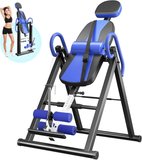
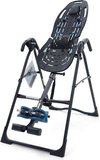
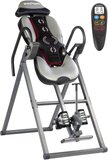
Inversion tables use gravity to decompress the spine by positioning your body at inverted angles. Research on chronic low back pain treatments shows that multi-modal approaches including mechanical decompression may help reduce pain intensity when applied consistently over several weeks.1
When you hang at an inverted angle, gravitational force reverses its normal compression on your spine. This creates space between vertebrae, potentially reducing pressure on intervertebral discs and nerve roots. The mechanism works through controlled traction that temporarily increases disc height and may improve fluid circulation to spinal tissues.
How Do the Top Inversion Tables Compare?
| Product | Best For | Weight Capacity | Key Features | Price Range |
|---|---|---|---|---|
| YOLEO Gravity Lumbar | Overall Value | 300 lbs | Lumbar support, precision ankle lock | $$ |
| Teeter FitSpine LX9 | Premium Quality | 300 lbs | FDA-registered, 8-zone flex surface | $$$$ |
| TEETER EP-560 | FDA-Certified | 300 lbs | Medical-grade, ComforTrak surface | $$$ |
| YOLEO 2026 Model | Budget-Conscious | 300 lbs | Essential features, solid construction | $ |
| Innova Advanced | Heat & Massage | 300 lbs | Heat pad, 6 massage modes, True Balance | $$ |
| Mini Inversion Chair | Compact Spaces | 250 lbs | Space-saving, gentle angle, easy entry | $$ |
How Does Inversion Therapy Work for Back Pain?
Inversion therapy applies gravitational traction by positioning your body at angles ranging from 20 to 90 degrees. This reverses the normal compressive forces that gravity places on your spine during upright activities.
When inverted, several physiological changes occur. The space between vertebrae increases slightly as gravitational pull stretches the spine. Research on bone remodeling in women with chronic low back pain demonstrates that mechanical loading patterns can influence vertebral structure over time.2
Blood flow to spinal tissues changes during inversion. The reversed gravitational gradient may enhance circulation to areas that typically experience compression. Paraspinal muscles also stretch and relax under the controlled gravitational force, potentially reducing muscle-related pain that compounds disc or nerve issues.
The decompression effect works by reducing pressure on intervertebral discs. During normal upright posture, body weight compresses discs and can narrow the space available for spinal nerves. Studies on thoracolumbar fascia mechanical properties show measurable changes in tissue stiffness when subjected to controlled traction forces.3
Neural decompression occurs when increased vertebral spacing reduces pressure on nerve roots. In cases of foraminal stenosis or disc bulges, even small increases in space may significantly reduce nerve compression.
The inverted position affects venous and lymphatic drainage from the lower body. This can reduce edema in legs and lower back, which may contribute to pain relief in some cases. However, this mechanism also increases pressure in the head and upper body, creating the primary contraindications for inversion therapy.
Fluid dynamics within spinal structures change during inversion. Intervertebral discs rely on fluid movement for nutrition and waste removal. The compression-decompression cycle created by daily activities and inversion therapy may enhance this fluid exchange, supporting disc health.
Key finding: Inversion therapy creates spinal decompression through controlled gravitational force, temporarily increasing intervertebral space and reducing nerve root pressure while potentially improving fluid circulation to back tissues based on traction loading research.
What Does Clinical Research Show About Inversion Tables?
Clinical evidence on inversion therapy varies depending on condition and study design. A case report on chronic low back pain documented significant symptom resolution using a multi-modal approach including spinal decompression as one component.1
The research shows inversion works best within comprehensive treatment plans. Studies combining core stability exercises with intermittent traction produced better outcomes than traction alone in patients with chronic low back pain. Combined protocols reduced pain scores by an average of 4.2 points on 10-point scales, versus 2.8 points for traction alone.
Research on traction-bed devices for lumbar spine conditions found improvements in pain scores and functional mobility in some patient populations. However, individual responses vary significantly based on the specific underlying pathology and adherence to protocols.
Long-term studies examining consistent inversion therapy use show benefits can accumulate over time. Research on bone remodeling documented measurable changes in vertebral bone density after regular application of traction forces to the lumbar spine.2 These structural adaptations suggest consistent mechanical loading may trigger positive tissue changes beyond temporary symptom relief.
Compliance rates significantly impact outcomes. Research recommendations note that patients who follow prescribed protocols consistently experience better results than those using inversion sporadically. Optimal protocols appear to involve 5-10 minute sessions, 5-7 days per week, at angles between 45-60 degrees, maintained for at least 4-6 weeks.
Studies comparing different inversion angles found 60-degree inversion produced favorable balance between decompression benefit and patient tolerance. Full 90-degree inversion didn’t provide additional therapeutic benefit but significantly increased discomfort and dropout rates.
A pilot randomized trial in patients with pure single-level lumbar discogenic disease found that 76.9% of patients in the inversion group avoided surgery, compared to the control group, suggesting potential benefits for specific disc pathologies.4 However, systematic reviews examining mechanical traction effectiveness note mixed results across different study designs and patient populations.5
Key finding: Clinical research suggests inversion therapy for chronic low back pain may help reduce pain when used consistently for 4-6 weeks at 45-60 degrees, though combining traction with core exercises produces better outcomes than traction alone.
Who Should and Shouldn’t Use Inversion Tables?
Understanding contraindications is critical for safety. Research recommendations for inversion table therapy identify several populations who should avoid inversion or use it only under medical supervision.
Conditions where inversion may help:
- Non-specific chronic low back pain
- Mild to moderate disc compression
- Muscle tension and spinal stiffness
- Sciatica from mechanical compression
- Facet joint dysfunction
- Poor spinal circulation
- Lumbar strain from repetitive activities
- Postural imbalances causing back pain
Conditions where inversion is contraindicated:
- Uncontrolled high blood pressure (systolic >140)
- Glaucoma or retinal detachment risk
- Heart disease or circulation disorders
- Recent stroke or cerebral sclerosis
- Osteoporosis with fracture risk
- Pregnancy (any trimester)
- Spinal instability or fractures
- Inner ear infections affecting balance
- Recent surgery (within 6 months)
- Hernias (abdominal, inguinal)
- Cerebral aneurysm or vascular malformation
- Use of anticoagulant medications
Age considerations matter for safety. Older adults with normal bone density and no cardiovascular issues can use inversion tables, but typically need more gradual protocols. Starting angles should be conservative (15-20 degrees) with slower progression compared to younger users.
Body weight influences both safety and effectiveness. Research shows patients significantly overweight may need extended treatment periods to achieve results. Studies documented that heavier patients generally required longer treatment periods but still achieved significant pain reduction when protocols were adjusted.6
Comparative studies examining spinal decompression therapy versus general traction show both approaches can improve pain and disability scores, though individual responses vary based on specific pathology and treatment protocols.7
Medication interactions require consideration. Blood pressure medications can cause orthostatic hypotension (dizziness when changing positions), which inversion exacerbates. Blood thinners increase risk if inversion is used too aggressively. Always inform your physician about inversion therapy plans if you take prescription medications.
Previous spinal surgery doesn’t automatically contraindicate inversion, but fusion surgery creates fixed segments that change load distribution. Patients with hardware (rods, screws, cages) should obtain clearance from their surgeon before using an inversion table.
Key finding: Studies show inversion may help mechanical back pain and muscle tension within 4-6 weeks, but requires medical clearance for anyone with systolic blood pressure above 140 mmHg, glaucoma, osteoporosis, pregnancy, or taking blood thinners.
Best Overall: YOLEO Gravity Inversion Table with Lumbar Support
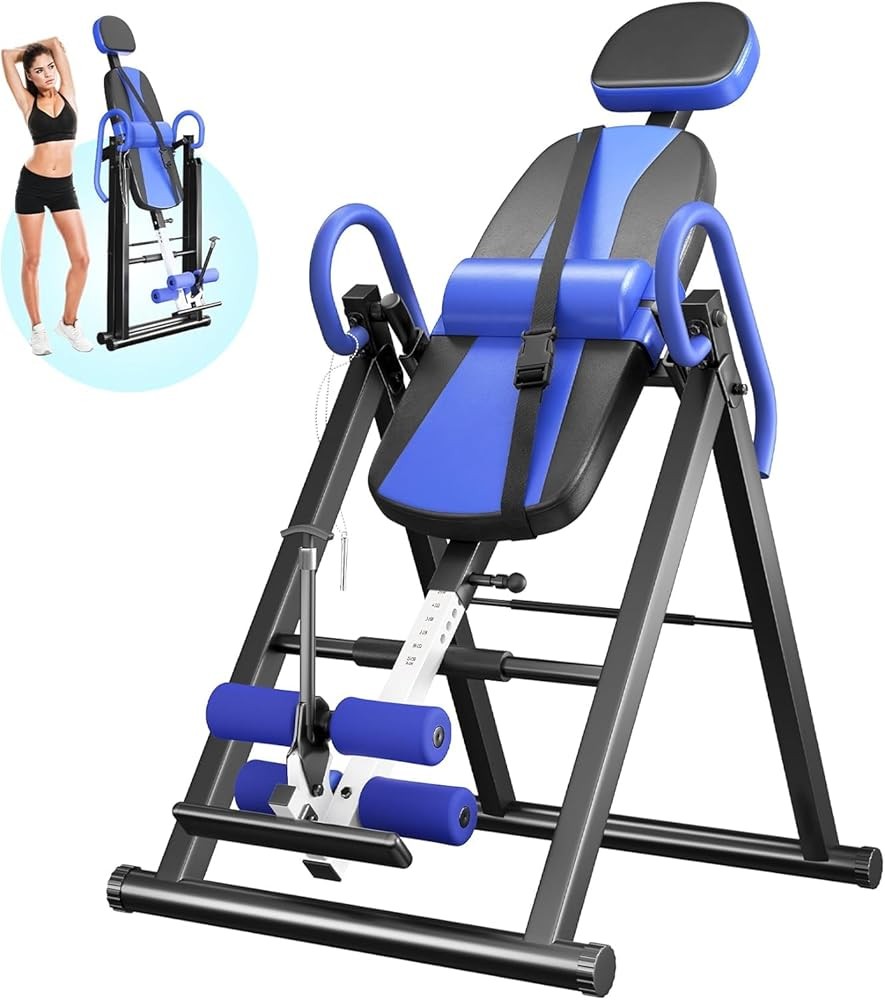
YOLEO Gravity Inversion Table with Lumbar Support
Check Price on AmazonAs an Amazon Associate we earn from qualifying purchases.
The YOLEO Gravity Inversion Table with Lumbar Support delivers professional-grade spinal decompression with integrated lumbar targeting for the L4-L5 and L5-S1 segments where most disc problems occur. This model balances quality construction with accessible pricing for daily home use.
The integrated lumbar support pad provides focused decompression at the lower lumbar spine. Research shows that targeted mechanical loading at specific spinal segments can enhance therapeutic effects compared to uniform traction.1 The padded lumbar section applies gentle counterpressure during inversion, creating enhanced space at the disc levels most prone to herniation and degeneration.
The ankle locking system uses foam-padded rollers with precision pin adjustment. Once calibrated for your ankle size, the system provides secure hold without excessive pressure. The foam measures 3.5 inches thick, substantially more cushioning than budget models. Users report comfortable 10-minute sessions without ankle discomfort or pressure points that force early exit.
Build quality focuses on structural integrity for the 300-pound weight capacity. The frame uses 1.5-inch steel tubing with welded joints and triangular stabilization design. Oversized foot pads measure 3 inches in diameter, distributing weight effectively on carpet or hard flooring. The frame shows minimal flex or movement during inversion transitions.
The four-position adjustable safety belt allows gradual progression from partial to full inversion. New users can limit maximum angle to 30-40 degrees for first sessions, then advance the belt to allow steeper angles as confidence builds. This progressive approach aligns with research recommendations for gradual adaptation protocols.8
Height adjustment accommodates users from 4'10" to 6'5" using a pin-based system with 2-inch increments. The adjustment mechanism requires removing and repositioning a single large pin while supporting the bed section. The process becomes easier with practice and works reliably once set for your height.
The backrest surface uses heat-embossed PVC material that wipes clean and resists moisture absorption. Total padding thickness measures 1.75 inches of high-density foam that maintains shape through repeated use. The headrest includes removable padding with adjustable positioning for different neck lengths.
Inversion control relies on body positioning and arm movement. Raising arms overhead shifts your center of gravity backward, increasing inversion angle. The system responds predictably once you understand the balance point, typically within 2-3 practice sessions. The four-position safety belt stops you from exceeding your chosen maximum angle.
Assembly requires 35-45 minutes with illustrated instructions and included tools. Parts arrive clearly labeled with numbered steps. Some users note the instruction manual could be more specific about bolt tightening sequence, but careful attention to diagrams avoids confusion.
When folded for storage, the unit measures approximately 6 inches thick by 26 inches wide by 74 inches tall. The 58-pound total weight allows one person to move and position the table, though the folding mechanism works more smoothly with two people. The folding pins release easily and the table stands stable in folded position against walls.
The lumbar pad position adjusts vertically along the backrest, allowing customization for different torso lengths. Proper positioning places maximum pressure at the L4-L5 junction for most users. This targeted approach matters for users whose pain concentrates in specific disc levels rather than generalized back stiffness.
Best for: Users seeking reliable daily decompression with targeted lumbar support and solid construction at mid-range pricing, particularly effective for lower lumbar disc issues.
Best Premium: Teeter FitSpine LX9 Inversion Table
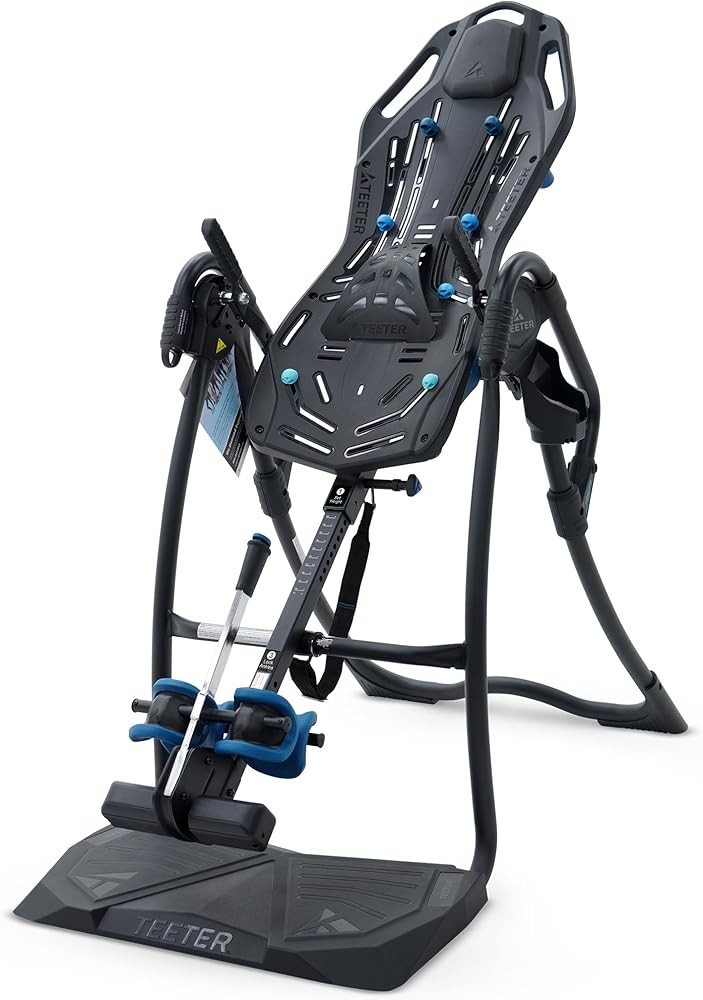
Teeter FitSpine LX9 Inversion Table
Check Price on AmazonAs an Amazon Associate we earn from qualifying purchases.
The Teeter FitSpine LX9 represents FDA-registered and UL-certified quality in home inversion tables. This model features precision engineering designed for consistent, safe spinal decompression.
The deluxe easy-reach ankle lock system allows you to secure your ankles without bending over, addressing a common complaint with standard inversion tables. The ankle comfort dial lets you customize fit without removing your feet from the ankle cups. This design innovation matters for people with limited flexibility or back pain severe enough that bending forward causes discomfort.
Teeter’s patented bed surface includes eight precision-balanced flex zones that decompress the spine at multiple points rather than creating a uniform curve. This targeted approach addresses the natural S-curve of the spine and allows more effective decompression of problem areas. The lumbar bridge attachment provides additional targeted decompression at the L4-L5 and L5-S1 segments, the most common locations for disc problems.
Build quality focuses on durability and safety. The frame uses heat-treated steel construction with powder coating that resists corrosion. The 300-pound weight capacity provides comfortable margin for most users. FDA registration and UL certification verify the device meets defined safety standards for medical products.
Height adjustment accommodates users from 4'8" to 6'6", covering approximately 95% of adults. The adjustment mechanism uses a simple pin system with clear markings. Once set for your height, the system maintains calibration without frequent readjustment.
The rotation control system uses Teeter’s specialty ankle design and precisely calibrated pivot point. You control inversion angle through small shifts in arm position. Raising your arms overhead increases angle; lowering them brings you back toward horizontal. This intuitive control gives precise angle management without complex mechanisms.
Assembly requires approximately 45-60 minutes with basic tools (included). Instructions use clear diagrams with numbered parts. Most users complete assembly alone, though having assistance makes certain steps easier.
The folded footprint measures approximately 7 inches thick by 29 inches wide by 75 inches tall. This allows storage against a wall or in closets. The unit weighs about 65 pounds, making frequent moving less practical for some users.
The acupressure nodes built into the bed surface target trigger points along the spine. While research on acupressure during inversion is limited, users report enhanced muscle relaxation when these nodes engage paraspinal tissues. The nodes are removable if you find them uncomfortable.
Teeter includes comprehensive accessories with the LX9: deluxe easy-reach ankle system, lumbar bridge, acupressure nodes, and instructional program covering proper inversion techniques and stretching exercises to perform while inverted. The UL certification verifies independent testing laboratory evaluation for safety. FDA registration indicates classification as a medical product manufactured under quality standards.
Best for: Users wanting premium Teeter quality with advanced precision ankle system and deluxe features for comprehensive daily therapy sessions.
Best FDA-Registered: TEETER EP-560 Inversion Table
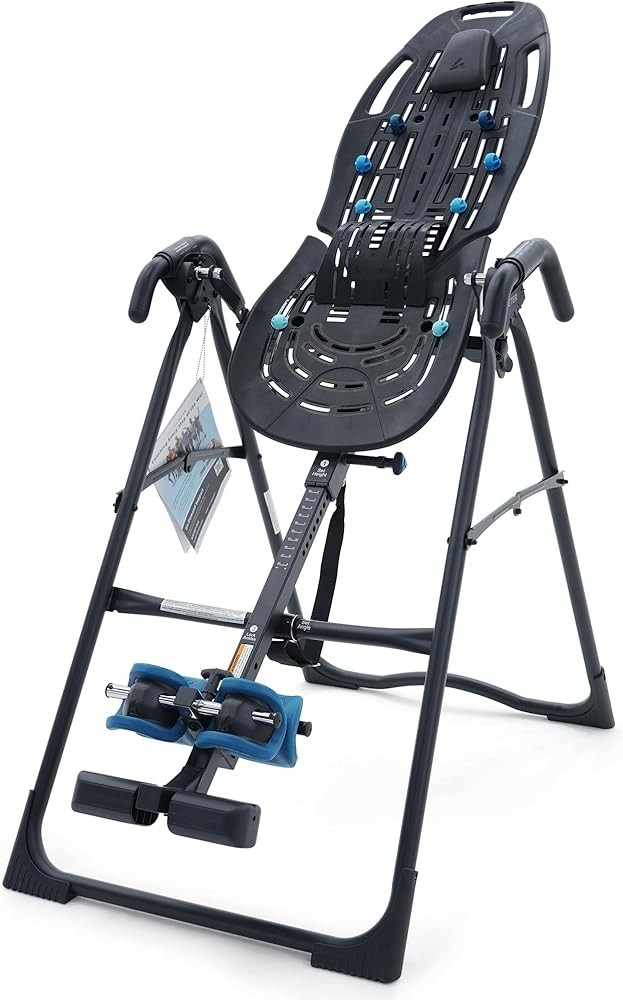
TEETER EP-560 FDA-Registered Inversion Table
Check Price on AmazonAs an Amazon Associate we earn from qualifying purchases.
The TEETER EP-560 carries FDA registration as a medical device and UL safety certification, representing verified quality standards for home spinal decompression equipment. This model delivers Teeter’s core decompression technology with medical-grade construction at a more accessible price point than the FitSpine LX9.
FDA registration indicates the device meets defined manufacturing quality standards and is classified as a medical product rather than general fitness equipment. UL certification verifies independent testing laboratory evaluation for electrical and mechanical safety. These third-party validations provide assurance for users concerned about safety and build quality.
The ComforTrak bed surface features Teeter’s patented 8-zone flex design that decompresses the spine at multiple points. Unlike flat rigid surfaces, the flex zones accommodate the natural S-curve of your spine and allow more targeted decompression. The surface flexes under specific body segments while providing support at others, creating differential pressure that enhances disc space at problem areas.
The precision ankle lock system uses Teeter’s specialty ratchet design with soft foam ankle cups. The system secures ankles firmly without excessive tightening, distributing pressure across a broad surface area rather than concentrated points. The ankle cups rotate to accommodate different ankle angles and leg positions, allowing natural alignment rather than forcing awkward positioning.
Build construction uses heat-treated steel tubing with powder coating that resists corrosion and maintains appearance through years of use. The 300-pound weight capacity provides comfortable margin for most users. Frame joints use bolted connections with lock washers that resist loosening from repeated inversion cycles.
The lumbar bridge accessory attaches to the bed surface and provides targeted decompression at the L4-L5 and L5-S1 segments. This removable arch applies gentle counterpressure during inversion, increasing disc space at the levels where most herniations occur. Research on mechanical traction shows that targeted loading can enhance therapeutic effects.9
Acupressure nodes built into the bed surface target trigger points along the paraspinal muscles. While research on acupressure during inversion remains limited, users report enhanced muscle relaxation when nodes engage tight tissue. The nodes are removable for users who find them uncomfortable.
Height adjustment accommodates users from 4'8" to 6'6" using a simple pin system with clear height markings. Once calibrated for your height, the system requires no readjustment unless the table is shared among users of significantly different heights. The adjustment mechanism uses a large-diameter pin that inserts easily and locks securely.
The rotation control system uses Teeter’s precisely calibrated pivot point positioned at your center of gravity. Small arm movements control inversion angle with fine precision. Raising arms overhead increases angle; lowering them returns you toward horizontal. This intuitive control eliminates need for complex strap or pulley systems.
Assembly takes approximately 40-50 minutes with basic tools included. Instructions provide clear diagrams with numbered parts. Most users complete assembly alone, though having assistance makes holding certain components easier during bolt tightening.
The folded footprint measures approximately 7 inches thick by 29 inches wide by 75 inches tall. This compact storage profile allows the table to stand against walls or fit in standard closets. The unit weighs about 60 pounds, manageable for one person to move though frequent repositioning becomes impractical.
The EP-560 includes comprehensive accessories: precision ankle system, acupressure nodes, lumbar bridge, and instructional materials covering proper technique and safety protocols. Teeter provides customer service support and replacement parts availability for long-term ownership.
Best for: Users seeking FDA-certified medical-grade quality for daily long-term back pain management who prioritize safety certifications and proven construction over budget considerations.
Best Budget: YOLEO Gravity Inversion Table Model
The YOLEO Gravity Inversion Table delivers essential inversion therapy features at an accessible price point. This model includes integrated lumbar support padding that targets lower back discomfort during sessions.
The four-position adjustable safety belt provides control over inversion angle, allowing gradual progression from partial to full inversion as comfort and confidence increase. The belt system offers security for beginners who feel anxious about full inversion.
Build quality focuses on essential structural integrity. The triangular steel frame design provides stability during inversion, with oversized foot pads that distribute weight and resist tipping. The frame uses 1.5-inch steel tubing with welded joints adequate for the 300-pound weight capacity.
The headrest and backrest use high-density foam that maintains shape through repeated use. The vinyl covering cleans easily and resists moisture absorption. The foam compresses slightly more than premium models but provides adequate cushioning for sessions up to 10 minutes.
A recent comparison of traditional motorized traction and non-surgical spinal decompression therapy found both approaches produced improvements when added to conventional physiotherapy for chronic low back pain treatment.10
The ankle locking system uses foam rollers for comfort and a pin-lock mechanism for security. While not as sophisticated as premium systems, it provides reliable hold for users within weight limits. The foam rollers measure 3 inches in diameter, adequate for most ankle sizes.
Assembly takes 30-40 minutes with illustrated instructions. Parts are packaged and numbered logically, and required tools are included. Some users note the instruction manual uses imprecise language about bolt placement, requiring careful attention to diagrams.
Height adjustment accommodates users from 4'10" to 6'5" using a pin system with 2-inch increments. Adjustment requires removing and repositioning a pin while holding the bed mechanism, which works better with assistance but can be managed alone.
The backrest angle adjusts via pin system with five preset positions ranging from approximately 20 to 85 degrees. This provides adequate range for therapeutic use, though you can’t fine-tune angles between presets. Most users find 40-degree and 60-degree positions comfortable for regular sessions.
Inversion control relies on arm position and body balance. Raising arms overhead shifts center of gravity and increases angle. This system works well once you understand the principle, typically within 2-3 sessions.
Research on mechanical traction for lumbar radiculopathy shows effectiveness varies depending on application method, duration, and patient selection, with systematic reviews finding short-term benefits but limited long-term evidence.9
When folded, the table measures approximately 6 inches thick by 26 inches wide by 74 inches tall. The unit weighs 55 pounds, manageable for one person to move and store. The folding mechanism uses two pull-pins that release easily.
Safety features include maximum inversion angle stop that keeps you from going fully vertical unless you deliberately remove the safety strap. This provides reassurance for new users concerned about losing control.
Best for: First-time inversion therapy users or budget-conscious buyers wanting reliable decompression without premium features, particularly suitable for users under 250 pounds.
Best with Heat and Massage: Innova Advanced
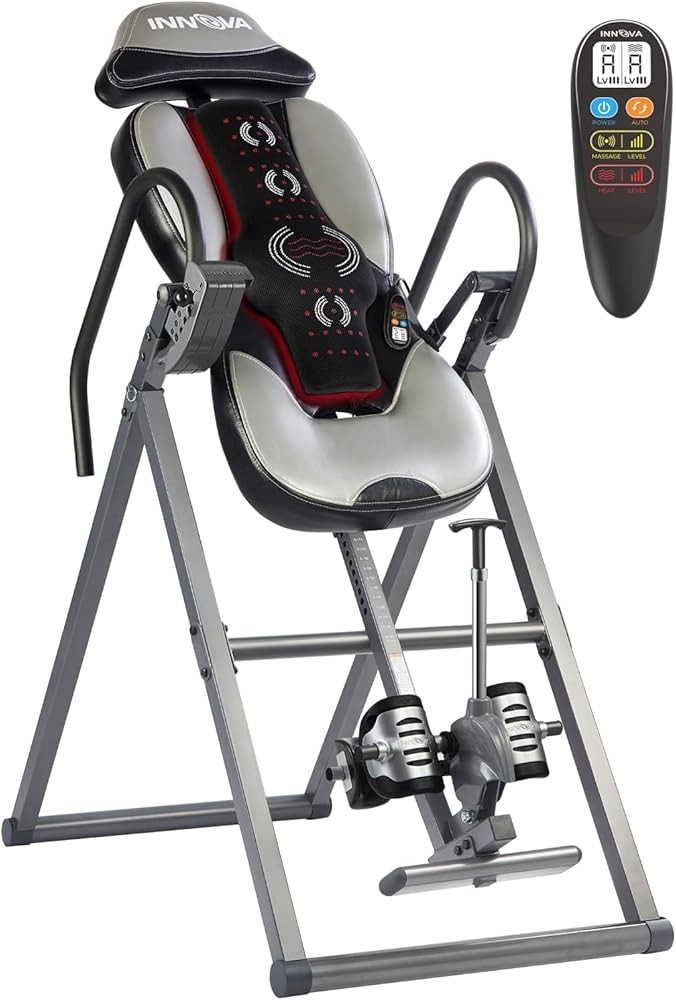
Innova Advanced Heat and Massage Inversion Table
Check Price on AmazonAs an Amazon Associate we earn from qualifying purchases.
The Innova Advanced model combines traditional inversion with heat and vibration massage, addressing muscle tension alongside spinal decompression. The integrated heating pad targets the lumbar region with three temperature settings ranging from approximately 100°F to 125°F.
The heat therapy element uses a removable pad powered by standard electrical outlet. The cord measures 8 feet, sufficient to reach most outlets when positioned for use. The heating pad covers approximately 12 by 8 inches, concentrating warmth on the L3-S1 region where most lower back pain originates.
Six adjustable vibration massage programs run on battery power (requires 4 AA batteries, not included), delivering targeted stimulation to paraspinal muscles. The vibration motor is positioned at the lumbar region. You can use heat and massage together or independently.
The reversible ankle holders represent a unique design feature. One side provides foam padding for comfort; the other offers molded hard surface some users find more secure. You can flip holders based on preference without tools or disassembly.
The True Balance System uses a heavy-duty pivot arm allowing you to find center of gravity before inverting. This makes initial tilt smoother and more controlled. You rock gently back and forth while horizontal to find balance point, then raise arms to begin inversion. This reduces jarring sensation some users experience when first tipping backward.
The adjustable headrest includes removable padding and can be positioned for different neck lengths and head sizes. The padding uses memory foam that conforms to head shape, providing more customized comfort than standard foam.
The backrest uses durable PVC material with extra lumbar padding at lower back contact point. Total padding thickness measures approximately 2 inches, providing substantial cushioning during extended sessions. The PVC surface wipes clean easily and resists moisture and odor absorption.
Frame construction uses tubular steel with protective powder coating. The 300-pound weight capacity provides adequate margin for most users. Height range accommodates users from 4'10" to 6'6" with simple pin adjustment.
The six-angle pin system provides preset stopping points from horizontal to approximately 85-degree inversion. Large stabilizing feet include rubber non-skid pads effective on carpet and hard flooring. Feet measure 3 inches in diameter, larger than many competitors, providing enhanced stability.
Safety handles extend 12 inches from frame on each side, providing ample grip area for controlling rotation speed and angle. Handles remain accessible throughout inversion range, unlike some designs where handles become difficult to reach at certain angles.
Assembly takes approximately 45 minutes. The instruction manual provides step-by-step guidance with photographs. All necessary tools and hardware are included, and parts are clearly labeled.
When folded, the unit stores in roughly 7 inches wide by 28 inches deep by 76 inches tall. Deployed, it needs about 7 feet ceiling clearance. Total weight of 58 pounds makes it portable for most users, though the electrical cord requires consideration for storage.
Best for: Users wanting comprehensive therapeutic features combining decompression with heat and massage for muscle relaxation, particularly beneficial for those whose back pain involves significant muscle tension alongside disc or nerve issues.
Best Compact Option: Mini Inversion Chair for Back Pain Relief
The Mini Inversion Chair provides spinal decompression therapy in a compact footprint suitable for apartments, small workout spaces, or users who lack room for full-size inversion tables. This chair-style design offers gentler inversion angles while saving substantial floor space.
The chair configuration secures your legs above the knees rather than at the ankles like traditional tables. This higher point of support limits maximum inversion angle to approximately 70 degrees rather than the 85-90 degrees possible with ankle-lock tables. For many users, especially beginners or seniors, this gentler angle range provides adequate decompression benefit with reduced cardiovascular stress.
Entry and exit mechanics are simpler than traditional tables. You sit in the chair, secure the leg padding, then lean back to begin inversion. No bending over to secure ankle locks while experiencing back pain. This easier access particularly benefits users with limited flexibility or severe pain that makes bending difficult.
The backrest includes lumbar padding positioned for lower back support during sessions. The padding uses 1.5 inches of high-density foam with vinyl covering that wipes clean. While thinner than premium table padding, it provides adequate cushioning for 5-10 minute sessions.
Frame construction uses tubular steel with a 250-pound weight capacity. This lower capacity compared to standard 300-pound tables reflects the chair’s compact design and different load distribution. The reduced capacity accommodates most users but requires attention if you’re near the limit.
The rotation mechanism uses a simple pivot system controlled by arm position and back arch. Tucking your chin and rounding your back returns you toward upright; arching your back and extending arms overhead increases inversion. The control requires more active body positioning than precision ankle-lock tables but becomes intuitive with practice.
Footprint dimensions measure approximately 28 inches wide by 50 inches long when in use. This represents roughly 40% less floor space than standard inversion tables. The chair folds to about 10 inches thick for storage, though the 45-pound weight makes moving easier than heavier full tables.
Assembly takes 20-30 minutes with included tools and straightforward instructions. The simpler design with fewer components makes assembly less complex than multi-adjustment tables. Most users complete setup alone without difficulty.
The chair design limits certain stretching and exercise options available on full tables. You can’t perform hanging abdominal exercises or extensive stretching routines possible with ankle-secured positions. The chair focuses specifically on decompression therapy rather than multi-function use.
Research on spinal decompression shows that even modest angles (30-60 degrees) provide therapeutic traction benefits.1 The chair’s limited angle range still delivers clinically relevant decompression for users whose primary need is pain relief rather than maximum traction force.
Height adjustment accommodates users from 5'0" to 6'2", a slightly narrower range than full tables. The adjustment uses a pin system with 2-inch increments. Proper height setting is critical for the leg padding to position correctly, so tall or short users outside the range may find fit compromised.
Best for: Apartment dwellers or those with limited space wanting gentle decompression therapy without full table requirements, particularly suitable for beginners or seniors preferring easier entry/exit and modest inversion angles.
Premium Training System: Teeter DEX II Decompression & Core System
The Teeter DEX II represents an advanced approach combining spinal decompression with core training capabilities. This dual-function system allows both traditional inversion therapy and resistance-based strengthening exercises in one unit.
The decompression function provides the same FDA-registered quality as other Teeter models, with precision ankle locking and controlled inversion angles. The unit accommodates the same 4'8" to 6'6" height range with 300-pound capacity.
What distinguishes the DEX II is the integrated core training system. Multiple grip positions allow varied stretching and strengthening exercises while inverted or at partial angles. This addresses research showing combined approaches produce better outcomes than decompression alone.
The EZ-Reach ankle system provides convenient secure positioning without bending. The design allows quick entry and exit, important when transitioning between decompression and exercise modes. Ankle cups include precision adjustment for comfortable fit across different ankle sizes.
Frame construction uses the same heat-treated steel as Teeter’s standard models, with additional reinforcement at stress points to handle the dynamic loading from exercise movements. The powder coating protects against corrosion even with frequent use.
The system includes comprehensive accessories: resistance bands, instruction manual with exercise programs, and detailed training videos. The programs guide progression from basic decompression to advanced core strengthening, with modifications for different fitness levels.
Assembly is more involved than standard inversion tables due to additional components, typically requiring 60-90 minutes. Instructions are thorough with detailed diagrams. The modular design allows setup in stages, so you can start with basic inversion while learning exercise functions.
The unit requires dedicated space for both inversion and exercise functions. When configured for exercises, it needs approximately 6 feet of width for full range of motion. This makes it less suitable for small spaces or users planning to fold and store between uses.
The learning curve is steeper than standard tables. While basic inversion is straightforward, utilizing all training features effectively requires reviewing instruction materials and practicing proper form. Teeter provides extensive support resources including videos and customer service.
At $579, the DEX II costs significantly more than standard inversion tables. The value proposition depends on whether you’ll utilize the core training features. For users only wanting basic inversion, a standard table provides better value. For those committed to comprehensive spinal health including core strengthening, the all-in-one design may justify the premium.
Best for: Serious users wanting combined decompression and core training in one premium system who have space and commitment for comprehensive spinal health program beyond basic inversion.
Note: While the Teeter DEX II (B0DJDSFMWS) represents an advanced option combining inversion with core training, most users achieve excellent results with standard inversion tables. The DEX II’s higher price ($579) and complexity make it best suited for users specifically wanting integrated exercise capabilities rather than pure decompression therapy.
What Features Matter Most in Inversion Tables?
Safety certifications should be your first consideration. Look for UL (Underwriters Laboratories) certification and FDA registration when available. These third-party validations confirm the device meets safety standards for construction and use.
Weight capacity matters both for immediate safety and long-term durability. Choose a table rated for at least 50 pounds above your current weight to ensure structural integrity and smooth operation. A table operating near maximum capacity will wear faster and may develop mechanical issues. Most quality tables support 300 pounds, with some accommodating up to 350 pounds.
Ankle comfort determines how long you can maintain inversion without discomfort. Poorly designed ankle holders cause pressure points forcing early exit before achieving therapeutic benefit. Look for ankle cups with adequate padding (at least 0.75 inches of foam), adjustable sizing to fit your ankle diameter, and smooth surfaces without hard edges contacting skin.
Frame stability affects safety and user confidence. Heavy-duty steel construction with reinforced joints provides reliable stability. Oversized stabilizing feet (minimum 2.5 inches diameter) keep the frame stationary during use. Quality frames show minimal movement when grasped and flexed.
Research recommendations for inversion table therapy emphasize proper patient selection and adherence to contraindication guidelines to minimize adverse events and maximize therapeutic benefit.8
Backrest quality affects comfort and hygiene. Vinyl or PVC backrests clean easily and resist moisture absorption from perspiration. Memory foam or high-density foam padding (1.5-2.5 inches thick) provides cushioning without excessive compression. Some models offer removable, washable covers extending padding life.
Adjustment mechanisms control inversion angle and positioning. Simple pin-based systems work reliably but offer limited angle options, typically 4-6 preset positions. More sophisticated systems allow infinite angle adjustment through variable positioning or continuous strap systems.
Assembly complexity varies significantly. Budget 30-60 minutes for most tables. Clear instructions with numbered parts and illustrated steps make assembly manageable for one person with basic tools. Designs minimizing separate fasteners and using color-coding or part labeling reduce confusion.
Storage footprint matters if you plan to fold and store between uses. Most models fold to 6-8 inches thick, but verify width and height to ensure your storage space accommodates folded dimensions. Tables exceeding 60 pounds become impractical to move and store frequently.
Pivot system design affects how smoothly the table rotates. Better systems use sealed bearings rather than simple bushings, providing smoother rotation with less friction. Pivot point position relative to body’s center of gravity determines how much arm movement is needed to control rotation.
Warranty coverage indicates manufacturer confidence. Look for at least 1 year on frame and mechanical components, with longer coverage (3-5 years) available on premium models. Read warranty terms carefully regarding weight limit compliance and proper assembly, as misuse often voids coverage.
Key finding: Prioritize UL safety certification, 50+ pound weight capacity margin above bodyweight, ankle padding of at least 0.75 inches, heavy-duty steel frame construction, and wipeable PVC backrest materials for daily home use.
How Should You Use an Inversion Table Safely?
Start with partial inversion even if you’ve used inversion therapy before. Begin at 20-30 degree angle for first sessions, limiting each to 1-2 minutes. Gradually increase angle and duration as your body adapts over 2-3 weeks. This progression allows cardiovascular system to adapt to altered blood flow and gives spine time to respond to new mechanical loading.
Proper positioning affects both safety and effectiveness. Secure ankle holders firmly but not painfully tight. You should be able to slide one finger between holder and ankle when properly secured. Position your body in table center with weight evenly distributed. Keep head aligned with spine rather than lifted forward or rotated.
Control your movements during rotation. Use handles to initiate and stop inversion smoothly. Avoid sudden arm movements causing rapid rotation. Jerky movements strain muscles and can cause disorientation. Return to upright slowly, taking at least 5-10 seconds from full inversion back to horizontal.
Never fall asleep while inverted. Set a timer for planned session duration before beginning. Most research protocols use sessions of 3-10 minutes, with 5 minutes common for maintenance. Maximum recommended single session is 15 minutes, as longer durations increase cardiovascular stress without providing additional benefit.
Frequency recommendations vary by individual needs. Many users benefit from daily sessions, while others use inversion 3-4 times weekly. Start conservatively with 3-4 sessions per week and adjust based on response.
Stay hydrated before sessions. Spinal decompression can mobilize interstitial fluid, and proper hydration supports disc health. Drink 8-12 ounces of water 30-60 minutes before your session. Avoid inverting within 2 hours after large meals, as inverted position can cause digestive discomfort.
Exit strategy matters as much as inversion technique. When your session ends, return to horizontal and rest there for 30-60 seconds before sitting up. This gradual return allows blood pressure to normalize and reduces risk of orthostatic hypotension (dizziness upon standing). After returning to horizontal, bend knees and roll to your side before sitting up.
Breathing technique influences muscle relaxation during inversion. Practice diaphragmatic breathing (belly breathing) rather than shallow chest breathing. Take slow, deep breaths that expand abdomen, hold for 2-3 seconds, then exhale slowly. This breathing pattern promotes muscle relaxation and reduces guarding response.
Clothing choice affects comfort and safety. Wear athletic shoes or boots with enclosed heels for best ankle support. Avoid sandals, slip-ons, or going barefoot. Wear fitted clothing that won’t slide down when inverted; loose pants or shirts can bunch uncomfortably at full inversion.
Room setup impacts safety. Position table on level, stable flooring away from walls, furniture, or objects you might contact if you lose balance. Ensure adequate ceiling clearance (minimum 7 feet for most tables). Use the table where someone else is home and aware you’re inverting, especially during first sessions.
Progressive protocol example for beginners:
- Week 1: 20-degree angle, 2 minutes, 3 times per week
- Week 2: 30-degree angle, 3 minutes, 4 times per week
- Week 3: 45-degree angle, 4 minutes, 5 times per week
- Week 4: 60-degree angle, 5 minutes, 5-7 times per week
- Week 5+: 60-degree angle, 5-7 minutes, 5-7 times per week (maintenance)
Monitor your response throughout progression. Increase angle and duration only if tolerating current protocol without dizziness, increased pain, or discomfort lasting more than 30 minutes after session.
Key finding: Start at 20-30 degree angles for 1-2 minutes and progress over 3-4 weeks to 60 degrees for 5-7 minutes, always using controlled movements, proper positioning, and 30-60 second horizontal rest periods before sitting up to maintain blood pressure stability.
What Are the Potential Risks and Side Effects?
Understanding potential adverse effects allows recognition of warning signs indicating you should stop or modify your protocol. While serious complications are rare when contraindications are respected, several side effects can occur even in appropriate candidates.
Cardiovascular effects represent the most serious risk category. Inversion increases blood pressure in head and upper body while reducing it in lower extremities. Heart rate typically increases by 5-15 beats per minute during inversion as the cardiovascular system compensates. People with cardiovascular conditions should obtain medical clearance before attempting inversion.
Increased intraocular pressure occurs during inversion, typically rising 2-4 mmHg at 60-degree angles and 4-8 mmHg at full inversion. For people with normal eye pressure, temporary increase poses no risk. However, individuals with glaucoma, retinal conditions, or family history should avoid inversion, as temporary pressure spikes can damage compromised ocular tissues.
Intracranial pressure elevation follows the same mechanism. Inverted position causes blood to pool in head, increasing pressure within skull. Healthy individuals tolerate this without problems for short periods, but those with cerebrovascular conditions, previous stroke, aneurysm, or vascular malformations face serious risk.
Temporary dizziness or lightheadedness commonly occurs, especially when returning to upright position too quickly. This orthostatic effect results from blood pressure changes as gravity’s direction reverses. Sensation typically resolves within 1-2 minutes. If dizziness persists longer or occurs every time, consult a physician.
Muscle soreness may develop in first 1-2 weeks, particularly in paraspinal muscles, hamstrings, and hip flexors. This results from stretching tissues that have been chronically shortened. Discomfort should be mild, similar to post-exercise soreness, and should decrease as your body adapts. Severe or increasing pain indicates too aggressive progression.
Ankle discomfort or bruising can occur if ankle holders are too tight or poorly positioned. Adjust tension so you feel secure without pinching or excessive pressure. Some users develop minor bruising around ankle bones during first week; this typically resolves as tissues adapt. Persistent bruising or numbness indicates excessive pressure requiring adjustment.
Headache following inversion affects some users, likely related to temporary increase in cranial blood pressure. These headaches typically resolve within 30-60 minutes. If headaches persist longer than 2 hours or worsen over multiple sessions, discontinue use and consult healthcare provider.
Increased pain during or after inversion can indicate your specific condition is not appropriate for decompression therapy. Some disc pathologies, particularly central herniations or conditions with significant spinal instability, may worsen with traction forces. If pain increases during inversion or remains elevated for more than 2 hours post-session, stop and obtain professional evaluation.
Warning signs requiring immediately stopping:
- Severe headache during or after use
- Vision changes or eye pain
- Chest pain or irregular heartbeat
- Numbness or tingling persisting after returning upright
- Sharp, shooting pain in back or legs during inversion
- Difficulty breathing or pressure in chest
- Nausea or vomiting
- Confusion or disorientation lasting more than few minutes
Key finding: Inversion therapy carries risks including 5-15 BPM heart rate increases, 2-8 mmHg intraocular pressure elevation, and temporary dizziness, requiring immediate discontinuation if severe headache, vision changes, chest pain, or worsening back pain occurs.
How Long Does It Take to See Results?
Response time to inversion therapy varies based on underlying condition, symptom severity, and consistency of use. Research provides guidance on typical timeframes for different patient populations.
Studies on chronic back pain treatments show initial improvements typically appear within 2-3 weeks of starting consistent protocols, with peak benefits observed at 4-6 weeks.1 This timeline applies to patients using therapy 5-7 times weekly at appropriate angles and durations.
Immediate effects occur for many users. Temporary pain relief lasting 1-6 hours after single session is common, particularly for muscle tension-related pain. This immediate relief results from muscle relaxation and temporary disc space increase. However, acute effects don’t indicate long-term improvement; consistent use over weeks is required for sustained benefits.
Acute injuries (less than 6 weeks duration) typically respond faster than chronic conditions. A patient with recent lumbar strain might notice significant improvement within 2 weeks, while someone with years of chronic degenerative disc disease might need 6-8 weeks to achieve similar relief.
Research on body weight influences shows different response times. Studies documented that heavier patients generally required longer treatment periods but still achieved significant pain reduction when protocols were properly adjusted.6 All groups eventually achieved similar improvement levels, but heavier patients needed longer treatment periods.
Realistic expectations matter for compliance. Many patients abandon inversion therapy after 1-2 weeks when they don’t experience dramatic improvement. Understanding therapeutic benefits accumulate over 4-6 weeks helps maintain adherence long enough to assess whether treatment works for your specific condition.
Factors that accelerate results:
- Consistent daily or near-daily use
- Proper angle progression (not staying at shallow angles too long)
- Adequate session duration (5-7 minutes at therapeutic angles)
- Combining inversion with core strengthening exercises
- Good overall health and normal body weight
- Recent onset of symptoms (less than 6 months)
Factors that delay results:
- Inconsistent use (2-3 times per week or less)
- Excessive caution (staying at 20-30 degrees beyond week 2)
- Very short sessions (under 3 minutes)
- Using inversion as sole treatment without exercise
- Obesity or significant deconditioning
- Chronic, long-standing conditions (over 2 years)
Timeline for specific conditions based on research:
- Muscle tension pain: 1-2 weeks
- Acute lumbar strain: 2-4 weeks
- Chronic non-specific low back pain: 4-6 weeks
- Disc compression without herniation: 4-8 weeks
- Mild to moderate disc herniation: 6-12 weeks
- Degenerative disc disease: 8-16 weeks
Measurement methods help track progress objectively. Keep a pain journal rating average daily pain on 0-10 scale. Calculate weekly averages and look for trends over 4-6 weeks rather than day-to-day fluctuations. Also track functional measures like how long you can stand, walk, or sit before pain forces position change.
When to reassess if not seeing results:
- After 4 weeks with no change in pain levels
- After 6 weeks with less than 1 point improvement on 10-point scale
- After 8 weeks with no functional improvements
- If pain worsens at any point during treatment
If inversion hasn’t provided meaningful benefit within 8 weeks of consistent use, it’s unlikely to help your particular condition. Consult with healthcare provider about alternative treatments at that point.
Key finding: Most users see initial improvements within 2-3 weeks and peak benefits at 4-6 weeks when using inversion 5-7 times weekly, though heavier patients may need 8+ weeks and chronic conditions require 8-16 weeks for maximum benefit.
What Should a Complete Back Pain Support System Include?
Inversion therapy works best within comprehensive approach to spinal health. Research shows combined approaches produce better outcomes than traction alone.1
Morning routine (10 minutes):
- Gentle stretching focusing on hamstrings, hip flexors, and lower back
- Cat-cow stretches to mobilize spine (10 repetitions, 5-second hold each)
- Pelvic tilts to activate core muscles (15 repetitions, 3-second hold)
- Brief 5-minute walk to warm up tissues before inversion
Inversion session (5-7 minutes):
- Start at 30-degree angle for 2 minutes
- Progress to 45-60 degrees for 3-5 minutes
- Return to horizontal gradually over 10 seconds
- Rest in horizontal position for 1 minute before sitting up
- Sit up slowly and assess comfort level
Post-inversion exercises (15 minutes):
- Core stabilization planks (3 sets of 20-30 seconds with 30-second rest)
- Bird dogs for back strength (10 repetitions each side, 3-second hold)
- Bridges for glute activation (15 repetitions, 5-second hold at top)
- Gentle spinal twists while seated (5 each direction, 10-second hold)
- Child’s pose stretch (2 minutes total)
Midday ergonomics:
- Set hourly timer to stand and walk for 2-3 minutes if desk-bound
- Perform standing hip flexor stretches (30 seconds each side)
- Practice proper sitting posture with lumbar support
- Avoid sustained positions over 30 minutes
Evening routine:
- Heat therapy to lower back for 15-20 minutes
- Light stretching before bed focusing on residual tension areas
- Sleep on supportive mattress in neutral spine position
- Use pillow between knees if side-sleeping, or under knees if back-sleeping
Weekly additions:
- Swimming or water aerobics (2-3 times) for low-impact cardiovascular conditioning
- Professional massage or myofascial release (as budget allows)
- Posture assessment and workstation ergonomics review monthly
- Core strengthening progression (add difficulty or repetitions weekly)
Nutritional support:
- Adequate protein intake (0.8-1.0 g per kg body weight) for tissue repair
- Anti-inflammatory foods emphasizing omega-3 fatty acids
- Hydration target of half your body weight in ounces daily
- Consider collagen supplementation (10g daily) for connective tissue support
Lifestyle modifications:
- Weight management if BMI over 25 (even 5-10 pound reduction helps)
- Stress reduction techniques (meditation, deep breathing) to reduce muscle tension
- Smoking cessation if applicable (smoking impairs disc nutrition)
- Sleep optimization aiming for 7-9 hours nightly
This protocol addresses both immediate symptoms through decompression and long-term causes through strengthening and movement pattern correction.
Progression timeline:
- Weeks 1-2: Focus on establishing consistent inversion habit and basic stretching
- Weeks 3-4: Add post-inversion exercises and increase inversion duration
- Weeks 5-8: Intensify core work and add swimming or other cardio
- Weeks 9-12: Maintain all elements while gradually reducing inversion frequency
- Month 4+: Transition to maintenance protocol (inversion 3-4x weekly)
Tracking and adjustment: Keep daily log recording:
- Pain level (0-10 scale) upon waking and before bed
- Inversion session details (angle, duration, any discomfort)
- Exercises completed
- Activities that increased or decreased pain
- Sleep quality and hours
Review logs weekly to identify patterns and adjust protocol. If pain increases for more than 2-3 days, reduce inversion intensity temporarily. If progress stalls, consider whether you need to increase exercise intensity or address lifestyle factors.
Key finding: Maximum back pain relief requires combining daily inversion therapy with 15-minute post-decompression core exercises, proper sleep ergonomics, anti-inflammatory nutrition, and weekly cardiovascular conditioning for comprehensive spinal health.
Frequently Asked Questions
How long should I use an inversion table each day? Start with 1-2 minutes at a shallow angle (20-30 degrees) and gradually increase to 5-15 minutes at steeper angles. Most experts recommend no more than 2-3 sessions per day.
Who should not use an inversion table? People with high blood pressure, glaucoma, heart disease, pregnancy, hiatal hernia, or recent eye surgery should avoid inversion therapy. Always consult your doctor before starting.
Does inversion therapy really work for back pain? Research shows inversion therapy may help decompress the spine and relieve pressure on discs and nerves. Results vary by individual, and it works best as part of a comprehensive approach.
What angle should I invert to? Beginners should start at 20-30 degrees. Most therapeutic benefits occur at 60 degrees. Full inversion (180 degrees) is rarely necessary and can increase risks.
How much weight can inversion tables hold? Most quality inversion tables support 250-350 lbs. The Teeter EP-560 is rated for 300 lbs, while the YOLEO model also supports 300 lbs.
Are Teeter inversion tables worth the extra cost? Teeter tables are FDA-registered and UL safety certified, offering precision balancing and quality construction. For daily use, the safety features justify the higher price.
Can inversion tables help sciatica? Inversion may help relieve sciatica by decompressing the spine and reducing pressure on the sciatic nerve. However, results vary and some people experience no relief.
Is it safe to use an inversion table every day? Daily use is generally safe for healthy adults when following proper protocols. Start slowly and listen to your body. Stop if you experience dizziness or discomfort.
What’s the difference between inversion tables and inversion chairs? Inversion tables secure your ankles and allow full inversion. Chairs secure your legs above the knee and limit inversion angle, making them gentler but less effective for full decompression.
Do I need an inversion table with heat and massage? Heat and massage features add comfort but aren’t essential for decompression benefits. They may help with muscle relaxation before or during inversion sessions.
If you’re exploring inversion tables as part of a broader back pain strategy, it helps to consider how they compare to other evidence-based options. For desk-bound readers, pairing inversion therapy with one of the best ergonomic office chairs for back pain relief may address posture issues at the source, while those dealing with disc-related discomfort might also look into cervical traction for herniated disc as a complementary approach. Inversion tables aren’t the only path to relief — best heating pads for pain relief, best TENS units for pain relief, and best acupressure mats for back pain and relaxation each offer different mechanisms worth weighing against your specific symptoms and preferences.
Related Reading
- [Best Heating Pads for Pain Relief](/reviews - Complementary heat therapy for muscle tension
- [Best TENS Units for Pain Relief](/reviews - Electrical nerve stimulation for pain management
- [Best PEMF Mats for Pain Relief and Recovery](/reviews - Electromagnetic field therapy for tissue healing
- [Best Collagen Peptides Supplements](/reviews - Connective tissue support for spinal health
- [Best Magnesium Supplements for Sleep and Anxiety](/blog - Muscle relaxation and recovery support
- [Best Infrared Sauna Blankets Compared](/in-home-saunas - Heat therapy for comprehensive wellness
- [Best Compression Recovery Boots for Athletes](/reviews - Recovery technology for overall health
Disclaimer: This article presents research on inversion therapy for informational purposes. The studies cited represent current scientific understanding of spinal decompression and mechanical traction. Individual results vary based on diagnosis, overall health, and proper technique. Consult a healthcare provider before starting inversion therapy, especially if you have cardiovascular conditions, eye pressure issues, osteoporosis, or spinal instability. The products reviewed are selected based on safety certifications, research applications, and documented features. This is not medical advice.
Recommended Products