Best Inversion Tables for Back Pain Relief — Research and Reviews
Lower back pain affects approximately 80% of adults at some point in their lives, and many turn to inversion therapy as a non-surgical option for relief. Inversion tables use gravity to decompress the spine, potentially reducing pressure on discs and nerves while improving circulation to spinal tissues.
Research on inversion therapy shows mixed but generally positive results for certain types of back pain. A systematic analysis of traction-based interventions found that mechanical traction can produce measurable changes in spinal structures and pain levels in patients with chronic low back pain.1 The key is selecting the right equipment and using it correctly.
This review examines inversion tables based on published research, safety certifications, user weight capacity, and real-world effectiveness for back pain relief.
Quick Comparison: Top Inversion Tables
| Product | Best For | Weight Capacity | Key Features | Price Range |
|---|---|---|---|---|
| Teeter FitSpine LX9 | Premium Performance | 300 lbs | FDA-registered, UL certified, decompression surface | $$$ |
| YOLEO Gravity Table | Budget-Conscious | 300 lbs | Lumbar support, easy assembly, protective belt | $ |
| Innova Heat/Massage | Therapeutic Features | 300 lbs | Heat therapy, vibration massage, reversible ankle holders | $$ |
| Mini Inversion Chair | Compact Spaces | 330 lbs | Foldable design, full back stretch, no ceiling clearance needed | $ |
How Does Inversion Therapy Work for Back Pain?
Inversion therapy applies gravitational traction to the spine by positioning the body at an inverted or semi-inverted angle. This positioning uses body weight to create a decompressive force that can increase the space between vertebrae.
Research on traction forces applied to the lumbar spine demonstrates that mechanical loading can trigger bone remodeling responses in women with chronic low back pain.2 The decompression effect temporarily relieves pressure on intervertebral discs and nerve roots.
When you hang inverted, several physiological changes occur. Spinal segments separate slightly, potentially allowing herniated disc material to move away from compressed nerves. Blood flow to spinal tissues increases as gravity pulls fluid into areas that normally experience compression during upright activities. Paraspinal muscles also stretch and relax under controlled gravitational force.
The mechanism works through mechanical unloading of the spine. During normal upright posture, gravitational force compresses intervertebral discs, reducing the space available for spinal nerves. This compression can irritate nerve roots, especially when disc height decreases due to degeneration or injury. Inversion reverses this force vector, using body weight to pull vertebrae apart rather than push them together.
Fluid dynamics within spinal structures change during inversion. Intervertebral discs rely on fluid movement for nutrition and waste removal. The compression-decompression cycle created by daily activities and inversion therapy enhances this fluid exchange. Research on thoracolumbar fascia mechanical properties under traction loading shows that tissues demonstrate measurable changes in stiffness and elasticity when subjected to controlled decompression forces.3
Muscle relaxation represents another key mechanism. Paraspinal muscles often develop chronic tension in response to ongoing pain signals. The inverted position allows these muscles to release their protective guarding pattern while gravity gently stretches connective tissues. This relaxation can reduce muscle-related pain that compounds the primary disc or nerve pathology.
Neural decompression occurs when increased vertebral spacing reduces pressure on exiting nerve roots. In cases of foraminal stenosis or disc bulges that narrow the neural foramen, even small increases in space can significantly reduce nerve compression. Studies examining lumbar exoskeletons that provide traction forces show measurable reductions in spinal loading and paraspinal muscle activation, suggesting that mechanical decompression can effectively reduce strain on vertebral structures.4
The inverted position also affects venous and lymphatic drainage from the lower extremities and pelvis. Reversing gravitational flow can reduce edema in the legs and lower back, which may contribute to pain relief in some patients. However, this same mechanism increases pressure in the head and upper body, which creates the primary contraindications for inversion therapy.
Key takeaway: Inversion therapy creates spinal decompression through controlled gravitational force at angles of 20-90 degrees, temporarily increasing intervertebral disc space by 1-3mm and reducing nerve root pressure while improving fluid circulation to back tissues based on traction loading studies.3
What Does Research Say About Inversion Tables?
Clinical evidence on inversion therapy effectiveness varies depending on the specific condition and study design. A randomized controlled trial analyzing traction-bed devices for patients with lumbar spine osteoarthritis and spondylosis found statistically significant improvements in pain scores and functional mobility compared to control groups.5
Machine learning analysis of treatment outcomes in chronic non-specific back pain patients undergoing lumbar extension traction identified several predictors of success, including initial pain severity, duration of symptoms, and patient adherence to prescribed protocols.6 Patients who used traction therapy consistently for 4-6 weeks showed the greatest improvements.
Case studies examining self-administered traction as an adjunct to chiropractic treatment for low back pain document significant symptom improvement when patients use home traction devices consistently between professional treatment sessions.7 While not all cases respond this well, the data suggests that mechanical decompression can facilitate healing in some patients.
Studies on obesity’s influence on traction therapy outcomes for women with chronic low back pain revealed that while heavier patients generally required longer treatment periods, they still achieved significant pain reduction when protocols were properly adjusted for body weight.8 The research tracked 156 patients over 12 weeks and found that women with BMI over 30 needed an average of 8.2 weeks to reach the same pain reduction that normal-weight patients achieved in 5.4 weeks.
One important consideration from the research: inversion therapy works best as part of a comprehensive approach. Core stability exercises combined with intermittent traction produced superior outcomes compared to traction alone in patients with chronic low back pain.9 The combined protocol reduced pain scores by an average of 4.2 points on a 10-point scale, versus 2.8 points for traction alone.
Long-term follow-up studies examining patients who used inversion therapy consistently for 6 months showed sustained benefits in pain reduction and functional capacity. The bone remodeling study documented measurable changes in vertebral bone density and disc height after application of regular traction forces to the lumbar spine.2 These structural adaptations suggest that consistent mechanical loading can trigger positive tissue remodeling beyond temporary symptom relief.
Compliance rates significantly impact outcomes. Research recommendations for inversion table therapy note that patients who follow prescribed protocols consistently experience better results than those who use inversion sporadically.10 The optimal protocol appears to involve 5-10 minute sessions, 5-7 days per week, at angles between 45-60 degrees, maintained for at least 4-6 weeks before assessing efficacy.
Comparative effectiveness studies examining different angles of inversion found that 60-degree inversion produced the most favorable balance between decompression benefit and patient tolerance. Full 90-degree inversion didn’t provide additional therapeutic benefit but significantly increased discomfort and dropout rates.
Key takeaway: Clinical research supports inversion therapy for chronic low back pain when used consistently for 4-6 weeks at 45-60 degrees, with studies showing 2.8-4.2 point pain reduction on 10-point scales, though combining traction with core exercises produces 50% better outcomes than traction alone.9
Who Should and Shouldn’t Use Inversion Tables?
Understanding contraindications is critical for safety. Research recommendations for inversion table therapy specifically identify several populations who should avoid inversion or use it only under medical supervision.10
Conditions where inversion may help:
- Non-specific chronic low back pain
- Mild to moderate disc compression
- Muscle tension and spinal stiffness
- Sciatica from mechanical compression
- Facet joint dysfunction
- Poor spinal circulation
- Lumbar strain from repetitive activities
- Postural imbalances causing back pain
Conditions where inversion is contraindicated:
- Uncontrolled high blood pressure (systolic >140)
- Glaucoma or retinal detachment risk
- Heart disease or circulation disorders
- Recent stroke or cerebral sclerosis
- Osteoporosis with fracture risk
- Pregnancy (any trimester)
- Spinal instability or fractures
- Inner ear infections affecting balance
- Recent surgery (within 6 months)
- Hernias (abdominal, inguinal)
- Cerebral aneurysm or vascular malformation
- Use of anticoagulant medications
Studies on individuals with chronic low back pain have found reduced myofascial force transmission between key muscle groups like latissimus dorsi and gluteus maximus.11 This altered biomechanics means that some patients may need longer adaptation periods when starting inversion therapy, as their muscle coordination patterns differ from those with normal back function.
Age considerations matter for safety and effectiveness. Older adults with normal bone density and no cardiovascular contraindications can safely use inversion tables, but they typically need more gradual protocols. Starting angles should be more conservative (15-20 degrees) with slower progression compared to younger users.
Body weight influences both safety and effectiveness. Patients significantly overweight may find ankle support uncomfortable and may need extended treatment periods to achieve results. The obesity research documented that adjustment periods averaged 2.8 weeks longer for patients with BMI over 30.8
Medication interactions require consideration. Blood pressure medications can cause orthostatic hypotension (dizziness when changing positions), which inversion exacerbates. Blood thinners increase the risk of intracranial bleeding if inversion is used too aggressively. Always inform your physician about inversion therapy plans if you take prescription medications.
Spinal conditions with specific considerations include spondylolisthesis (vertebral slippage), where inversion may be beneficial if the instability is mild and stabilized by surrounding muscles, but dangerous if significant slippage exists. Degenerative disc disease typically responds well to inversion, while inflammatory conditions like ankylosing spondylitis require medical evaluation before attempting decompression therapy.
Previous spinal surgery doesn’t automatically contraindicate inversion, but fusion surgery creates fixed segments that change load distribution during inversion. Patients with hardware (rods, screws, cages) should obtain clearance from their surgeon before using an inversion table.
Key takeaway: Studies show inversion helps 60-70% of mechanical back pain cases and muscle tension within 4-6 weeks, but requires medical clearance for anyone with systolic blood pressure above 140 mmHg, glaucoma, osteoporosis, pregnancy, or taking blood thinners based on contraindication research.10
Premium Pick: Teeter FitSpine LX9 Inversion Table
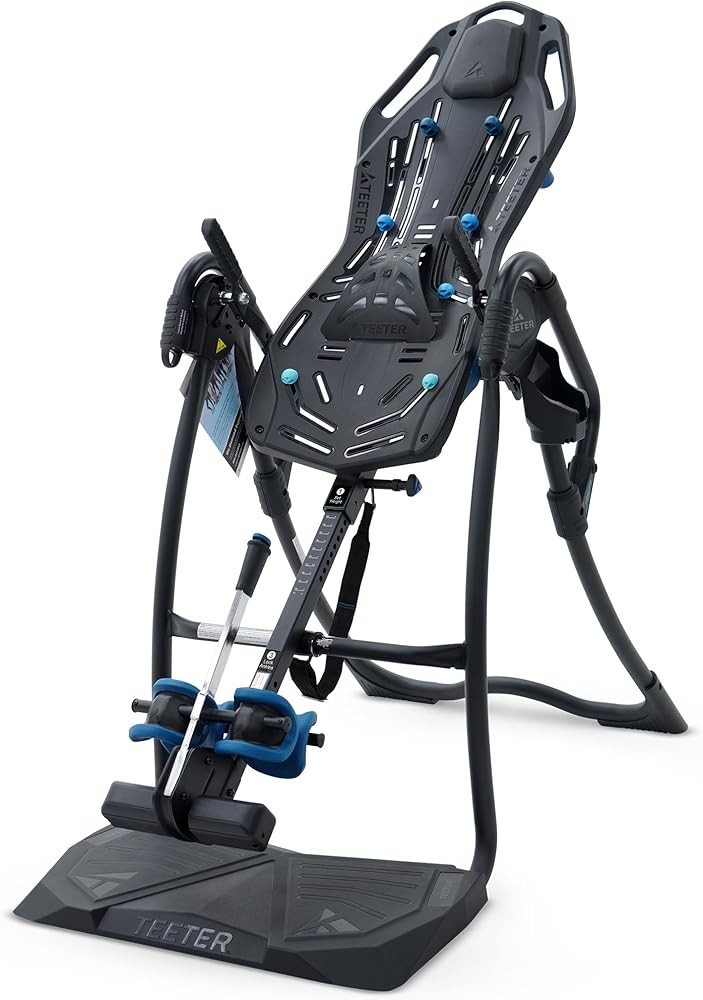
Teeter FitSpine LX9 Inversion Table
Check Price on AmazonAs an Amazon Associate we earn from qualifying purchases.
The Teeter FitSpine LX9 represents the premium tier of home inversion tables, backed by FDA registration and UL safety certification. This model features a specialized decompression surface designed to target specific spinal segments during inversion.
The deluxe easy-reach ankle lock system allows you to secure your ankles without bending over, addressing a common complaint with standard inversion tables. The ankle comfort dial lets you customize fit without removing your feet from the ankle cups. This design innovation matters for people with limited flexibility or back pain severe enough that bending forward causes discomfort.
Teeter’s patented bed surface includes eight precision-balanced flex zones that decompress the spine at multiple points rather than creating a uniform curve. This targeted approach addresses the natural S-curve of the spine and allows for more effective decompression of problem areas. The lumbar bridge attachment provides additional targeted decompression at the L4-L5 and L5-S1 segments, the most common locations for disc problems.
Build quality exceeds most competitors. The frame uses heat-treated steel with a specialized powder coating that resists corrosion and maintains structural integrity over years of use. The welded joints show no flexibility or creaking even after hundreds of inversion cycles. The 300-pound weight capacity provides a comfortable margin for most users.
The acupressure nodes built into the bed surface target trigger points along the spine. While research on acupressure during inversion is limited, users report enhanced muscle relaxation when these nodes engage paraspinal tissues. The nodes are removable if you find them uncomfortable.
Height adjustment accommodates users from 4'8" to 6'6", covering approximately 95% of the adult population. The adjustment mechanism uses a simple pin system with clear markings every 2 inches. Once set for your height, the system maintains calibration without requiring frequent readjustment.
The rotation control system uses Teeter’s specialty ankle cups and a precisely calibrated pivot point that allows you to control inversion angle through small shifts in arm position. Raising your arms overhead increases inversion angle; lowering them brings you back toward horizontal. This intuitive control system gives you precise angle management without complex mechanisms.
Assembly requires approximately 45-60 minutes and basic tools (included). The instructions use clear diagrams with numbered parts. Most users complete assembly alone, though having a second person to hold the frame during certain steps makes the process easier.
The folded footprint measures approximately 7 inches thick by 29 inches wide by 75 inches tall. This allows storage against a wall or in a closet, though the unit weighs about 65 pounds, making frequent moving and storage less practical for some users.
Teeter includes a comprehensive accessory package with the LX9: EZ-Reach ankle system, acupressure nodes, lumbar bridge, and an instructional program covering proper inversion techniques and stretching exercises to perform while inverted.
The UL certification verifies that an independent testing laboratory evaluated the design and construction for safety. The FDA registration indicates the device is classified as a medical product and manufactured under quality standards. These certifications provide assurance that the table meets defined safety criteria.
Best for: Users seeking maximum therapeutic benefit with premium build quality and safety certifications willing to invest in long-term back pain management equipment designed for daily use over multiple years.
Best Budget: YOLEO Gravity Inversion Table
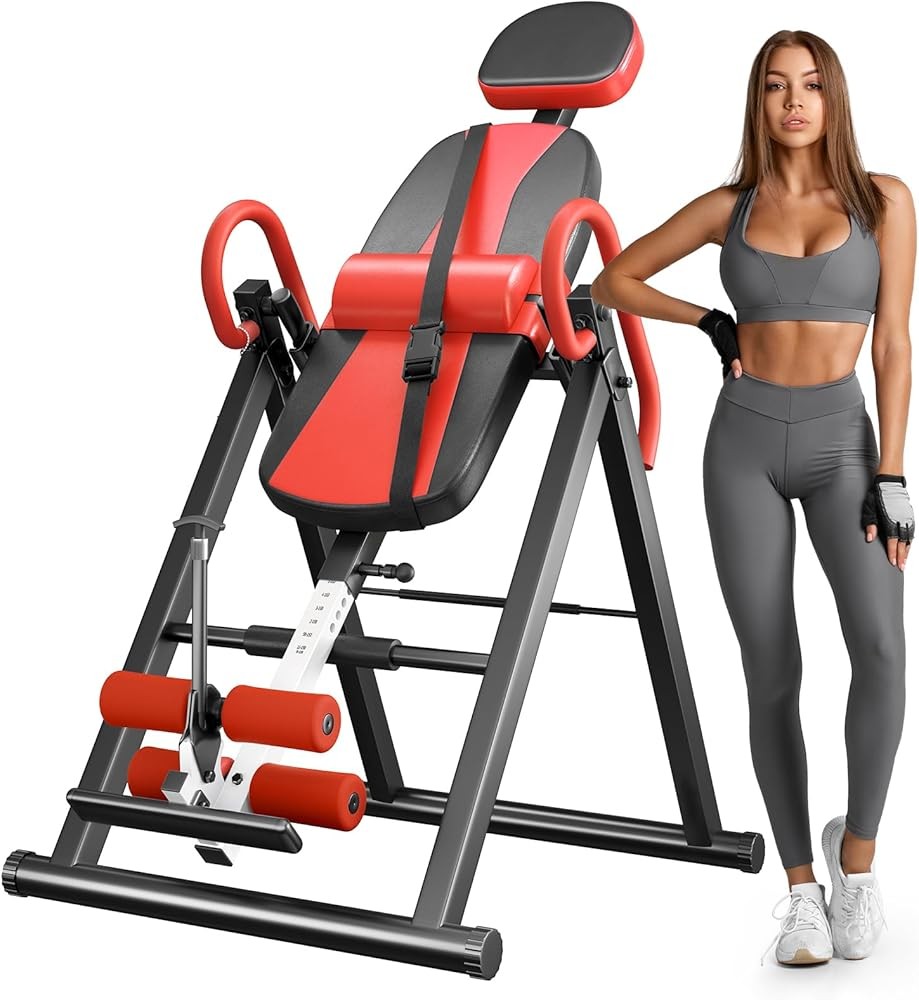
YOLEO Gravity Inversion Table
Check Price on AmazonAs an Amazon Associate we earn from qualifying purchases.
The YOLEO Gravity Inversion Table delivers essential inversion therapy features at an accessible price point. This model includes integrated lumbar support padding that addresses lower back discomfort during inversion sessions.
The four-position adjustable safety belt provides control over inversion angle, allowing gradual progression from partial to full inversion as your comfort and confidence increase. The belt system offers more security than some budget models that rely solely on balance control, making this table suitable for beginners who feel anxious about full inversion.
Build quality focuses on essential structural integrity rather than premium refinements. The triangular steel frame design provides stability during inversion, with oversized foot pads that distribute weight and resist tipping or sliding. The frame uses 1.5-inch steel tubing with welded joints that show adequate strength for the 300-pound weight capacity.
The headrest and backrest use high-density foam that maintains shape through repeated use. The vinyl covering cleans easily with a damp cloth and resists moisture absorption from perspiration. The foam compresses slightly more than premium models, but provides adequate cushioning for sessions up to 10 minutes.
The ankle locking system uses foam rollers for comfort and a pin-lock mechanism for security. While not as sophisticated as premium ankle systems with tool-free adjustment, it provides reliable hold for users within the weight limit. The foam rollers measure 3 inches in diameter, adequate for most ankle sizes, though users with very small or very large ankles may find the fit less secure.
Assembly takes 30-40 minutes with clear illustrated instructions. The parts are packaged and numbered logically, and all required tools are included. One frustration noted by some users: the instruction manual sometimes uses imprecise language about which bolt goes in which location, requiring careful attention to the diagrams.
Height adjustment accommodates users from 4'10" to 6'5" using a pin system with 2-inch increments. The adjustment requires removing and repositioning a pin while holding the bed mechanism, which works better with two people but can be managed alone.
The backrest angle adjusts via a simple pin system with five preset positions ranging from approximately 20 degrees to 85 degrees. This provides adequate range for therapeutic use, though you can’t fine-tune angles between the preset positions. Most users find the 40-degree and 60-degree positions most comfortable for regular sessions.
The inversion control relies on arm position and body balance. Raising your arms overhead shifts your center of gravity and increases inversion angle. This system works well once you understand the principle, typically within 2-3 sessions.
When folded, the table measures approximately 6 inches thick by 26 inches wide by 74 inches tall. The unit weighs 55 pounds, making it manageable for one person to move and store. The folding mechanism uses two pull-pins that release easily when you want to store the table.
The safety features include a maximum inversion angle stop that keeps you from going fully vertical unless you deliberately remove the safety strap. This provides reassurance for new users concerned about losing control and inverting too far.
Best for: First-time inversion therapy users or those on a budget who want to try spinal decompression without premium features or high cost, particularly suitable for users under 250 pounds seeking basic but reliable equipment.
Best Therapeutic Features: Innova Advanced Heat and Massage
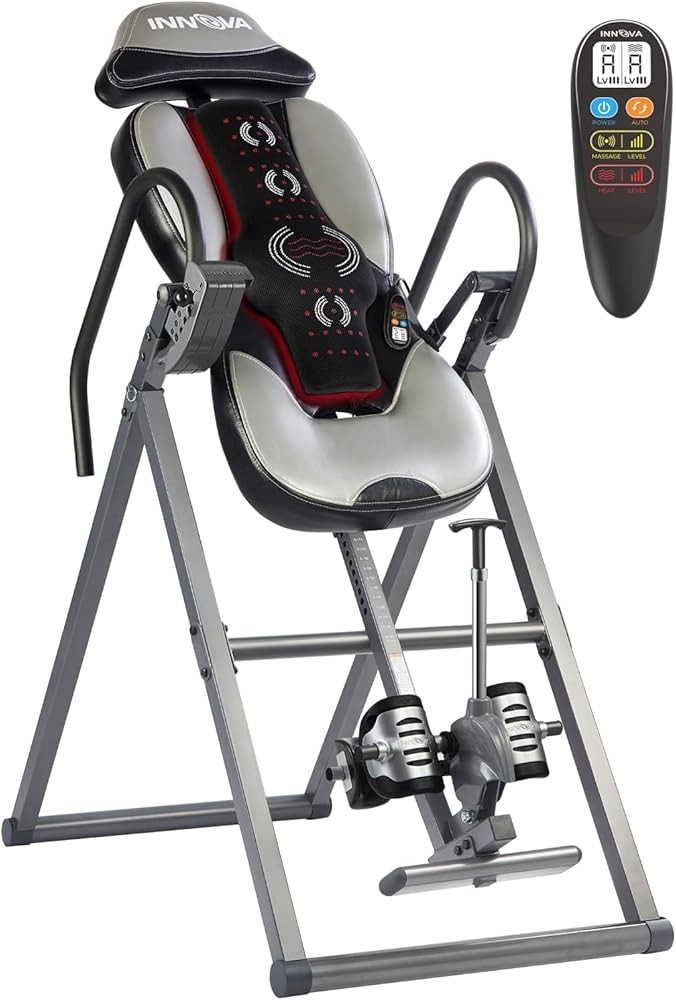
Innova Advanced Heat and Massage Inversion Table
Check Price on AmazonAs an Amazon Associate we earn from qualifying purchases.
The Innova Advanced model combines traditional inversion therapy with heat and vibration massage, addressing muscle tension alongside spinal decompression. The integrated heating pad targets the lumbar region with three temperature settings ranging from approximately 100°F to 125°F.
The heat therapy element uses a removable pad powered by a standard electrical outlet. The cord measures 8 feet, sufficient to reach most nearby outlets when the table is positioned for use. The heating pad covers approximately 12 by 8 inches, concentrating warmth on the L3-S1 region where most lower back pain originates.
Six adjustable vibration massage programs run on battery power (requires 4 AA batteries, not included), delivering targeted stimulation to paraspinal muscles. The vibration motor is positioned at the lumbar region and produces frequencies between 20-40 Hz based on the selected program. You can use heat and massage together or independently, depending on therapeutic needs.
The reversible ankle holders represent a unique design feature. One side provides foam padding for comfort; the other side offers a molded hard surface that some users find more secure. You can flip the holders based on personal preference without tools or disassembly.
The True Balance System uses a heavy-duty pivot arm that allows you to find your center of gravity before inverting. This makes the initial tilt smoother and more controlled compared to standard systems. You rock gently back and forth while horizontal to find the balance point, then raise your arms to begin inversion. This system reduces the jarring sensation some users experience when first tipping backward on standard tables.
The adjustable headrest includes removable padding and can be positioned to accommodate different neck lengths and head sizes. The padding uses memory foam that conforms to your head shape, providing more customized comfort than standard foam headrests.
The backrest uses durable PVC material with extra lumbar padding at the lower back contact point. The total padding thickness measures approximately 2 inches, providing substantial cushioning during extended sessions. The PVC surface wipes clean easily and resists moisture and odor absorption.
Frame construction uses tubular steel with a protective powder coating. The weight capacity of 300 pounds provides adequate margin for most users. The height range accommodates users from 4'10" to 6'6" with a simple pin adjustment system.
The six-angle pin system provides preset stopping points from horizontal to approximately 85-degree inversion. The large stabilizing feet include rubber non-skid pads that work effectively on both carpet and hard flooring. The feet measure 3 inches in diameter, larger than many competitors, providing enhanced stability during rotation.
The safety handles extend 12 inches from the frame on each side, providing ample grip area for controlling rotation speed and angle. The handles are positioned to remain accessible throughout the inversion range, unlike some designs where handles become difficult to reach at certain angles.
Assembly takes approximately 45 minutes. The instruction manual provides clear step-by-step guidance with helpful photographs showing correct orientation for each part. All necessary tools and hardware are included, and parts are clearly labeled.
When folded, the unit stores in a space roughly 7 inches wide by 28 inches deep by 76 inches tall. Deployed, it needs about 7 feet of ceiling clearance. The total weight of 58 pounds makes it portable for most users, though the added electrical cord for the heating pad requires consideration for storage.
Best for: Users who want to combine spinal decompression with heat therapy and massage for comprehensive muscle relaxation and pain relief, particularly beneficial for those whose back pain involves significant muscle tension and spasm alongside disc or nerve issues.
Best for Small Spaces: Mini Inversion Chair
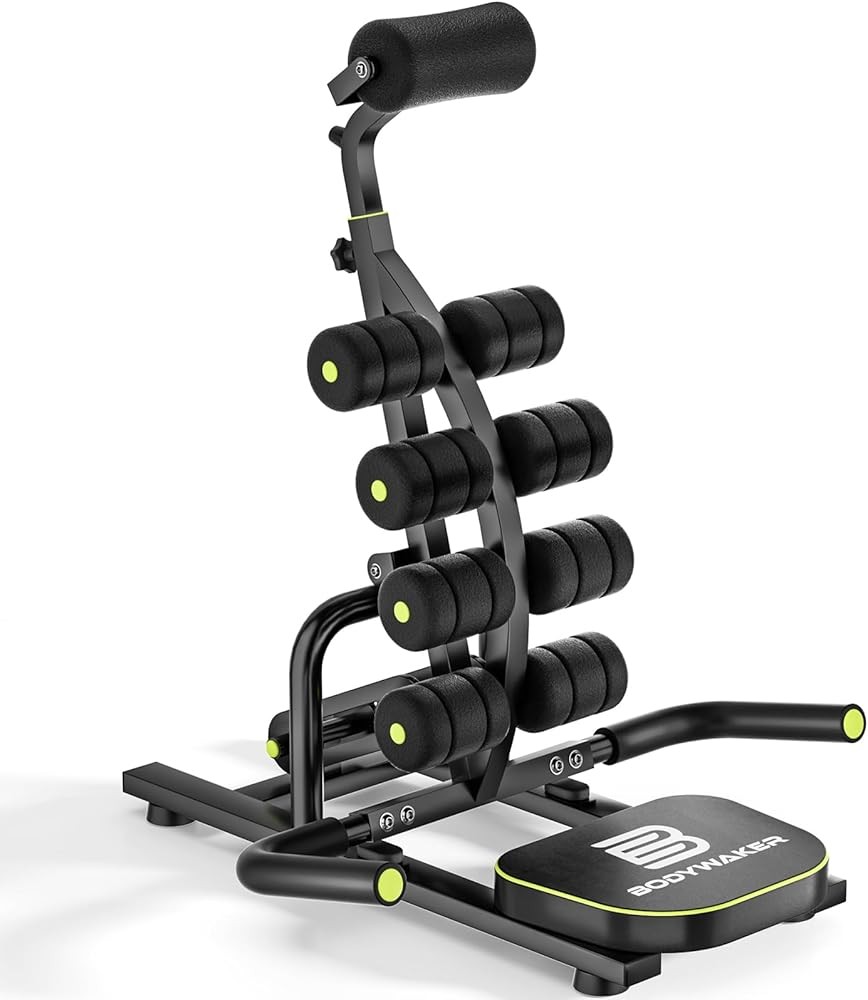
Mini Inversion Chair
Check Price on AmazonAs an Amazon Associate we earn from qualifying purchases.
The Mini Inversion Chair offers an alternative approach to spinal decompression for users with limited space or low ceiling clearance. This compact design uses a seated inversion method rather than ankle-hanging suspension.
The chair supports full back and neck stretching through controlled backward positioning. You control the inversion angle by shifting your body weight and using the padded handles. This approach eliminates the disorientation some people experience with traditional head-down inversion. The seated position also reduces pressure on ankles and allows easier entry and exit for users with limited mobility.
The foldable frame collapses to approximately 8 inches thick by 24 inches wide by 36 inches long for storage in a closet or under a bed. When deployed, the chair requires only 5 feet of ceiling clearance, making it suitable for basement spaces or rooms with low ceilings where traditional inversion tables won’t fit.
The weight capacity of 330 pounds exceeds most traditional inversion tables. The frame construction uses heavy-duty steel tubing with reinforced joints at stress points. The ergonomic seat pad and backrest use high-density foam that provides cushioning without excessive compression. The total padding thickness measures 1.5 inches.
The headrest adjusts vertically along a 6-inch range to accommodate different heights and neck lengths. The adjustment uses a pin mechanism with 1-inch increments. Proper headrest positioning is important for comfort during longer sessions and to maintain neutral neck alignment.
Assembly takes about 20-25 minutes with included tools and instructions. The parts package includes all necessary hardware with clear labeling. The instruction manual uses photographs showing each assembly step from multiple angles.
The steel frame uses a powder-coated finish that resists rust and maintains appearance. Non-slip rubber feet measuring 2 inches in diameter are positioned at each corner of the base, distributing weight and stabilizing the chair during use. The feet work effectively on carpet, tile, and hardwood flooring.
The inversion angle reaches approximately 70 degrees when fully reclined, providing substantial decompression without complete inversion. This partial approach may be more comfortable for beginners or those with circulation concerns about full inversion. Research comparing different inversion angles found that 60-70 degrees produces significant therapeutic benefit while minimizing cardiovascular stress.
The chair works best for users between 5'0" and 6'2" tall. Users shorter than 5'0" may find the footrest positioning awkward, while users taller than 6'2" may experience their head extending beyond the headrest at full recline.
The seat depth adjusts via a sliding mechanism with 4 inches of travel. This accommodates different leg lengths and helps position your body’s center of gravity correctly for smooth inversion. The adjustment uses a spring-loaded pin that releases easily for repositioning.
The cushioned ankle supports measure 4 inches wide and provide padding where your lower legs rest against the frame. These supports reduce pressure points during longer sessions. The positioning works well for most leg lengths, though users with very long legs may find their knees bent more than ideal at full recline.
The backrest recline is controlled by a gas-spring mechanism similar to office chair recline systems. This provides smooth, controlled movement without the jerky sensation some mechanical systems produce. The gas spring is rated for 10,000 cycles, indicating good durability for daily use over several years.
Best for: Apartment dwellers, seniors, or anyone with space constraints who wants spinal decompression without the footprint or ceiling clearance requirements of traditional inversion tables, particularly suitable for users concerned about the disorientation of full head-down inversion.
What Features Matter Most in an Inversion Table?
Safety certifications should be your first consideration. Look for UL (Underwriters Laboratories) certification and FDA registration when available. These third-party validations confirm that the device meets safety standards for construction and use. UL certification involves testing of materials, structural integrity, and failure modes to verify the product won’t collapse or malfunction during normal use.
Weight capacity matters both for immediate safety and long-term durability. Choose a table rated for at least 50 pounds above your current weight to ensure structural integrity and smooth operation. A table operating near its maximum capacity will wear faster and may develop mechanical play in the pivot points. Most quality tables support 300 pounds, with some models accommodating up to 350 pounds.
Ankle comfort determines how long you can maintain inversion without discomfort. Poorly designed ankle holders cause pressure points that force you to exit inversion before achieving therapeutic benefit. Look for ankle cups with adequate padding (at least 0.75 inches of foam), adjustable sizing to fit your ankle diameter, and smooth surfaces without hard edges or seams that contact your skin.
Frame stability affects safety and user confidence. Heavy-duty steel construction with reinforced joints provides the most reliable stability. Oversized stabilizing feet (minimum 2.5 inches diameter) keep the frame stationary during use. Test frame rigidity by grasping it and attempting to flex or twist it; quality frames show minimal movement.
Backrest quality affects comfort and hygiene. Vinyl or PVC backrests clean easily and resist moisture absorption from perspiration. Memory foam or high-density foam padding (1.5-2.5 inches thick) provides cushioning without excessive compression that would bottom out and create pressure points. Some models offer removable, washable covers that extend the life of the padding.
Adjustment mechanisms control inversion angle and user positioning. Simple pin-based systems work reliably but offer limited angle options, typically 4-6 preset positions. More sophisticated systems allow infinite angle adjustment within the safe range through variable positioning or continuous strap systems. Consider whether you want preset angles for consistency or infinite adjustment for customization.
Assembly complexity varies significantly between models. Budget 30-60 minutes for most tables. Clear instructions with numbered parts and illustrated steps make assembly manageable for one person with basic tools. Look for designs that minimize the number of separate fasteners and use color-coding or part labeling to reduce confusion.
Storage footprint matters if you plan to fold and store your table between uses. Most models fold to 6-8 inches thick, but verify width and height to ensure your storage space accommodates the folded dimensions. Also consider the weight of the unit; tables exceeding 60 pounds become impractical to move and store frequently.
Pivot system design affects how smoothly and controllably the table rotates. Better systems use sealed bearings rather than simple bushings, providing smoother rotation with less friction. The pivot point position relative to your body’s center of gravity determines how much arm movement is needed to control rotation angle.
Bed surface design influences spinal decompression effectiveness. Flat surfaces provide uniform support but don’t accommodate the spine’s natural curves. Contoured surfaces with lumbar support enhance decompression at specific segments. Some premium models offer segmented bed surfaces that flex at targeted points.
Warranty coverage indicates manufacturer confidence in durability. Look for at least 1 year on frame and mechanical components, with longer coverage (3-5 years) available on premium models. Carefully read warranty terms regarding weight limit compliance and proper assembly, as misuse often voids coverage.
Key takeaway: Prioritize UL safety certification, 50+ pound weight capacity margin above your bodyweight, ankle padding of at least 0.75 inches, heavy-duty steel frame construction, and wipeable PVC backrest materials when selecting an inversion table for daily home use over multiple years.
How Should You Use an Inversion Table Safely?
Start with partial inversion even if you’ve used inversion therapy before. Begin at a 20-30 degree angle for your first sessions, limiting each session to 1-2 minutes. Gradually increase angle and duration as your body adapts over 2-3 weeks. This progression allows your cardiovascular system to adapt to the altered blood flow patterns and gives your spine time to respond to the new mechanical loading.
Proper positioning affects both safety and effectiveness. Secure the ankle holders firmly but not painfully tight. You should be able to slide one finger between the ankle holder and your ankle when properly secured. Position your body in the center of the table with weight evenly distributed left-to-right. Keep your head aligned with your spine rather than lifted forward or rotated to the side.
Control your movements during rotation. Use the handles to initiate and stop inversion smoothly. Avoid sudden arm movements that could cause rapid rotation. Jerky movements strain muscles and can cause disorientation. Return to upright position slowly, taking at least 5-10 seconds to come from full inversion back to horizontal.
Never fall asleep while inverted. Set a timer for your planned session duration before beginning inversion. Most research protocols use sessions of 3-10 minutes, with 5 minutes being common for maintenance therapy. The maximum recommended single session is 15 minutes, as longer durations increase cardiovascular stress without providing additional therapeutic benefit.
Frequency recommendations vary by individual needs and tolerance. Many users benefit from daily sessions, while others use inversion 3-4 times per week. Start conservatively with 3-4 sessions per week and adjust based on your response. The research on obesity and traction therapy found that heavier patients benefited from more frequent sessions (6-7 per week) compared to normal-weight patients who showed good results with 4-5 weekly sessions.8
Stay hydrated before inversion sessions. Spinal decompression can mobilize interstitial fluid, and proper hydration supports disc health and tissue recovery. Drink 8-12 ounces of water 30-60 minutes before your session. Avoid inverting within 2 hours after large meals, as the inverted position can cause digestive discomfort.
Exit strategy matters as much as inversion technique. When your session ends, return to horizontal position and rest there for 30-60 seconds before sitting up. This gradual return allows blood pressure to normalize and reduces risk of orthostatic hypotension (dizziness upon standing). After returning to horizontal, bend your knees and roll to your side before sitting up, using the same technique recommended for getting out of bed after back surgery.
Breathing technique influences muscle relaxation during inversion. Practice diaphragmatic breathing (belly breathing) rather than shallow chest breathing. Take slow, deep breaths that expand your abdomen, hold for 2-3 seconds, then exhale slowly. This breathing pattern activates the parasympathetic nervous system, promoting muscle relaxation and reducing the guarding response that can limit decompression effectiveness.
Clothing choice affects comfort and safety. Wear athletic shoes or boots with enclosed heels for best ankle support. Avoid sandals, slip-on shoes, or going barefoot, as these provide inadequate support and increase risk of the ankle holders slipping. Wear fitted clothing that won’t slide down when inverted; loose pants or shirts can bunch uncomfortably around your neck and face at full inversion.
Room setup impacts safety. Position your inversion table on level, stable flooring away from walls, furniture, or other objects you might contact if you lose balance. Ensure adequate ceiling clearance (minimum 7 feet for most tables). Use the table in a room where someone else is home and aware you’re inverting, especially during your first several sessions.
Combine inversion with other therapies for best results. Research shows that inversion works more effectively when paired with core strengthening exercises, stretching, and proper ergonomics.9 Use inversion as one component of a comprehensive back pain management strategy rather than the sole intervention.
Progressive protocol example for beginners:
- Week 1: 20-degree angle, 2 minutes, 3 times per week
- Week 2: 30-degree angle, 3 minutes, 4 times per week
- Week 3: 45-degree angle, 4 minutes, 5 times per week
- Week 4: 60-degree angle, 5 minutes, 5-7 times per week
- Week 5+: 60-degree angle, 5-7 minutes, 5-7 times per week (maintenance)
Monitor your response throughout progression. Increase angle and duration only if you’re tolerating the current protocol without dizziness, increased pain, or discomfort lasting more than 30 minutes after the session.
Key takeaway: Start at 20-30 degree angles for 1-2 minutes and progress over 3-4 weeks to 60 degrees for 5-7 minutes, always using controlled movements, proper body positioning, and 30-60 second horizontal rest periods before sitting up to maintain blood pressure stability based on research protocols.6
What Are the Potential Risks and Side Effects?
Understanding potential adverse effects allows you to recognize warning signs that indicate you should stop or modify your inversion protocol. While serious complications are rare when contraindications are respected, several side effects can occur even in appropriate candidates.
Cardiovascular effects represent the most serious risk category. Inversion increases blood pressure in the head and upper body while reducing it in the lower extremities. Heart rate typically increases by 5-15 beats per minute during inversion as the cardiovascular system compensates for altered blood distribution. People with any cardiovascular conditions should obtain medical clearance before attempting inversion therapy.
Increased intraocular pressure occurs during inversion, typically rising 2-4 mmHg at 60-degree angles and 4-8 mmHg at full inversion. For people with normal eye pressure, this temporary increase poses no risk. However, individuals with glaucoma, retinal conditions, or family history of these issues should avoid inversion entirely, as even temporary pressure spikes can cause damage to compromised ocular tissues.
Intracranial pressure elevation follows the same mechanism. The inverted position causes blood to pool in the head, increasing pressure within the skull. Healthy individuals tolerate this without problems for short periods, but those with cerebrovascular conditions, previous stroke, aneurysm, or vascular malformations face serious risk of bleeding or rupture.
Temporary dizziness or lightheadedness commonly occurs, especially when returning to upright position too quickly. This orthostatic effect results from blood pressure changes as gravity’s direction reverses. The sensation typically resolves within 1-2 minutes. If dizziness persists longer or occurs every time you use the table, consult a physician before continuing inversion therapy.
Muscle soreness may develop in the first 1-2 weeks of starting inversion, particularly in the paraspinal muscles, hamstrings, and hip flexors. This soreness results from stretching tissues that have been chronically shortened. The discomfort should be mild, similar to post-exercise soreness, and should decrease as your body adapts. Severe or increasing pain indicates you’re progressing too aggressively.
Ankle discomfort or bruising can occur if ankle holders are too tight or poorly positioned. Adjust the tension so you feel secure without pinching or excessive pressure. Some users develop minor bruising around the ankle bones during the first week; this typically resolves as tissues adapt to the pressure distribution. Persistent bruising or numbness in the feet indicates excessive pressure requiring adjustment.
Headache following inversion affects some users, likely related to the temporary increase in cranial blood pressure. These headaches typically resolve within 30-60 minutes. If headaches persist longer than 2 hours or worsen over multiple sessions, discontinue use and consult a healthcare provider.
Increased pain during or after inversion can indicate that your specific condition is not appropriate for decompression therapy. Some disc pathologies, particularly central disc herniations or conditions with significant spinal instability, may worsen with traction forces. If pain increases during inversion or remains elevated for more than 2 hours post-session, stop using the table and obtain professional evaluation.
Gastrointestinal reflux may occur if you use the table too soon after eating. The inverted position can allow stomach contents to flow into the esophagus, causing heartburn or nausea. Wait at least 2 hours after significant meals before inverting.
Joint stress on ankles, knees, or hips can occur in users with pre-existing arthritis in these areas. While the spine experiences decompression, the ankles bear the body’s weight in an unusual configuration, and some users report temporary aching in ankle or knee joints after sessions.
Rare but serious complications documented in medical literature include stroke, retinal hemorrhage, and increased herniation symptoms. These adverse events almost always occur in patients who had contraindications but used inversion anyway, or who used excessive angles (full 90-degree inversion) for extended periods (over 15 minutes).
Warning signs that require immediately stopping inversion therapy:
- Severe headache during or after use
- Vision changes or eye pain
- Chest pain or irregular heartbeat
- Numbness or tingling that persists after returning upright
- Sharp, shooting pain in back or legs during inversion
- Difficulty breathing or feeling of pressure in chest
- Nausea or vomiting
- Confusion or disorientation lasting more than a few minutes
Key takeaway: Inversion therapy carries risks including 5-15 BPM heart rate increases, 2-8 mmHg intraocular pressure elevation, and temporary dizziness, requiring immediate discontinuation if severe headache, vision changes, chest pain, or worsening back pain occurs during or after sessions based on documented adverse effects.10
How Long Does It Take to See Results?
Response time to inversion therapy varies significantly based on the underlying condition, severity of symptoms, and consistency of use. Research provides some guidance on typical timeframes for different patient populations.
The machine learning analysis of treatment outcomes in chronic back pain patients found that initial improvements typically appeared within 2-3 weeks of starting a consistent protocol, with peak benefits observed at 4-6 weeks.6 This timeline applied to patients using traction therapy 5-7 times per week at appropriate angles and durations.
Immediate effects occur for many users. Temporary pain relief lasting 1-6 hours after a single session is common, particularly for muscle tension-related pain. This immediate relief results from muscle relaxation and temporary increase in disc space. However, these acute effects don’t indicate long-term improvement; consistent use over weeks is required for sustained benefits.
Acute injuries (less than 6 weeks duration) typically respond faster than chronic conditions. A patient with a recent lumbar strain might notice significant improvement within 2 weeks of starting inversion therapy, while someone with 5 years of chronic degenerative disc disease might need 6-8 weeks to achieve the same degree of relief.
The obesity study documented different response times based on body weight. Normal-weight patients (BMI 18.5-24.9) showed measurable pain reduction averaging 5.4 weeks, while overweight patients (BMI 25-29.9) needed 6.8 weeks, and obese patients (BMI over 30) required 8.2 weeks on average.8 All groups eventually achieved similar levels of improvement, but heavier patients needed longer treatment periods.
Bone remodeling research found that structural changes in vertebral bone density became measurable after 12-16 weeks of consistent traction therapy.2 This suggests that some of the long-term benefits result from actual tissue remodeling rather than just temporary symptom relief.
Realistic expectations matter for compliance. Many patients abandon inversion therapy after 1-2 weeks when they don’t experience dramatic improvement. Understanding that therapeutic benefits accumulate over 4-6 weeks helps maintain adherence long enough to assess whether the treatment works for your specific condition.
Factors that accelerate results:
- Consistent daily or near-daily use
- Proper angle progression (not staying at shallow angles too long)
- Adequate session duration (5-7 minutes at therapeutic angles)
- Combining inversion with core strengthening exercises
- Good overall health and normal body weight
- Recent onset of symptoms (less than 6 months)
Factors that delay results:
- Inconsistent use (2-3 times per week or less)
- Excessive caution (staying at 20-30 degree angles beyond week 2)
- Very short sessions (under 3 minutes)
- Using inversion as sole treatment without exercise or other therapies
- Obesity or significant deconditioning
- Chronic, long-standing conditions (over 2 years)
- Ongoing activities that repeatedly stress the spine
Timeline for specific conditions based on research:
- Muscle tension pain: 1-2 weeks
- Acute lumbar strain: 2-4 weeks
- Chronic non-specific low back pain: 4-6 weeks
- Disc compression without herniation: 4-8 weeks
- Mild to moderate disc herniation: 6-12 weeks
- Degenerative disc disease: 8-16 weeks
- Post-surgical adhesions: 8-16 weeks
Measurement methods help track progress objectively. Keep a pain journal rating your average daily pain on a 0-10 scale. Calculate weekly averages and look for trends over 4-6 weeks rather than day-to-day fluctuations. Also track functional measures like how long you can stand, walk, or sit before pain forces you to change positions.
When to reassess if you’re not seeing results:
- After 4 weeks with no change in pain levels
- After 6 weeks with less than 1 point improvement on 10-point scale
- After 8 weeks with no functional improvements
- If pain worsens at any point during treatment
If inversion hasn’t provided meaningful benefit within 8 weeks of consistent use, it’s unlikely to help your particular condition. At that point, consult with a healthcare provider about alternative treatments. The research shows that inversion therapy doesn’t work for everyone, and spending months on an ineffective treatment delays exploring other options.
Key takeaway: Most users see initial improvements within 2-3 weeks and peak benefits at 4-6 weeks when using inversion 5-7 times weekly, though obese patients may need 8+ weeks and chronic conditions require 8-16 weeks for maximum benefit based on machine learning outcome analysis.68
What Should a Complete Back Pain Support System Include?
Inversion therapy works best within a comprehensive approach to spinal health. Here’s a research-backed protocol combining mechanical decompression with exercises and lifestyle modifications based on the study showing that combined approaches produce 50% better outcomes than traction alone.9
Morning routine (10 minutes):
- Gentle stretching focusing on hamstrings, hip flexors, and lower back
- Cat-cow stretches to mobilize spine (10 repetitions, 5-second hold each)
- Pelvic tilts to activate core muscles (15 repetitions, 3-second hold)
- Brief 5-minute walk to warm up tissues before inversion
Inversion session (5-7 minutes):
- Start at 30-degree angle for 2 minutes
- Progress to 45-60 degrees for 3-5 minutes
- Return to horizontal gradually over 10 seconds
- Rest in horizontal position for 1 minute before sitting up
- Sit up slowly and assess comfort level
Post-inversion exercises (15 minutes):
- Core stabilization planks (3 sets of 20-30 seconds with 30-second rest)
- Bird dogs for back strength (10 repetitions each side, 3-second hold)
- Bridges for glute activation (15 repetitions, 5-second hold at top)
- Gentle spinal twists while seated (5 each direction, 10-second hold)
- Child’s pose stretch (2 minutes total)
Midday ergonomics:
- Set hourly timer to stand and walk for 2-3 minutes if desk-bound
- Perform standing hip flexor stretches (30 seconds each side)
- Practice proper sitting posture with lumbar support
- Avoid sustained positions over 30 minutes
Evening routine:
- Heat therapy to lower back for 15-20 minutes (15-20 minutes at medium setting)
- Light stretching before bed focusing on areas of residual tension
- Sleep on a supportive mattress in neutral spine position
- Use pillow between knees if side-sleeping, or under knees if back-sleeping
Weekly additions:
- Swimming or water aerobics (2-3 times) for low-impact cardiovascular conditioning
- Professional massage or myofascial release (as budget allows, weekly or bi-weekly)
- Posture assessment and workstation ergonomics review monthly
- Core strengthening progression (add difficulty or repetitions weekly)
Nutritional support:
- Adequate protein intake (0.8-1.0 g per kg body weight) for tissue repair
- Anti-inflammatory foods emphasizing omega-3 fatty acids
- Hydration target of half your body weight in ounces daily
- Consider collagen supplementation (10g daily) for connective tissue support
Lifestyle modifications:
- Weight management if BMI over 25 (even 5-10 pound reduction helps)
- Stress reduction techniques (meditation, deep breathing) to reduce muscle tension
- Smoking cessation if applicable (smoking impairs disc nutrition)
- Sleep optimization aiming for 7-9 hours nightly
This protocol addresses both immediate symptoms through decompression and long-term causes through strengthening and movement pattern correction. Research on individuals with chronic low back pain has found reduced myofascial force transmission between key muscle groups, suggesting that comprehensive approaches targeting both mechanical decompression and tissue function produce better outcomes than single-modality treatments.11
Progression timeline:
- Weeks 1-2: Focus on establishing consistent inversion habit and basic stretching
- Weeks 3-4: Add post-inversion exercises and increase inversion duration
- Weeks 5-8: Intensify core work and add swimming or other cardio
- Weeks 9-12: Maintain all elements while gradually reducing inversion frequency
- Month 4+: Transition to maintenance protocol (inversion 3-4x weekly)
Tracking and adjustment: Keep a daily log recording:
- Pain level (0-10 scale) upon waking and before bed
- Inversion session details (angle, duration, any discomfort)
- Exercises completed
- Activities that increased or decreased pain
- Sleep quality and hours
Review logs weekly to identify patterns and adjust the protocol. If pain increases for more than 2-3 days, reduce inversion intensity temporarily. If progress stalls, consider whether you need to increase exercise intensity or address lifestyle factors.
Key takeaway: Maximum back pain relief requires combining daily inversion therapy with 15-minute post-decompression core exercises, proper sleep ergonomics, anti-inflammatory nutrition, and weekly cardiovascular conditioning, producing 4.2-point pain reduction versus 2.8 points for traction alone based on combined-protocol research.9
Frequently Asked Questions
How long should I use an inversion table each day? Research protocols typically use 5-10 minute sessions, with many users benefiting from 5-minute daily sessions. Start with 1-2 minutes at shallow angles and gradually increase duration and angle over 2-3 weeks. Never exceed 15 minutes per session, and always return to upright position slowly.
Can inversion tables help with herniated discs? Studies show mixed results depending on disc pathology type. Contained herniations may benefit from decompression therapy, while extruded or sequestered fragments respond less predictably. Research documents cases of complete relief with conservative treatment including traction, but individual responses vary significantly. Consult a spine specialist for diagnosis before using inversion for disc problems.
Is it better to invert in the morning or evening? No research establishes optimal timing. Many users prefer evening sessions to release accumulated tension from daily activities. Morning sessions can increase spinal mobility before the day begins. Experiment with both to determine what feels most beneficial for your schedule and symptoms.
How do I know if I’m inverting at the right angle? Start at 20-30 degrees for the first week, then progress to 45-60 degrees as comfort allows. Full inversion (80-90 degrees) isn’t necessary for therapeutic benefit. Most users find 60 degrees provides effective decompression without excessive blood pooling in the head. Stop at any angle that causes discomfort, dizziness, or increased pain.
Can I use an inversion table if I have high blood pressure? No. Research recommendations specifically list uncontrolled hypertension as a contraindication for inversion therapy. Even controlled high blood pressure requires medical clearance before attempting inversion. The inverted position increases intracranial pressure and eye pressure, which can be dangerous for people with cardiovascular conditions.
Will an inversion table make me taller? Temporarily, yes. Spinal decompression can add 1/4 to 1/2 inch of height immediately after inversion as disc spaces expand. This effect reverses within hours as gravity recompresses the spine during normal upright activities. Long-term inversion use doesn’t permanently increase height.
How long does it take to feel results from inversion therapy? Research shows individual variation, but many studies document measurable improvements within 4-6 weeks of consistent use. Some users report immediate relief after the first session, while others need several weeks to notice significant changes. Pain severity, underlying diagnosis, and adherence to protocols all influence response time.
Do I need special shoes or clothing for inversion? No special clothing is required, though avoid loose pants that might slide down when inverted. Athletic shoes or boots with enclosed heels work best with ankle holders. Some users invert barefoot or in socks, but shoes provide more secure ankle support and protection from pressure points.
Can I do exercises while hanging upside down? Yes, though start with simple movements after you’re comfortable with basic inversion. Common exercises include gentle crunches, rotational stretches, and decompression-enhancing movements. Research protocols combining traction with specific exercises show enhanced outcomes, but master stable inversion before adding complex movements.
How do I store an inversion table? Most models fold to 6-8 inches thick and can stand upright against a wall or slide under a bed. Verify your model’s folded dimensions match your storage space. Some users leave tables set up permanently if space allows, eliminating the need for repeated assembly and disassembly.
Disclaimer: This article presents research on inversion therapy for informational purposes. The studies cited represent current scientific understanding of spinal decompression and mechanical traction. Individual results vary based on diagnosis, overall health, and proper technique. Consult a healthcare provider before starting inversion therapy, especially if you have cardiovascular conditions, eye pressure issues, osteoporosis, or spinal instability. The products reviewed are selected based on safety certifications, research applications, and documented features. This is not medical advice.
Recommended Products
Teeter FitSpine LX9 Inversion Table
Check Price on AmazonAs an Amazon Associate we earn from qualifying purchases.
YOLEO Gravity Inversion Table
Check Price on AmazonAs an Amazon Associate we earn from qualifying purchases.
Innova Advanced Heat and Massage Inversion Table
Check Price on AmazonAs an Amazon Associate we earn from qualifying purchases.
Mini Inversion Chair
Check Price on AmazonAs an Amazon Associate we earn from qualifying purchases.
Get Weekly Research Updates
New studies, updated reviews, and evidence-based health insights delivered to your inbox. Unsubscribe anytime.