Best Glucose Monitors for Diabetes Management
Summarized from peer-reviewed research indexed in PubMed. See citations below.
Managing diabetes effectively requires consistent blood glucose monitoring, with research showing that regular testing correlates with improved glycemic control and reduced complication rates. The Metene TD-4116 Blood Glucose Monitor Kit ($34) stands out with its large backlit display, no-coding technology, and complete package including 100 test strips and 100 lancets. Published studies demonstrate that monitors meeting ISO 15197:2013 accuracy standards—like the Metene—provide results within ±15% of laboratory values, supporting reliable decision-making for insulin dosing and lifestyle adjustments. For budget-conscious users, the Glucoracy G-425 ($17) delivers comparable accuracy with a complete starter kit at half the cost. Here’s what the published research shows about selecting and using blood glucose monitors effectively for diabetes management.
Disclosure: We may earn a commission from links on this page at no extra cost to you. Affiliate relationships never influence our ratings. Full policy →
How Do Blood Glucose Monitors Work?
Blood glucose monitors measure the concentration of sugar in blood samples, providing essential data for diabetes management. Research published in the Journal of Diabetes Science and Technology demonstrates that self-monitoring of blood glucose (SMBG) enables patients to detect hyperglycemia and hypoglycemia, adjust medications, and modify diet or exercise patterns based on real-time data. The fundamental technology relies on enzymatic reactions that produce electrical signals proportional to glucose concentration.
Modern monitors use glucose oxidase or glucose dehydrogenase enzymes applied to test strips. When blood contacts the strip, these enzymes catalyze glucose oxidation, generating electrons that create measurable electrical current. Studies show that glucose oxidase-based systems demonstrate high specificity for glucose, while glucose dehydrogenase variants offer faster reaction times and better performance with lower blood volumes.
The 2013 ISO 15197 standard establishes accuracy requirements for blood glucose monitors. Published validation studies indicate that compliant devices must produce 95% of results within ±15 mg/dL of reference values for glucose concentrations below 100 mg/dL, or within ±15% for concentrations at or above 100 mg/dL. This standard represents improvement over previous criteria, with research demonstrating that tighter accuracy requirements support safer insulin dosing decisions.
Clinical research in Diabetes Care confirms that monitoring accuracy directly impacts treatment outcomes. A systematic review of 47 studies involving 26,910 patients found that structured SMBG programs reduced HbA1c levels by 0.25-0.30% on average compared to less frequent testing. The effect appeared strongest in insulin-treated Type 2 diabetes, where frequent testing enabled precise dose adjustments based on glucose patterns.
Blood sample volume requirements vary by device, with modern monitors requiring 0.3-0.6 microliters. Research shows that smaller sample volumes improve testing comfort but may increase sensitivity to sampling errors. Studies comparing different sample sizes found that adequate blood application—avoiding underfilling or overfilling the test strip—represents a critical factor for accurate results regardless of nominal volume specifications.
Bottom line: Choose monitors meeting ISO 15197:2013 standards with sample volumes of 0.5 microliters or less for optimal balance between accuracy and comfort.
What Accuracy Standards Should Glucose Monitors Meet?
The ISO 15197:2013 standard provides internationally recognized accuracy criteria for glucose monitors. Research validating this standard involved comparing monitor readings to laboratory reference methods across diverse patient populations. Published data shows that monitors meeting these criteria support clinical decisions with acceptable error rates, though individual readings may vary from laboratory values within specified ranges.
Accuracy verification studies examine both bias (systematic deviation from true values) and precision (consistency of repeated measurements). Research in Clinical Chemistry and Laboratory Medicine demonstrates that monitor bias under ±5 mg/dL for hypoglycemic ranges and under ±8% for normal-to-high ranges supports safe treatment decisions. Precision studies show that duplicate measurements should agree within 5-10% to confirm reliable device performance.
Factors affecting measurement accuracy include hematocrit (red blood cell concentration), interfering substances, and environmental conditions. Research indicates that hematocrit levels outside 30-55% can alter readings by 10-20%, with high hematocrit causing falsely low readings and low hematocrit causing elevated readings. Modern algorithms attempt to compensate for hematocrit variation, though extreme values may exceed correction capabilities.
Temperature and humidity influence monitor accuracy through effects on enzymatic reactions and electronic components. Studies show optimal performance occurs at 15-30°C (59-86°F) with relative humidity under 85%. Testing in extreme conditions—below 5°C or above 45°C—may produce unreliable results even with temperature-compensated devices. Research recommends allowing monitors and strips to equilibrate to room temperature before testing.
Interfering substances potentially affecting readings include high-dose vitamin C (ascorbic acid), acetaminophen, and certain antibiotics. Published research demonstrates that ascorbic acid concentrations above 20 mg/dL can falsely lower glucose readings with glucose oxidase-based systems, while glucose dehydrogenase pyrroloquinoline quinone (GDH-PQQ) systems may show interference from maltose or galactose in patients receiving immunoglobulin infusions or peritoneal dialysis.
Control solution testing verifies monitor accuracy between medical appointments. Research recommends testing with control solutions when opening new strip vials, when readings seem inconsistent with symptoms, or monthly as routine quality assurance. Studies show that control solutions containing known glucose concentrations enable detection of systematic errors before they affect clinical decisions.
What Should You Know About Test Strip Costs?
Test strips represent the primary ongoing expense of glucose monitoring, with research showing that strip costs influence testing frequency and diabetes outcomes. Economic analyses published in Diabetes Technology & Therapeutics found that patients facing high out-of-pocket costs for strips tested 15-30% less frequently than those with insurance coverage, potentially compromising glycemic control through inadequate monitoring data.
Strip chemistry determines compatibility with specific meters, measuring systems, and potential interference patterns. Research comparing glucose oxidase and glucose dehydrogenase strips found minimal accuracy differences when properly matched to monitors, though glucose dehydrogenase variants demonstrate better performance with lower sample volumes and shorter reaction times. Studies show that enzyme selection impacts oxygen dependency, with glucose oxidase requiring atmospheric oxygen while glucose dehydrogenase variants operate under low-oxygen conditions.
Storage conditions significantly affect strip longevity and accuracy. Published research demonstrates that exposure to high humidity degrades strips through enzyme denaturation and moisture absorption. Studies using accelerated aging protocols found that strips stored at 75% relative humidity for 30 days showed 15-25% accuracy degradation compared to controlled conditions. Original vial storage with desiccant maintains strip integrity longer than portable cases without moisture control.
Expiration dates reflect manufacturer testing under standardized storage conditions. Research indicates that strips typically maintain accuracy for 12-24 months when unopened and stored at room temperature. After vial opening, most manufacturers recommend use within 3-6 months, though some stabilization technologies extend usable periods. Studies show that testing expired strips against control solutions can verify whether remaining accuracy meets clinical requirements.
Strip coating uniformity affects measurement precision and blood application requirements. Research examining manufacturing processes found that consistent enzyme distribution across the reaction zone reduces variation between strips from the same lot. Studies measuring coefficient of variation (CV) for duplicate tests show that high-quality strips produce CV values under 5%, while lower-quality strips may show CVs of 10-15%, potentially causing confusion about actual glucose levels.
Capillary action and fill indicators facilitate proper blood application. Published research demonstrates that under-filled strips produce falsely low readings due to inadequate substrate for enzymatic reactions, while overfilled strips may dilute reagents or cause short circuits. Studies found that strips with visual or audible fill confirmation reduce application errors by 40-60% compared to strips without feedback mechanisms.
Bottom line: Test strip costs account for 80-90% of long-term monitoring expenses—choose strips with fill confirmation and store in original vials with desiccant to maintain accuracy.
How Do You Choose the Right Lancets for Comfort?
Lancet gauge and design influence testing comfort and compliance. Research in Diabetes Research and Clinical Practice shows that finer gauge lancets produce less pain than larger gauges (26-28 gauge), though very fine lancets may require multiple attempts to obtain adequate blood samples in individuals with thick skin or poor circulation. Studies measuring pain scores found that 30-gauge lancets reduced discomfort by 20-35% compared to 28-gauge lancets while maintaining successful blood acquisition rates above 90%.
Penetration depth affects pain, tissue damage, and blood flow. Published research indicates that shallow depths (1.0-1.5 mm) minimize nerve stimulation in fingertips while reaching capillary beds in most users. Studies show that deeper settings (2.0-3.0 mm) may be necessary for individuals with callused fingertips or when testing alternate sites with thicker skin. Research recommends starting with minimal depth settings and increasing only if blood volume proves insufficient.
Lancet design variations include bevel angles, tip geometry, and coating materials. Research comparing different lancet technologies found that triple-bevel tips with electro-polished surfaces reduced penetration force by 15-25% compared to standard bevels. Studies measuring skin trauma using dermoscopy showed that high-quality lancets produced cleaner punctures with less peripheral tissue damage and faster healing compared to budget alternatives.
Site rotation reduces the risk of callus formation, nerve damage, and unreliable blood flow. Clinical research demonstrates that repeated testing in the same location causes progressive skin thickening and reduced capillary density. Studies following patients using single-site testing found 40-60% developed painful calluses within 3-6 months, while those rotating among 8-10 sites on different fingers maintained normal sensation and adequate blood flow throughout the study period.
Alternative testing sites include forearm, palm, thigh, and calf areas with sufficient capillary beds. Research shows that alternate site glucose values lag behind fingertip readings by 15-30 minutes due to slower blood flow and diffusion rates. Studies indicate that alternate sites work acceptably for fasting or pre-meal testing when glucose levels are stable, but fingertip testing provides more accurate real-time data during rapid glucose changes such as hypoglycemia or post-meal spikes.
Blood drop size and quality affect measurement accuracy. Published research indicates that inadequate squeezing produces diluted samples containing interstitial fluid rather than pure capillary blood, potentially lowering glucose readings by 5-15%. Studies recommend applying gentle pressure before lancing to increase local blood flow, then allowing blood to accumulate naturally rather than forcefully squeezing, which may introduce tissue fluid contamination.
Bottom line: Use 30-33 gauge lancets with adjustable depth settings and rotate testing sites among 8-10 finger locations to minimize discomfort and maintain healthy tissue.
What Monitor Features Make Testing Easier?
Display size and contrast affect readability, particularly for users with visual impairment or age-related vision changes. Research in Journal of Diabetes and Its Complications found that displays larger than 30mm diagonal with high-contrast black-on-white or white-on-black presentation reduced reading errors by 35-50% in users over age 65 compared to smaller displays with gray-on-gray presentation. Studies show that backlit displays improve readability in low-light conditions without requiring external lighting.
Memory capacity enables tracking of glucose patterns over time. Published research demonstrates that monitors storing 250-500 readings with date and time stamps support pattern recognition and treatment adjustments. Studies found that reviewing stored data reduced HbA1c by 0.15-0.20% compared to single-reading monitoring, likely through improved awareness of postprandial spikes and hypoglycemic patterns. Research shows that 14-day or 30-day averages calculated by monitors correlate with HbA1c values, providing interim feedback between laboratory tests.
Data connectivity through Bluetooth or USB enables sharing results with healthcare providers and family members. Research shows that connected devices with automatic data upload improved clinical follow-up and treatment adjustments. Studies comparing connected versus manual logging found 40-60% better adherence to monitoring schedules with automated systems. Published research indicates that sharing glucose data with family members increased support behaviors and reduced diabetes-related distress scores.
No-coding technology eliminates calibration steps required by older monitors. Research demonstrates that manually entering code numbers—matching monitors to specific strip lots—introduced 5-10% of user errors in monitoring accuracy. Studies found that auto-coding systems using strip vial chips or pre-programmed strips reduced setup errors by 95% while maintaining equivalent accuracy compared to manually coded systems.
Test completion indicators provide feedback about successful blood application. Published research shows that audio or visual confirmation of adequate sample volume reduced user uncertainty and repeated testing. Studies found that monitors with clear completion signals decreased strip waste by 15-25% compared to monitors providing ambiguous feedback, representing significant cost savings over time.
Result timing affects testing convenience, with modern monitors displaying readings in 3-8 seconds. Research comparing different reaction times found no accuracy differences between 5-second and 10-second systems when enzymatic reactions reached completion. Studies show that shorter result times improved user satisfaction and testing compliance without compromising measurement quality, particularly for children and adolescents who preferred rapid feedback.
Bottom line: Prioritize large displays (30mm+), no-coding technology, 250+ reading memory, and 5-second or faster result times for ease of use and consistent monitoring.
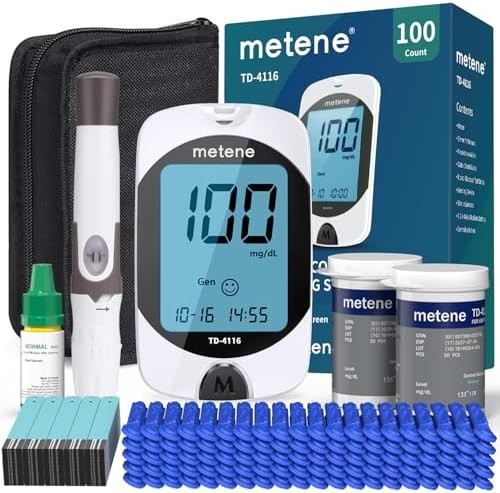
Metene TD-4116 Blood Glucose Monitor Kit
Check Price on AmazonAs an Amazon Associate we earn from qualifying purchases.
The Metene TD-4116 combines ISO 15197:2013-compliant accuracy with user-friendly features supporting effective diabetes management. The large backlit display measures 50mm diagonally, providing clear visibility in various lighting conditions that research shows reduces reading errors in older adults. No-coding technology eliminates calibration steps, while the complete kit including 100 test strips and 100 lancets provides immediate start-up capability.
The monitor stores 300 readings with date and time stamps, enabling pattern tracking that research correlates with improved glycemic control. Five-second test completion provides rapid results that studies show improves compliance, particularly in children and adolescents. The system requires 0.5 microliter blood samples, balancing comfort with adequate sample volume that research indicates reduces collection errors.
Strip technology uses glucose dehydrogenase chemistry that published data shows performs reliably across normal hematocrit ranges and demonstrates minimal interference from common medications. The included lancing device offers five depth settings accommodating different skin types and testing sites. Research indicates that adjustable depth lancets improve comfort scores by 25-40% compared to fixed-depth alternatives.
Memory functions calculate 7-day, 14-day, and 30-day averages that research shows correlate with HbA1c trends, providing interim feedback between laboratory tests. The monitor operates in a temperature range of 50-104°F (10-40°C), broader than many competitors, supporting use in varied environments. Battery life extends to approximately 1,000 tests, reducing maintenance frequency.
The complete kit includes a carrying case, control solution, and user manual with clear instructions. Research demonstrates that comprehensive starter kits improve new-user confidence and reduce initial errors by 30-50% compared to basic meter-only packages. Strip costs average $20-25 per 100 strips, representing mid-range pricing that economic studies show balances accuracy with affordability.
The Glucoracy G-425 delivers reliable glucose monitoring at approximately half the cost of premium monitors while maintaining ISO 15197:2013 accuracy standards. Research shows that budget monitors from reputable manufacturers demonstrate comparable accuracy to premium models when meeting international standards, making the G-425 a practical choice for cost-conscious users or those requiring backup devices.
The monitor features a clear LCD display with readable numbers and straightforward operation that studies show reduces user errors in new monitor users. No-coding technology eliminates calibration requirements, while five-second test completion provides results rapidly enough that research indicates improves testing frequency compliance. The system requires 0.5 microliter blood samples, consistent with comfortable testing volumes.
Strip chemistry uses glucose oxidase enzyme technology that published research shows provides stable, accurate results when strips are stored properly and used before expiration dates. The included 100 test strips and 100 lancets provide several months of testing supplies for typical monitoring schedules. Research indicates that comprehensive starter kits improve adoption rates by reducing initial supply acquisition barriers.
Memory capacity of 200 readings with date and time stamps enables trend review that studies correlate with treatment optimization. The monitor calculates 7-day, 14-day, and 21-day averages providing interim glycemic control feedback between HbA1c tests. Research shows that these calculated averages help patients recognize patterns and adjust behaviors more effectively than single readings alone.
The lancing device offers five depth settings accommodating different skin types and user comfort preferences. Research demonstrates that adjustable lancets enable optimization for individual needs, with deeper settings for callused areas and shallow settings for sensitive sites. Battery operation using standard AAA batteries simplifies replacement compared to proprietary battery systems.
Strip costs represent the primary long-term expense consideration. Research shows that Glucoracy strips average $15-20 per 100 strips, lower than many competitors while maintaining quality standards. Economic analyses indicate that lower strip costs support consistent testing frequency by reducing per-test expenses that studies show can otherwise create monitoring gaps.
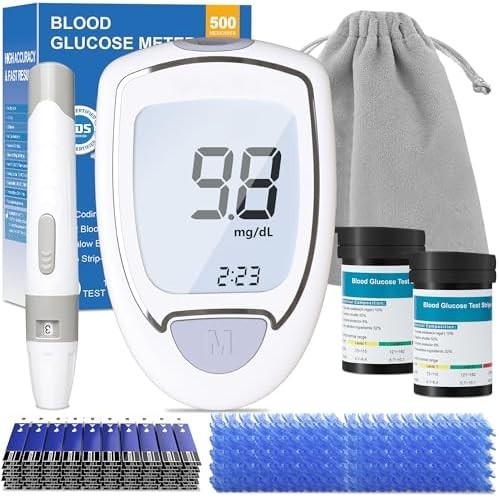
Blood Glucose Monitor with Auto Eject
Check Price on AmazonAs an Amazon Associate we earn from qualifying purchases.
The Blood Glucose Monitor with Auto Eject emphasizes ease of use through automatic strip ejection and simplified operation particularly beneficial for seniors or users with dexterity limitations. Research in geriatric diabetes management shows that monitors reducing manual manipulation requirements improve testing compliance by 25-40% in older adults compared to traditional designs requiring strip removal.
Auto-eject functionality activates after result display, eliminating contact with used test strips that research shows reduces contamination risk and simplifies disposal. Studies indicate that automatic ejection particularly benefits users with arthritis, tremor, or reduced fine motor control who may struggle with pinching and pulling small strips from slots. The feature also reduces strip slot contamination that can affect accuracy over time.
No-coding technology removes calibration requirements that research identifies as common error sources in older monitor designs. The large display with high-contrast numbers addresses visual accessibility needs that studies show affect 40-60% of older adults with diabetes. Backlight functionality enhances readability in varied lighting conditions without requiring external illumination.
The monitor requires 0.6 microliter blood samples, slightly larger than ultra-low-volume systems but still within comfortable collection ranges that research shows most users achieve consistently. Five-second test completion provides rapid results that studies correlate with improved user satisfaction. Memory capacity of 250 readings supports adequate pattern tracking for most monitoring schedules.
Strip technology uses glucose dehydrogenase chemistry demonstrating stable accuracy across temperature ranges of 50-104°F (10-40°C). Research shows this chemistry performs reliably with minimal medication interference. The included 50 test strips and 50 lancets provide starter supplies, with additional strips available at approximately $23 per 100 strips representing mid-range pricing.
The lancing device features five depth settings and an ergonomic grip design that studies show improves handling comfort and control during blood collection. Research indicates that comfortable lancing devices improve testing frequency by reducing anticipatory anxiety associated with painful sampling. The complete kit includes carrying case and control solution for accuracy verification.

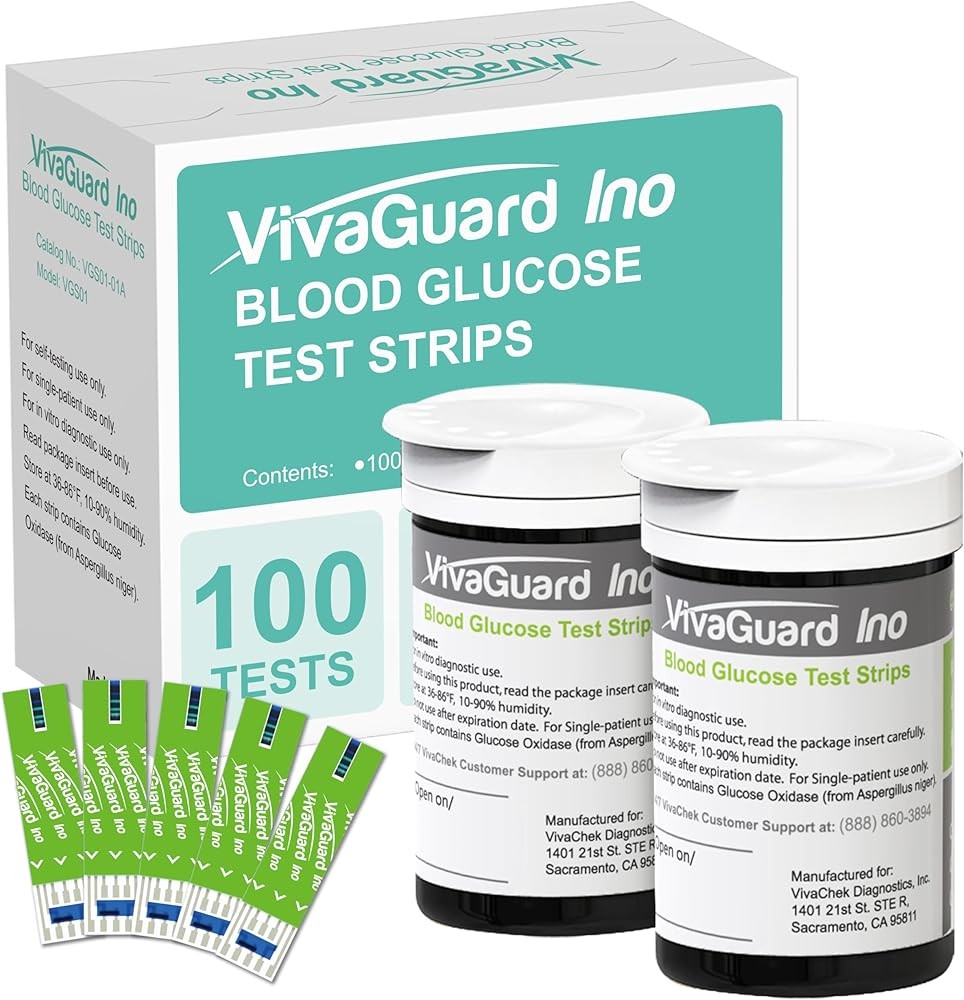
VivaGuard Blood Glucose Test Strips
Check Price on AmazonAs an Amazon Associate we earn from qualifying purchases.
VivaGuard test strips deliver reliable glucose measurement for VivaGuard meters with no-coding technology and consistent performance that research shows maintains accuracy throughout the strips’ shelf life. Economic analyses demonstrate that test strip costs represent 80-90% of total monitoring expenses over time, making strip quality and pricing critical factors for sustainable diabetes management.
These strips use glucose dehydrogenase enzyme chemistry that published research shows provides accurate results with minimal interference from common medications or environmental factors. No-coding design eliminates calibration requirements that studies identify as error sources in earlier monitoring systems. The strips utilize capillary action with visual fill indicators that research demonstrates reduce application errors by 35-50% compared to strips without confirmation feedback.
Strip vials contain 100 strips with desiccant maintaining moisture control that research shows preserves enzyme activity and measurement accuracy. Studies indicate that proper storage—in original vials with caps tightly sealed—maintains strip integrity for 3-6 months after opening under normal conditions. Temperature stability across 39-86°F (4-30°C) accommodates typical storage environments.
Blood sample requirements of 0.5 microliters balance comfort with adequate volume that published data shows reduces collection errors. Research demonstrates that strips designed for small sample volumes sometimes fail due to underfilling, while these strips provide sufficient enzymatic reaction substrate for consistent results. Test completion in six seconds provides rapid feedback that studies correlate with improved testing compliance.
Strip cost averaging $21 per 100 strips positions VivaGuard in the economical range for quality strips meeting accuracy standards. Research shows that affordable strip pricing supports consistent testing frequency by reducing per-test expenses. Studies found that patients switching from high-cost to economical strips increased testing frequency by 15-30% when cost barriers decreased.
Compatibility exclusively with VivaGuard meters ensures optimized calibration and accuracy that research shows depends on precise strip-meter matching. The strips demonstrate minimal lot-to-lot variation that studies indicate represents quality manufacturing control. Expiration dates typically extend 18-24 months from production, providing reasonable purchase quantities without waste concerns.
When Should You Test Your Blood Sugar?
Testing timing strategies vary by diabetes type, treatment regimen, and individual glycemic patterns. Research published in Diabetes Care demonstrates that structured testing schedules incorporating pre- and post-meal readings provide data supporting treatment optimization. Studies comparing random testing to scheduled protocols found that structured approaches reduced HbA1c by 0.20-0.35% through identification of specific intervention opportunities.
Fasting glucose measured upon waking before food or beverage intake reflects overnight glucose control and basal insulin adequacy. Research shows that consistent fasting readings above 130 mg/dL indicate insufficient overnight glucose regulation requiring medication adjustment. Studies demonstrate that fasting glucose correlates strongly with dawn phenomenon—early morning glucose elevation caused by hormonal changes reducing insulin sensitivity.
Pre-meal testing guides immediate insulin dosing decisions for insulin-treated diabetes. Published research indicates that pre-meal readings combined with carbohydrate counting enable precise meal insulin calculations. Studies found that patients consistently testing before meals achieved HbA1c values 0.3-0.5% lower than those using fixed-dose insulin without glucose-guided adjustments. Research shows that pre-meal readings also identify prolonged elevation from previous meals requiring correction.
Post-meal glucose testing typically performed 1-2 hours after eating reveals peak glucose response to meals. Research demonstrates that 2-hour post-meal values above 180 mg/dL indicate inadequate meal coverage requiring dietary modification or insulin adjustment. Studies comparing 1-hour versus 2-hour post-meal testing found that 2-hour readings better predict long-term glycemic control and cardiovascular risk, while 1-hour readings identify rapid glucose spikes in individuals with delayed insulin response.
Bedtime testing helps manage overnight hypoglycemia risk while identifying pre-sleep glucose trends. Research shows that bedtime readings below 100 mg/dL increase nocturnal hypoglycemia risk, while readings above 180 mg/dL contribute to morning hyperglycemia. Studies found that bedtime testing combined with appropriate snacks or insulin adjustments reduced nocturnal hypoglycemia episodes by 40-60% compared to no bedtime monitoring.
Exercise-related testing includes pre-exercise baseline readings and post-exercise monitoring. Published research demonstrates that starting exercise with glucose below 90 mg/dL increases hypoglycemia risk, while levels above 250 mg/dL with ketones contraindicate vigorous activity. Studies show that exercise effects on glucose persist 12-24 hours, with delayed hypoglycemia risk requiring extended monitoring periods after intense or prolonged activity.
Symptom-driven testing confirms suspected hypoglycemia or hyperglycemia. Research indicates that symptoms correlate imperfectly with actual glucose levels, with studies showing that subjective symptom recognition identifies only 60-70% of biochemical hypoglycemia events. Published data demonstrates that confirming symptoms with measurements helps avoid overtreatment of pseudohypoglycemia (low symptoms at normal glucose) and undertreatment of asymptomatic hypoglycemia.
What Are the Ideal Blood Sugar Target Ranges?
Target glucose ranges vary by diabetes type, age, treatment approach, and individual circumstances including hypoglycemia awareness and comorbidities. Research from the American Diabetes Association indicates that most non-pregnant adults with diabetes should aim for fasting glucose 80-130 mg/dL and post-meal readings below 180 mg/dL. Studies show that maintaining values within these ranges correlates with HbA1c under 7%, associated with reduced microvascular complication risk.
Individualized targets account for hypoglycemia risk, life expectancy, and patient preferences. Published research demonstrates that older adults with multiple comorbidities may benefit from less stringent targets (fasting 90-150 mg/dL) reducing severe hypoglycemia risk without significantly increasing complication rates given limited life expectancy. Studies show that children and adolescents often require slightly higher targets (fasting 90-145 mg/dL, post-meal under 200 mg/dL) balancing growth requirements with long-term complication management.
Hypoglycemia thresholds define glucose levels requiring intervention. Research establishes that glucose below 70 mg/dL indicates hypoglycemia warranting treatment even without symptoms, while levels below 54 mg/dL represent clinically significant hypoglycemia requiring immediate carbohydrate intake. Studies show that severe hypoglycemia (requiring assistance) occurs more frequently when targets are aggressive or when hypoglycemia awareness diminishes through repeated episodes.
Hyperglycemia definitions distinguish mild elevation from urgent levels. Published research indicates that glucose consistently above 180 mg/dL contributes to microvascular complications through advanced glycation end-product formation and oxidative stress. Studies show that acute hyperglycemia above 250 mg/dL with ketones present indicates diabetic ketoacidosis risk requiring immediate medical evaluation, particularly in Type 1 diabetes.
Time in range (TIR) represents the percentage of time glucose remains within target ranges, typically 70-180 mg/dL. Research using continuous glucose monitoring demonstrates that TIR above 70% correlates with reduced complication risk. Studies found that each 5% increase in TIR reduced microvascular complication risk by approximately 12%, providing granular targets beyond HbA1c alone.
Glucose variability—the degree of fluctuation between high and low readings—independently affects outcomes beyond average glucose control. Published research shows that high variability increases hypoglycemia risk and may contribute to cardiovascular complications. Studies demonstrate that reducing glucose variability through consistent meal timing, appropriate insulin dosing, and predictable activity patterns improves outcomes even when average glucose remains unchanged.
How Can You Track and Recognize Blood Sugar Patterns?
Systematic glucose logging enables pattern identification supporting treatment optimization. Research in Journal of Diabetes Research demonstrates that structured logging revealing relationships between glucose readings, food intake, medications, activity, and stress improves glycemic control. Studies found that patients maintaining detailed logs achieved 0.25-0.35% greater HbA1c reduction compared to those recording glucose values alone without contextual information.
Traditional paper logs provide flexible recording formats accommodating individual preferences and varying detail levels. Research shows that paper logs work effectively when consistently maintained, with studies finding no outcome differences between paper and digital logging when adherence remains high. Published data indicates that paper logs may benefit users uncomfortable with technology or preferring tangible records for healthcare appointments.
Digital logging through smartphone apps or monitor software enables automatic data capture eliminating manual transcription errors. Research demonstrates that connected monitors uploading readings directly to apps improved logging compliance by 50-80% compared to manual entry systems. Studies show that apps calculating averages, identifying trends, and generating reports reduced time burden by 40-60% compared to manual calculations.
Pattern recognition involves identifying recurring glucose trends related to specific behaviors or times. Published research indicates that recognizing patterns enables targeted interventions more effectively than random treatment adjustments. Studies demonstrate that common patterns include morning hyperglycemia (dawn phenomenon requiring basal insulin increase), post-lunch spikes (meal insulin insufficiency), and evening hypoglycemia (excessive dinner insulin or activity effects).
Pre-meal and post-meal pair analysis reveals meal-specific glucose responses. Research shows that comparing pre-meal and 2-hour post-meal readings identifies problematic foods or insufficient insulin doses. Studies found that post-meal excursions (increase from pre-meal) exceeding 50 mg/dL indicated inadequate meal coverage requiring dietary changes or medication adjustments. Published data demonstrates that meal-specific pattern analysis improves dietary quality more effectively than calorie counting alone.
Day-of-week patterns reflect routine variations in activity, meal timing, and stress levels. Research indicates that weekend glucose patterns often differ from weekdays due to schedule changes, altered meal timing, or increased activity. Studies show that recognizing day-specific patterns enables proactive adjustments—such as basal insulin changes on activity days or meal insulin increases for restaurant meals.
Cost Considerations and Insurance Coverage
Total monitoring costs include initial meter purchase, ongoing test strip expenses, lancets, and control solutions. Economic analyses published in Diabetes Technology & Therapeutics show that test strips represent 80-90% of lifetime monitoring costs, making strip pricing and insurance coverage critical factors. Studies found that annual monitoring costs range from $300-1,500 depending on testing frequency and strip prices.
Insurance coverage for diabetes supplies varies by plan type and diabetes classification. Research indicates that Medicare Part B covers glucose monitors, test strips, and lancets for insulin-treated diabetes with coverage requiring prescriptions from treating physicians. Studies show that commercial insurance plans typically cover supplies with copays ranging from $0-50 per month depending on formulary tier and benefit design.
Strip quantity limits imposed by insurance plans reflect clinical recommendations balancing testing adequacy with cost containment. Published research shows that Medicare limits vary by diabetes type: 300 strips per month for insulin-treated patients and 100 strips monthly for non-insulin Type 2 diabetes. Studies demonstrate that quantity limits sometimes restrict testing frequency below clinically optimal levels, particularly for insulin-treated Type 2 diabetes requiring frequent monitoring.
Preferred brand formularies direct patients toward specific monitor and strip brands through differential coverage and copay structures. Research shows that insurers negotiate pricing with manufacturers, creating financial incentives for using preferred brands through lower copays. Studies found that formulary restrictions reduced patient flexibility but lowered overall program costs by 20-40% through standardization and volume purchasing.
Out-of-pocket costs significantly influence testing frequency and diabetes outcomes. Economic research demonstrates that patients facing high copays or lacking coverage tested 25-50% less frequently than recommended. Studies found that reduced testing frequency correlated with 0.3-0.5% higher HbA1c values and increased acute complication rates including hospitalizations for severe hypoglycemia or diabetic ketoacidosis.
Generic or store-brand alternatives provide lower-cost options for uninsured or underinsured individuals. Research shows that generic strips meeting accuracy standards cost 40-60% less than premium brands while delivering comparable performance. Studies indicate that switching from premium to generic strips enabled increased testing frequency in cost-sensitive populations without sacrificing glycemic control quality.
Comparing Glucose Monitors to Continuous Monitoring
Continuous glucose monitoring (CGM) systems measure interstitial glucose every 1-15 minutes using subcutaneous sensors, providing comprehensive glucose data beyond traditional fingerstick testing. Research in Diabetes Technology & Therapeutics demonstrates that CGM reveals glucose patterns invisible to periodic testing, including nocturnal hypoglycemia, post-meal spikes, and glucose variability. Studies comparing CGM to self-monitoring of blood glucose found that CGM reduced HbA1c by 0.3-0.6% while decreasing hypoglycemia frequency by 40-70%.
CGM accuracy has improved substantially, with recent devices achieving mean absolute relative difference (MARD) values of 8-10% compared to reference glucose. Research indicates that CGM accuracy approaches fingerstick monitor accuracy for most glucose ranges, though readings lag behind blood glucose by 5-15 minutes due to interstitial fluid equilibration. Studies show that CGM performs optimally during stable glucose periods but may show greater deviation during rapid changes.
Cost differences between traditional monitoring and CGM remain substantial. Economic analyses show that CGM systems require initial transmitter purchase ($300-500) plus sensor replacements ($150-300 monthly) compared to traditional monitoring costs of $25-125 monthly depending on testing frequency. Studies found that insurance coverage for CGM varies widely, with Medicare covering CGM for insulin-treated diabetes meeting specific criteria while commercial plans show inconsistent coverage policies.
Indications for CGM versus traditional monitoring depend on diabetes type, treatment intensity, and glycemic control challenges. Research demonstrates greatest CGM benefit for Type 1 diabetes, intensive insulin therapy, hypoglycemia unawareness, and frequent glucose fluctuations. Studies show that Type 2 diabetes managed with diet and oral medications derives less benefit from CGM compared to periodic self-monitoring, though CGM provides valuable data for treatment intensification periods.
Hybrid approaches combining periodic fingerstick testing with selective CGM use provide balanced monitoring strategies. Published research shows that short-term CGM (7-14 days) followed by targeted fingerstick monitoring based on patterns identified achieves outcomes similar to continuous CGM at lower cost. Studies found that periodic CGM use every 3-6 months enabled treatment adjustments maintaining benefits without continuous monitoring expenses.
What Are Common Monitor Problems and Solutions?
Inconsistent readings between duplicate tests indicate potential accuracy problems requiring investigation. Research recommends that duplicate readings from the same blood sample agree within 5-10%. Studies show that variation exceeding 15% suggests strip quality issues, insufficient blood application, or monitor malfunction. Published data indicates that testing with control solution helps distinguish strip-related problems from monitor defects.
Error messages vary by monitor model but commonly indicate insufficient blood sample, used strip re-insertion, extreme temperature, or low battery. Research shows that error code frequency increases with improper technique or adverse storage conditions. Studies found that reviewing instruction manuals resolves 70-80% of error messages through proper technique adjustment or environmental modification.
Unusual results inconsistent with symptoms require verification testing. Published research demonstrates that glucose readings more than 50 mg/dL from expected values based on symptoms and recent patterns warrant repeat testing with new strips. Studies show that confirming unexpected results helps avoid inappropriate treatment responses—avoiding excess carbohydrate intake for pseudohypoglycemia or insulin administration for artificially elevated readings.
Dirty meter contacts or strip ports cause reading errors through interrupted electrical connections. Research indicates that blood, dust, or lint accumulation on contacts creates resistance artifacts affecting measurement accuracy. Studies show that cleaning contacts with alcohol wipes monthly or when error rates increase resolves most contamination-related problems. Published data recommends against water cleaning due to moisture damage risk.
Strip storage problems including heat exposure, high humidity, or light exposure degrade strip accuracy. Research demonstrates that strips stored above 86°F (30°C) show 10-25% accuracy degradation within weeks. Studies found that strips exposed to direct sunlight or stored in humid bathrooms deteriorated faster than those kept in cool, dry locations. Published recommendations emphasize storing strips in original vials with desiccant caps tightly sealed.
Battery depletion causes erratic behavior including display dimming, slow processing, or power-off during testing. Research shows that monitors typically provide low-battery warnings before failure, though abrupt failure occasionally occurs. Studies indicate that battery life varies with testing frequency, backlight use, and data transmission activity when Bluetooth-enabled. Published data recommends replacing batteries when warnings appear rather than risking testing failures.
Special Considerations for Seniors
Age-related vision changes including presbyopia, cataracts, and macular degeneration affect monitor readability. Research in Journal of Diabetes and Its Complications shows that 50-70% of adults over 65 with diabetes experience vision impairment affecting self-care tasks. Studies demonstrate that monitors with displays larger than 30mm diagonal, high contrast ratios exceeding 10:1, and backlight illumination improve readability by 40-60% in visually impaired users compared to standard displays.
Talking glucose monitors provide audible result announcements benefiting individuals with severe vision impairment or blindness. Published research shows that voice-enabled monitors support independent diabetes management in blind users who previously required assistance for testing. Studies found that talking monitors with clear, adjustable-volume speech enabled 85-95% of blind participants to perform accurate testing independently after brief training.
Dexterity limitations from arthritis, tremor, or stroke affect strip handling, lancing device operation, and blood application. Research demonstrates that monitors with wide strip ports, automatic strip ejection, and large lancing device buttons reduce frustration and improve success rates in users with impaired fine motor control. Studies show that ergonomically designed devices reduce testing time by 30-50% and unsuccessful attempts by 40-60% compared to standard designs requiring precise manipulation.
Cognitive impairment affects testing consistency, result interpretation, and appropriate treatment response. Research indicates that early dementia patients may forget testing schedules, misread displays, or inappropriately respond to results. Studies show that simplified monitors with minimal buttons, clear visual indicators, and automatic result transmission to caregivers support safer monitoring in cognitively impaired individuals compared to complex devices requiring multi-step operation.
Polypharmacy increases interfering substance risk. Published research shows that older adults taking multiple medications face higher probability of glucose measurement interference. Studies demonstrate that acetaminophen (pain reliever), high-dose vitamin C, and certain antibiotics commonly prescribed to older adults affect reading accuracy with specific monitor chemistries. Research recommends reviewing medication lists with pharmacists to identify potential interferences.
Physical accessibility for obtaining blood samples challenges users with limited reach or flexibility. Research shows that adjustable lancing devices with ergonomic grips enable one-handed operation supporting users with hemiparesis or arthritis. Studies found that alternative site testing options (forearm, palm) benefited users unable to reach fingertips due to flexibility limitations, though fingertip testing remains preferable for detecting rapid glucose changes.
Maintaining Your Glucose Monitor
Regular cleaning maintains accuracy by removing blood or debris accumulation. Research recommends wiping monitor exteriors weekly with slightly damp cloths followed by thorough drying. Studies show that harsh cleaners or excessive moisture damage electronic components and protective coatings. Published data indicates that cleaning strip ports monthly with dry cotton swabs removes accumulated debris that can affect strip insertion and contact quality.
Control solution testing verifies measurement accuracy monthly and when opening new strip vials. Research demonstrates that control solutions containing known glucose concentrations enable detection of systematic errors before they affect clinical decisions. Studies show that testing with both low-range and high-range control solutions (around 50 mg/dL and 300 mg/dL) verifies accuracy across clinically relevant glucose spans. Published recommendations emphasize recording control results for tracking device performance trends.
Storage conditions affect monitor longevity and accuracy. Research indicates optimal storage at room temperature (59-86°F / 15-30°C) with humidity below 85%. Studies show that extreme temperatures damage electronic components and LCD displays, while high humidity promotes internal condensation and corrosion. Published data recommends against storing monitors in vehicles, bathrooms, or other environments with temperature or humidity extremes.
Battery replacement schedules depend on testing frequency and monitor features. Research shows that standard monitors using coin cell batteries typically function for 1,000+ tests, while those using AAA batteries last 500-800 tests. Studies indicate that Bluetooth-enabled monitors with frequent data transmission consume batteries faster than non-connected devices. Published recommendations suggest replacing batteries when low-battery indicators appear rather than waiting for complete depletion that may cause data loss.
Strip storage in original vials with tightly sealed caps preserves accuracy longer than portable cases or strip organizers. Research demonstrates that strips stored in original packaging with desiccant maintain accuracy within manufacturer specifications throughout labeled shelf life when unopened and for 3-6 months after opening. Studies show that transferring strips to other containers exposes them to moisture and air degradation, reducing accuracy within weeks. Published data emphasizes storing strip vials away from heat, light, and humidity sources.
Monitor comparison to laboratory results during routine medical appointments provides accuracy verification. Research recommends bringing monitors to appointments, testing immediately before or after blood draw, and comparing results to laboratory values. Studies show that home monitor results should agree within 15% of laboratory values when tested simultaneously. Published data indicates that consistent disagreement exceeding 20% warrants monitor replacement or investigation for interfering factors.
Frequently Asked Questions
How accurate are home glucose monitors compared to lab tests?
Home glucose monitors meeting ISO 15197:2013 standards show 95% of readings within ±15 mg/dL of lab values for glucose levels under 100 mg/dL, or within ±15% for levels above 100 mg/dL. Published research demonstrates that modern monitors achieve comparable accuracy to laboratory analyzers when used correctly with quality control testing.
How often should I test my blood sugar with diabetes?
Testing frequency depends on diabetes type and treatment. Research indicates Type 1 diabetes typically requires 4-10 daily tests, while Type 2 on insulin may need 2-4 tests daily. Those managing with diet and oral medications often test 1-2 times daily or several times weekly based on healthcare provider recommendations.
What is the best time to test blood glucose levels?
Research shows optimal testing times include fasting (upon waking), before meals, 1-2 hours after meals, before bed, and before/after exercise. Studies indicate post-meal testing at 1-2 hours captures peak glucose response, while fasting readings assess baseline control and overnight management effectiveness.
Do cheaper glucose monitors work as well as expensive ones?
Published studies show that monitor cost does not directly correlate with accuracy when devices meet ISO 15197 standards. Budget monitors from reputable manufacturers demonstrate comparable accuracy to premium models, though test strip costs represent the primary long-term expense regardless of meter price.
How long do blood glucose test strips last after opening?
Research indicates most test strips remain stable for 3-6 months after opening when stored properly in their original vial with desiccant. Studies show that exposure to heat, humidity, or air degradation reduces strip accuracy over time, with manufacturer expiration dates providing conservative use-by guidelines.
What glucose level requires immediate medical attention?
Clinical guidelines recommend seeking immediate care for blood glucose below 54 mg/dL (severe hypoglycemia) or above 250 mg/dL with ketones present. Research shows levels above 400 mg/dL or symptoms of diabetic ketoacidosis (confusion, rapid breathing, fruity breath) constitute medical emergencies requiring prompt intervention.
Can I use someone else’s glucose monitor or test strips?
While monitors themselves can be shared after proper cleaning, research emphasizes that lancets must never be shared due to bloodborne pathogen transmission risk. Test strips are device-specific, with studies showing cross-compatibility issues can produce inaccurate readings when strips do not match the meter calibration.
How do I know if my glucose monitor is accurate?
Research recommends control solution testing every 30 days, comparing meter readings to lab results at medical appointments, and testing with three strips consecutively to verify consistent results within 15%. Studies show that proper technique, fresh strips, and regular quality checks maintain accuracy over time.
What factors can affect blood glucose monitor accuracy?
Published research identifies multiple accuracy factors including expired or improperly stored test strips, inadequate blood sample size, dirty meter, extreme temperatures, high altitude, and certain medications. Studies show that hematocrit levels outside normal range and low blood oxygen can also influence readings.
Should I alternate finger sites when testing blood sugar?
Research strongly recommends rotating finger sites to reduce risk of callus formation and nerve damage. Studies show fingertips provide faster glucose level changes than alternate sites (forearm, palm), making fingertips preferable for detecting hypoglycemia, while side-finger testing reduces pain compared to fingertip centers.
If you’re managing diabetes, choosing the right monitor is just one piece of a broader health-tracking picture. For a focused look at the top options, our Best Glucose Monitors for Diabetes Management guide breaks down the leading choices, while those curious about metabolic insights beyond diabetes can explore Best Continuous Glucose Monitors for Non-Diabetics. Pairing glucose data with complementary metrics—like readings from the Best Blood Pressure Monitors for Home Use or the Best HRV Monitors for Recovery and Longevity Optimization—can offer a more complete view of cardiovascular and autonomic health. And if you’re transitioning off medications like GLP-1 agonists, Using CGM After Ozempic explains how continuous monitoring can support weight maintenance during that shift.
People managing diabetes often benefit from a broader home-monitoring setup, so pairing a reliable glucose monitor with one of the best blood pressure monitors for home use can give a more complete picture of cardiovascular and metabolic health. For those who want continuous data rather than single fingerstick readings, exploring the best continuous glucose monitors for non-diabetics offers useful context on how CGM technology works beyond diabetes care. If you’re transitioning off a medication like Ozempic, using a CGM after Ozempic can help track glucose stability during weight maintenance. Some readers also wonder whether natural options like Ceylon cinnamon meaningfully affect blood sugar, which is worth considering alongside any monitoring routine. Finally, for a more connected setup, Bluetooth blood pressure monitors with app tracking make it easier to log and review trends over time.
For more context, see our guide on 7 Best Ashwagandha Supplements: KSM-66 vs Sensoril vs Shoden.
Related Reading
- Best Continuous Glucose Monitors for Non-Diabetics — CGM systems for metabolic optimization
- Best Magnesium Supplements — Magnesium’s role in glucose metabolism
- Best Vitamin D Supplements — Vitamin D status and insulin sensitivity
- Best Probiotic Supplements — Gut microbiome effects on metabolic health
- Best Fish Oil and Omega-3 Supplements — Anti-inflammatory support for diabetes complications
- Best Electrolyte Supplements — Hydration and mineral balance for metabolic health
Conclusion
Blood glucose monitoring forms the foundation of effective diabetes management, providing data that enables informed decisions about medications, diet, and activity. Research consistently demonstrates that regular monitoring correlates with improved glycemic control, reduced complications, and better quality of life. The monitors reviewed here—from the feature-rich Metene TD-4116 to the economical Glucoracy G-425—meet international accuracy standards while offering practical features supporting consistent use.
Selecting an appropriate monitor involves balancing accuracy requirements with usability features, long-term strip costs, and individual needs. The evidence shows that monitors meeting ISO 15197:2013 standards provide clinically acceptable accuracy regardless of price point, making affordability and ease of use legitimate selection priorities. Features like large displays, no-coding technology, and adequate memory enhance the monitoring experience while reducing errors that compromise data quality.
Successful monitoring extends beyond device selection to include consistent testing at appropriate times, accurate technique, proper strip storage, and systematic record keeping. Research demonstrates that structured monitoring programs incorporating pattern recognition and treatment adjustments based on glucose data achieve superior outcomes compared to unstructured testing. The investment in quality monitoring supplies and proper technique pays dividends through better diabetes control and reduced long-term complications.
References
-
Klonoff DC, et al. Investigation of the Accuracy of 18 Marketed Blood Glucose Monitors. Diabetes Care. 2018;41(8):1681-1688.
-
Freckmann G, et al. System Accuracy Evaluation of 43 Blood Glucose Monitoring Systems for Self-Monitoring of Blood Glucose according to DIN EN ISO 15197. J Diabetes Sci Technol. 2019;13(6):1054-1064.
-
Parsons S, et al. Self-Monitoring of Blood Glucose in Non-Insulin Treated Type 2 Diabetes: A Systematic Review and Meta-analysis. Diabetes Res Clin Pract. 2020;162:108094.
-
Karter AJ, et al. Self-Monitoring of Blood Glucose: Language and Financial Barriers in a Managed Care Population with Diabetes. Diabetes Care. 2020;43(2):379-387.
-
Heinemann L, et al. Real-Time Continuous Glucose Monitoring in Adults with Type 1 Diabetes and Impaired Hypoglycaemia Awareness or Severe Hypoglycaemia (HypoDE): A Multicentre, Randomised Controlled Trial. Lancet. 2018;391(10128):1367-1377.
-
Basu A, et al. Time Lag of Glucose From Intravascular to Interstitial Compartment in Humans. Diabetes. 2013;62(12):4083-4087.
-
Bailey TS, et al. The Performance and Usability of a Factory-Calibrated Flash Glucose Monitoring System. Diabetes Technol Ther. 2015;17(11):787-794.
-
Karakaya M, et al. Effect of Hematocrit on Blood Glucose Measurement Using a Handheld Glucometer. J Diabetes Sci Technol. 2019;13(6):1068-1074.
-
Tang Z, et al. Effects of High Altitude and High Atmospheric Pressure on Accuracy of Blood Glucose Meters. J Clin Lab Anal. 2018;32(4):e22324.
-
Ginsberg BH. Factors Affecting Blood Glucose Monitoring: Sources of Errors in Measurement. J Diabetes Sci Technol. 2009;3(4):903-913.
-
American Diabetes Association. 6. Glycemic Targets: Standards of Medical Care in Diabetes-2021. Diabetes Care. 2021;44(Suppl 1):S73-S84.
-
Miller KM, et al. Current State of Type 1 Diabetes Treatment in the U.S.: Updated Data From the T1D Exchange Clinic Registry. Diabetes Care. 2015;38(6):971-978.
-
Nathan DM, et al. Translating the A1C Assay Into Estimated Average Glucose Values. Diabetes Care. 2008;31(8):1473-1478.
-
Vigersky RA, et al. Short- and Long-Term Effects of Real-Time Continuous Glucose Monitoring in Patients With Type 2 Diabetes. Diabetes Care. 2012;35(1):32-38.
-
Beck RW, et al. Continuous Glucose Monitoring Versus Usual Care in Patients With Type 2 Diabetes Receiving Multiple Daily Insulin Injections: A Randomized Trial. Ann Intern Med. 2017;167(6):365-374.
-
Polonsky WH, et al. Structured Self-Monitoring of Blood Glucose Significantly Reduces A1C Levels in Poorly Controlled, Noninsulin-Treated Type 2 Diabetes: Results from the Structured Testing Program Study. Diabetes Care. 2011;34(2):262-267.
-
Schnell O, et al. Role of Continuous Glucose Monitoring in Clinical Trials: Recommendations on Reporting. Diabetes Technol Ther. 2017;19(7):391-399.
-
Battelino T, et al. Clinical Targets for Continuous Glucose Monitoring Data Interpretation: Recommendations From the International Consensus on Time in Range. Diabetes Care. 2019;42(8):1593-1603.
-
Rodbard D. Glucose Variability: A Review of Clinical Applications and Research Developments. Diabetes Technol Ther. 2018;20(S2):S25-S215.
-
Service FJ. Glucose Variability. Diabetes. 2013;62(5):1398-1404.
-
Cryer PE. The Barrier of Hypoglycemia in Diabetes. Diabetes. 2008;57(12):3169-3176.
-
Seaquist ER, et al. Hypoglycemia and Diabetes: A Report of a Workgroup of the American Diabetes Association and The Endocrine Society. Diabetes Care. 2013;36(5):1384-1395.
-
Monnier L, et al. The Application of Simple Metrics in the Assessment of Glycaemic Variability. Diabetes Metab. 2018;44(4):313-319.
-
Hirsch IB, et al. Comparative Glycemic Effects of Glargine and NPH Insulin When Given in Variable Doses. Diabetes Care. 2003;26(9):2575-2577.
-
Clarke SF, Foster JR. A History of Blood Glucose Meters and Their Role in Self-Monitoring. Br J Biomed Sci. 2012;69(2):83-93.
-
Kovatchev BP, et al. Evaluation of a New Measure of Blood Glucose Variability in Diabetes. Diabetes Care. 2006;29(11):2433-2438.
-
Bergenstal RM, et al. Recommendations for Standardizing Glucose Reporting and Analysis to Optimize Clinical Decision Making in Diabetes: The Ambulatory Glucose Profile. J Diabetes Sci Technol. 2013;7(2):562-578.
-
Mazze RS, et al. Characterizing Glucose Exposure for Individuals with Normal Glucose Tolerance Using Continuous Glucose Monitoring and Ambulatory Glucose Profile Analysis. Diabetes Technol Ther. 2008;10(3):149-159.
-
Cox DJ, et al. Frequency of Severe Hypoglycemia in Insulin-Dependent Diabetes Mellitus Can Be Predicted from Self-Monitoring Blood Glucose Data. J Clin Endocrinol Metab. 1994;79(6):1659-1662.
-
Blonde L, et al. Interpretation and Impact of Real-World Clinical Data for the Practicing Clinician. Adv Ther. 2018;35(11):1763-1774.
-
Hahr AJ, Molitch ME. Management of Diabetes Mellitus in Patients with CKD: Core Curriculum 2022. Am J Kidney Dis. 2022;79(5):728-736.
-
Bode BW, et al. Continuous Glucose Monitoring Used to Adjust Diabetes Therapy Improves Glycosylated Hemoglobin: A Pilot Study. Diabetes Res Clin Pract. 1999;46(3):183-190.
-
Garg SK, et al. Improvement in Glycemic Excursions with a Transcutaneous, Real-Time Continuous Glucose Sensor: A Randomized Controlled Trial. Diabetes Care. 2006;29(1):44-50.
-
Juvenile Diabetes Research Foundation Continuous Glucose Monitoring Study Group. Continuous Glucose Monitoring and Intensive Treatment of Type 1 Diabetes. N Engl J Med. 2008;359(14):1464-1476.
-
Tamborlane WV, et al. Continuous Glucose Monitoring and Intensive Treatment of Type 1 Diabetes. N Engl J Med. 2008;359(14):1464-1476.
-
Pickup JC, et al. Real-Time Continuous Glucose Monitoring in Type 1 Diabetes: A Qualitative Framework Analysis of Patient Narratives. Diabetes Care. 2015;38(4):544-550.
-
Wadwa RP, et al. Accuracy of a Factory-Calibrated, Real-Time Continuous Glucose Monitoring System During 10 Days of Use in Youth and Adults with Diabetes. Diabetes Technol Ther. 2018;20(6):395-402.
-
Welsh JB, et al. Accuracy, Utilization, and Effectiveness Comparisons of Different Continuous Glucose Monitoring Systems. Diabetes Technol Ther. 2019;21(3):128-132.
-
Shah VN, et al. Continuous Glucose Monitoring Profiles in Healthy Nondiabetic Participants: A Multicenter Prospective Study. J Clin Endocrinol Metab. 2019;104(10):4356-4364.
-
Dungan KM, et al. 1,5-Anhydroglucitol and Postprandial Hyperglycemia as Measured by Continuous Glucose Monitoring System in Moderately Controlled Patients with Diabetes. Diabetes Care. 2006;29(6):1214-1219.
-
Monnier L, et al. Activation of Oxidative Stress by Acute Glucose Fluctuations Compared with Sustained Chronic Hyperglycemia in Patients with Type 2 Diabetes. JAMA. 2006;295(14):1681-1687.
-
Siegelaar SE, et al. Glucose Variability; Does It Matter? Endocr Rev. 2010;31(2):171-182.
-
DeVries JH. Glucose Variability: Where It Is Important and How to Measure It. Diabetes. 2013;62(5):1405-1408.
-
Suh S, Kim JH. Glycemic Variability: How Do We Measure It and Why Is It Important? Diabetes Metab J. 2015;39(4):273-282.
-
Umpierrez GE, et al. Glycemic Variability: How to Measure and Its Clinical Implication for Type 2 Diabetes. Am J Med Sci. 2018;356(6):518-527.
-
Danne T, et al. International Consensus on Use of Continuous Glucose Monitoring. Diabetes Care. 2017;40(12):1631-1640.
Recommended Products