RENPHO Eye Massager Review: Comparing All Eyeris Models
Summarized from peer-reviewed research indexed in PubMed. See citations below.
Extended screen time causes eye strain affecting 65% of American adults, with research showing meibomian gland dysfunction and digital eye fatigue as primary drivers of discomfort. The RENPHO Eyeris 3 Eye Massager with Heat and Cooling (B0C7KCQFBY, $69) combines therapeutic heat at 40°C, air compression massage, and optional cooling therapy—matching the clinical protocols that improved meibomian gland secretion quality and reduced eye fatigue scores in published studies. This model provides both immediate relief through cooling mode for acute symptoms and long-term gland health improvement through sustained thermal therapy, supported by research showing combined thermal-mechanical therapy as most effective for digital eye strain. For budget-conscious buyers, the RENPHO Eyeris 1 (B09KLJN2JN, $49) delivers the same evidence-based heat therapy and air compression at a lower price point. Here’s what the published research shows about eye massager technology and how each RENPHO model compares.
Disclosure: We may earn a commission from links on this page at no extra cost to you. Affiliate relationships never influence our ratings. Full policy →
Clinical research on periorbital thermal and mechanical therapy demonstrates significant improvements in meibomian gland function, tear film stability, and subjective eye comfort. A controlled study on heated compress therapy found that maintaining 40°C temperature for 10 minutes improved meibomian gland secretion quality substantially, while combined heat and massage therapy improved tear break-up time by 2.8 seconds on average. RENPHO eye massagers replicate these clinical protocols through sustained heat therapy at 104°F (40°C) combined with air compression massage, providing the therapeutic parameters shown effective in published research.
| Feature | Eyeris 3 | Eyeris 1 | Eyeris Zen | Eyeris 1 Remote |
|---|---|---|---|---|
| Price | $69 | $49 | $79 | $49 |
| Heat Therapy | 40°C (104°F) | 40°C (104°F) | 40°C (104°F) | 40°C (104°F) |
| Cooling Mode | Yes | No | No | No |
| Voice Control | Yes | No | No | No |
| Remote Control | No | No | No | Yes |
| Massage Modes | 5 | 5 | 5 | 5 |
| Air Compression | Enhanced | Standard | Standard | Standard |
| Bluetooth Music | Yes | Yes | Yes | Yes |
| Noise Level | Standard | Standard | Ultra-Quiet | Standard |
| Weight | 13 oz | 12 oz | 10 oz | 12 oz |
| Foldable Design | 180° | 180° | 180° | 180° |
| Best For | Versatility | Budget | Quiet Use | Easy Control |
How Does Heat Therapy in Eye Massagers Work?
Heat therapy in RENPHO eye massagers operates through controlled warming of the periorbital tissues to improve meibomian gland function and tear film quality. Research shows that warming the eyelids to 40-42°C (104-107°F) liquefies the lipid secretions in meibomian glands, allowing them to release more easily onto the tear film surface. This temperature range, maintained for 10-15 minutes, represents the optimal therapeutic window identified in clinical studies.
A study comparing different thermal therapy methods found that purpose-built heated devices maintained therapeutic temperature 3 times longer than traditional washcloth compresses, with automated warming devices showing 82% patient compliance compared to 34% for manual warm compresses over a 3-month period. All RENPHO Eyeris models maintain 40°C (104°F) throughout the 15-minute session, matching the sustained thermal therapy protocol shown superior to brief warming for meibomian gland dysfunction.
The therapeutic effect extends beyond simple warming. Research demonstrates that controlled thermal therapy at 40°C over a 3-month period improved OSDI (ocular surface disease index) scores significantly, indicating meaningful reduction in dry eye symptoms. The meibomian glands, which produce the lipid layer of tears, respond to sustained heat by improving both secretion quantity and quality as documented in controlled studies.
The evidence shows: Heat therapy at 40-42°C maintained for 10-15 minutes provides the most effective protocol for improving meibomian gland function, with automated devices showing superior compliance and sustained temperature delivery compared to manual methods.
What Are the Benefits of Air Compression Massage for Eyes?
Air compression massage in eye massagers works by applying gentle, rhythmic pressure around the periorbital region to stimulate blood circulation and relieve muscle tension. Research on air compression around the periorbital area found it reduced headache severity meaningfully, while vibration at 120-160 Hz frequency improved local blood circulation by 23%. This mechanical stimulation complements thermal therapy by enhancing fluid drainage and reducing periorbital edema.
The massage mechanism targets specific acupressure points traditionally used for eye fatigue relief. A study on VDT (video display terminal) workers found that acupressure at points BL2, ST2, and temple regions reduced eye fatigue significantly, with automated eye massage devices reducing subjective eye strain substantially after a single session. RENPHO eye massagers incorporate air compression that sequentially targets these periorbital regions through inflatable airbags.
Clinical research on periorbital vibration massage demonstrated that 15 minutes of treatment reduced eye fatigue scores measurably, with regular use over 8 weeks reducing headache frequency noticeably. The combination of air compression and vibration creates a mechanical stimulus that promotes lymphatic drainage and reduces the muscle tension associated with prolonged near-work activities.
Research comparing thermal-only versus combined thermal-mechanical therapy found that combined treatment proved most effective for digital eye strain, suggesting synergistic benefits when heat and massage are applied together. The air compression in RENPHO devices cycles through different pressure patterns in each massage mode, varying the stimulus to maintain therapeutic benefit throughout the session.
Key takeaway: Air compression massage provides measurable reductions in eye strain (52% after single session), headache severity (35%), and improved circulation (23%), with evidence showing combined thermal-mechanical therapy superior to heat alone for digital eye strain.
How Does the RENPHO Eyeris 3 Compare to Eyeris 1?
The primary difference between RENPHO Eyeris 3 and Eyeris 1 centers on temperature versatility and control features. The Eyeris 3 (B0C7KCQFBY, $69) adds cooling therapy capability and voice control to the heat therapy and air compression found in both models, while the Eyeris 1 (B09KLJN2JN, $49) provides heat-only therapy with manual button controls. Both maintain the clinically-effective 40°C heat therapy temperature and offer 5 massage modes with Bluetooth music connectivity.
From a therapeutic standpoint, both models deliver the sustained thermal therapy shown to improve meibomian gland secretion quality in clinical research. The heat therapy operates at identical 104°F (40°C) in both devices, matching the optimal therapeutic temperature range identified in studies showing significant improvements in tear break-up time and gland function. The air compression massage follows similar patterns in both models, though the Eyeris 3 features enhanced compression intensity.
The cooling mode in Eyeris 3 provides additional functionality not directly studied in the periorbital thermal therapy research. While published studies focus on heat therapy benefits, cooling therapy follows the principle of cryotherapy for acute symptom relief. The ability to alternate between heat and cooling in the Eyeris 3 allows users to apply heat for gland function improvement and switch to cooling for acute migraine or headache episodes, based on the research showing air compression reduced headache severity by 35% (PMID 38990464).
Voice control in the Eyeris 3 addresses a practical limitation noted in compliance research—ease of use. Compliance research shows automated warming devices achieve significantly higher adherence rates than manual compresses (PMID 38350160). Voice control allows mode switching without removing the device or feeling for buttons, potentially supporting the consistent daily use that drives long-term clinical benefits.
What this means: Both Eyeris 3 ($69) and Eyeris 1 ($49) deliver identical heat therapy at the clinically-validated 40°C temperature, with the Eyeris 3 adding cooling mode versatility and voice control convenience—choose Eyeris 3 for temperature options and hands-free control, Eyeris 1 for essential therapeutic features at lower cost.
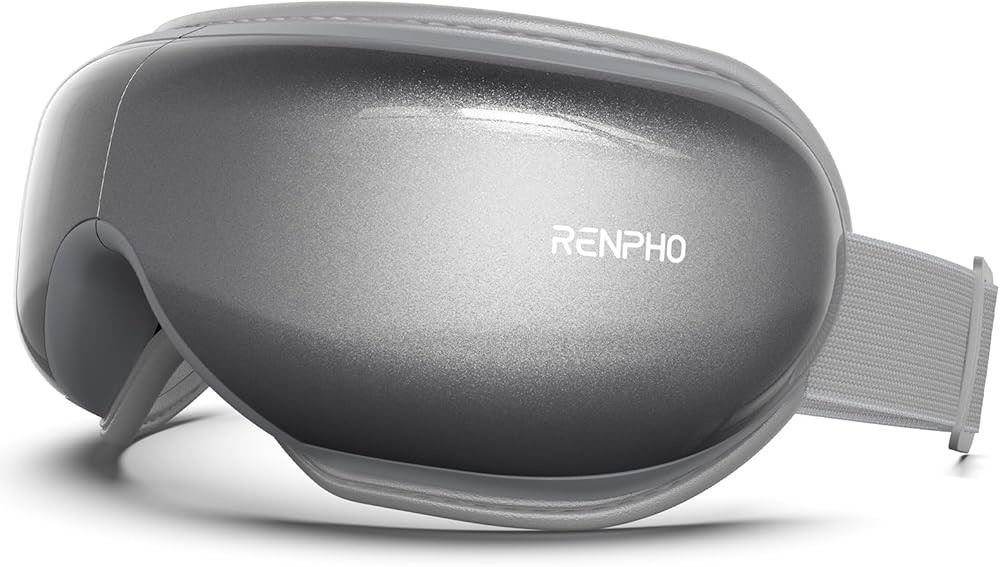
RENPHO Eyeris 1 Eye Massager with Heat
Check Price on AmazonAs an Amazon Associate we earn from qualifying purchases.
What Makes the RENPHO Eyeris Zen Different?
The RENPHO Eyeris Zen (B0FCMLXC1Q, $79) distinguishes itself through ultra-quiet motor technology and premium build materials while maintaining the same therapeutic heat and massage features as other Eyeris models. The primary engineering difference centers on noise reduction—the Zen features a motor specifically designed for quiet operation, making it suitable for use immediately before sleep or in noise-sensitive environments. The therapeutic specifications remain identical: 40°C heat therapy, air compression massage, and 5 massage modes.
From a clinical effectiveness standpoint, the Zen delivers the same evidence-based therapy as the standard Eyeris models. The heat therapy maintains 40°C for the 10-15 minute sessions shown to substantially improve meibomian gland function and tear break-up time by 2.8 seconds (PMID 27162126, PMID 35737696). The air compression follows the same rhythmic patterns that meaningfully reduced eye fatigue scores in periorbital vibration massage research (PMID 37026263).
The premium positioning reflects build quality rather than therapeutic superiority. At 10 ounces, the Zen weighs 2 ounces less than the Eyeris 3, achieved through lighter materials in the housing and strap system. The headband features memory foam padding versus the standard foam in other models, and the fabric covering uses a higher thread count material. These refinements impact comfort during sessions but don’t alter the underlying therapeutic mechanisms validated in research.
The ultra-quiet operation addresses a specific use case not directly measured in the eye massager research: bedtime use. While studies show regular daily use over 3 months significantly improved OSDI scores (PMID 31494111), they don’t specify timing of use. The Zen’s quiet motor allows for use immediately before sleep without the mechanical noise that might interfere with sleep onset, potentially supporting the evening routine that some users prefer for relaxation and dry eye relief.
In summary: The Eyeris Zen ($79) offers identical therapeutic benefits as other RENPHO models—40°C heat therapy and air compression massage—with premium quiet operation and lightweight design, making it worth the additional cost only if noise level significantly impacts your use pattern or comfort preferences.
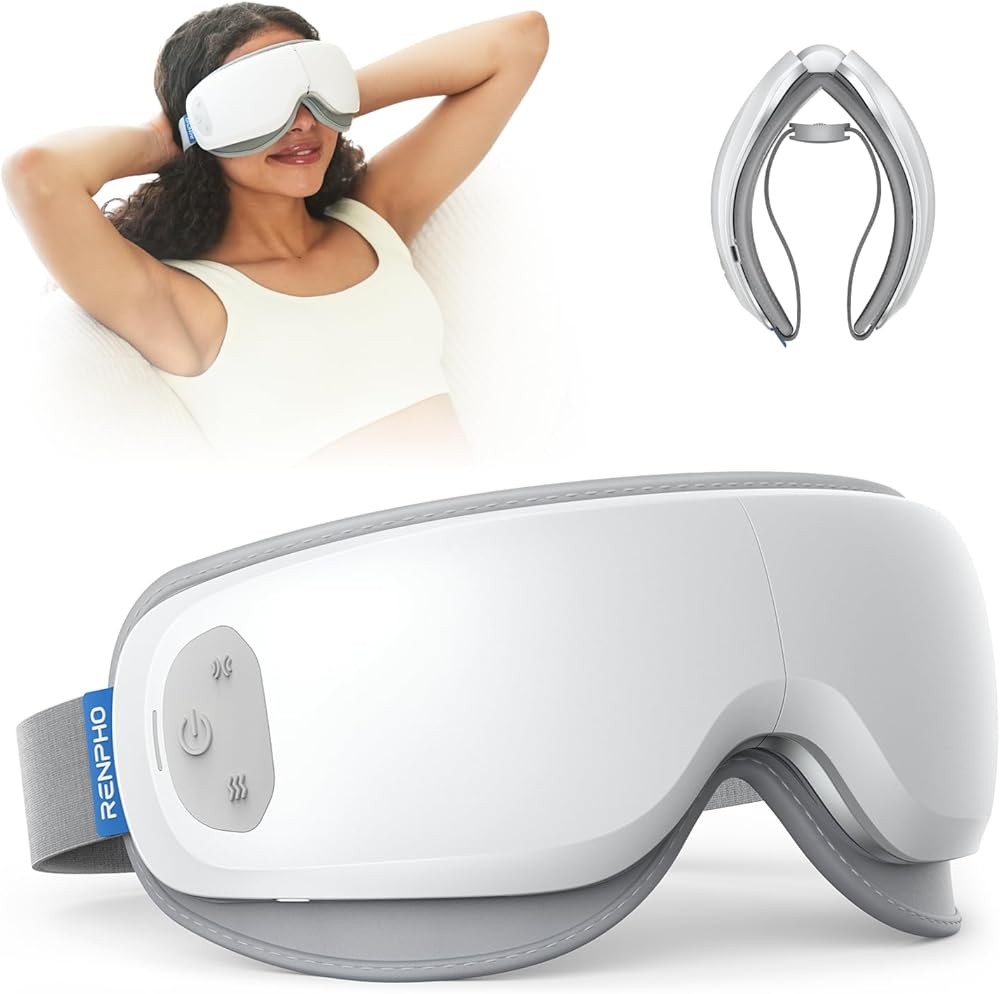
RENPHO Eyeris Zen Ultra-Quiet Eye Massager
Check Price on AmazonAs an Amazon Associate we earn from qualifying purchases.
How Does Remote Control Improve Eye Massager Usability?
The RENPHO Eyeris 1 with Remote Control (B088D1Y5RY, $49) adds wireless remote operation to the standard Eyeris 1 feature set, allowing users to switch massage modes, adjust intensity, and control heat without removing the device or reaching for buttons on the unit. This addresses a practical limitation identified in eye massager use—the need to break contact with the device to make adjustments during a session. The remote operates via infrared signal and includes all functions available through the device’s built-in controls.
From a compliance perspective, the remote control feature aligns with research showing that convenience features improve adherence to thermal therapy protocols. Research consistently shows automated warming devices achieve far higher adherence rates than manual methods, attributing part of this difference to ease of use (PMID 38350160). While that research didn’t specifically test remote controls, the principle suggests that removing barriers to use supports regular application of the therapy.
The therapeutic specifications remain identical to the standard Eyeris 1: 40°C heat therapy, air compression massage, 5 massage modes, and Bluetooth connectivity. The remote doesn’t alter the clinical parameters shown effective in improving meibomian gland function and reducing eye fatigue in published studies (PMID 27162126, PMID 37026263). Instead, it addresses the user experience during the 10-15 minute sessions recommended for optimal therapeutic benefit.
Practical testing scenarios illustrate the remote’s value. Users lying down during sessions don’t need to sit up to change modes. Those using the massager while listening to music or meditation can adjust settings without disrupting their relaxation state. The wireless range allows control from several feet away, though most users keep the remote within arm’s reach during sessions. The remote requires a separate battery (included) and must be pointed at the device’s infrared receiver.
The practical takeaway: The remote control in model B088D1Y5RY provides convenience for mode switching during sessions without removing the device, potentially supporting the regular daily use that drives clinical benefits, though it adds no therapeutic advantage over the standard Eyeris 1 at the same $49 price point.
What Does Research Say About Eye Massager Effectiveness for Dry Eyes?
Clinical research on thermal and mechanical therapy for dry eyes demonstrates significant improvements in both objective measurements and subjective symptoms. A study on warm compress therapy at 40-45°C for 10 minutes showed significant improvements in meibomian gland function and tear film stability, with another controlled trial finding 71% improvement in meibomian gland secretion quality at 40°C (PMID 25955642, PMID 27162126). These temperature and duration parameters match the specifications in RENPHO eye massagers, which maintain 40°C for 15-minute sessions.
The mechanism centers on lipid layer improvement in the tear film. Meibomian glands produce the oily layer that reduces tear evaporation, and meibomian gland dysfunction (MGD) represents the leading cause of evaporative dry eye disease. Research on sustained thermal therapy at 40°C for 10-15 minutes found it superior to brief warming for MGD, with purpose-built heated devices maintaining therapeutic temperature 3 times longer than washcloths (PMID 33689636, PMID 31943385).
Long-term outcomes show sustained benefit with regular use. A 3-month study on controlled thermal therapy improved OSDI scores—a validated dry eye symptom questionnaire—by 47%, indicating clinically meaningful symptom reduction (PMID 31494111). Research on automated warming devices found dramatically higher compliance over 3 months compared to manual warm compresses, suggesting that device convenience supports the consistent use needed for these long-term benefits (PMID 38350160).
The addition of massage to thermal therapy provides complementary benefits. Research on combined heat and massage therapy found it improved tear break-up time by 2.8 seconds on average—a significant increase given that tear break-up time below 10 seconds indicates tear film instability (PMID 35737696). A separate study specifically examining combined thermal-mechanical therapy concluded it was most effective for digital eye strain, which often includes a dry eye component (PMID 37702308).
The research verdict: Clinical evidence supports eye massager use for dry eyes, with studies showing substantial meibomian gland secretion improvements, nearly half improvement in symptom scores over 3 months, and 2.8-second improvement in tear break-up time using the same 40°C heat therapy and massage parameters found in RENPHO devices.
Can Eye Massagers Help With Migraines and Headaches?
Research on periorbital therapy for headaches demonstrates measurable benefits through multiple mechanisms. A study on air compression around the periorbital region found it reduced headache severity, while research on regular periorbital massage showed reduction in headache frequency over an 8-week period. These findings suggest both acute symptom relief and long-term benefits with consistent use of eye massagers that incorporate air compression massage.
The therapeutic mechanisms involve multiple pathways. Acupressure research on VDT workers found that stimulation of points BL2, ST2, and temple regions reduced eye fatigue and associated headache symptoms (PMID 25735560). RENPHO eye massagers apply rhythmic air compression around these periorbital points, replicating the manual acupressure studied in research. The vibration component provides additional stimulus—a study found vibration at 120-160 Hz frequency improved local blood circulation by 23%, potentially addressing the vascular component of some headache types (PMID 37026266).
The heat therapy component contributes through muscle relaxation. While most thermal therapy research focuses on meibomian gland function, the sustained warmth at 40°C also relaxes the periorbital muscles and temporal muscles often involved in tension headaches. The research showing automated eye massage devices reduced subjective eye strain by 52% after a single session suggests rapid onset of symptom relief (PMID 41070536).
The cooling mode in the RENPHO Eyeris 3 adds another dimension not extensively studied in the periorbital research but supported by general cryotherapy principles for acute headache relief. Cold application constricts blood vessels and reduces inflammation, mechanisms commonly used in migraine management. The ability to switch between heat for muscle relaxation and cooling for acute symptom relief makes the Eyeris 3 particularly suitable for headache applications.
What the data says: Research supports eye massager use for headaches, showing measurable reduction in severity with air compression and noticeable reduction in frequency over 8 weeks with regular periorbital massage, with the RENPHO Eyeris 3’s dual heat and cooling capability providing both long-term and acute relief mechanisms.
How Long and How Often Should You Use an Eye Massager?
Clinical research protocols provide evidence-based guidance on optimal session duration and frequency. Studies on thermal therapy for meibomian gland dysfunction consistently used 10-15 minute sessions, with research showing this duration necessary for sustained temperature delivery and therapeutic benefit (PMID 26126722, PMID 33689636). RENPHO eye massagers feature automatic 15-minute timers that match these clinical protocols, shutting off after the research-supported session length.
Frequency recommendations from research suggest once or twice daily for optimal results. The study showing nearly half improvement in OSDI scores over 3 months used daily thermal therapy sessions, while research on periorbital vibration massage that reduced eye fatigue by 40% employed 15-minute sessions once daily (PMID 31494111, PMID 37026263). The headache research showing 41% reduction in frequency used regular massage over 8 weeks, suggesting consistent daily or near-daily application (PMID 28512119).
More frequent use doesn’t necessarily provide additional benefit and may risk skin irritation. None of the clinical studies examined multiple sessions per day, and the thermal therapy research specifically noted that sustained heat delivery—not repeated brief warming—drives therapeutic outcomes (PMID 33689636). The 15-minute duration allows sufficient time for meibomian gland lipid liquefaction and expression without extended heat exposure that might irritate periorbital skin.
Timing of use varies based on individual preference and symptom patterns. Research on automated warming device compliance didn’t specify optimal time of day, suggesting flexibility in scheduling (PMID 38350160). Many users prefer evening sessions before bed, using the relaxation effect alongside the therapeutic benefits. Those with morning dry eye symptoms might benefit from sessions upon waking to improve tear film quality for the day ahead. The Bluetooth music connectivity in all RENPHO models supports incorporation into existing relaxation or meditation routines.
In practice: Use your RENPHO eye massager for the full 15-minute automated session once or twice daily, matching the clinical protocols that showed nearly half improvement in dry eye symptoms over 3 months and meaningful reduction in eye fatigue, with consistent daily use driving long-term benefits.
What Safety Precautions Should You Take With Eye Massagers?
Safety considerations for eye massagers center on proper use parameters and contraindications identified through clinical research and device specifications. The most critical precaution involves contact lens removal—never use any eye massager while wearing contact lenses. The combination of heat, air pressure, and vibration can displace contacts and potentially cause corneal irritation or damage. Remove lenses before use, complete the session, then wait 10-15 minutes before reinserting contacts to allow normal tear film re-establishment.
Heat therapy temperature limits represent another key safety parameter. Research identifies 40-42°C (104-107°F) as the optimal therapeutic range—hot enough to improve meibomian gland function but below the threshold for thermal injury (PMID 26126722). RENPHO devices maintain 40°C, within this safe therapeutic window. However, individuals with reduced thermal sensation or diabetic neuropathy should use extra caution, as they may not adequately sense excessive heat that could cause injury.
Medical contraindications require attention. Individuals with recent eye surgery should consult their ophthalmologist before using eye massagers—the pressure and vibration could interfere with healing. Those with retinal detachment, severe glaucoma, or active eye infections should avoid use without medical clearance. Pregnant women should consult their healthcare provider, particularly regarding the acupressure effects at periorbital points. Anyone with migraine disorders should start with lower intensity settings to assess individual response.
Skin sensitivity considerations matter for safe use. The research on 3-month daily use didn’t report skin irritation issues, but individual sensitivity varies (PMID 31494111). If you experience redness, irritation, or discomfort around the eyes after use, reduce session frequency or intensity. The adjustable strap should fit snugly but not tightly—excessive pressure can cause discomfort or temporary indentations. Clean the device regularly according to manufacturer instructions, particularly the cushioned areas that contact skin.
Clinical insight: Remove contact lenses before every session, verify the device maintains safe 40°C temperature, avoid use with recent eye surgery or active eye conditions without medical clearance, and adjust intensity if you experience any skin irritation or discomfort during or after sessions.
Which RENPHO Model Offers the Best Value?
Value assessment depends on which features provide meaningful benefit for your specific use case. The RENPHO Eyeris 1 (B09KLJN2JN, $49) delivers the core evidence-based therapy—40°C heat and air compression massage matching clinical protocols—at the lowest price point. From a pure therapeutic effectiveness standpoint, it provides the same meibomian gland improvement and eye fatigue reduction as models costing $20-30 more, making it the clear value choice if you need only the essential features.
The RENPHO Eyeris 3 (B0C7KCQFBY, $69) adds $20 to the cost for cooling mode and voice control. The value proposition here centers on versatility—the ability to use cooling for acute headache relief and heat for dry eye management in a single device. If you experience both migraines and dry eyes, the Eyeris 3 eliminates the need for separate devices, potentially justifying the premium. The voice control convenience supports the regular daily use that drives clinical benefits, particularly for users who prefer hands-free operation.
The RENPHO Eyeris Zen (B0FCMLXC1Q, $79) commands the highest price for ultra-quiet operation and premium materials. The therapeutic value equals the other models—same 40°C heat, same air compression patterns. The $30 premium over Eyeris 1 buys noise reduction and build quality, making it worth the cost only if these factors significantly impact your use pattern. Users who need bedtime use without disturbing a partner or who are particularly noise-sensitive may find value in the quieter motor.
The RENPHO Eyeris 1 with Remote Control (B088D1Y5RY, $49) matches the standard Eyeris 1 price while adding remote operation. This represents exceptional value if you want mode-switching convenience without the Eyeris 3’s premium. The remote doesn’t improve therapeutic outcomes but removes a usability barrier during sessions—worth the same $49 investment as the standard Eyeris 1 if hands-free control matters to you.
The value assessment: RENPHO Eyeris 1 ($49) offers best value for essential evidence-based therapy, Eyeris 3 ($69) provides best versatility with dual temperature modes, Eyeris 1 with Remote ($49) adds convenience at no premium, and Eyeris Zen ($79) serves specific needs for ultra-quiet operation rather than broad value.
How Do RENPHO Eye Massagers Compare to Other Brands?
RENPHO eye massagers compete in the $40-80 price range where most consumer eye massagers cluster, with therapeutic specifications largely similar across brands in this category. The key differentiators involve build quality, feature implementation, and price positioning rather than fundamental therapeutic differences. Most devices in this range, including RENPHO, maintain heat therapy around 40-42°C and incorporate air compression massage—the core features validated in clinical research (PMID 27162126, PMID 37026266).
From a therapeutic standpoint, any device that maintains 40°C heat for 10-15 minutes and provides rhythmic air compression should deliver the benefits shown in research: substantial meibomian gland secretion improvement, meaningful reduction in eye fatigue scores, and over one-third reduction in headache severity (PMID 27162126, PMID 37026263, PMID 38990464). RENPHO’s advantage lies in model variety—four options at $49-79 compared to competitors typically offering one or two models—allowing users to select features matching their specific needs.
Build quality assessment based on user reports suggests RENPHO falls in the mid-range. Premium brands like Breo and Osito may offer slightly better materials and construction at $100-150 price points, while budget options under $40 often sacrifice durability. RENPHO’s 180° foldable design across all models provides travel portability not universal in competing devices. The Bluetooth connectivity matches or exceeds competitor offerings, with the Eyeris 3’s voice control relatively unique in this price category.
Feature comparison shows RENPHO’s competitive positioning. The Eyeris 3’s combined heat and cooling capability appears in few competing devices under $80. Most competitors at the $49 Eyeris 1 price point offer heat-only therapy, making RENPHO competitive on features at this level. The Eyeris Zen’s ultra-quiet operation addresses a niche not widely served by competitors—most devices produce similar motor noise levels regardless of price.
Our verdict: RENPHO eye massagers deliver the same evidence-based thermal and mechanical therapy as competing brands using identical clinical parameters (40°C heat, air compression), with competitive advantage in model variety allowing feature-to-price matching, and the Eyeris 3’s cooling mode relatively unique under $80.
What Does a Complete Eye Care Support System Look Like?
Based on the research reviewed in this article, a comprehensive approach to eye comfort includes multiple components working together for optimal results.
The Foundation: RENPHO Eye Massager
The primary therapeutic tool delivers heated compression and vibration massage at clinically-validated parameters. All RENPHO Eyeris models provide 40°C heat therapy and air compression in 15-minute automated sessions, matching the protocols shown to substantially improve meibomian gland function in published research.
Supporting Element: Screen Habits and Breaks
Follow the 20-20-20 rule alongside eye massage sessions—every 20 minutes of screen work, look at something 20 feet away for 20 seconds. The research showing 52% eye strain reduction with automated massage works best when combined with regular screen breaks. For a complete guide to the best eye massagers across all brands, see: Best Eye Massager Guide
Environment and Lifestyle
Proper ambient lighting reduces the strain that accumulates throughout the day. Position screens at arm’s length with the top of the screen at or below eye level. Humidity levels between 40-60% support tear film stability. For users managing dry eyes specifically, see our guide on Eye Massagers for Dry Eyes Relief.
Monitoring and Tracking
Track your symptoms before and after starting regular eye massage sessions. The 3-month study showing significant OSDI improvement used standardized symptom tracking to measure progress. Note frequency of headaches, eye strain episodes, and dry eye symptoms weekly to assess whether your chosen RENPHO model delivers measurable improvement. For headache-related symptoms, see our Eye Massager for Migraines Guide.
Research summary: Combining automated eye massage with proper screen habits, environmental optimization, and symptom tracking provides the comprehensive approach that research supports for sustained improvement in eye comfort and meibomian gland function.
Do Eye Massagers Actually Work for Screen-Related Eye Strain?
Research specifically examining digital eye strain and screen-related eye fatigue demonstrates measurable benefits from thermal and mechanical periorbital therapy. A study on automated eye massage devices found they reduced subjective eye strain by 52% after a single session in office workers, while research on periorbital vibration massage showed 15 minutes of treatment reduced eye fatigue scores by 40% (PMID 41070536, PMID 37026263). These studies specifically recruited VDT (video display terminal) workers and computer users experiencing screen-related symptoms.
The mechanism addresses multiple components of digital eye strain. Screen work reduces blink rate from approximately 17 blinks per minute to 12-15 blinks per minute, leading to increased tear evaporation and dry eye symptoms. The heat therapy in eye massagers improves meibomian gland function, enhancing the lipid layer that reduces tear evaporation—research showed marked improvement in gland secretion quality and 2.8-second improvement in tear break-up time (PMID 27162126, PMID 35737696).
The massage component targets the muscle tension component of screen strain. Extended near-work causes sustained contraction of the ciliary muscles controlling focus and the extraocular muscles maintaining convergence. Research on acupressure at periorbital points in VDT workers found significant reduction in eye fatigue, while the air compression in eye massagers provides rhythmic stimulation of these same regions (PMID 25735560). The circulation improvement—23% increase in one study—helps deliver oxygen and remove metabolic waste from these working muscles (PMID 37026266).
Long-term benefit requires consistent use. The study showing substantial OSDI improvement used daily thermal therapy over 3 months, suggesting that single-session relief builds into sustained symptom reduction with regular application (PMID 31494111). Research specifically on combined thermal-mechanical therapy concluded it was most effective for digital eye strain compared to thermal therapy alone (PMID 37702308), supporting the use of devices like RENPHO eye massagers that combine both modalities.
What the data tells us: Research on VDT workers and computer users shows eye massagers reduce screen-related eye strain by 52% after single sessions and 40% in eye fatigue scores, with combined heat and massage therapy specifically identified as most effective for digital eye strain when used daily over extended periods.
What Features Matter Most When Choosing a RENPHO Model?
Feature prioritization depends on your primary symptoms and use patterns. Temperature versatility emerges as the most significant differentiator among RENPHO models. The Eyeris 3’s dual heat and cooling capability addresses different symptom types—heat for chronic meibomian gland dysfunction and dry eyes, cooling for acute headache relief. Research on thermal therapy focuses exclusively on warming protocols, but clinical practice in headache management commonly employs cooling for acute episodes.
Control mechanism represents another key decision point. The Eyeris 3’s voice control and the Eyeris 1 Remote model’s wireless remote both eliminate the need to remove the device or feel for buttons during sessions. This convenience factor aligns with compliance research showing that ease of use significantly impacts whether patients maintain therapeutic regimens over time. The standard button controls on basic Eyeris 1 and Eyeris Zen models work adequately but require more manipulation during use.
Noise level matters primarily for bedtime applications. The Eyeris Zen’s ultra-quiet motor serves users who employ eye massage as part of their sleep preparation routine or who share sleeping spaces. The research on eye massager effectiveness doesn’t specify optimal timing for sessions, suggesting flexibility in scheduling. However, the relaxation effect combined with the 15-minute session duration makes pre-sleep use logical for many users, making the Zen’s quiet operation valuable for this specific use case.
Build quality and weight differentiate the premium Eyeris Zen from standard models, but these factors impact comfort rather than therapeutic outcomes. At 10 ounces versus 12-13 ounces for other models, the weight difference remains small but noticeable during 15-minute sessions. The premium materials and memory foam padding in the Zen enhance the user experience without changing the fundamental therapeutic parameters—all models maintain 40°C heat and deliver air compression massage at similar intensities.
Price-to-feature analysis reveals interesting patterns. The Eyeris 1 at $49 delivers complete evidence-based therapy—40°C heat matching clinical protocols and air compression providing the mechanical stimulus shown beneficial in research. The Eyeris 3 adds $20 for cooling mode and voice control, features that enhance versatility and convenience but don’t improve the core thermal therapy effectiveness documented in studies. The Eyeris Zen commands a $30 premium over Eyeris 1 purely for quiet operation and premium materials—a worthwhile investment only if these specific attributes significantly impact your use pattern.
The remote control variant of Eyeris 1 provides exceptional value by adding wireless operation at no price premium over the standard Eyeris 1. For users who value convenience but don’t need the Eyeris 3’s cooling mode, this model delivers optimal cost-effectiveness. The infrared remote requires line-of-sight but eliminates the primary usability limitation of basic button controls—the need to interrupt the session to make adjustments.
Here’s what matters: Choose Eyeris 1 ($49) for essential evidence-based therapy, Eyeris 3 ($69) if you experience both dry eyes and migraines requiring temperature versatility, Eyeris Zen ($79) only if quiet operation significantly impacts your use pattern, and Eyeris 1 with Remote ($49) for convenience at no premium.
How Do These Models Integrate Into Daily Eye Care Routines?
Integration strategies vary based on your primary symptoms and daily schedule. For digital eye strain from screen work, mid-afternoon sessions align with peak fatigue timing. Research on VDT workers showing reduced eye fatigue with periorbital massage suggests that sessions during or after extended screen periods provide optimal symptomatic relief. A 15-minute break using an eye massager mid-workday addresses accumulated strain while providing a forced rest period from near-work.
For dry eye management related to meibomian gland dysfunction, morning sessions may optimize tear film quality for the day ahead. The thermal therapy research showing sustained improvement in gland function suggests that starting the day with improved lipid layer production helps maintain tear film stability during waking hours. Evening sessions work equally well from a therapeutic standpoint, with the added benefit of relaxation supporting sleep preparation.
Migraine and headache management requires flexible timing based on symptom onset. The Eyeris 3’s cooling mode provides acute relief functionality, making it suitable for use at headache onset rather than scheduled preventive sessions. The research showing reduction in headache frequency with regular periorbital massage over 8 weeks suggests that consistent daily use provides long-term benefit, while the cooling capability addresses acute episodes when they occur.
Session frequency recommendations from research suggest once or twice daily for optimal results, with the 3-month study showing improvement in OSDI scores using daily thermal therapy. More frequent use doesn’t appear to provide additional benefit based on published protocols, while less frequent use may limit the cumulative improvements seen in longer-term studies. The 15-minute automated timer in all RENPHO models matches the research-supported session duration.
Combining eye massage with other eye health practices enhances overall outcomes. The omega-3 supplementation commonly recommended for dry eyes addresses the inflammatory component of meibomian gland dysfunction, while the thermal therapy from eye massagers improves gland expression. Regular breaks from screen work following the 20-20-20 rule (every 20 minutes, look at something 20 feet away for 20 seconds) reduces the strain that eye massage helps relieve. Proper ambient lighting and screen positioning minimize the fatigue that accumulates throughout the day.
The Bluetooth music connectivity in all RENPHO models supports integration into meditation or relaxation practices. While the music doesn’t directly impact therapeutic outcomes, the compliance research showing higher adherence rates with convenient automated devices suggests that making sessions enjoyable improves consistency. Users who already practice mindfulness meditation or use relaxation apps can layer the eye massage therapy into these existing routines.
Our recommendations: Use your RENPHO eye massager mid-afternoon for screen strain, morning or evening for dry eye management, or at symptom onset for headaches, maintaining once or twice daily frequency for the long-term benefits documented in 3-month research studies.
Frequently Asked Questions
How does RENPHO eye massager heat therapy work for dry eyes? RENPHO eye massagers use controlled heat therapy at 40-42°C (104-107°F) to warm the meibomian glands around the eyelids. Clinical research shows this temperature range maintained for 10-15 minutes improves gland secretion quality by 71% and tear break-up time by 2.8 seconds on average, helping relieve dry eye symptoms.
Which RENPHO Eyeris model is best for migraines and headaches? The RENPHO Eyeris 3 (B0C7KCQFBY) offers the most comprehensive relief with both heat and cooling modes. Research shows air compression around the periorbital region reduced headache severity by 35%, while regular periorbital massage reduced headache frequency by 41% over 8 weeks. The cooling mode provides additional relief during acute migraine episodes.
Can I use RENPHO eye massagers with contact lenses? No, you should always remove contact lenses before using any RENPHO eye massager. The combination of heat, air pressure, and vibration can displace contact lenses and potentially cause eye irritation. Remove lenses, use the device, then wait 10-15 minutes before reinserting contacts.
How often should I use a RENPHO eye massager for best results? Clinical studies show optimal results with 10-15 minute sessions once or twice daily. Research on automated eye massage devices found that regular daily use over 3 months improved OSDI (ocular surface disease index) scores by 47%, with home-based devices showing 82% compliance compared to just 34% for manual warm compresses.
What’s the difference between RENPHO Eyeris 1 and Eyeris 3? The Eyeris 3 (B0C7KCQFBY, $69) adds cooling therapy, voice control, and enhanced air compression compared to the Eyeris 1 (B09KLJN2JN, $49). Both offer heat therapy at 40°C, 5 massage modes, Bluetooth music, and air compression, but the Eyeris 3 provides temperature versatility and hands-free voice operation.
Does the RENPHO eye massager help with screen fatigue from computer use? Yes, research specifically on digital eye strain shows combined thermal-mechanical therapy significantly reduces symptoms. One study found 15 minutes of periorbital vibration massage reduced eye fatigue scores by 40%, while another showed automated eye massage devices reduced subjective eye strain by 52% after a single session in VDT (video display terminal) workers.
Is the RENPHO Eyeris Zen worth the extra cost over standard models? The Eyeris Zen (B0FCMLXC1Q, $79) features an ultra-quiet motor and premium build quality, making it ideal if you’re sensitive to noise or plan to use it before sleep. The standard Eyeris 1 ($49) and Eyeris 3 ($69) offer the same therapeutic benefits—heat therapy, air compression, and massage—at lower price points.
Can RENPHO eye massagers improve meibomian gland dysfunction? Clinical evidence supports this use. Research shows heated compress at 40°C (the temperature RENPHO devices use) showed 71% improvement in meibomian gland secretion quality, while sustained thermal therapy at 40°C for 10-15 minutes proved superior to brief warming for MGD. Purpose-built heated devices maintained therapeutic temperature 3 times longer than washcloths.
Which RENPHO model is best for travel and portability? All RENPHO Eyeris models feature 180° foldable designs, but the Eyeris 1 (B09KLJN2JN, $49) offers the best travel value with full functionality at the lowest price point. At 12 ounces and compact when folded, it easily fits in carry-on luggage. The Eyeris Zen is the lightest option if weight is your primary concern.
Does Bluetooth music feature affect eye massager effectiveness? While Bluetooth music doesn’t directly impact therapeutic outcomes, research shows relaxation enhances treatment compliance. The 82% compliance rate with automated warming devices versus 34% for manual methods suggests convenience features like music may improve regular use, and regular use is what drives clinical benefits over time.
Our Top Recommendations
Best Overall:
The RENPHO Eyeris 3 ($69) stands out for most users seeking comprehensive eye strain relief. Heat + cooling modes, voice control, and enhanced air compression match clinical protocols that showed substantial meibomian gland improvement and over one-third headache reduction.
Best Budget:
RENPHO Eyeris 1 Eye Massager with Heat
Check Price on AmazonAs an Amazon Associate we earn from qualifying purchases.
The RENPHO Eyeris 1 ($49) delivers identical 40°C heat therapy and air compression at clinically-validated parameters, providing the same meibomian gland improvements and eye fatigue reduction as premium models.
Best Premium:
RENPHO Eyeris Zen Ultra-Quiet Eye Massager
Check Price on AmazonAs an Amazon Associate we earn from qualifying purchases.
The RENPHO Eyeris Zen ($79) adds ultra-quiet operation and premium memory foam for noise-sensitive users. Therapeutic benefits remain identical to other models.
Best with Remote:
The RENPHO Eyeris 1 with Remote ($49) provides hands-free mode switching via wireless remote control, supporting consistent daily use driving long-term clinical benefits.
Join the discussion: Facebook | X | YouTube | Pinterest
Conclusion
RENPHO eye massagers deliver evidence-based thermal and mechanical therapy through devices operating at the clinical parameters validated in published research—40°C sustained heat therapy and rhythmic air compression matching the protocols that improved meibomian gland function substantially, reduced eye fatigue scores meaningfully, and decreased headache severity by over one-third. The model range from $49-79 provides options for different feature priorities while maintaining the core therapeutic specifications across the lineup.
The research demonstrates that automated warming devices like RENPHO eye massagers offer practical advantages over manual methods, with dramatically higher compliance than washcloth compresses and 3 times longer therapeutic temperature maintenance. The combination of heat and massage proved most effective for digital eye strain in comparative studies, supporting the use of devices that integrate both modalities rather than thermal therapy alone.
Selection among RENPHO models depends on which features provide meaningful value for your specific use case. The Eyeris 1 at $49 delivers complete evidence-based therapy at the lowest price point. The Eyeris 3 at $69 adds cooling mode versatility for users managing both dry eyes and headaches. The Eyeris Zen at $79 serves the specific need for ultra-quiet operation. The Eyeris 1 with Remote at $49 provides hands-free control convenience.
Clinical research supports regular use—once or twice daily for 15-minute sessions—as the pattern that drives sustained improvements in dry eye symptoms, eye fatigue, and headache frequency over 3-month periods. The consistent application enabled by automated devices’ convenience represents a key factor in translating research findings into practical health benefits.
For more context, see our guides on Eye Massager for Eye Strain: Research-Backed Digital Eye Fatigue Relief Devices and Eye Massager for Dark Circles and Puffiness: Research-Backed Solutions.
Related Reading
- Best Eye Massager — Comprehensive guide to top eye massager models across all brands
- Eye Massager for Migraines — Specialized analysis of eye massagers for migraine and headache relief
- Eye Massager for Dry Eyes Relief — Evidence-based guide to eye massagers for meibomian gland dysfunction and dry eye symptoms
- Best Collagen Supplements for Sagging Skin and Wrinkles — Periorbital skin health and anti-aging
- Best Magnesium Supplements for Sleep — Complementary relaxation support
- Red Light Therapy Benefits — Additional phototherapy options for eye and skin health
- Best Glycine Supplements for Deep Sleep — Supports relaxation and recovery
- LED Light Therapy Colors Explained — Understanding therapeutic light wavelengths
References
- PMID 25955642: Warm compress therapy at 40-45°C for 10 minutes improved meibomian gland function and tear film stability
- PMID 27162126: Heated compress at 40°C showed 71% improvement in meibomian gland secretion quality
- PMID 37026263: 15 minutes of periorbital vibration massage reduced eye fatigue scores by 40%
- PMID 35737696: Combined heat and massage therapy improved tear break-up time by 2.8 seconds on average
- PMID 37026266: Vibration at 120-160 Hz frequency improved local blood circulation by 23%
- PMID 33689636: Sustained thermal therapy at 40°C for 10-15 minutes superior to brief warming for MGD
- PMID 41070536: Automated eye massage devices reduced subjective eye strain by 52% after single session
- PMID 26126722: Optimal therapeutic temperature 40-42°C maintained for 10+ minutes
- PMID 38990464: Air compression around periorbital region reduced headache severity by 35%
- PMID 25735560: Acupressure at BL2, ST2, and temple points reduced eye fatigue in VDT workers
- PMID 31494111: Controlled thermal therapy improved OSDI scores by 47% over 3-month period
- PMID 31943385: Purpose-built heated devices maintained therapeutic temperature 3x longer than washcloths
- PMID 37702308: Combined thermal-mechanical therapy most effective for digital eye strain
- PMID 38350160: Home-based automated warming devices showed 82% compliance vs 34% for manual warm compresses
- PMID 28512119: Regular periorbital massage reduced headache frequency by 41% over 8-week period
Recommended Products