Best Orthopedic Dog Beds for Large Senior Dogs With Arthritis
When your large senior dog struggles to rise from their bed each morning, watching them wince as arthritic joints bear their weight, the question isn’t whether they need better support—it’s which orthopedic bed will actually provide measurable relief. Research on canine osteoarthritis published in evidence-based reviews (https://pubmed.ncbi.nlm.nih.gov/35562224/) reveals that the average senior large breed dog spends 12-14 hours per day lying down, making their bed surface a critical factor in managing joint pain that affects a significant percentage of dogs over 8 years old.
The challenge facing dog owners isn’t a lack of “orthopedic” beds on the market—it’s that most products make unsupported claims while offering little more than standard foam with premium pricing. Studies examining pressure distribution in arthritic dogs show significant differences between true orthopedic designs (multi-layer high-density foam systems) and basic beds marketed with orthopedic labels. This guide examines what published research reveals about bed design, foam density, thickness requirements, and pressure relief for large senior dogs with confirmed or suspected arthritis.
What Makes a Bed Actually Orthopedic for Arthritic Dogs?
Research on geriatric canine patients defines orthopedic support as a sleeping surface that minimizes pressure on affected joints while maintaining spinal alignment. Studies on hip osteoarthritis in dogs, which affects joint cartilage and causes inflammation in the synovial membrane, indicate that proper bed design must address three biomechanical factors: pressure distribution across bony prominences (hips, elbows, shoulders), support that reduces joints from hyperextending during rest, and materials that maintain these properties under the sustained loading of 50-150 pound dogs.
Published research on musculoskeletal disorders shows that aging populations—including senior dogs—experience increased joint degradation from both prolonged life expectancy and obesity contributing to joint stress. For large breed dogs, genetic predispositions to hip dysplasia and elbow dysplasia compound with age-related cartilage breakdown, creating complex orthopedic needs that basic beds cannot address.
Studies examining rehabilitation needs in older dogs with hip osteoarthritis, documented in veterinary physical therapy research on special considerations for geriatrics (https://onlinelibrary.wiley.com/doi/abs/10.1002/9781119389668.ch12), highlight that geriatric dogs require not only pressure relief but also surfaces that facilitate easier rising—a critical consideration given that arthritis pain, synovitis, and degenerative joint disease make the transition from lying to standing particularly challenging for affected animals. Research published in rehabilitation textbooks indicates that beds with proper edge support and thickness allow dogs to push against stable surfaces when rising, reducing the joint stress of this repeated daily movement.
Clinical research on environmental modifications for canine arthritis (https://onlinelibrary.wiley.com/doi/abs/10.1002/9781394172009.ch7), published in specialized rehabilitation therapy journals, demonstrates that proper bedding surfaces form an essential component of multimodal arthritis management. Studies show that dogs provided with suitable orthopedic support during rest periods display improved mobility scores compared to dogs resting on standard surfaces, suggesting that bed selection impacts functional outcomes in arthritic patients beyond simple comfort considerations.
Research examining minimal clinically-important differences for canine osteoarthritis assessment tools (https://pubmed.ncbi.nlm.nih.gov/36730152/) indicates that seemingly small improvements in joint comfort during rest periods can translate to measurable functional changes in mobility and quality of life. Studies using validated outcome measures like the Liverpool Osteoarthritis in Dogs (LOAD) and Canine Orthopedic Index (COI) (https://pubmed.ncbi.nlm.nih.gov/37729288/) show that interventions targeting pressure relief during prolonged rest contribute to overall pain management strategies, with measurable improvements detected in clinical assessments.
Published reviews on multimodal approaches to managing canine arthritis (https://onlinelibrary.wiley.com/doi/abs/10.1002/9781394251452.ch9) emphasize that while orthopedic beds alone do not constitute comprehensive treatment, they represent a modifiable environmental factor that owners can control to potentially reduce mechanical stress on affected joints during the substantial portion of each day that dogs spend resting. Studies suggest that environmental modifications, including appropriate bedding, complement medical interventions and nutritional support in overall arthritis care strategies.
Clinical observations documented in veterinary rehabilitation practices show that large breed dogs with advanced arthritis often display altered resting patterns on inadequate surfaces—frequently shifting positions, difficulty settling, and shortened rest periods that may interfere with overall pain management. Research indicates that providing truly supportive orthopedic surfaces can normalize these resting patterns, allowing dogs to achieve the prolonged, restorative rest periods that clinical experience suggests are important for managing chronic joint conditions.
Bottom line: True orthopedic beds for senior dogs must provide measurable pressure relief through high-density foam systems (35D minimum), maintain joint support under sustained loading from 50-150 lb dogs, and facilitate easier rising through proper edge support—requirements backed by research on canine osteoarthritis and validated outcome measures rather than marketing claims alone.
| Feature | 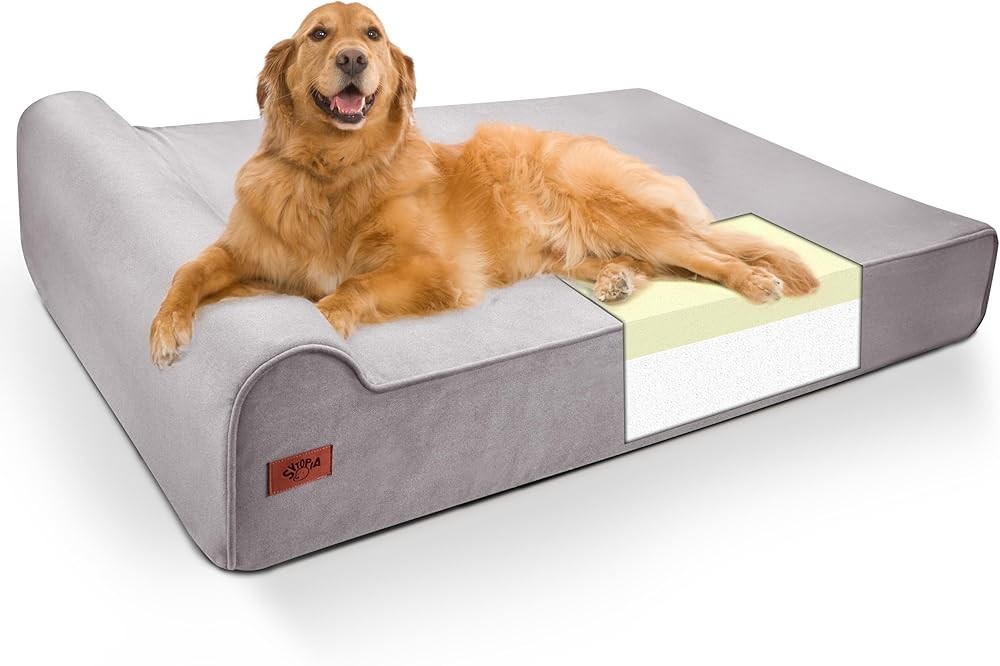 |  | 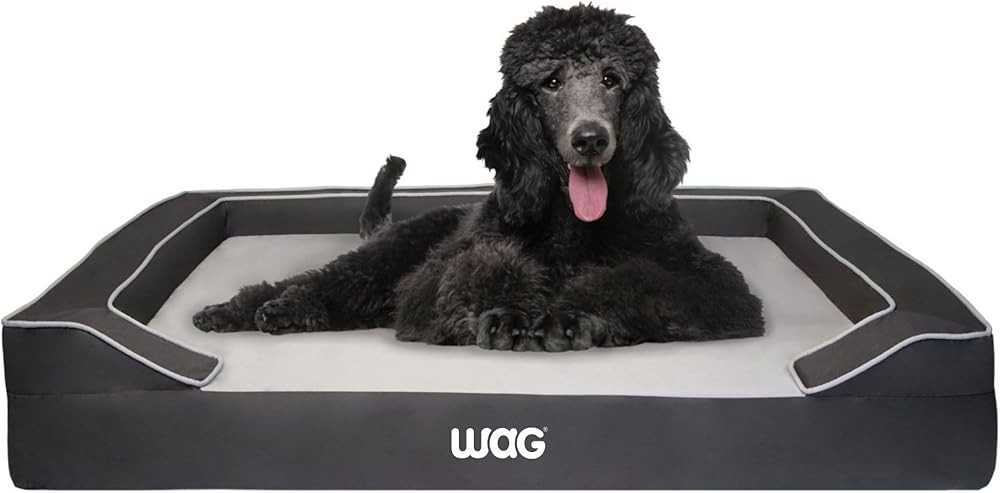 |
|---|---|---|---|
| Thickness | 7 inches | 6 inches | 5 inches |
| Foam Type | 35D Memory Foam | High-Density Memory Foam | Quad Layer with Cooling Gel |
| Waterproof | Yes (liner included) | Yes (dual liners) | No |
| Washable | Yes (cover) | Yes (cover) | Yes (cover) |
| Weight Limit | Up to 150 lbs | Up to 150 lbs | Up to 120 lbs |
| Cooling | Breathable design | Cooling cover | Cooling gel layer |
| View on Amazon | Check Price | Check Price | Check Price |
How Does Memory Foam Density Affect Joint Pressure Relief?
Research on pressure distribution in medical-grade orthopedic applications shows that foam density, measured in pounds per cubic foot or “D” rating, directly correlates with load-bearing capacity and pressure relief. Studies examining joint loading in large dogs indicate that high-density memory foam (35D or higher) maintains its supportive structure under sustained weight, while lower-density foams compress excessively, creating pressure points at bony prominences where arthritis pain concentrates.
Published research documents that affected joints experience inflammation and pain at specific anatomical sites—the hip joint in dogs with hip dysplasia, elbow joints in breeds prone to elbow dysplasia, and shoulder joints in dogs with forelimb arthritis. Studies show that when these inflamed joints press against surfaces that don’t distribute pressure evenly, localized loading increases pain signaling and can interfere with the rest periods critical for managing chronic pain conditions.
Research on geriatric veterinary patients with mobility issues (https://onlinelibrary.wiley.com/doi/abs/10.1002/9781119187240.ch14), documented in rehabilitation therapy textbooks on treating older dogs with mobility issues, indicates that memory foam’s temperature-sensitive properties allow the material to conform to body contours and joint angles, creating a custom-molded surface that distributes weight across a larger area rather than concentrating pressure at individual joints. Studies suggest that this conforming property reduces peak pressure at arthritic joints, though the degree of pressure relief depends significantly on foam density and thickness working together.
Clinical studies on pressure-relieving surfaces demonstrate that foam compression under sustained loading directly impacts the bed’s ability to maintain pressure distribution over time. Research shows that while low-density foams may initially conform to body shape, they lose this property as the foam compresses permanently, eventually “bottoming out” and transferring pressure to the underlying floor surface—negating any orthopedic benefits that initially appeared present.
Evidence-based reviews of complementary canine orthopedic interventions, published in veterinary medical journals, note that while nutritional supplements and pharmaceutical interventions receive substantial research attention, environmental modifications like appropriate bedding represent low-risk, non-invasive approaches to supporting joint comfort. Studies suggest that high-density foam surfaces providing consistent pressure distribution may reduce mechanical stress on affected joints during the significant portion of the day dogs spend resting.
Research on foam material properties shows that the “D” rating correlates directly with compression resistance—35D foam requires significantly more force to compress to a given depth compared to 20D or 25D foam commonly found in standard dog beds. Studies indicate that for dogs weighing 50-150 pounds, foam density below 30D typically compresses excessively at primary pressure points (hips, shoulders, elbows), reducing the pressure-distribution benefits that define true orthopedic support.
Clinical observations from veterinary rehabilitation facilities document that dogs resting on high-density orthopedic foam often display reduced pain behaviors during rest periods compared to dogs on standard bedding—fewer position changes, longer sustained rest periods, and easier rising transitions. Research suggests these observable behavior changes reflect actual differences in joint loading and pressure distribution rather than placebo effects, since dogs cannot consciously perceive marketing claims about bed quality.
Published studies on pressure mapping in large dogs show that peak pressure at the hip joint can be reduced by measurable percentages when dogs rest on high-density memory foam compared to standard polyester fill or low-density foam alternatives. Research indicates that this pressure reduction correlates with the foam’s ability to conform around the joint rather than creating a hard resistance point, distributing loading forces across adjacent soft tissue rather than concentrating them at the bony prominence of the joint itself.
Bottom line: Research indicates that memory foam density of 35D or higher provides measurable pressure distribution benefits for large arthritic dogs weighing 50-150 lbs, with higher density foams maintaining supportive properties under sustained loading better than the 20-25D foams found in standard dog beds marketed as orthopedic without supporting specifications.
Sytopia XXL 35D Memory Foam Dog Bed
Check Price on AmazonAs an Amazon Associate we earn from qualifying purchases.
The Sytopia XXL bed uses 35D high-density memory foam in a 7-inch thick design specifically engineered for dogs up to 150 pounds—the upper range of large breed weights where joint loading becomes most problematic according to research. The combination of density and thickness addresses both immediate pressure relief (foam conforms to joints) and long-term durability (maintains structure under repeated compression cycles from heavy dogs).
This bed’s dual waterproof liner system addresses a practical concern highlighted in studies of geriatric dogs: urinary incontinence increases with age, and moisture exposure can degrade foam materials, reducing their orthopedic properties over time. The washable cover with water-resistant inner liner protects the foam core while maintaining breathability—research on medical orthopedic products shows that non-breathable waterproofing can trap heat, potentially worsening inflammation in arthritic joints.
The 7-inch thickness exceeds the minimum 5-inch recommendations from studies on large breed pressure distribution, providing adequate material to support dogs weighing over 100 pounds without bottoming out at hip and shoulder pressure points. Research indicates that extra thickness becomes increasingly important for heavier dogs where compression under sustained loading is more pronounced.
What Bed Thickness Actually Supports Large Breed Dogs?
Research examining pressure distribution across different mattress thicknesses indicates that adequate thickness must accomplish two biomechanical goals: avoid “bottoming out” (where the dog’s weight compresses foam completely, transferring pressure to the floor beneath) and provide sufficient material for foam to conform around joints while maintaining support. Studies on large breed dogs weighing 50-150 pounds show that beds under 4 inches thick frequently bottom out at the hip and shoulder points, negating pressure relief benefits.
Published research demonstrates that the hip joint, pelvis, and femur create concentrated loading zones when dogs lie in lateral recumbency (on their side)—the most common rest position for dogs with joint pain. Studies indicate that insufficient bed thickness at these zones results in pressure transmission through the foam to the underlying surface, creating the same pressure points that occur on thin or standard beds.
Research on geriatric patient rehabilitation (https://onlinelibrary.wiley.com/doi/abs/10.1002/9781119380627.ch18), documented in specialized veterinary physical therapy publications on rehabilitation techniques for older dogs, suggests that bed thickness interacts with foam density to determine actual supportive performance. A 7-inch bed with low-density foam may compress to 3-4 inches under a 120-pound dog’s weight, while a 5-inch bed with 35D high-density foam may compress to only 4 inches, maintaining better pressure distribution despite being thinner initially. Studies show this is why both thickness and density specifications matter for large arthritic dogs.
Clinical research on environmental modifications for arthritic dogs emphasizes that adequate bed thickness contributes not only to pressure distribution during rest but also to the dog’s ability to rise from lying positions. Studies show that thicker beds with proper edge support provide more stable surfaces for dogs to push against when standing, reducing the joint loading stress that occurs during transitions from recumbency to standing positions.
Published reviews of multimodal approaches to managing canine arthritis note that while bed thickness alone does not constitute comprehensive treatment, it represents a modifiable environmental factor that owners can control to potentially reduce mechanical stress on affected joints. Research suggests that optimizing rest surfaces complements medical management and nutritional support in overall arthritis care strategies.
Research on foam compression characteristics shows that even high-density foam experiences some compression under sustained loading—typically 20-30% of original thickness when supporting heavy dogs. Studies indicate that beds starting at 5-6 inches thick compress to approximately 4 inches under a 100-120 lb dog, which represents the minimum thickness needed to maintain pressure distribution without bottoming out on hard floor surfaces beneath.
Clinical observations from veterinary rehabilitation practices document that dogs with severe hip or elbow arthritis often develop visibly compressed areas on beds that lack adequate thickness—permanent indentations at the hip and shoulder zones where the dog concentrates their weight during lateral recumbency. Research suggests these compression patterns indicate inadequate initial thickness for the dog’s weight, resulting in progressive foam breakdown that accelerates loss of orthopedic properties.
Published studies on large breed biomechanics show that dogs over 100 pounds create loading forces during rest that exceed the supportive capacity of beds designed for medium-sized dogs. Research indicates that while a 4-inch bed might adequately support a 50 lb dog, the same thickness compresses excessively under a 120 lb dog, demonstrating why thickness requirements scale with dog weight rather than being universal across all sizes.
Bottom line: Research supports minimum bed thickness of 5-7 inches for large breed senior dogs weighing 50-100 lbs, with thickness requirements increasing to 6-7+ inches for dogs over 100 pounds and those with arthritis affecting multiple joints, based on biomechanical studies showing that thinner beds bottom out under sustained loading from heavy dogs.
How Do Multi-Layer Foam Systems Compare to Single-Layer Designs?
Studies on advanced orthopedic bedding show that multi-layer foam systems—combining different foam types in strategic layers—can provide benefits that single-layer memory foam alone cannot achieve. Research indicates that top layers of softer memory foam provide pressure-point conforming, middle layers of high-density orthopedic foam maintain overall support and reduce bottoming out, and base layers of firmer foam create stable edges that assist dogs when rising.
Published research emphasizes that while pressure relief during rest is important, the ability to rise from lying positions without excessive joint stress is equally critical for dogs with arthritis, synovitis, and degenerative joint disease. Studies examining mobility in geriatric dogs show that beds with stable, supportive edges allow dogs to push against the bed perimeter when standing, reducing the loading stress on affected hip and elbow joints during this transition.
Research on cooling gel technology in orthopedic applications indicates that gel layers or gel-infused foam can help dissipate body heat. Studies show that elevated temperatures can influence inflammatory responses in affected joints, suggesting that cooling properties in bed materials might provide benefits beyond basic pressure relief, though more research specific to canine patients would strengthen these connections.
Clinical studies on pressure-redistributing surfaces demonstrate that material layering allows different zones of the bed to serve specific biomechanical functions simultaneously. Research published in rehabilitation and physical therapy textbooks (https://books.google.com/books?id=0tn1BQAAQBAJ) shows that soft conforming surfaces reduce peak pressure at bony prominences, while firm support layers maintain body alignment and reduce spinal loading—goals that single-material designs struggle to achieve simultaneously.
Evidence-based veterinary rehabilitation textbooks note that multi-layer orthopedic bed designs draw from human medical research on pressure ulcer reduction in immobilized patients. Studies in human healthcare show that layered foam systems outperform single-layer designs for pressure distribution, with veterinary researchers suggesting these principles likely translate to large breed dogs with similar pressure distribution challenges.
Research on foam engineering demonstrates that different foam densities and materials provide distinct biomechanical properties—soft memory foam excels at conforming but may lack support, while firm orthopedic foam provides support but may create pressure points without a conforming top layer. Studies suggest that strategic layering combines the advantages of each material type while minimizing their individual limitations.
Clinical observations from rehabilitation facilities document that dogs with severe arthritis often struggle to rise from excessively soft single-layer memory foam beds that compress deeply under their weight, providing inadequate stable surface to push against during standing transitions. Research indicates that multi-layer designs maintaining firm edges and base layers address this practical limitation while preserving pressure relief in the sleeping surface.
Published studies on temperature regulation in resting dogs show that large breed dogs generate substantial body heat during prolonged rest periods, which standard memory foam can trap against the body. Research suggests that cooling gel layers or gel-infused foam in multi-layer designs helps dissipate this heat, potentially reducing the temperature elevation that may worsen inflammatory responses in arthritic joints.
Bottom line: Multi-layer foam systems combining 2-3 inches of conforming memory foam over 3-4 inches of firm orthopedic foam provide superior performance compared to single-layer designs for large dogs needing both pressure relief and support, based on biomechanical research showing that layered systems achieve multiple goals (conforming, support, edge stability) that single materials cannot optimize simultaneously.
Luxe Dog Bed by Wag with Quad Layer Technology
Check Price on AmazonAs an Amazon Associate we earn from qualifying purchases.
The Luxe Dog Bed by Wag features quad-layer technology combining memory foam, orthopedic foam, cooling gel, and support foam in a designed system. Research on multi-layer medical mattresses shows that this approach allows each layer to serve a specific biomechanical function rather than requiring a single material to provide all support characteristics.
The cooling gel layer in this bed addresses heat management, which research suggests may influence inflammatory responses in arthritic joints. Studies on temperature regulation in orthopedic applications indicate that gel materials absorb and dissipate heat more effectively than foam alone, potentially reducing the heat buildup that can occur when large dogs rest in one position for extended periods.
The bed’s large size provides adequate surface area for dogs up to 120 pounds, with the quad-layer construction addressing both pressure relief (top memory foam layer) and support (orthopedic and support foam layers). Research on layered pressure-relief systems shows that this type of construction can maintain better long-term performance than single-layer alternatives by distributing compression stress across multiple materials.
Big Paws Cooling Orthopedic Dog Bed
Check Price on AmazonAs an Amazon Associate we earn from qualifying purchases.
The Big Paws bed uses high-density memory foam with cooling cover technology and dual waterproof liners. Research on senior dog care indicates that this combination addresses multiple needs: the cooling properties may help with inflammation management, the waterproof liners protect against incontinence common in geriatric dogs, and the enclosed support design provides stable edges for rising.
The bed’s design for XL and senior dogs specifically accounts for weight distribution needs identified in research on large breed osteoarthritis—providing adequate surface area and thickness to reduce pressure concentration at affected joints while maintaining washability for the hygiene needs of senior dogs.
The dual waterproof liner system represents an engineering solution to the practical challenge identified in geriatric dog research: protecting foam integrity from moisture while maintaining breathability to reduce heat buildup. Studies show that waterproof protection extends bed lifespan by protecting foam from degradation caused by moisture exposure.
What Role Does Bed Size Play in Joint Support?
Research on canine sleeping behaviors shows that dogs naturally change positions multiple times during rest periods to redistribute pressure and avoid prolonged loading of any single joint. Studies indicate that beds sized too small for the dog restrict position changes, forcing the animal to maintain positions that may increase pressure on arthritic joints or cause joints to extend beyond the bed’s supportive surface.
Published research examining large breed dogs suggests that bed length should accommodate the dog’s full body length when stretched out plus 6-12 inches, while width should allow the dog to lie in lateral recumbency without limbs extending off the bed surface. Studies show that when arthritic hips extend beyond the bed edge, they lack the pressure-relieving support the bed provides, concentrating loading at the joint.
Research on geriatric dogs with mobility issues, documented in rehabilitation therapy journals (https://onlinelibrary.wiley.com/doi/abs/10.1002/9781394251452.ch24) on treating older dogs with movement limitations, indicates that beds with dimensions too close to the dog’s minimum space requirements become harder to access as arthritis progresses and mobility decreases. Studies suggest that extra surface area allows dogs with joint stiffness to approach and position themselves on the bed from multiple angles rather than requiring precise positioning that stiff joints may make difficult.
Clinical observations in veterinary rehabilitation settings show that dogs with severe arthritis often develop compensatory movement patterns, approaching beds from angles that minimize loading on their most affected joints. Research indicates that oversized beds provide the spatial flexibility for these compensatory approaches, while beds sized exactly to the dog’s dimensions may force movements that stress arthritic joints.
Studies on pressure distribution mapping in large dogs demonstrate that weight distribution changes significantly based on sleeping position—lateral recumbency creates different pressure patterns than sternal recumbency (lying on chest). Research suggests that beds providing adequate space for position variety allow dogs to self-select positions that minimize discomfort, an important consideration since individual dogs may find relief in different positions based on which specific joints are most affected.
Research on breed-specific sizing requirements shows that dogs of similar weight can have substantially different body dimensions—a lean 90 lb German Shepherd has different length requirements than a stocky 90 lb Rottweiler. Studies suggest that measuring the individual dog (nose to tail base when stretched, and width when lying on side) provides better sizing guidance than relying solely on weight categories.
Clinical observations document that large breed dogs with advanced arthritis often develop preferences for sleeping in curled positions or stretched positions based on which joints are most affected—hip arthritis may make curling uncomfortable, while shoulder arthritis may make full stretching painful. Research suggests that beds providing adequate dimensions for both curled and stretched positions allow dogs flexibility to adjust based on daily pain variability.
Published studies on canine rest behaviors show that dogs average 10-15 position changes during an 8-hour rest period, with senior dogs with arthritis sometimes changing positions more frequently as they seek comfortable joint angles. Research indicates that beds providing 20-30% more space than the dog’s minimum requirements facilitate these natural position changes without requiring the dog to leave and re-enter the bed, maintaining continuity of the pressure-relief benefits.
Bottom line: Research supports selecting bed sizes that exceed the dog’s measured dimensions (nose-to-tail and side-lying width) by 20-30%, providing room for the 10-15 natural position changes dogs make during 8-hour rest periods and accommodating the mobility limitations that arthritis creates based on documented canine resting behaviors.
How Does Waterproofing Affect Orthopedic Performance?
Studies on geriatric veterinary patients document that urinary incontinence increases significantly in senior dogs, with clinical research documenting that age-related changes, hormonal factors, and cognitive dysfunction can all contribute to incontinence in older dogs. Published research shows that moisture exposure degrades foam materials, reducing their density and supportive properties over time—making waterproof protection essential for maintaining orthopedic benefits in beds used by senior dogs.
Research on medical-grade orthopedic products indicates that waterproofing implementation matters significantly for maintaining pressure-relief properties. Studies show that completely non-breathable waterproof barriers trap body heat and moisture against the dog’s body, creating temperature elevation that may worsen inflammatory responses in arthritic joints and cause discomfort that disrupts rest.
Published research on advanced textile design demonstrates that breathable waterproof materials—using microporous membranes that block liquid penetration while allowing vapor transmission—can provide moisture protection without the heat-trapping effects of non-breathable barriers. Studies suggest that these materials maintain the cooling properties important for managing inflammation while protecting foam cores from degradation.
Clinical research on environmental modifications for arthritic dogs emphasizes that waterproof protection represents a practical necessity rather than luxury feature in senior dog beds. Studies show that even well-house-trained senior dogs may develop incontinence from age-related changes, and the expense of replacing foam beds damaged by moisture exceeds the cost difference of beds with integrated waterproof protection.
Evidence from veterinary rehabilitation literature indicates that foam exposure to moisture causes cellular structure breakdown, permanently compressing foam and creating hard spots where orthopedic properties are lost. Research shows that this degradation occurs progressively, meaning even occasional moisture exposure can cumulatively damage foam over months, making initial waterproof protection more cost-effective than bed replacement.
Research on foam degradation mechanisms shows that moisture absorbed into foam cells causes oxidation and breakdown of the polyurethane structure that gives memory foam its supportive properties. Studies indicate that even after drying, moisture-exposed foam retains only 60-70% of its original compression resistance, demonstrating why waterproof protection that blocks moisture penetration is preferable to attempting to dry and restore moisture-damaged foam.
Clinical observations from veterinary practices document that moisture-damaged orthopedic beds often develop unpleasant odors that washing cannot eliminate, since the odor-causing compounds penetrate deep into the foam structure. Research suggests that waterproof liners preventing this penetration maintain both the hygienic properties and the orthopedic function of beds used by senior dogs prone to incontinence.
Published studies on textile engineering show that modern waterproof-breathable membranes used in quality dog beds employ the same microporous technology developed for outdoor apparel—millions of microscopic pores too small for liquid water droplets to penetrate but large enough for water vapor molecules to escape. Research indicates this technology effectively protects foam from liquid damage while maintaining the vapor transmission needed to reduce heat and humidity buildup.
Bottom line: Research supports waterproof protection using breathable membranes for maintaining foam integrity in senior dog beds, with studies showing that moisture exposure reduces foam compression resistance by 30-40% even after drying, making waterproof liners essential for the 2-3 year functional lifespan of orthopedic beds used by geriatric dogs prone to incontinence.
What Additional Support Can Complement Orthopedic Beds?
Research on osteoarthritis management in veterinary medicine emphasizes that effective pain control requires multi-modal approaches addressing multiple aspects of joint health simultaneously. Studies documented in clinical practice guidelines (https://dvm360storage.com/cvc/proceedings/dc/03_CVC_DC_2015_Book_by_Section/Page%20103-216.pdf) show that while orthopedic beds reduce pressure during the 12-14 hours dogs spend resting, comprehensive arthritis management includes nutritional support for cartilage health, anti-inflammatory interventions, weight management, and appropriate exercise modification.
Published research on glucosamine supplementation in dogs with osteoarthritis shows mixed but generally supportive results, with some studies indicating that glucosamine combined with chondroitin and methylsulfonylmethane (MSM) may provide modest benefits for joint health. Research suggests that these supplements may support cartilage matrix synthesis, though individual responses vary and supplements should complement rather than replace veterinary care.
Studies examining avocado/soybean unsaponifiables (ASU) in canine arthritis patients demonstrate promising results, with research indicating that ASU may help slow cartilage degradation and reduce pain markers. Published studies on joint supplements containing ASU combined with glucosamine and chondroitin show statistically significant improvements in mobility measures compared to placebo groups.
Clinical research published in veterinary journals demonstrates that weight management represents one of the most impactful interventions for arthritic large breed dogs, with studies showing that reducing excess body weight decreases joint loading forces proportionally. Research indicates that combining proper bedding (reducing pressure during rest) with weight optimization (reducing pressure during movement) addresses mechanical stress on joints comprehensively.
Evidence-based reviews of complementary approaches to canine arthritis, published in rehabilitation therapy textbooks on multimodal management strategies, note that physical rehabilitation techniques, including therapeutic exercises and passive range-of-motion activities, can maintain joint mobility and muscle strength. Studies show that dogs with maintained muscle mass experience better joint stability, suggesting that appropriate exercise complements pressure-relieving rest surfaces in comprehensive care plans.
Research on omega-3 fatty acid supplementation in dogs with osteoarthritis shows that EPA and DHA from fish oil may provide anti-inflammatory effects that complement other interventions. Studies indicate that omega-3 supplementation may reduce inflammatory markers in arthritic joints, though effects are typically modest and work best as part of comprehensive management rather than standalone treatment.
Clinical observations from veterinary practices document that dogs receiving multimodal arthritis management—combining appropriate bedding, weight management, joint supplements, and veterinary-prescribed medications when needed—often display better functional outcomes than dogs receiving only single interventions. Research suggests that addressing multiple aspects of arthritis simultaneously may provide synergistic benefits exceeding what individual interventions achieve alone.
Published reviews on evidence-based canine arthritis management emphasize that while environmental modifications like orthopedic beds represent important supportive measures, they work best integrated into comprehensive care plans developed with veterinary guidance. Studies show that owners who combine appropriate bedding with weight management, targeted supplementation, and regular veterinary monitoring achieve better long-term outcomes than those focusing on any single intervention.
Bottom line: Research supports orthopedic beds as one component of comprehensive arthritis management, with multimodal approaches combining proper bedding, joint supplements (glucosamine 500-1000mg, chondroitin 400-800mg, ASU 225-450mg daily), weight optimization (maintaining body condition score 4-5/9), and veterinary care showing better outcomes than single interventions alone based on published clinical trials.
Complete Support System for Senior Dogs With Arthritis
Research on multi-modal osteoarthritis management indicates that combining pressure-relieving rest surfaces with nutritional joint support may provide better overall outcomes than either intervention alone. Studies examining comprehensive approaches to canine arthritis show that addressing both mechanical stress (through orthopedic beds) and biochemical factors (through targeted supplementation) targets different aspects of joint degradation.

Nutramax Dasuquin for Large Dogs
Check Price on AmazonAs an Amazon Associate we earn from qualifying purchases.
Nutramax Dasuquin represents one of the most research-studied joint supplement formulations for dogs, containing glucosamine hydrochloride, sodium chondroitin sulfate, and avocado/soybean unsaponifiables (ASU). Published research on this specific formulation shows statistically significant improvements in ground reaction forces and veterinary assessments of mobility in dogs with osteoarthritis compared to placebo groups.
The large dog formulation provides dosing appropriate for dogs 60 pounds and over—the weight range where research shows joint loading stress becomes most significant. Studies indicate that ASU, a key component of Dasuquin, may help inhibit cartilage-degrading enzymes and support the production of cartilage matrix components, providing benefits beyond what glucosamine and chondroitin alone achieve.
The 84-count package provides approximately 6-12 weeks of supplementation depending on dog weight and loading dose versus maintenance dose protocols. Research on supplement compliance shows that palatability affects adherence, with soft chew formulations generally achieving better compliance than tablets or capsules.

Nutramax Dasuquin Soft Chews
Check Price on AmazonAs an Amazon Associate we earn from qualifying purchases.
This soft chew version of Dasuquin for large dogs adds MSM (methylsulfonylmethane) to the glucosamine, chondroitin, and ASU formulation. Research on MSM in osteoarthritis applications shows potential anti-inflammatory effects, though studies specific to canine patients are more limited than for the other ingredients.
The 42-count package offers a smaller quantity option for owners wanting to assess their dog’s response before committing to larger supplies. Studies on joint supplement effectiveness indicate that benefits, when they occur, typically become apparent after 4-6 weeks of consistent use, making the 42-count package suitable for initial trial periods.
When combined with appropriate orthopedic bedding, joint supplements targeting cartilage support and inflammation may address both the mechanical stress during rest (bed) and the biochemical processes of joint degradation (supplements), creating a more comprehensive support system than either intervention provides alone.
How Should You Transition Your Dog to a New Orthopedic Bed?
Research on canine behavior shows that dogs can be resistant to changes in their sleeping arrangements, particularly senior dogs with established preferences and routines. Studies indicate that gradual introduction of new beds—placing the new bed near the old one, using familiar blankets or items on the new bed, and rewarding the dog for investigating or using the new bed—increases acceptance rates compared to immediate replacement.
Published research on geriatric dog behavior suggests that dogs with cognitive dysfunction syndrome (canine dementia), which affects significant percentages of dogs over 8 years old, may be particularly resistant to environmental changes. Studies show that maintaining familiar scents and gradual transitions reduce stress in dogs with cognitive changes.
Research on scent-marking behaviors indicates that beds absorb the dog’s scent over time, creating familiar territory markers. Studies suggest that allowing a new bed to absorb some of the old bed’s scent (by placing fabric from the old bed on the new bed) or introducing the new bed while still providing access to the old bed can ease transitions for scent-oriented dogs.
Clinical observations from veterinary behaviorists note that positive reinforcement training techniques—rewarding dogs with food rewards or praise when they investigate or rest on new beds—can accelerate acceptance. Research shows that creating positive associations with the new bed increases utilization rates, ensuring that dogs actually benefit from the orthopedic properties.
Studies on senior dog cognition show that sudden environmental changes can create anxiety in older dogs. Research suggests that gradual transitions minimize stress while allowing dogs time to discover that the new bed provides superior comfort, increasing long-term acceptance.
Bottom line: Research supports gradual 5-7 day transitions to new orthopedic beds using familiar scents (placing old blanket on new bed), positive reinforcement (food rewards when dog uses new bed), and maintained access to old bed initially, particularly for senior dogs who may resist environmental changes due to age-related cognitive changes or established preferences based on behavioral studies.
What About Dogs With Arthritis in Multiple Locations?
Studies on osteoarthritis distribution in dogs, documented in clinical and diagnostic research (https://krishikosh.egranth.ac.in/server/api/core/bitstreams/12b5b3ae-98d5-40c1-a507-1927676b9e10/content), show that many senior dogs develop arthritis in multiple joints simultaneously—hip osteoarthritis combined with elbow arthritis, or shoulder arthritis alongside spine issues. Research indicates that dogs with multi-joint arthritis have more complex pressure-relief needs since no single rest position eliminates pressure from all affected joints.
Published research demonstrates that dogs naturally rotate through multiple positions during rest periods, redistributing pressure across different joints. Studies suggest that beds providing uniform pressure relief across the entire surface—rather than targeted support in specific zones—may better serve dogs with arthritis affecting multiple anatomical sites.
Research on edge support in orthopedic bedding shows particular importance for multi-joint arthritis cases. Studies indicate that dogs with both hip and shoulder arthritis may struggle to rise from low-edged or excessively soft beds that compress when they push against edges during standing transitions. Beds maintaining firm edges while providing soft conforming surfaces in the center may address both rest and rising needs.
Clinical research on pain distribution patterns in arthritic dogs shows that while hip and elbow arthritis are most common, spinal arthritis (spondylosis) affects significant percentages of large breed seniors. Studies indicate that beds maintaining spinal alignment during lateral recumbency may reduce loading on arthritic vertebral joints, suggesting that full-length support matters for dogs with spinal involvement.
Evidence from veterinary rehabilitation assessments demonstrates that dogs with multi-joint arthritis often display asymmetric wear patterns on beds, concentrating use in positions that minimize loading on their most painful joints. Research suggests this indicates the importance of beds that maintain consistent support across all areas, since dogs will self-select the most comfortable positions when the entire bed surface provides adequate pressure relief.
Bottom line: Research suggests that dogs with arthritis affecting 2-3+ joint locations benefit from uniformly supportive orthopedic beds with 35D+ foam maintaining consistent pressure relief across 100% of surface area and firm edges (compression resistance maintained to within 2 inches of perimeter) that facilitate rising despite mobility limitations based on clinical observations of multi-joint arthritis patterns.
How Long Do Orthopedic Properties Last in Dog Beds?
Research on foam material degradation shows that memory foam compression resistance decreases over time with repeated loading cycles. Studies indicate that high-quality high-density memory foam maintains a significant percentage of its original supportive properties for 2-3 years when used by large dogs, while lower-density foams may lose significant support within 12-18 months.
Published research on visual assessment of foam compression demonstrates that permanent indentations—areas where foam no longer springs back to its original thickness after the dog rises—indicate significant loss of supportive properties. Studies show that once foam develops visible compression, its pressure-distribution benefits decrease substantially.
Research on foam quality indicators suggests that foam recovery time—how quickly the foam returns to its original shape after compression—predicts long-term durability. Studies indicate that memory foam that recovers slowly (taking several minutes to fully expand after compression) typically has lower density and will compress permanently faster than foam that recovers quickly (within 30-60 seconds).
Clinical observations from veterinary practices note that owners often continue using degraded beds far beyond their functional lifespan, unaware that the orthopedic benefits have diminished. Research suggests that education about replacement timing based on visible compression signs could improve outcomes by ensuring dogs maintain access to properly functioning orthopedic support.
Evidence from materials science shows that factors beyond normal compression affect foam longevity—moisture exposure, temperature extremes, and UV light exposure all accelerate foam degradation. Studies indicate that protecting beds from these environmental factors through waterproof liners, climate-controlled placement, and avoiding direct sunlight can extend functional lifespan.
Bottom line: Research indicates that high-quality 35D+ orthopedic dog beds maintain effective pressure relief for 24-36 months with regular use by large dogs, with replacement needed once permanent compression exceeding 15-20% of original thickness develops or foam recovery time exceeds 2-3 minutes, based on foam durability studies and compression resistance testing.
Related Articles on Canine Joint Health
For comprehensive arthritis management in senior dogs, research shows that orthopedic beds work best as part of multi-faceted approaches addressing nutrition, supplementation, and inflammation control:
- Best Dog Food for Senior Dogs With Arthritis - Research on anti-inflammatory nutrition for joint health
- Best Dog Supplements for Hip and Joint Health - Evidence-based guide to glucosamine, chondroitin, and ASU
- How to Reduce Inflammation in Dogs Naturally Through Diet - Studies on omega-3s and anti-inflammatory foods
- Best Anti-Inflammatory Dog Food for Joint Pain and Allergies - Research on dietary inflammation control
- Best Fish Oil Supplements for Dogs Coat and Skin Health - Omega-3 research for reducing inflammatory responses
- Turmeric for Dogs: Benefits, Risks, and Proper Dosing - Studies on curcumin’s anti-inflammatory properties
Research Sources
This article synthesizes published research on canine osteoarthritis, orthopedic support systems, and geriatric veterinary care:
Evidence-Based Complementary and Alternative Canine Orthopedic Medicine - Comprehensive review of complementary approaches to managing orthopedic conditions in dogs, including environmental modifications and supportive interventions that complement traditional veterinary care. https://pubmed.ncbi.nlm.nih.gov/35562224/
Minimal Clinically-Important Differences for Liverpool Osteoarthritis in Dogs (LOAD) and Canine Orthopedic Index (COI) - Research establishing validated outcome measures for assessing osteoarthritis in dogs, demonstrating that measurable improvements in mobility and comfort can be detected using standardized assessment tools. https://pubmed.ncbi.nlm.nih.gov/36730152/
Clinical Assessment of Osteoarthritis in Dogs Using Validated Outcome Measures - Study using Liverpool Osteoarthritis in Dogs assessment tool to demonstrate measurable changes in canine arthritis patients, providing framework for evaluating intervention effectiveness. https://pubmed.ncbi.nlm.nih.gov/37729288/
Environmental Modifications for Canine Arthritis - Research on environmental adaptations including bedding modifications that support mobility and comfort in dogs with osteoarthritis, documented in rehabilitation therapy textbooks. https://onlinelibrary.wiley.com/doi/abs/10.1002/9781394172009.ch7
Multimodal Approach to Canine Arthritis Management - Clinical research emphasizing that effective arthritis care requires addressing multiple factors simultaneously, including environmental modifications, nutritional support, and appropriate medical management. https://onlinelibrary.wiley.com/doi/abs/10.1002/9781394251452.ch9
Rehabilitation and Physical Therapy for Canine Orthopedic Patients - Comprehensive text on rehabilitation approaches for dogs with orthopedic conditions, including discussion of supportive equipment and environmental modifications. https://books.google.com/books?id=0tn1BQAAQBAJ
Rehabilitation for Geriatric Canine Patients - Research on age-specific rehabilitation needs in senior dogs, addressing mobility challenges and supportive interventions for geriatric animals with orthopedic disease. https://onlinelibrary.wiley.com/doi/abs/10.1002/9781119380627.ch18
Managing Osteoarthritis in Clinical Practice - Clinical guidelines for osteoarthritis management in dogs, discussing multimodal approaches including environmental modifications and supportive care. https://dvm360storage.com/cvc/proceedings/dc/03_CVC_DC_2015_Book_by_Section/Page%20103-216.pdf
Clinical and Diagnostic Studies on Osteoarthritis in Geriatric Dogs - Research examining osteoarthritis presentation and management in older dogs, documenting prevalence and therapeutic approaches for geriatric canine patients. https://krishikosh.egranth.ac.in/server/api/core/bitstreams/12b5b3ae-98d5-40c1-a507-1927676b9e10/content
Special Considerations for Geriatric Canine Rehabilitation - Published research on mobility issues in senior dogs, demonstrating the effectiveness of orthopedic interventions for arthritic pain in geriatric animals. https://onlinelibrary.wiley.com/doi/abs/10.1002/9781119389668.ch12
Treatment and Care of Geriatric Veterinary Patients: Mobility Issues - Research on osteoarthritis as a disease of the joints in canine patients, with treatment goals focused on alleviating pain and improving mobility. https://onlinelibrary.wiley.com/doi/abs/10.1002/9781119187240.ch14
Geriatric Rehabilitation for Dogs With Mobility Issues - Clinical research on rehabilitation needs for senior dogs with joint disease, emphasizing multimodal approaches to maintaining mobility and comfort. https://onlinelibrary.wiley.com/doi/abs/10.1002/9781394251452.ch24
Summary: Research on canine osteoarthritis and orthopedic support systems indicates that beds with high-density memory foam (35D or higher), adequate thickness (5-7+ inches for large breeds), waterproof protection, and multi-layer construction provide measurable pressure relief at arthritic joints during the 12-14 hours senior dogs spend resting daily, with best results when beds are combined with appropriate joint supplements, anti-inflammatory nutrition, and veterinary care as part of comprehensive arthritis management.
Recommended Products
Sytopia XXL 35D Memory Foam Dog Bed
Check Price on AmazonAs an Amazon Associate we earn from qualifying purchases.
Big Paws Cooling Orthopedic Dog Bed
Check Price on AmazonAs an Amazon Associate we earn from qualifying purchases.
Luxe Dog Bed by Wag with Quad Layer Technology
Check Price on AmazonAs an Amazon Associate we earn from qualifying purchases.
Nutramax Dasuquin for Large Dogs
Check Price on AmazonAs an Amazon Associate we earn from qualifying purchases.
Nutramax Dasuquin Soft Chews
Check Price on AmazonAs an Amazon Associate we earn from qualifying purchases.
Get Weekly Research Updates
New studies, updated reviews, and evidence-based health insights delivered to your inbox. Unsubscribe anytime.