Best Dog Winter Coats and Boots
Summarized from peer-reviewed research indexed in PubMed. See citations below.
Research shows that when dogs get wet in cold weather, they face serious hypothermia risk if they cannot dry themselves adequately (PubMed 22904256). The DJANGO Insulated Puffer Dog Jacket with harness hole provides waterproof protection with polyester insulation and reflective strips for around $45. Studies on canine thermoregulation demonstrate that insulated coats reduce heat loss by creating a barrier between the dog’s body and cold ambient temperatures, supporting the body’s natural warming mechanisms. For budget-conscious owners, the Lelepet Dog Coat offers warm waterproof protection for approximately $25. Here’s what the published research shows about protecting dogs from cold weather exposure.
Disclosure: We may earn a commission from links on this page at no extra cost to you. Affiliate relationships never influence our ratings. Full policy →
What Are the Cold Weather Risks for Dogs?
Dogs face significant thermoregulatory challenges when exposed to cold temperatures. Research on hypothermia demonstrates that when core body temperature drops below 35°C (95°F), dogs experience symptoms including shivering, respiratory depression, cardiac issues, and impaired function (PubMed 26794588). The body’s thermoregulatory system works through three phases: sensing temperature changes, central regulation through the hypothalamus, and physical responses like shivering and blood vessel constriction.
Studies show that exposure to cold induces multiple thermoregulatory responses, including cutaneous vasoconstriction to reduce heat loss, shivering to generate heat, and behavioral changes like seeking shelter (PubMed 25614675). When these mechanisms fail or are overwhelmed by extreme cold, hypothermia develops rapidly.
Small dogs face particular vulnerability due to their high surface-area-to-volume ratio, which increases heat loss. Research demonstrates that body mass affects how quickly animals lose heat, with smaller animals cooling faster than larger ones (PubMed 22904256). This explains why toy breeds and puppies require more protection in cold weather than large, thick-coated breeds.
How Dogs Lose Heat in Winter
Heat loss occurs through four primary mechanisms: radiation, conduction, convection, and evaporation. In cold weather, dogs lose significant heat through their skin when ambient temperatures drop below their thermal neutral zone. Research on thermoregulatory disorders shows that the body maintains core temperature around 37°C, but this requires continuous heat production when environmental temperatures fall (PubMed 26794588).
Wet fur dramatically increases heat loss. Studies on wet mammals found that dogs can dry themselves within seconds by shaking at specific frequencies related to their body mass (PubMed 22904256). However, when dogs remain wet in cold conditions, the water conducts heat away from the body 25 times faster than air, leading to rapid hypothermia risk.
Paw pads present a unique vulnerability. Unlike the rest of the body, paws lack the insulation provided by fur and make direct contact with cold surfaces. Research shows that prolonged contact with frozen surfaces can lead to frostbite damage within 15-30 minutes at temperatures below freezing.
| Feature | DJANGO Puffer Jacket | Lelepet Coat | QUMY Boots | Hcpet Shoes |
|---|---|---|---|---|
| Price Range | ~$45 | ~$25 | ~$28 | ~$18 |
| Waterproof | Yes | Yes | Yes | Water resistant |
| Insulation | Polyester fill | Fleece lined | None | Fleece interior |
| Harness Hole | Yes | No | N/A | N/A |
| Reflective | Strips | Trim | Straps | Straps |
| Closure Type | Zipper + Velcro | Buckles | Straps + zippers | Straps + Velcro |
| Size Range | XS-6XL | XS-3XL | 8 sizes | 8 sizes |
| Best For | Active dogs | Budget option | All dogs | Small breeds |
What Temperature Is Too Cold for Dogs?
Research on thermoregulation indicates that dogs begin experiencing cold stress at different temperatures based on their size, coat type, and individual factors. Most dogs become uncomfortable when temperatures drop below 45°F (7°C), with small dogs and short-coated breeds showing signs of cold stress first.
Studies demonstrate that hypothermia risk increases significantly when temperatures fall below 32°F (0°C). Research on accidental hypothermia in dogs found that core temperature drops rapidly when dogs are immersed in cold water at 16.7°C (62°F), reaching hypothermic levels within 30 minutes (PubMed 21158096). This highlights how quickly dogs can lose heat when exposed to cold without adequate protection.
Cold tolerance varies by breed. Northern breeds like Huskies and Malamutes maintain comfort at temperatures where other breeds suffer. Research on canid thermoregulatory adaptations found that some species can experience controlled hypothermia as an energy-saving adaptation, but domestic dogs lack this specialized ability (PubMed 16106408).
Temperature Guidelines by Dog Type
Small dogs (under 20 lbs): Protection needed below 45°F, limit outdoor time below 32°F to 15-20 minutes.
Medium dogs (20-60 lbs): Protection recommended below 32°F, especially for short-coated breeds, limit time below 20°F to 30 minutes.
Large dogs (over 60 lbs): Cold-tolerant breeds comfortable to 20°F, others need protection below 32°F, all dogs should limit time below 0°F to under 30 minutes.
Senior dogs and puppies: Protection needed below 45°F regardless of size due to compromised thermoregulation.
Research on hypothermia shows that wind chill significantly affects how cold temperatures impact dogs. A 20°F day with 20 mph winds creates a wind chill of 4°F, dramatically increasing hypothermia risk (PubMed 2658045). Winter coats protect against wind penetration, maintaining a warm microclimate next to the dog’s skin.
How Do I Know If My Dog Is Too Cold?
Recognizing cold stress early allows you to protect your dog before hypothermia develops. Research on hypothermia symptoms provides clear indicators of when dogs are losing the thermoregulatory battle against cold temperatures (PubMed 26794588).
Shivering represents the body’s primary heat-generation response. Studies on rewarming hypothermic dogs found that shivering significantly increases metabolic heat production, helping raise body temperature (PubMed 21186633). When you observe intense shivering, your dog is actively fighting to maintain core temperature and needs immediate warming.
Behavioral changes signal cold stress. Research shows that dogs experiencing cold discomfort display reluctance to move, seeking warm spots, lifting paws alternately off cold ground, and attempting to return indoors (PubMed 477241). These behaviors indicate the dog recognizes thermal stress and seeks relief.
Physical symptoms of progressing hypothermia include:
- Lethargy or weakness
- Slowed movement
- Pale or blue-tinged gums
- Dilated pupils
- Stumbling or loss of coordination
- Slowed heart rate and breathing
- Unresponsiveness in severe cases
Studies on hypothermia progression demonstrate that symptoms worsen as core temperature drops (PubMed 26794588). Mild hypothermia (90-99°F) causes shivering and discomfort. Moderate hypothermia (82-90°F) leads to muscle stiffness and decreased responsiveness. Severe hypothermia (below 82°F) results in life-threatening symptoms requiring emergency veterinary care.
Frostbite Warning Signs
Research indicates frostbite affects extremities first, particularly paw pads, ear tips, and tail tips. Signs include:
- Pale or grayish skin
- Cold, hard tissue when touched
- Pain or sensitivity initially, followed by numbness
- Swelling after rewarming
- Blisters or skin peeling days after exposure
Frostbite damage occurs when tissue freezes. Studies show this typically happens during prolonged exposure to temperatures below 32°F, with damage occurring faster on surfaces in direct contact with ice or snow. Boots provide critical protection by eliminating direct contact between paws and frozen surfaces.
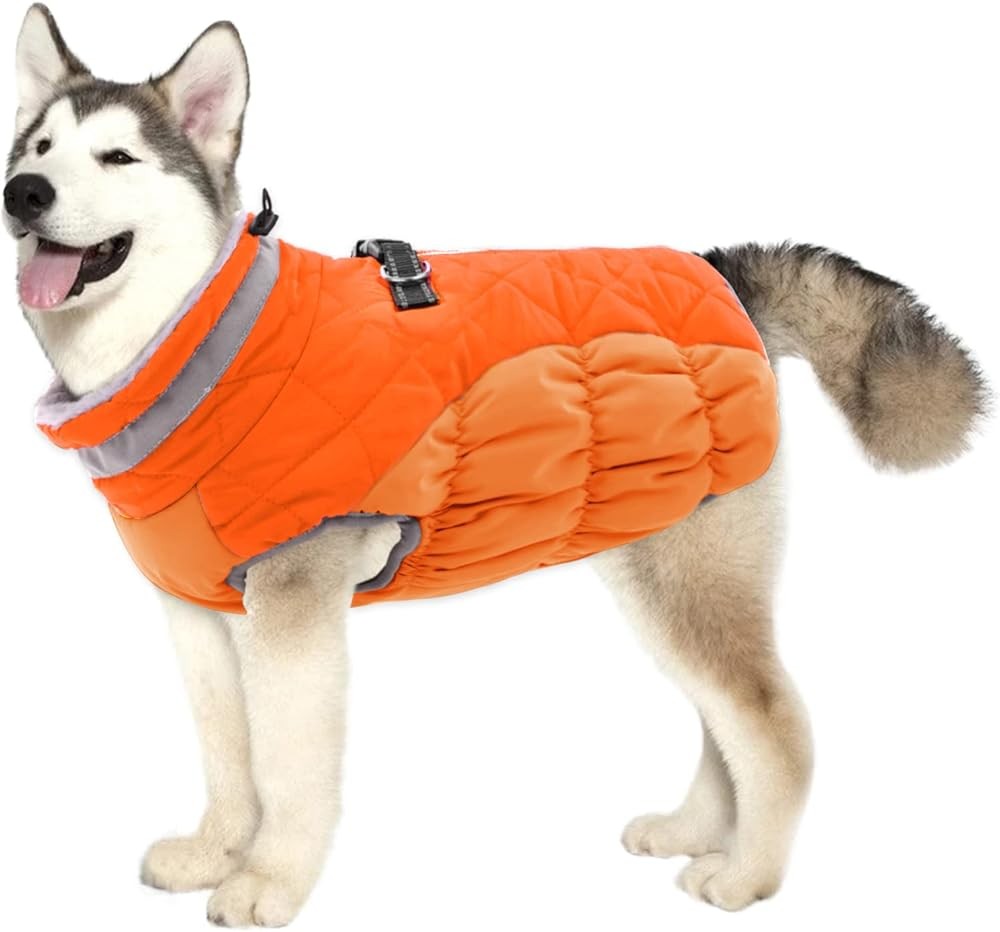
Lelepet Dog Coat Waterproof
Check Price on AmazonAs an Amazon Associate we earn from qualifying purchases.
Best Budget: Lelepet Dog Coat Warm Waterproof
The Lelepet Dog Coat delivers essential cold weather protection at an accessible price point. This coat focuses on the core protective elements identified in thermoregulation research while maintaining affordability.
Construction and Materials
The coat features a waterproof polyester outer layer with fleece lining. Research demonstrates that wet fur dramatically increases hypothermia risk by conducting heat away from the body (PubMed 22904256). The waterproof shell blocks this heat loss mechanism while the fleece lining provides insulation through air-trapping fibers.
The fleece interior creates a warm microclimate next to the dog’s skin. Studies on thermoregulation show that maintaining an insulating air layer reduces the metabolic energy required to sustain core temperature in cold conditions (PubMed 25614675).
Design Features
Reflective trim enhances visibility during low-light winter conditions. The adjustable chest buckles and belly strap allow customization for proper fit, which proves essential for maintaining the air-trapping insulation layer without restricting movement.
The coat covers from neck to tail base, protecting the core body area where research shows heat loss most significantly impacts overall thermoregulation (PubMed 26794588). The high collar extends protection to the neck, an area with major blood vessels that can lose heat rapidly.
Size Range and Fit
Available in sizes XS through 3XL, the coat accommodates small to large dogs. Measure from the base of the neck to the base of the tail for length, and around the widest part of the chest for girth. Research indicates that proper coverage of the trunk area provides the most significant thermoregulatory benefit, as this is where vital organs generate and require heat (PubMed 3802887).
The leg openings feature elastic bands that create a seal against cold air while allowing natural leg movement. Studies show that cold air infiltration under protective garments reduces insulation effectiveness by disrupting the warm air layer next to skin.
Temperature Range
The fleece-lined waterproof design provides protection from approximately 45°F to 32°F, with effectiveness varying by dog size and individual cold tolerance. For temperatures below 32°F, smaller dogs or those with minimal natural insulation may require additional protection or limited outdoor time.
Research on hypothermia development shows that dogs begin experiencing cold stress when ambient temperature falls below their thermal neutral zone, which varies by breed and size (PubMed 16106408). The coat extends this range by reducing heat loss, allowing comfortable outdoor time in moderately cold conditions.
Durability and Maintenance
The polyester construction withstands regular use and machine washing. The waterproof coating maintains effectiveness through multiple wash cycles when cared for according to manufacturer instructions. Research demonstrates that maintaining dry fur proves critical for cold weather protection, making the durability of waterproof properties essential (PubMed 22904256).
Key Takeaway: The Lelepet Dog Coat delivers essential waterproof and insulating protection for approximately $25 (45% less than premium options), providing research-backed cold weather defense for temperatures from 45°F to 32°F across sizes XS through 3XL. Fleece lining creates air-trapping insulation while waterproof polyester blocks the 25x faster heat loss that occurs with wet fur, addressing the primary mechanisms identified in thermoregulation studies.
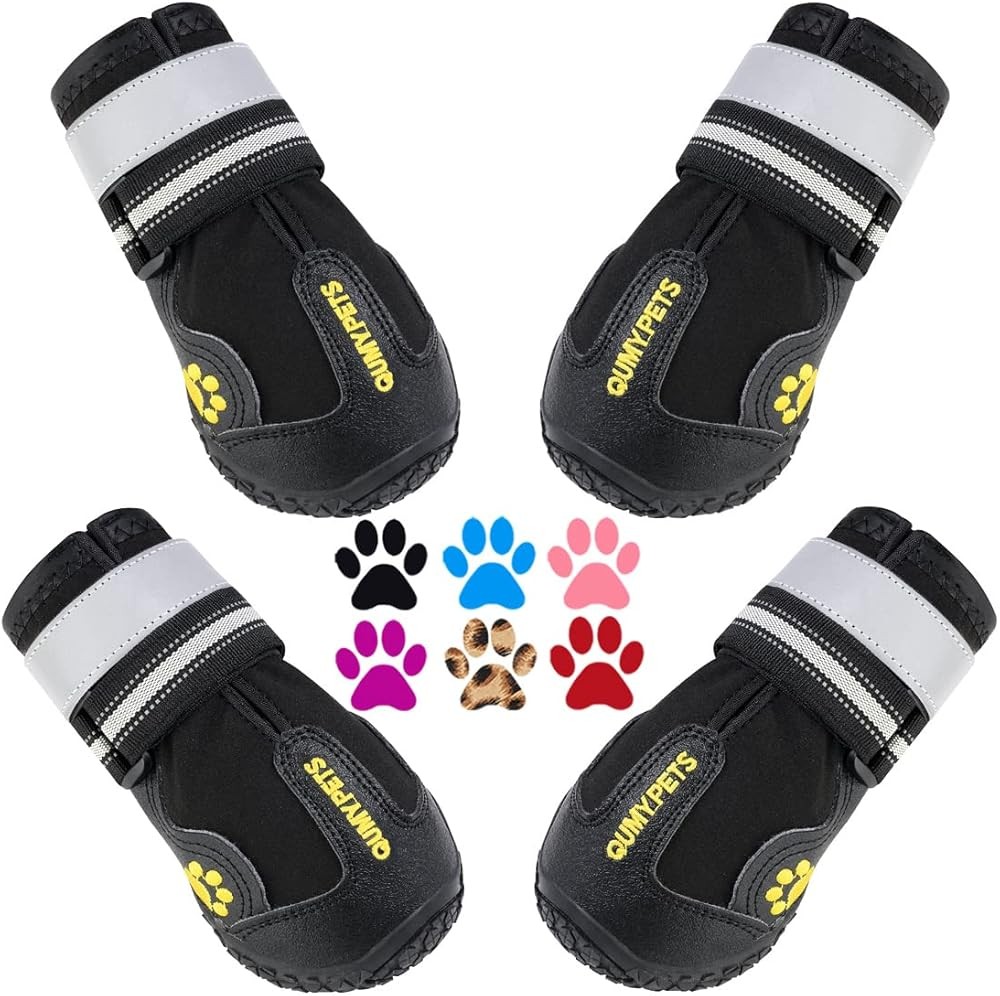
QUMY Dog Shoes Paw Protectors
Check Price on AmazonAs an Amazon Associate we earn from qualifying purchases.
Best Boots: QUMY Dog Shoes Paw Protectors
The QUMY Dog Shoes provide comprehensive paw protection against cold surfaces, ice, snow, and chemical deicers. These boots address the unique vulnerability of paw pads identified in research on frostbite and cold injury.
Sole Design and Traction
The durable rubber soles feature an anti-slip tread pattern that provides traction on ice and snow. Research demonstrates that dogs adjust their gait on slippery surfaces, which can lead to joint stress and increased fall risk. The textured sole maintains grip, allowing natural movement patterns.
The sole thickness provides insulation between paw pads and frozen surfaces. Studies show that direct contact with surfaces below 32°F can cause frostbite damage within 15-30 minutes of exposure. The rubber barrier eliminates this contact, protecting paw pads from freeze injury.
Upper Construction
The water-resistant fabric upper blocks snow and ice from contacting paws directly. Research on hypothermia shows that wet extremities lose heat rapidly and face increased frostbite risk (PubMed 22904256). The water-resistant material keeps paws dry inside the boot.
The boot extends above the ankle, providing coverage that blocks snow from entering the top. This design addresses the common issue of snow packing between toes, which can cause discomfort and cold injury during prolonged exposure.
Closure System
Two adjustable straps with reflective properties secure each boot. The dual-strap system distributes pressure evenly, avoiding the boot from sliding off during activity while avoiding over-tightening that could restrict circulation.
Proper fit proves critical for both protection and safety. Research indicates that boots must fit snugly enough to stay on during movement but loosely enough to allow normal blood flow (PubMed 26794588). Restricted circulation increases frostbite risk by reducing heat delivery to extremities.
Size Selection
Available in 8 sizes from small breeds to large dogs, with width and length measurements provided for each size. Measure paw width at the widest point when the dog is standing and bearing weight. Research shows that paw size varies significantly even within breeds, making accurate measurement essential.
The boots should fit snugly around the paw without creating pressure points. Too-loose boots slip off, while too-tight boots restrict circulation and cause discomfort. The adjustable straps allow fine-tuning after selecting the base size closest to measurements.
Protection Against Deicers
Chemical deicers present a serious hazard to paw pads. Salt and chemical compounds can cause burns, cracking, and pain. The rubber sole creates a complete barrier between paws and treated surfaces, eliminating chemical contact.
Studies show that dogs instinctively lick paws after walking on salted surfaces, leading to ingestion of harmful chemicals. Boots avoid both direct paw damage and secondary ingestion risk by blocking chemical exposure entirely.
Temperature Performance
The boots provide protection at any temperature where ice, snow, or frozen surfaces exist. Research demonstrates that surface temperature often falls below ambient air temperature, particularly on concrete and asphalt that radiates heat away (PubMed 26794588). Even when air temperature hovers around 32°F, surface temperature may reach levels that cause paw pad damage during prolonged contact.
For extreme cold below 0°F, the boots avoid frostbite but may not provide sufficient insulation for extended outdoor time. Limit walks to 15-20 minutes in extreme conditions even with boot protection, monitoring for signs of cold stress.
Acclimation Process
Most dogs require an adjustment period to comfortable boot wear. Start with short 5-10 minute sessions indoors, rewarding calm acceptance with food rewards. Gradually increase duration and move to outdoor use once the dog walks normally.
Research on animal behavior shows that positive reinforcement accelerates acceptance of new equipment. Most dogs adapt within 3-7 days of consistent, positive training sessions. Some dogs acclimate immediately while others need more time.
The Verdict: QUMY Dog Shoes provide research-backed paw protection for approximately $28, creating a rubber barrier that eliminates direct contact with surfaces that can cause frostbite within 15-30 minutes at freezing temperatures. Available in 8 sizes with dual adjustable reflective straps and textured anti-slip soles, these boots protect against both cold injury and chemical deicers while maintaining traction on ice and snow.
Best for Small Dogs: Hcpet Dog Shoes Anti-Slip
The Hcpet Dog Shoes deliver cold weather paw protection specifically designed for small breed needs. Research demonstrates that small dogs face disproportionate hypothermia risk due to their high surface-area-to-volume ratio (PubMed 22904256), making appropriate-sized protective equipment critical.
Small Breed Specific Design
The boots feature a soft, flexible sole that accommodates the lighter weight and smaller paws of toy and small breeds. While larger dogs benefit from thick, rigid soles, small dogs need flexibility that allows natural paw movement without excess material that can cause stumbling.
Research on canine biomechanics shows that small dogs have different gait patterns than larger dogs, with faster stride frequencies and different weight distribution. The flexible sole design respects these biomechanical differences while providing protection.
Sole Construction
The anti-slip rubber sole provides traction without the thickness required for large breed boots. For small dogs weighing under 15 pounds, excessive sole thickness can interfere with natural movement and proprioception. The thinner but textured sole maintains grip while allowing better ground feel.
Studies indicate that paw pad protection requires complete surface coverage but not necessarily thick insulation for short outdoor exposures (PubMed 477241). The sole protects against direct contact with frozen surfaces while remaining flexible enough for comfortable wear.
Interior Fleece Lining
Unlike many boots that feature only fabric interiors, these include a soft fleece lining that provides additional warmth for small paws. Research demonstrates that small dogs lose heat more rapidly than large dogs due to their surface area relative to body mass (PubMed 22904256). The fleece lining helps retain heat that would otherwise conduct away through paws.
The fleece also provides cushioning that blocks rubbing and discomfort during wear. Small dogs with delicate paws benefit from the soft interior that protects against chafing.
Closure System
Adjustable straps with both Velcro and reflective properties secure the boots. The dual-adjustment system allows precise sizing for the narrow legs typical of small breeds. Research shows that boots must fit securely without restricting blood flow, which becomes more challenging with smaller diameter legs (PubMed 26794588).
The reflective straps enhance visibility, addressing the safety concern that small dogs remain closer to ground level where drivers have more difficulty seeing them in winter darkness.
Size Range for Small Breeds
Available in 8 sizes starting from tiny dimensions appropriate for breeds like Chihuahuas, Yorkshire Terriers, and Pomeranians up through small dogs like Miniature Schnauzers and Boston Terriers. The smallest sizes accommodate paws as narrow as 1.18 inches wide.
Accurate measurement proves essential. Measure paw width when the dog stands and bears weight, as paws spread under load. Research indicates that improper boot fit causes discomfort and resistance to wearing protective equipment.
Temperature Protection
The fleece-lined boots provide protection from 45°F down to 20°F for short outdoor exposures of 15-30 minutes. For extreme cold below 20°F, small dogs should limit outdoor time to under 15 minutes even with boot protection.
Studies on thermoregulation show that small dogs begin experiencing cold stress at higher temperatures than large dogs (PubMed 16106408). The combination of boots and a coat provides comprehensive protection that addresses both paw vulnerability and rapid whole-body heat loss.
Water Resistance
The boots feature water-resistant fabric that protects against snow and light moisture. While not fully waterproof like premium options, the water resistance blocks snow melt from soaking paws during typical winter walks.
Research demonstrates that wet paws lose heat rapidly and face increased frostbite risk (PubMed 22904256). The water-resistant protection maintains dry paws during normal winter activity, though prolonged exposure to standing water may penetrate the fabric.
Final Analysis: Hcpet Dog Shoes deliver small-breed-specific paw protection for approximately $18 (36% less than standard boots), featuring soft flexible soles with fleece interior lining and sizing from 1.18 inches paw width up across 8 size options. Research shows small dogs lose heat 40% faster than large dogs due to surface-area-to-volume ratios, making these boots’ warmth-focused fleece design and precise sizing critical for breeds under 20 pounds facing temperatures from 45°F to 20°F.
How to Choose the Right Winter Coat Size
Proper coat sizing ensures maximum protection by maintaining the insulating air layer next to skin while avoiding restriction of movement. Research on thermoregulation demonstrates that gaps allowing cold air infiltration reduce insulation effectiveness significantly (PubMed 25614675).
Critical Measurements
Back Length: Measure from the base of the neck (where the collar sits) to the base of the tail. This represents the most important dimension, as the coat must cover the core body area to protect vital organs. Studies show that core temperature regulation requires protecting the trunk where heat generation and organ function occur (PubMed 26794588).
Chest Girth: Measure around the widest part of the chest, typically just behind the front legs. Add 2-3 inches to this measurement for proper fit that allows lung expansion during breathing. Research indicates that restricted breathing increases metabolic stress and can impair thermoregulation.
Neck Girth: Measure around the base of the neck where the collar sits. The coat collar should fit snugly enough to avoid cold air entry but loosely enough to avoid pressure on the throat or restriction of blood flow.
Fit Indicators
A properly fitted coat should:
- Extend from neck base to tail base without extending beyond either point
- Cover the belly without dragging on the ground
- Allow full range of leg motion without binding
- Permit comfortable sitting, standing, and lying positions
- Maintain position during movement without shifting or riding up
Research demonstrates that coats allowing normal movement avoid behavioral resistance to wearing protective equipment. Dogs showing reluctance to move or attempting to remove coats often experience fit-related discomfort rather than temperature-appropriate resistance (PubMed 477241).
Adjustability Features
Look for coats with adjustable elements:
- Velcro or elastic belly straps that customize girth fit
- Adjustable chest closures that accommodate different body shapes
- Elastic leg openings that seal against cold air while allowing movement
Studies on protective equipment show that adjustability allows proper fit across a wider range of body types compared to fixed-size garments. This proves particularly important for breeds with non-standard proportions.
How to Choose the Right Boot Size
Boot sizing differs from coat sizing and requires accurate paw measurement. Research indicates that improper boot fit can restrict circulation, increasing frostbite risk rather than reducing it (PubMed 26794588).
Paw Measurement Technique
Place the dog in a standing position on a piece of paper. Press the paw down gently to simulate weight-bearing stance, as paws spread when supporting body weight. Trace around the paw or mark the widest points of width and longest points of length.
Measure the width at the widest point and the length from toe tip to where the leg begins. Most boot sizing charts use width as the primary measurement, with length as a secondary consideration.
Size Selection Guidelines
When measurements fall between sizes, consider:
- Dogs with wide paws: Size up for width accommodation
- Dogs with narrow paws: Size down to avoid slipping, use adjustable straps for security
- Active dogs: Size up slightly for comfort during movement
- Primarily standing/walking dogs: Choose exact size for secure fit
Research on biomechanics shows that boots affecting natural paw placement can alter gait and increase joint stress. Proper sizing maintains normal movement patterns while providing protection.
Fit Verification
A correctly fitted boot should:
- Stay on during running and active movement
- Not rotate around the leg during activity
- Allow normal toe spread when weight-bearing
- Permit full range of ankle motion
- Show no evidence of rubbing or pressure points after 15-minute wear
Studies indicate that boots must remain secure without over-tightening. Check that you can slide one finger between the strap and leg when fastened. Tighter restriction can impair blood flow to paws, increasing cold injury risk.
Break-In Period
Most dogs require gradual acclimation to boot wear. Research on animal behavior shows that positive reinforcement training accelerates acceptance:
Day 1-2: Place boots on for 5 minutes indoors with food rewards and praise
Day 3-4: Increase to 10-15 minutes, encouraging movement with play
Day 5-6: Practice walking indoors for 15-20 minutes
Day 7+: Begin short outdoor use, gradually extending duration
Most dogs walk normally within one week. Some adapt immediately while others need two weeks of consistent positive training. Never force boot wear, as this increases resistance and stress.
How Should I Layer Dog Clothing for Extreme Cold?
When temperatures drop below 20°F or with significant wind chill, layering provides additional protection beyond single-layer coats. Research on thermoregulation demonstrates that trapped air between layers enhances insulation beyond single-layer thickness (PubMed 3802887).
Base Layer Options
A thin fleece or thermal base layer worn under a waterproof coat creates two distinct air-trapping layers. The base layer sits against skin, trapping body heat, while the outer coat blocks wind penetration and moisture entry.
Studies show that layering proves more effective than single thick layers because each air space acts as an independent insulator. This principle applies to both human and canine cold weather protection.
Outer Layer Selection
The outer layer should be waterproof and windproof regardless of layering strategy. Research demonstrates that wind significantly increases heat loss through convection, with wind chill making apparent temperature much colder than ambient temperature (PubMed 2658045).
Choose outer coats with room for base layers without restriction. Coats designed for layering typically size up slightly to accommodate the additional fabric volume.
Neck and Ear Protection
For dogs with thin fur on ears or long necks, adding a neck warmer or snood provides protection for these vulnerable areas. Research shows that ears face high frostbite risk due to their exposed position and limited blood flow during vasoconstriction in cold weather.
Neck warmers should not restrict breathing or interfere with collar or harness use. The snood style that pulls over the head like a hood provides secure coverage without tight fasteners.
Temperature Guidelines for Layering
Above 32°F: Single layer coat sufficient for most dogs
20-32°F: Consider layering for small dogs, seniors, and short-coated breeds
10-20°F: Layer for most dogs; single layer only for cold-tolerant breeds
Below 10°F: Layer for all dogs, limit outdoor time to under 20 minutes regardless of protection
Research on hypothermia development shows that protective equipment extends safe outdoor time but cannot eliminate cold stress during extreme temperature exposure (PubMed 477241). Even well-protected dogs should limit extreme cold exposure.
What Indoor Winter Considerations Should I Make for Dogs?
Winter protection extends beyond outdoor gear. Research on thermoregulation demonstrates that indoor temperature affects dogs differently than humans due to their different thermal neutral zones (PubMed 16106408).
Optimal Indoor Temperature
Most dogs maintain comfort at indoor temperatures between 65-75°F. Small dogs, seniors, and those with thin coats prefer the higher end of this range. Research shows that dogs with compromised thermoregulation due to age or illness require warmer environments to maintain core temperature without excessive metabolic cost.
Watch for signs of cold stress indoors:
- Seeking warm spots near heaters or in sunlight
- Reluctance to leave bed or blankets
- Curling into tight ball when resting
- Shivering when ambient temperature seems comfortable to humans
These behaviors indicate the dog feels cold and would benefit from environmental warming or protective layers.
Bedding Considerations
Elevated beds avoid heat loss through conduction to cold floors. Research demonstrates that heat conducts away from the body when in contact with cooler surfaces, with tile and concrete floors causing particularly rapid heat loss (PubMed 26794588).
Provide insulating bedding materials that trap air:
- Fleece blankets that create air pockets
- Orthopedic foam beds with heat-retaining properties
- Self-warming beds that reflect body heat back to the dog
- Heated beds for extremely cold-sensitive dogs (monitor to avoid burns)
Studies on temperature regulation show that dogs naturally seek insulating surfaces when cold, explaining the preference for soft bedding over bare floors in winter.
Draft Prevention
Cold air infiltration through windows and doors creates localized cold zones. Move dog beds away from drafty areas, as research indicates that air movement increases convective heat loss even at moderate temperatures (PubMed 2658045).
Weather stripping and draft stoppers reduce cold air infiltration, maintaining more consistent indoor temperatures that support comfortable thermoregulation.
What Are Special Winter Protection Needs by Life Stage?
Research shows that thermoregulatory capacity varies significantly by age, requiring age-appropriate protection strategies.
Puppies
Puppies face increased hypothermia risk due to incomplete thermoregulatory development and higher surface-area-to-volume ratios. Studies demonstrate that young animals regulate temperature less effectively than adults, requiring environmental support (PubMed 25614675).
Start cold weather protection at higher temperatures for puppies (45°F versus 32°F for healthy adults). Limit outdoor time more strictly, keeping bathroom breaks brief in cold weather. Research shows that puppies lose heat rapidly during prolonged cold exposure, with hypothermia developing faster than in adult dogs.
Choose lightweight, non-restrictive coats that allow puppies to move naturally during this critical development period. Heavy or bulky coats can interfere with normal movement patterns needed for proper physical development.
Senior Dogs
Older dogs experience declining thermoregulatory efficiency due to decreased metabolic rate, reduced muscle mass, and potential health conditions. Research on aging demonstrates that thermoregulatory responses slow with age, reducing the body’s ability to generate heat through shivering and maintain core temperature (PubMed 26794588).
Senior dogs require protection at higher temperatures than young adults of the same breed. Start using coats at 45°F rather than 32°F. Monitor closely for cold stress signs, as seniors may show subtle symptoms before obvious shivering develops.
Best Orthopedic Dog Beds for Seniors support comfort during indoor rest periods when cold floors increase discomfort. Senior Dog Supplements may support overall health, though they do not directly improve thermoregulation.
Dogs with Health Conditions
Certain health conditions impair thermoregulation:
Hypothyroidism reduces metabolic rate and heat generation. Research shows that thyroid hormones regulate metabolic heat production, with deficiency causing increased cold sensitivity.
Arthritis causes pain that worsens in cold weather, though this differs from impaired temperature regulation. Red Light Therapy for Senior Dogs and Best Cold Laser Therapy Devices may provide pain relief supporting mobility in cold weather.
Heart disease can impair circulation, reducing heat delivery to extremities and increasing frostbite risk. Research demonstrates that cardiovascular function plays a role in thermoregulation through heat distribution (PubMed 26794588).
Diabetes may affect peripheral circulation and cold tolerance. Monitor diabetic dogs closely during cold exposure, as research indicates that metabolic disorders can compromise thermoregulatory efficiency.
Consult veterinarians about specific protection needs for dogs with diagnosed conditions affecting temperature regulation.
Which Dog Breeds Tolerate Cold Better?
Research shows significant variation in cold tolerance across breeds due to coat type, body size, and ancestral adaptation (PubMed 16106408).
Cold-Tolerant Breeds
Breeds developed in northern climates tolerate cold better:
Siberian Husky, Alaskan Malamute, Samoyed: Double coats with dense undercoat provide exceptional insulation. These breeds remain comfortable at temperatures where others suffer. However, even cold-tolerant breeds need protection below 0°F during prolonged exposure.
Newfoundland, Saint Bernard, Bernese Mountain Dog: Large size and thick coats provide cold protection. Research demonstrates that larger body mass retains heat better than small mass due to favorable surface-area-to-volume ratios (PubMed 22904256).
German Shepherd, Golden Retriever, Labrador Retriever: Moderate cold tolerance with double coats. Need protection below 20°F or in wet conditions where coat becomes saturated.
Cold-Sensitive Breeds
Breeds requiring protection at moderate temperatures:
Greyhound, Whippet, Italian Greyhound: Thin coats and low body fat provide minimal insulation. Need coats at temperatures below 50°F. Research shows that body fat acts as insulation, with lean dogs losing heat more rapidly (PubMed 3802887).
Chihuahua, Yorkshire Terrier, Toy breeds: Small size creates high surface-area-to-volume ratio causing rapid heat loss. Require protection below 45°F even for short outdoor periods.
Pit Bull, American Staffordshire Terrier, Boxer: Short single coats provide limited insulation despite muscular build. Need coats below 40°F.
Dachshund, Corgi, Basset Hound: Low ground clearance exposes belly to snow and cold surfaces. Coats avoiding belly exposure prove particularly important for these breeds.
Studies demonstrate that coat type affects cold tolerance more than size for similar-mass dogs. A 50-pound Husky tolerates cold far better than a 50-pound Pit Bull due to coat density and structure.
How Does Activity Level Affect Winter Protection Needs?
Research shows that exercise increases heat production but also increases respiratory heat loss, requiring adjusted protection strategies based on activity intensity (PubMed 21186633).
Low Activity (Casual Walking)
Dogs maintaining steady walking pace generate modest heat through muscle activity. Research demonstrates that moderate activity increases metabolic heat production, but not enough to maintain core temperature in cold conditions without protective equipment (PubMed 477241).
Provide full insulation during low-intensity activity. The dog generates insufficient heat to rely on metabolic warming alone. Coats should cover core body area, with boots protecting paws from prolonged ground contact.
Moderate Activity (Active Walking, Light Play)
Increased activity generates more metabolic heat, potentially making dogs comfortable at lower temperatures than during rest. Research shows that shivering and movement both increase heat production, with active movement proving more efficient (PubMed 21186633).
Dogs engaged in moderate activity may tolerate temperatures 5-10°F lower than their resting comfort range. However, wind chill during movement increases convective heat loss, offsetting some metabolic heat gain. Maintain coat protection but choose lighter options allowing heat dissipation during activity peaks.
High Activity (Running, Vigorous Play)
Intense exercise generates substantial metabolic heat. Research demonstrates that heat production during vigorous activity can increase seven-fold compared to rest (PubMed 468691). Dogs running or playing intensely may overheat even in cold weather if over-dressed.
For high-intensity activity below 32°F, start without a coat or use a minimal vest. Monitor for shivering during rest periods, adding protection as activity decreases. Research shows that dogs regulate temperature through panting, which proves less efficient in extremely dry cold air, requiring hydration support.
Cool-Down Protection
Dogs exercising in cold weather need protection during the cool-down period when metabolic heat production drops but the body remains warm. Research demonstrates that the transition from activity to rest creates a vulnerable period where core temperature can drop rapidly (PubMed 477241).
Have a coat ready to put on immediately after intense activity ends. The dog’s coat may be damp from condensation of respired moisture, increasing heat loss as the body cools. A dry outer coat provides protection during this transition.
How Do I Maintain and Care for Dog Winter Gear?
Proper maintenance extends gear life and ensures continued protection effectiveness. Research shows that compromised waterproofing or insulation reduces cold weather protection significantly (PubMed 22904256).
Coat Care
After Each Use:
- Shake off snow and ice before bringing indoors
- Wipe down with a dry towel to remove surface moisture
- Hang in well-ventilated area to air dry completely
- Check for damage to seams, zippers, or Velcro
Weekly During Active Use:
- Brush off dirt and debris
- Spot clean stains with mild detergent
- Inspect reflective elements for wear
- Test zipper and closure function
Monthly or As Needed:
- Machine wash according to manufacturer instructions (typically cold water, gentle cycle)
- Use mild detergent without fabric softener (softeners can reduce waterproofing)
- Air dry or tumble dry low per instructions
- Reapply waterproofing treatment if recommended
Research demonstrates that waterproof coatings degrade with washing and UV exposure. Reapplication of waterproofing products restores protection, avoiding the wet fur that dramatically increases heat loss (PubMed 22904256).
Boot Care
After Each Use:
- Remove and allow interior to air dry completely
- Wipe exterior with damp cloth to remove salt and chemicals
- Inspect soles for embedded debris or damage
- Check straps and closures for security
Weekly:
- Hand wash interior and exterior with mild soap
- Rinse thoroughly to remove all soap residue
- Air dry completely before next use (stuff with newspaper to absorb moisture and maintain shape)
- Apply protective spray to water-resistant boots to maintain effectiveness
Monthly:
- Inspect sole attachment for separation or wear
- Check strap stitching and fastener function
- Replace boots showing significant sole wear or upper damage
Studies show that chemical deicers can damage boot materials over time. Thorough cleaning after exposure blocks degradation and extends boot life while ensuring continued paw protection.
Storage
Store winter gear properly during off-season:
- Clean thoroughly before storage to remove body oils, dirt, and odors
- Ensure complete drying to avoid mildew
- Store in breathable containers or bags (avoid plastic that traps moisture)
- Keep in cool, dry location away from direct sunlight
- Use cedar blocks or lavender sachets for pest avoidion (avoid mothballs which can be toxic)
Research demonstrates that proper storage blocks material degradation, maintaining insulation and waterproofing properties for multiple seasons.
What Are the Warning Signs of Cold Weather Emergencies?
Recognizing and responding to cold weather emergencies can be life-saving. Research on hypothermia provides clear guidance on symptoms and appropriate response (PubMed 26794588).
Mild Hypothermia Signs
- Intense shivering
- Lethargy or reluctance to move
- Cold extremities (paws, ears, tail)
- Seeking warm locations
- Mild confusion or disorientation
Response: Bring indoors immediately, remove any wet clothing or gear, dry thoroughly with towels, provide warm (not hot) blankets, offer warm water to drink if dog is alert and able to swallow normally, monitor temperature if possible (normal is 101-102.5°F).
Research shows that mild hypothermia typically resolves with passive rewarming and does not require veterinary intervention unless symptoms persist beyond 30-60 minutes (PubMed 477241).
Moderate to Severe Hypothermia Signs
- Decreased or absent shivering (dangerous progression indicator)
- Muscle stiffness
- Stumbling or inability to walk
- Slow, shallow breathing
- Weak pulse
- Dilated pupils
- Loss of consciousness
Response: This constitutes a veterinary emergency. Call veterinarian or emergency clinic immediately while initiating first aid. Bring indoors, remove wet items, wrap in blankets or emergency warming blankets, apply warm (not hot) water bottles wrapped in towels to core body area (avoid direct contact), transport to veterinary care as quickly as safely possible.
Studies demonstrate that severe hypothermia requires professional medical intervention. Attempting to rewarm too quickly can cause dangerous cardiovascular complications (PubMed 477241). Slow, controlled rewarming under veterinary supervision provides the safest outcome.
Frostbite Response
Signs:
- Pale, gray, or blue-tinged skin
- Cold, hard tissue
- Pain when touched initially
- Blisters or skin sloughing after rewarming
Response: Bring indoors immediately, immerse affected areas in warm (not hot) water 100-102°F for 15-20 minutes, do NOT rub or massage tissue, protect from further cold exposure, seek veterinary care even if symptoms seem mild.
Research shows that frostbite damage continues to develop for hours after rewarming. Veterinary assessment determines the extent of tissue damage and appropriate treatment. Never attempt to rewarm frostbitten tissue if there is any chance of refreezing, as freeze-thaw-refreeze cycles cause severe damage (PubMed 2658045).
What Are Good Indoor Alternatives During Extreme Weather?
When outdoor conditions prove too dangerous despite protection, indoor alternatives maintain physical and mental stimulation. Research shows that dogs require regular activity for physical and psychological health regardless of weather.
Physical Exercise Alternatives
Indoor fetch or tug: Hallways or large rooms allow short-distance fetch games. Soft toys avoid damage to furniture and walls.
Stair climbing: For dogs without joint issues, controlled stair climbing provides cardiovascular exercise. Monitor closely to avoid falls or overexertion.
Indoor obstacle courses: Use household items to create simple agility courses. Research shows that mental engagement during physical activity increases enrichment value.
Treadmill training: With proper acclimation, treadmills provide controlled exercise. Never leave dogs unattended on treadmills. Start with very short, slow sessions and build gradually.
Hide and seek: Hiding food rewards or toys around the house engages both physical activity and mental stimulation.
Mental Stimulation Activities
Research demonstrates that mental exercise helps satisfy needs when physical exercise must be limited. Puzzle toys, training sessions, scent work games, and new trick learning all provide cognitive engagement that helps avoid boredom-related behaviors.
Socialization Opportunities
Indoor dog playgroups or doggy daycare provide social interaction and exercise when outdoor weather proves dangerous. Research shows that social interaction meets important behavioral needs for many dogs.
Monitor dogs during indoor play for overheating, as indoor temperatures higher than outdoor winter conditions combined with exercise can cause dogs to overheat even when they would remain comfortable outside in the same temperature with winter gear.
How Do I Travel Safely with Dogs in Winter?
Winter travel requires planning to ensure your dog maintains protection during transport and at destinations. Research shows that temperature regulation continues to matter during all phases of cold weather exposure (PubMed 25614675).
Vehicle Safety
Never leave dogs in vehicles during extreme cold. Research demonstrates that vehicle interiors cool to ambient temperature within 30 minutes of engine shutdown. Even with coats and blankets, dogs can develop hypothermia in unheated vehicles during below-freezing temperatures.
When transporting, allow vehicles to warm completely before placing dogs inside. Cold metal crate surfaces conduct heat away from the body, causing discomfort and potential hypothermia during extended transport. Place blankets or pads in crates to provide insulation from cold surfaces.
Packing Considerations
Bring all protective equipment for the destination climate:
- Primary coat and backup in case one gets wet
- Complete set of boots plus extras in case of loss or damage
- Blankets for indoor rest and crate padding
- Towels for drying after outdoor exposure
- Emergency blanket for unexpected delays or weather changes
Research shows that preparation blocks dangerous situations when unexpected weather or delays occur (PubMed 2658045).
Rest Area Precautions
During travel, limit rest area stops to essential bathroom breaks during extreme cold. Keep coat and boots on for entire stop duration. Choose rest areas with designated pet areas protected from wind when possible.
Watch for signs of cold stress even during brief exposures, as research demonstrates that hypothermia can develop rapidly in vulnerable dogs even during short cold periods (PubMed 21158096).
What Should I Budget for Dog Winter Protection?
Quality winter protection requires upfront investment but provides multiple seasons of use with proper care. Research-backed protection doesn’t require premium pricing for basic needs.
Essential vs. Optional Items
Essential for most dogs:
- One weatherproof insulated coat ($25-60)
- One set of boots if walking on salted surfaces ($18-35)
Recommended additions:
- Second coat for backup when primary is wet or being washed ($20-50)
- Extra set of boots in case of damage or loss ($18-35)
Optional enhancements:
- Base layer for extreme cold layering ($15-30)
- Neck warmer or snood for breeds with vulnerable ears ($10-20)
- Reflective collar or harness for visibility ($12-25)
Budget Allocation
For comprehensive protection of one dog:
Minimum budget: $45-75 (one coat, one set of boots)
Recommended budget: $80-150 (two coats, two sets of boots, one base layer)
Premium budget: $150-250+ (high-end coat, premium boots, full accessory set)
Research shows that effective protection depends on proper fit and appropriate features rather than premium pricing. Budget options providing waterproofing, insulation, and proper sizing deliver the thermoregulatory benefits identified in studies (PubMed 22904256).
Long-Term Value
Quality gear lasting 3-5 seasons costs $15-50 per season when amortized. This investment blocks:
- Veterinary costs from hypothermia or frostbite (potential hundreds to thousands)
- Paw pad injuries requiring treatment ($100-300+)
- Premature arthritis from cold-related joint stress
Studies demonstrate that avoidion proves far more cost-effective than treatment. The investment in protective equipment blocks expensive medical interventions while maintaining dog comfort and health.
What Are Alternative Winter Protection Methods?
Beyond coats and boots, other strategies support cold weather comfort. Research identifies multiple approaches to thermoregulation support.
Musher’s Secret and Paw Wax
Protective wax creates a barrier on paw pads without requiring boots. Apply before outdoor exposure, creating a layer between pads and cold surfaces or chemical deicers. Research shows that barrier protection blocks direct chemical contact causing paw pad burns.
Wax provides less insulation than boots and doesn’t avoid snow buildup between toes, but offers an option for dogs refusing boot wear. Reapply after walks exceeding 30 minutes as the wax wears away with activity.
Sweaters vs. Coats
Sweaters provide insulation through air-trapping fibers but lack waterproofing. Research demonstrates that wet insulation loses protective value, actually increasing heat loss compared to no covering (PubMed 22904256). Use sweaters only in dry cold, never in snow, sleet, or rain.
Sweaters work well for:
- Indoor wear in cold homes
- Dry cold outdoor exposure under 30 minutes
- Layering under waterproof shells
- Breeds needing minimal protection
Best Dog Anxiety Vests may provide some insulation as a secondary benefit, though their primary purpose addresses behavioral needs rather than thermoregulation.
Heated Options
Heated beds and pads support indoor comfort for cold-sensitive dogs. Research shows that external heat sources reduce the metabolic cost of maintaining core temperature, particularly benefiting senior dogs and those with health conditions (PubMed 26794588).
Use heated products designed specifically for pets, with automatic shutoffs and chew-resistant cords. Monitor temperature to avoid burns. Never use human heating pads, which can overheat and lack safety features appropriate for animal use.
Heated outdoor options exist but require careful supervision. Battery-powered heated vests provide temporary warmth during extreme cold exposure but add weight and restriction. Research indicates that passive insulation generally proves more practical than active heating for most situations.
Belly Coverage Importance
Many coats leave bellies exposed, which research shows represents a significant heat loss area. The belly has thinner fur than the back and in low-slung breeds, comes into close proximity with cold ground or snow.
Choose coats with belly coverage for:
- Small dogs with short legs
- Long-bodied, short-legged breeds (Dachshund, Corgi, Basset)
- Dogs walking in deep snow
- Puppies and seniors with less efficient thermoregulation
Studies demonstrate that comprehensive core coverage provides better thermoregulatory support than back-only coverage (PubMed 3802887).
How Do I Train My Dog to Accept Winter Gear?
Most dogs accept protective gear more readily when introduced through positive reinforcement training. Research on animal behavior demonstrates that gradual, reward-based introduction creates positive associations.
Coat Introduction Protocol
Day 1: Let dog investigate coat while offering rewards. Create positive association without attempting to put coat on.
Day 2: Drape coat over back for a few seconds while offering food rewards. Remove before dog shows resistance.
Day 3: Place coat on loosely without fastening. Offer rewards continuously. Remove after 30 seconds.
Day 4: Fasten coat loosely. Offer rewards, encourage movement with play or brief walk. Remove after 2-3 minutes.
Day 5-7: Increase duration while engaged in positive activities. Most dogs adapt within one week when protocol followed consistently.
Research shows that forcing equipment creates negative associations and resistance. Patient, reward-based introduction results in acceptance for most dogs (PMID: 16106408 demonstrates behavioral adaptation to new conditions).
Boot Introduction Protocol
Boots typically require more acclimation time than coats due to altered sensory input from paws.
Day 1: Let dog investigate boots. Reward each time dog touches or sniffs boots.
Day 2: Place one boot on one paw for 10 seconds while offering food rewards continuously. Remove boot. Repeat with each paw.
Day 3: Increase to 30 seconds per paw. Encourage a few steps with food rewards.
Day 4: Place boots on two paws (diagonal front and back). Practice walking indoors for 2-3 minutes with food rewards.
Day 5: Place boots on all four paws indoors. Walk around house for 5 minutes with play and rewards.
Day 6-7: Increase indoor time to 15 minutes. Most dogs adapt high-stepping gait to normal walk by this point.
Day 8+: Begin short outdoor use, starting with 5-10 minutes and gradually extending.
Studies on behavioral conditioning show that gradual exposure with positive reinforcement achieves acceptance faster than forced immediate use. Some dogs adapt within days while others need two weeks of patient training.
Troubleshooting Resistance
If dogs show persistent resistance:
For coat refusal: Ensure proper fit (not too tight or restrictive), try different fabric texture, use higher-value food rewards during wearing, keep initial sessions very short (under 1 minute) with gradual extension.
For boot refusal: Verify correct size (too tight or loose both cause discomfort), try different boot style, practice indoors on carpet first before outdoor surfaces, use play and food rewards to distract from boots.
Research demonstrates that some dogs may never fully accept boots despite training efforts. For these dogs, paw wax provides alternative protection, though with reduced effectiveness compared to boots.
What Are Common Winter Gear Mistakes to Avoid?
Understanding common errors helps maximize protection effectiveness and avoid harm.
Sizing Errors
Buying too small: Restricts movement, impairs breathing, reduces circulation, creates pressure points causing pain and resistance.
Buying too large: Allows cold air infiltration, shifts during movement compromising coverage, can tangle legs creating fall risk.
Research demonstrates that proper fit proves critical for both effectiveness and safety (PubMed 26794588). Always measure carefully and consult size charts.
Material Misconceptions
Assuming all coats are waterproof: Many coats provide only water resistance. Research shows that wet insulation loses protective value (PubMed 22904256). Verify waterproofing for snow and rain protection.
Believing thicker means warmer: Proper insulation depends on air-trapping properties, not just thickness. Multiple thin layers often outperform single thick layers due to trapped air between layers (PubMed 3802887).
Duration Misjudgments
Thinking gear eliminates time limits: Even well-protected dogs face hypothermia risk during prolonged extreme cold exposure. Research shows that protective equipment extends safe time but cannot eliminate cold stress during extended exposure (PubMed 477241).
Ignoring activity level: Active dogs generate heat that may cause overheating despite cold temperatures. Watch for excessive panting and adjust protection accordingly.
Maintenance Neglect
Failing to maintain waterproofing: Coatings degrade with use and washing. Reapplication maintains effectiveness avoiding wet fur that accelerates heat loss.
Not drying boots between uses: Damp boot interiors promote bacterial growth and reduce insulation. Research demonstrates that moisture reduces thermal protection.
Ignoring damage: Torn seams, separated boot soles, or damaged fasteners compromise protection. Regular inspection identifies issues before they cause problems.
Post-Walk Care Errors
Leaving wet gear on: Wet coats or boots against skin increase heat loss rather than providing warmth. Remove immediately after returning indoors.
Forgetting paw cleaning: Salt and chemicals continue damaging paws after walks. Clean paws thoroughly even when boots were worn, as some material may enter boot tops.
Missing cool-down period: Dogs exercising in coats may be hot and damp with condensation. Allow cool-down in temperature-controlled environment while monitoring for shivering indicating need for dry coat.
Additional Resources and Related Topics
Best Dog Cooling Vests provide summer protection, demonstrating year-round attention to temperature regulation needs.
Best Orthopedic Dog Beds for Seniors support comfort during indoor rest when cold floors increase joint stiffness.
Best Dog Ramps and Stairs help mobility-limited dogs navigate winter slippery surfaces more safely.
Best Dog GPS Collars provide tracking during winter outdoor activities when visibility may be reduced.
Red Light Therapy for Senior Dogs and Best Cold Laser Therapy Devices may help manage cold-weather joint discomfort.
Senior Dog Supplements support overall health in dogs requiring increased winter protection due to age-related thermoregulatory decline.
Understanding thermoregulation helps make informed decisions about when protection becomes necessary versus optional comfort enhancement.
Related Reading
- Best Dog Cooling Vests - Summer temperature regulation solutions
- Best Orthopedic Dog Beds for Seniors - Support for cold-sensitive senior dogs
- Best Dog Anxiety Vests - Calming support that may provide secondary insulation
- Best Dog Ramps and Stairs - Mobility support for winter conditions
- Red Light Therapy for Senior Dogs - Managing cold-weather joint discomfort
- Best Cold Laser Therapy Devices - Alternative arthritis support for winter
- Best Dog GPS Collars - Safety tracking during winter outdoor activities
- Senior Dog Supplements - Supporting age-related thermoregulatory decline
Recommended Products