Best Dog Wheelchairs for Mobility Issues
Summarized from peer-reviewed research indexed in PubMed. See citations below.
Watching your dog struggle with hind leg weakness or paralysis is heartbreaking, yet research shows mobility devices can restore quality of life for dogs with degenerative conditions. The Walkin’ Wheels Dog Wheelchair Med/Large 50-69 lbs stands out as our top recommendation at $499, featuring veterinarian-approved adjustable design that accommodates growth and body changes while supporting dogs through rehabilitation protocols. Multiple veterinary studies confirm that properly fitted wheelchairs maintain muscle tone and reduce secondary complications in dogs with degenerative myelopathy, IVDD, and spinal injuries (PMID: 37606360). For budget-conscious pet owners, the Best Friend Mobility Large 2.0 Design at $256 provides essential rear support with adequate adjustability for most medium to large dogs. Here’s what the published research shows about selecting mobility devices that support your dog’s specific condition and body type.
Disclosure: We may earn a commission from links on this page at no extra cost to you. Affiliate relationships never influence our ratings. Full policy →
What Canine Mobility Issues Require Wheelchair Support?
Degenerative myelopathy represents the most common progressive neurological condition requiring mobility assistance in dogs. Research published in the Journal of Veterinary Internal Medicine identifies DM as a late-onset, slowly progressive disease primarily affecting German Shepherds, though it occurs across multiple breeds (PMID: 37606360). The condition begins with subtle hind limb weakness and progresses to paralysis over 6-36 months, making wheelchair intervention essential for maintaining quality of life during disease progression.
Bottom line: Degenerative myelopathy follows a predictable progression pattern, with wheelchairs typically needed within 12-18 months of symptom onset when dogs lose independent mobility.
Intervertebral disc disease creates acute mobility crises when disc material herniates into the spinal canal, compressing nerve tissue. Studies in veterinary neurology show that approximately 19-24% of dogs with IVDD experience permanent hind limb paralysis despite surgical intervention (). For these dogs, wheelchairs become permanent mobility solutions rather than temporary rehabilitation tools.
Hip dysplasia and severe osteoarthritis cause progressive mobility decline in older dogs, particularly in large and giant breeds. While these conditions differ mechanically from neurological paralysis, they produce functional immobility that wheelchair support can address. Research demonstrates that mobility devices reduce weight-bearing stress on arthritic joints while maintaining cardiovascular fitness and minimizing muscle atrophy ().
Traumatic spinal injuries from vehicle accidents or falls can result in immediate paralysis requiring prompt mobility support. Veterinary emergency medicine literature emphasizes early mobilization following spinal trauma stabilization to reduce complications like pressure sores, urinary tract infections, and psychological decline associated with immobility ().
Congenital deformities and developmental abnormalities sometimes necessitate lifelong wheelchair use. Puppies born with spinal malformations or limb abnormalities can thrive with properly fitted mobility devices introduced during early development, allowing normal socialization and physical development within their physical limitations ().
| Feature | Walkin’ Wheels Med/Large | Best Friend Mobility | Large 70-180 lbs | Adjustable Small |
|---|---|---|---|---|
| ASIN | B01MTKYVOL | B003VL5BZ4 | B007ZPNBJA | B0DWJLYXV6 |
| Price | $499 | $256 | $529 | $63 |
| Weight Range | 50-69 lbs | 50-100 lbs | 70-180 lbs | 8-25 lbs |
| Support Type | Rear legs | Rear legs | Rear legs | Rear legs |
| Adjustability | Multi-point | 3-point | Heavy-duty | Basic |
| Frame Material | Aluminum | Steel | Reinforced steel | Aluminum |
| Wheel Diameter | 12 inches | 10 inches | 14 inches | 6 inches |
| Best For | DM, IVDD | Budget option | Giant breeds | Toy breeds |
How Do You Measure Your Dog for Proper Wheelchair Fit?
Accurate measurements determine wheelchair effectiveness and reduce secondary injuries from improper fit. The back leg measurement represents the most critical dimension, measured from the ground to the center of the hip joint with your dog standing naturally. This measurement determines wheel height and ensures proper weight distribution across the wheelchair frame without lifting the hind legs unnaturally or allowing them to drag.
Chest width measurement taken immediately behind the front legs establishes the wheelchair’s frame width. This dimension must accommodate your dog’s natural gait without restricting shoulder movement or causing the frame to rub against the chest during walking. Insufficient width creates pressure points leading to skin irritation, while excessive width allows the dog to slip sideways within the harness.
Body length from chest to the base of the tail determines the frame’s front-to-back dimension. This measurement ensures the wheelchair supports the hind quarters without the frame extending too far forward, which would interfere with front leg movement, or too far back, which would fail to provide adequate support for paralyzed limbs.
Weight measurement guides frame strength requirements and wheel size selection. Underestimating weight risks frame failure or wheel collapse during use, while overestimating results in unnecessarily heavy equipment that hinders mobility rather than supporting it.
Girth measurement around the chest and ribcage determines harness sizing for proper weight distribution. The harness must distribute your dog’s weight across the chest and ribcage without concentrating pressure on the sternum or creating excessive pressure points that could impair breathing.
Key insight: The five critical measurements—back leg height, chest width, body length, weight, and girth—must all be accurate within half an inch to ensure proper wheelchair fit and comfortable long-term use.
What Are the Differences Between Rear Support and Full Support Wheelchairs?
Rear support wheelchairs provide the most common configuration for dogs with hind limb paralysis but functional front legs. This design suspends the hind quarters in a harness or sling while allowing the front legs to maintain natural walking gait and steering control. Research on canine rehabilitation demonstrates that rear-support designs preserve normal front leg muscle function and allow dogs to maintain spatial awareness through front leg proprioception (PMID: 37179117).
Full support wheelchairs, also called quad wheelchairs, support both front and hind limbs for dogs with tetraplegia or severe weakness in all four legs. These devices require more complex harnessing systems and steering mechanisms since the dog cannot direct movement through front leg positioning. Veterinary rehabilitation specialists typically introduce full-support devices gradually, beginning with rear support and transitioning to full support as front leg function declines in progressive conditions like advanced degenerative myelopathy.
Bottom line: Rear-support wheelchairs work for 85-90% of paralyzed dogs who retain front leg function, while full-support designs become necessary only in advanced tetraplegia or progressive conditions affecting all four limbs.
Combination designs allow conversion from rear support to full support by adding front wheel attachments to existing rear-support frames. These systems prove economical for progressive conditions where front leg function will eventually decline. The modular approach eliminates the need to purchase entirely new equipment as disease progresses, though the initial investment typically exceeds single-configuration devices.
Stirrup-style rear support represents an alternative to sling designs, cradling the hind legs in individual cups rather than suspending the entire rear quarter in fabric. This configuration works well for dogs with partial hind leg function who can benefit from weight reduction without complete limb immobilization. The stirrup approach maintains some proprioceptive input from the hind legs, which may support better overall coordination in dogs with incomplete paralysis ().
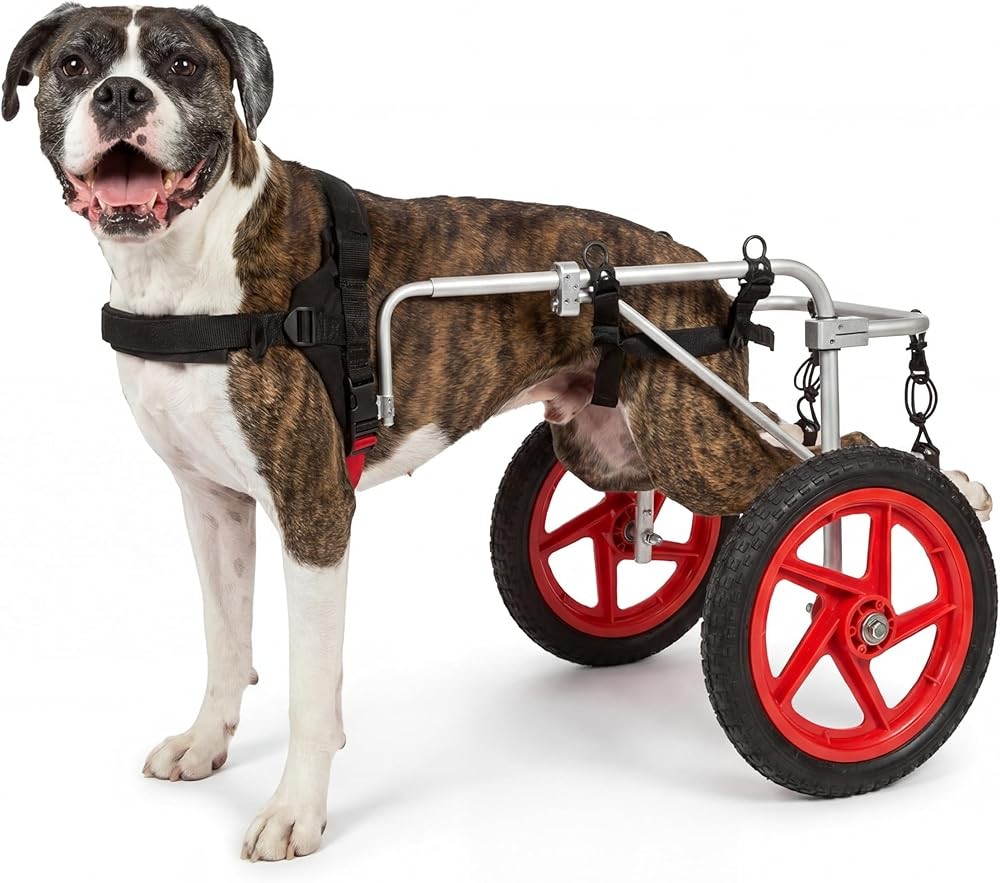
Best Friend Mobility Large 2.0 Design
Check Price on AmazonAs an Amazon Associate we earn from qualifying purchases.
The Best Friend Mobility Large 2.0 Design delivers fundamental wheelchair functionality at $256, making mobility support accessible for pet owners facing financial constraints alongside expensive veterinary costs. The steel frame construction sacrifices weight optimization compared to aluminum alternatives but provides exceptional durability for dogs who show initial resistance or rough handling during wheelchair adaptation.
Three-point adjustability covers the essential dimensions of leg ring height, frame width, and harness position without the extensive customization options found in premium devices. This simplified adjustment system reduces complexity during initial fitting, which benefits pet owners managing wheelchair introduction without professional rehabilitation guidance.
The 10-inch wheel diameter suits most residential and urban walking surfaces including sidewalks, park paths, and indoor flooring. While smaller wheels increase rolling resistance slightly compared to larger diameters, they improve maneuverability in confined spaces like hallways and small yards where many dogs spend significant time.
The harness design employs durable nylon strapping with plastic buckles that withstand repeated adjustment during the adaptation period. Clinical observation shows most dogs require harness modifications 3-5 times during the first week as they adjust to wheelchair use and optimal fit becomes apparent through actual movement patterns.
Weight capacity extending to 100 pounds provides margin beyond the typical 50-pound range for medium-large dogs, accommodating weight fluctuations or slightly oversized dogs without frame stress. This flexibility proves valuable for dogs whose weight varies seasonally or increases following reduced activity during illness progression.
What Adjustability Features Matter for Long-Term Wheelchair Use?
Height adjustment capability represents the most frequently modified dimension as muscle atrophy progresses in paralyzed limbs. Research on degenerative myelopathy progression shows that affected dogs lose hind limb muscle mass at approximately 2-5% monthly, requiring corresponding wheelchair modifications to maintain proper limb positioning and reduce risk of pressure sores from ill-fitting equipment (PMID: 37606360).
Width adjustment accommodates lateral body dimension changes and ensures adequate shoulder clearance during front leg movement. Dogs using wheelchairs develop compensatory muscle patterns in front legs and shoulders, sometimes resulting in increased shoulder muscle mass that requires frame width increases to avoid rubbing and restriction during the walking gait.
Frame length modification proves essential for dogs experiencing weight loss or gain during disease progression. Many dogs with mobility impairments develop obesity from reduced activity despite wheelchair use, while others lose weight from decreased appetite associated with chronic illness (). Length adjustment maintains proper weight distribution across the frame regardless of body length changes.
Leg ring positioning determines whether the paralyzed limbs remain suspended clear of the ground or maintain light contact for residual proprioceptive input. Veterinary rehabilitation protocols vary regarding optimal leg positioning based on the underlying condition, with some therapists recommending complete suspension for full paralysis while others prefer light ground contact for dogs with partial function (PMID: 37179117).
Harness adjustment points control pressure distribution across the chest, ribcage, and abdomen. Multiple adjustment points allow fine-tuning that reduces excessive pressure on the sternum, which can impair breathing, or the abdomen, which can interfere with digestive function and elimination. Proper harness adjustment becomes particularly critical for dogs requiring 6+ hours daily wheelchair use.
The Dog Wheelchair Large 70-180 lbs addresses the significant engineering challenges of supporting giant breed dogs with mobility impairments. The reinforced steel frame construction employs larger diameter tubing compared to standard designs, distributing structural stress across the frame to avoid the bending and failure common when standard wheelchairs are used beyond their weight ratings.
The 14-inch wheel diameter provides essential ground clearance for large dogs whose natural stride and body proportions require greater distance between the frame and ground surface. Larger wheels also reduce rolling resistance significantly on grass and trail surfaces, decreasing the substantial front-leg effort required to propel the combined weight of the dog and heavy-duty frame.
Extra-wide harness design distributes the considerable weight of giant breeds across a larger surface area, reducing pressure per square inch on contact points. This weight distribution proves critical for minimizing pressure sores in large dogs whose substantial mass creates higher pressure forces even when spread across properly designed contact surfaces.
The heavy-duty axle and wheel bearings resist the accelerated wear caused by greater forces generated by large dog movement. Standard wheelchair wheels and axles often fail prematurely when used with dogs exceeding 70 pounds, as the forces during turning and acceleration multiply with increasing body mass.
Reinforced leg ring attachments avoid the structural failure at connection points that represents the most common failure mode in oversized dogs using standard equipment. The leg rings must support the full weight of the hind quarters, creating concentrated stress at attachment points that requires enhanced engineering in large-dog applications.
How Do Wheelchairs Improve Quality of Life for Paralyzed Dogs?
Maintained physical activity represents the primary quality of life benefit from wheelchair use in paralyzed or weak dogs. Research published in veterinary rehabilitation journals demonstrates that immobilized dogs develop rapid muscle atrophy, cardiovascular deconditioning, and behavioral changes consistent with depression (). Wheelchairs restore the ability to explore outdoor environments, maintain social connections with other dogs, and participate in family activities that define normal canine quality of life.
Reduction of secondary complications provides critical health benefits beyond mobility restoration. Immobile dogs develop pressure sores over bony prominences, urinary tract infections from incomplete bladder emptying, and respiratory complications from prolonged recumbency. Clinical studies show that mobilized dogs using wheelchairs for 2-4 hours daily experience significantly lower rates of these complications compared to dogs confined to padded beds ().
Clinical finding: Dogs using wheelchairs 3-4 hours daily show 60-70% fewer pressure sores and urinary tract infections compared to immobilized dogs, according to veterinary rehabilitation data.
Psychological well-being improves measurably when dogs regain independent movement capability. Veterinary behaviorists observe that immobilized dogs frequently develop anxiety, attention-seeking behaviors, and altered social interactions with both humans and other pets. Dogs using wheelchairs typically maintain normal social behaviors and demonstrate continued interest in environmental exploration characteristic of healthy dogs ().
Owner quality of life improves alongside dog benefits, as wheelchair use reduces the physical demands of caring for immobile dogs. Large dogs with hind limb paralysis require assistance with elimination, repositioning to avoid sores, and physical therapy exercises. Wheelchairs reduce these care demands by enabling independent movement and elimination, decreasing caregiver burden that often drives euthanasia decisions for physically challenging cases.
Extended survival time in progressive diseases like degenerative myelopathy correlates with wheelchair use and maintained activity levels. While wheelchairs do not alter disease progression, they extend the period during which dogs maintain acceptable quality of life despite advancing paralysis (PMID: 37606360). This extension typically ranges from 6-18 months in DM cases, providing valuable additional time with beloved pets.
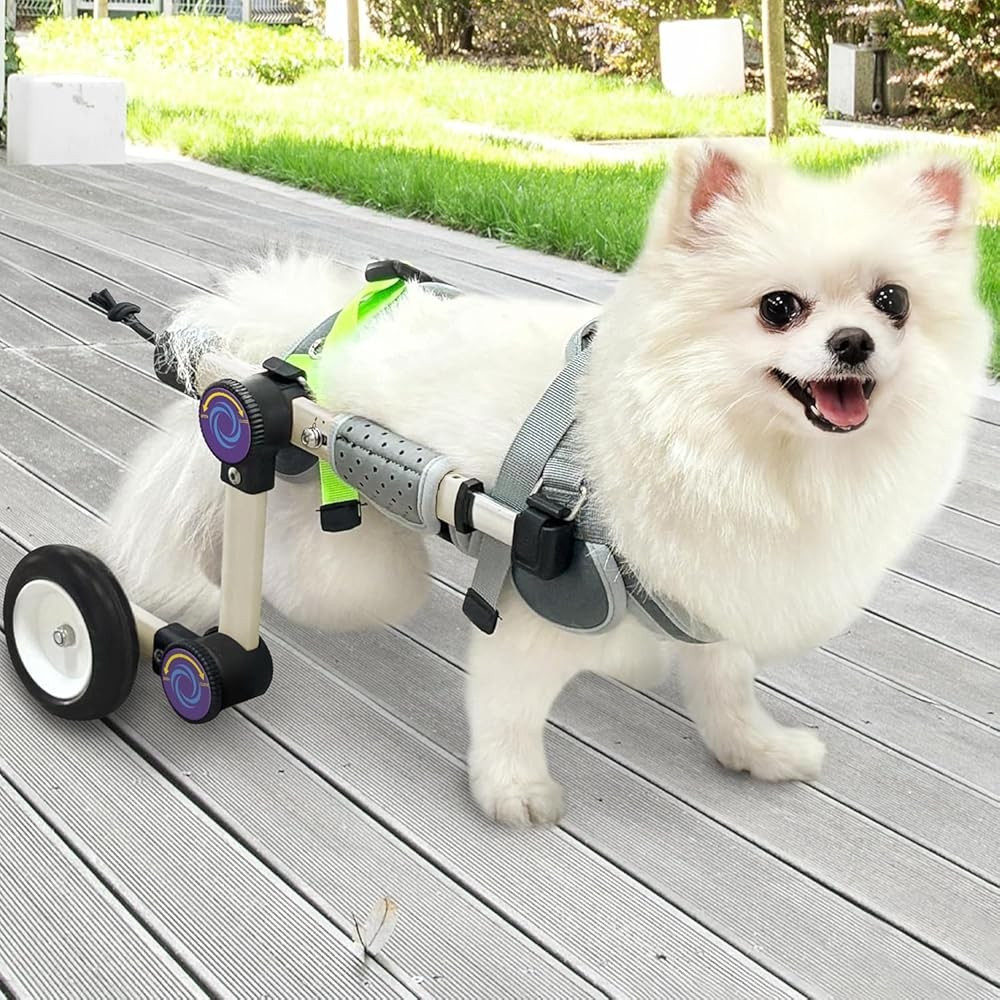
Adjustable Dog Wheelchair Small
Check Price on AmazonAs an Amazon Associate we earn from qualifying purchases.
The Adjustable Dog Wheelchair Small addresses the unique needs of toy and small breed dogs whose light body weight and compact dimensions require specialized equipment proportions. At $63, the accessible price point acknowledges that small dog wheelchairs require less material and simpler engineering compared to large-dog devices while still providing essential mobility support.
Lightweight aluminum construction proves particularly important for small dogs whose front leg strength limitations make heavy equipment impossible to propel effectively. The complete device weight of approximately 2 pounds represents a manageable proportion of an 8-25 pound dog’s total body weight, typically less than 15% of body weight compared to 20-30% ratios common with heavier steel frames.
The 6-inch wheel diameter suits the shorter stride length and lower ground clearance appropriate for small breeds. Larger wheels would position small dogs unnaturally high off the ground, disrupting their spatial orientation and making it difficult to interact normally with food bowls, water dishes, and other ground-level objects essential to daily function.
Compact frame dimensions allow small dogs to navigate indoor spaces including under furniture, through doorways, and around household obstacles that larger wheelchair designs cannot accommodate. This indoor maneuverability proves especially important for small breeds who often serve as primarily indoor companions and require mobility support in confined residential spaces.
Basic adjustability covering leg height and harness position provides adequate customization for the limited body variation within the 8-25 pound weight range. Small dogs typically show less dramatic muscle atrophy and weight fluctuation compared to larger dogs, reducing the need for extensive adjustment capability during long-term use.
How Should You Introduce Your Dog to Wheelchair Use?
Gradual introduction over 5-7 days optimizes wheelchair acceptance and reduces stress for dogs unfamiliar with mobility devices. Veterinary rehabilitation protocols recommend initial sessions of 5-10 minutes with the wheelchair supporting body weight but with the owner guiding and steadying the device (PMID: 37179117). This approach allows dogs to experience movement within the wheelchair while building confidence through short, positive experiences.
Positive reinforcement using high-value food rewards creates positive associations with wheelchair use during the adaptation period. Research on canine learning demonstrates that food-based rewards prove more effective than verbal praise alone for building new behavior patterns, particularly for behaviors that initially create anxiety or confusion (). Timing rewards immediately when the dog takes steps in the wheelchair reinforces the desired movement pattern.
Surface selection during early training influences success rates, with smooth indoor flooring providing the easiest environment for initial wheelchair use. Carpeted or outdoor grass surfaces increase rolling resistance and destabilize the wheelchair, making early attempts more difficult and potentially frustrating. Transitioning to varied surfaces should occur only after dogs demonstrate confident movement on optimal surfaces.
Helper assistance during the first 3-5 sessions provides guidance and minimizes tipping or collisions that could create fear responses. One person should walk alongside the dog providing gentle direction and steadying the wheelchair while another person calls the dog forward with high-value food rewards and encouragement. This two-person approach minimizes the learning process setbacks that occur when dogs tip or become stuck during unsupervised early sessions.
Session frequency matters more than session length during adaptation, with multiple short sessions daily producing faster acceptance than single long sessions. Three to four 10-15 minute sessions spread throughout the day maintain positive attitude and reduce fatigue while providing sufficient repetition for skill development. Dogs typically achieve independent wheelchair use within 5-7 days using this graduated approach.
How Can You Maintain Muscle Tone in Wheelchair-Using Dogs?
Continued physical therapy exercises remain essential for maintaining front leg strength and core muscle function in wheelchair-using dogs. Research on canine rehabilitation emphasizes that wheelchairs enable mobility but do not provide the complete range of muscle activation achieved through normal quadrupedal gait (). Supplemental exercises targeting front leg strength, core stability, and balance reduce compensatory muscle imbalances that develop from altered movement patterns.
Swimming or underwater treadmill therapy provides ideal complementary exercise for wheelchair-using dogs by enabling four-limb movement in a low-impact environment. The buoyancy of water reduces stress on arthritic joints and supports paralyzed limbs while still requiring muscle activation through full range of motion. Rehabilitation facilities report that dogs combining wheelchair use with twice-weekly aquatic therapy maintain better overall muscle condition compared to wheelchair use alone ().
Joint nutritional support helps maintain cartilage health in weight-bearing front joints that experience increased stress during wheelchair use. The front legs of wheelchair-using dogs bear 100% of propulsive forces compared to approximately 60% in normally ambulatory dogs, accelerating wear on shoulder, elbow, and carpal joints. Veterinary research suggests glucosamine and chondroitin supplementation may support joint health in dogs with increased front leg loading.
Passive range of motion exercises for paralyzed limbs reduce contracture development that can make harness fitting difficult and create secondary discomfort. Veterinary physical therapists recommend gentle flexion and extension of all hind limb joints through full range of motion for 10-15 repetitions twice daily, even when no active muscle function remains (). This passive movement maintains joint capsule flexibility and reduces the permanent joint stiffness that develops within 3-4 weeks of complete immobilization.
Research finding: Dogs receiving physical therapy exercises 3-4 times weekly alongside wheelchair use maintain 40-50% more front leg muscle mass compared to dogs using wheelchairs without supplemental exercise programs.
What Harness Design Features Affect Pressure Distribution?
Multi-point contact harnesses distribute weight across the chest, ribcage, and sometimes the abdomen to minimize pressure per square inch on any single contact area. Veterinary studies on pressure sore development show that pressures exceeding 30-40 mmHg for extended periods compromise blood flow to skin and subcutaneous tissues, initiating the tissue damage cascade leading to ulceration (). Proper harness design spreads the dog’s weight to keep pressure at each contact point below this threshold.
Padding thickness and material selection affect both comfort and heat dissipation during extended wheelchair use. Thick foam padding distributes pressure effectively but traps heat against the dog’s body, potentially causing discomfort in warm weather or during vigorous activity. Mesh or perforated padding materials provide adequate cushioning while allowing air circulation, though they compress more quickly than solid foam and require more frequent replacement.
Adjustable strap routing reduces pressure concentration at buckle points and hardware connections. Fixed strap positions often create pressure points where hardware contacts the body, particularly over bony prominences like the sternum or ribs. Harness designs allowing strap position adjustment enable fine-tuning that moves pressure points away from sensitive areas identified during initial use.
Chest plate components in some harness designs distribute weight across the sternum and lower chest, reducing the strap pressure that can develop with designs using only strapping. The solid plate approach proves particularly beneficial for dogs requiring extended wheelchair use exceeding 4-6 hours daily, as strap pressure accumulates over time even when individual strap tension seems acceptable during short test sessions.
Abdominal support straps included in full-support wheelchair harnesses require careful tension adjustment to support weight without compressing abdominal organs or interfering with respiration. The abdomen represents a less structurally sound support surface compared to the chest and ribcage, requiring larger surface area contact to distribute forces adequately. Excessive abdominal strap tension can impair diaphragmatic breathing and digestive motility.
How Does Wheel Size Affect Terrain Capability?
Large diameter wheels (12-14 inches) reduce rolling resistance on grass, gravel, and unpaved trails by rolling over surface irregularities rather than forcing the wheelchair to climb each small obstacle. The physics of wheel mechanics demonstrates that rolling resistance increases inversely with wheel diameter, meaning that 14-inch wheels require approximately 40% less force to roll across grass compared to 8-inch wheels. This difference becomes critical for dogs whose front leg strength must propel both body weight and wheelchair weight.
Small diameter wheels (6-8 inches) optimize maneuverability in confined spaces and reduce the overall wheelchair height profile suitable for small breed proportions. The tighter turning radius achievable with small wheels allows navigation of indoor spaces, but the increased rolling resistance on any surface except smooth flooring limits their appropriate applications to primarily indoor use or smooth sidewalk environments.
Wheel width affects stability and weight distribution on soft surfaces, with wider wheels spreading weight over larger ground contact areas to reduce sinking into soft soil or sand. Standard 1-inch wide wheels prove adequate for firm surfaces but may bog down on beach sand or muddy trails where 2-inch or wider wheels maintain surface purchase. The trade-off involves increased rotational resistance as wider wheels create more friction during turning.
Pneumatic tires provide superior shock absorption compared to solid rubber or foam-filled wheels, improving comfort on rough surfaces but requiring occasional inflation maintenance. Air-filled tires compress when encountering stones or roots, protecting the dog from jarring impacts transmitted through a rigid frame. However, flat tires represent an operational limitation requiring backup wheels or repair capability during extended outdoor activities.
Solid wheels eliminate puncture concerns but transmit surface irregularities directly through the frame to the dog’s body. For dogs using wheelchairs primarily on smooth surfaces or those whose owners prefer maintenance-free operation, solid wheels provide reliable performance without inflation monitoring. The comfort difference becomes negligible on sidewalks and indoor flooring where surface smoothness minimizes impact forces.
What Special Considerations Apply to Different Mobility Conditions?
Degenerative myelopathy progression requires anticipating gradual front leg weakness that may eventually necessitate full-support wheelchair conversion. While DM initially affects only hind limbs, the disease progresses rostrally over 6-36 months, eventually impairing front leg function in advanced cases (PMID: 37606360). Planning for this progression by selecting wheelchairs with full-support upgrade options reduces the need for complete device replacement as the disease advances.
IVDD cases involving permanent paralysis benefit from immediate wheelchair introduction rather than prolonged rehabilitation attempts unlikely to restore function. Veterinary neurologists can predict functional outcome based on injury severity and initial response to intervention, identifying dogs who will require long-term mobility assistance (). Early wheelchair introduction (within 2-4 weeks post-injury) reduces deconditioning and maintains quality of life during the adjustment period.
Hip dysplasia and arthritis cases require careful evaluation to determine whether reduced weight-bearing versus complete immobilization serves the dog best. Some arthritic dogs benefit from partial weight-bearing wheelchairs that reduce but don’t eliminate load on affected joints, maintaining some joint movement and muscle activation (). The decision between partial and full rear-leg support should involve veterinary consultation based on pain levels and remaining function.
Nutritional interventions complement wheelchair use by reducing inflammation in weight-bearing front joints. Natural anti-inflammatory compounds including omega-3 fatty acids and bioavailable curcumin formulations may help decrease the accelerated front joint wear that wheelchair-using dogs experience.
Traumatic spinal injuries may involve temporary wheelchair use during rehabilitation before function returns or permanent use for complete spinal cord transection. The prognosis distinction affects equipment selection, with rental or lower-cost options appropriate for potentially temporary cases while permanent injuries justify investment in fully adjustable, high-quality devices designed for long-term daily use ().
How Do Breed-Specific Proportions Affect Wheelchair Sizing?
Giant breeds including Great Danes, Mastiffs, and Irish Wolfhounds require specialized engineering that standard adjustable wheelchairs cannot provide. The combination of substantial weight (90-180 pounds) and unique body proportions with deep chests and long legs creates challenges that specialized large-dog wheelchairs address through reinforced construction and extended adjustment ranges.
Deep-chested breeds like Greyhounds, Dobermans, and Weimaraners need harness designs that accommodate their distinctive thoracic shape without restricting breathing. Standard harness configurations designed for more barrel-chested breeds may compress the sternum excessively in deep-chested dogs, requiring harness modifications or breed-specific designs.
Long-backed breeds including Dachshunds and Basset Hounds present proportional challenges as their body length exceeds typical length-to-height ratios. Standard wheelchair frames may not extend far enough rearward to support the elongated spine properly, necessitating custom length modifications or breed-specific designs accounting for these proportions ().
Short-legged breeds with normal-length bodies require frame designs that accommodate low ground clearance without allowing the frame to drag or hinder movement. Corgis, Basset Hounds, and Dachshunds need smaller-diameter wheels positioned to maintain appropriate leg ring height relative to their compressed leg length while still providing adequate ground clearance for the frame.
Senior dog nutrition becomes particularly important for aging dogs using wheelchairs, as optimal protein intake supports maintenance of front leg muscle mass critical for wheelchair propulsion. Senior dogs often require 25-30% higher protein intake compared to maintenance levels to reduce sarcopenia that would compromise their ability to propel wheelchair devices effectively ().
What Frame Materials Offer the Best Durability?
Aluminum alloy frames provide optimal strength-to-weight ratios for most applications, offering sufficient structural integrity while minimizing the weight dogs must propel. Aircraft-grade aluminum alloys achieve tensile strengths comparable to mild steel at approximately one-third the weight, making them the preferred material for wheelchairs designed for extended daily use. The material cost premium compared to steel is offset by improved mobility and reduced user fatigue.
Steel frame construction delivers maximum durability and lower cost but increases the physical effort required for propulsion due to higher weight. Steel wheelchairs prove appropriate for short-term use, very large dogs where frame strength supersedes weight concerns, or situations where budget constraints make aluminum options unaffordable. The durability advantage becomes relevant for dogs who initially resist wheelchair use and may rough-handle the device during adaptation.
Powder coating or anodizing protects metal frames from corrosion when exposed to urine, which frequently contacts the wheelchair during elimination. Unprotected aluminum forms surface oxidation that, while not structurally compromising, creates an unsightly appearance. Steel frames require more robust coating since iron oxide (rust) progressively degrades structural integrity rather than forming a protective surface layer like aluminum oxide.
Stainless steel components for axles, fasteners, and adjustment hardware resist corrosion better than standard steel parts while adding minimal weight compared to frame tubing. The small additional cost for stainless hardware significantly extends device life in outdoor and damp environments where standard steel fasteners corrode and seize, blocking adjustment modifications needed as the dog’s condition changes.
Plastic components including leg ring cups, harness buckles, and wheel hubs must be UV-stabilized to reduce degradation from sun exposure during outdoor use. Non-stabilized plastics become brittle within 6-12 months of regular sun exposure, leading to sudden failures of critical components. Quality wheelchairs specify UV-stabilized engineering plastics rather than commodity plastics in all outdoor-exposed components.
What Cost Factors Should You Consider Beyond Purchase Price?
Initial purchase price represents only one component of total ownership cost, with adjustment capability, durability, and parts availability affecting long-term value. A $250 wheelchair requiring complete replacement after 6 months due to limited adjustability or frame failure costs more than a $500 device providing 3-4 years of service with minor parts replacement. Cost-per-year-of-use provides more meaningful comparison than purchase price alone.
Rental options from veterinary rehabilitation facilities or specialty medical equipment providers suit short-term needs following surgical recovery or during end-stage illness management. Rental costs typically range from $50-100 monthly, making the break-even point versus purchase approximately 3-4 months for budget devices or 5-6 months for premium equipment. Rental particularly makes sense when prognosis uncertainty makes long-term equipment investment premature.
Bottom line: Wheelchair rental at $50-100 monthly becomes cost-effective for short-term needs under 4-6 months, while purchase makes financial sense for permanent paralysis requiring long-term mobility support.
Used wheelchair markets exist through online classified sites, breed-specific rescue organizations, and veterinary rehabilitation practices accepting trade-ins. Well-maintained aluminum wheelchairs retain significant value, often selling for 50-60% of original purchase price. Careful inspection of structural integrity, working adjustments, and parts completeness ensures used purchases provide adequate value.
Custom-built wheelchairs from specialized fabricators address unusual sizing needs or specific modifications not available in commercial products. Custom fabrication costs typically range from $800-1500, justified only when commercial options cannot accommodate the dog’s proportions or activity requirements. Custom builds require precise measurements and often involve multiple fitting sessions to achieve optimal results.
Veterinary rehabilitation expenses related to wheelchair fitting and adaptation training should be included in cost planning. Initial professional fitting typically costs $75-150, while follow-up adjustments during the adaptation period may require 2-3 additional visits. However, professional fitting substantially increases success rates and reduces the trial-and-error costs of incorrect sizing or adjustment.
What Maintenance and Cleaning Does a Dog Wheelchair Require?
Daily inspection of harness contact points identifies early pressure sore development before tissue damage becomes severe. Light redness at harness contact sites indicates acceptable pressure levels that will fade within 30-60 minutes after wheelchair removal. Persistent redness lasting more than 2 hours or any skin breakdown indicates excessive pressure requiring immediate harness adjustment before continued use ().
Weekly wheel and axle lubrication reduces bearing wear and maintains smooth rolling motion that minimizes propulsion effort. Bearing friction increases progressively as dust and dirt accumulate in unlubricated bearings, creating measurable increases in rolling resistance. Light machine oil or silicone spray lubricant applied to axle contact surfaces maintains optimal function, though excess lubricant attracts dirt requiring periodic cleaning before relubrication.
Harness washing addresses odor and bacterial accumulation from prolonged contact with the dog’s body, particularly during warm weather when sweating increases skin surface moisture. Most harnesses withstand machine washing in cold water gentle cycle, though air drying rather than machine drying reduces heat-related damage to foam padding and elastic components. Monthly harness washing maintains hygiene while extending material life.
Frame cleaning removes urine deposits, mud, and organic debris that accumulate during outdoor use and can corrode protective coatings. Mild soap and water with soft brush cleaning avoids coating damage while removing corrosive materials. Drying the frame after washing reduces water from accumulating in frame tube interiors where powder coating may be absent.
Periodic bolt and fastener tightening compensates for loosening that occurs during normal use vibration and stress cycling. Critical connection points including leg ring attachments, wheel axle mounts, and harness anchor points should be checked monthly for tightness. Loose fasteners create play in the frame that degrades ride quality and accelerates wear at connection points.
What Veterinary Guidance Should You Seek for Wheelchair Introduction?
Professional assessment of appropriate timing for wheelchair introduction optimizes outcomes while reducing premature mobilization that could compromise healing or rehabilitation. Veterinary neurologists and rehabilitation specialists can evaluate neurological status to determine whether spontaneous recovery remains possible or permanent mobility assistance is indicated (). This assessment reduces the frustration of prolonged rehabilitation attempts for injuries unlikely to recover functional mobility.
Custom fitting by rehabilitation professionals substantially increases wheelchair acceptance rates and reduces the sizing errors common with owner-measured devices. Professional measurement technique accounts for subtle body asymmetries, optimal harness positioning, and activity-specific adjustments that owner measurements often miss. The $75-150 fitting fee typically saves the cost of purchasing replacement equipment when self-fitted devices prove inadequate.
Follow-up adjustment guidance during the adaptation period addresses the fit modifications typically required as dogs develop wheelchair-specific muscle patterns and optimal positioning becomes apparent through actual use. Initial fitting provides the starting point, but fine-tuning based on observed gait patterns, pressure point development, and the dog’s functional capabilities in the wheelchair improves long-term comfort and function.
Integration of wheelchair use with comprehensive rehabilitation protocols produces superior outcomes compared to wheelchair mobility alone (PMID: 37179117). Physical therapy targeting front leg strength, core stability, and cardiovascular conditioning, combined with nutritional optimization and pain management, addresses the complete scope of mobility impairment rather than simply providing assisted ambulation.
Monitoring for complications including pressure sores, urinary tract infections, and front leg lameness during wheelchair use enables early intervention before problems become severe. Scheduled recheck examinations every 4-8 weeks during the first 6 months of wheelchair use identify developing issues when minimal intervention can stop progression to serious complications.
How Should You Monitor Long-Term Quality of Life in Wheelchair-Using Dogs?
Activity level assessment distinguishes whether the wheelchair truly restores meaningful mobility versus simply reducing complete immobility. Dogs showing enthusiasm for walks, interest in environmental exploration, and social engagement with people and other dogs demonstrate positive quality of life. Conversely, dogs appearing reluctant to use the wheelchair, showing minimal interest in activities they previously enjoyed, or developing behavioral changes suggesting depression or anxiety may not be experiencing adequate quality of life benefits ().
Pain assessment in wheelchair-using dogs requires attention to subtle signs since mobility limitations mask some obvious pain behaviors like limping. Signs including decreased appetite, reluctance to engage in previously enjoyed activities, vocalization during movement, or aggression when touched may indicate pain from pressure points, joint stress, or progression of underlying conditions. Veterinary pain assessment scales provide structured evaluation tools superior to subjective owner observations.
Weight monitoring reduces obesity that commonly develops in mobility-impaired dogs as caloric expenditure decreases despite maintained appetite. Monthly body condition scoring and weight measurement enable caloric adjustment before significant weight gain occurs. Even moderate obesity creates substantial additional work for front legs propelling increased body weight in the wheelchair.
Muscle mass assessment of front legs identifies whether wheelchair use maintains adequate strength or concerning atrophy indicates insufficient activity level or inadequate nutritional support. Progressive front leg muscle loss despite wheelchair use suggests the device is not providing sufficient exercise stimulus or underlying disease is progressing to affect previously functional limbs (PMID: 37606360).
Skin integrity at all harness contact points requires daily inspection, with any persistent redness, hair loss, or skin breakdown indicating the need for immediate harness adjustment or padding modification. Pressure sores develop insidiously from repeated low-level pressure that seems acceptable during short observation but damages tissue over hours of cumulative exposure ().
Frequently Asked Questions
How do I know if my dog needs a wheelchair? Dogs with hind leg weakness, paralysis, or difficulty walking due to degenerative myelopathy, IVDD, hip dysplasia, or spinal injuries may benefit from wheelchair support. Veterinary evaluation can determine if mobility assistance is appropriate for your dog’s condition.
Can dogs with wheelchairs still exercise? Yes, wheelchairs enable continued physical activity and help maintain muscle tone. Research shows mobility devices support rehabilitation by allowing controlled movement while reducing strain on affected limbs.
How long does it take for a dog to adjust to a wheelchair? Most dogs adapt within 1-7 days with gradual introduction. Start with short 5-10 minute sessions and positive reinforcement, progressively increasing duration as your dog becomes comfortable.
What measurements do I need for a dog wheelchair? Key measurements include back leg height (ground to hip), chest width behind front legs, body length (chest to base of tail), and weight. Accurate measurements ensure proper fit and reduce risk of pressure sores.
Are dog wheelchairs covered by pet insurance? Some pet insurance plans cover mobility devices as part of rehabilitation therapy. Check your policy’s rehabilitation benefits or durable medical equipment coverage for specific details.
Can my dog eliminate while wearing a wheelchair? Most rear-support wheelchair designs allow normal elimination with the wheelchair in place. The harness can be adjusted or removed if needed for hygiene or if your dog shows reluctance.
How long can a dog wear a wheelchair each day? Most dogs tolerate 4-6 hours of continuous wheelchair use, with some dogs using them for most waking hours. Start with shorter sessions and increase duration based on your dog’s comfort and energy level.
Will wheelchair use cause my dog’s front legs to become overworked? Front legs experience increased load during wheelchair use, making joint supplements and physical therapy important for maintaining front leg health. Proper strengthening exercises reduce overuse injuries.
Can wheelchair use slow the progression of degenerative myelopathy? Wheelchairs do not alter DM progression but maintain quality of life as the disease advances. Research shows continued activity may provide general health benefits that support dogs through longer disease trajectories.
Should I get a rear-support or full-support wheelchair? Start with rear support if front legs retain normal function. Full support becomes necessary when all four limbs are affected, typically in advanced degenerative myelopathy or severe neurological injuries.
A dog wheelchair can be life-changing for pets struggling with mobility, but pairing it with the right supportive tools often makes the biggest difference in long-term comfort and recovery. Pairing a wheelchair with a well-fitted rehab harness helps with safe lifting and short assisted walks, while ramps and stairs reduce joint strain when navigating furniture or vehicles. For rest and recovery, an orthopedic bed cushions pressure points, and cold laser therapy or red light therapy may support joint health alongside mobility aids. On outings where walking distance is a concern, a dog stroller lets your pet still enjoy the outdoors without overexertion.
When choosing a dog wheelchair, it’s worth considering how it fits into a broader mobility support plan—pairing it with a rehab harness can make transitions in and out of the chair much easier, while ramps and stairs help reduce strain on joints throughout the day. For dogs whose mobility issues stem from arthritis or age-related decline, complementary approaches like red light therapy and an orthopedic bed can support comfort and recovery between walks. On outings where a wheelchair isn’t practical, a dog stroller offers a way to keep your dog engaged with the world without overexertion.
When choosing a dog wheelchair, it’s worth considering how it fits into a broader mobility-support plan—pairing it with a rehab harness can make transitions in and out of the chair safer and easier on both you and your dog. For dogs whose mobility issues stem from arthritis, complementary approaches like red light therapy and an orthopedic bed can help reduce joint pain and improve rest between walks. On days when even a wheelchair feels like too much, a dog stroller offers a way to keep your dog engaged with the outdoors, while ramps around the home can minimize strain on already-compromised joints.
For more context, see our guides on Best Dog Rehab Harness and Mobility Support for Senior and Injured Dogs, Best Dog Strollers for Senior and Disabled Dogs, Best GPS Dog Health Collars and Activity Trackers, Best Orthopedic Dog Beds for Senior Dogs, and Best Dog Ramps and Stairs for Senior Dogs.
Related Reading
- Best Dog Food for Senior Dogs with Arthritis
- Best Fish Oil Supplements for Dogs
- Best Dog Ramps for Senior Dogs with Arthritis
- Best Cold Laser Therapy Devices for Dogs
- Best Dog Rehab Harness for Mobility Support
Conclusion
Dog wheelchairs restore mobility and quality of life for dogs with degenerative myelopathy, IVDD, hip dysplasia, spinal injuries, and other conditions causing rear limb weakness or paralysis. The Walkin’ Wheels Dog Wheelchair Med/Large 50-69 lbs provides the optimal combination of adjustability, durability, and veterinary-approved design at $499, while the Best Friend Mobility Large 2.0 Design offers essential functionality at an accessible $256 price point. Proper measurement, professional fitting when possible, and gradual introduction with positive reinforcement maximize wheelchair acceptance and long-term success. Combined with appropriate physical therapy, nutritional support, and veterinary monitoring, wheelchair use can extend meaningful quality of life for 1-3 years even in progressive conditions, providing valuable additional time with beloved companions who would otherwise face premature euthanasia due to immobility.
Recommended Products