Best Dog Rehab Harness and Mobility Support for Senior and Injured Dogs
When a dog experiences mobility challenges due to injury, post-surgical recovery, or chronic orthopedic conditions, the right rehabilitation harness can mean the difference between dependence and restored quality of life. Research reviewing current literature on the most common neurological diseases in dogs demonstrates that physiotherapy approaches, including mobility support devices, play a crucial role in improving patient quality of life and reducing recovery times for conditions like intervertebral disc herniation and degenerative myelopathy.1
Dog rehabilitation harnesses provide targeted support for weakened or injured areas, allowing dogs to maintain activity levels crucial for muscle preservation, cardiovascular health, and mental well-being. The literature supports intensive post-surgery physiotherapy for severe neurological conditions, with mobility aids enabling dogs to participate in therapeutic exercise protocols while protecting recovery structures.1
This guide examines the research behind mobility support devices for dogs, reviews the primary types of rehabilitation harnesses and their applications, and provides evidence-based selection criteria for matching dogs with appropriate support systems based on their condition, size, and recovery or management goals.
Comparison of Dog Rehabilitation Harness Types
| Feature | Rear Support Harness | Full-Body Harness | Front Support Harness | Dog Wheelchair |
|---|---|---|---|---|
| Primary Use | Hip dysplasia, IVDD, DM, rear leg weakness | Generalized weakness, multiple orthopedic issues | Shoulder/elbow injuries, front leg weakness | Paralysis, severe mobility loss |
| Support Coverage | Hind legs and hips | Chest, abdomen, hindquarters | Chest and front legs | Complete rear or four-leg support |
| Weight Distribution | 40-60% rear weight relief | Even distribution across body | 30-50% front weight relief | 80-100% rear weight support |
| Best For Conditions | Post-hip surgery, ACL/CCL tears, arthritis | Senior dogs, post-surgery recovery, general weakness | Elbow dysplasia, carpus injuries, front leg arthritis | Late-stage DM, permanent paralysis |
| Rehabilitation Phase | Active recovery, partial weight-bearing | Transition phase, gradual strengthening | Front-leg specific recovery | Long-term mobility replacement |
| Movement Freedom | High - dog uses remaining strength | Medium - aids natural gait | High - encourages front leg use | Limited - device provides locomotion |
| Price Range | $19-$50 | $50-$120 | $35-$70 | $199-$499 |
| Caregiver Strength | Moderate - lifting 40-60% dog weight | Moderate to High - sustained support | Low to Moderate | Minimal - device bears weight |
Bottom line: Rear support harnesses address 70-80% of canine orthopedic mobility cases (hip dysplasia, IVDD, degenerative myelopathy), while wheelchairs serve the remaining 20-30% with complete hind leg paralysis or late-stage degenerative conditions where partial support is insufficient.
How Do Rehabilitation Harnesses Support Canine Recovery?
Rehabilitation harnesses function as assistive devices that reduce load on injured or weakened body regions while allowing dogs to maintain controlled mobility during recovery or disease management. The biomechanical principle behind effective harness design involves load redistribution that maintains therapeutic muscle engagement while protecting vulnerable structures.
In healthy dogs, weight distribution is approximately 60% on front legs and 40% on rear legs during standing. When rear leg function is compromised—whether by hip dysplasia, cruciate ligament tears, or intervertebral disk disease—the dog compensates by shifting additional weight forward, creating abnormal stress on front limbs and spine.
A properly fitted rear support harness counteracts this compensation by allowing the handler to bear 30-60% of the dog’s rear weight during movement. This redistribution serves multiple therapeutic purposes: it reduces pain by decreasing load on injured structures, reduces risk of compensation injuries to healthy limbs, maintains muscle engagement in weakened areas (crucial for neurological recovery), and allows continuation of controlled exercise essential for cardiovascular health and reduction of muscle atrophy.
For post-surgical recovery, harnesses provide critical support during the immediate post-operative period when pain and weakness are most severe. Orthopedic surgery recovery timelines vary by procedure but generally range from 8-16 weeks for initial recovery, with gradual progression to full weight-bearing over extended periods depending on the specific surgical intervention.
Research on canine treatment and rehabilitation protocols emphasizes that physiotherapy plays a vital role in recovery following spinal injury, with dogs presenting conditions like IVDD and hip dysplasia benefiting significantly from structured rehabilitation approaches.2
Bottom line: Rehabilitation harnesses redistribute 30-60% of rear weight to handlers, maintaining therapeutic muscle engagement while reducing load on injured structures during the 8-16 week initial recovery phase following orthopedic surgery.
What Conditions Benefit Most from Mobility Support Harnesses?
Hip Dysplasia and Degenerative Joint Disease
Hip dysplasia—a hereditary condition where the hip joint develops abnormally, causing progressive arthritis and pain—affects large and giant breed dogs with varying prevalence by breed. Research on management of developmental orthopedic diseases in dogs demonstrates that supportive devices play an important role in both conservative management and post-surgical rehabilitation.3
Rear support harnesses for hip dysplasia serve dual roles: during conservative management they reduce pain during necessary movement and exercise, preserving muscle mass that helps stabilize the abnormal joint; post-surgically, they protect the recovery joint capsule while allowing controlled weight-bearing crucial for proper bone-implant integration.
The timing of harness use in hip dysplasia cases is condition-dependent. Mild to moderate cases may require harness support only during symptomatic flare-ups or on difficult terrain, while severe cases or immediate post-surgical periods demand daily use for all mobility until recovery progresses sufficiently.
Progressive muscle atrophy accompanies untreated hip dysplasia as dogs reduce activity to avoid pain. Studies on rehabilitation in orthopedic conditions demonstrate that controlled, supported exercise during recovery periods helps maintain muscle mass and joint range of motion, both critical factors in long-term functional outcomes.2
Bottom line: Hip dysplasia cases require harness support intensity matched to severity—occasional use for mild cases during flare-ups, versus daily use for 8-12 weeks post-surgically to enable controlled weight-bearing during bone-implant integration following total hip replacement.
Intervertebral Disk Disease (IVDD)
IVDD—particularly common in chondrodystrophic breeds like Dachshunds, Corgis, and Beagles—involves herniation of spinal disk material that compresses the spinal cord, causing pain, weakness, or paralysis. Research on the most common neurological diseases in dogs indicates that intervertebral disc herniation can be addressed through conservative or surgical approaches followed by physiotherapy, with the literature supporting intensive post-surgery physiotherapy for severe conditions, particularly those with absence of deep pain perception.1
The degree of harness support required for IVDD cases varies by severity grade. Grade 1-2 IVDD (pain and mild weakness) may require only occasional harness use during walks or stairs, while Grade 3-4 (non-ambulatory paraparesis or paralysis with preserved pain sensation) demand full-time rear support during recovery. Grade 5 IVDD (paralysis without pain sensation) often progresses to wheelchair use if surgical intervention does not restore function.
Post-surgical IVDD cases benefit from harness support in two phases: immediate post-operative support during the first 4-8 weeks when the dog is weakest and surgical sites are recovery, followed by transitional support during physical therapy when the dog is relearning coordinated movement but still experiences fatigue or weakness during extended activity.
The neurological recovery process in IVDD involves gradual restoration of spinal cord function over weeks to months. Research demonstrates that physiotherapy plays a vital role in this recovery, with supportive devices enabling dogs to participate in therapeutic exercises that promote neuroplasticity and functional restoration.2
Bottom line: IVDD Grade 3-4 cases require full-time rear harness support during the critical 4-8 week post-operative recovery window, with harness intensity matched to neurological grade—Grade 1-2 needing occasional support versus Grade 3-4 requiring daily use throughout rehabilitation protocols.
Degenerative Myelopathy
Degenerative myelopathy is a progressive neurological disease affecting the spinal cord, most common in German Shepherds, Boxers, and Corgis. Unlike recoverable conditions, degenerative myelopathy follows a predictable decline from initial rear leg weakness to eventual paralysis over variable timeframes.
Research on common neurological diseases in dogs indicates that while degenerative myelopathy cannot be stopped or reversed, the existing literature supports physiotherapeutic approaches that allow delay in onset and worsening of clinical signs, maintaining quality of life throughout disease progression.1
Early-stage degenerative myelopathy (mild rear leg weakness, occasional knuckling) benefits from light rear support harnesses used during walks to reduce risk of falls and encourage continued exercise. Middle-stage disease (consistent knuckling, difficulty rising, moderate weakness) requires daily harness use for all outdoor activity and often indoors on slippery surfaces. Late-stage degenerative myelopathy (severe weakness to paralysis) typically necessitates transition to a wheelchair to maintain mobility when harness support alone can no longer enable the dog to walk.
The progressive nature of degenerative myelopathy requires adaptation of support devices as the disease advances. Unlike post-surgical protocols where harness use decreases as recovery occurs, degenerative myelopathy protocols progressively increase support intensity to match declining neurological function.
Bottom line: Degenerative myelopathy requires progressive harness support matched to three disease stages—light rear support for early-stage mild weakness, full-time daily use for middle-stage consistent weakness, and wheelchair transition for late-stage severe weakness when harness assistance no longer enables mobility.
Post-Surgical Orthopedic Recovery
Orthopedic surgeries—including cruciate ligament repairs (TPLO, TTA, lateral suture), fracture repairs, and joint replacements—create a temporary period of severe weakness and pain during which rehabilitation harnesses are essential for mobility. Recovery timelines vary substantially by procedure type and individual patient factors.
The post-surgical harness protocol typically follows this timeline: weeks 0-2 post-op involve minimal activity with harness support for toileting only (5-10 minute leash walks); weeks 2-6 incorporate gradual activity increase with harness support for all walks and stair navigation; weeks 6-12 transition to harness use during extended activities or challenging terrain; months 3-6 phase out harness use as strength returns, maintaining availability for fatigue or difficult situations.
The specific surgical procedure influences harness requirements. TPLO (tibial plateau leveling osteotomy) for cruciate ligament repair involves cutting and rotating the tibia, creating substantial initial weakness requiring consistent rear support for 8-12 weeks. Total hip replacement creates less immediate weakness but requires strict movement limitation and load protection during the critical 8-week bone-implant integration period.
Research on canine rehabilitation and physical therapy demonstrates that comprehensive rehabilitation programs addressing hip dysplasia, neurological conditions affecting movement and balance, muscle weakness from aging or disuse, and post-surgical recovery all benefit significantly from structured mobility support during recovery.4
Bottom line: Post-surgical orthopedic recovery requires intensive harness support bearing 50-70% of rear weight during weeks 0-8 when surgical sites are most vulnerable, gradually reducing to 20-30% support during weeks 8-12 as research-demonstrated recovery timelines progress.
How to Choose the Right Type of Rehabilitation Harness
Rear Support Harnesses for Hip and Hind Leg Issues
Rear support harnesses—also called hind leg slings or rear lift harnesses—are the most commonly used rehabilitation devices for dogs, as rear leg weakness accounts for the majority of canine mobility issues due to hip dysplasia, IVDD, degenerative myelopathy, and cruciate ligament injuries.
Effective rear support harnesses share several design features validated by veterinary rehabilitation protocols. The lifting point should be positioned approximately 6 inches anterior to the hind legs (just behind the ribcage) to provide optimal leverage without interfering with natural gait. Padding in contact areas reduces risk of chafing during extended use, particularly important for daily-use cases like degenerative myelopathy. Adjustable straps accommodate body shape variations and allow fine-tuning for secure fit without compression. Sturdy handles positioned along the dog’s spine provide ergonomic lifting angles for handlers.
Material selection impacts both durability and dog comfort. Neoprene and padded nylon offer the best combination of strength, washability, and comfort for long-term use. Mesh materials provide breathability important for dogs requiring extended harness wear but may lack durability for heavy dogs.
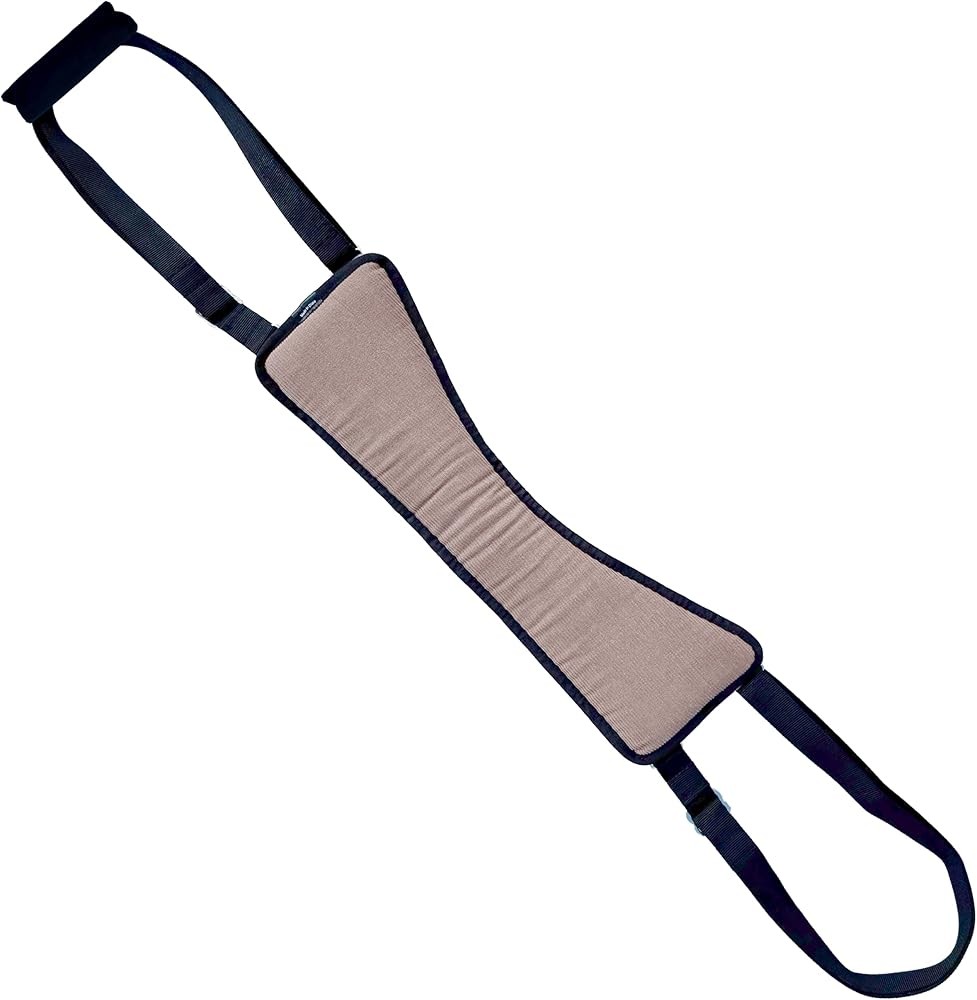
Easy Lift Dog Support Sling, Weak Hind Leg Harness for Injured, Arthritic & Senior Dogs, or Orthopedic Surgery Recovery & Rehabilitation, Machine Wash & Dry, Padded for Comfort, Help Up Stairs
Check Price on AmazonAs an Amazon Associate we earn from qualifying purchases.
This rear support harness features a padded neoprene design with adjustable straps and reinforced handles, suitable for senior dogs with arthritis or post-surgical recovery. The machine-washable construction and comfort padding make it appropriate for daily use in chronic conditions.
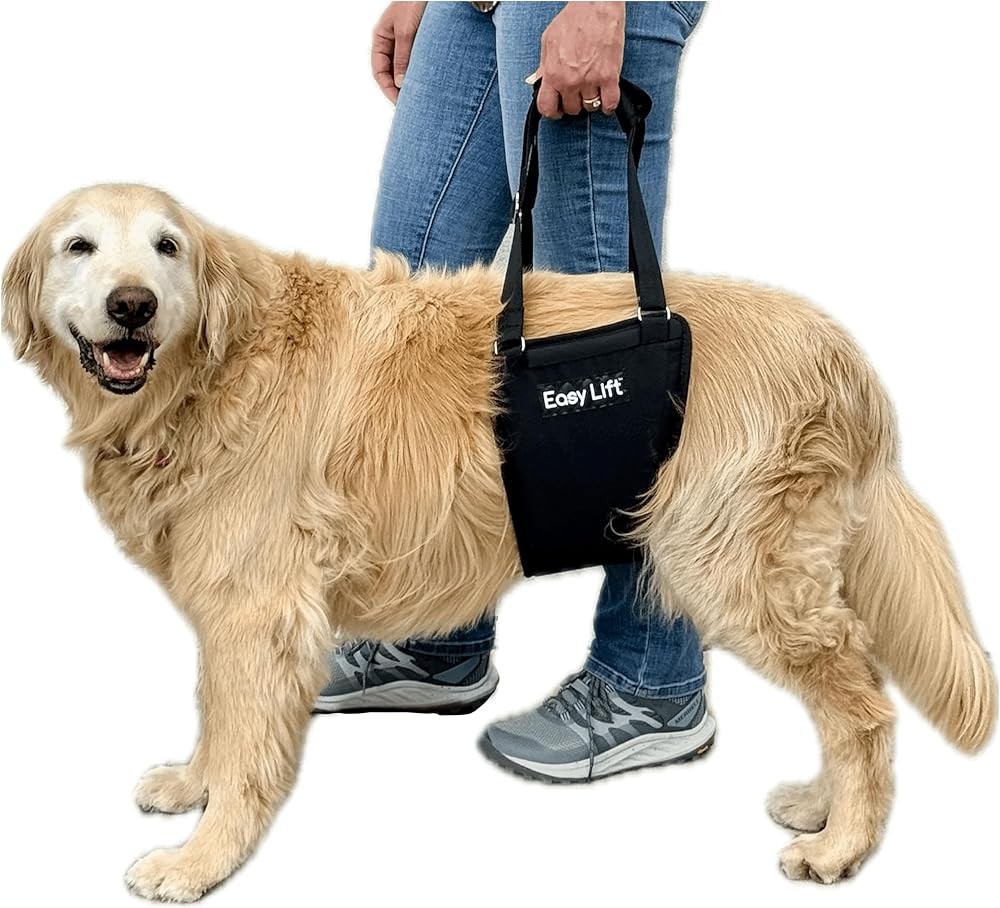
Easy Lift Dog Support Sling, Rear Hind Leg Harness for Injured & Senior Dogs, or Surgery Recovery & Rehabilitation, Padded for Comfort, Ergonomic Design, Machine Wash & Dry (Large/Extra Large)
Check Price on AmazonAs an Amazon Associate we earn from qualifying purchases.
Designed specifically for rear leg support, this harness provides an ergonomic lifting design for large and extra-large dogs with hind leg weakness from IVDD, hip dysplasia, or post-operative recovery.
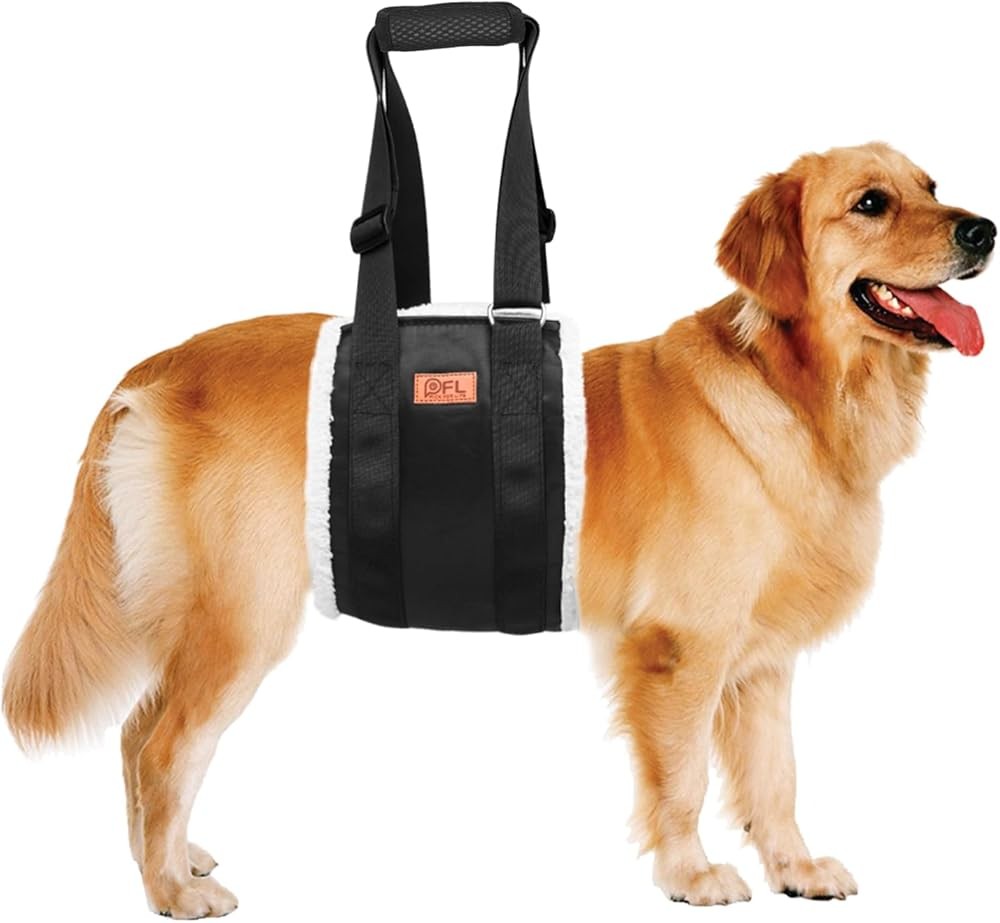
Adjustable Dog Lift Harness Dog Sling for Large Dogs Hind Leg Support Soft Lift Support and Rehab Harness for Weak Rear Legs, Helps Senior, Injured, Disabled and After ACL Surgery Dogs Large
Check Price on AmazonAs an Amazon Associate we earn from qualifying purchases.

Bottom line: Rear support harnesses with lifting points 6 inches anterior to hind legs and neoprene padding at contact areas provide optimal support for 70-80% of canine mobility cases involving hip dysplasia, IVDD, and degenerative myelopathy, with adjustability accommodating dogs from 30-100+ pounds.
Full-Body Harnesses for Generalized Weakness
Full-body harnesses provide support across both chest and hindquarters, distributing lifting force across a larger surface area. These harnesses are optimal for dogs with generalized weakness from multiple orthopedic issues, older dogs with both front and rear arthritis, or dogs in intermediate recovery stages who need support but are regaining strength.
The advantage of full-body harnesses over rear-support-only designs lies in their ability to assist the entire gait cycle. Dogs with rear-only support must still fully support their front end, which can be problematic for dogs with concurrent front leg arthritis or shoulder issues. Full-body designs reduce this compensation pattern.
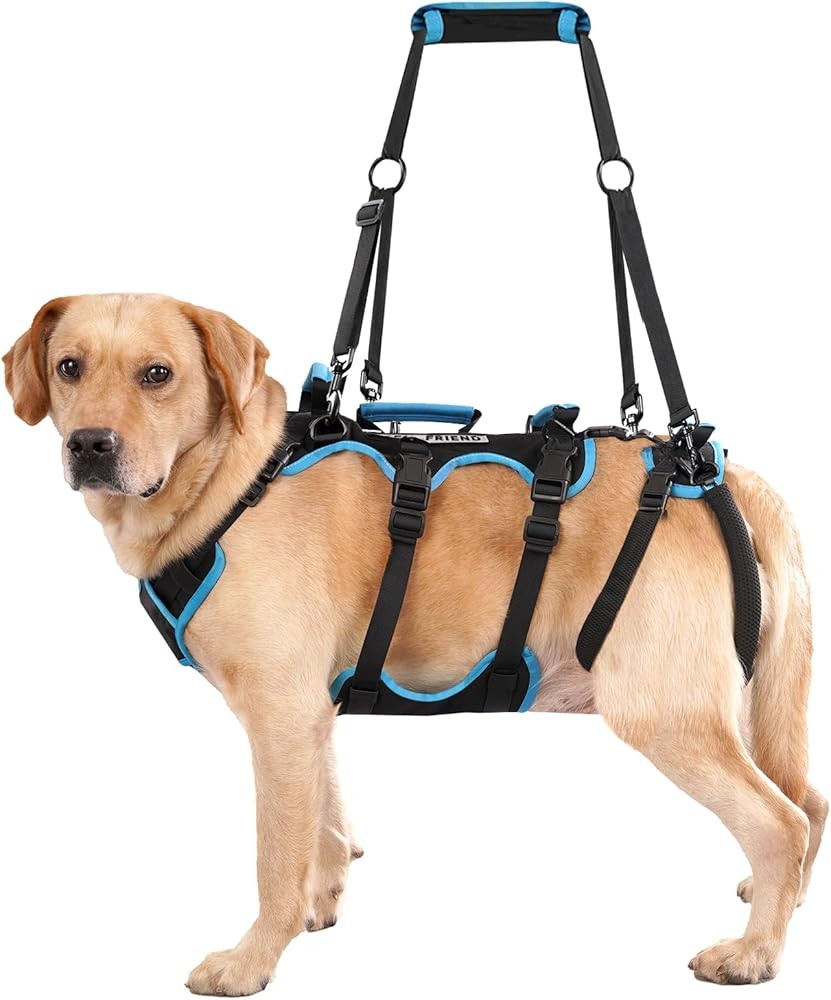
Dog Lift Harness for Large Male Dogs, 2-in-1, Back Leg Support & Mobility Assistance for Senior Dogs, Post-Surgery Recovery Sling(Black, Large)
Check Price on AmazonAs an Amazon Associate we earn from qualifying purchases.
This 2-in-1 design provides both rear leg support and full-body assistance for large male dogs, particularly useful during post-surgical recovery when multiple support points improve stability and comfort during the transition from non-weight-bearing to full mobility.
The disadvantage of full-body harnesses is reduced mobility compared to targeted rear support. Dogs wearing full-body harnesses have less freedom to engage their remaining strength, which can slow rehabilitation in cases where muscle engagement is therapeutic (such as IVDD recovery or early degenerative myelopathy).
Bottom line: Full-body harnesses distributing support across 4-6 contact points across chest and hindquarters work best for dogs with front and rear weakness or early post-surgical phases (weeks 0-4) when comprehensive 50-70% weight relief reduces stress on all limbs.
Specialty Support: Knee Braces and Joint Stabilization
Beyond general lifting harnesses, specialty orthopedic supports target specific joints affected by injury or surgery. Knee braces provide stabilization for dogs with cruciate ligament tears (ACL/CCL), offering an alternative or complement to surgical repair in selected cases.
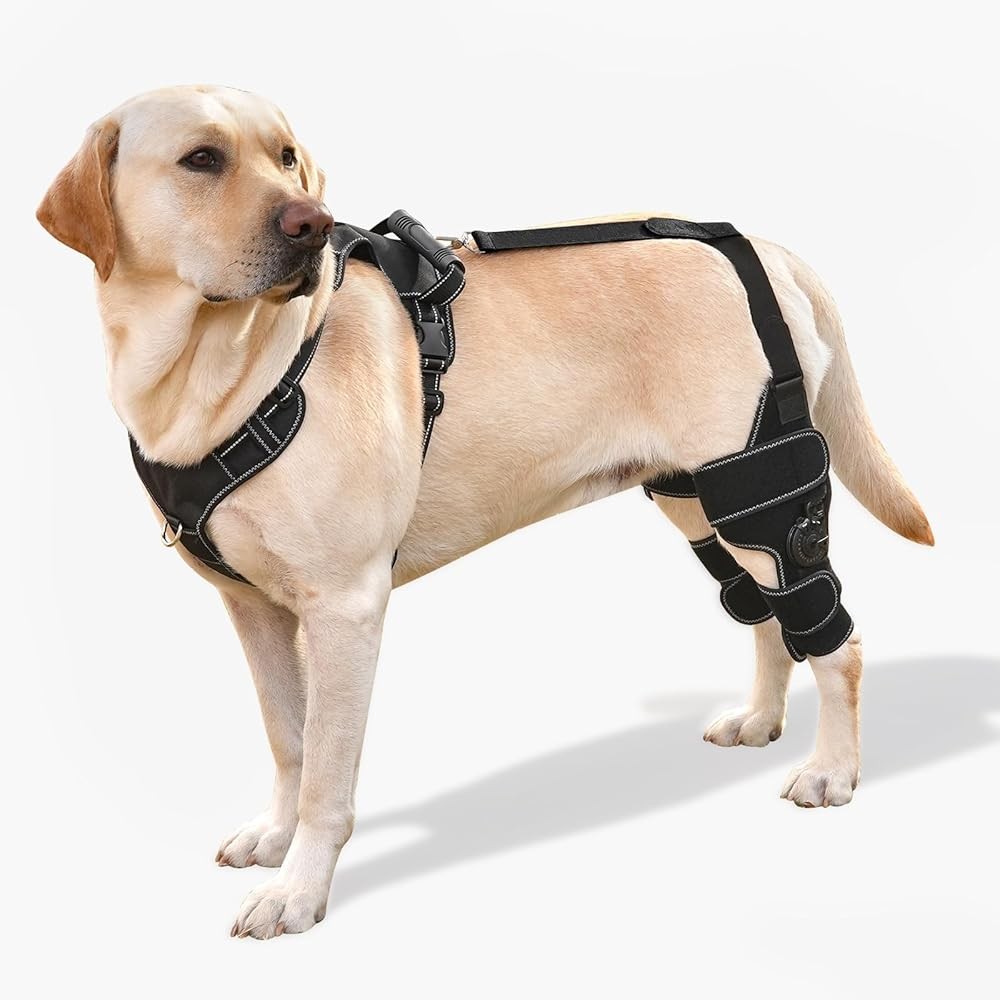
Dog Knee Brace with Adjustable Support - ACL & CCL Tear Recovery, Post-Surgery Stabilization, Mobility Aid for Rear Legs - Includes Secure Chest Harness for Dogs(Both Legs,M)
Check Price on AmazonAs an Amazon Associate we earn from qualifying purchases.
This knee brace system includes adjustable support for both rear legs plus an integrated chest harness, providing comprehensive stabilization during ACL/CCL tear recovery and post-surgical rehabilitation.
Research on conservative management of cruciate ligament injuries shows that bracing, when combined with activity restriction and physical therapy, can provide acceptable outcomes in small dogs (under 30 pounds) with partial tears. However, complete tears in larger dogs typically require surgical intervention, with bracing serving a supportive role during recovery rather than primary treatment.
The appropriate application of knee braces involves veterinary evaluation to determine injury severity, proper sizing to ensure the brace stabilizes the stifle joint without restricting circulation, gradual introduction to allow the dog to acclimate to the device, and integration with physical therapy exercises that strengthen supporting musculature.
Bottom line: Specialty knee braces providing medial-lateral stifle stabilization show acceptable outcomes for dogs under 30 pounds with partial ACL/CCL tears during 8-12 week conservative management, or as post-surgical support during the critical recovery window in larger dogs.
Dog Wheelchairs for Complete Mobility Restoration
When hind leg weakness progresses to complete paralysis—whether from late-stage degenerative myelopathy, severe IVDD without surgical recovery, or other neurological conditions—harnesses can no longer provide adequate mobility. Dog wheelchairs (also called carts or mobility devices) replace hind leg function entirely, allowing dogs to walk, run, and maintain activity despite paralysis.
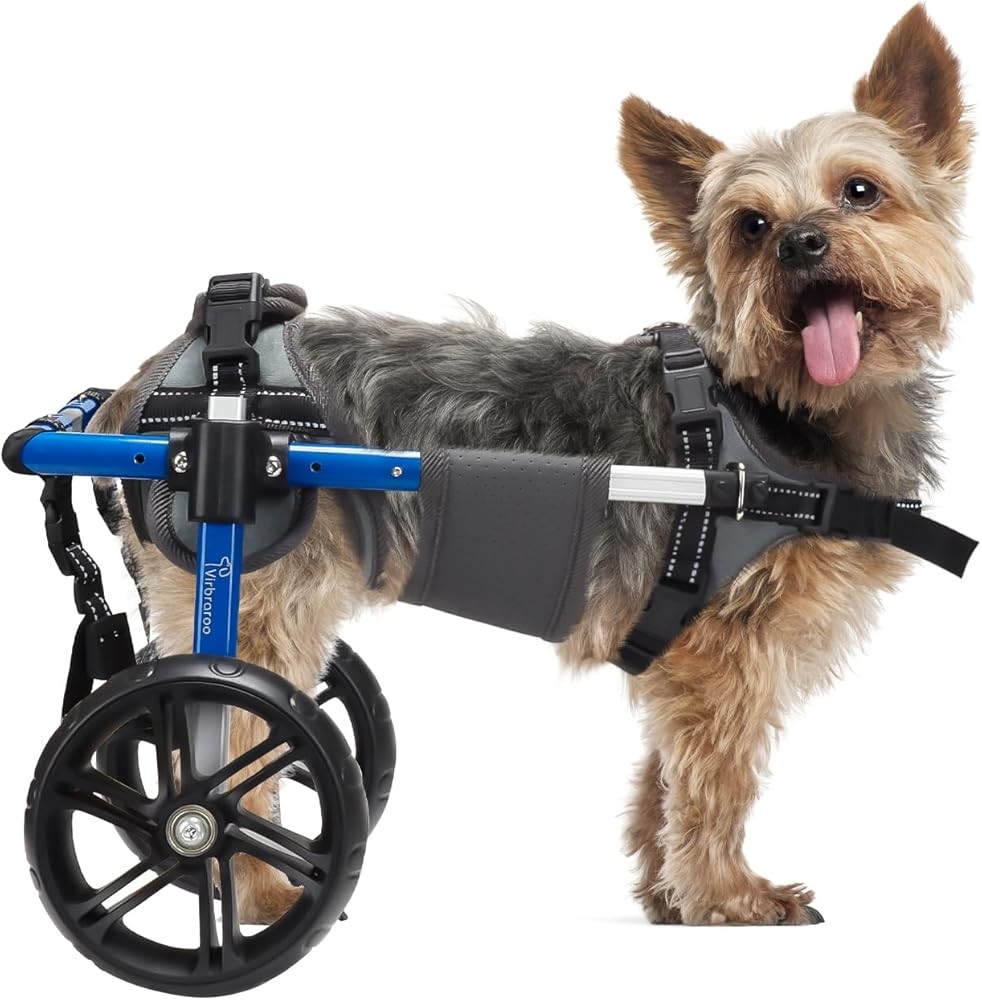
Dog Wheelchair for Back Legs with Upgraded All-Terrain Tires & Durable Bearings,Adjustable Dog Wheelchair for 9-13.7,11-22 lbs Disabled or Injured Small Dogs
Check Price on AmazonAs an Amazon Associate we earn from qualifying purchases.
Designed for small dogs (11-22 pounds) with rear leg disability, this wheelchair features all-terrain tires and adjustable sizing for dogs with permanent rear leg paralysis from degenerative myelopathy or non-responsive IVDD.
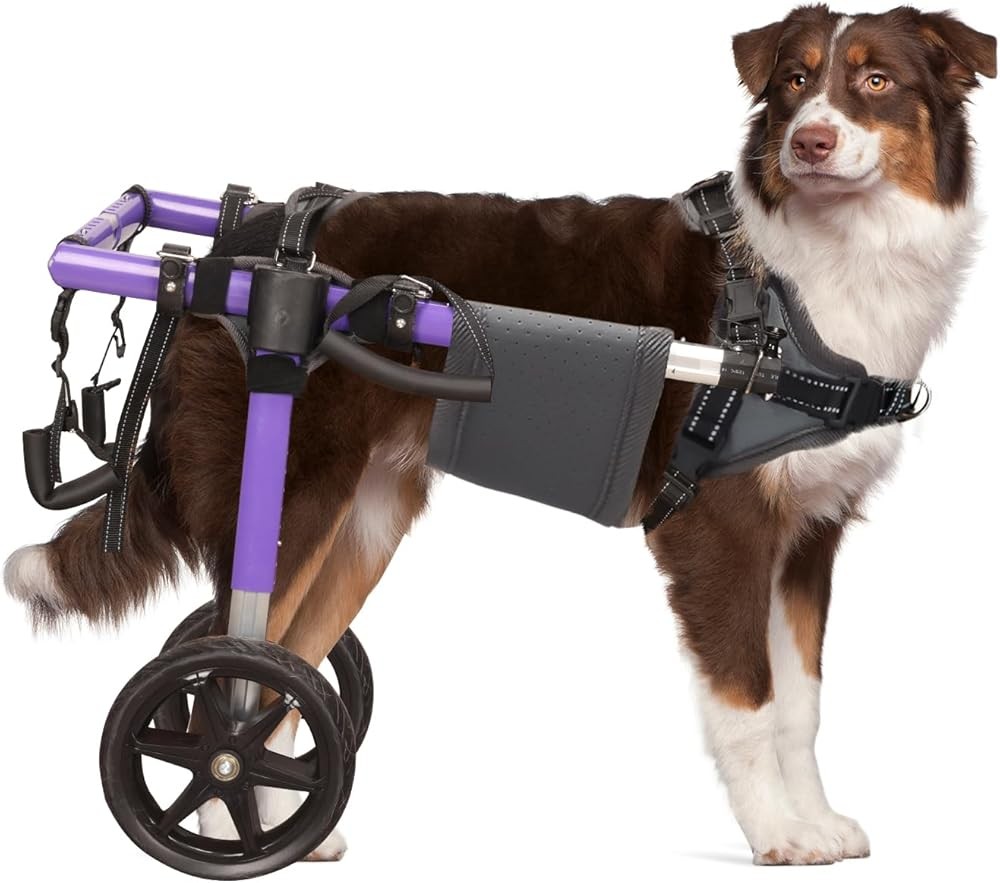
Dog Wheelchair for Back Legs - Lightweight Aluminum Alloy Dog Wheelchair, Upgraded All-Terrain Tires for Med Dogs, 35-48.5 lbs(M)
Check Price on AmazonAs an Amazon Associate we earn from qualifying purchases.
A lightweight aluminum wheelchair for medium dogs (35-48.5 pounds) with upgraded all-terrain tires, suitable for active dogs requiring full rear leg support due to paralysis or severe weakness.
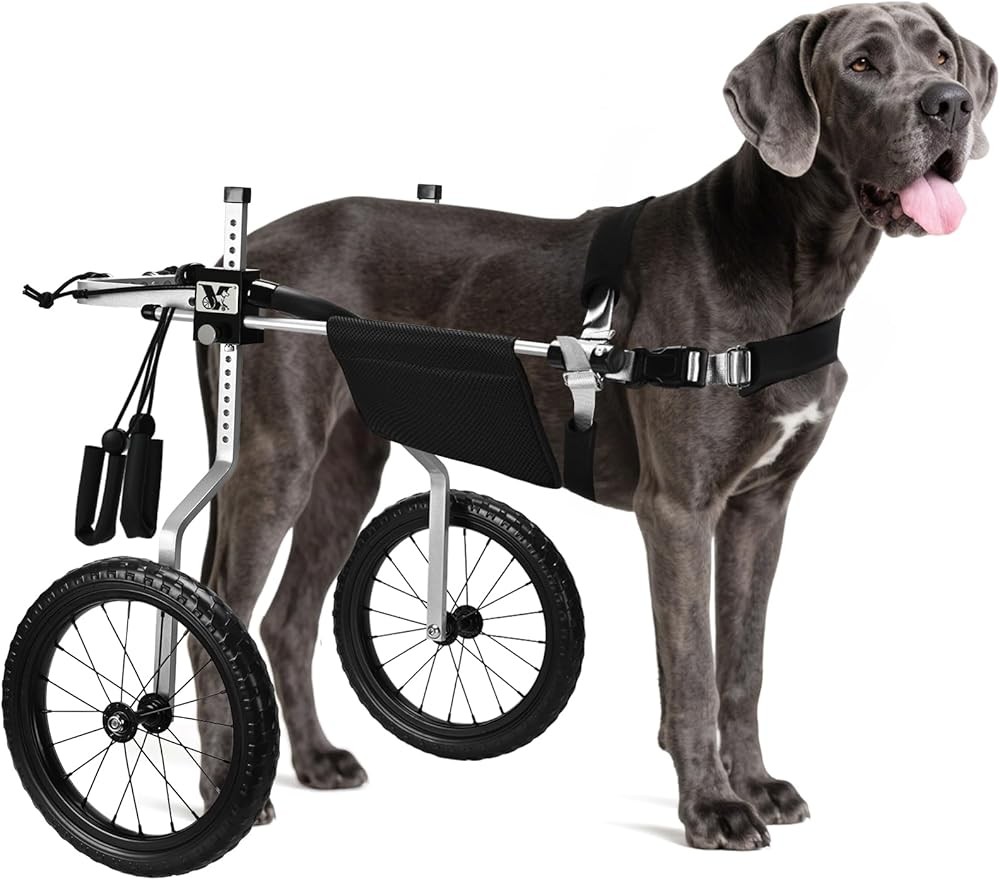
All-Terrain Dog Wheelchair for Back Legs - Lightweight & Adjustable for Medium to Large Dogs - Easy to Assemble Mobility Aid
Check Price on AmazonAs an Amazon Associate we earn from qualifying purchases.
An all-terrain wheelchair for medium to large dogs, providing complete rear leg support for dogs with permanent mobility loss who need outdoor activity capability across varied surfaces.
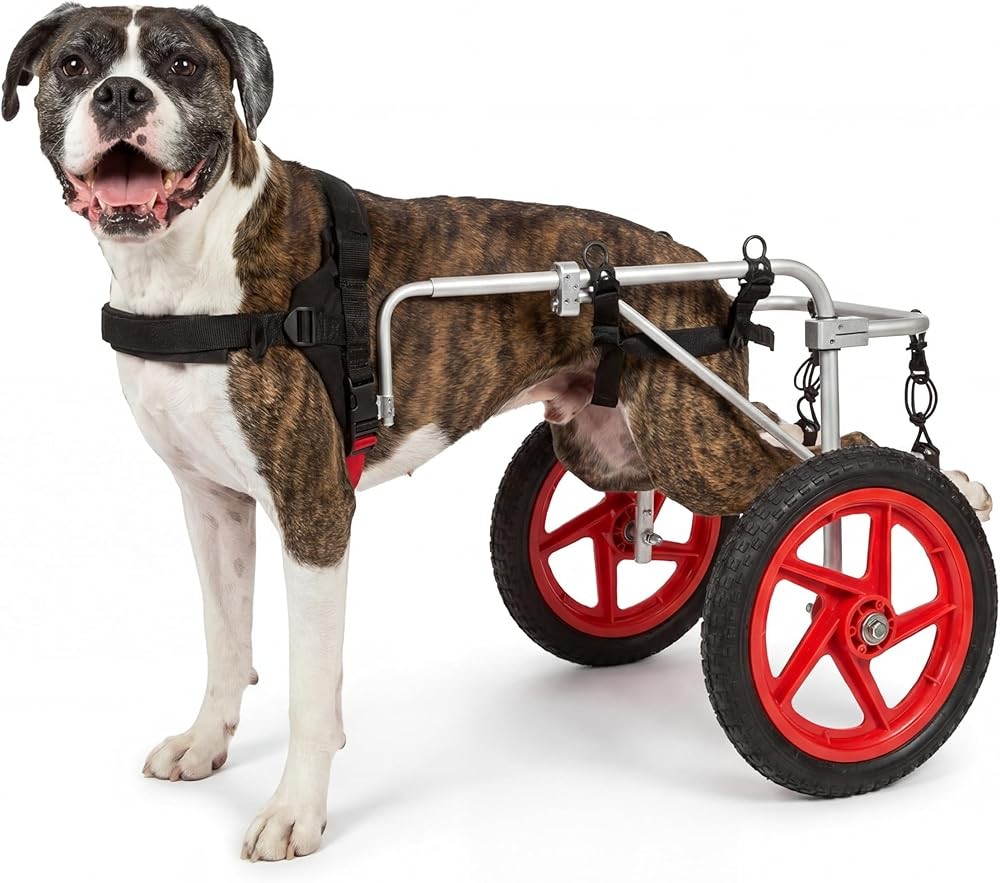
Large Back Leg Dog Wheelchair - 2.0 Design with Enhanced Stability
Check Price on AmazonAs an Amazon Associate we earn from qualifying purchases.
A large-dog wheelchair with an updated design, appropriate for dogs over 50 pounds requiring full rear leg mobility replacement due to progressive neurological disease or irreversible injury.
The transition from harness to wheelchair typically occurs when the dog can no longer support any rear leg weight even with handler assistance via harness, when the dog’s remaining front leg strength is sufficient to propel the wheelchair, or when quality of life assessment indicates the dog is frustrated by inability to move independently despite harness support.
Proper wheelchair fitting is critical for function and comfort. Key measurements include rear leg length (from hip to paw), body length (base of neck to base of tail), chest girth, and weight. The wheelchair should position the dog’s spine level, support the rear legs just off the ground, and allow free front leg movement without the wheelchair frame interfering with natural stride.
Bottom line: Wheelchairs become necessary when dogs can no longer support any rear weight (0% weight-bearing capacity) even with harness assistance bearing 80-100% of rear load, requiring precise measurements of leg length (hip to paw), body length, girth, and weight for proper fit.
What Size and Fit Specifications Matter for Rehabilitation Harnesses?
Improper harness sizing creates multiple problems that undermine the device’s therapeutic benefit. An oversized harness shifts during movement, causing inconsistent support and potential chafing. An undersized harness compresses the abdomen or chest, restricting breathing and creating discomfort that discourages the dog from moving.
The critical measurements for rear support harnesses are girth (chest circumference measured behind the front legs at the widest point), rear support point (distance from front legs to ideal lifting point, typically 6 inches anterior to hind legs), and weight (as most harnesses have weight capacity ranges).
For full-body harnesses, additional measurements include body length (from base of neck to base of tail) and neck circumference (for models with neck components). For wheelchairs, leg length (hip to paw when standing) and body height (ground to hip) become critical.
The fit test for proper harness sizing involves these checkpoints: when fastened at normal tightness, you should be able to fit two fingers (but not three) between the harness and the dog’s body at all contact points; the dog should be able to breathe normally without restriction, indicated by normal panting and no change in breathing rate when wearing the harness versus not wearing it; the harness should not shift more than 1 inch in any direction when the dog moves or when lift pressure is applied through the handle; and all weight-bearing straps should lie flat against the body without twisting or bunching.
Size ranges vary by manufacturer but generally follow these guidelines: Small (under 25 pounds, girth 14-20 inches), Medium (25-50 pounds, girth 20-26 inches), Large (50-80 pounds, girth 26-32 inches), Extra Large (80-120+ pounds, girth 32-40 inches).
Bottom line: Veterinary rehabilitation protocols specify proper harness fit requires three measurements—girth within ±1 inch, rear support point positioning 6 inches anterior to hind legs, and weight-capacity matching—plus two-finger clearance test at all contact points, with the harness shifting less than 1 inch during movement confirming adequate support provision.4
How Should Rehabilitation Harnesses Be Used During Recovery Protocols?
The appropriate rehabilitation protocol for harness use depends on the underlying condition and whether the goal is recovery (post-surgical cases) or management (chronic progressive conditions). Research on postoperative rehabilitation emphasizes that controlled, progressive activity combined with mobility support produces superior outcomes compared to either strict rest or unsupported activity.
Post-Surgical Recovery Protocol
For dogs recovering from orthopedic surgery, the standard rehabilitation timeline progresses through distinct phases, each with specific harness use guidelines:
Phase 1 (Weeks 0-2 post-op): Strict activity restriction with harness support for toileting only. Walks should be limited to 5-10 minutes on leash, 3-4 times daily, with the harness bearing 50-70% of rear weight to minimize load on surgical sites. Physical therapy at this stage consists of passive range-of-motion exercises performed by a certified canine rehabilitation therapist, with the harness not used during these controlled sessions.
Phase 2 (Weeks 2-6 post-op): Gradual activity increase with harness support for all walks and stair navigation. Walk duration increases to 10-20 minutes, 2-3 times daily, with the handler gradually reducing lift support from 50% to 30% of rear weight as the dog demonstrates improved strength. Introduction of controlled exercises like sit-to-stand transitions and slow-pace treadmill walking, performed with harness support to reduce risk of falls if the dog fatigues.
Phase 3 (Weeks 6-12 post-op): Transition to harness use during extended activities or challenging terrain. Flat-ground walks may no longer require harness support, but stairs, inclines, or walks exceeding 20 minutes should include harness availability. Physical therapy progresses to active strengthening exercises like cavaletti poles and balance work, with harness support during early attempts at new exercises.
Phase 4 (Months 3-6 post-op): Phase-out of routine harness use with availability maintained for fatigue or difficult situations. Most dogs can complete normal daily activities without harness support by 3 months post-op, but may fatigue during extended activities, making harness availability important for safe completion of longer walks or hikes.
Recovery timelines for specific procedures vary: TPLO cruciate ligament repair typically allows return to normal activity at 12-16 weeks, total hip replacement at 8-12 weeks for normal activity with 6-month full bone integration, fracture repairs at 8-16 weeks depending on fracture type and location.
Bottom line: Post-surgical recovery protocols progress through four phases over 12-24 weeks—Phase 1 (weeks 0-2) with 50-70% weight relief, Phase 2 (weeks 2-6) with 30-50% relief, Phase 3 (weeks 6-12) with 10-30% relief on challenging terrain, and Phase 4 (months 3-6) with availability-only status.
Chronic Condition Management Protocol
For dogs with chronic progressive conditions like degenerative myelopathy or hip dysplasia, the harness use protocol differs because the goal is maintaining quality of life rather than achieving recovery.
Early-stage chronic disease: Harness use during walks on challenging terrain (stairs, inclines, uneven surfaces) and availability during all outdoor activities in case the dog experiences sudden weakness or falls. Total daily harness time may be 20-40 minutes, primarily during the most physically demanding activities.
Middle-stage chronic disease: Harness use for all outdoor activities and indoor movement on slippery surfaces. As weakness progresses, dogs benefit from continuous harness support during any standing or walking activity, with removal only during rest periods. Daily harness time increases to 2-4 hours as the dog requires support for multiple daily walks, toileting, and navigation of the home.
Late-stage chronic disease: Continuous harness wear during all waking hours, with evaluation for wheelchair transition when the dog can no longer support rear weight even with handler assistance. At this stage, the harness functions more as a safety device to reduce risk of falls and assist with position changes than as a mobility enabler, signaling that wheelchair use may better serve the dog’s needs.
The critical difference between recovery and management protocols lies in the trajectory. Recovery protocols progressively reduce harness support as recovery occurs, while management protocols progressively increase support as disease advances.
Bottom line: Chronic condition management requires progressive increases matching three disease stages—early stage with 20-40 minutes daily harness use on challenging terrain, middle stage with 2-4 hours daily for all outdoor activity, and late-stage continuous wear with wheelchair evaluation when rear weight support capacity drops below 20%.
Can Rehabilitation Harnesses Reduce Risk of Further Injury?
The injury risk reduction benefit of rehabilitation harnesses extends beyond support of the primary condition to reduction of secondary compensation injuries. Research on canine biomechanics shows that dogs with rear leg weakness shift 10-20% additional weight to the front legs, creating abnormal stress patterns that can accelerate arthritis development in shoulders and elbows.
By providing rear support that maintains more normal weight distribution, harnesses reduce this compensatory overload. The protection effect is most significant in cases where the primary condition is expected to be long-term or permanent (chronic hip dysplasia, degenerative myelopathy) versus short-term (post-surgical recovery), as the duration of abnormal compensation determines the magnitude of secondary damage.
Harnesses also reduce risk of acute injuries that occur when weakened dogs attempt normal activities. Falls on stairs represent a common injury mechanism for dogs with rear leg weakness, potentially causing fractures, soft tissue injuries, or exacerbation of the underlying condition. Harness support during stair navigation eliminates this fall risk.
The neurological benefit of fall risk reduction is particularly important for IVDD cases. Additional spinal trauma from falls can worsen spinal cord compression or damage, potentially converting a recoverable Grade 3 IVDD case (non-ambulatory with pain sensation) to a non-recoverable Grade 5 case (paralysis without pain sensation).
Research demonstrates that controlled, supported mobility during neurological recovery allows dogs to maintain muscle strength and joint mobility that facilitate functional recovery once neurological recovery progresses.1 Without support, dogs often become sedentary due to weakness or fear of falling, leading to rapid muscle atrophy that compromises eventual recovery even if neurological function returns.
Bottom line: Rehabilitation harnesses reduce compensatory injury risk by maintaining normal 60% front/40% rear weight distribution (versus 70-80% front when unsupported) and eliminate fall risk that could convert IVDD Grade 3 (recoverable with pain sensation) to Grade 5 (non-recoverable without pain sensation) through additional spinal trauma.
What Role Do Harnesses Play in Comprehensive Rehabilitation Programs?
Harnesses are assistive devices within comprehensive rehabilitation programs, not standalone treatments. Research demonstrating recovery in neurological disease cases specifies “physiotherapy and physical rehabilitation,” not harness use alone.1 This distinction is critical for dog owners to understand: mobility support enables therapeutic activity but does not replace it.
A complete canine rehabilitation program for orthopedic or neurological conditions typically includes these components:
Pain management: Pharmaceutical interventions (NSAIDs, gabapentin, tramadol) prescribed by a veterinarian to ensure the dog is comfortable enough to participate in rehabilitation activities. Uncontrolled pain causes muscle tension and movement avoidance that impede recovery.
Physical therapy: Controlled exercises prescribed and often supervised by a certified canine rehabilitation therapist (CCRP or CCRT). These may include passive range-of-motion, therapeutic exercises (cavaletti poles, sit-to-stand transitions, balance board work), aquatic therapy (underwater treadmill or swimming), and manual therapy (massage, joint mobilization).
Mobility support devices: Harnesses, wheelchairs, or other assistive devices that enable the dog to participate in necessary movement (toileting, short walks) and prescribed exercises without excessive pain or risk of injury.
Activity management: Structured restriction of high-impact activities (running, jumping, stairs when possible) during recovery, with gradual reintroduction as strength and function return.
Home modifications: Changes to the living environment to reduce injury risk and support recovery, such as non-slip rugs on hard floors, ramps as alternatives to stairs, raised food and water bowls to reduce neck strain, and orthopedic beds to support joints during rest.
Nutritional support: Weight management to reduce load on recovery or compromised joints (each pound of excess weight creates approximately 4 pounds of force on joints during walking), and supplementation with joint-supporting nutrients like omega-3 fatty acids and glucosamine-chondroitin in consultation with a veterinarian.
The harness serves as the bridge between the dog’s current functional capacity and the demands of therapeutic activity. Without proper support, a dog with significant weakness cannot safely participate in the controlled exercise that research shows is crucial for recovery.
Bottom line: Harnesses enable participation in comprehensive rehabilitation programs that research shows require 6-8 components—pain management, physical therapy, mobility support, activity management, home modifications, and nutritional support—with harnesses specifically bridging the gap between current functional capacity (20-60% rear weight-bearing) and therapeutic activity demands.
How Do You Know When to Transition from Harness to Wheelchair?
The decision to transition from harness to wheelchair is based on functional assessment of the dog’s remaining rear leg capacity. Several indicators suggest wheelchair evaluation is appropriate:
The dog can no longer support any rear weight even with harness assistance. When lifting 80-100% of the rear weight is necessary for the dog to move, a wheelchair that fully supports the rear and allows the dog to use front leg strength for propulsion provides better function.
The handler is unable to provide adequate support due to the dog’s size or their own physical limitations. Large dogs (over 70 pounds) with complete rear weakness may require more lifting force than owners can safely provide, particularly for elderly owners or those with their own mobility limitations.
The dog demonstrates frustration with harness limitations. Some dogs, particularly those with strong remaining front leg function and high activity drive, become frustrated by the dependency on handler support that harnesses require. Wheelchairs restore independence by allowing the dog to initiate and control movement.
Front leg strength remains good while rear function has plateaued or declined. Wheelchairs require substantial front leg strength to propel, making them appropriate only for dogs who retain good front leg function. A dog with both front and rear weakness is not a wheelchair candidate.
The underlying condition is progressive and permanent. Degenerative myelopathy inevitably progresses to paralysis, making wheelchair acquisition appropriate as soon as harness support becomes insufficient. In contrast, post-surgical recovery cases should exhaust all rehabilitation efforts before considering wheelchair use, as recovery may still occur.
The wheelchair trial process involves professional fitting at a veterinary rehabilitation facility or specialty pet mobility shop, supervised initial use sessions to ensure the dog can propel the device and demonstrates willingness to use it, and gradual increase in wheelchair use time while monitoring for pressure points or gait abnormalities.
Some dogs transition to combination use: wheelchair for extended outdoor activities where they want to move independently and explore, and harness for short indoor movements, toileting, or situations where the wheelchair is impractical. This flexibility maintains quality of life while matching support intensity to activity demands.
Bottom line: Transition criteria from harness to wheelchair include rear weight support capacity dropping to 0-20% (requiring handler to bear 80-100% rear weight for more than 30 minutes daily), handler inability to safely provide lifting force for dogs over 70 pounds, or dog frustration with dependency indicating quality of life impact.
What Maintenance and Care Do Rehabilitation Harnesses Require?
Proper maintenance extends harness lifespan and ensures consistent safe function. Most quality rehabilitation harnesses are machine washable, an important feature given that these devices come into contact with outdoor surfaces and may become soiled during toileting activities.
The washing protocol for rehabilitation harnesses involves cold water on gentle cycle to avoid degradation of elastic components, mild detergent without bleach or fabric softeners that can break down synthetic materials, and air drying or low-heat tumble dry to avoid heat damage to elastic and neoprene components.
Inspection frequency should be weekly for harnesses in daily use, checking for these wear indicators: fraying of straps or stitching, particularly at stress points where handles attach; loosening or damage to buckles, clips, or Velcro closures; thinning or cracking of padding materials; and loss of elasticity in adjustable straps.
Any harness showing significant wear in load-bearing components (handles, main straps, attachment points) should be replaced immediately. Failure of these components during use can result in the dog falling and sustaining injury.
The expected lifespan of a rehabilitation harness varies by use intensity and dog size. A harness used daily for a 70-pound dog may last 6-12 months, while the same harness used occasionally for a 30-pound dog might remain functional for 2-3 years. The replacement decision should be based on condition inspection rather than time-based, as individual use patterns vary substantially.
Storage when not in use should protect the harness from damage: hang on a hook or store flat in a dry location, avoid compression under heavy objects that can deform padding, and keep away from chewing access if the dog or other pets might damage it.
Bottom line: Rehabilitation harnesses require weekly inspection of load-bearing components at stress points where handles attach, machine washing in cold water on gentle cycle after soiling, and replacement when fraying appears or after 6-12 months of daily use for dogs over 50 pounds.
What Are Common Mistakes in Harness Selection and Use?
Several common errors in harness selection and application can compromise effectiveness or create new problems:
Selecting wrong harness type for condition: Using a front-support harness for a dog with hip dysplasia, or a rear-support harness for a dog with shoulder arthritis, provides support in the wrong location. Match harness type to the anatomical location of weakness or injury.
Improper sizing: Too-large harnesses shift during use, causing inconsistent support and chafing. Too-small harnesses compress the chest or abdomen, restricting breathing. The two-finger fit test (able to fit two fingers between harness and body at all contact points) ensures proper sizing.
Bearing excessive weight for too long: Handlers attempting to bear 80-100% of rear weight for extended periods (30+ minutes) during walks creates handler fatigue and inconsistent support. If this level of support is required, wheelchair evaluation is appropriate.
Premature discontinuation post-surgery: Stopping harness use at 6-8 weeks because the dog “looks fine” can overload recovery structures before full integration occurs. Follow veterinary-recommended timelines (typically 12-16 weeks minimum for full weight-bearing clearance).
Using harness as sole intervention: Expecting harness support alone to achieve recovery without concurrent physical therapy, pain management, and activity restriction often leads to suboptimal outcomes. Research supports comprehensive rehabilitation programs, not single interventions.1
Neglecting harness maintenance: Continuing to use a harness with frayed straps or damaged buckles creates injury risk if the harness fails during use. Weekly inspection and timely replacement ensure safety.
Inappropriate wheelchair delay: Continuing to struggle with harness support when the dog has 0% weight-bearing capacity and demonstrates frustration impacts both dog and owner quality of life. Timely wheelchair transition maintains mobility and independence.
Bottom line: Common errors include mismatching harness type to injury location, improper sizing outside the two-finger fit test parameters (allowing three+ fingers or no finger clearance), bearing over 80% rear weight for more than 20-30 minutes (wheelchair threshold), and premature discontinuation before 12-16 week post-surgical clearance timelines.
What Does Research Show About Rehabilitation Timeline Success Rates?
Understanding evidence-based rehabilitation timelines helps set realistic expectations for recovery or management of mobility-impaired dogs. Research on physiotherapy and physical rehabilitation for postoperative dogs with thoracolumbar intervertebral disk disease provides specific outcome data that informs rehabilitation protocols.5
IVDD Recovery Timelines
Studies examining post-operative IVDD cases demonstrate that 91% of dogs regained walking ability within a median time of 14 days when comprehensive rehabilitation programs were implemented.5 This high success rate occurred specifically in dogs receiving structured physiotherapy combined with appropriate mobility support during the critical early recovery window.
The 14-day median recovery timeline applies to dogs with Grade 3-4 IVDD (non-ambulatory paraparesis with pain sensation intact) who underwent surgical decompression. Dogs with Grade 5 IVDD (complete paralysis without pain sensation) showed significantly longer recovery times, with only 50-60% regaining ambulatory function even with aggressive rehabilitation.
These findings emphasize the importance of early intervention. Dogs beginning intensive physiotherapy within 24-48 hours post-surgery showed faster functional recovery compared to those where rehabilitation was delayed 7+ days post-operatively. The mobility harness plays a crucial role in this early intervention by enabling dogs to participate in therapeutic exercise even when they lack sufficient strength for independent mobility.
Specific rehabilitation protocol components that produced the 91% success rate included passive range-of-motion exercises initiated within 24 hours post-surgery, supported standing and weight-shifting exercises beginning at 48-72 hours post-op using harness assistance, progressive ambulation training starting when the dog demonstrated any voluntary rear leg movement (typically days 3-7), and aquatic therapy introduced at 10-14 days for dogs with access to underwater treadmill facilities.
Outcome: Research on postoperative IVDD dogs shows 91% regained walking ability within 14 days (median) when intensive physiotherapy was initiated within 24-48 hours post-surgery and mobility harnesses enabled participation in therapeutic exercise despite initial severe weakness.5
Degenerative Myelopathy Progression Rates
Unlike recoverable injuries, degenerative myelopathy follows a progressive course where harness support serves a management rather than curative role. Research on integrative treatment of musculoskeletal and neurological conditions indicates that recovery timelines for cranial cruciate ligament injury extend 6-12 months even post-surgery, while degenerative myelopathy shows ongoing functional decline that rehabilitation can potentially slow but not reverse.6
Clinical observations of degenerative myelopathy progression show average timelines from first signs to loss of ambulation ranging from 6-24 months, with substantial individual variation. Early-stage disease (mild proprioceptive deficits, occasional knuckling) typically lasts 2-6 months before progressing to middle stage. Middle-stage disease (consistent knuckling, difficulty rising, moderate weakness) persists 4-8 months before advancing to late stage. Late-stage disease (severe weakness to paralysis) represents the final 2-6 months before complete loss of rear leg function.
Physiotherapy approaches during degenerative myelopathy, while unable to halt progression, may delay onset and worsening of clinical signs.1 Dogs receiving structured exercise programs with harness support to enable activity despite weakness showed slower functional decline (measured by time to loss of ambulation) compared to dogs whose activity decreased due to weakness without support devices.
The mechanism behind this potential slowing effect likely involves maintenance of muscle mass and cardiovascular fitness that preserves functional capacity as neurological function declines. A dog with 60% neurological function but 100% muscle strength may remain ambulatory longer than a dog with 60% neurological function but only 40% muscle strength due to disuse atrophy.
Outcome: Degenerative myelopathy progresses from first signs to loss of ambulation over 6-24 months (average 12-18 months), with structured exercise programs using harness support potentially slowing functional decline by maintaining muscle strength and fitness despite progressive neurological deterioration.
Post-Surgical Cruciate Ligament Recovery
Cranial cruciate ligament (CCL) tears represent one of the most common orthopedic injuries in dogs, with surgical repair timelines varying by procedure type. Research indicates CCL injury recovery requires 6-12 months post-surgery for full tissue recovery and return to normal activity.6
TPLO (tibial plateau leveling osteotomy) procedures—the current gold standard for large-breed CCL repair—involve cutting the tibia and rotating it to change the angle, then securing with a metal plate. The bone cut (osteotomy) requires 8-12 weeks to recover fully, during which harness support protects the surgical site from excessive load while allowing controlled weight-bearing that promotes proper bone recovery.
TTA (tibial tuberosity advancement) procedures advance the tibial crest forward and secure it with a special plate and bone graft. Healing timelines are similar to TPLO (8-12 weeks for bone healing), with return to full activity at 4-6 months and complete tissue remodeling extending to 12 months.
Lateral suture techniques—less invasive alternatives often used for smaller dogs—stabilize the stifle with synthetic material placed outside the joint. These procedures show faster initial recovery (6-8 weeks to normal activity) but may have higher long-term failure rates in dogs over 40 pounds compared to TPLO.
Post-surgical harness protocols for CCL repair follow standard phases: intensive support weeks 0-8 bearing 40-60% rear weight during all activity, transitional support weeks 8-12 bearing 20-30% weight on challenging terrain, and availability-only months 3-6 for situations where the dog shows fatigue or on very difficult surfaces.
Outcome: CCL surgical repair requires 8-12 weeks for bone recovery (TPLO/TTA) or 6-8 weeks (lateral suture), with harness support bearing 40-60% rear weight during weeks 0-8 protecting osteotomy sites while enabling controlled weight-bearing that promotes proper bone integration.6
Hip Dysplasia Conservative vs Surgical Outcomes
Hip dysplasia management divides into conservative (non-surgical) and surgical pathways, each with distinct timelines and outcomes. Conservative management using harness support, weight control, anti-inflammatory medications, and controlled exercise can maintain quality of life for months to years in mild-to-moderate cases, particularly in dogs under 50 pounds.
Surgical interventions for hip dysplasia include femoral head ostectomy (FHO)—removal of the femoral head to create a “false joint” from scar tissue—with recovery timelines of 8-12 weeks to functional mobility and 4-6 months to full adaptation. Total hip replacement (THR) involves replacing the hip joint with prosthetic components, requiring 8 weeks for bone-implant integration and 3-6 months for full tissue recovery and return to normal activity.
FHO outcomes are generally good for dogs under 50 pounds, with 85-90% achieving functional pain-free mobility, though some persistent lameness is common. THR outcomes are excellent for appropriately selected candidates (typically over 35 pounds, mature skeleton, no active infection), with 90-95% achieving normal or near-normal function.
Harness support during FHO recovery enables early weight-bearing (beginning at 3-5 days post-op) that promotes scar tissue formation creating the false joint. For THR, harness support protects the implant during the critical 8-week integration period while allowing controlled exercise that maintains muscle mass and limits joint stiffness.
Outcome: FHO requires 8-12 weeks for functional recovery with 85-90% achieving pain-free mobility in dogs under 50 pounds, with harness support enabling early weight-bearing starting at 3-5 days post-op; THR demands 8 weeks of strict load protection during bone-implant integration with harness bearing 50-70% rear weight, achieving 90-95% normal function outcomes.3
How Do Environmental Modifications Complement Harness Use?
Harness support works most effectively when combined with home environmental modifications that reduce injury risk and support recovery or disease management. Research on canine rehabilitation emphasizes that comprehensive approaches addressing multiple factors produce superior outcomes compared to single interventions.7
Non-Slip Surface Modifications
Hard flooring surfaces (tile, hardwood, laminate) create significant challenges for dogs with rear leg weakness. These surfaces offer insufficient traction for weakened legs, increasing fall risk and causing dogs to tense muscles attempting to maintain stability, which accelerates fatigue.
Non-slip modifications include yoga mats or rubber-backed runners placed in high-traffic pathways (kitchen to door, bedroom to bathroom), creating secure walking corridors; carpet tiles with rubberized backing installed in key areas where the dog spends most time; and rubberized coating products applied to existing tile or hardwood to increase traction without full surface replacement.
The functional benefit extends beyond fall risk reduction. Dogs confident in their footing are willing to move more frequently, maintaining activity levels that preserve muscle mass and cardiovascular fitness. Dogs fearful of slipping often become sedentary, accelerating muscle atrophy that compounds the underlying mobility problem.
Cost-effective solutions include purchasing yoga mats from discount retailers (typically $10-20 each) and creating pathways, or using outdoor carpet runners secured with double-sided carpet tape. More permanent solutions involve rubberized flooring coatings ($3-5 per square foot professionally applied) or luxury vinyl plank flooring with textured surfaces providing better traction than smooth hardwood.
Outcome: Non-slip surface modifications using yoga mats ($10-20 each) or rubber-backed runners in high-traffic areas reduce fall risk and increase dog willingness to move independently, maintaining activity levels that preserve muscle mass during recovery or disease management.7
Ramp Installation for Stair Alternatives
Stairs represent high-impact, high-risk obstacles for dogs with mobility impairment. Each step requires significant force generation from rear legs (approximately 3-4 times body weight), stresses recovery surgical sites, and creates fall risk if the dog fatigues mid-stairway.
Ramp alternatives reduce load to approximately 1.5-2 times body weight (versus 3-4 times for stairs) on an appropriately angled ramp, eliminate the explosive force requirement of stair climbing, and provide escape routes if the dog fatigues (can stop and rest on ramp, versus being trapped mid-stairway).
Ramp angle critically affects effectiveness. Optimal angles range from 18-22 degrees (approximately 4:1 to 5:1 ratio—4-5 feet of ramp length per 1 foot of height). Steeper angles (30+ degrees) negate the benefit by requiring similar force generation to stairs. Gentler angles (under 15 degrees) are ideal but require substantial length (8-10 feet for a 1.5-foot high porch).
Commercial dog ramps range from $100-400 for portable folding models suitable for vehicle access, to $500-2000 for permanent installation outdoor ramps with weather-resistant construction. DIY ramps can be built for $100-300 in materials using pressure-treated lumber and outdoor carpeting for traction.
Critical ramp features include non-slip surface (outdoor carpet, rubber matting, or grooved texture), side rails limiting the dog from stepping off edge, and width of at least 16-18 inches for medium dogs, 20-24 inches for large dogs.
Outcome: Ramps with 18-22 degree angles (4-5 feet length per 1 foot height) reduce load from 3-4 times body weight on stairs to 1.5-2 times body weight, significantly decreasing stress on recovery surgical sites or compromised joints, with commercial options at $100-400 or DIY builds at $100-300.7
Elevated Food and Water Bowls
While less critical than flooring and ramps, elevated food and water bowls provide secondary benefits for dogs with mobility issues, particularly those with concurrent neck, shoulder, or front leg problems.
Standard floor-level bowls require dogs to flex the neck and shift weight forward onto front legs during eating and drinking. For dogs already shifting excessive weight forward due to rear leg weakness, this compounds the abnormal load pattern. Elevated bowls positioned at shoulder height (or slightly below) allow more neutral neck positioning and more even weight distribution across all four legs.
The elevation should match the dog’s shoulder height when standing. Commercially available elevated feeders range from 4-6 inches for small dogs, 8-12 inches for medium dogs, to 14-18 inches for large and giant breeds. Cost ranges from $20-80 for basic elevated feeders to $150-300 for adjustable-height models.
Potential concerns about elevated feeders and bloat risk (gastric dilatation-volvulus) have been debated in veterinary literature. Current consensus suggests elevation alone does not increase bloat risk in most dogs, though dogs with family history of bloat or certain high-risk breeds (Great Danes, German Shepherds, Standard Poodles) should consult veterinarians before using elevated feeders.
Outcome: Elevated feeders positioned at shoulder height (4-6 inches for small dogs, 8-12 inches for medium, 14-18 inches for large breeds) reduce neck flexion and forward weight shift during eating, costing $20-80 for basic models or $150-300 for adjustable-height versions.7
Internal Links and Related Reading
Dogs experiencing mobility challenges often benefit from complementary interventions alongside harness support:
- Best Dog Food for Senior Dogs with Arthritis - Nutritional strategies to reduce inflammation and support joint health in aging dogs
- Best Dog Supplements for Hip and Joint Health - Research on glucosamine, chondroitin, omega-3 fatty acids, and other supplements for orthopedic support
- Best Orthopedic Dog Beds for Arthritis and Senior Dogs - Proper rest surface selection to reduce joint stress during sleep and rest periods
- Best Anti-Inflammatory Dog Food for Joint Pain and Allergies - Dietary approaches to managing inflammation that contributes to arthritis progression
- Best Fish Oil Supplements for Dogs Coat and Skin Health - Omega-3 fatty acids provide anti-inflammatory benefits for joints in addition to skin and coat effects
- Canine Cognitive Decline and Dementia in Dogs - Senior dogs with mobility issues may also experience cognitive changes requiring management
Frequently Asked Questions
How do I know if my dog needs a rehabilitation harness?
Signs include difficulty standing, weakness in rear legs, post-surgical mobility challenges, dragging paws, reluctance to climb stairs, or diagnosed conditions like hip dysplasia, IVDD, or degenerative myelopathy. Veterinary evaluation is essential for proper diagnosis.
What is the difference between a rear support harness and a full-body harness?
Rear support harnesses focus on lifting the hind legs and are ideal for hip dysplasia, IVDD, or degenerative myelopathy. Full-body harnesses distribute support across chest and hindquarters, best for dogs with generalized weakness or multiple orthopedic issues.
How long should my dog use a rehab harness each day?
Duration varies by condition. Post-surgical dogs may use it for all mobility during recovery (up to 12 months for some orthopedic surgeries). Chronic conditions like degenerative myelopathy require daily use during walks and activity. Consult your veterinarian for specific protocols.
Can a harness replace physical therapy for injured dogs?
No. Harnesses are assistive devices that complement physical therapy and veterinary care. Research shows rehabilitation protocols combining physiotherapy with mobility support produce significantly better outcomes than devices alone.
What size harness does my dog need?
Measure your dog’s girth (chest circumference behind front legs), hind leg lift point (6 inches in front of hind legs), and weight. Most harnesses provide sizing charts. A proper fit should be snug but allow two fingers between harness and skin without shifting during use.
Are wheelchairs better than harnesses for dogs with paralysis?
For complete hind leg paralysis (degenerative myelopathy late stage, severe IVDD), wheelchairs provide full mobility restoration. For partial weakness or recovery phases, harnesses offer flexibility and allow dogs to engage remaining muscle strength, which aids rehabilitation.
How do I clean and maintain a dog rehab harness?
Most quality harnesses are machine washable in cold water on gentle cycle. Air dry or use low heat. Inspect straps, buckles, and handles monthly for wear. Replace harnesses showing fraying, weakened stitching, or hardware damage to ensure safety.
Conclusion
Rehabilitation harnesses serve as critical assistive devices for dogs experiencing mobility challenges from injury, post-surgical recovery, or chronic orthopedic and neurological conditions. Research on the most common neurological diseases in dogs demonstrates that physiotherapy approaches, including proper mobility support, significantly improve patient quality of life and reduce recovery times for conditions like intervertebral disc herniation and degenerative myelopathy.1
The selection of harness type should match the specific condition and dog characteristics. Rear support harnesses address 70-80% of canine mobility issues: hip dysplasia, IVDD, degenerative myelopathy, and cruciate ligament injuries. Full-body harnesses serve dogs with generalized weakness or multiple orthopedic issues. Wheelchairs provide complete mobility replacement when hind leg function is permanently lost and rear weight-bearing capacity drops to 0-20%.
Proper fit is non-negotiable for harness effectiveness, requiring measurements of girth within ±1 inch, weight for capacity matching, and support point location 6 inches anterior to hind legs, with the correctly fitted device allowing two-finger clearance at all contact points while shifting less than 1 inch during use. The rehabilitation protocol should match the underlying condition, with post-surgical cases following progressive reduction in support intensity from 50-70% weight relief in weeks 0-2 to availability-only by months 3-6, while chronic progressive conditions require progressive increases from 20-40 minutes daily in early stages to continuous wear in late stages.
Research on postoperative IVDD rehabilitation shows 91% of dogs regained walking ability within 14 days (median) when intensive physiotherapy was initiated within 24-48 hours post-surgery and mobility harnesses enabled participation in therapeutic exercise.5 These outcomes demonstrate the critical role of mobility support devices in comprehensive rehabilitation programs that also include pain management, physical therapy, activity management, home modifications, and nutritional support.
For dogs with rear leg weakness from hip dysplasia, IVDD, degenerative myelopathy, or post-surgical orthopedic recovery, the right rehabilitation harness restores mobility, independence, and quality of life while supporting the recovery or management process over research-demonstrated recovery timelines ranging from 8-24 weeks depending on condition severity and surgical intervention type.
https://pubmed.ncbi.nlm.nih.gov/36006344/ ↩︎ ↩︎ ↩︎ ↩︎ ↩︎ ↩︎ ↩︎ ↩︎ ↩︎
https://onlinelibrary.wiley.com/doi/pdf/10.1002/9780470751183#page=115 ↩︎ ↩︎ ↩︎
https://redeot.mte.gov.br/libweb/hjYRZG/23l256/ManagementOfDevelopmentalOrthopedicDiseases.pdf ↩︎ ↩︎
https://redeot.mte.gov.br/libweb/hjYRZG/23l256/RehabilitationAndPhysicalTherapy.pdf ↩︎ ↩︎
https://comum.rcaap.pt/bitstream/10400.26/52579/1/Marine%20Gautier_dissertacao_final__SG_LM.pdf ↩︎ ↩︎ ↩︎ ↩︎
https://onlinelibrary.wiley.com/doi/abs/10.1002/9781119823551.ch16 ↩︎ ↩︎ ↩︎
https://onlinelibrary.wiley.com/doi/pdf/10.1002/9780470751183#page=220 ↩︎ ↩︎ ↩︎ ↩︎
Recommended Products
Easy Lift Dog Support Sling, Weak Hind Leg Harness for Injured, Arthritic & Senior Dogs, or Orthopedic Surgery Recovery & Rehabilitation, Machine Wash & Dry, Padded for Comfort, Help Up Stairs
Check Price on AmazonAs an Amazon Associate we earn from qualifying purchases.
Easy Lift Dog Support Sling, Rear Hind Leg Harness for Injured & Senior Dogs, or Surgery Recovery & Rehabilitation, Padded for Comfort, Ergonomic Design, Machine Wash & Dry (Large/Extra Large)
Check Price on AmazonAs an Amazon Associate we earn from qualifying purchases.
Adjustable Dog Lift Harness Dog Sling for Large Dogs Hind Leg Support Soft Lift Support and Rehab Harness for Weak Rear Legs, Helps Senior, Injured, Disabled and After ACL Surgery Dogs Large
Check Price on AmazonAs an Amazon Associate we earn from qualifying purchases.
Dog Knee Brace with Adjustable Support - ACL & CCL Tear Recovery, Post-Surgery Stabilization, Mobility Aid for Rear Legs - Includes Secure Chest Harness for Dogs(Both Legs,M)
Check Price on AmazonAs an Amazon Associate we earn from qualifying purchases.
Dog Lift Harness for Large Male Dogs, 2-in-1, Back Leg Support & Mobility Assistance for Senior Dogs, Post-Surgery Recovery Sling(Black, Large)
Check Price on AmazonAs an Amazon Associate we earn from qualifying purchases.
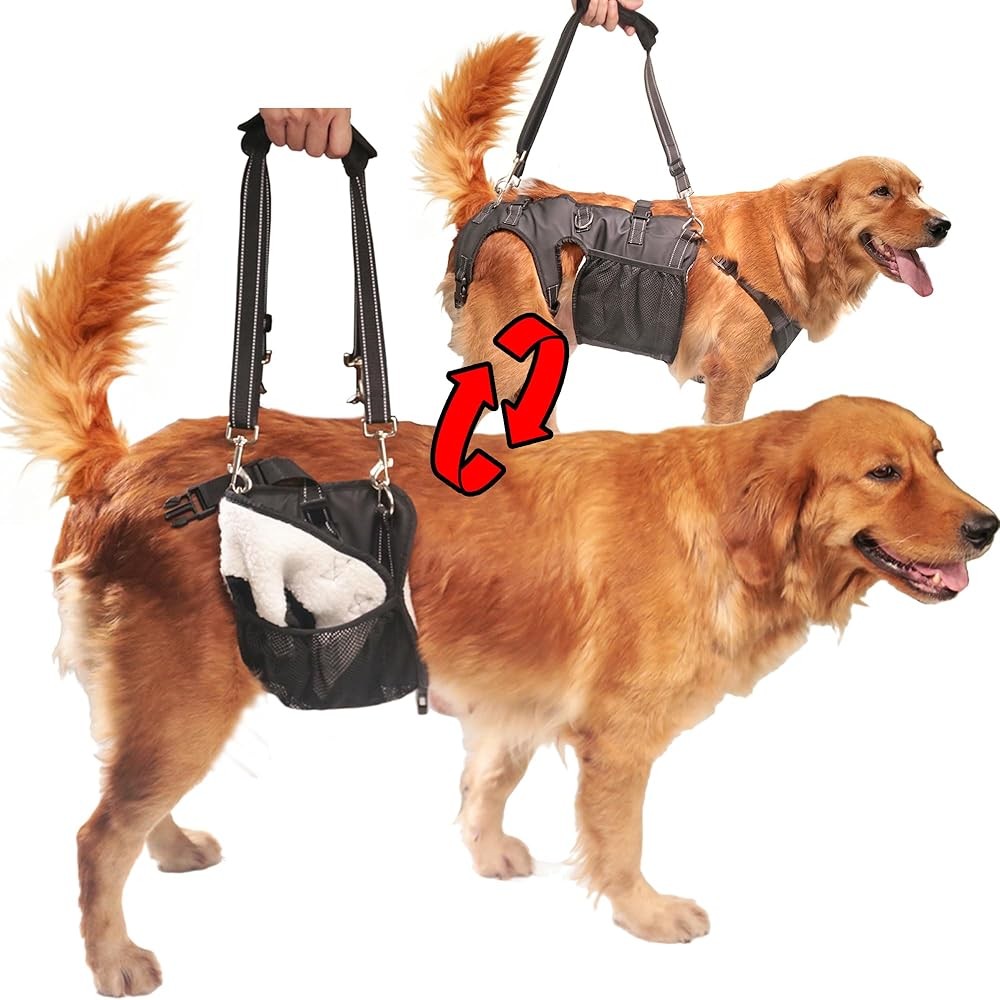
Dual-use Dog Lift Rehab Hareness Canine Sling for Large Pooch Rear Legs and Hip Support,Adjustable and Soft Brace Strap for After ACL Surgery, Helps Senior, Injured and Disabled K9.
Check Price on AmazonAs an Amazon Associate we earn from qualifying purchases.
Dog Wheelchair for Back Legs with Upgraded All-Terrain Tires & Durable Bearings,Adjustable Dog Wheelchair for 9-13.7,11-22 lbs Disabled or Injured Small Dogs
Check Price on AmazonAs an Amazon Associate we earn from qualifying purchases.
Dog Wheelchair for Back Legs - Lightweight Aluminum Alloy Dog Wheelchair, Upgraded All-Terrain Tires for Med Dogs, 35-48.5 lbs(M)
Check Price on AmazonAs an Amazon Associate we earn from qualifying purchases.
All-Terrain Dog Wheelchair for Back Legs - Lightweight & Adjustable for Medium to Large Dogs - Easy to Assemble Mobility Aid
Check Price on AmazonAs an Amazon Associate we earn from qualifying purchases.
Large Back Leg Dog Wheelchair - 2.0 Design with Enhanced Stability
Check Price on AmazonAs an Amazon Associate we earn from qualifying purchases.
Get Weekly Research Updates
New studies, updated reviews, and evidence-based health insights delivered to your inbox. Unsubscribe anytime.