Best Dog Ramps and Stairs for Senior Dogs
Summarized from peer-reviewed research indexed in PubMed. See citations below.
Senior dogs with arthritis and joint issues often struggle with jumping into vehicles or onto furniture, leading to reduced mobility and quality of life. The Folding Dog Ramp for Cars offers a 72-inch gradual incline with a non-slip surface and 200-pound capacity, priced around $120, making it ideal for helping aging dogs access vehicles safely. Research on elderly mobility aids demonstrates that gradual inclines reduce joint stress compared to stairs, particularly for dogs with hip dysplasia or knee problems. For budget-conscious pet owners, the Dog Stairs for Bed provides a stable three-step option for furniture access at approximately $45. Here’s what the published research shows about supporting senior dog mobility.
Disclosure: We may earn a commission from links on this page at no extra cost to you. Affiliate relationships never influence our ratings. Full policy →
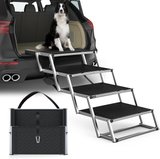
When Do Senior Dogs Need Ramps or Stairs?
As dogs age, their joints experience natural wear that makes jumping increasingly difficult and painful. Research on joint mobility in aging populations shows that repetitive high-impact activities accelerate cartilage breakdown and worsen existing conditions like arthritis and hip dysplasia (PMID 37200392). For senior dogs, the repeated stress of jumping into vehicles or onto furniture creates cumulative damage that can significantly reduce quality of life.
Several signs indicate your senior dog may benefit from mobility aids. Hesitation before jumping, difficulty landing, limping after activity, or completely avoiding previously accessible areas all suggest joint discomfort. Dogs may also vocalize when jumping or show reluctance to participate in activities they once enjoyed. These behavioral changes often appear gradually, making them easy to miss until the problem becomes severe.
The biomechanics of jumping place enormous stress on joints. When a dog jumps, the force on landing can exceed twice their body weight, concentrated on the front legs and shoulders. For a 70-pound dog, this means over 140 pounds of impact force absorbed by already compromised joints. Ramps and stairs distribute this force over time and distance, significantly reducing peak stress on individual joints.
Early intervention with mobility aids can slow the progression of joint problems. Research on rehabilitation and mobility support shows that reducing high-impact activities while maintaining movement helps preserve joint function and improves quality of life (PMID 40797496). The study found that patients using support aids showed better mobility outcomes compared to those who continued high-impact activities without assistance.
Age alone isn’t the only factor. Large breed dogs face higher joint stress throughout their lives due to their size and weight. Breeds prone to hip dysplasia, such as Labradors, German Shepherds, and Golden Retrievers, benefit from ramps even before obvious symptoms appear. Similarly, dogs with diagnosed conditions like osteoarthritis, hip dysplasia, or cruciate ligament injuries need immediate support to prevent further damage.
The decision to introduce ramps or stairs should be made proactively rather than reactively. Waiting until a dog completely refuses to jump or shows severe pain means the joint damage has already progressed significantly. Introducing mobility aids when early symptoms appear gives dogs time to adapt while they still have relatively good mobility, making the transition easier and more effective.
| Feature | Ramps | Stairs |
|---|---|---|
| Joint Stress | Lower - gradual incline distributes force | Higher - requires repeated stepping motion |
| Best For | Arthritis, hip dysplasia, severe mobility issues | Mild mobility issues, smaller spaces |
| Space Required | More length needed for gentle slope | Compact, works in smaller areas |
| Training Difficulty | Moderate - some dogs hesitant initially | Easier - similar to regular stairs |
| Vehicle Access | Excellent - adjustable for SUVs and trucks | Limited - difficult for high vehicles |
| Furniture Access | Good - but may require more space | Excellent - compact for beds and couches |
| Weight Capacity | Typically 150-300 lbs | Usually 100-200 lbs |
| Portability | Folding models highly portable | Generally less portable, bulkier |
| Price Range | $80-200 for quality models | $40-100 for pet stairs |
| Ideal Angle | 18-26 degrees for senior dogs | 35-45 degrees per step |
What’s the Difference Between Dog Ramps and Stairs?
The fundamental difference between ramps and stairs lies in how they distribute weight and impact forces during use. Ramps provide a continuous inclined surface that allows dogs to walk up gradually, keeping all four paws on the ground throughout the movement. This creates a smooth, flowing motion that minimizes joint stress and maintains natural gait patterns.
Stairs require dogs to lift each leg to clear individual steps, creating repeated small jumps that still stress joints. Each step represents a mini-obstacle that forces the dog to shift weight, lift, and land repeatedly. For dogs with arthritis or hip problems, this repetitive motion can cause pain and may discourage use of the stairs entirely.
The angle of incline differs significantly between the two options. Quality dog ramps typically maintain angles between 18-26 degrees, which research suggests minimizes joint stress while remaining practical for most situations. Stairs create much steeper angles at each step, often 35-45 degrees, requiring more aggressive leg flexion and extension.
Space requirements vary considerably. A ramp suitable for accessing a vehicle may need 6-8 feet of length to maintain a gentle slope, while stairs can achieve the same height in just 2-3 feet of horizontal space. This makes stairs more practical for small living spaces or areas where a full-length ramp won’t fit.
Training and adaptation present different challenges for each option. Many dogs instinctively understand stairs since they’re similar to regular household stairs, though senior dogs with vision problems may struggle with depth perception. Ramps often require more initial training since dogs may be unfamiliar with walking on an inclined plane, but once trained, most dogs find them easier and more comfortable to use.
The choice between ramps and stairs often depends on the specific situation. For vehicle access, ramps are generally superior because they can extend to appropriate lengths for gentle inclines even with high SUVs or trucks. For furniture access inside the home, stairs may be more practical due to their compact footprint, especially if the dog only needs to reach a couch or bed that’s relatively low.
Dogs with specific conditions benefit from different options. Those with severe arthritis, advanced hip dysplasia, or recovering from joint surgery typically do better with ramps that eliminate the stepping motion entirely. Dogs with mild mobility issues, recovering from minor injuries, or those who simply need a safer alternative to jumping may do fine with quality stairs.
Folding Dog Ramp for Cars - Best Overall
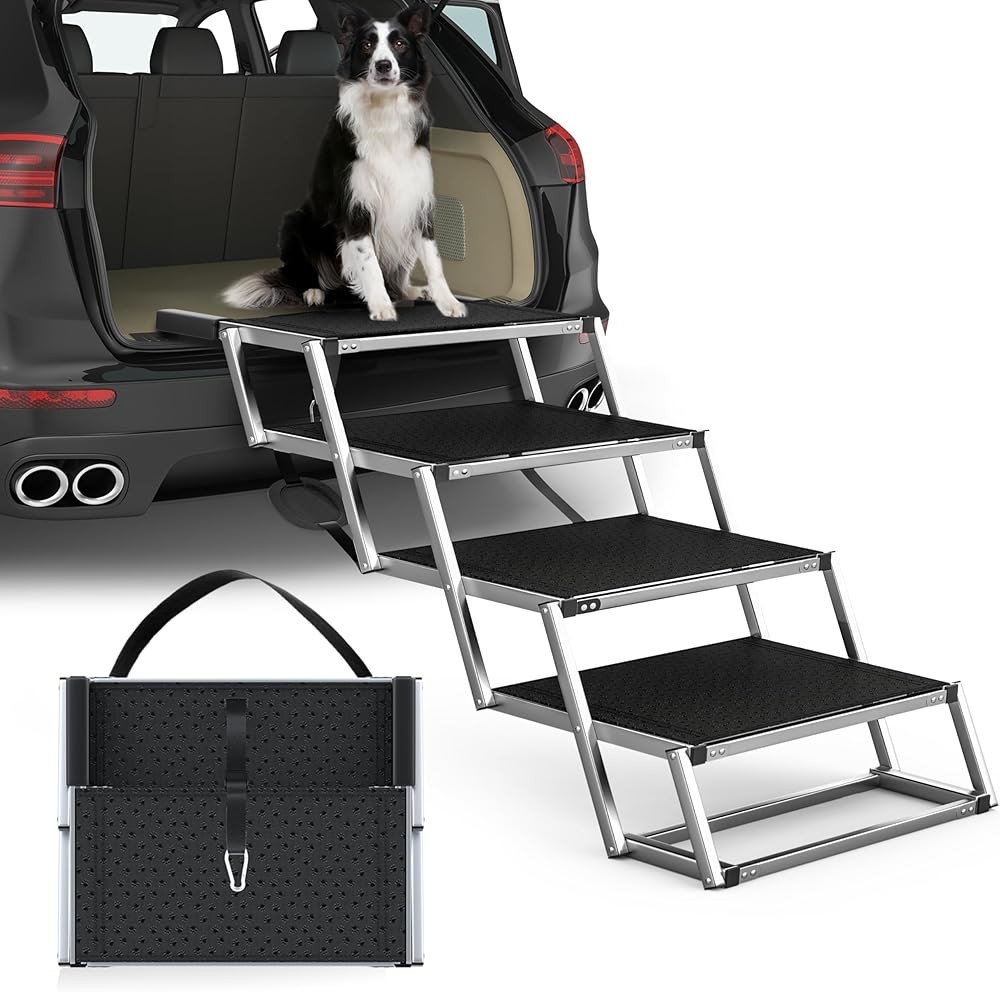
Folding Dog Ramp for Cars
Check Price on AmazonAs an Amazon Associate we earn from qualifying purchases.
The Folding Dog Ramp for Cars addresses the most common challenge senior dog owners face: safely loading dogs into vehicles. This 72-inch ramp provides sufficient length to create a gentle incline for most SUVs, trucks, and higher vehicles without forcing dogs to navigate steep angles that stress joints.
The bi-fold design solves the storage problem that plagues many vehicle ramps. When folded, the ramp measures just 36 inches, fitting easily in most cargo areas without consuming excessive space. This portability means owners can keep the ramp in the vehicle at all times, ensuring it’s available whenever needed rather than left at home when it would be most useful.
Surface traction is critical for senior dogs who may have reduced coordination or confidence. This ramp features a textured, non-slip surface with raised ridges that provide grip even in wet conditions. The high-traction material helps prevent slipping during ascent or descent, which is particularly important for dogs with arthritis who may have slower, more cautious movements.
Side rails add an important safety feature that some competing ramps lack. The 3.5-inch raised edges help keep dogs centered on the ramp and prevent them from stepping off the sides, which is especially valuable for dogs with vision problems or those still learning to use the ramp. These rails also improve stability by reducing the ramp’s tendency to twist or flex under weight.
The 200-pound weight capacity accommodates most large breed dogs with a comfortable safety margin. Weight ratings should account for dynamic forces during movement, which can exceed the dog’s static weight. This capacity ensures the ramp remains stable and secure even for large breeds like German Shepherds, Labradors, or Golden Retrievers.
Adjustable height settings allow the ramp to work with various vehicles. The telescoping legs can extend from approximately 16 to 30 inches, making the ramp suitable for everything from lower sedans to high truck beds. This adjustability ensures owners can maintain an appropriate incline angle regardless of their vehicle type.
Setup and breakdown take minimal time and effort. The ramp unfolds quickly with a simple release mechanism, and the legs adjust with push-button controls. This ease of use encourages consistent use rather than having owners skip the ramp due to inconvenience. Research on assistive device compliance shows that ease of use directly correlates with regular adoption (PMID 40797496).
The aluminum construction keeps the ramp lightweight at around 15 pounds while maintaining durability. This weight makes it manageable for most adults to lift and position, yet the material is strong enough to withstand regular outdoor use and exposure to weather. The aluminum won’t rust or corrode, ensuring long-term reliability.
Rubber feet on the ground-contact points prevent slipping and protect vehicle surfaces. The feet grip the ground securely while the vehicle-end contact point includes a soft rubber coating that won’t scratch paint or damage vehicle surfaces. This dual protection ensures stability during use while preserving your vehicle’s finish.
The 72-inch length creates appropriate angles for most common vehicles. For a typical SUV with a 30-inch cargo height, this length produces approximately a 23-degree incline, well within the ideal range for senior dogs. Even for trucks with 36-inch bed heights, the angle remains under 27 degrees, still manageable for most dogs with mobility issues.
Adjustable Dog Ramp - Best for Large Dogs
Large breed dogs require ramps built to higher standards than smaller dogs need. The Adjustable Dog Ramp specifically addresses the challenges of supporting dogs weighing 100-150 pounds or more with heavy-duty construction and enhanced stability features.
The 250-pound weight capacity provides substantial headroom above most large dog weights. This extra capacity isn’t just about maximum weight but about ensuring the ramp remains solid and doesn’t flex or bend during use. A ramp that flexes underfoot can frighten dogs and make them reluctant to use it, particularly senior dogs who already feel uncertain about their footing.
The telescoping design extends from 60 to 84 inches, offering flexibility for different situations. The shorter length works well for lower vehicles or furniture, while the extended length creates gentler angles for high trucks or SUVs. This adjustability means one ramp can serve multiple purposes rather than requiring separate ramps for different scenarios.
Enhanced width at 18 inches accommodates larger dogs more comfortably than standard 14-16 inch ramps. Large breeds need room to place their paws naturally without feeling constrained, and the wider surface provides that security. Dogs who feel cramped on narrow ramps often try to turn around or step off, creating safety risks.
The industrial-grade aluminum frame construction adds durability without excessive weight. While the ramp weighs approximately 22 pounds (heavier than lighter-duty options), this weight contributes to stability rather than being a pure disadvantage. The solid feel inspires confidence in both dogs and owners, and the weight remains manageable for most adults to lift and position.
Deep grooves in the walking surface create aggressive traction that works even with muddy or wet paws. Large dogs generate substantial force during movement, and inadequate traction can cause dangerous slips. The pronounced tread pattern channels water away from contact points while still providing grip in multiple directions.
Reinforced side rails rise 4 inches above the walking surface, higher than standard ramps. For a large, potentially unsteady dog, these taller rails provide important security without restricting movement. The rails also add structural rigidity that reduces flex in the middle of the ramp, a common weak point in lower-quality designs.
The locking mechanism uses heavy-duty pins rather than simple latches. This commercial-grade hardware ensures the ramp stays securely at the selected length during use and won’t accidentally collapse or adjust. For large dogs, stability is paramount - any movement or shifting during use can cause falls or injuries.
Rubber-coated contact points at both ends protect surfaces while providing grip. The vehicle end includes an extra-wide hook that distributes weight across a larger area, preventing paint damage even on extended use. The ground end features large rubber feet that resist sinking into soft surfaces like grass or gravel.
The ramp’s engineering accounts for the biomechanics of large breed movement. Big dogs often have longer strides and move more deliberately than small dogs, so the ramp’s length and width accommodate their natural gait without forcing shortened steps or awkward positioning. This attention to movement patterns makes the ramp more intuitive and comfortable for large dogs to use.
Heat dissipation in the aluminum construction prevents the surface from becoming uncomfortably hot in direct sunlight. Metal ramps can reach temperatures that burn sensitive paw pads, but the design and finish on this ramp minimize heat absorption. The textured surface also creates small air gaps that reduce contact with hot metal.
Dog Stairs for Bed - Best Budget
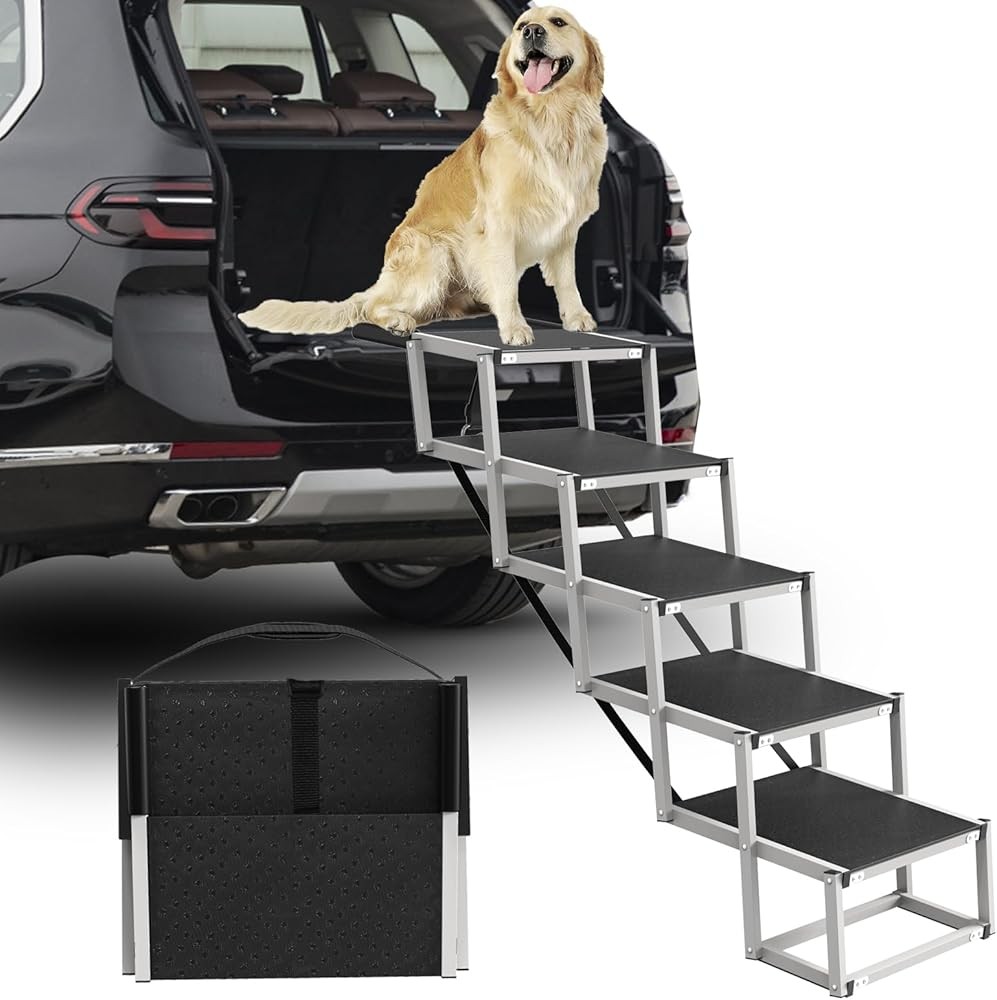
Not every senior dog needs an expensive vehicle ramp, especially if the primary need is accessing furniture inside the home. The Dog Stairs for Bed delivers essential functionality at a budget-friendly price point that makes mobility assistance accessible to more pet owners.
The three-step design provides approximately 15 inches of elevation, perfect for standard beds, couches, and other furniture. Each step measures about 5 inches in height, creating a manageable climb for dogs with mild to moderate mobility issues. This stair height falls within ergonomic ranges that most senior dogs can handle without excessive joint stress.
High-density foam construction provides stability while remaining lightweight. The CertiPUR-US certified foam ensures the steps won’t collapse or compress significantly over time, even with daily use. This foam density balances support with a slight give that’s gentler on joints than completely rigid surfaces would be.
The machine-washable microfiber cover addresses one of the biggest maintenance challenges with pet furniture. Senior dogs may have occasional accidents, and the ability to remove and wash the cover keeps the stairs hygienic without requiring specialized cleaning. The cover features a non-slip bottom that prevents the entire unit from sliding on hardwood or tile floors.
Each step includes a non-slip surface with a corduroy-style texture that provides grip without being abrasive on paw pads. The textured material works effectively even when paws are slightly damp, maintaining traction when dogs jump up on the bed after going outside. This consistent grip reduces anxiety about slipping, encouraging regular use.
The 150-pound weight capacity accommodates most medium to large dogs, though it’s not suitable for giant breeds. This capacity reflects the foam construction limitations while still serving the majority of pet owners. Dogs under 100 pounds will find the stairs stable and secure during normal use.
Compact dimensions make these stairs practical for smaller bedrooms or living spaces. The unit measures approximately 24 inches long by 16 inches wide, fitting easily beside beds or in front of couches without blocking walkways. This space efficiency makes them viable even in apartments or rooms with limited floor space.
Assembly requires no tools or complicated setup. The stairs arrive compressed for shipping and expand to full size within a few hours of unboxing. This immediate usability eliminates setup frustration and means dogs can start using the stairs right away rather than waiting for assembly.
The neutral color options blend with most home decor rather than standing out as obvious pet furniture. While aesthetics shouldn’t override functionality, stairs that coordinate with existing furniture face less resistance from household members and don’t compromise the room’s appearance.
The budget price point removes financial barriers to providing mobility support. At approximately $45, these stairs cost less than a single veterinary visit, making them an accessible preventive measure for pet owners on tight budgets. The value proposition is strong: relatively minimal investment for potentially significant improvement in a dog’s quality of life.
Weight distribution across three steps reduces the peak force on any single step. Even though each step involves some impact, spreading the climb across multiple stages is substantially better than the single high-force jump directly onto furniture. Research on joint mechanics shows that multiple smaller impacts cause less cumulative damage than single high-impact events (PMID 40556028).
Pet Steps with Storage - Best Value
The Pet Steps with Storage combines mobility assistance with practical storage, creating added value beyond simple stairs. This multifunctional design appeals to owners who need both pet accessibility and solutions for space-constrained homes.
The built-in storage compartment underneath the steps provides space for pet supplies, toys, grooming tools, or other household items. This hidden storage transforms what would otherwise be dead space into functional organization, particularly valuable in apartments or smaller homes. The compartment measures approximately 20 inches by 14 inches with about 8 inches of depth, suitable for items like leashes, pet medications, or grooming supplies.
Four-step configuration provides approximately 20 inches of total elevation, slightly more than the budget three-step option. This additional height makes these steps suitable for taller beds or furniture that the shorter option can’t reach. Each step rises about 5 inches, maintaining an ergonomic height that senior dogs can manage without excessive strain.
The CertiPUR-US certified foam construction ensures the materials meet safety and environmental standards. This certification indicates the foam is made without prohibited phthalates, heavy metals, formaldehyde, or other concerning chemicals. For pet furniture that dogs use daily, material safety provides peace of mind about long-term exposure.
A removable, washable cover in multiple color options allows customization to match home decor while maintaining easy cleaning. The polyester-blend fabric resists pet hair and light stains, and the zipper design makes removal straightforward. Machine washing keeps the stairs fresh and hygienic with minimal effort.
The non-slip bottom uses rubber dots rather than a continuous rubber coating. These grip points effectively prevent sliding on hard floors without making the stairs difficult to reposition when needed. The design allows for easy adjustment of placement while maintaining stability during use.
Each step features a textured corduroy-style surface that provides traction similar to the budget option. The corduroy ridges run perpendicular to the climbing direction, giving paws something to grip against rather than potentially sliding forward. This orientation maximizes effectiveness for the intended use pattern.
Side bolsters on the top step create a small raised edge that some dogs appreciate for security. These subtle rails don’t restrict movement but provide a tactile reference point that helps dogs orient themselves, particularly useful for dogs with vision impairment. The bolsters also slightly cushion dogs if they misjudge the top step positioning.
Assembly remains minimal with no tools required. The stairs arrive vacuum-compressed and expand within 24-48 hours to full size. Some owners report that placing the stairs in a warm area or manually fluffing the foam speeds up the expansion process.
The value proposition extends beyond the immediate functionality. The storage feature means owners don’t need to purchase separate organizers for pet supplies, and the higher step count serves taller furniture that would require more expensive options otherwise. The price point of approximately $70 delivers multiple benefits in one purchase.
Weight capacity of 180 pounds falls between the budget and heavy-duty options, suitable for most large dogs under 120 pounds with a reasonable safety margin. This capacity reflects the foam construction limitations while still serving a broad range of dog sizes. The additional step distributes weight across more contact points, reducing stress on individual steps.
The multi-height design makes these stairs more versatile than fixed-height options. Dogs can stop at the second or third step to access different furniture pieces, effectively creating multiple tools in one unit. This flexibility works well in homes with various furniture heights or when the stairs need to serve different purposes in different rooms.
How to Choose Between Ramps and Stairs
The decision between ramps and stairs depends on multiple factors including your dog’s specific condition, the intended use location, available space, and budget constraints. Understanding these variables helps narrow options to the most appropriate choice.
Your dog’s mobility condition should be the primary consideration. Dogs with severe arthritis, advanced hip dysplasia, or recovering from orthopedic surgery typically benefit most from ramps because they eliminate the stepping motion that stresses joints. Research on joint mechanics shows that continuous inclines distribute forces more evenly than repeated step climbing (PMID 37200392). Conversely, dogs with mild mobility issues or those who simply need a safer alternative to jumping may do fine with quality stairs.
The primary use location significantly influences the best choice. Vehicle access almost always favors ramps because stairs struggle to reach the heights of SUVs and trucks while maintaining safe step dimensions. A ramp can extend to 6-8 feet to create a gentle slope, while stairs attempting the same height would require many steps or have dangerously steep individual steps. For furniture access inside homes, stairs often work better due to their compact footprint and the typically lower heights involved.
Available space places practical constraints on options. Ramps need sufficient length to create appropriate angles - generally 4-6 times the height being accessed. A 24-inch bed would need a ramp at least 8 feet long to achieve a 18-degree angle. Many bedrooms simply don’t have this floor space. Stairs achieve the same height in just 2-3 feet of length, making them more practical for indoor use in smaller spaces.
Your dog’s size and weight affect structural requirements. Large and giant breeds need sturdier construction with higher weight capacities, which often means ramps built to commercial standards rather than lightweight consumer options. Small to medium dogs have more options available since most products can safely support their weight. However, very small dogs may actually prefer stairs because the continuous incline of a ramp feels too steep at small scales.
Training and adaptation likelihood varies between dogs. Some dogs adapt quickly to ramps, particularly if introduced gradually with positive reinforcement. Others show persistent reluctance, viewing the inclined plane as unsafe or unfamiliar. These same dogs often take to stairs immediately since they resemble regular household stairs. Observing your dog’s initial reaction during a trial period can guide the final decision.
Budget considerations affect options, though they shouldn’t override safety and effectiveness. Quality ramps typically cost $80-200, while functional stairs often range from $40-100. However, a cheaper option that your dog won’t use provides no value regardless of price. The investment should be viewed in the context of veterinary costs for injuries from falls or worsening joint problems from continued jumping.
Storage and portability needs influence practical usability. Folding ramps offer excellent portability for travel or temporary use, while fixed stairs work better as permanent installations. Consider whether you need to move the equipment frequently, store it when not in use, or keep it in a vehicle. Products that are difficult to store or move often end up not being used consistently.
Durability and longevity factor into long-term value. Hard-surface ramps made from aluminum or heavy-duty plastic typically outlast foam stairs, which may compress or wear over time. However, foam stairs are often more comfortable on joints and quieter during use. The expected lifespan should be considered alongside the initial cost.
Multiple products may be optimal. Many senior dog owners find value in having both a vehicle ramp and indoor stairs, using each in the situation where it works best. This dual approach isn’t always necessary, but for dogs with significant mobility limitations, it provides comprehensive support across all situations.
Your home’s layout and your dog’s routine determine daily utility. If your dog primarily needs to access a bed and couch, stairs designed for those specific heights work well. If your dog travels frequently in your vehicle or needs to access outdoor elevated areas, a portable ramp becomes more valuable. Matching the solution to actual usage patterns ensures consistent benefit.
What Features Make a Dog Ramp Safe?
Safety features in dog ramps range from obvious elements like non-slip surfaces to subtler design characteristics that prevent accidents and build confidence. Understanding these features helps identify quality products that will actually protect your senior dog.
Surface traction is the most critical safety feature. The walking surface must provide grip in all conditions, including when wet from rain, muddy paws, or even ice in cold climates. Quality ramps use rubberized textures, raised ridges, or aggressive tread patterns that give paws something to grip against. Smooth surfaces, even if made from non-slip materials, don’t provide enough feedback for dogs to feel secure, particularly senior dogs with reduced confidence.
Side rails serve multiple safety functions. They keep dogs centered on the ramp, prevent legs from stepping off the edge, and provide visual boundaries that help dogs with impaired vision. Rails should be high enough to prevent accidents (typically 3-4 inches) but not so high that they restrict movement or make dogs feel trapped. The spacing between the walking surface and rail bottom should be minimal to prevent paws from slipping underneath.
Weight capacity should significantly exceed your dog’s actual weight. Dynamic forces during movement can create loads 1.5-2 times greater than static weight. A 100-pound dog generates forces up to 200 pounds during active use. Choosing a ramp rated for at least 1.5 times your dog’s weight provides an appropriate safety margin and ensures the ramp doesn’t flex or bend during use, which can frighten dogs and cause accidents.
Appropriate angle prevents dogs from sliding down or struggling to climb up. Research on joint mechanics suggests angles under 26 degrees minimize joint stress while remaining climbable for most dogs. Steeper angles may work for young, healthy dogs but create safety risks for seniors who may lose footing on steep inclines. The angle calculation is straightforward: divide the height by the ramp length and convert to degrees. A 30-inch height with a 72-inch ramp creates a 23-degree angle.
Stability during use means the ramp doesn’t shift, wobble, or slide when the dog moves on it. Ground-side rubber feet that grip without slipping are essential. The vehicle-side connection should distribute weight across a wide area and include gripping material that won’t slide on vehicle surfaces. Even small amounts of movement during use can cause dogs to lose confidence and refuse to use the ramp.
Width must accommodate your dog’s natural stance and gait. Dogs need to place their paws naturally without feeling cramped or having to narrow their stance. Minimum widths of 14-16 inches work for small to medium dogs, while large breeds need 17-19 inches for comfortable movement. Dogs forced to move with an unnatural gait on narrow ramps are more likely to misstep or lose balance.
Transition zones at the top and bottom of ramps can be accident points. The transition from ramp to vehicle or ground should be smooth without gaps that might catch paws or create tripping hazards. Quality ramps include curved or beveled edges rather than sharp 90-degree angles at transitions. Some models include adjustable lip extensions that eliminate gaps between the ramp end and vehicle.
Material quality affects long-term safety. Aluminum resists corrosion and maintains strength over time, while some plastics may become brittle or crack with age and UV exposure. Hardware like hinges, locks, and adjustment mechanisms should be made from durable materials that won’t fail unexpectedly. Inspect these components regularly as part of safety maintenance.
Visibility helps dogs see the ramp clearly against various backgrounds. Some dogs, particularly those with vision impairment, struggle to distinguish gray or black ramps against dark vehicle interiors or outdoor surfaces. Contrasting colors or reflective strips improve visibility in low light conditions. This is particularly important for evening or early morning use.
Load distribution engineering determines how well the ramp handles weight across its length. Cheap ramps may sag in the middle under load, creating a flex point that frightens dogs. Quality designs use reinforced centers or structural elements that maintain a consistent plane from top to bottom. Testing the ramp with your own weight before asking your dog to use it can reveal flex problems.
Temperature considerations matter for outdoor use. Metal ramps can become extremely hot in direct sunlight or dangerously cold in winter. Quality designs use materials or coatings that moderate temperature extremes, and textured surfaces create small air gaps that reduce direct paw contact with hot or cold materials. Some owners successfully use protective booties for dogs in extreme conditions.
How Steep Can a Dog Ramp Be?
The steepness of a dog ramp directly affects both safety and usability, particularly for senior dogs with joint problems. Understanding appropriate angles helps evaluate whether specific ramps will actually work for your situation.
The ideal angle range for senior dog ramps falls between 18-26 degrees from horizontal. This range balances practical elevation with minimal joint stress. Research on joint mechanics shows that inclines steeper than 30 degrees significantly increase force on hip and knee joints, potentially causing pain or discouraging use (PMID 40556028). Angles under 18 degrees are even better for joints but require impractically long ramps for most situations.
Calculating angle from dimensions is straightforward: divide the height by the ramp length to get the tangent, then use a calculator’s inverse tangent function to convert to degrees. For example, a 24-inch height with a 72-inch ramp: 24/72 = 0.333, inverse tangent of 0.333 = 18.4 degrees. Online ramp angle calculators can perform this math instantly if manual calculation feels daunting.
Different uses tolerate different angles. Vehicle access often requires steeper angles than ideal simply because SUVs and trucks are high while ramps have practical length limits. A maximum angle of 30 degrees should be the absolute limit for senior dogs, and even that may be too steep for dogs with severe arthritis or hip dysplasia. Furniture access inside homes can usually achieve gentler angles since ramps can extend across floors without space constraints.
Your dog’s specific condition influences acceptable angles. Dogs with mild joint issues may handle 28-30 degree ramps without problems, while those with severe arthritis or recovering from surgery need angles under 22 degrees. When in doubt, gentler is always better - no dog is harmed by an unnecessarily gentle slope, but many are hurt or discouraged by slopes that are too steep.
Adjustable ramps provide flexibility to find your dog’s tolerance. These models allow experimentation with different lengths and heights to discover what your dog handles comfortably. Starting with the gentlest possible angle and gradually shortening the ramp can identify the steepest angle your dog will reliably use without hesitation or difficulty.
Width affects perceived steepness independently of actual angle. Wider ramps feel less steep to dogs even at identical angles because they provide more room for longer strides that maintain a more horizontal body position. Narrow ramps force dogs into more vertical postures that feel steeper and less secure. This psychological factor can be as important as the physical angle.
Visual inspection methods help estimate angles when exact measurements aren’t available. A ramp that looks like a gentle hill typically falls in the safe range, while ramps that resemble a steep incline probably exceed safe angles for senior dogs. If you would feel uncomfortable walking down the ramp at a normal pace, it’s likely too steep for an arthritic dog.
Practical length limits constrain angle options for vehicle ramps. Most folding ramps extend to 72-84 inches maximum. For a typical SUV with 30-inch cargo height, a 72-inch ramp creates a 23-degree angle - acceptable but approaching the steeper end of the ideal range. Taller vehicles may produce angles that are too steep for some senior dogs unless owners invest in longer specialty ramps.
Temporary angle reduction solutions exist when ramps are too steep. Parking vehicles on a slight downward slope reduces the effective height difference, making ramps less steep. Using ramps from curbs instead of ground level has the same effect. These situational adjustments can make borderline ramps more suitable for dogs who struggle with the standard angle.
Training can help dogs adapt to steeper angles, but there are limits. Gradual desensitization starting with very gentle angles and slowly increasing steepness over weeks can build confidence and tolerance. However, training cannot overcome the biomechanical reality that steep angles stress joints. Training should never substitute for appropriate equipment - it should complement properly angled ramps, not compensate for inadequate ones.
What’s the Best Surface for Dog Ramps?
The surface material of a dog ramp determines traction, comfort, durability, and usability in different conditions. Comparing options helps identify which surfaces work best for specific needs and environments.
Rubberized textures provide excellent all-weather traction. These surfaces use small rubber nubs or raised patterns that give paws something to grip even when wet. The rubber material has natural grip properties while remaining comfortable on paw pads. Quality rubberized surfaces drain water effectively through small gaps between texture elements rather than holding moisture that would create slick spots.
Carpeted surfaces offer good grip and comfort but require more maintenance. The fabric texture gives excellent traction for dry paws and feels comfortable for dogs to walk on. However, carpet holds moisture, collects dirt, and can become matted or worn over time. Outdoor use limits carpet’s lifespan, and cleaning is more difficult than with hard surfaces. Carpet works well for indoor-only ramps but faces challenges in vehicle applications.
Grooved aluminum or plastic creates durable textured surfaces resistant to weather and wear. Deep channels or ridges running perpendicular to travel direction give paws grip points without requiring soft materials. These hard surfaces don’t absorb water or harbor bacteria, making them easy to clean and maintain. The grooves should be deep enough to provide meaningful grip (at least 1/8 inch) and closely spaced (every 1-2 inches) for maximum effectiveness.
Sandpaper-like grit coatings provide aggressive traction but may be harsh on paws. These surfaces use embedded grit particles similar to skateboard grip tape. While they provide excellent slip resistance even in wet conditions, the abrasive surface can be uncomfortable for senior dogs with sensitive pads and may cause wear over time. These surfaces work better for occasional use than daily applications.
Mesh or perforated surfaces combine drainage with traction. Punched holes or mesh patterns allow water, snow, and debris to fall through rather than accumulating on the walking surface. This self-cleaning property makes them excellent for outdoor use. However, very small paws can sometimes catch in larger perforations, making hole size important - generally under 1/4 inch spacing works safely.
Artificial turf provides natural-feeling traction that many dogs readily accept. The grass-like texture feels familiar and comfortable while providing good grip in most conditions. Quality artificial turf designed for pet use includes antimicrobial treatments and drains well. Maintenance involves regular brushing to prevent matting and occasional rinsing to remove debris.
Combination surfaces use different materials in specific zones. Some ramps feature rubber or aggressive texture in the center with smoother edges, or vary texture based on the area of the ramp most prone to slipping. These hybrid approaches attempt to balance traction needs with comfort and durability across the ramp’s length.
Surface temperature matters for outdoor use. Dark-colored surfaces absorb heat and can become uncomfortably hot in direct sunlight, potentially burning sensitive paw pads. Light-colored materials or those with reflective properties stay cooler. Textured surfaces with gaps create small air spaces that reduce direct paw contact with hot materials, moderating temperature extremes.
Durability determines long-term cost-effectiveness. Soft surfaces like carpet or foam may need replacement every 1-2 years with regular use, while hard surfaces like aluminum or quality plastic can last 5-10 years or more. Factor replacement costs and effort into the initial surface choice. Removable surface covers offer a compromise, allowing replacement of worn traction layers without replacing the entire ramp.
Noise during use affects indoor applications. Hard surfaces can be loud when dogs’ nails contact them, potentially disturbing others or frightening dogs. Softer surfaces like carpet or rubber absorb sound better, making them preferable for indoor use or noise-sensitive situations. Some dogs become frightened by the sound of their own footsteps on hollow-sounding ramps.
Cleaning requirements impact ongoing maintenance effort. Non-porous surfaces like aluminum or plastic simply need hosing off or wiping down. Absorbent materials like carpet require deep cleaning to remove embedded dirt and odors. For dogs with incontinence issues or those used outdoors in muddy conditions, easy-clean surfaces significantly reduce maintenance burden.
Training Senior Dogs to Use Ramps
Introducing ramps to senior dogs requires patience and appropriate training techniques, particularly for dogs unfamiliar with walking on inclined surfaces. Proper training ensures the ramp becomes a helpful tool rather than another source of stress.
Start with the ramp completely flat on the ground to remove the incline variable. Place it in a familiar area and reward your dog simply for investigating or walking across it. This initial step builds positive associations with the ramp as an object before adding the complexity of an incline. Use high-value treats your dog doesn’t normally receive to create strong motivation.
Gradually introduce incline over multiple sessions rather than immediately using the ramp at full height. Begin with just a few inches of elevation, perhaps propping one end on a small block. Once your dog reliably uses the ramp at this low angle, increase height slightly. This gradual progression prevents overwhelming dogs and builds confidence incrementally.
Use food lures strategically to guide movement. Place treats along the ramp surface every few inches, creating a trail that naturally leads dogs up the incline. As dogs follow the treat trail, they’re walking the ramp while focused on the reward rather than worrying about the incline. Gradually reduce treat frequency as confidence builds, maintaining only rewards at the top.
Verbal encouragement and physical presence provide security during training. Walk alongside the ramp, offering praise and reassurance as your dog climbs. Some dogs benefit from gentle leash guidance, though avoid pulling or forcing movement. Your presence and calm demeanor communicate that the ramp is safe and normal, leveraging your dog’s trust in you.
Target training using a pointer, stick, or your hand as a touch target gives dogs a focal point. Train your dog to touch the target with their nose, then use the target to guide them up the ramp. This technique works particularly well for dogs who respond better to task-based training than food lures alone.
Address fear or hesitation without reinforcing it. If your dog shows reluctance, resist the urge to comfort them excessively, which can reinforce fearful behavior. Instead, remain upbeat and encouraging, making the training feel like a game rather than a serious challenge. Some dogs respond better to matter-of-fact approaches that don’t acknowledge their concerns.
Practice going both up and down the ramp. Many training programs focus on ascent but neglect descent, which can be more challenging for senior dogs. Descending requires more braking and control, potentially stressing joints differently. Dogs need equal confidence in both directions for the ramp to be fully useful.
Keep training sessions short and positive. Five to ten minutes of training several times daily works better than long, exhausting sessions. End each session on a success, even if that means returning to an easier step. This ensures your dog finishes with positive feelings about the ramp rather than frustration or fatigue.
Generalize the training to different locations and situations. A dog who uses the ramp perfectly in the backyard may hesitate when it’s positioned at the vehicle. Practice in all the contexts where you’ll actually use the ramp, repeating the gradual introduction process in each setting if necessary. This generalization ensures the training transfers to real-world applications.
Some dogs require weeks to become fully comfortable with ramps. Rushing the process often backfires, creating negative associations that make training harder. Patient, consistent work that progresses at your dog’s pace yields the best long-term results. Research on animal behavior shows that gradual desensitization with positive reinforcement is most effective for training new skills (PMID 40797496).
Physical assistance may be necessary initially. For dogs with severe mobility limitations, you might need to support their hindquarters as they walk the ramp at first. This support reduces their fear of falling while showing them the movement pattern. Gradually reduce physical assistance as confidence and strength improve.
Video recording training sessions helps identify problems. Watching footage reveals subtle body language indicating discomfort or confusion that you might miss in the moment. Videos also document progress, showing improvement that may feel slow day-to-day but is obvious when comparing early and later sessions.
How to Measure for the Right Ramp Length
Proper ramp length depends on the height being accessed and the desired angle. Calculating appropriate dimensions ensures you purchase equipment that will actually work for your specific situation.
Measure the exact height from ground to the target surface. For vehicles, this means from the ground to the cargo floor or seat level, not to the bumper or door sill. For furniture, measure from the floor to the sleeping or sitting surface, not to the top of bed rails or couch arms. Accurate height measurement is essential for calculating appropriate ramp length.
Determine your target angle based on your dog’s condition. For dogs with mild mobility issues, 26-28 degrees may be acceptable. Dogs with moderate arthritis should use ramps under 24 degrees, while those with severe joint problems need angles under 20 degrees. Knowing your target angle allows calculation of required ramp length.
Calculate minimum ramp length using trigonometry. Divide the height by the sine of your target angle to get required length. For a 30-inch height with a 22-degree target angle: 30 / sin(22°) = 30 / 0.375 = 80 inches minimum length. Online ramp calculators perform this math automatically if manual calculation is difficult.
Add extra length for safety margin and easier angles. The calculated minimum represents the absolute shortest ramp for the target angle. Adding 6-12 inches creates a slightly gentler angle and provides margin for measurement error. Longer is always better for dog comfort and joint health, limited only by practical storage and space constraints.
Account for where the ramp will actually contact surfaces. A ramp doesn’t extend perfectly horizontally from the target height - it angles down. The ground contact point will be farther from the vehicle or furniture than the calculated length might suggest. Ensure you have adequate floor or ground space for the full ramp length plus this additional distance.
Consider adjustable ramps for flexibility. If you’re uncertain about ideal length or use the ramp in multiple situations, adjustable models that extend from 60-84 inches provide versatility. These allow experimentation to find the optimal length for your specific needs without committing to a single fixed dimension.
Measure available storage space if the ramp needs to fit in your vehicle. Folding ramps typically fold to approximately half their extended length. A 72-inch ramp folds to about 36 inches. Ensure your cargo area can accommodate the folded dimensions along with your other gear. Some ramps come with carry handles or straps that facilitate storage against walls or in garages.
Test fit before purchasing when possible. Some pet stores have floor models that can be extended to check dimensions, though you may not be able to bring your vehicle. At minimum, use string or rope cut to the potential ramp length to verify you have adequate space in all intended use locations.
Plan for multiple heights if using one ramp for different purposes. A ramp perfect for your SUV might be too long for accessing furniture, or a furniture ramp might be too short for your vehicle. Adjustable models or owning two different lengths may be necessary for comprehensive coverage of all your dog’s access needs.
Recheck measurements before finalizing purchase. It’s easy to mis-measure or transpose numbers. Verify all measurements and recalculate required lengths before ordering. Returning incorrectly sized ramps is inconvenient and delays getting your dog the support they need.
Maintaining and Storing Dog Ramps
Proper maintenance extends ramp lifespan while ensuring consistent safety and performance. Establishing simple maintenance routines prevents problems before they develop into safety hazards.
Clean ramps regularly to remove dirt, mud, and organic debris. Even small amounts of accumulated dirt can reduce traction significantly. For hard-surface ramps, hosing off or wiping with a damp cloth removes most debris. Stubborn deposits may require brushing with a stiff-bristled brush. Carpeted or fabric surfaces need more intensive cleaning, potentially including vacuuming and spot treatment.
Inspect hardware and mechanical components monthly. Check hinges, locks, and adjustment mechanisms for wear, looseness, or damage. Tighten any loose fasteners before they work completely free. Look for cracks in plastic components or bends in aluminum frames that might indicate structural problems. Catching these issues early prevents sudden failures during use.
Test weight capacity and stability periodically. Walk on the ramp yourself to feel for flex, movement, or instability that wasn’t present when new. Increased flex suggests material fatigue or loosening connections. Address these issues immediately - a ramp that feels unstable will frighten dogs and create safety risks.
Lubricate moving parts if applicable. Folding mechanisms, telescoping sections, or adjustable legs may have metal-on-metal contact points that benefit from occasional lubrication. Use appropriate lubricants - typically silicone spray rather than oil-based products that might attract dirt. Apply sparingly to prevent residue that could make surfaces slippery.
Store ramps in protected locations when not actively in use. While quality ramps are weather-resistant, prolonged exposure to sun, rain, and temperature extremes accelerates wear. If the ramp lives in your vehicle, that’s fine. But ramps used occasionally should be stored in garages, sheds, or basements between uses. Protect from direct sunlight particularly, as UV radiation degrades many plastics and rubbers.
Treat wooden ramps with appropriate sealants or stains. Untreated wood absorbs moisture, leading to warping, rot, and structural failure. Apply waterproof sealants annually or as recommended by the manufacturer. Check wood ramps frequently for signs of moisture damage, particularly around ground-contact areas.
Replace worn traction surfaces before they become hazardous. Smooth or flattened texture that no longer provides adequate grip should be replaced even if the underlying ramp structure remains sound. Some ramps feature replaceable surface materials like carpet runners or rubber mats, making this maintenance straightforward.
Clean and dry ramps thoroughly after use in wet conditions. Moisture left on ramps, particularly in crevices or folded sections, can promote rust, corrosion, or mold growth. After rainy weather or snow use, wipe down the ramp and allow it to dry completely before folding or storing.
Address rust immediately on metal ramps. Surface rust on aluminum is less concerning than on steel, but either indicates moisture exposure that will worsen over time. Remove rust with appropriate methods (wire brushing, chemical rust removers) and treat with protective coatings to prevent recurrence.
Retrain dogs after extended periods without ramp use. If your dog hasn’t used the ramp for weeks or months due to seasonal changes or temporary circumstances, they may need refresher training. A few quick sessions reestablishing positive associations prevents hesitation or refusal when regular use resumes.
Document maintenance dates and observations. Keeping simple records of when you cleaned, inspected, or repaired the ramp helps establish routines and track developing issues. Note any changes in stability, traction, or structural integrity that might indicate approaching end-of-life for the product.
When Stairs Are Better Than Ramps
Despite ramps’ general advantages for senior dogs, specific situations exist where stairs are the superior choice. Recognizing these scenarios ensures you select the most appropriate equipment for your actual needs.
Limited floor space makes ramps impractical in many indoor settings. A bedroom with furniture on multiple walls may not have the 6-8 feet of clear floor space a ramp requires. Stairs achieve the same height in 2-3 feet, fitting in spaces where ramps simply won’t work. For apartment dwellers or those with compact rooms, stairs may be the only viable option.
Lower furniture heights favor stairs over ramps. Accessing a couch that’s only 18-20 inches high requires relatively little ramp length to maintain gentle angles, but stairs handle this height efficiently in minimal space. When the elevation is modest, stairs’ space efficiency outweighs ramps’ joint-health advantages for many situations.
Dogs with mild mobility issues rather than severe joint disease often do fine with stairs. If your dog’s primary need is reducing jump impact rather than eliminating all joint stress, stairs provide sufficient benefit at lower cost and with easier implementation. The distinction is between prevention for aging dogs and support for those with diagnosed serious conditions.
Weight considerations favor stairs for very small dogs. A 10-pound dog generates minimal force during stair climbing, so the joint stress disadvantage of stairs is less significant. For small breeds, the compact nature of stairs and the ease of moving them around often makes them more practical than ramps.
Budget constraints may necessitate stairs as a more affordable option. While joint health shouldn’t be compromised purely for cost savings, stairs at $40-70 make mobility assistance accessible to owners who couldn’t afford $150-200 ramps. Providing some support with stairs is better than no support at all when cost is prohibitive.
Storage and portability favor stairs in some contexts. While folding ramps are portable, they still require substantial storage space. Foam stairs are lightweight and can sometimes be stored under beds or in closets more easily than folding ramps. For situations requiring frequent moving or storage, stairs’ smaller footprint provides practical advantages.
Multiple dogs with different needs might do better with stairs. In households with both young and senior dogs, stairs allow the senior dog safe access while not preventing the younger dog from jumping if they choose. Ramps sometimes discourage all dogs from jumping when only the senior dog needs that restriction.
Aesthetic preferences influence indoor furniture access solutions. Some owners find stairs blend better with home decor than ramps, particularly in visible areas like living rooms. While function should override aesthetics for safety equipment, stairs that complement rather than clash with furniture face less household resistance.
Trying stairs first as a lower-risk experiment makes sense for uncertain situations. If you’re not sure your dog needs mobility assistance yet, starting with less-expensive stairs allows testing the concept. If stairs prove insufficient, you can upgrade to ramps with the stairs serving as a backup for low-traffic areas.
Common Mistakes When Choosing Dog Ramps
Understanding frequent errors helps avoid purchasing equipment that doesn’t meet your dog’s actual needs or ends up unused after initial attempts.
Choosing ramps based solely on price without considering features leads to poor outcomes. The cheapest ramp may lack critical safety features like adequate weight capacity, side rails, or proper traction surfaces. These deficiencies can make the ramp unsafe or unusable regardless of cost savings. Conversely, the most expensive option may include features you don’t need, wasting money. Focus on appropriate features for your specific situation rather than defaulting to the cheapest or most premium option.
Underestimating required length creates ramps too steep for senior dogs to use comfortably. Many owners measure their vehicle height and purchase ramps of similar length, not realizing a 30-inch height needs a 72-80 inch ramp for appropriate angles. This miscalculation results in ramps that are technically functional but too steep for arthritic dogs to use without discomfort.
Ignoring weight capacity creates safety hazards. A 90-pound dog needs a ramp rated for at least 150 pounds to account for dynamic forces during movement. Purchasing ramps with barely adequate capacity or even below your dog’s weight leads to structural failure, flex that frightens dogs, or premature wear. Always choose capacity significantly above your dog’s weight.
Failing to consider storage space results in ramps that don’t fit in vehicles or living spaces. An 84-inch ramp that folds to 42 inches may not fit in your SUV’s cargo area, forcing you to leave it home when needed. Measure storage spaces before purchasing, considering both extended and folded dimensions.
Overlooking surface traction leads to slippery ramps dogs won’t use. Smooth surfaces, even if made from “non-slip” materials, don’t provide enough grip for confident senior dogs. Aggressive texture, raised ridges, or rubber surfaces work better. Test surfaces with your hand - if you can easily slide your palm across the material, it’s probably insufficient for dog paws.
Purchasing non-adjustable ramps without measuring all intended uses creates equipment that works in some situations but not others. A fixed-length ramp perfect for your current SUV becomes useless if you change vehicles. Adjustable models cost slightly more but provide flexibility for changing circumstances.
Choosing ramps based on product photos rather than specifications leads to surprises. Photos can make products appear larger, sturdier, or different in texture than they actually are. Always read detailed specifications, dimensions, and materials lists rather than making decisions based on marketing images.
Neglecting to read detailed user reviews misses real-world performance information. Specifications tell you what the ramp should do, but reviews from actual users reveal what it does do. Look specifically for reviews from owners with similar dogs (size, age, condition) to yours for the most relevant information.
Waiting until joint problems are severe before introducing ramps makes training harder. Senior dogs adapt more easily to ramps when introduced while they still have relatively good mobility. Waiting until jumping is completely impossible means training a dog with limited physical capabilities and potentially increased pain and reluctance.
Choosing the right ramp or stairs is just one part of supporting an aging dog’s mobility—pairing these aids with an orthopedic bed designed for senior dogs and elevated bowls can further reduce joint strain throughout the day. For dogs already showing signs of arthritis, complementary approaches like red light therapy and cold laser therapy may offer additional pain relief alongside equipment choices. Nutrition and supplementation also play a role, with joint-supporting supplements and senior-specific formulas helping to address the underlying inflammation that makes climbing so difficult in the first place.
When choosing the right ramp or stairs for an aging dog, it’s worth considering how mobility support fits into a broader care plan—pairing access solutions with an orthopedic bed designed for senior dogs can ease joint stress during rest, while elevated bowls help reduce strain during meals. For dogs already showing signs of joint discomfort, supplements targeting hip and joint health may complement physical aids, and emerging options like red light therapy offer additional non-pharmacologic relief. Owners managing more advanced arthritis may also want to explore cold laser therapy as part of a multimodal approach to keeping senior dogs comfortable and mobile.
- Medical Management of Osteoarthritis.. PubMed 42618363
- Structured therapeutic exercise program effect on PROM and muscle mass in dogs with osteoarthritis: a prospective clinical study.. PubMed 42519725
- Evaluation of clinical effects and plasma metabolomic profiles after the administration of grapiprant in dogs affected by osteoarthritis: a prospective, off-on-off, clinical study.. PubMed 42375512
- Is All Fat Created Equal? A Comparative Study of Chondrogenesis Potential of Peri-Ovarian Adipose Tissues in Dogs.. PubMed 42353509
References
- Trochlear Ridge Prosthetic Replacement Surgery in 20 Dogs with Medial Patellar Luxation: Clinical and Radiographic Findings.. PubMed 42600658
- Utility of Infrared Thermography in Dogs with Osteoarthritis.. PubMed 42588997
- Initial psychometric evaluation of the Korean version of the Canine Brief Pain Inventory for canine osteoarthritis.. PubMed 42551991
- Efficacy and Safety of Cannabis Extracts for the Treatment of Osteoarthritis: A Systematic Review and Meta-Analysis of Preclinical and Human Studies.. PubMed 42515994
- Multivariate Analysis of Inflammatory and Regenerative Mediators in an In Vitro Canine Osteoarthritis System Treated with Platelet Gel Supernatants.. PubMed 42505298
- Radiographic characteristics of cranial cruciate ligament disease in small- and large-breed dogs.. PubMed 42470145
For more context, see our guides on Best Orthopedic Dog Beds for Senior Dogs, Senior Dog Supplements: Joint Health and Cognitive Support for Aging Dogs, Best Dog Food for Senior Dogs with Arthritis, Best Dog Ramps for Senior Dogs With Arthritis, and Best Dog Rehab Harness and Mobility Support for Senior and Injured Dogs.
Related Reading
For additional information on supporting senior dog health and mobility:
- Best Dog Wheelchairs for Mobility Support - Complete mobility solutions for dogs with severe mobility limitations
- Best Orthopedic Dog Beds for Senior Dogs - Supportive sleeping surfaces that ease joint pain
- Best Dog Cooling Vests - Temperature regulation for senior dogs with reduced heat tolerance
- Senior Dog Nutrition Guide - Dietary approaches for maintaining joint health as dogs age
- Labrador Hip Dysplasia Guide - Breed-specific information on managing hip dysplasia
These resources provide comprehensive information on multiple aspects of senior dog care, from mobility support to nutrition and breed-specific health concerns that complement the use of ramps and stairs.
Recommended Products