Best Dog Life Jackets
Summarized from peer-reviewed research indexed in PubMed. See citations below.
Drowning remains a leading cause of accidental death in water activities, with research showing that multiple layers of safety protection are necessary since no single method is completely effective. The Ruffwear Float Coat Dog Life Jacket (B08S3J38WT) stands out as the top choice, featuring low-profile flotation foam that maintains proper swim position, a strong top handle for immediate rescue, and reflective trim for visibility, all for $99. Studies demonstrate that life jacket use reduces drowning risk by providing reliable buoyancy and enabling quick rescue, particularly critical for dogs with limited swimming skills or in unpredictable water conditions. For budget-conscious owners, the Outward Hound Granby Splash Dog Life Jacket (B0081XIKYG) at $25 offers basic flotation and a rescue handle, making water safety accessible for all dogs. Here’s what the published research shows about life jacket effectiveness, proper fit, and features that protect dogs in water environments.
Disclosure: We may earn a commission from links on this page at no extra cost to you. Affiliate relationships never influence our ratings. Full policy →
Quick Comparison: Top Dog Life Jackets
| Feature | Ruffwear Float Coat | Ruffwear Confluence | Outward Hound Granby | Kuoser High Flotation |
|---|---|---|---|---|
| Price | $99 | $119 | $25 | $42 |
| Buoyancy Type | Low-profile foam | Optimized distribution | Standard foam | Enhanced foam |
| Rescue Handle | Strong top handle | Dual handles | Top handle | Reinforced handle |
| Reflective Trim | Yes | Yes | Minimal | Enhanced |
| Adjustability | 5 points | 6 points | 2 points | 4 points |
| Sizes Available | XXS-L | XXS-L | XS-L | XS-XXL |
| Warranty | Lifetime | Lifetime | 1 year | 1 year |
Why Do Dog Life Jackets Matter for Water Safety?
Research on water safety demonstrates that flotation devices provide critical protection across all age groups and swimming abilities. A comprehensive study published in Injury Prevention examined life jacket use among nearly 2,000 swimmers at designated swim sites, finding that 37% used some type of flotation device, with usage rates highest among younger participants who faced the greatest risk. The study revealed that “flotation devices were frequently used for recreational wading and swimming in open water by all age groups,” though life jacket use specifically decreased with age and perceived swimming ability.
Dogs face similar drowning risks, particularly breeds with short legs, barrel chests, or flat faces that make swimming difficult. Bulldogs, pugs, dachshunds, corgis, and basset hounds struggle with natural buoyancy due to body proportions that favor sinking rather than floating. Senior dogs lose muscle strength and coordination, while puppies lack the stamina for extended swimming. Medical conditions affecting mobility, respiratory function, or neurological control further compromise swimming safety.
A cross-sectional survey of 675 adult boaters identified key barriers to life jacket use, including perception of discomfort and confidence in swimming ability. The research found that low life jacket use was associated with perceived greater swimming ability, with expert swimmers showing 25% higher likelihood of wearing life jackets less than half the time during water activities. This false confidence parallels situations where dog owners overestimate their pet’s swimming capabilities, particularly in open water with currents, waves, or cold temperatures that quickly exhaust even strong swimmers.
Environmental factors multiply drowning risk beyond individual swimming ability. Currents that feel mild to humans can overwhelm dogs, whose lower mass and smaller size give them less resistance to flow. Waves and boat wakes create unpredictable forces that disorient dogs and push them underwater repeatedly. Cold water accelerates exhaustion and impairs muscle function, compromising even strong swimmers.
Bottom line: Published research establishes that life jackets provide essential safety support through reliable buoyancy and rescue capability, particularly for those with limited swimming skills or in challenging water conditions. Dogs benefit from the same protective mechanisms, making properly fitted life jackets critical safety equipment for water activities.
What Swimming Limitations Do Dogs Face?
Not all dogs are natural swimmers, and even water-loving breeds face limitations that increase drowning risk. Body structure fundamentally determines swimming ability. Brachycephalic breeds with flat faces and short muzzles, including bulldogs, pugs, Boston terriers, and French bulldogs, struggle to keep their airways above water while swimming. Their compressed respiratory anatomy makes breathing difficult during exertion, and the effort required to maintain proper head position quickly exhausts them.
Breeds with short legs relative to body mass, such as dachshunds, corgis, and basset hounds, cannot generate sufficient propulsion to maintain buoyancy in moving water. Their low center of gravity works against them in swimming, requiring constant effort to keep heads above the surface. Barrel-chested breeds like bulldogs and some terriers have body proportions that favor sinking, with heavy front quarters pulling them downward even during vigorous paddling. Research on flotation device effectiveness shows that proper equipment compensates for anatomical limitations.
Age affects swimming capability at both ends of the lifespan. Puppies under six months lack the muscle development, coordination, and stamina for sustained swimming. They tire rapidly and may panic in water over their heads, leading to inefficient thrashing rather than productive swimming strokes. Senior dogs experience muscle atrophy, joint stiffness from arthritis, and reduced cardiovascular capacity that limit swimming duration and effectiveness. What once felt effortless becomes exhausting within minutes. Studies on water safety across age groups demonstrate that flotation support benefits those with limited physical capability.
Medical conditions create additional vulnerabilities. Hip dysplasia, common in large breeds like German shepherds and Labrador retrievers, restricts the powerful hind leg kicks needed for swimming propulsion. Neurological conditions affecting coordination or balance make maintaining proper swimming position difficult or impossible. Heart disease reduces stamina and can trigger dangerous arrhythmias during the exertion of swimming. Obesity adds body mass that requires more effort to keep afloat while reducing the muscle strength needed to generate that effort.
Cold water introduces hypothermia risk that compounds swimming challenges. Dogs lose body heat rapidly in water below 70°F, with small dogs and those with thin coats particularly vulnerable. As core temperature drops, muscle function deteriorates, coordination fails, and swimming becomes progressively more difficult. Research on water temperature and drowning shows that even strong swimmers succumb quickly when hypothermia impairs their ability to maintain position and propulsion.
Water movement transforms safe swimming areas into hazards. Currents that feel mild to humans can overwhelm dogs, whose lower mass and smaller size give them less resistance to flow. Waves and boat wakes create unpredictable forces that disorient dogs and push them underwater repeatedly. Tidal areas change depth and current direction, potentially trapping dogs in situations beyond their swimming capacity.
Bottom line: Multiple factors limit dog swimming ability, including breed anatomy, age, medical conditions, water temperature, and environmental forces. These limitations make life jackets essential safety equipment rather than optional accessories, particularly for dogs in open water or boating situations.
What Does Research Show About Life Jacket Effectiveness?
Research on water safety interventions identifies life jackets as critical safety equipment alongside barriers, supervision, and swim competency. Studies show that multiple layers of protection work better than any single method, with life jackets providing buoyancy support when other measures prove insufficient. This multi-layered approach applies directly to dog water safety, where combining supervision, controlled access, swim training, and flotation devices creates comprehensive protection.
An observational study of swimmers at designated open water sites documented flotation device usage patterns across age groups and swimming abilities. Researchers found that children under six years, the group with highest drowning risk, showed 66% flotation device usage with 50.5% specifically using life jackets. The study noted that “promoting use of flotation devices with safety standards that provide protection as well as fun could potentially decrease open water drowning rates,” highlighting the importance of selecting properly designed equipment over recreational floats.
The distinction between safety-standard flotation and recreational flotation matters significantly. The same observational study found that while teenagers and adults used flotation devices at rates of 29.5% and 23.5% respectively, “they rarely used life jackets (2-3%)”, instead relying on pool noodles, inflatable toys, and water wings that provide minimal protection in emergencies. This pattern parallels the dog life jacket market, where poorly designed products offer false security without adequate buoyancy or rescue features.
Research examining barriers to life jacket adoption revealed that comfort and convenience drive usage patterns. The cross-sectional survey of adult boaters found that “low life jacket use was less likely when an inflatable life jacket was the primary life jacket used”, with inflatable designs showing better compliance than bulky foam vests. For dogs, this translates to selecting streamlined designs that allow natural movement rather than restrictive jackets that hinder swimming and create resistance.
Studies show that life jacket use correlates with significantly reduced drowning rates across water activities. Consistent use of properly fitted flotation equipment provides measurable safety benefits, particularly when combined with other safety measures such as supervision and water competency training.
Policy research on aquatic facility regulations found that almost all facilities allowed wearing life jackets in shallow water but fewer permitted them in deep water, creating inconsistent protection for users. The study noted that “policy variations around wearing clothing and swim diapers could be costly, confusing, and impede participation in aquatic activities by vulnerable populations,” advocating for standardized approaches that balance safety with accessibility. For dog swimming areas, this suggests the need for clear policies that encourage life jacket use without creating barriers to water activities.
Research on flotation device design shows that proper buoyancy distribution maintains swimming efficiency while providing safety support. Well-designed life jackets allow natural movement and full range of motion, while poorly designed alternatives restrict movement and create resistance that tires swimmers quickly. For dogs, this emphasizes the importance of selecting jackets with streamlined designs that support surface swimming without interfering with brief underwater movements during play or navigation around obstacles.
Bottom line: Peer-reviewed research establishes that life jackets provide measurable drowning protection across multiple scenarios, with effectiveness dependent on proper design, adequate buoyancy, and consistent use. Dogs benefit from the same protective mechanisms documented in human studies, particularly when life jackets meet safety standards rather than serving purely decorative purposes.
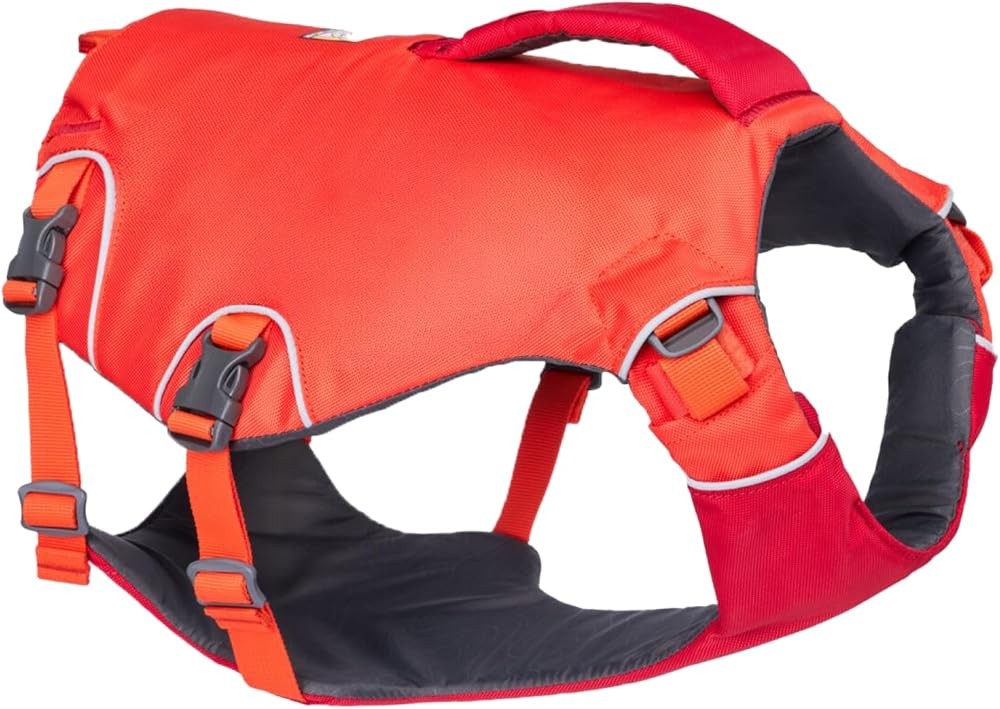
Ruffwear Confluence Life Jacket
Check Price on AmazonAs an Amazon Associate we earn from qualifying purchases.
The Ruffwear Confluence represents an evolution in dog life jacket design, incorporating ergonomic advances that optimize both safety and comfort during extended water activities. The optimized buoyancy distribution accounts for breed-specific weight distribution patterns, with foam placement calculated to support proper swimming position across different body types. This advanced engineering maintains horizontal orientation in water while allowing the natural spinal flexion and limb movement required for efficient swimming.
Dual rescue handles provide options for different rescue scenarios. The primary top handle offers quick vertical lifting for boat retrieval or emergency extraction, while a secondary handle positioned lower on the back enables horizontal pulling when dragging a dog from water onto docks, shores, or shallow areas. The dual-handle system gives rescuers mechanical advantages that reduce strain and enable faster response.
Six adjustment points create the most customizable fit in the premium category. Independent straps control chest girth, belly band, neck opening, and shoulder positioning, allowing precise adaptation to individual dogs. This level of adjustment proves particularly valuable for breeds with unusual proportions, such as deep-chested sight hounds or barrel-bodied bulldogs, where standard sizing often fails to provide secure fit.
The enhanced reflective coverage extends beyond trim elements to include integrated reflective panels and piping across multiple surfaces. This comprehensive visibility approach makes dogs detectable from 360 degrees rather than just specific angles. In boating situations where other vessels present collision risks, or during water activities in failing light, the enhanced reflective coverage provides measurable safety improvements.
Hydrodynamic shaping reduces drag during swimming. The Confluence’s streamlined profile and smooth external surfaces minimize water resistance compared to boxy designs that create turbulence and slow swimming speed. For dogs who swim regularly or cover significant distances, this design feature reduces fatigue and enables longer, more enjoyable water sessions.
The jacket’s construction uses closed-cell foam that resists water absorption, maintaining consistent buoyancy throughout extended use. Unlike open-cell foams that gradually saturate and lose effectiveness, the closed-cell material provides reliable flotation from first water entry through hours of swimming. This performance consistency matters during all-day boating trips or extended beach sessions.
Premium materials include fade-resistant fabrics that maintain appearance despite sun exposure and chlorine contact. The outer shell resists tearing from encounters with rough surfaces, boat hardware, or lakeside vegetation. Internal seams use reinforced stitching that withstands the repeated stress of swimming motion and rescue pulls.
Bottom line: The Ruffwear Confluence at $119 provides advanced engineering that translates research on buoyancy optimization and rescue mechanics into practical features for dogs engaged in frequent or demanding water activities, with premium materials justifying the higher investment for serious water enthusiasts.
The Outward Hound Granby Splash demonstrates that essential safety features need not require premium pricing. At $25, this budget option provides fundamental safety support through adequate flotation foam and rescue access, making water safety accessible to owners who cannot justify higher-priced alternatives. Research shows that life jackets provide safety through multiple protective mechanisms including reliable buoyancy and rescue accessibility, and the Granby delivers those core mechanisms without advanced refinements.
Standard foam flotation distributes across the jacket’s torso section to maintain surface buoyancy. While not optimized for specific breed proportions like premium alternatives, the foam quantity and placement keeps dogs afloat in calm to moderate water conditions. The buoyancy supports the dog’s chest and belly, allowing the head to remain above water without constant swimming effort.
The top rescue handle provides lifting and pulling capability for emergency response. Constructed from durable nylon webbing, the handle supports the weight of dogs within the jacket’s size range, enabling boat retrieval or current rescue. The handle’s positioning offers adequate leverage for most rescue scenarios, though it lacks the reinforced construction and ergonomic shaping found in premium models.
Two adjustment straps control fit around the chest and belly. While fewer than premium jackets offering five or six points, the two-strap system accommodates dogs with standard proportions within each size range. Quick-release buckles enable fast donning and removal, particularly useful when introducing dogs to life jacket use or during frequent water entry and exit cycles.
The bright color options enhance visibility during water activities. Orange, yellow, and pink variants make dogs easier to locate in open water compared to neutral tones that blend with surroundings. While the jacket lacks the comprehensive reflective coverage of premium alternatives, the color choices provide baseline visibility improvements.
Sizes from XS through L cover small to large breeds based on weight and girth measurements. The size chart provides clear guidance for selection, though the limited adjustment range within each size means dogs at the edges of size ranges may experience less secure fit than those in the middle of the range.
Bottom line: The Outward Hound Granby Splash at $25 provides essential flotation and rescue capability that research identifies as fundamental drowning protection mechanisms, making it a practical choice for budget-conscious owners whose dogs need water safety equipment for occasional swimming or boating activities.
The Kuoser High Flotation jacket prioritizes visibility features that address the specific challenges of locating dogs in open water environments. Bright color options including neon yellow, orange, and pink create strong contrast against water surfaces, making dogs identifiable from significant distances. Research on water safety emphasizes the importance of rapid location and rescue, and high-visibility coloring directly supports both objectives.
Enhanced reflective strips cover a larger surface area than standard trim applications. Multiple reflective panels appear on the sides, back, and top of the jacket, creating 360-degree visibility that remains effective as dogs change swimming direction or orientation. The comprehensive reflective coverage proves particularly valuable during dawn and dusk water activities when natural light levels fall but recreational boating continues.
The superior buoyancy comes from generous foam thickness that provides extra flotation margin. This enhanced buoyancy particularly benefits breeds with poor natural flotation, including bulldogs, pugs, and other brachycephalic types whose body proportions work against them in water. The additional foam creates more passive flotation, reducing the swimming effort required to keep heads above water.
Four adjustment points balance secure fit with ease of use. Straps at the chest, belly, shoulders, and neck allow customization that reduces jacket rotation or slipping during swimming. The adjustment system uses buckles and hook-and-loop closures that enable quick fitting while maintaining security during water activities.
The reinforced rescue handle features thicker webbing and additional stitching compared to basic budget models. This construction withstands repeated lifting and pulling forces during rescue operations or boat retrieval. The handle’s placement distributes weight evenly, making it easier to lift larger dogs or extract them from difficult positions.
Size options from XS through XXL accommodate an unusually broad range of dogs, including very small toy breeds and extra-large working breeds. The extended size range makes the Kuoser accessible to owners of dogs at the extremes of size distribution who struggle to find appropriate life jackets in standard size runs.
The jacket’s design includes side release buckles that enable one-handed operation. This feature proves useful during rescue scenarios or when managing multiple dogs, allowing faster response without fumbling with complex closure systems. The buckles lock securely to reduce risk of accidental release while remaining easy to disengage intentionally.
Bottom line: The Kuoser High Flotation jacket at $42 delivers exceptional visibility features and enhanced buoyancy that address specific safety needs for dogs in open water environments or low-light conditions, with comprehensive reflective coverage supporting the rapid location and rescue emphasized in water safety research.
How Do You Properly Size and Fit a Dog Life Jacket?
Accurate sizing determines whether a life jacket provides protection or creates hazards. Research on flotation device effectiveness emphasizes that proper fit ensures consistent performance, while ill-fitting equipment fails during the emergencies it should reduce risk of. For dogs, where communication about discomfort is limited, owners must rely on precise measurements and careful fit assessment.
Begin by measuring girth at the widest part of the chest, typically located immediately behind the front legs. Use a flexible measuring tape pulled snug but not tight, with enough tension to compress the coat but not the ribcage. Record this measurement in inches, as it serves as the primary sizing criterion for most manufacturers. Dogs with barrel chests or deep keel-shaped chests may fall between standard sizes, requiring attention to manufacturer-specific sizing charts.
Weigh the dog accurately using a scale appropriate for their size. Small dogs require gram-precision scales, while large breeds can use standard bathroom scales. Weight serves as the secondary sizing factor, helping narrow choices when girth measurements fall between size ranges. Some breeds, particularly those with heavy bone structure or dense muscle mass, weigh more than their girth might suggest, making both measurements necessary for proper selection.
Measure body length from the base of the neck to the base of the tail. This measurement matters less for sizing than for ensuring the jacket covers adequate torso area without extending so far back that it restricts hip movement during swimming. Jackets that end mid-torso allow full hip extension, while those extending to the hind legs may interfere with the powerful rear leg kicks that provide swimming propulsion.
Try the jacket on the dog before water introduction. Adjust all straps to achieve snug fit that does not restrict breathing or movement. You should fit two fingers between the straps and the dog’s body, but no more. Looser fit allows the jacket to shift during swimming, potentially rotating to the side or slipping backward and losing effectiveness. Tighter fit restricts breathing and chafes skin during movement.
Check that the jacket maintains position during movement. Have the dog walk, trot, and if possible, simulate swimming motions while on dry land. The jacket should stay centered on the torso without rotating, sliding backward, or bunching at the shoulders. Jackets that shift during calm movement will fail entirely during vigorous swimming or rescue operations.
Evaluate buoyancy distribution while the dog swims in shallow water. The jacket should keep the dog’s body horizontal, with the head naturally above water and the rear quarters supported rather than sinking. Dogs forced into vertical positions by poorly distributed buoyancy cannot swim efficiently and tire rapidly. Proper buoyancy allows normal paddling motion with reduced effort.
Verify that rescue handles remain accessible and properly positioned during swimming. Handles should sit high on the back where they can be easily grasped, without sliding to the side or rotating during dog movement. Test the handle by lifting the dog’s front quarters, ensuring the jacket supports the weight without excessive shifting or strap stress.
Inspect for pressure points after initial use. Remove the jacket and check for redness, chafing, or areas where fur appears matted from pressure. Common problem areas include the armpits, where straps cross, and along the chest where buckles contact skin. Adjust strap positions to eliminate pressure points, or consider different size or style if adjustment cannot resolve the issue.
Reassess fit periodically, particularly for growing puppies or dogs experiencing weight changes. A jacket that fit properly at the season’s beginning may become too tight or loose as body composition changes. Senior dogs losing muscle mass may need smaller sizes, while dogs gaining weight require upsize to maintain proper fit and effectiveness.
Bottom line: Proper life jacket fit requires precise girth and weight measurements, careful attention to manufacturer sizing charts, and thorough assessment of position stability and pressure points during actual use. Research-supported effectiveness depends on fit that maintains buoyancy distribution and rescue access without restricting natural movement.
What Essential Safety Features Should You Look For?
Buoyancy capacity determines whether a jacket keeps dogs afloat or merely provides false security. Adequate foam thickness and distribution should maintain the dog’s head above water without requiring constant swimming effort. Research examining flotation device effectiveness found that “promoting use of flotation devices with safety standards that provide protection as well as fun could potentially decrease open water drowning rates”, distinguishing between safety-certified equipment and recreational toys that fail during emergencies. Studies on water safety behaviors show that proper equipment selection directly impacts safety outcomes across diverse populations.
Look for closed-cell foam that resists water absorption and maintains consistent buoyancy throughout use. Open-cell foams gradually saturate, losing effectiveness over time and potentially leaving dogs without adequate flotation hours into water activities. Closed-cell materials provide the same lift on the tenth hour as the first, ensuring reliable performance during all-day boating trips or extended swimming sessions. Research on life jacket compliance shows that comfort and reliability drive consistent use patterns.
Rescue handles must support the full weight of a wet dog during lifting and pulling operations. Reinforced webbing with bar-tack stitching at stress points reduces tearing when handles bear maximum loads. The handle’s position should balance the dog’s weight distribution, making vertical lifts into boats or horizontal pulls onto shores mechanically efficient rather than requiring excessive strength. Studies on water safety equipment emphasize that rescue accessibility represents a critical safety feature.
Adjustability enables secure fit across different body types and accounts for movement during swimming. Multiple adjustment points at the chest, belly, neck, and shoulders reduce risk of jacket rotation or slipping that compromises buoyancy distribution. Quick-release buckles enable rapid donning and removal while maintaining security during use, addressing the barrier research identifies where “perception of life jackets as uncomfortable” reduces usage rates. Studies examining barriers to safety equipment use show that comfort and ease of use significantly influence compliance.
Visibility features help locate dogs in water environments. Bright colors create contrast against water surfaces, making dogs easier to spot from boats or shores. Reflective trim and panels enhance detection in low-light conditions, particularly during dawn and dusk when many water activities occur but natural illumination fades. Research on aquatic facility safety shows that visibility aids rapid location, critical when dogs enter water unexpectedly or drift from swimming areas.
D-ring or leash attachments provide control during water entry, swimming, and exit. Reinforced attachment points distribute pulling forces across the jacket structure rather than concentrating stress on single seams. This reduces tearing while giving handlers ability to guide dogs away from hazards, assist tired swimmers, or reduce risk of unauthorized water entry. Research on water safety behaviors demonstrates that proper equipment design supports safer water activities.
Comfortable design encourages consistent use rather than fighting resistance from dogs who associate jackets with restriction. Soft inner linings reduce risk of chafing during movement. Ergonomic shaping accommodates natural body contours rather than forcing dogs into unnatural positions. The jacket should allow full range of motion for head turning, leg extension, and spinal flexion required during swimming. Research examining barriers to equipment compliance emphasizes that comfort drives consistent safety equipment use.
Durable materials withstand repeated use in demanding environments. Abrasion-resistant outer shells survive encounters with boat hardware, rough shores, and underwater obstacles. Corrosion-resistant hardware maintains function despite salt water exposure and UV radiation. Quality construction delivers multiple seasons of reliable service rather than single-season disposable performance. Studies on flotation equipment standards emphasize that material quality directly impacts long-term safety performance.
Drainage systems enable water to exit the jacket rather than pooling in pockets that add weight and create cold zones against the dog’s body. Mesh panels or drain holes positioned away from buoyancy zones allow water to flow through while maintaining flotation. This feature particularly matters during boat retrieval, where jackets full of trapped water become significantly heavier and more difficult to manage. Research on life jacket design shows that comfort features including drainage influence user compliance.
Bottom line: Essential safety features include adequate closed-cell foam buoyancy, reinforced rescue handles positioned for mechanical advantage, comprehensive adjustability for secure fit, enhanced visibility through color and reflective elements, and durable construction that maintains performance across multiple seasons, as supported by research identifying these elements as fundamental to flotation device effectiveness.
When Do Dogs Need Life Jackets?
All boat passengers require life jackets regardless of swimming ability, as capsize events and unexpected water entry create situations where even expert swimmers struggle. Both experienced and novice boaters benefit from consistent life jacket use, as water conditions, equipment failures, and unexpected events create risks that experience alone cannot mitigate. This principle applies directly to dogs on boats, where movement, waves, and excitement create entry risks that swimming skills cannot overcome.
Dogs with breeds predisposed to poor swimming face constant risk in water environments. Bulldogs, French bulldogs, pugs, Boston terriers, and other brachycephalic types cannot maintain proper head position without exhausting themselves within minutes. Their compressed airways make breathing difficult during exertion, and the body proportions create sinking rather than floating tendencies. Life jackets transform deadly environments into accessible ones for these breeds. Research on flotation equipment standards shows that proper safety equipment enables water access for vulnerable populations.
Puppies under six months lack the physical development for safe swimming. Their muscle mass, coordination, and stamina fall short of what sustained swimming requires. They tire rapidly and may panic when unable to reach safety, leading to inefficient thrashing that accelerates exhaustion. Life jackets provide the flotation puppies need while they develop swimming skills and water confidence.
Senior dogs experience declining physical capabilities that compromise swimming safety. Arthritis reduces joint flexibility and power in the hind leg kicks that provide swimming propulsion. Muscle atrophy decreases overall strength and endurance. Cardiovascular changes limit oxygen delivery during exertion. Conditions that cause minor discomfort during walking become dangerous limitations during swimming, where continuous effort is required to stay afloat.
Dogs with medical conditions affecting mobility, coordination, or stamina need constant flotation support. Hip dysplasia restricts the powerful rear leg extension required for efficient swimming. Neurological disorders impair the coordinated paddling that maintains proper position. Heart disease limits exertion tolerance and creates arrhythmia risks during strenuous activity. Life jackets enable water access for dogs whose conditions would otherwise make swimming impossible or dangerous.
Cold water situations demand life jackets even for strong swimmers. Water below 70°F causes rapid heat loss, with small dogs and those with thin coats particularly vulnerable. As hypothermia develops, muscle function deteriorates, coordination fails, and swimming ability collapses. Life jackets maintain flotation as physical capabilities decline, reducing drowning when cold water overwhelms even experienced swimmers. Research on water safety practices emphasizes that environmental hazards exceed individual swimming capability.
Open water environments present hazards absent from pools. Currents create forces that move dogs away from safety despite swimming efforts. Waves and boat wakes push dogs underwater repeatedly, exhausting them and filling airways with water. Tidal changes alter depth and flow patterns, potentially trapping dogs in conditions beyond their capabilities. Life jackets provide security margins that accommodate environmental unpredictability.
Unfamiliar water presents psychological challenges that compromise performance. Dogs comfortable in home pools may panic in lakes, rivers, or ocean environments where depth perception fails and boundaries are unclear. Panic triggers inefficient movement and rapid exhaustion. Life jackets maintain safety while dogs adapt to new environments and develop confidence in unfamiliar settings. Studies on water safety equipment usage show that flotation devices provide security during adaptation periods.
Dogs learning to swim require flotation support during skill development. The learning process involves mistakes, fatigue, and occasional panic that create drowning risks. Life jackets provide security that allows dogs to focus on skill acquisition rather than survival, accelerating learning while reducing accidents during the vulnerable early stages.
Multiple-dog households benefit from universal life jacket policies. When some dogs swim confidently while others struggle, requiring all dogs to wear jackets eliminates jealousy, simplifies supervision, and ensures consistent safety standards. The policy reduces situations where struggling swimmers attempt to keep up with confident swimmers, exceeding their capabilities and creating emergencies.
Bottom line: Life jackets provide essential protection during boating, for breeds with poor swimming anatomy, during puppyhood and senior years, when medical conditions limit capability, in cold or open water, and during skill development, with research supporting flotation devices as fundamental drowning protection across these diverse scenarios.
Training Dogs to Wear Life Jackets
Introduction should occur in calm, familiar environments without water pressure. Place the jacket on the dog in their usual living area, offering rewards and praise for accepting it. Leave it on for a few minutes initially, gradually increasing duration over multiple sessions. This familiarization builds positive associations before water activities add stress and excitement.
Practice fit adjustments during calm sessions. Dogs should learn that strap tightening and buckle closure predict rewards rather than discomfort. Pair each adjustment with food rewards, creating positive conditioning that reduces resistance during actual use. This training investment pays dividends during rushed departures or when fitting must occur in distracting environments like boat launches.
Allow shallow water exploration while wearing the jacket. Choose calm areas without current where the dog can touch bottom comfortably. Let them walk through ankle-deep water, experiencing how the jacket feels when wet without demanding swimming. This gradual exposure reduces the panic some dogs experience when buoyancy lifts their rear quarters unexpectedly during first swimming attempts.
Support early swimming sessions with hands-on assistance. Hold the dog’s midsection or use the rescue handle to provide security while they learn how the jacket changes their position in water. Many dogs initially struggle with the different balance point jackets create, attempting to swim vertically rather than horizontally. Gentle guidance helps them discover the efficient horizontal position the jacket supports.
Keep initial swimming sessions brief. Even with life jacket support, dogs tire from the exertion and psychological stress of new experiences. Five to ten minutes provides adequate practice without risking exhaustion or building negative associations. Multiple short sessions prove more effective than extended ones that overwhelm dogs and create resistance to future water activities.
Gradually reduce hands-on support as dogs gain confidence. Transition from holding them constantly to maintaining hand contact without providing lift, then to swimming alongside with hand nearby but not touching. This progression builds independence while maintaining security that reduces panic. Dogs should learn they can rely on the jacket’s buoyancy rather than constant handler intervention.
Practice rescue handle use during calm conditions. Periodically lift the dog’s front quarters using the handle, simulating boat retrieval or emergency extraction. This training ensures the handle works as intended and familiarizes dogs with being lifted by the jacket. Dogs prepared for handle use respond more calmly during actual emergencies when swift action is required.
Reward calm behavior during water entry and exit. Many dogs become overly excited approaching water, making jacket security checks difficult and creating safety risks during boarding or disembarking from boats. Training calm waiting while wearing jackets establishes control that reduces dangerous rushing into water or resistance during pre-water safety checks.
Create positive associations with post-swim jacket removal. Some dogs resist the process of taking jackets off, particularly when straps stick to wet fur. Offering highly valued food rewards during removal builds cooperation that simplifies the process and reduces negative associations that could generalize to resistance putting jackets on.
Maintain jacket use consistency across water activities. Allowing dogs to swim without jackets sometimes while requiring them other times confuses expectations and may trigger resistance when jackets are required. Consistent use builds habituation that eliminates discussion, making jackets part of water activity routines rather than special restrictions that trigger opposition.
Bottom line: Systematic training that pairs life jackets with positive experiences, introduces water gradually, provides hands-on support during early sessions, and maintains consistent use policies builds cooperation and confidence that ensures dogs accept and benefit from flotation protection throughout their water activities.
Common Life Jacket Mistakes to Avoid
Using recreational flotation toys instead of safety-certified life jackets creates false security. Pool noodles, inflatable rings, and water wings lack the buoyancy distribution and reliability that research shows effective flotation devices provide. A study of swimmers at open water sites found that while many used flotation, “teenagers and adults rarely used life jackets (2-3%)”, instead relying on substandard alternatives that fail during emergencies. For dogs, whose communication about struggle is limited, this mistake can prove fatal before owners recognize the problem.
Selecting size based on breed rather than measurements leads to poor fit. Great Pyrenees and greyhounds may both qualify as large breeds, yet their chest girths and body proportions differ dramatically. Relying on breed categories rather than precise girth and weight measurements results in jackets that shift during swimming, rotate to the side, or fail to provide proper buoyancy distribution. Every dog requires individual sizing regardless of breed generalizations.
Failing to adjust straps properly compromises both safety and comfort. Straps left too loose allow jackets to shift or rotate during swimming, moving buoyancy away from optimal positions. Straps overtightened restrict breathing and create pressure points that cause chafing and resistance to future jacket use. The two-finger rule applies: owners should fit two fingers between straps and dog, providing security without restriction.
Skipping water introduction in controlled settings before real activities creates unnecessary stress. Dogs introduced to life jackets for the first time during actual boat trips or beach visits face multiple novel stimuli simultaneously. This sensory overload may trigger panic or resistance that could be reduced through gradual familiarization in familiar, calm environments where dogs can adapt without performance pressure.
Neglecting regular fit checks as dogs age or change weight allows jackets to become ineffective. Puppies grow rapidly, requiring size increases every few months during their first year. Senior dogs losing muscle mass may need smaller sizes to maintain proper fit. Dogs gaining or losing significant weight experience girth changes that alter proper size selection. Jackets that fit perfectly last season may be dangerously loose or restrictive this season without intervention.
Assuming strong swimmers do not need life jackets ignores the research finding that “low life jacket use was associated with perceived greater swimming ability”, with expert swimmers showing reduced safety compliance. Water conditions, fatigue, medical emergencies, and environmental factors can overwhelm even excellent swimmers. Life jackets provide security when unexpected circumstances exceed capabilities, regardless of skill level.
Using damaged jackets compromises their protective function. Torn foam loses buoyancy. Damaged straps may fail under rescue loads. Broken buckles cannot maintain proper fit. Hardware corroded by salt water may snap during critical moments. Regular inspection and prompt replacement of damaged equipment reduces failures during emergencies when equipment must perform flawlessly.
Allowing dogs to swim unsupervised while wearing life jackets creates dangerous overconfidence. Life jackets provide flotation and rescue access, but they cannot address entanglement in underwater obstacles, intervene when dogs venture beyond safe areas, or manage medical emergencies that occur in water. Research emphasizes that multiple layers of protection work better than relying on single safety measures. Supervision remains essential regardless of flotation equipment.
Failing to practice rescue procedures before emergencies occurs leaves handlers unprepared when seconds matter. Knowing conceptually how rescue handles work differs from the physical skill of lifting a panicked, water-saturated dog into a boat. Practice during calm conditions builds muscle memory and confidence that enables effective response when stress and urgency complicate rescue operations.
Storing wet jackets without proper drying promotes mildew growth and material degradation. Closed-cell foam resists water absorption but surrounding fabrics and straps remain wet after use. Jackets stuffed into storage bags while wet develop odors, mildew, and accelerated material breakdown. Thorough air drying before storage preserves materials and ensures jackets remain ready for next use.
Bottom line: Common mistakes including using recreational floats instead of safety-certified jackets, improper sizing and fit, inadequate training, assumptions about swimming ability, poor maintenance, and insufficient supervision compromise the protective benefits research demonstrates proper life jacket use provides.
Maintenance and Care for Long-Term Performance
Rinse jackets thoroughly after each use in chlorinated or salt water. Chlorine breaks down fabrics and foam over time, while salt creates corrosive deposits that damage hardware and stitching. Fresh water rinsing removes chemical residues and salt crystals before they cause deterioration. Focus particular attention on buckles, D-rings, and adjustment mechanisms where salt accumulates in crevices.
Air dry jackets completely before storage. Hang them in well-ventilated areas away from direct sunlight, which degrades fabrics and fading colors. Ensure all layers dry thoroughly, as moisture trapped in foam layers promotes mildew and bacterial growth. Proper drying maintains material integrity and reduces odors that make dogs resistant to wearing jackets during future activities.
Inspect jackets regularly for damage. Check foam for tears, compressions, or separations from outer fabric. Examine straps for fraying, particularly at stress points where they thread through buckles. Test buckles for secure closure and smooth release. Verify that stitching remains intact along seams and at handle attachment points. Early detection of damage allows repair or replacement before failures occur during water use.
Store jackets in cool, dry locations away from sunlight and heat sources. Avoid compressing them under heavy items that could permanently compress foam and reduce buoyancy. Proper storage maintains foam resilience and fabric integrity between uses. Jackets stored in hot cars, damp basements, or crushed under equipment degrade faster than those given appropriate storage conditions.
Replace jackets when damage cannot be repaired safely. Foam tears that compromise buoyancy, strap damage that affects secure fit, and hardware failures that reduce risk of proper closure all require jacket replacement. The cost of new equipment pales compared to the consequences of equipment failure during water emergencies. Manufacturers’ warranties may cover some damage, making replacement more affordable than expected.
Follow manufacturer care instructions for washing when needed. Most jackets require hand washing in mild detergent with air drying rather than machine washing and drying. Machine agitation can damage foam and stitching, while dryer heat degrades materials. Hand washing preserves jacket integrity while removing accumulated dirt, oils, and biological residues that accumulate during use.
Address visible mildew promptly with appropriate cleaners. Mildew appears as dark spots or streaks, particularly on light-colored fabrics. Products designed for mildew removal on outdoor gear eliminate growth without damaging jacket materials. Unaddressed mildew spreads, creating odors and stains while degrading fabrics.
Check and clean drainage areas regularly. Mesh panels and drain holes allow water to exit jackets but can become clogged with debris, algae, or sediment. Clear obstructions ensure water drains properly rather than adding weight and creating cold zones against dogs. Proper drainage maintains jacket function and dog comfort.
Update sizing as dogs change. Growing puppies require periodic size increases to maintain proper fit and protection. Senior dogs losing muscle mass may need smaller sizes. Weight changes from seasonal activity levels or medical conditions alter appropriate sizing. Regular assessment ensures jackets continue providing proper buoyancy distribution and secure fit regardless of body changes.
Keep records of purchase dates and warranty information. Manufacturers’ warranties cover defects but require proof of purchase and adherence to stated warranty periods. Documentation enables warranty claims when needed and helps track jacket age for replacement decisions. Jackets exceeding manufacturer-recommended service life may retain appearance while losing performance characteristics that determine safety.
Bottom line: Proper maintenance including thorough rinsing, complete drying, regular inspection, appropriate storage, and timely replacement extends jacket life while ensuring the reliable performance research shows necessary for effective drowning protection, with attention to manufacturer care instructions preserving materials and warranty coverage.
Frequently Asked Questions
Do all dogs need life jackets for swimming?
Not all dogs need life jackets for every swimming situation, but multiple factors indicate when they provide essential protection. Research shows that life jackets improve water safety through multiple protective layers including buoyancy support and rescue accessibility, particularly benefiting those with limited swimming ability or in challenging conditions. Breeds with poor swimming anatomy including bulldogs, pugs, dachshunds, and other brachycephalic or short-legged types require life jackets for any water deeper than they can stand in safely. Puppies under six months and senior dogs with declining strength benefit from flotation support that compensates for limited capability.
All dogs on boats need life jackets regardless of swimming ability, as capsize events and unexpected water entry create emergencies where even expert swimmers struggle. Dogs in open water with currents, waves, or cold temperatures face hazards that exceed swimming capability, making life jackets necessary safety equipment. Swimming pools with supervision and easy exit access present lower risk, though life jackets benefit dogs learning to swim or those with medical conditions affecting mobility and stamina.
How do I size a dog life jacket?
Measure your dog’s girth at the widest part of the chest, typically immediately behind the front legs, using a flexible measuring tape pulled snug but not tight. Weigh your dog accurately using an appropriate scale. Compare both measurements to manufacturer-specific sizing charts, as sizes vary between brands. When measurements fall between sizes, consider your dog’s body type: deep-chested breeds often need larger sizes for girth even when weight suggests smaller, while barrel-chested breeds may need the reverse.
Try the jacket on before water use and adjust all straps to achieve snug fit that allows two fingers between strap and dog but no more. The jacket should not shift during movement, rotate to the side, or slide backward. Check that the rescue handle remains centered on the back and easily accessible. Verify that the jacket keeps your dog horizontal in water rather than forcing vertical position. Reassess fit periodically, particularly for growing puppies or dogs experiencing weight changes.
Can dogs swim in pools with life jackets?
Yes, dogs can swim in pools with life jackets, and research on aquatic facility policies shows that almost all facilities allow life jackets in shallow water, with many also permitting them in deep water. Life jackets benefit dogs learning to swim, providing security that allows skill development without survival stress. They protect breeds with poor natural buoyancy, enabling pool access that would otherwise be dangerous or impossible.
For home pools, life jackets add safety layers particularly valuable for unsupervised moments or when multiple dogs with varying abilities swim together. They enable easy rescue if a dog enters the pool unexpectedly or struggles to reach steps. Some public pools restrict life jacket use in certain areas due to concerns about equipment standards or interference with other swimmers, so verify facility policies before assuming permission. Safety-certified life jackets that meet flotation standards receive wider acceptance than recreational toys that lack standardized performance.
What features make a dog life jacket effective?
Research on flotation device effectiveness identifies several critical features. Adequate buoyancy from closed-cell foam that resists water absorption keeps dogs afloat without constant swimming effort. Studies show that “flotation devices with safety standards provide protection” more reliably than recreational alternatives lacking standardized performance. Buoyancy should distribute across the torso to maintain horizontal swimming position rather than forcing dogs vertical.
Strong rescue handles positioned on the back support full dog weight during lifting and pulling operations. Reinforced webbing with bar-tack stitching at stress points reduces failures under maximum loads. Multiple adjustment points at chest, belly, neck, and shoulders create secure fit that reduces shifting during swimming. Bright colors and reflective trim enhance visibility for rapid location in open water. Drainage systems allow water to exit rather than pooling in pockets that add weight. Durable, abrasion-resistant materials withstand repeated use in demanding environments.
How long can a dog wear a life jacket?
Dogs can wear properly fitted life jackets for several hours during water activities, though regular breaks reduce risk of overheating and chafing. Research on comfort barriers found that “perception of life jackets as uncomfortable” reduces usage, emphasizing the importance of proper fit and periodic relief. Monitor your dog for signs including excessive panting beyond normal exercise response, attempts to remove the jacket, redness or raw spots at strap contact points, or behavior changes suggesting discomfort.
Remove jackets during extended breaks from water to allow skin to dry and reduce risk of irritation from wet fabric contact. Check for pressure points or chafing after initial use and during longer sessions. Adjust straps if redness appears or if the jacket shifts position. Dogs with thick coats may overheat faster in jackets, requiring more frequent breaks. After water activities end, remove the jacket promptly rather than leaving it on during travel or rest periods. Proper fit, quality materials, and attention to your dog’s comfort signals enable safe extended wear when water activities demand it.
Do life jackets restrict dogs’ swimming ability?
Properly designed life jackets maintain natural swimming position and movement while providing buoyancy support. Research on flotation equipment shows that well-designed jackets support efficient swimming without impeding natural movement. Low-profile designs with streamlined shaping minimize drag and allow full leg extension during paddling. Buoyancy distributed to support horizontal position enables efficient swimming strokes rather than forcing the vertical orientation that requires constant effort.
Poorly designed jackets with excessive buoyancy in wrong locations or bulky construction can restrict movement and create resistance that tires dogs quickly. This emphasizes the importance of selecting jackets designed specifically for swimming rather than simple flotation. Dogs may initially struggle adapting to how jackets change their balance point in water, swimming less efficiently during first sessions. Most dogs adapt within a few swimming sessions, learning to work with the jacket’s buoyancy rather than fighting it. The slight restriction well-designed jackets may create is vastly outweighed by the safety benefits they provide.
Should puppies wear life jackets?
Yes, puppies benefit significantly from life jacket use during water activities. Puppies under six months lack the muscle development, coordination, and stamina that sustained swimming requires. They tire rapidly and may panic when unable to reach safety, leading to inefficient thrashing that accelerates exhaustion. Life jackets provide flotation that compensates for limited physical capabilities while puppies develop swimming skills and water confidence.
The rescue handle proves particularly valuable for puppies, enabling quick intervention when they venture too deep or show distress. This security allows puppies to explore water gradually while handlers maintain immediate rescue capability. Life jackets should fit snugly on puppies as on adult dogs, with the same attention to strap adjustment and position stability. Puppies grow rapidly, requiring size reassessment every few weeks during peak growth periods. Introducing life jackets during puppyhood builds positive associations and acceptance that continue into adulthood, making adult life jacket use easier than introducing the equipment to dogs without prior experience.
Can senior dogs use the same life jacket they wore when younger?
Senior dogs experiencing weight loss from muscle atrophy may require smaller sizes than they wore during their prime years. The loss of muscle mass changes chest girth and overall body shape, causing jackets that once fit properly to become loose and shift during swimming. Loose jackets rotate to the side or slide backward, compromising buoyancy distribution and making rescue handles less accessible.
Conversely, senior dogs gaining weight from reduced activity need larger sizes to maintain proper fit. Regular fit assessment becomes increasingly important as dogs age and body composition changes. Beyond sizing, senior dogs benefit from life jackets more than they did when younger. Arthritis, reduced stamina, coordination changes, and cardiovascular capacity decline make swimming more challenging even when dogs retain interest in water activities. Life jackets enable continued water access by reducing the effort required to stay afloat, extending senior dogs’ ability to enjoy activities they loved in youth.
What about dogs who resist wearing life jackets?
Resistance typically stems from unfamiliarity, improper fit causing discomfort, or negative associations from forced introduction. Systematic training builds acceptance and cooperation. Begin by pairing the jacket with high-value food rewards and praise during calm introduction sessions away from water. Leave it on briefly initially, gradually increasing duration across multiple sessions. This positive conditioning creates associations between jacket and rewards rather than restriction and struggle.
Verify that fit is appropriate without pressure points or restriction that could cause physical discomfort. Many dogs resist jackets that pinch, chafe, or restrict movement. Adjusting strap positions or trying different styles may resolve resistance rooted in genuine discomfort. Introduce water gradually rather than forcing dogs into swimming immediately after jacket introduction. Let them explore shallow water where they can touch bottom comfortably, experiencing how the jacket feels when wet without the stress of swimming. Hand-on support during early sessions provides security that builds confidence. Maintain consistent use across all water activities rather than intermittent application that confuses expectations. Most dogs adapt within a few sessions when introduction follows systematic training principles.
If your pup is hitting the water this summer, a properly fitted life jacket is just the start of a safe routine — pairing it with a GPS dog health collar can help you keep tabs on their location and activity levels around the lake or beach. For dogs who already deal with stiffness or joint issues, gentle recovery options like cold laser therapy or red light therapy may support mobility after long swim sessions. And if your dog tires easily in the water, a dog wheelchair can be a useful backup for shore-side breaks, while keeping them well-hydrated with a pet water fountain at home helps support overall health between adventures.
If your dog enjoys water activities, a well-fitted life jacket is just one part of keeping them safe and healthy—pairing it with a GPS dog health collar or activity tracker can help you monitor their fitness and spot any changes in mobility or behavior. For older dogs or those with joint issues, cold laser therapy devices and red light therapy may offer additional support for comfort and recovery after active outings. If your dog shows signs of fatigue, digestive upset, or unusual symptoms after swimming, it may be worth exploring resources on chronic diarrhea causes or kidney failure signs and stages to rule out underlying conditions. And for pups who need extra mobility support on land, dog wheelchairs can help maintain an active, engaged lifestyle.
For more context, see our guides on Best Dog Pools for Hydrotherapy, Best Cooling Dog Beds for Summer — Heat Relief for All Breeds, Best Dog Massage Tools, Best Orthopedic Dog Beds for Large Senior Dogs With Arthritis, and Best Dog Nail Grinders for Safe and Stress-Free Trimming.
Related Reading
- Best GPS Dog Health Collars and Activity Trackers - Location monitoring during outdoor water activities
- Best Dog Water Fountains - Hydration equipment for active dogs
- Best Cooling Dog Beds for Summer - Temperature regulation after water activities
- Best Dog First Aid Kits - Emergency supplies for water safety incidents
- Best Dog Strollers for Senior and Disabled Dogs - Mobility support for dogs with physical limitations
- Best Automatic Dog Feeders for Weight Control - Managing body weight for optimal swimming
Recommended Products