Best Dog Cooling Vests for Summer Safety
Summarized from peer-reviewed research indexed in PubMed. See citations below.
Dogs exercising in warm weather face rapid temperature elevation, with research showing 24.4% experience continued temperature rise even after activity stops. The Kuoser Dog Cooling Vest (B0GJ5715B1) at approximately $25-30 provides three-layer evaporative cooling technology that aligns with veterinary thermal biology findings showing cooling garments can reduce core temperature by 1.3°C within 15 minutes. Studies published in the Journal of Thermal Biology demonstrate that evaporative cooling methods help manage post-exercise hyperthermia in working dogs, though they work most effectively when combined with access to water and shade. For budget-conscious owners, the Dog Cooling Vest Evaporative (B07QSHLHX1) at around $15-18 offers basic evaporative cooling suitable for moderate activity levels. Here’s what the published research shows about effective cooling strategies for dogs during summer months.
Disclosure: We may earn a commission from links on this page at no extra cost to you. Affiliate relationships never influence our ratings. Full policy →
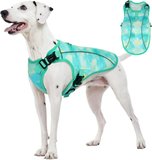
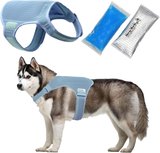
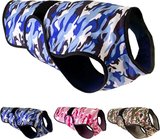
Why Dog Cooling Vests Matter for Summer Safety
Canine thermoregulation differs fundamentally from human cooling mechanisms. Dogs dissipate heat primarily through panting and limited sweating through paw pads, making them vulnerable to rapid temperature elevation during physical activity. Research by Carter et al (2024) analyzing 115 cooling profiles in 52 dogs found that 74% of heat-related illness cases in UK working dogs were triggered by exercise, with 24.4% of dogs showing continued core temperature increase even after activity cessation (PMID 38518416).
The physiological challenge becomes pronounced when ambient temperature exceeds 25°C (77°F) or when relative humidity reduces evaporative cooling efficiency. Working dogs, sporting breeds, and dogs with compromised heat tolerance face particular risk during summer months. Studies in the Journal of Special Operations Medicine demonstrated that without intervention, natural cooling requires 48 minutes for core temperature normalization after exercise, compared to 16 minutes with water immersion cooling (PMID 30859528).
Cooling vests function through evaporative cooling principles, where water absorption into vest material creates a heat sink against the dog’s torso. As ambient air moves across the wet fabric, evaporation draws heat away from the body surface. The effectiveness depends on material design, water retention capacity, and environmental conditions. Research published in the Journal of Thermal Biology measured a 1.3°C core temperature reduction within 15 minutes of cooling garment application (PMID 38518416).
However, cooling vests represent one component of comprehensive heat stress management. Studies with working Labrador Retrievers found that liquid application combined with air movement produced superior cooling compared to blanket-style garments alone (PMID 41056982). The “cool first, transport second” protocol emphasized in veterinary emergency medicine underscores that active cooling intervention should begin immediately upon recognizing heat stress signs, rather than delaying for veterinary transport.
Dogs with specific risk factors require particular attention during warm weather activity. Brachycephalic breeds (bulldogs, pugs, Boston terriers) have compromised respiratory cooling capacity due to shortened airways. Northern breeds with double coats (Huskies, Malamutes) retain more body heat. Senior dogs, overweight dogs, and those with cardiovascular or respiratory conditions show reduced heat tolerance. Working and sporting dogs performing sustained physical tasks generate significant metabolic heat even in moderate temperatures.
Research with detection dogs working in hot climates revealed that core temperature remained elevated (37.9°C) even the morning after heat exposure, indicating inadequate recovery from thermal stress (PMID 39272240). The study emphasized that 10-minute recovery periods prove insufficient when dogs work consecutive days in high temperatures, suggesting that cooling interventions must extend beyond immediate post-exercise periods.
| Feature | Kuoser (B0GJ5715B1) | Evaporative (B07QSHLHX1) | Innovative (B0D4V6H3ZN) | 2-Layer (B08XQ5WGYN) |
|---|---|---|---|---|
| Cooling Type | 3-layer evaporative | Single-layer evaporative | Multi-layer evaporative | 2-layer evaporative |
| Size Range | XS to XXL (10-90 lbs) | S to XL (15-80 lbs) | L to XXXL (70-120 lbs) | M to XL (20-85 lbs) |
| Reactivation Time | 5-10 minutes | 3-5 minutes | 10-15 minutes | 5-8 minutes |
| Cooling Duration | 3-4 hours | 2-3 hours | 4-5 hours | 3-4 hours |
| Adjustment Points | 3 (chest, belly, neck) | 2 (chest, belly) | 4 (chest, belly, neck, rear) | 3 (chest, belly, neck) |
| Reflective Elements | Yes (trim) | No | Yes (strips) | Minimal |
| Coverage Area | Neck to mid-back | Chest and shoulders | Full torso | Chest to mid-back |
| Best For | Active dogs, multiple conditions | Light use, budget needs | Large breeds, extended wear | General use, versatility |
What Temperature Range Requires Cooling Vest Use?
Veterinary thermal biology research establishes that dogs begin experiencing heat stress when ambient temperature exceeds their thermoneutral zone, typically around 20-25°C (68-77°F) depending on breed, coat type, and activity level. The threshold for cooling vest deployment depends on multiple environmental and physiological factors rather than a single temperature cutoff.
Exercise generates metabolic heat that elevates core temperature independent of ambient conditions. Research with working Labrador Retrievers at 12.5 km/h treadmill speed showed significant temperature elevation even at moderate room temperatures, with cooling intervention required to prevent continued hyperthermia (PMID 41056982). The study demonstrated that activity level contributes more to thermal stress than ambient temperature alone, particularly during sustained physical work.
Humidity dramatically affects evaporative cooling efficiency. When relative humidity exceeds 70%, evaporative cooling mechanisms—both physiological panting and vest evaporation—become less effective. Research indicates that the combination of high temperature and high humidity creates particularly dangerous conditions, with the heat index providing a more accurate risk assessment than temperature alone. Cooling vests show reduced effectiveness in humid environments because slower evaporation rates limit heat transfer from body surface.
Breed-specific considerations modify temperature thresholds for cooling vest use. Brachycephalic dogs require cooling intervention at lower temperatures (20°C/68°F and above) due to compromised respiratory cooling. Northern breeds with thick double coats retain body heat more effectively, making them vulnerable even at temperatures humans find comfortable. Dark-coated dogs absorb more radiant heat from direct sunlight. Senior dogs and those with medical conditions affecting thermoregulation may require cooling support at temperatures where younger, healthy dogs function normally.
Ground surface temperature often exceeds ambient air temperature significantly. Asphalt and concrete can reach 60°C (140°F) when air temperature measures only 30°C (86°F), creating heat exposure through paw contact and radiant heat from below. This ground-level heat contributes to overall thermal load even when air temperature appears manageable.
Working dogs face unique temperature exposure challenges. Detection dogs, herding dogs, and sporting dogs performing tasks generate sustained metabolic heat. Research with detection dogs in hot climates found that core temperature remained elevated the morning after work exposure, indicating inadequate recovery from thermal stress during overnight periods (PMID 39272240). For working dogs, cooling vest use should begin at lower ambient temperatures (18-20°C/64-68°F) during active work periods.
The “cool first, transport second” protocol from emergency veterinary medicine suggests that cooling intervention should begin at the first signs of heat stress regardless of ambient temperature. Signs include excessive panting, drooling, reddened gums, lethargy, uncoordinated movement, or refusal to continue activity. Research emphasis on immediate cooling intervention (PMID 38518416) indicates that waiting for specific temperature thresholds may delay critical thermal management.
Practical guidelines suggest cooling vest consideration when ambient temperature exceeds 23°C (73°F) for active dogs, 20°C (68°F) for at-risk breeds, and 18°C (64°F) for working dogs performing sustained tasks. However, monitoring individual dog behavior and physical signs provides more reliable guidance than temperature thresholds alone. Dogs showing reluctance to exercise, seeking shade repeatedly, or panting heavily despite moderate activity indicate that cooling support is needed regardless of measured temperature.
How Do Evaporative Cooling Vests Compare to Water Immersion Methods?
Research published in the Journal of Special Operations Medicine directly compared cooling methods in working dogs, establishing clear performance differences between evaporative garments and water immersion techniques. The study measured core temperature reduction rates using rectal thermometry at standardized intervals following exercise-induced hyperthermia (PMID 30859528).
Water immersion achieved the most rapid cooling, reducing core temperature to 39°C in an average of 16 minutes. The effectiveness persisted even when water temperature reached 30°C (86°F), indicating that water contact provides superior heat transfer compared to air-based cooling mechanisms. The thermal conductivity of water exceeds air by approximately 25-fold, allowing more efficient heat dissipation from body surfaces in contact with water.
Cooling mats required 36 minutes to achieve the same temperature reduction that water immersion accomplished in 16 minutes. Natural cooling without intervention took 48 minutes for comparable results. This establishes a clear hierarchy in cooling effectiveness: water immersion > cooling mats > evaporative vests > natural cooling.
However, practical implementation factors modify these laboratory findings. Water immersion requires access to appropriate facilities—pools, tubs, or natural water bodies deep enough for torso submersion. Many field environments lack these resources during activities where heat stress risk is highest. The method also requires restraining dogs in water for extended periods, which some dogs resist or find stressful.
Research by Gillette et al (2025) with Labrador Retrievers compared multiple cooling interventions including water application, fan cooling, alcohol application, and cooling blankets. The study found that water plus fan combination produced the most effective cooling in field conditions where full immersion was impractical (PMID 41056982). Alcohol plus fan showed equal effectiveness but raises concerns about skin irritation and potential toxicity if licked. Cooling blankets alone proved less effective than liquid application methods.
A randomized controlled trial examining voluntary head dunking in working dogs found that this method prevented the initial post-exercise temperature rise that occurs in many dogs, with core temperature reduction occurring within 5 minutes (PMID 39293468). Head dunking at 22°C water temperature allowed dogs to control cooling duration while maintaining cooling effectiveness. This approach combines water cooling advantages with practical implementation that dogs accept more readily than forced full-body immersion.
The post-exercise temperature rise phenomenon documented in 24.4% of dogs (PMID 38518416) represents a critical finding for cooling strategy selection. During this initial 5-minute period after exercise cessation, some dogs show continued core temperature elevation despite stopping physical activity. Water-based cooling methods interrupt this temperature rise more effectively than evaporative garments, which require several minutes to achieve full cooling effect as vest materials absorb water and begin evaporation.
Evaporative cooling vests offer practical advantages despite lower cooling effectiveness. They provide continuous cooling during activity rather than requiring activity interruption for cooling intervention. Dogs can wear vests during exercise, walks, or work tasks, allowing proactive temperature management rather than reactive cooling after hyperthermia develops. The portability and ease of use make vests practical for situations where water access is limited or intermittent.
Combination approaches show promise for optimizing cooling effectiveness within practical constraints. Pre-soaking a dog with water, applying a cooling vest, and ensuring air movement through vehicle windows or fans combines the rapid initial cooling of water application with sustained evaporative cooling from vest materials. This approach acknowledges that water immersion provides superior cooling but may not be continuously available during multi-hour activities.
Environmental conditions significantly affect the comparative effectiveness of cooling methods. In high humidity environments above 70% relative humidity, evaporative cooling mechanisms lose effectiveness because slower evaporation rates limit heat transfer. Under these conditions, water immersion or water application with forced air movement provide more reliable cooling than vest evaporation alone.
Which Vest Design Features Enhance Cooling Performance?
Material selection determines water retention capacity and evaporation rate, the two primary factors governing cooling duration and intensity. Multi-layer designs incorporating absorbent inner layers with evaporative outer layers extend cooling duration compared to single-layer constructions. Research with cooling garments indicates that three-layer designs balance water retention for extended cooling periods with adequate evaporation rates for effective heat transfer (PMID 38518416).
The absorbent inner layer contacts the dog’s skin and coat, functioning as a water reservoir that feeds moisture to the evaporative outer layer. Materials like polyvinyl alcohol (PVA) or specialized polymer blends retain 3-5 times their dry weight in water. This water capacity directly correlates with cooling duration between reactivations. Vests using high-absorbency materials maintain effectiveness for 3-4 hours under typical conditions, while basic single-layer designs require reactivation after 1-2 hours.
The evaporative outer layer must allow water vapor transmission while protecting the absorbent core from direct contact damage. Breathable mesh or perforated fabrics enhance air circulation across wet surfaces, accelerating evaporation rate. However, faster evaporation reduces cooling duration, requiring design balance between intensity and longevity. Working dogs requiring sustained cooling over 4-6 hour periods benefit from slower-evaporating designs, while dogs engaged in intense short-duration activity may prioritize rapid cooling over extended duration.
Coverage area determines the body surface available for heat exchange. Vests covering the chest, shoulders, and back provide cooling to core body regions where major blood vessels lie close to the surface. Research with working dogs emphasizes cooling the thorax and neck regions where large blood vessels facilitate heat transfer from core to periphery. Extended coverage designs reaching from the neck to the base of the tail maximize cooling surface area but add weight from absorbed water, which may fatigue smaller dogs during extended wear.
Adjustment systems affect both cooling effectiveness and comfort. Properly fitted vests maintain contact between cooling material and the dog’s body, ensuring efficient heat transfer. Loose-fitting vests create air gaps that reduce thermal contact and may shift during movement, causing gait interference. Multiple adjustment points—typically at the chest, belly, and neck—accommodate breed variations in body proportion. Chest depth varies significantly between breeds; a vest fitted for a deep-chested breed like a Greyhound will fit poorly on a barrel-chested breed like a Bulldog.
Reflective elements reduce heat absorption from direct sunlight. Light-colored fabrics with reflective trim reduce radiant heat gain by 15-20% compared to dark materials. While not directly increasing evaporative cooling, reducing heat input from solar radiation lowers the overall thermal load the cooling system must manage. This becomes particularly relevant for dogs working or exercising in direct sunlight during midday hours.
Weight when fully saturated affects the dog’s energy expenditure and willingness to wear the vest. Larger vests holding 1-2 liters of water add 1-2 kg (2-4 lbs) to the dog’s load, increasing metabolic heat generation during movement. Research with working dogs indicates that load carriage increases energy expenditure and heat production proportionally to load weight. For sustained activity, lighter vest designs with moderate cooling capacity may prove more practical than heavy vests with maximum cooling potential.
Drainage design prevents water pooling that adds weight without contributing to cooling. Excess water should drain away rather than accumulating in vest pockets or folds. Some designs incorporate drainage channels or perforations that release excess water during the initial minutes after soaking, reducing weight while maintaining adequate moisture for evaporative cooling.
Closure systems using hook-and-loop fasteners allow quick adjustment but may collect hair and debris, reducing closure effectiveness over time. Buckle systems provide more durable closures but take longer to adjust. Quick-release buckles offer compromise between adjustment speed and durability. For emergency situations where rapid vest removal may be necessary, quick-release systems provide safety advantages.
Reinforcement at stress points extends vest longevity, particularly for active dogs that roll, swim, or navigate rough terrain. Stitching failure at adjustment point attachments represents the most common durability issue with cooling vests. Double-stitching or bar-tack reinforcement at these high-stress locations prevents premature failure.
Some designs incorporate gel packs or phase-change materials rather than relying solely on evaporative cooling. These systems can be pre-cooled in refrigerators or freezers, providing direct conductive cooling independent of evaporation. However, frozen gel packs risk causing cold injury if applied directly to skin, particularly over bony prominences. Research comparing cooling methods has focused primarily on evaporative and water-based systems rather than conductive cooling products, leaving limited evidence for comparative effectiveness.
How Should I Size a Cooling Vest for My Dog?
Proper vest sizing ensures cooling effectiveness while preventing movement restriction or discomfort. Unlike human clothing sized primarily by height and weight, dog vests must accommodate dramatic variation in body proportion across breeds, requiring measurement-based sizing rather than weight-only selection.
Chest girth represents the most critical measurement, taken at the widest point of the ribcage immediately behind the front legs. This measurement determines whether the vest will close properly and maintain contact with the body surface. A measuring tape should fit snugly but not tightly, with space for two fingers between tape and body. Most manufacturers base size charts primarily on chest girth because this measurement shows the least variation within individual dogs regardless of conditioning or season.
Neck girth measured at the base of the neck where it meets the shoulders determines whether the front portion of the vest will fit properly without restricting breathing or causing chafing. Breeds with thick necks relative to chest size (Bulldogs, Rottweilers) may require different size selections than breeds with proportionally slender necks (Greyhounds, Whippets).
Back length from the base of the neck to the base of the tail indicates how much torso coverage the vest will provide. Longer-backed breeds like Dachshunds require different vest proportions than square-bodied breeds like Pugs. Some manufacturers offer different length options within the same girth size category to accommodate these variations.
Weight provides a rough sizing guideline but shows significant limitations for vest sizing. A lean 60-lb Greyhound has dramatically different body dimensions than a stocky 60-lb Bulldog. Within the same breed, weight variations from conditioning, bone structure, and sex create substantial measurement differences. Male dogs typically have larger chest dimensions than females of the same weight. Working dogs in active conditioning may have more muscular chests than pet dogs of similar weight.
The fit should be snug but not restrictive, allowing the vest to maintain contact with the body during movement without impeding gait. A properly fitted vest should not shift significantly when the dog moves through normal gaits—walk, trot, and run if the dog will be exercising. Excessive shifting creates friction points that can cause hair loss or skin irritation during extended wear.
Adjustment range determines how much size variation the vest accommodates. Designs with 4-6 inches (10-15 cm) of adjustment at each closure point fit dogs more precisely and accommodate changes in conditioning or seasonal coat thickness. Limited adjustment range requires more precise size selection and may not accommodate dogs that gain or lose weight seasonally.
For breeds with unusual body proportions, measurement-based size selection becomes critical. Basset Hounds combine long backs with relatively small chest dimensions. Greyhounds and Whippets have deep but narrow chests. Bulldogs and Pugs have wide but shallow chests. Dachshunds have long backs with small girth. Manufacturer size charts based on mixed-breed or Labrador-type proportions may not accommodate these variations well.
Growing puppies present additional sizing challenges. A vest sized for current dimensions will be outgrown within weeks during rapid growth phases. For puppies, selecting slightly larger sizes with maximum adjustment allows some growth accommodation, but cooling effectiveness may be compromised by loose fit during the early portion of the puppy’s use period. This creates a practical trade-off between cooling effectiveness and cost-effectiveness over the growth period.
Multi-dog households with dogs of similar size can share vests if adjustment range is adequate, but hygiene considerations suggest individual vest assignment to prevent skin irritation from accumulated oils and dander. Vests should be washed regularly according to manufacturer guidelines to prevent bacterial growth in the moist environment.
Some manufacturers provide breed-specific sizing recommendations based on typical proportions for common breeds. These guidelines help narrow size selection but should be verified with actual measurements because individual variation within breeds remains substantial. A breed recommendation of “Large” for German Shepherds may not accommodate a particularly large male or a smaller female of the same breed.
Return policies and sizing exchanges become important considerations when purchasing cooling vests online where in-person fitting is unavailable. Manufacturers that accept returns with opened packaging allow proper fit testing, which requires wetting the vest and observing fit during movement—impossible to assess without opening the product.
Can Cooling Vests Be Used During Active Exercise or Only Afterward?
Research examining cooling interventions in working dogs addresses this question with findings relevant to both proactive and reactive cooling strategies. The physiological differences between preventing heat stress versus managing established hyperthermia influence optimal vest deployment timing.
Studies analyzing post-exercise cooling consistently emphasize the “cool first, transport second” approach when heat stress signs appear (PMID 38518416). This reactive protocol focuses on rapid temperature reduction after hyperthermia develops. However, research with working dogs in hot climates revealed that core temperature remained elevated even the morning after heat exposure, suggesting that recovery-only cooling proves insufficient for dogs facing repeated heat challenges (PMID 39272240).
Proactive cooling through vest use during activity aims to reduce the rate of core temperature increase rather than reversing established hyperthermia. By maintaining a cooling gradient against the torso throughout exercise, evaporative vests reduce the peak temperature reached during activity. This approach aligns with occupational heat stress management principles used in human working environments where cooling garments help workers sustain activity in hot conditions.
The effectiveness of during-exercise vest cooling depends on activity intensity, duration, and environmental conditions. Low to moderate intensity sustained activity—walking, easy jogging, fieldwork—generates metabolic heat gradually, allowing evaporative cooling to partially offset heat accumulation. Research with working Labrador Retrievers at 12.5 km/h demonstrated that cooling interventions applied during exercise reduced peak temperature compared to post-exercise cooling only (PMID 41056982).
High-intensity activity generates metabolic heat faster than evaporative cooling can dissipate it. During sprinting, agility work, or intense play, core temperature rises rapidly regardless of external cooling measures. Under these conditions, vest cooling cannot prevent temperature elevation but may reduce the magnitude of peak temperature reached. The practical benefit comes from shortening the required cooling period after activity cessation rather than preventing temperature rise entirely.
Movement during exercise enhances evaporative cooling effectiveness by increasing air circulation across the vest surface. A dog jogging at 8-10 km/h generates substantially more air movement than a stationary dog, increasing evaporation rate and cooling intensity. This suggests that vests provide greater cooling benefit during continuous movement than during stationary periods, contrary to the common assumption that cooling works better at rest.
Water availability during exercise allows periodic vest reactivation, extending cooling duration during multi-hour activities. Dogs participating in hiking, hunting, or working roles lasting 4-6 hours may benefit from cooling vest use with planned reactivation stops rather than relying on a single vest soaking for the entire activity period. Research emphasizing the importance of continued cooling during recovery periods (PMID 39272240) suggests that sustained cooling throughout activity provides better thermal management than brief cooling interventions.
The initial post-exercise period presents unique challenges documented in thermal biology research. Studies found that 24.4% of dogs show continued core temperature rise for 5 minutes after exercise cessation despite stopping physical activity (PMID 38518416). This temperature rise occurs because metabolic heat generation decreases slowly while heat dissipation mechanisms take time to achieve maximum effectiveness. During this critical window, cooling vest use—whether initiated before or during exercise—provides immediate heat dissipation capacity that may prevent the post-exercise temperature spike.
Practical considerations affect vest deployment timing. Applying a wet vest immediately before starting a long walk provides cooling throughout the activity period. Waiting to apply the vest only after heat stress signs appear means the dog has already experienced significant thermal stress. For dogs with known heat sensitivity or working in predictably hot conditions, proactive vest use appears more appropriate than waiting for reactive cooling needs.
However, overreliance on cooling vests during exercise may create false security that enables excessive activity in dangerous conditions. Research emphasizes that cooling interventions complement but cannot replace fundamental heat stress prevention through activity modification, timing adjustment to cooler periods, and ensuring adequate hydration (PMID 38518416). A cooling vest allows some extension of safe activity but does not make high-intensity exercise safe in extreme heat.
The vest adds weight from absorbed water, increasing the dog’s energy expenditure and metabolic heat production during movement. This creates a thermodynamic trade-off where cooling benefit must exceed the additional heat generated from carrying the vest weight. For smaller dogs under 15 kg (33 lbs), the proportional weight increase from a fully saturated vest may approach 10% of body weight, potentially negating cooling benefits for sustained high-intensity activity.
What Are the Signs That a Cooling Vest Is Needed?
Early recognition of heat stress indicators allows intervention before progression to dangerous hyperthermia. Research emphasis on immediate cooling intervention (PMID 38518416) underscores the importance of identifying subtle early signs rather than waiting for obvious distress.
Increased respiratory rate and effort represent the earliest indicators that a dog is managing thermal load. Normal resting respiratory rate in dogs ranges from 10-30 breaths per minute. During heat stress, respiratory rate increases to 100-350 breaths per minute as panting becomes the primary cooling mechanism. The transition from closed-mouth breathing to open-mouth panting signals thermal stress, though panting alone does not necessarily indicate dangerous hyperthermia—it represents normal thermoregulatory response.
The character of panting provides additional information beyond respiratory rate. Early heat stress produces rapid shallow panting with the tongue slightly extended. Progressive heat stress leads to deeper, more labored panting with the tongue fully extended and curled at the edges. The tongue may appear wider and darker red than normal due to increased blood flow and vascular dilation. Excessive drooling accompanies advanced panting, with thick ropy saliva indicating dehydration combined with heat stress.
Behavioral changes often precede obvious physical signs. A normally energetic dog that suddenly stops playing, lies down frequently, or seeks shade repeatedly shows early heat stress. Reluctance to continue walking or working, particularly if the dog was previously eager for the activity, indicates thermal discomfort. Some dogs become irritable or uncharacteristically aggressive when overheated. Others become lethargic and unresponsive to commands they normally obey immediately.
Gait changes including stiffness, uncoordinated movement, or rear leg weakness suggest progression from heat stress to heat exhaustion. These neurological signs indicate that core temperature has reached levels affecting brain and nervous system function, typically above 41°C (106°F). At this point, immediate aggressive cooling is required, and cooling vest application should be combined with other more effective cooling methods like water immersion or cool water dousing.
Gum color provides assessment of circulatory status. Normal gums appear pink and moist. During heat stress, gums become bright red from increased blood flow. As heat stress progresses to heat stroke, gums may become pale, gray, or blue from circulatory collapse and poor oxygenation. Capillary refill time—assessed by pressing the gum briefly and observing how quickly color returns—increases beyond the normal 1-2 seconds when circulation is compromised.
Vomiting or diarrhea during or after exercise in warm conditions suggests gastrointestinal distress from heat stress. Blood in vomit or stool indicates serious progression to heat stroke with internal organ damage. This requires immediate veterinary intervention beyond field cooling measures.
Heart rate elevation beyond what expected exercise intensity would produce suggests thermal stress. Resting heart rate in dogs ranges from 60-160 beats per minute depending on size and age. During exercise, heart rate increases proportionally to intensity. However, heart rate that remains severely elevated (>180 beats/minute in medium to large dogs) during rest periods after exercise suggests inadequate cooling.
Environmental context helps interpret physical signs. The same panting intensity may represent normal thermoregulation during moderate exercise or dangerous heat stress depending on ambient temperature, humidity, and activity duration. Research with working dogs demonstrated that core temperature elevation occurred even at moderate ambient temperatures during sustained activity (PMID 41056982), indicating that activity level contributes more to thermal stress than temperature alone.
Breed-specific considerations modify sign interpretation. Brachycephalic breeds (Bulldogs, Pugs) breathe louder and appear more stressed during normal activity than breeds with normal respiratory anatomy. Their baseline breathing effort makes it harder to recognize when they transition from normal panting to heat stress. For these breeds, behavioral indicators like seeking shade or stopping activity provide more reliable early warning signs than respiratory assessment alone.
Dogs with thick coats or dark coloration show heat stress signs earlier than short-coated or light-colored dogs in the same conditions. Northern breeds (Huskies, Malamutes, Samoyeds) begin heat stress behaviors at lower temperatures and with less activity than breeds adapted to warm climates.
Age affects heat tolerance substantially. Senior dogs show reduced ability to regulate body temperature due to decreased cardiovascular efficiency, reduced panting effectiveness, and underlying health conditions. Puppies under 6 months lack fully developed thermoregulation systems. Both age extremes warrant more conservative activity restrictions and earlier cooling intervention than adult dogs in their prime.
Previous heat stress episodes may create lasting sensitivity. Dogs that have experienced heat stroke show increased vulnerability to future heat stress, sometimes developing signs at temperatures they previously tolerated. This suggests lasting damage to thermoregulatory systems, requiring permanent activity modifications for affected dogs.
How Often Should Cooling Vests Be Reactivated During Use?
Reactivation timing depends on vest design, environmental conditions, activity level, and observable effectiveness indicators. Research examining cooling duration in thermal management interventions provides framework for evidence-based reactivation schedules (PMID 38518416).
Evaporative cooling effectiveness diminishes as vest moisture content decreases. A fully saturated vest maintains maximum cooling intensity for approximately 30-60 minutes under typical conditions—ambient temperature 25-30°C (77-86°F), moderate activity level, and relative humidity below 60%. After this initial high-intensity cooling period, the vest continues providing reduced cooling effect for an additional 2-3 hours as remaining moisture gradually evaporates.
Environmental humidity dramatically affects evaporation rate and cooling duration. In low humidity environments below 40% relative humidity, evaporation proceeds rapidly, providing intense cooling but requiring reactivation every 1.5-2 hours. In high humidity above 70%, evaporation slows, extending the cooling duration to 3-4 hours but reducing cooling intensity. This creates an inverse relationship between cooling intensity and duration that varies with environmental conditions.
Activity level influences vest performance through multiple mechanisms. Increased movement generates more air circulation across the vest surface, accelerating evaporation rate. This provides enhanced cooling during activity but depletes moisture more quickly, requiring more frequent reactivation. Conversely, stationary periods during activity breaks allow some moisture retention but reduce cooling effectiveness due to limited air movement.
Observable indicators signal when reactivation is needed. The vest transitions from cool and moist to room temperature and barely damp as moisture depletes. A hand placed on the vest surface should feel noticeably cool compared to ambient temperature and unmistakably wet. When the vest feels similar to ambient temperature or only slightly damp, cooling effectiveness has decreased substantially and reactivation should occur.
The dog’s behavior provides feedback about cooling adequacy. If heat stress signs—heavy panting, seeking shade, reduced activity—persist or worsen despite vest use, either the vest requires reactivation or additional cooling measures are needed. Research demonstrating that 24.4% of dogs show continued temperature rise after exercise cessation (PMID 38518416) indicates that cooling vest effectiveness varies between individual dogs, requiring behavioral assessment rather than relying solely on timing schedules.
Planned reactivation schedules work better than waiting for obvious cooling failure. For sustained multi-hour activities like hiking or working roles, planning reactivation stops every 2 hours allows vest performance optimization. These stops can coincide with water and rest breaks, integrating cooling management into the overall activity plan rather than treating it as a separate intervention.
The reactivation process requires 5-10 minutes of soaking in cool water to fully recharge vest moisture capacity. Partially wetting the vest or brief dunking provides inadequate water absorption, resulting in shortened cooling duration. Complete immersion ensures that absorbent inner layers fully saturate, maximizing the water reservoir available for sustained evaporative cooling.
Water temperature for reactivation affects initial cooling intensity but not duration. Colder water (10-15°C / 50-59°F) provides more immediate cooling effect during the first 15-30 minutes after application compared to warm water (25-30°C / 77-86°F). However, research with working dogs found that even warm water immersion at 30°C provided effective cooling (PMID 30859528), indicating that water temperature optimization is secondary to ensuring adequate vest saturation.
Excess water should drain from the vest after reactivation to reduce weight without compromising cooling capacity. Allowing 2-3 minutes of drainage after removing the vest from water eliminates pooled water that adds weight without contributing to evaporative cooling. Some users gently squeeze excess water from vest edges and straps, though aggressive squeezing may reduce overall moisture content below optimal levels.
Multiple vest systems allow continuous cooling during extended activities. Having two vests enables alternating use—while one vest is worn, the second remains soaking in a portable water container. This system works well for full-day activities where cooling is essential but frequent reactivation stops are impractical. Working dogs performing field tasks or dogs participating in multi-hour hiking benefit from this approach, though the additional weight and logistics of carrying extra vests and water must be considered.
Pre-cooling the vest by soaking then refrigerating provides enhanced initial cooling but does not extend overall duration substantially. This approach works well for short-duration high-intensity activities like competition agility runs or brief vigorous play sessions where immediate cooling effect is prioritized over extended duration.
Are There Situations Where Cooling Vests Should Not Be Used?
Medical contraindications and environmental factors exist where cooling vest application could be inappropriate or potentially harmful. Understanding these limitations ensures safe implementation of cooling interventions aligned with veterinary guidance.
Hypothermia risk emerges when cooling continues after core temperature has normalized. While rare during warm weather activity, overcooling can occur if a wet vest remains on a dog during inactivity in air-conditioned environments or during evening temperature drops. Research emphasis on rapid cooling for heat stress (PMID 30859528) should not be misinterpreted as justification for continuous cooling regardless of conditions.
Dogs with cardiovascular disease require modified cooling approaches. Rapid temperature changes, whether heating or cooling, stress the cardiovascular system by demanding increased blood flow redistribution. For dogs with heart conditions, gradual moderate cooling proves safer than aggressive rapid cooling. Consultation with a veterinarian about appropriate cooling methods for dogs with diagnosed heart disease ensures that temperature management does not exacerbate cardiac stress.
Skin conditions including open wounds, surgical incisions, or active dermatitis may worsen with prolonged moisture exposure from cooling vests. The wet environment creates ideal conditions for bacterial and fungal growth. Dogs recovering from surgery should not wear cooling vests over incision sites without veterinary approval. Alternative cooling methods like shaded rest areas and limited activity may be more appropriate during wound healing periods.
Very small dogs under 5 kg (11 lbs) face disproportionate weight burden from saturated cooling vests. The vest weight may represent 10-15% of body weight, creating excessive metabolic load during movement. For toy breeds, other cooling strategies including carrying during hot periods, frequent rest in shade, and avoiding peak temperature hours provide more practical alternatives than vest use.
Brachycephalic breeds present a paradox regarding cooling vest use. These breeds face highest heat stress risk due to compromised respiratory cooling, yet cooling vests that fit around the chest may restrict the already compromised breathing if poorly fitted. For brachycephalic dogs, ensuring the vest does not constrict the chest or neck is critical. Alternative cooling methods emphasizing head and neck cooling may prove more appropriate than torso vests for severely affected individuals.
Water aversion or vest intolerance in some dogs creates stress that may exceed any cooling benefit. Dogs that struggle, panic, or refuse to move when wearing wet garments experience psychological stress that increases heart rate and potentially core temperature. Gradual desensitization training with positive reinforcement helps some dogs accept vest use, but for dogs showing severe distress, forced vest use is contraindicated.
Extremely humid environments above 85% relative humidity substantially reduce evaporative cooling effectiveness. Under these conditions, evaporation proceeds so slowly that cooling vests provide minimal benefit. Water immersion or water spray cooling methods work better in high humidity because they function through conductive heat transfer rather than evaporative mechanisms. Attempting vest cooling in very humid conditions may create false security while providing inadequate thermal protection.
Activities involving water immersion make cooling vests unnecessary and potentially problematic. Dogs swimming or working in water receive superior cooling through direct water contact. A vest worn during swimming adds weight and drag without providing cooling benefit beyond what the water provides. After exiting water, allowing the wet coat to evaporate provides natural cooling similar to vest function.
Cold water immersion immediately after intense exercise carries theoretical risk of cardiovascular stress from rapid peripheral vasoconstriction, though research with working dogs has not documented adverse events from this practice (PMID 30859528). The practical recommendation emphasizes cooling intensity appropriate to heat stress severity rather than avoiding rapid cooling entirely. For dogs showing heat stroke signs—collapse, seizures, loss of consciousness—immediate aggressive cooling takes priority over concerns about cooling rate.
Nighttime use of cooling vests is generally unnecessary and potentially problematic. Evening temperatures typically drop below heat stress thresholds, eliminating the need for active cooling. A wet vest worn overnight in air conditioning or during temperature drops may cause excess cooling. Vests should be removed during inactive periods when ambient temperature permits comfortable thermoregulation without intervention.
Transport in vehicles with air conditioning while wearing wet cooling vests may produce excessive cooling. The combination of evaporative cooling from the wet vest plus cold air from vehicle AC can drop skin temperature excessively. During vehicle transport after outdoor activity, either remove the vest or minimize AC intensity to prevent overcooling.
How Do I Maintain and Clean Cooling Vests Properly?
Regular maintenance extends vest longevity and ensures continued cooling effectiveness while preventing bacterial growth and odor development in the moist environment that cooling vests create. Research demonstrating the importance of sustained cooling effectiveness (PMID 38518416) underscores that well-maintained equipment performs more reliably.
Post-use rinsing removes dirt, debris, and organic material accumulated during outdoor activity. Even when the vest appears clean, microscopic soil particles and plant material lodge in fabric fibers, degrading material over time and reducing water absorption capacity. Immediate rinsing after each use—before the vest fully dries—allows easier debris removal than attempting to clean dried, embedded material later.
Thorough washing should occur every 3-5 uses or more frequently if the dog wears the vest in muddy or dusty conditions. Hand washing in lukewarm water with mild detergent maintains material integrity better than machine washing, which subjects the vest to mechanical stress from agitation. If machine washing is necessary, using a mesh laundry bag protects the vest and prevents straps from tangling with other items.
Detergent selection matters for material preservation and dog safety. Mild detergents without strong fragrances, dyes, or harsh chemicals reduce the risk of skin irritation when the vest contacts the dog’s skin. Residual detergent in fabric can cause contact dermatitis, particularly in dogs with sensitive skin. Thorough rinsing until water runs clear removes all detergent residue.
Air drying preserves vest materials better than machine drying. High heat damages elastic components, degrades water-absorbent materials, and may melt synthetic fabrics or adhesives. Hanging the vest in a well-ventilated area allows complete drying within 24 hours under most conditions. Ensuring complete drying before storage prevents mildew and bacterial growth during storage periods.
Storage location affects vest longevity. Cool, dry storage areas prevent mildew growth and material degradation from heat exposure. Avoid storing wet or damp vests in closed containers or bags where limited air circulation promotes bacterial and fungal growth. A breathable storage bag or open shelf provides adequate air circulation for long-term storage.
Periodic inspection identifies wear patterns requiring attention before failure occurs. Common failure points include stitching at adjustment strap attachment points, hook-and-loop fastener wear, and fabric tears at stress points. Addressing minor damage through repair extends vest life substantially. Reinforcing stitching at stress points before complete failure prevents sudden failure during critical use periods.
Some materials benefit from periodic reactivation treatments. Specialized cooling fabrics may lose water-retention capacity after extended use and repeated washing. Manufacturer guidelines sometimes recommend specific treatments or conditioning products that restore original performance characteristics. Following these maintenance recommendations optimizes long-term performance.
Hard water minerals can accumulate in absorbent vest materials, reducing water retention capacity over time. In areas with very hard water, periodic soaking in diluted white vinegar (1 part vinegar to 4 parts water) for 30 minutes helps dissolve mineral deposits. This maintenance step becomes more important in regions with calcium and magnesium concentrations exceeding 180 mg/L (hard water classification).
Replacement timing depends on observable performance degradation rather than specific time intervals. A vest requiring reactivation twice as frequently as when new, showing reduced cooling effectiveness, or developing persistent odors despite regular cleaning has reached the end of functional life. Material breakdown, loss of water retention capacity, or structural damage compromise cooling performance, warranting replacement even if the vest appears superficially intact.
Multiple-dog households should assign individual vests to each dog rather than sharing equipment. Sharing vests transfers skin oils, dander, and potentially pathogenic bacteria between dogs. Individual vest assignment reduces cross-contamination risk and allows proper sizing for each dog’s body dimensions.
Seasonal storage requires complete cleaning and drying before extended storage during winter months. Storing a damp or dirty vest for months promotes material degradation and creates strong odors that resist removal. Preparing vests properly for off-season storage ensures they remain functional for the following summer.
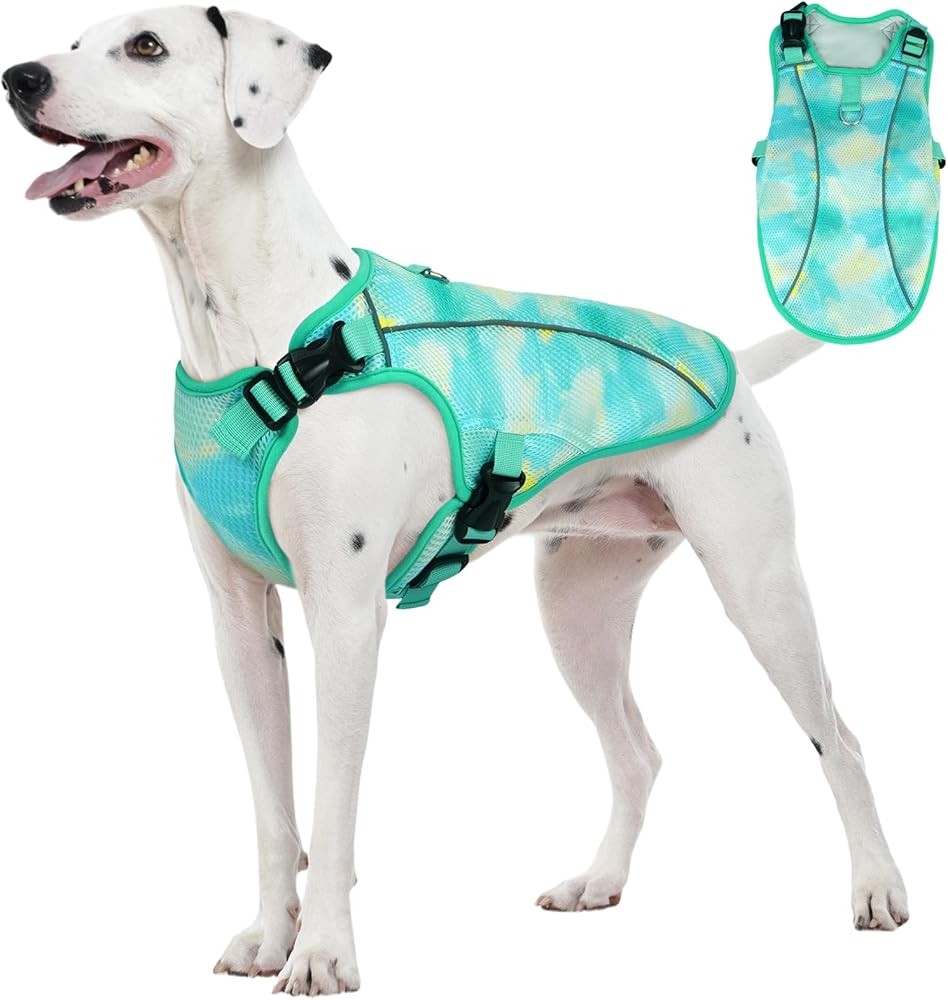
Kuoser Dog Cooling Vest
Check Price on AmazonAs an Amazon Associate we earn from qualifying purchases.
Review: Kuoser Dog Cooling Vest (Best Overall)
The Kuoser three-layer cooling vest provides evaporative cooling aligned with the thermal management principles established in veterinary research. The design incorporates an absorbent inner layer, moisture-retention middle layer, and breathable outer mesh that allows air circulation across the vest surface. This construction method extends cooling duration to 3-4 hours under typical use conditions, requiring less frequent reactivation compared to single-layer designs.
Coverage extends from the base of the neck to mid-back, encompassing major muscle groups and areas where large blood vessels lie close to the surface. This anatomical coverage provides heat exchange surface area aligned with research emphasizing core body cooling (PMID 38518416). The vest design leaves the belly uncovered, allowing heat dissipation through this relatively hairless region while preventing excess weight in the abdominal area.
The adjustment system uses three closure points: chest, belly, and neck. This configuration accommodates variation in body proportions across breeds better than two-point systems. The chest adjustment particularly matters for breeds with breed-specific thorax dimensions—deep-chested breeds like Greyhounds require more adjustment range than barrel-chested breeds like Bulldogs. The reported adjustment range of 4-6 inches at each point provides adequate flexibility for most breed types within each size category.
Reflective trim along vest edges enhances visibility during evening activity while potentially reducing radiant heat absorption from direct sunlight. The reflective elements do not directly contribute to evaporative cooling but support overall thermal management by reducing heat input from solar radiation. This feature becomes relevant for working dogs performing tasks during daylight hours when direct sun exposure is unavoidable.
Size range spans XS to XXL, covering dogs from approximately 10-90 lbs according to manufacturer specifications. Size selection relies primarily on chest girth measurement, with the manufacturer providing detailed sizing charts including chest, neck, and back length measurements. User reports suggest sizing runs somewhat true to measurement-based recommendations, though dogs at the upper end of a size range may benefit from selecting the next size up for comfort during extended wear.
Material construction uses polyester mesh outer layer with polymer-blend absorbent layers. The reported water retention capacity approaches 3-4 times the vest’s dry weight, providing the moisture reservoir necessary for extended cooling duration. Reactivation requires 5-10 minutes of complete immersion in water, with excess water draining during the first 2-3 minutes after removal from water.
Weight when fully saturated ranges from 0.5-1.5 kg (1-3 lbs) depending on size, representing 5-10% of body weight for dogs in the target weight range. This weight proportion falls within acceptable limits that should not significantly impair movement or increase metabolic heat generation during moderate activity.
Durability reports from working dog handlers indicate functional life of 2-3 seasons with regular use and proper maintenance. Common wear patterns include stitching degradation at adjustment strap attachments and hook-and-loop fastener wear from repeated opening and closing. These represent typical failure modes for textile products subjected to regular wetting and drying cycles.
The vest design accommodates harness use simultaneously, with openings that allow leash attachment points to remain accessible. This practical feature matters for dogs that require leash control during activity periods when cooling is needed. Some users report that certain harness styles may interfere with vest fit depending on harness design and placement.
User feedback from owners of heat-sensitive breeds—Bulldogs, Pugs, senior dogs—generally reports perceived benefit during warm weather activity. However, objective temperature measurements are lacking in user reviews, making it impossible to verify the 1.3°C temperature reduction documented in research with cooling garments (PMID 38518416). The vest appears most effective for moderate-intensity sustained activity where evaporative cooling can partially offset heat generation, consistent with the thermal management principles in published research.
Price point in the $25-30 range positions this vest in the mid-range category, neither budget nor premium pricing. The cost appears justified by the three-layer construction and extended coverage design when compared to simpler single-layer alternatives at lower price points.
Review: Dog Cooling Vest Evaporative (Best Budget)
The basic evaporative cooling vest provides essential cooling function at a significantly reduced price point compared to multi-layer designs. The single-layer construction uses absorbent fabric that retains water for evaporative cooling without the complexity of premium multi-layer systems. This simplified design trades cooling duration for affordability, making it accessible for owners with budget constraints or those wanting to trial cooling vest effectiveness before investing in premium options.
Coverage focuses on the chest and shoulder region, with back coverage extending to mid-torso rather than the full-length coverage of premium designs. This reduced coverage area decreases overall weight when saturated while still providing cooling to major muscle groups in the shoulder and chest where large blood vessels facilitate heat exchange. For dogs engaged in light to moderate activity, this coverage area may prove sufficient for effective thermal management.
The adjustment system uses two closure points—chest and belly—rather than the three-point systems found in premium vests. This simplified closure design reduces complexity and potential failure points but offers less precise fit customization across breed types with unusual proportions. The adjustment range of approximately 3-4 inches at each closure point accommodates some variation but may not fit as precisely as multi-point systems.
Material construction uses a single layer of absorbent polyester blend without the moisture-retention middle layers found in premium designs. Water retention capacity approximates 2-3 times dry weight, roughly half the retention of three-layer designs. This reduced capacity directly correlates with shorter cooling duration—approximately 2-3 hours compared to 3-4 hours for premium vests. For activities lasting under 2 hours or when water access allows mid-activity reactivation, this limitation may not significantly impact practical effectiveness.
Size range spans S to XL, covering approximately 15-80 lbs according to manufacturer specifications. The reduced size range excludes very small dogs under 15 lbs and very large dogs over 80 lbs, limiting applicability compared to extended-range premium vests. Size selection relies on chest girth and weight, with manufacturer charts providing basic guidance though less detailed than premium product specifications.
Reactivation time of 3-5 minutes represents one advantage of single-layer construction. The simplified material structure allows faster water absorption during reactivation compared to multi-layer designs requiring 5-10 minutes for complete saturation. For activities requiring frequent reactivation, this time savings accumulates, potentially offsetting the disadvantage of shorter cooling duration between reactivations.
Weight when saturated ranges from 0.3-0.8 kg (0.7-1.8 lbs) depending on size, representing a lower absolute weight than premium vests though similar proportional weight relative to dog size. The reduced weight may benefit smaller dogs where every additional gram affects comfort and energy expenditure during sustained activity.
Durability appears adequate for occasional use but shows limitations for regular intensive use. User reports indicate functional life of 1-2 seasons with regular use, approximately half the longevity of premium multi-layer construction. The primary failure mode involves general material breakdown and reduced water retention capacity rather than specific mechanical failures at stress points. For owners using cooling vests occasionally during peak summer heat rather than regularly throughout warm seasons, this reduced longevity may prove acceptable given the substantially lower initial cost.
The vest lacks reflective elements found on premium designs, eliminating the visibility and solar heat reduction benefits these features provide. For dogs exercising during daylight hours in direct sun, the absence of reflective material may increase overall thermal load slightly, though the practical significance of this difference likely remains small compared to the dominant effect of evaporative cooling.
The design does not specifically accommodate simultaneous harness use, though depending on harness style and placement, some harness types may work with the vest. Users report variable compatibility depending on specific product combinations, suggesting that harness compatibility should be verified rather than assumed.
Price point typically ranges from $15-18, representing approximately 50-60% of premium vest cost. This significant cost reduction makes cooling vests accessible to budget-conscious owners while accepting trade-offs in cooling duration, coverage area, and longevity. For owners uncertain about cooling vest effectiveness or those with dogs requiring occasional rather than regular cooling support, this budget option provides entry-level access to evaporative cooling technology.
User feedback suggests the vest performs adequately for intended use cases—light to moderate activity in moderately warm conditions. Owners attempting to use budget vests for intensive activity or extreme heat conditions report less satisfaction, consistent with the thermal management limitations inherent in single-layer construction with reduced coverage area.
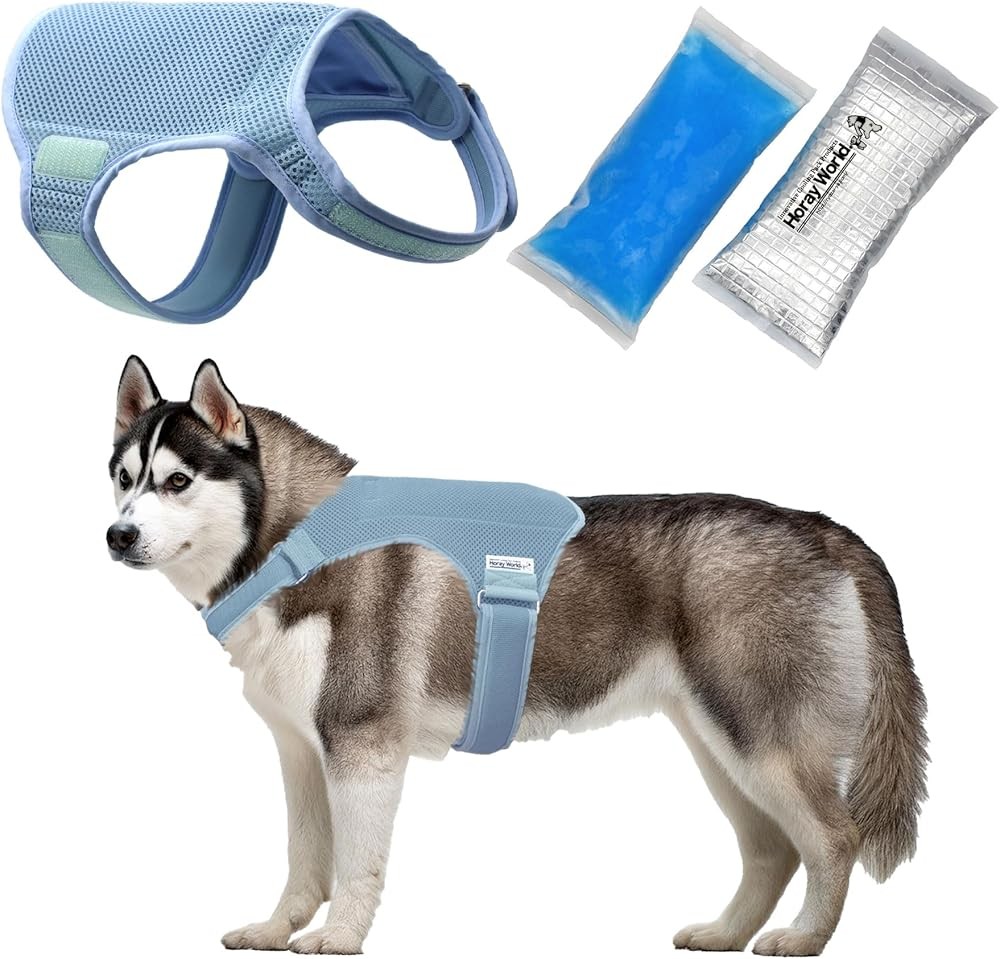
Innovative Dog Cooling Vest
Check Price on AmazonAs an Amazon Associate we earn from qualifying purchases.
Review: Innovative Dog Cooling Vest (Best for Large Dogs)
The extended-coverage vest designed specifically for large breed dimensions addresses the sizing limitations that often plague cooling vests when applied to dogs over 70 lbs. The size range spanning L to XXXL covers dogs from approximately 70-120 lbs, filling the gap left by standard vests that typically max out at 80-90 lbs. This extended range accommodates working breeds, guardian breeds, and giant breeds that require proportionally more cooling surface area due to greater metabolic heat generation from larger muscle mass.
Coverage extends from the neck base to nearly the tail base, providing maximum cooling surface area across the entire dorsal torso. This extended coverage aligns with research emphasizing comprehensive cooling intervention for effective thermal management (PMID 38518416). The additional material weight when saturated becomes less significant proportionally for larger dogs where vest weight represents a smaller percentage of total body weight.
The adjustment system incorporates four closure points—chest, belly, neck, and rear—providing exceptional fit customization for large dogs with breed-specific proportions. Large breeds show substantial variation in chest depth, neck thickness, and back length. The four-point system accommodates these differences more effectively than standard three-point designs. The rear adjustment point particularly benefits long-backed large breeds like Great Danes and Irish Wolfhounds where vest shifting during movement can create discomfort.
Material construction uses multi-layer evaporative design similar to premium standard-sized vests, with absorbent inner layers and breathable outer mesh. The water retention capacity scales proportionally with vest size, with the XXXL size holding approximately 2-3 liters of water when fully saturated. This substantial water load provides extended cooling duration of 4-5 hours under typical conditions, reducing reactivation frequency during day-long activities.
Reactivation requires 10-15 minutes of complete water immersion due to the larger material volume requiring saturation. This extended reactivation time represents a practical trade-off for the longer cooling duration between reactivations. For working dogs performing sustained tasks, the longer reactivation time may be offset by proportionally fewer reactivation stops throughout a work session.
Weight when fully saturated ranges from 2-3 kg (4-6 lbs) for the largest sizes, representing approximately 2-4% of body weight for dogs in the target weight range. This proportional weight remains within acceptable limits that should not significantly impair movement or increase metabolic heat generation. Large working dogs routinely carry loads exceeding this weight during professional activities, suggesting that properly conditioned large dogs can accommodate the saturated vest weight during normal activity levels.
Reflective strips along the spine and sides enhance visibility while potentially reducing radiant heat absorption during direct sun exposure. The reflective elements provide important safety features for working dogs operating in low-light conditions or near roadways where visibility matters for handler safety.
Durability construction addresses the higher mechanical stress that large dog movement and activity generates. Reinforced stitching at all adjustment points and double-layer construction at high-wear areas extend functional life despite the substantial forces large dogs generate during normal movement. User reports from handlers of working large breeds indicate functional life of 2-3 seasons with regular intensive use.
The design accommodates working harness use, with cut-outs and openings positioned to allow access to standard harness attachment points. This feature matters particularly for working dogs where simultaneous cooling and working equipment must function together without interference.
Size selection requires careful measurement because the extended size range means that incorrect size selection produces poor fit with reduced cooling effectiveness. The manufacturer provides detailed sizing charts with breed-specific recommendations, acknowledging that a 90-lb Rottweiler has different proportions than a 90-lb Great Dane. These breed-specific guidelines improve size selection accuracy beyond simple weight-based charts.
Price point in the $35-45 range reflects the increased material requirements and specialized design for large breed dimensions. While more expensive than standard vests, the cost per pound of dog covered actually approximates or slightly undercuts premium standard-sized vests, suggesting reasonable value proposition for large breed owners.
User feedback from large breed owners—German Shepherd, Rottweiler, Great Dane, and Mastiff handlers—reports improved fit and cooling effectiveness compared to attempting to use standard-sized vests on large dogs. The extended coverage and proportional adjustment range address the common complaint that standard vests either don’t close properly or ride up during movement when used on dogs exceeding the nominal size range.
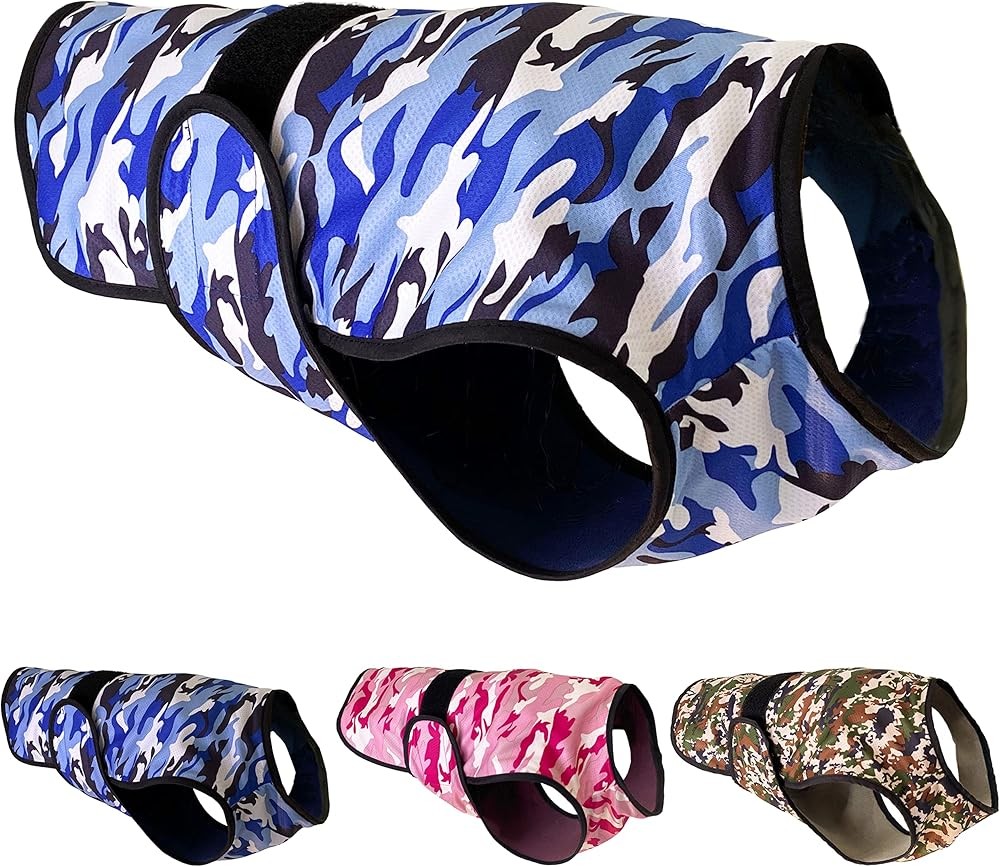
2-Layer Dog Cooling Vest
Check Price on AmazonAs an Amazon Associate we earn from qualifying purchases.
Review: 2-Layer Dog Cooling Vest (Best Value)
The two-layer construction vest occupies the middle ground between basic single-layer budget vests and premium three-layer designs. This intermediate approach balances cooling effectiveness with cost efficiency, providing extended cooling duration compared to budget vests while remaining more affordable than premium options. The design philosophy emphasizes practical functionality for regular use rather than either budget minimalism or maximum-performance engineering.
Coverage spans from the neck base to mid-back, similar to premium designs, providing adequate cooling surface area across major muscle groups and blood vessel locations. The coverage design leaves the belly region uncovered, maintaining the balance between cooling effectiveness and weight minimization that characterizes well-designed cooling vests.
The adjustment system uses three closure points—chest, belly, and neck—matching premium vest configurations. The adjustment range of approximately 4-5 inches at each point accommodates breed variation in body proportions, though potentially with slightly less range than premium designs. For most standard breed types, the adjustment range proves adequate for achieving secure, comfortable fit.
Material construction incorporates a moisture-retention inner layer and evaporative outer layer without the middle layer found in premium three-layer systems. This two-layer approach provides substantially better water retention than single-layer budget vests—approximately 3 times dry weight—while requiring less material than three-layer premium construction. The practical result shows cooling duration of 3-4 hours, comparable to three-layer vests, suggesting that two-layer construction may represent optimal design efficiency for evaporative cooling applications.
Reactivation time of 5-8 minutes falls between the quick reactivation of single-layer vests and the longer saturation time of premium multi-layer designs. This moderate reactivation duration provides reasonable balance between complete saturation for maximum cooling duration and quick turnaround during activity breaks.
Weight when saturated ranges from 0.4-1.2 kg (0.9-2.6 lbs) depending on size, similar to premium vests of comparable size. The weight distribution and vest design allow comfortable wear during activity without apparent movement restriction or gait interference in properly fitted applications.
Size range spans M to XL, covering approximately 20-85 lbs according to manufacturer specifications. This range accommodates most common companion dog breeds while excluding the smallest toy breeds and largest giant breeds. For the majority of dog owners whose dogs fall within this size range, the coverage proves adequate.
Minimal reflective elements appear on the vest, with small reflective accents rather than comprehensive reflective trim. This provides some visibility enhancement during low-light conditions while not matching the extensive reflective features of premium designs. For dogs exercising primarily during daylight hours, this limitation carries minimal practical significance.
Durability reports suggest functional life of 2 seasons with regular use, falling between budget vests (1-2 seasons) and premium designs (2-3 seasons). The intermediate durability aligns with the mid-range pricing and construction quality. Common wear patterns mirror those of other vest designs—stitching degradation at stress points and hook-and-loop fastener wear—without specific design flaws accelerating failure.
The design allows reasonable harness compatibility, with most standard harness styles working alongside the vest without significant interference. The specific compatibility depends on individual harness and vest size combinations, suggesting that verification remains appropriate rather than assuming universal compatibility.
Price point typically ranges from $20-25, positioning the vest at approximately 75-85% of premium three-layer vest cost while providing comparable cooling duration. This pricing suggests strong value proposition for owners seeking effective cooling without premium pricing, particularly for dogs requiring regular rather than occasional vest use where budget vest limitations would become problematic.
User feedback emphasizes the “best of both worlds” perception—better than budget vests without the cost premium of top-tier designs. Owners report satisfaction with cooling effectiveness during typical use cases: walks, moderate exercise, outdoor activities in warm weather. The performance appears adequate for standard companion dog needs while potentially showing limitations during extreme conditions or very intensive activity where maximum cooling capacity matters most.
The vest represents rational choice for owners who have determined that cooling vest use provides genuine benefit for their dogs but do not require the absolute maximum cooling capacity of premium designs. The value proposition becomes particularly strong for owners of multiple dogs where equipping all dogs with premium vests creates substantial cost burden, but adequate cooling for all dogs remains the priority.
What Supporting Cooling Strategies Complement Vest Use?
Cooling vests function most effectively as components of comprehensive thermal management rather than standalone interventions. Research with working dogs emphasizes multi-modal approaches to heat stress prevention and management (PMID 38518416). Integrating vests with additional cooling strategies optimizes thermal protection beyond what any single method achieves alone.
Access to drinking water represents the most critical complementary strategy. Hydration affects thermoregulation through multiple mechanisms: blood volume maintenance supports cardiovascular heat transport, adequate fluid enables effective panting, and water consumption provides some direct cooling of the oral cavity and esophagus. Research with working dogs demonstrates that dehydration amplifies heat stress effects even when external cooling measures are applied.
Offering water every 15-20 minutes during sustained activity prevents progressive dehydration that impairs thermoregulation. Water temperature affects consumption rates, with moderately cool water (10-15°C / 50-59°F) preferred over very cold or warm water. Ice water may cause some dogs to drink more slowly or in smaller quantities despite good intentions. Adding small amounts of low-sodium broth can encourage drinking in dogs showing reluctance to consume adequate water during activity.
Shade access during rest breaks significantly reduces radiant heat load from direct sunlight. Even brief 5-10 minute shade breaks during continuous outdoor activity lower body temperature and allow recovery before heat stress progresses. Natural shade from trees provides cooler microclimates than artificial shade structures due to evaporative cooling from vegetation, though any shade proves superior to continued direct sun exposure.
Activity timing modification represents a fundamental heat stress prevention strategy that no cooling vest can replace. Restricting high-intensity activity to morning hours before 10 AM and evening hours after 6 PM avoids peak temperature periods. Research with detection dogs working in hot climates emphasized the importance of activity timing in preventing accumulated heat stress over consecutive work days (PMID 39272240).
Surface selection affects heat exposure through paw contact and radiant heat from below. Choosing grass or dirt surfaces over asphalt and concrete reduces ground-level heat exposure. When paved surfaces are unavoidable, brief crossing with longer periods on cooler surfaces minimizes paw pad contact with hot materials. Protective booties provide thermal insulation for paws though some dogs resist wearing booties and may develop gait changes that increase energy expenditure.
Air movement through fans or vehicle windows enhances evaporative cooling from both vest evaporation and the dog’s natural panting mechanism. Research comparing cooling methods found that water application combined with fan cooling produced superior results compared to water or fan alone (PMID 41056982). During vehicle transport, window ventilation or AC use supplements vest cooling substantially.
Wetting the dog’s coat before applying the cooling vest provides additional evaporative cooling surface beyond the vest material alone. This approach works particularly well for short-coated breeds where water reaches skin easily. For thick-coated breeds, superficial coat wetting may not effectively wet the undercoat where cooling would be most effective, limiting the additional benefit this strategy provides.
Head and neck cooling through water application or wet bandanas placed around the neck provides supplemental cooling to these critical areas. Research examining voluntary head dunking found this method particularly effective at preventing post-exercise temperature rise (PMID 39293468). A wet bandana or head cooling wrap combined with a body vest creates multi-site cooling that may exceed single-site vest cooling alone.
Gradual activity warm-up and cool-down periods help thermoregulatory systems adjust progressively rather than facing abrupt transitions from rest to high-intensity work. Beginning activity with 5-10 minutes of easy movement allows cardiovascular adjustments that improve heat dissipation efficiency during subsequent higher-intensity work. Similarly, cool-down periods at reduced intensity after vigorous activity allow gradual temperature normalization rather than abrupt cessation that may contribute to the post-exercise temperature rise documented in research.
Weight management optimizes thermoregulation by reducing excess insulation from body fat and decreasing the metabolic heat generated moving excess body mass. Overweight dogs show reduced heat tolerance compared to dogs at ideal body condition. While weight management represents a long-term strategy rather than an immediate intervention, maintaining appropriate body condition substantially improves heat tolerance before adding cooling vests.
Coat management through appropriate grooming reduces insulation in dogs with thick coats, though complete shaving may paradoxically increase heat absorption by eliminating the insulating air layer that coat provides. Thinning thick coats while maintaining adequate coverage provides compromise between excessive insulation and complete exposure. Consulting professional groomers familiar with coat management for heat tolerance helps avoid counterproductive grooming approaches.
Monitoring core temperature through rectal thermometry provides objective assessment of cooling effectiveness and heat stress progression. Normal canine rectal temperature ranges from 38.0-39.2°C (100.4-102.6°F). Temperature exceeding 40°C (104°F) indicates significant heat stress, while temperature above 41°C (106°F) represents heat stroke requiring immediate aggressive cooling and veterinary intervention. Periodic temperature measurement during activity in warm conditions verifies that cooling strategies achieve desired effect rather than assuming effectiveness without confirmation.
How Can I Tell If My Dog’s Cooling Vest Is Working Effectively?
Objective and subjective indicators provide feedback about cooling vest performance, allowing real-time adjustment of thermal management strategies. Research emphasis on immediate cooling intervention (PMID 38518416) underscores the importance of recognizing both effectiveness and inadequacy of cooling measures.
The most direct assessment involves comparing the dog’s behavior and physical signs with and without the cooling vest during similar activity and environmental conditions. A dog showing heavy panting, frequent rest-seeking, or reduced activity enthusiasm during walks without the vest should demonstrate noticeably reduced heat stress signs when wearing an effective cooling vest during comparable walks. If behavior remains unchanged with vest use, either the vest is ineffective for that individual dog or environmental conditions exceed what vest cooling can manage.
Panting intensity provides readily observable feedback. Effective cooling should reduce panting frequency and depth compared to activity without cooling intervention. A dog that pants heavily despite wearing a cooling vest requires additional cooling measures—more frequent rest breaks, reduced activity intensity, or alternative cooling methods providing greater cooling capacity than the vest alone delivers.
Rectal temperature measurement provides the most objective effectiveness assessment. Taking temperature before activity, during activity with vest use, and after a standardized recovery period quantifies cooling effectiveness. Research with working dogs documented 1.3°C temperature reduction within 15 minutes of cooling intervention (PMID 38518416). Measuring actual temperature reduction in individual dogs verifies whether vest cooling achieves comparable results or falls short of expected performance.
However, temperature measurement requires equipment and technique that many owners find impractical during routine activity. Rectal thermometry requires restraining the dog, inserting a thermometer 1-2 inches into the rectum, and waiting 60 seconds for accurate reading. The process may stress some dogs, potentially affecting the measurement through stress-induced temperature elevation. For owners able to perform temperature measurements, periodic assessment during known hot conditions provides valuable baseline data about individual dog cooling needs and vest effectiveness.
Activity duration provides indirect effectiveness measure. A dog that previously tolerated 30-minute walks before showing heat stress signs but now comfortably completes 45-60 minute walks with vest use demonstrates clear cooling benefit. Conversely, if activity tolerance remains unchanged with vest use, either the vest provides inadequate cooling or other factors limit activity tolerance independent of thermal stress.
Recovery time after activity indicates cooling effectiveness. A dog requiring 20-30 minutes of rest and heavy panting after exercise without vest use should show reduced recovery time and less intense recovery panting when the vest is used. Research documented that 24.4% of dogs show continued temperature rise during the immediate post-exercise period (PMID 38518416), suggesting that cooling interventions reducing this recovery period provide meaningful benefit.
The vest surface temperature provides feedback about cooling system function. A properly functioning evaporative vest should feel noticeably cool to touch throughout use. If the vest surface feels warm or barely cooler than ambient temperature, evaporation has progressed to the point where cooling effectiveness has diminished substantially and reactivation is needed. During use, periodically touching the vest surface provides simple effectiveness check without requiring specialized equipment.
Moisture assessment confirms that the evaporative cooling mechanism remains active. The vest should feel damp throughout the cooling duration period. A vest that feels dry or barely moist has depleted its water reservoir and requires reactivation to restore cooling capacity. This assessment can be performed by running fingers across the vest surface or pressing gently to detect moisture in the absorbent layers.
Comparative testing between vest types or brands provides individual dog effectiveness data that may differ from general product performance. Testing multiple vests during similar activity and conditions allows direct comparison of cooling duration, ease of use, and subjective cooling effectiveness for individual dogs. What works optimally for one dog may not prove best for another due to coat type, activity level, and individual thermoregulation variation.
Environmental condition tracking contextualizes vest performance. A vest that works well at 25°C (77°F) and 50% humidity may prove inadequate at 32°C (90°F) and 75% humidity. Recording temperature, humidity, and activity level during vest use builds understanding of the environmental envelope where vest cooling provides adequate protection versus conditions requiring activity modification or alternative cooling methods.
Long-term effectiveness tracking identifies performance degradation as vests age. A vest that initially provided 3-4 hours of cooling may gradually decline to 2-3 hours as materials lose water retention capacity through repeated use and washing. Documenting cooling duration over the vest’s life allows recognition of when replacement is needed rather than continuing to use degraded equipment providing inadequate cooling.
Professional consultation with a veterinarian provides expert assessment of cooling adequacy, particularly for dogs with medical conditions affecting heat tolerance or those showing persistent heat stress signs despite cooling interventions. Veterinary examination can identify underlying conditions—cardiovascular disease, respiratory compromise, endocrine disorders—that impair thermoregulation independent of external cooling measures.
- Evaluation of methods to reduce exercise-induced heat stress in working Labrador Retrievers.. PubMed 41056982
- Voluntary head dunking after exercise-induced hyperthermia rapidly reduces core body temperature in dogs.. PubMed 39293468
- Post-exercise management of exertional hyperthermia in dogs participating in dog sport (canicross) events in the UK.. PubMed 38518416
- A Randomized Cross-Over Study Comparing Cooling Methods for Exercise-Induced Hyperthermia in Working Dogs in Training.. PubMed 38067024
- Evaluation of methods to reduce exercise-induced heat stress in working Labrador Retrievers.. PubMed 41056982
- Voluntary head dunking after exercise-induced hyperthermia rapidly reduces core body temperature in dogs.. PubMed 39293468
- Post-exercise management of exertional hyperthermia in dogs participating in dog sport (canicross) events in the UK.. PubMed 38518416
- A Randomized Cross-Over Study Comparing Cooling Methods for Exercise-Induced Hyperthermia in Working Dogs in Training.. PubMed 38067024
References
- Voluntary head dunk: cooperative care for irrigating canine noses and eyes and rapid cooling.. PubMed 39293481
- Clinical Evaluation of Exercise-Induced Physiological Changes in Military Working Dogs (MWDs) Resulting from the Use or Non-Use of Cooling Vests during Training in Moderately Hot Environments.. PubMed 36139205
- Investigating factors affecting the body temperature of dogs competing in cross country (canicross) races in the UK.. PubMed 29496012
- Heat Stroke-Induced Sinoatrial Node Dysfunction.. PubMed 25802161
- Clearance of serum solutes by hemofiltration in dogs with severe heat stroke.. PubMed 25145441
- [Heatstroke in dogs in southern Germany. A retrospective study over a 5.5-year period].. PubMed 25119629
- Heatstroke: clinical signs, diagnosis, treatment, and prognosis.. PubMed 23894763
- Heat stroke in a great Pyrenees dog.. PubMed 15283523
For more context, see our guides on Best Cooling Dog Beds for Summer — Heat Relief for All Breeds, Best Dog Anxiety Vests and Calming Wraps, Best Dog Nail Grinders for Safe and Stress-Free Trimming, Best Dog Car Safety Harnesses, and Cucumber-Celery Juice for Dog Hydration: The Low-Calorie Cooling Solution.
Related Reading
Explore our comprehensive guides for dog health and safety:
- Best Dog Wheelchairs for Mobility Support - Mobility solutions for dogs with neurological or orthopedic conditions
- Best Dog Car Safety Harnesses - Crash-tested restraint systems for vehicle transport safety
- Senior Dog Nutrition Guide - Age-appropriate dietary strategies for aging dogs
- Labrador Hip Dysplasia Guide - Evidence-based management for orthopedic conditions in retrievers
- German Shepherd Degenerative Myelopathy - Understanding progressive spinal cord disease in working breeds
For broader summer safety planning, consider shade structures, hydration systems, and activity timing modifications that complement cooling vest use. Working dogs may benefit from additional resources covering occupational heat stress prevention protocols developed for detection, herding, and sporting dog disciplines.
Recommended Products