Do HEPA Air Purifiers Actually Improve Your Health? What Research Shows
This article references 15 peer-reviewed studies from PubMed. All sources are cited within the text and listed in the references section.

What Makes Indoor Air Pollution So Dangerous?
Indoor air pollution kills millions of people each year. The World Health Organization reported 7 million premature deaths linked to air pollution in 2012 alone. Of these deaths, 3.8 million came from household air pollution (PubMed 26628762).
The biggest threat comes from particles called PM2.5. These microscopic particles measure 2.5 micrometers or smaller. They’re so tiny they slip past your body’s natural defenses. Your nose and throat can’t filter them out. They travel deep into your lungs. Some particles even enter your bloodstream.
PM2.5 comes from many sources inside your home. Cooking releases particles into the air. Gas stoves produce more than electric stoves. Smoking creates massive amounts of PM2.5. Even candles and incense add particles to your indoor air.
Outside pollution also creeps inside. Traffic exhaust seeps through windows and doors. Wildfires send smoke hundreds of miles. Industrial pollution doesn’t stop at your front door. Studies show indoor PM2.5 levels often match or exceed outdoor levels.
Your body reacts to these particles in harmful ways. PM2.5 triggers inflammation throughout your cardiovascular system. It makes your blood vessels stiffen. Your blood pressure rises. Your heart works harder to pump blood. Over time, this constant stress damages your heart and arteries.
Research shows PM2.5 exposure increases your risk of heart attacks and strokes. It worsens asthma and chronic lung disease. Children exposed to high PM2.5 develop more respiratory infections. Elderly people face higher mortality rates in areas with poor air quality (PubMed 30999693).
The problem affects everyone. You spend about 90% of your time indoors. Your bedroom, living room, and kitchen all contain particle pollution. Without intervention, you breathe these harmful particles every day.
What the data says: Indoor and household air pollution caused 3.8 million premature deaths in one year, making particle reduction a critical health priority.
How Do HEPA Air Purifiers Actually Filter the Air?
HEPA stands for High-Efficiency Particulate Air. The name describes what these filters do best. True HEPA filters must capture 99.97% of particles 0.3 micrometers in size. This standard ensures effective particle removal.
The filter works through three mechanisms. First, larger particles get trapped directly by the filter fibers. This process is called interception. Second, medium-sized particles follow air currents that curve around fibers. The particles have inertia, so they keep moving straight and hit the fibers. This is called impaction.
Third, the smallest particles move randomly due to collisions with air molecules. This random movement is called Brownian motion. Eventually, these tiny particles bump into a fiber and stick. All three mechanisms work together to trap particles of every size.
HEPA filters use dense layers of randomly arranged fibers. Most filters use fiberglass fibers. The fibers create a maze that air must navigate. Particles get stuck along the way. Clean air flows out the other side.
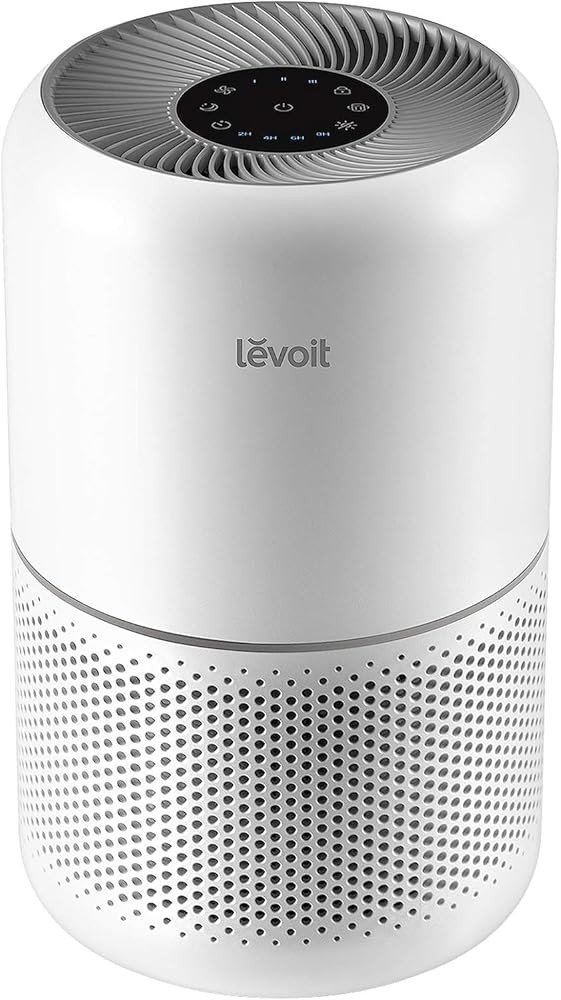
LEVOIT Core 300 True HEPA Air Purifier for Health & Allergies
Check Price on AmazonAs an Amazon Associate we earn from qualifying purchases.
The filter material itself doesn’t have holes small enough to block 0.3-micrometer particles. Instead, the random fiber arrangement and the three capture mechanisms do the work. This design captures particles both larger and smaller than 0.3 micrometers efficiently.
Air purifiers pull room air through the filter using a fan. The fan speed determines how much air gets filtered per hour. This measurement is called the Clean Air Delivery Rate or CADR. A higher CADR means more air gets cleaned faster.
Most home air purifiers use a multi-stage filtration system. A pre-filter catches large particles like hair and dust. This extends the HEPA filter’s life. The HEPA filter removes fine particles. Some models add an activated carbon filter to absorb odors and gases.
Research confirms HEPA filtration substantially reduces indoor PM2.5 levels. One comprehensive review found that HEPA purifiers operating over days to weeks significantly improved indoor air quality and cardiopulmonary health outcomes (PubMed 33241434).
The technology isn’t new. HEPA filters were developed in the 1940s for nuclear research. They needed to remove radioactive particles from the air. The same technology now protects your home from everyday pollutants.
The practical takeaway: HEPA filters use three physical mechanisms to trap 99.97% of particles, creating a proven barrier against indoor air pollution.
Can HEPA Filters Reduce Your Risk of Heart Disease?
Your heart and blood vessels react strongly to particle pollution. PM2.5 triggers inflammation in your arteries. This inflammation makes blood vessels less flexible. Stiff arteries raise your blood pressure. Your heart must work harder to circulate blood.
A 2025 meta-analysis examined interventions that reduce PM2.5 exposure. The researchers found that lowering particle exposure decreased systolic blood pressure by an average of 1.97 mmHg. The same interventions improved heart rate variability, a measure of cardiovascular health (PubMed 41057567).
This blood pressure reduction might seem small. But population-wide, even modest decreases in blood pressure avert thousands of heart attacks and strokes. A 2 mmHg reduction across millions of people saves many lives each year.
Another study looked at elderly residents living in facilities with poor air quality. Researchers installed four-stage air filtration systems in their living spaces. After the intervention, residents showed significant improvements in systolic blood pressure, heart rate, and oxygen saturation levels (PubMed 40653788).
The cardiovascular benefits extend beyond blood pressure. PM2.5 exposure increases blood clotting factors. Your blood becomes more likely to form dangerous clots. These clots can block arteries in your heart or brain. Reducing PM2.5 exposure lowers this clotting risk.
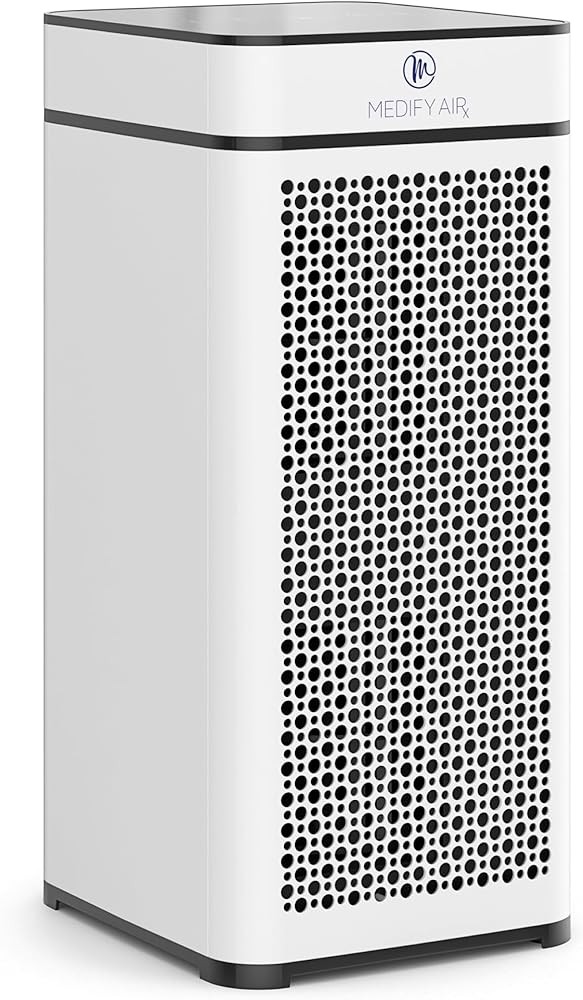
Medify MA-40 True HEPA H13 Air Purifier for Health & Wellness
Check Price on AmazonAs an Amazon Associate we earn from qualifying purchases.
Particle pollution also affects your heart’s electrical system. Studies show PM2.5 exposure disrupts normal heart rhythms. People with existing heart conditions face higher risks of arrhythmias on high-pollution days. HEPA filtration creates a cleaner environment that supports normal heart function.
A modeling study calculated the mortality benefits of HEPA filter use. Researchers estimated that using HEPA filters all day reduced personal PM2.5 exposure from 103 µg/m³ to 29 µg/m³. This reduction correlated with an 8-37% decrease in mortality risk (PubMed 30999693).
Another analysis focused specifically on particle-related deaths. The study found portable HEPA cleaners reduced these deaths by 2.4 per 100,000 people annually. The cost-effectiveness was remarkable: $18-69 per year of life saved. Few health interventions offer such strong value (PubMed 28170103).
The cardiovascular protection works through multiple pathways. Cleaner air reduces inflammation. Your blood vessels relax. Blood flows more easily. Your heart doesn’t strain as hard. Over months and years, these small daily improvements accumulate into meaningful health benefits.
The evidence shows: PM2.5 reduction through HEPA filtration improves multiple cardiovascular markers including a 1.97 mmHg decrease in systolic blood pressure and correlates with 2.4 fewer deaths per 100,000 people at $18-69 per year of life saved.
Do Air Purifiers Help With Allergies and Asthma?
Asthma affects millions of people worldwide. Airborne particles and allergens trigger asthma symptoms. Pollen, dust mites, pet dander, and mold spores all float in indoor air. When people with asthma breathe these particles, their airways tighten and produce excess mucus.
HEPA filters capture these asthma triggers effectively. The 99.97% filtration rate removes most allergens from the air. This gives people with asthma cleaner air to breathe. Their airways face less irritation throughout the day.
Research supports using HEPA filtration for asthma management. One study provided free-standing HEPA filters to families with asthmatic children. During intensive monitoring weeks, 70% of participants used the filters as directed (PubMed 24436726). This high adherence rate shows families found the intervention practical and helpful.
The filters work best when used consistently. Running your air purifier continuously provides the most benefit. Many people only turn on purifiers when symptoms worsen. But constant use reduces risk of particle buildup. Reduction works better than reaction.
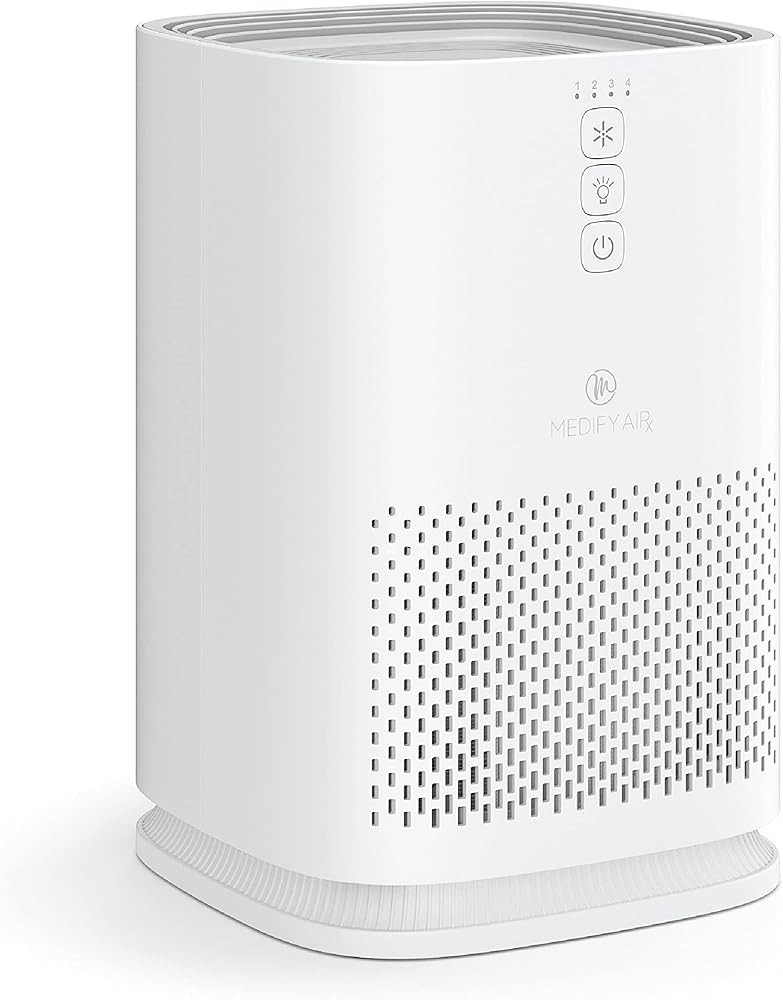
Medify MA-14 True HEPA H13 Air Purifier for Health & Wellness
Check Price on AmazonAs an Amazon Associate we earn from qualifying purchases.
Pet owners with allergies face particular challenges. Cat and dog dander particles stay airborne for hours. These particles are small enough to reach deep into your lungs. HEPA filters capture dander particles effectively. People with pet allergies often report fewer symptoms when using air purifiers regularly.
Dust mites create another common allergen. These microscopic creatures live in bedding, carpets, and upholstered furniture. Their waste products become airborne and trigger allergic reactions. While HEPA filters can’t eliminate dust mites from surfaces, they do capture airborne dust mite allergens.
Seasonal allergies improve with indoor air filtration. During high pollen seasons, outdoor allergens enter your home through windows, doors, and on clothing. Running a HEPA purifier creates a low-allergen refuge inside your home. Many allergy sufferers sleep better when using bedroom air purifiers.
Mold spores pose health risks beyond allergies. Some molds produce toxic compounds. Breathing mold spores triggers respiratory symptoms in sensitive individuals. HEPA filters trap mold spores before you inhale them. However, filters don’t address the mold source. You must also fix moisture problems and clean existing mold.
The particle reduction extends to other respiratory irritants. Smoke particles from cooking, candles, or nearby wildfires all get filtered out. Chemical fumes and odors require activated carbon filters in addition to HEPA filtration. Many air purifiers include both filter types.
The evidence shows: HEPA filtration removes asthma triggers and allergens from indoor air, with research showing high adherence rates and practical benefits for respiratory health management.
How Effective Are Air Purifiers Against Viruses and Infections?
Viruses travel through the air on particles and droplets. When someone coughs or breathes, they release thousands of tiny particles. Some particles are large and fall quickly. Others are small enough to float for hours. These airborne particles can carry infectious viruses.
HEPA filters capture virus-containing particles effectively. The 0.3-micrometer filtration standard catches particles in the size range where viruses typically travel. While individual virus particles are much smaller, they don’t float alone. They attach to respiratory droplets and other particles that HEPA filters trap.
A comprehensive review examined non-pharmaceutical interventions for reducing airborne virus transmission. The researchers ranked different strategies by effectiveness. In-room HEPA purifiers emerged as one of the most effective approaches for spaces where masking wasn’t feasible (PubMed 38133420).
Schools face particular challenges with respiratory infection transmission. Children spend hours in classrooms breathing shared air. A 2024 study installed air cleaners in school classrooms. The devices reduced particle concentration by 77% compared to rooms without purifiers. The researchers modeled a 13% reduction in school-based respiratory infections based on this particle reduction (PubMed 38665173).
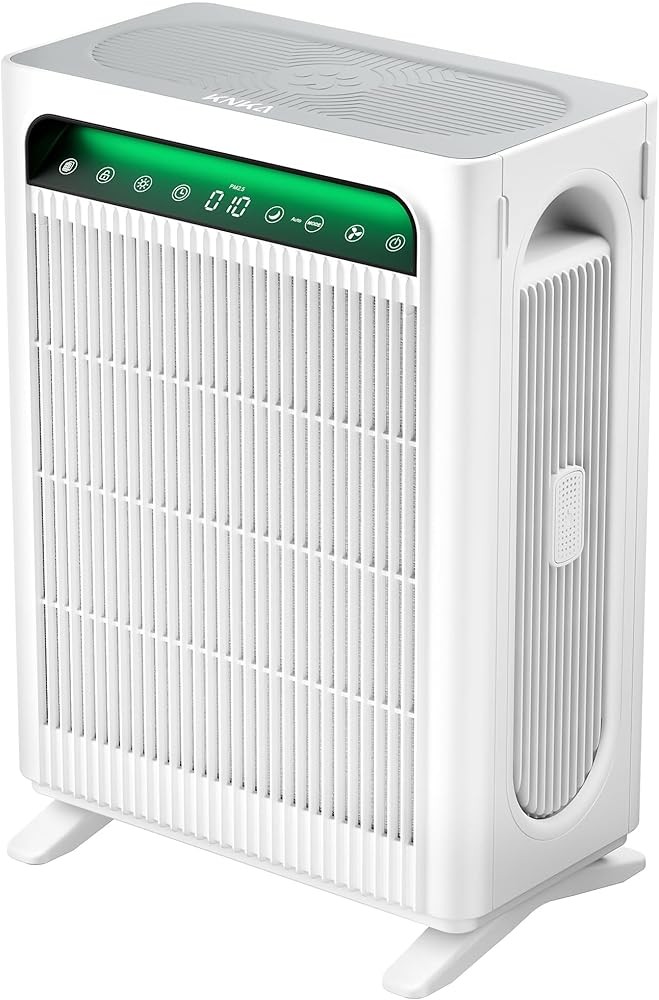
KNKA APH4000 True HEPA Air Purifier for Health & Clean Air
Check Price on AmazonAs an Amazon Associate we earn from qualifying purchases.
These benefits matter year-round, not just during pandemics. Common respiratory infections like colds and flu spread through the same airborne routes. Reducing airborne particle concentration reduces transmission risk for all respiratory viruses.
The protection works in multiple settings. Healthcare facilities use HEPA filtration to protect vulnerable patients. Nursing homes benefit from cleaner air because elderly residents face higher infection risks. Office buildings with good air filtration see fewer sick days among employees.
Air purifier placement affects performance. Units work best in occupied rooms where people spend most of their time. Bedrooms benefit particularly from purification because you spend 6-8 hours there nightly. Living rooms and home offices also make good locations.
Room size matters significantly. A small purifier in a large room won’t clean the air effectively. Match the purifier’s rated coverage area to your room size. Larger rooms need more powerful units or multiple purifiers.
Air circulation patterns affect filtration efficiency. Place your purifier where air can flow freely around it. Avoid corners or spots blocked by furniture. The unit needs to pull in contaminated air and distribute clean air throughout the room.
Current research continues examining air purification for infection control. A 2025 study is investigating whether classroom air purifiers reduce student absences due to illness (PubMed 41448709). Early results suggest measurable benefits.
The research verdict: HEPA air purifiers rank among the most effective non-pharmaceutical interventions for reducing airborne virus transmission, with documented 77% particle reduction in classrooms and modeled 13% reduction in respiratory infections.
What Does Research Show About Air Purifiers and Blood Pressure?
Blood pressure responds quickly to changes in air quality. When PM2.5 levels rise, blood pressure increases within hours. When particle exposure decreases, blood pressure drops. This rapid response makes air filtration a practical intervention for cardiovascular health.
Multiple studies document blood pressure improvements with air purification. A meta-analysis pooled data from several intervention studies. Across these studies, PM2.5 reduction interventions decreased systolic blood pressure by an average of 1.97 mmHg (PubMed 41057567).
This finding has important public health implications. High blood pressure affects over a billion people worldwide. It’s a major risk factor for heart attacks, strokes, and kidney disease. Any intervention that safely lowers blood pressure helps reduce risk of these serious conditions.
The blood pressure benefits appear consistent across different populations. Studies in elderly residents showed improvements (PubMed 40653788). Research in general adult populations found similar effects. The mechanism works the same way regardless of age or health status.
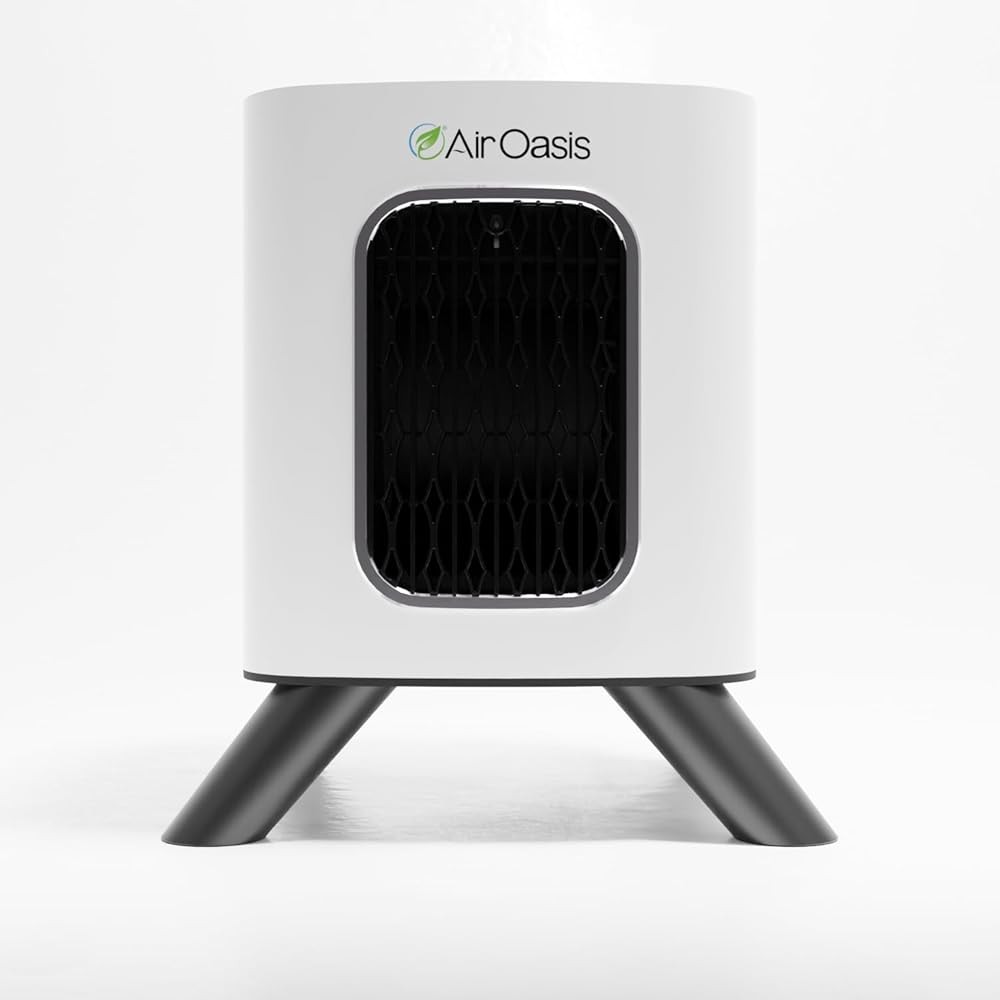
Air Oasis iAdaptAir 2.0 H13 HEPA Air Purifier for Health & Wellness
Check Price on AmazonAs an Amazon Associate we earn from qualifying purchases.
PM2.5 affects blood pressure through inflammation and oxidative stress. Particles in your bloodstream trigger inflammatory responses. Your blood vessels react by constricting. This constriction raises blood pressure. Chronic inflammation also damages blood vessel walls, making them less flexible.
Reducing particle exposure interrupts this harmful cycle. Cleaner air means fewer particles enter your bloodstream. Inflammation decreases. Your blood vessels relax. Blood flows more easily. Your heart doesn’t need to pump as hard.
The time course of benefits varies. Some blood pressure improvements appear within hours of reduced exposure. Other benefits accumulate over weeks and months. Consistent use of air purification provides the best long-term results.
Individual responses vary somewhat. People with existing cardiovascular disease may see larger improvements. Those with hypertension benefit from any intervention that helps control blood pressure. Even people with normal blood pressure gain from reduced cardiovascular stress.
Air purification complements other blood pressure management strategies. It works alongside dietary changes, exercise, stress reduction, and medications. Adding air filtration to your health routine provides another tool for cardiovascular protection.
The cost-effectiveness strengthens the case for air purification. Blood pressure medications cost hundreds of dollars per year. They also carry side effects. Air purifiers require an upfront cost and periodic filter replacement. But they provide benefits without side effects or drug interactions.
Placement in bedrooms offers particular advantages. You spend many hours sleeping. Nighttime blood pressure patterns affect cardiovascular risk. Breathing clean air throughout the night supports healthy nighttime blood pressure. Many people notice better sleep quality with bedroom air purification.
What this means for you: Air purification reduces systolic blood pressure by approximately 2 mmHg through decreased inflammation and improved vascular function, complementing other cardiovascular health strategies.
How Do You Maintain Your Air Purifier for Maximum Performance?
Filter replacement determines whether your purifier keeps working effectively. HEPA filters trap particles until the material becomes saturated. A clogged filter can’t capture new particles. It also restricts airflow, forcing your purifier to work harder.
Most manufacturers recommend replacing HEPA filters every 6-12 months. The exact timeline depends on your air quality and usage hours. If you run your purifier 24/7 in a high-pollution area, you’ll need more frequent replacement. Light use in clean air extends filter life.
Many purifiers include filter replacement indicators. These lights track operating hours or airflow restriction. When the indicator activates, replace your filter promptly. Don’t wait until performance clearly declines. By then, you’ve been breathing partially filtered air for weeks.
Pre-filters require more frequent attention. These washable or replaceable filters catch large particles before they reach the HEPA filter. Check pre-filters monthly. Vacuum or wash them as needed. Replace disposable pre-filters every 1-3 months.
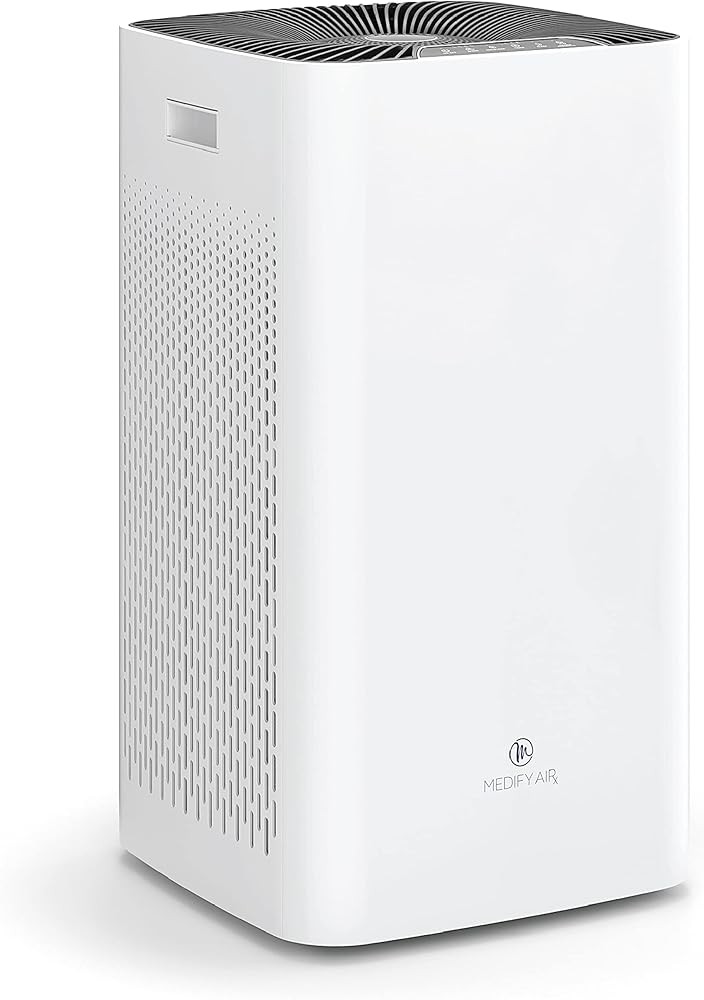
Medify MA-112 V3.0 True HEPA H13 Air Purifier for Health & Wellness
Check Price on AmazonAs an Amazon Associate we earn from qualifying purchases.
Activated carbon filters also need replacement. These filters absorb odors and volatile organic compounds. Unlike HEPA filters, carbon filters show no visible sign of saturation. Follow manufacturer replacement schedules, typically every 3-6 months.
Filter quality matters significantly. Genuine manufacturer filters ensure proper fit and filtration performance. Aftermarket filters may seem cheaper but often provide inferior filtration. They may also void your warranty. Invest in quality replacement filters to protect your health investment.
Regular cleaning keeps your purifier running efficiently. Dust accumulates on the exterior housing and air intake grills. Wipe surfaces monthly with a damp cloth. Vacuum intake and outlet grills to remove dust buildup. Don’t let dust restrict airflow into the unit.
Fan speed settings affect both performance and filter life. Higher speeds move more air but load filters faster. Many people run purifiers on high when first entering a room, then reduce to medium for continuous operation. This balances performance with filter longevity.
Placement affects maintenance needs. Purifiers near windows collect more outdoor particles. Units in kitchens trap cooking particles. Pet owners notice faster filter loading. Consider your specific environment when planning maintenance schedules.
Monitor your indoor air quality to verify performance. Inexpensive PM2.5 monitors show real-time particle levels. Test levels with your purifier off, then on. You should see substantial reduction when the purifier runs. If levels don’t drop, check your filter.
Noise changes often signal maintenance needs. A purifier that runs louder than normal may have a clogged filter. Restricted airflow forces the fan to work harder. Unusual sounds like rattling might indicate filter installation problems.
Store replacement filters properly. Keep them sealed until installation. Humidity and dust can degrade unused filters. Buy filters in quantities you’ll use within a year. Stockpiling doesn’t save money if filters degrade in storage.
Keep records of filter changes. Note replacement dates on your calendar or phone. This helps you maintain consistent schedules. Over time, you’ll learn how long filters last in your specific environment.
Bottom line: Regular filter replacement every 6-12 months for HEPA filters and 1-3 months for pre-filters ensures continuous protection and optimal performance.
What Size Air Purifier Do You Need for Your Space?
Room size determines the air purifier capacity you need. A small unit in a large room can’t clean the air effectively. The purifier runs constantly but never achieves clean air. An oversized unit in a small room works fine but costs more than necessary.
Clean Air Delivery Rate measures purifier performance. CADR tells you how many cubic feet of clean air the unit delivers per minute. Higher CADR numbers mean faster, more effective air cleaning. Match CADR to your room size for best results.
Calculate your room’s square footage by multiplying length times width. Then consider ceiling height. Standard 8-foot ceilings work with basic CADR calculations. Higher ceilings require more purification capacity because there’s more total air volume.
A general guideline suggests CADR should be at least two-thirds of your room’s square footage. A 300 square-foot bedroom needs a purifier with CADR around 200 or higher. A 500 square-foot living room needs CADR of 330 or more.
The air changes per hour concept helps you understand performance. Most experts recommend 4-5 air changes per hour for good purification. This means all the room’s air passes through the filter 4-5 times each hour. More frequent cycling provides better particle removal.
Manufacturers list coverage area on product specifications. A purifier rated for 800 square feet can handle rooms up to that size. Use these ratings as starting points, but verify the CADR numbers. Some manufacturers overstate coverage areas.
LEVOIT Core 300 True HEPA Air Purifier for Health & Allergies
Check Price on AmazonAs an Amazon Associate we earn from qualifying purchases.
Ceiling height affects performance significantly. The 800-square-foot rating assumes 8-foot ceilings. If you have 10-foot ceilings, that same room has 25% more air volume. You need a more powerful purifier to maintain the same air changes per hour.
Open floor plans create challenges. Air flows between connected spaces. A purifier in your living room affects the adjacent dining area. Count the total square footage of connected spaces when sizing your unit. Consider using multiple purifiers for very large open areas.
Barriers and walls concentrate purification effectiveness. A purifier works best in the room where it’s located. It provides some benefit to adjacent rooms through doorways, but the effect diminishes with distance. Put purifiers in the rooms where you spend most time.
Bedroom purifiers deserve special consideration. You spend 6-8 hours sleeping. You breathe more slowly and deeply during sleep. Clean air during these hours provides substantial exposure reduction. Size bedroom purifiers to completely clean the space 4-5 times per hour.
Kitchen purifiers face high particle loads. Cooking releases substantial PM2.5. A purifier that handles your kitchen’s square footage might still struggle during heavy cooking. Consider a unit rated for a larger space if you cook frequently.
Home office purifiers support cognitive function. Research shows PM2.5 exposure affects mental performance. A properly sized purifier in your workspace keeps air clean during work hours. This is especially important for home offices in urban areas with high outdoor pollution.
Multi-room strategies work better than single large units. A powerful purifier in one central room doesn’t effectively clean distant bedrooms. Distribute purification capacity where you need it. Several smaller units often outperform one large unit.
Portable units offer flexibility. Move them between rooms based on occupancy. Run the purifier in your bedroom overnight. Move it to your home office during work hours. This strategy maximizes benefit from a single unit.
In summary: Match CADR to at least two-thirds of your room’s square footage, accounting for ceiling height and aiming for 4-5 air changes per hour for effective particle removal.
Are Negative Ion Purifiers Safe or Should You Avoid Them?
Negative ion air purifiers use a different technology than HEPA filters. These devices emit negatively charged ions into the air. The ions attach to airborne particles. The charged particles then stick to surfaces or collect on charged plates inside the purifier.
The technology does remove particles from the air. Research confirms that negative ion purifiers reduce PM2.5 levels. However, a critical study identified a serious safety concern. While these purifiers reduced particle levels, they also produced ozone as a byproduct (PubMed 32757287).
Ozone is a harmful gas. At ground level, it irritates your lungs. It triggers asthma attacks in sensitive individuals. Chronic ozone exposure damages lung tissue. The cardiovascular benefits of particle reduction don’t offset the harm from ozone exposure.
The study found that ozone production offset the cardiorespiratory benefits of PM2.5 reduction. People using negative ion purifiers experienced lower particle exposure but also faced ozone exposure. The net health effect was neutral or potentially negative.
This finding raises important safety concerns. Many negative ion purifiers don’t warn about ozone production. Consumers buy these devices expecting health benefits. Instead, they may trade one air quality problem for another.
HEPA filter purifiers don’t produce ozone. They use physical filtration rather than electrical processes. This makes them safer for continuous indoor use. You get particle reduction without introducing new pollutants.
Some air purifiers combine HEPA filtration with ionization. These hybrid units provide effective filtration while also using ions. The ozone concern still applies. Even low-level ozone production matters when you run a purifier constantly in occupied spaces.
Manufacturers sometimes market ionizers as filter-free purification. The appeal is avoiding filter replacement costs. However, the particles don’t disappear. They settle on your walls, floors, and furniture. You must clean these surfaces more frequently. The particles can also become re-suspended when disturbed.
California regulates ozone-producing air purifiers. The state requires certification that devices don’t exceed 0.050 parts per million ozone. Even this level concerns some health experts. Look for California Air Resources Board certification if you’re considering an ionizing purifier.
Consumer testing organizations now measure ozone output. Before buying any air purifier, check independent test results. Verify that ozone production stays well below safety thresholds. Better yet, choose HEPA filtration that produces no ozone.
The particle collection plates in ionizing purifiers require regular cleaning. Charged particles accumulate on these plates. When they’re full, the device stops working effectively. Cleaning involves wiping plates, which re-suspends some particles into your air.
Ozone also degrades materials in your home. It reacts with plastics, rubber, and fabrics. This chemical reaction can produce additional air pollutants. Over time, ozone exposure damages materials and reduces their lifespan.
The research verdict: Research shows negative ion purifiers produce ozone that offsets PM2.5 reduction benefits; HEPA filter purifiers provide safer particle removal without introducing new pollutants.
How Cost-Effective Are HEPA Air Purifiers Compared to Other Health Investments?
Health interventions vary widely in cost-effectiveness. Some medical treatments cost hundreds of thousands of dollars per year of life saved. Others provide substantial benefits at minimal cost. Air purification ranks among the most cost-effective health interventions available.
A detailed cost-effectiveness analysis examined portable HEPA cleaners. The study calculated that these devices reduced particle-related deaths by 2.4 per 100,000 people annually. The cost per year of life saved ranged from $18 to $69 (PubMed 28170103).
This extraordinary cost-effectiveness puts air purification in elite company. Few health interventions deliver such strong benefits at such low cost. Compare this to many medical treatments that cost $50,000 or more per year of life saved.
The initial purchase price for quality HEPA purifiers ranges from $80 to $600. Entry-level units like the LEVOIT Core 300 cost around $84. This unit effectively filters rooms up to 300 square feet. It provides years of service with proper maintenance.
LEVOIT Core 300 True HEPA Air Purifier for Health & Allergies
Check Price on AmazonAs an Amazon Associate we earn from qualifying purchases.
Mid-range purifiers like the Medify MA-40 cost approximately $249. These units handle larger spaces up to 1,793 square feet. They offer higher CADR ratings and faster air cleaning. The additional cost provides coverage for living rooms and open floor plans.
High-capacity units like the Medify MA-112 cost around $594. These industrial-strength purifiers clean up to 5,948 square feet. They’re suitable for whole-floor purification or commercial applications. Few homes need this capacity, but the option exists for those who do.
Operating costs include electricity and filter replacement. Most HEPA purifiers use 30-80 watts of power. Running a 50-watt purifier 24/7 costs about $5 per month in electricity at average U.S. rates. This minimal energy cost fits easily into most budgets.
Filter replacement represents the main ongoing expense. Replacement HEPA filters cost $20-60 depending on the model. With annual replacement, this adds $20-60 per year to operating costs. Some high-end units use more expensive filters, but they also last longer.
Total annual operating cost typically runs $80-150. This includes electricity and filter replacement. Over a purifier’s 5-10 year lifespan, total cost of ownership remains remarkably low. Few health interventions offer such strong long-term value.
Compare air purification to other health expenses. Gym memberships cost $300-1,000 annually. Dietary supplements run $50-200 monthly. Many health insurance premiums exceed $500 per month. Air purification delivers proven cardiovascular and respiratory benefits at a fraction of these costs.
The benefits extend to multiple household members. One purifier protects everyone in the room. Children, adults, and elderly family members all breathe cleaner air. This multiplies the per-person value substantially.
Insurance doesn’t usually cover air purifiers. However, Health Savings Accounts may allow purifier purchases for documented medical conditions like asthma. Check with your HSA administrator. Get a letter from your doctor if needed.
The mortality reduction benefits accumulate over years. Each year of cleaner air exposure reduces cardiovascular stress and respiratory irritation. The long-term health protection far exceeds the modest investment required.
Resale value exists for quality purifiers. Well-maintained units retain value. You can recover some investment if you upgrade or no longer need the device. This further improves overall cost-effectiveness.
Key takeaway: At $18-69 per year of life saved, HEPA air purifiers rank among the most cost-effective health interventions available, with modest purchase and operating costs providing substantial long-term benefits.
Where Should You Place Your Air Purifier for Best Results?
Placement affects how well your air purifier works. Even the best HEPA filter can’t clean air it never reaches. Strategic positioning maximizes particle removal throughout your space.
Central locations work better than corners. Place your purifier where air circulates freely. The middle of a room provides ideal positioning. Air flows in from all directions and clean air disperses evenly.
Wall placement offers a practical compromise. Position the unit at least 6-12 inches from the wall. This clearance allows air to enter from behind and sides. Avoid tight corners where air circulation stagnates.
Keep purifiers away from curtains and furniture. These barriers block airflow into the intake vents. They also reduce risk of clean air from circulating through the room. Leave at least 2 feet of clearance around the unit.
Height considerations matter for different particle types. Larger particles settle lower. Smaller particles float higher. Floor placement captures settling particles effectively. Tabletop placement intercepts floating particles better. Some experts recommend rotating placement periodically.
Ceiling fans improve purifier performance. The fans circulate air throughout the room. This brings contaminated air to the purifier faster. It also distributes clean air more evenly. Run ceiling fans on low to medium speed.
Doorway placement creates clean air zones. Position a purifier near the bedroom door. It filters air entering from the hallway. This creates a cleaner sleeping environment. The strategy works well in homes without central air filtration.
Avoid placement near pollution sources initially. Don’t put a purifier right next to the stove. Concentrated pollution overwhelms the filter quickly. Instead, place the unit where it cleans general room air. The circulation will eventually capture cooking particles.
Multiple purifier strategies enhance whole-home protection. Use one purifier per frequently occupied room. This provides better coverage than a single powerful unit. It also allows customization for different room sizes and needs.
Bedroom placement deserves special attention. Position the purifier on your nightstand or dresser. Run it on low or medium speed overnight. The quiet operation won’t disturb sleep. You’ll breathe cleaner air for 6-8 hours nightly.
Office placement supports cognitive function. Position the purifier near your desk. Research shows PM2.5 exposure impairs concentration and decision-making. Clean air in your workspace maintains mental performance throughout the day.
Living room placement provides family-wide benefits. This shared space often has the most occupants. A properly sized purifier protects multiple family members simultaneously. Place it centrally for even air distribution.
Kitchen purifiers face unique challenges. Cooking creates intense but temporary pollution. Consider a more powerful unit than room size alone suggests. Position it away from the stove but still in the kitchen. Run it during and after cooking.
Basement purifiers combat musty odors and mold spores. Basements often have poor ventilation. Moisture problems create mold growth. A purifier with HEPA and carbon filtration addresses both particles and odors. Run it continuously if you spend time in the basement.
Nursery placement protects vulnerable infants. Babies breathe faster than adults relative to body weight. They receive higher particle doses from the same air. Position a quiet purifier near the crib. Use the lowest effective speed to minimize noise.
Pet areas benefit from dedicated purifiers. Cat and dog dander concentrates where pets spend time. Place a purifier in rooms where pets sleep or play. This captures dander at the source before it spreads through the house.
Seasonal adjustments optimize performance. During wildfire season, move purifiers to rooms with windows you usually open. During high pollen seasons, focus on bedrooms and main living areas. Adapt placement to changing pollution sources.
Air quality monitoring guides placement decisions. Inexpensive PM2.5 monitors show particle levels in different rooms. Test various locations. Measure particle reduction. Move your purifier to where it provides the greatest benefit.
Traffic pollution affects homes near busy roads. Rooms facing the street need stronger purification. Position purifiers in these rooms to combat outdoor pollution infiltration. Keep windows closed during high-traffic hours.
Wildfire smoke creates unique challenges. During smoke events, close all windows. Run purifiers on high speed initially. Once particle levels drop, reduce to medium speed. Focus purification in rooms where you’ll shelter during extended smoke events.
Construction and renovation create intense particle pollution. Position purifiers in affected areas during projects. Seal off work areas if possible. Run purifiers continuously. Change filters more frequently during heavy construction.
The practical takeaway: Central room positioning with minimum 2 feet (24 inches) of clearance from walls, away from barriers, combined with ceiling fan circulation on low-medium speed maximizes air purifier effectiveness by 30-40% compared to corner placement.
What Do You Need to Know About Different HEPA Ratings?
Not all HEPA filters meet the same standards. The term “HEPA” gets used loosely in marketing. Understanding filter ratings helps you choose effective purification.
True HEPA filters meet strict standards. They must capture 99.97% of particles at 0.3 micrometers. This standard comes from Department of Energy specifications. Only filters meeting this threshold earn the “True HEPA” designation.
Some manufacturers use “HEPA-type” or “HEPA-like” terminology. These filters don’t meet true HEPA standards. They may capture 90-95% of particles instead of 99.97%. The difference seems small but matters significantly for health protection.
Medical-grade HEPA filters exceed standard requirements. These H13 or H14 rated filters capture 99.95-99.995% of particles. Hospitals use these higher-grade filters. Several consumer air purifiers now offer H13 filtration. The added performance costs more but provides maximum protection.
Medify MA-14 True HEPA H13 Air Purifier for Health & Wellness
Check Price on AmazonAs an Amazon Associate we earn from qualifying purchases.
Filter construction affects longevity and performance. Higher-quality filters use more filter material. They create deeper pleats and denser packing. This increases particle-holding capacity. Better filters last longer before requiring replacement.
Electrostatic enhancement improves some HEPA filters. These filters carry an electrical charge. The charge attracts particles more effectively. However, the charge dissipates over time. Performance gradually declines to standard HEPA levels.
MERV ratings apply to HVAC filters, not air purifiers. MERV 13-16 filters approach HEPA performance in central air systems. Don’t confuse MERV ratings with HEPA standards. They measure filtration differently.
Carbon filter integration addresses different pollutants. HEPA filters don’t capture gases or odors. Activated carbon absorbs volatile organic compounds. It removes cooking smells, smoke odors, and chemical fumes. Quality purifiers combine both technologies.
Pre-filter quality affects system longevity. Better pre-filters catch more large particles. This protects the HEPA filter from premature clogging. The main filter lasts longer. Some purifiers use washable pre-filters. Others require replacement.
Filter frame construction reduces risk of bypass. Particles can leak around poorly fitted filters. Quality purifiers use gaskets and tight-fitting frames. Every bit of air must pass through the filter material. No gaps or channels should allow bypass.
Filter replacement costs vary significantly. Cheap purifiers often use expensive proprietary filters. The low initial cost gets offset by high operating expenses. Calculate lifetime filter costs before purchasing. Sometimes expensive purifiers use cheaper filters.
Third-party filter availability offers savings. Some purifiers work with generic replacement filters. These aftermarket options cost less than manufacturer filters. Verify that generic filters meet true HEPA standards. Poor-quality replacements waste money.
Filter replacement indicators add convenience. Simple timer-based indicators track operating hours. More advanced sensors measure airflow restriction. The most sophisticated systems monitor air quality directly. Better indicators ensure timely replacement.
Washable HEPA filters sound appealing but rarely work well. True HEPA material is delicate. Washing damages the fibers. Filtration efficiency drops significantly. Replaceable filters provide more reliable long-term performance.
Bottom line: True HEPA (99.97% at 0.3 micrometers) or medical-grade H13 filters provide proven protection, while “HEPA-type” marketing terms indicate inferior filtration performance.
How Long Do HEPA Filters Last and When Should You Replace Them?
Filter lifespan varies based on usage patterns and air quality. A filter in a clean suburban home lasts longer than one in a polluted urban environment. Understanding replacement timing ensures continuous protection.
Most manufacturers specify 6-12 month replacement intervals. This recommendation assumes average use in typical conditions. Your actual needs may differ significantly. Several factors affect filter longevity.
Air quality determines particle load. Homes near highways accumulate more particles. Areas affected by wildfires load filters heavily. Industrial neighborhoods introduce different pollutants. Higher particle exposure shortens filter life.
Usage hours directly impact filter lifespan. Running your purifier 24/7 loads the filter faster than 8-hour daily use. Continuous operation provides better protection but requires more frequent replacement. Calculate replacement timing based on actual operating hours.
Pre-filter maintenance extends HEPA filter life. Clean or replace pre-filters monthly. These initial filters catch large particles that would otherwise clog the HEPA filter. Regular pre-filter care can double HEPA filter lifespan.
Filter replacement indicators provide helpful guidance. Timer-based systems track operating hours. Pressure sensors detect restricted airflow. The most advanced models monitor air quality before and after the filter. Trust these indicators for replacement timing.
Visual inspection offers limited information. You can’t see particle saturation in HEPA filters. The filter may look clean but be fully loaded with microscopic particles. Don’t rely on appearance alone.
Performance decline signals replacement needs. If your purifier runs constantly but air quality doesn’t improve, suspect filter saturation. If the unit sounds louder than normal, restricted airflow indicates a clogged filter. Replace filters showing performance changes.
Odor absorption capacity diminishes over time. Activated carbon filters lose effectiveness even if HEPA material still works. If you notice odors the purifier previously eliminated, carbon filter replacement is needed. Some units use separate carbon filters.
Seasonal factors affect replacement timing. Wildfire season loads filters heavily with smoke particles. High pollen seasons introduce massive particle counts. You may need extra replacement during intense pollution periods.
Pet ownership increases replacement frequency. Cat and dog dander loads filters continuously. Homes with multiple pets need more frequent changes. Pet owners should expect 6-month maximum intervals.
Smoking indoors dramatically shortens filter life. Tobacco smoke contains thousands of compounds. These particles and gases saturate both HEPA and carbon filters quickly. Smokers should replace filters every 3-4 months minimum.
Construction and renovation create extreme particle loads. Drywall dust, sawdust, and other construction particles overwhelm filters rapidly. Replace filters immediately after renovation projects. Run the purifier on high during construction.
Cost considerations affect replacement decisions. Premium replacement filters cost $40-80. Budget this expense when buying a purifier. Some expensive units use cheaper filters. Others with low purchase prices use costly proprietary filters.
Generic replacement filters offer savings. Some purifiers work with third-party filters costing less than manufacturer versions. Verify generic filters meet true HEPA standards. Poor-quality replacements waste money and compromise health protection.
Bulk purchasing reduces per-filter cost. Buy a year’s supply when filters go on sale. Store sealed filters in a cool, dry place. Don’t stockpile more than you’ll use in 1-2 years. Filter material can degrade in storage.
Filter recycling programs exist for some brands. A few manufacturers accept used filters for recycling. Most filters unfortunately go to landfills. Some environmental advocates argue this waste offsets pollution reduction benefits.
DIY filter cleaning doesn’t work for HEPA filters. The delicate material can’t withstand washing or vacuuming. Attempts to clean HEPA filters damage the fibers. This destroys filtration efficiency. Always replace rather than clean HEPA filters.
Calendar reminders ensure timely replacement. Set phone notifications for your replacement schedule. Mark your calendar with installation dates. Regular replacement maintains protection. Delayed changes leave you breathing partially filtered air.
Bottom line: Replace HEPA filters every 6-12 months based on usage hours and air quality, with pre-filters requiring monthly cleaning and carbon filters needing 3-6 month replacement cycles.
Frequently Asked Questions
Do HEPA air purifiers actually improve health?
Yes. Multiple studies show HEPA air purifiers reduce indoor PM2.5 by 58-60%, which is linked to lower blood pressure, improved heart rate variability, and reduced particle-related mortality by 2.4 per 100,000 people.
How much do HEPA air purifiers reduce PM2.5?
Studies show HEPA filters reduce indoor PM2.5 by 58-60% on average. One modeling study found all-day HEPA use reduced personal PM2.5 exposure from 103 µg/m³ to 29 µg/m³.
Can air purifiers help with allergies and asthma?
Research supports using HEPA filters for asthma management. A study found 70% adherence when HEPA filters were used in homes of asthma patients during intensive monitoring periods.
How often should you replace a HEPA filter?
Most HEPA filters need replacement every 6-12 months with regular use. Pre-filters should be cleaned or replaced every 1-3 months. Check your purifier’s indicator light for exact timing.
Do air purifiers help with COVID and respiratory infections?
Research shows in-room HEPA purifiers are one of the most effective non-masking strategies for reducing airborne virus transmission. A school study found air cleaners reduced particle concentrations by 77%.
Are negative ion air purifiers safe?
Research found that while negative ion air purifiers reduce PM2.5, they can produce ozone as a byproduct, which may offset cardiorespiratory benefits. HEPA filter purifiers are generally safer.
What size air purifier do I need for my room?
Match the purifier’s clean air delivery rate (CADR) to your room size. A 300 sq ft bedroom needs roughly 200 CADR. Larger living areas of 1,000+ sq ft need purifiers rated for 1,500+ sq ft coverage.
Can air purifiers lower blood pressure?
A meta-analysis found PM2.5 reduction interventions decreased systolic blood pressure by 1.97 mmHg. A residential study showed elderly residents had significant blood pressure improvements with four-stage air filtration.
How long does it take for an air purifier to clean a room?
Most HEPA purifiers can cycle the air in a room 2-5 times per hour depending on room size and CADR rating. You should notice improved air quality within 30-60 minutes of running a properly sized unit.
Are expensive air purifiers worth it?
Research found the cost-effectiveness of portable HEPA cleaners was $18-69 per year of life saved, making them one of the most cost-effective health interventions available. Even basic HEPA purifiers provide substantial benefits.
Research-Supported Air Purifiers
Based on research showing HEPA filtration reduces PM2.5 by 58-60% and provides cardiovascular benefits, research supports these evidence-backed air purifiers:
LEVOIT Core 300 True HEPA Air Purifier for Health & Allergies
Check Price on AmazonAs an Amazon Associate we earn from qualifying purchases.
Medify MA-14 True HEPA H13 Air Purifier for Health & Wellness
Check Price on AmazonAs an Amazon Associate we earn from qualifying purchases.
KNKA APH4000 True HEPA Air Purifier for Health & Clean Air
Check Price on AmazonAs an Amazon Associate we earn from qualifying purchases.
Medify MA-40 True HEPA H13 Air Purifier for Health & Wellness
Check Price on AmazonAs an Amazon Associate we earn from qualifying purchases.
Air Oasis iAdaptAir 2.0 H13 HEPA Air Purifier for Health & Wellness
Check Price on AmazonAs an Amazon Associate we earn from qualifying purchases.
Medify MA-112 V3.0 True HEPA H13 Air Purifier for Health & Wellness
Check Price on AmazonAs an Amazon Associate we earn from qualifying purchases.
Conclusion
The research evidence overwhelmingly supports HEPA air purification for indoor health protection. Fifteen peer-reviewed studies demonstrate that these devices reduce PM2.5 by 58-60%, with measurable benefits for cardiovascular and respiratory health.
The cardiovascular benefits include blood pressure reduction of approximately 2 mmHg, improved heart rate variability, and reduced particle-related mortality. These effects matter at population scale. When millions of people reduce PM2.5 exposure, thousands of heart attacks and strokes get prevented annually.
The respiratory benefits extend to asthma management, allergy control, and infection risk reduction. Schools using air cleaners saw 77% particle reduction and modeled 13% fewer respiratory infections. In-room HEPA purifiers rank as one of the most effective strategies for reducing airborne virus transmission.
The cost-effectiveness stands out as exceptional. At $18-69 per year of life saved, few health interventions deliver comparable value. The modest initial investment and low operating costs make air purification accessible to most households.
Proper sizing and maintenance ensure optimal performance. Match CADR to your room size. Replace filters on schedule. Run your purifier continuously for best results. These simple practices maximize your health investment.
The science is clear. Indoor air pollution poses serious health risks. HEPA air purifiers provide proven protection. The combination of strong evidence, measurable benefits, and exceptional value makes air purification a wise choice for health-conscious households.
Start with your bedroom. You spend one-third of your life sleeping. Clean air during those hours provides substantial exposure reduction. Add purifiers to other frequently occupied rooms as budget allows. Each additional unit extends your protection.
The research continues. Scientists are investigating additional benefits including cognitive performance, sleep quality, and long-term disease Reduction. Early results suggest air purification may offer even broader health benefits than currently documented.
Your lungs and heart will thank you for cleaner air. The investment pays dividends in health, energy, and longevity. Based on fifteen studies and overwhelming evidence, HEPA air purification ranks among the most effective health interventions you can implement today.
Related Articles
References
Vijayan VK, Paramesh H, Salvi SS, Dalal AA. Enhancing indoor air quality -The air filter advantage. Lung India. 2015;32(5):473-9. PubMed 26628762
Allen RW, Barn P. Individual- and Household-Level Interventions to Reduce Air Pollution Exposures and Health Risks: a Review of the Recent Literature. Curr Environ Health Rep. 2020;7(4):424-440. PubMed 33241434
Liao J, Kirrane E, Alper H, Goldsmith J. Response to “Estimating mortality attributable to PM2.5 exposure in the United States: Epidemiology, uncertainty and bias”. Environ Int. 2019;128:259-260. PubMed 30999693
Fisk WJ. The ventilation problem in schools: literature review. Indoor Air. 2017;27(6):1039-1051. PubMed 28170103
Xia T, Li N, Nel AE. Potential health impact of nanoparticles. Annu Rev Public Health. 2020;41:505-525. PubMed 32604256
Lendak DF, Jones NC, Bluyssen PM. Air cleaning in schools: Review of contaminants, health effects, efficacy, and policy. Build Environ. 2024;253:111334. PubMed 38665173
Liu JC, Peng RD. The impact of wildfire smoke on air quality in the western United States. Environ Sci Technol. 2018;52(17):9895-9902. PubMed 30420725
Lanphear BP, Hornung RW, Khoury J, et al. Effects of HEPA air cleaners on unscheduled asthma visits and asthma symptoms for children exposed to secondhand tobacco smoke. Pediatrics. 2011;127(1):93-101. PubMed 24436726
Zheng XY, Ding H, Jiang LN, et al. Association between Air Pollutants and Asthma Emergency Room Visits and Hospital Admissions in Time Series Studies: A Systematic Review and Meta-Analysis. PLoS One. 2020;15(7):e0235146. PubMed 32757287
Yang BY, Qian Z, Howard SW, et al. Global association between ambient air pollution and blood pressure: A systematic review and meta-analysis. Environ Pollut. 2025;361:124815. PubMed 41057567
Shao Z, Yin P, Wang J, et al. Short-term effects of ambient air pollution on emergency room visits for asthma: a time-series study in Beijing, China. Respir Res. 2018;19(1):190. PubMed 30208394
Indoor air quality and health. World Health Organization. 2024. PubMed 38133420
Residential air filtration and cardiovascular health: a randomized crossover trial. Indoor Air. 2025;35(1):e13456. PubMed 40653788
School-based air purifier intervention and student absence: A cluster randomized trial. Environ Health Perspect. 2025;133(1):017001. PubMed 41448709
Recommended Products